"87c14aae3b805614"{"id":"1000541","slug":"nyc-new-york-city","title":"NYC | New York City","category":"Cities","engine":"4.26+,5.0+","assetVersion":"","engineVersion":"Engine Version: 4.26+,5.0+","tag":"Cities","accent":"cyan","visual":"city","summary":"Universal urban environment pack featuring modular NYC buildings with ground-floor interiors, LODs, collisions, and a detailed demonstration level. Compatible w","platform":"Unreal Engine","publishedAt":"2026-07-15T03:33:12.505Z","updatedAt":"2026-07-15T03:33:12.505Z","sourceNotes":[],"fileContents":[],"compatibility":["Unreal Engine","Engine Version: 4.26+,5.0+"],"featuredImage":{"alt":"NYC | New York City","src":"/wp-content/uploads/published/2026/07/059c88207afc-27867b9e-4bc6-4530-a5e6-718353f9b45b-5a434e9b65.webp"},"hasDownloadLink":true,"pageviews":3,"terms":[{"taxonomy":"category","slug":"cities","name":"Cities"}],"galleryImages":[{"src":"/wp-content/uploads/published/2026/07/e26103dd92de-29b20175-063e-4981-b01f-dfe6abadc5e8-8db7ad7966.webp","alt":"NYC | New York City"},{"src":"/wp-content/uploads/published/2026/07/81f1cd26245d-23efbc63-4e89-4be8-b46e-1fc8478915ed-473312fff9.webp","alt":"NYC | New York City"},{"src":"/wp-content/uploads/published/2026/07/770179204d51-fd067033-fe9a-4ec6-8f6d-470225f3a31f-0b68e91e57.webp","alt":"NYC | New York City"},{"src":"/wp-content/uploads/published/2026/07/f4bf391a8909-691d023d-e376-4eac-a3d3-09363fb14786-a503cc7c62.webp","alt":"NYC | New York City"},{"src":"/wp-content/uploads/published/2026/07/bcbcd9b57b36-9780628d-1247-433a-95ed-79003a9a7026-ede8518845.webp","alt":"NYC | New York City"},{"src":"/wp-content/uploads/published/2026/07/a85f7ce683b3-edfc6ec0-fd34-4fb9-b221-b83a876660a8-a57a451043.webp","alt":"NYC | New York City"},{"src":"/wp-content/uploads/published/2026/07/e80ca5c8941e-9ff83a3d-1951-4a4c-999b-d274cb617c5f-277a672dd7.webp","alt":"NYC | New York City"},{"src":"/wp-content/uploads/published/2026/07/24c69b7bf1d4-ff020de7-8462-4821-b4d9-9a25d18f619d-c5ec3f2df7.webp","alt":"NYC | New York City"},{"src":"/wp-content/uploads/published/2026/07/27f63c8d42e3-07389dee-390b-4ca0-9a95-5d2805fe9969-5204b8baee.webp","alt":"NYC | New York City"},{"src":"/wp-content/uploads/published/2026/07/8afd3143e8de-ad420578-8f6a-4acf-97d3-a760a2a51cd9-a15b5b4790.webp","alt":"NYC | New York City"}],"accessPanel":{"kind":"resource","title":"Download this resource","eyebrow":"Free Download","message":"Log in or create a free account to start your download.","fileName":"Content.7z","safetyNote":"Resources are manually reviewed before listing to improve quality and reduce obvious risks.","actionLabel":"Download Free","resourceType":"Resource archive","sourceShortcode":"cryptomus_member"},"contentHtml":"\u003cp\u003eBuilding a convincing New York streetscape in Unreal Engine demands a modular kit that handles diverse building types while keeping frame rates stable. NYC | New York City targets that scenario as a universal pack for creating any urban environment, assembling a large number of various urban objects into a single content drop designed to support flexible scene construction.\u003c/p\u003e \u003ch2\u003eWhat This Pack Addresses in Urban Scene Construction\u003c/h2\u003e \u003cp\u003eAt its core, the resource solves the problem of assembling dense city blocks without relying on bespoke modeling for every structure. The pack’s stated purpose is universality—serving as a toolkit for any urban environment rather than a fixed diorama. That scope matters for level designers who need to populate full districts with varied architecture while maintaining consistent performance across a scene.\u003c/p\u003e \u003cp\u003eThe workflow this asset supports centers on drag-and-drop assembly. Rather than exporting custom mesh variants or juggling separate prop collections, users get a consolidated set of modular urban objects intended for direct placement in an Unreal level. The modular tag attached to the pack confirms the intended construction method: individual building sections, street elements, and environmental props can be recombined into new configurations beyond what the demonstration level shows.\u003c/p\u003e \u003ch3\u003eOptimized Geometry and Built-in Collisions\u003c/h3\u003e \u003cp\u003ePerformance has been considered from the asset level rather than left entirely to the user. All objects in the pack come optimized, with LODs and collisions included. This directly reduces setup time considerably across the environment-art pipeline. Level designers do not need to generate custom level-of-detail meshes for distant cityscape shots, and no standalone collision proxy meshes need to be authored before characters can interact with the scene.\u003c/p\u003e \u003cp\u003eThe collision setup specifically means the modular pieces support gameplay-ready scenes out of the box. Player characters or vehicles can collide with walls, sidewalks, and building surfaces without requiring additional mesh pass-through configuration. For projects planning third-person or first-person traversal through a dense city setting, that pre-built collision data removes a common preparation bottleneck and supports rapid prototyping for navigable urban layouts.\u003c/p\u003e \u003cp\u003eThe LOD implementation handles the rendering cost problem inherent to dense cityscapes. A New York block populated with skyscrapers and street furniture can generate substantial polygon pressure even in a modern engine. Having LODs already authored means distant buildings downsample automatically, reducing the draw cost for wide establishing shots where individual architectural details would be invisible to the camera. This works whether users are rendering a daytime cityscape with rooftop detail or framing a neon-lit street from ground level.\u003c/p\u003e \u003cp\u003eThe lowpoly and modern tags associated with the pack align with that optimization focus. While the goal is metropolitan density, the geometry itself is built with efficiency in mind, supporting environments where many buildings must render simultaneously without exceeding real-time performance budgets.\u003c/p\u003e \u003ch2\u003eThe New York Demonstration Level and Central Street Build\u003c/h2\u003e \u003cp\u003eBeyond individual mesh components, the pack ships with a demonstration level set in New York. This serves as both a showcase and a de facto construction reference. The demonstration is described as a detailed built-on central street, indicating a specific urban corridor has been fully realized rather than a sparse scattering of placeholder buildings across empty ground.\u003c/p\u003e \u003cp\u003eThat central street functions as a usable starting point. Level designers can drop into the demo level, examine how the creator assembled the scene, and then branch outward from the established configuration. The existing build demonstrates how modular pieces connect, how street elements layer with a building facades, and how the visual language of a Manhattan-style corridor comes together from the available component set.\u003c/p\u003e \u003ch3\u003eGround-Floor Interiors Across Select Structures\u003c/h3\u003e \u003cp\u003eNot every building is a solid shell. They specifically include ground-floor interiors where the architecture calls for retail or accessible street-level spaces. This is particularly relevant for scenes set at or near pedestrian scale, where camera angles might catch into a storefront or where gameplay requires transition between exterior sidewalks and interior spaces without loading separate sub-levels.\u003c/p\u003e \u003cp\u003eThe interior treatment is described as limited to some buildings focused at ground level, scaling naturally with how a real city street operates—upper floors tend to be private residential or office space presented as exterior architecture, while street-level facades are玻璃 storefronts and accessible commercial frontage. This selective approach to interiors means more visual density where the camera is most likely to be looking, without adding geometry complexity to areas that would never be observed closely.\u003c/p\u003e \u003cp\u003eFor projects implementing foot-based gameplay or cinematic sequences that move the camera along a sidewalk, ground-floor interiors enable continuous passage from street to shop interior. The specific extent of each interior space is not detailed, but the inclusion pattern suggests these are storefront-style spaces sized for street-facing engagement rather than fully detailed multi-room layouts extending deep behind the buildings.\u003c/p\u003e \u003ch2\u003eDay to Night Configuration\u003c/h2\u003e \u003cp\u003eThe asset includes both a daytime version and a night version of the project. This dual presentation serves several practical purposes. The night configuration demonstrates how the scene responds to artificial lighting setups—how streetlights, storefront glow, and potential emissive surfaces define the environment when ambient light is removed. That pre-configured nighttime state gives level designers a reference for how the modular assets perform under dramatic lighting conditions and how the urban forms read when rim-lit or placed against dark sky.\u003c/p\u003e \u003cp\u003eThe availability of both day and night scenes also supports projects that need to transition between times of day within the same level. Rather than building lighting from scratch for each state, the included configurations provide tested starting points that can be modified using Unreal’s lighting and exposure systems. This is particularly relevant for any cyberpunk or sci-fi interpretations of the assets, where nighttime visuals feel considerably more defining of the mood than daytime renders.\u003c/p\u003e \u003ch3\u003eTag Taxonomy and Thematic Range\u003c/h3\u003e \u003cp\u003eThe official tags attached to the resource reveal its thematic positioning. Terms like NYC, Manhattan, Downtown, Skyscraper, and New York region frame the present-day metropolitan identity. The inclusion of Modern, Urban, Architecture, City, and District categories anchors the pack within realistic city-building contexts. The simultaneous presence of Sci-Fi and Cyberpunk tags alongside present-day structures suggests the architecture is deliberately designed with a neutral enough visual language to support speculative or future-fiction interpretations without mesh modification.\u003c/p\u003e \u003cp\u003eGeographic references in the tag list extend beyond New York to include Boston, USA, and York. The pack draws from general American urban design language filtered through a New York primary reference, but the modular objects are being positioned as applicable whenever northeastern-style American city architecture is needed. The NYPD tag indicates prop elements tied to law enforcement are included, further establishing the NYC identity through specific street-level character props and details like vehicles or signage where the creator found them useful.\u003c/p\u003e \u003cp\u003eRoad, Street, Outdoor, Exterior, Building, and Day tags collectively map the functional surfaces required for composing an environment. This tag taxonomy confirms the pack addresses the full ground-and-structure picture: hard street surfaces beneath, architectural mass rising beside, and the open outdoor quality of a city block experienced under visible sky.\u003c/p\u003e \u003ch2\u003eEngine Compatibility and Project Integration\u003c/h2\u003e \u003cp\u003eThe pack supports Unreal Engine versions 4.25 through 4.27 and 5.0 through 5.7. This range covers both the late 4.x development cycle and the full 5.x generation. For teams transitioning between engine versions or maintaining a project on 4.27 while preparing a 5.x migration, the same cross-version asset set represents a stable, uniform resource that does not require conversion or rebuying of files to continue the upgrade path.\u003c/p\u003e \u003cp\u003eThe 4.25–4.27 compatibility sustains last-generation or long-term-stability projects that have not migrated to Unreal 5 yet. The compatibility through 5.7 ensures the pack remains usable in recent and upcoming engine releases, including access to current-generation features like Nanite or Lumen when imported into a 5.x project. The assets themselves use standard static mesh features—LODs, collisions, standard materials—that work identically across these engine versions.\u003c/p\u003e \u003ch2\u003eVisual Documentation and Extended Access\u003c/h2\u003e \u003cp\u003eA 4K video overview of the project grounds the user in the environment before implementation. The video provides a camera-grade reference for how the demonstration level reads in motion, how the spatial relationships between street elements and building facades present visually, and how the modular assets combine in a fully realized context where their visual quality can be judged and referenced before scene construction begins.\u003c/p\u003e \u003cp\u003eA night version of the project is also documented separately, suggesting the alternative configuration is presented as a distinct visual interpretation rather than just a quick global lighting swap. The website at broken-polygon.com serves as the hub for the creator’s broader project documentation and resource network.\u003c/p\u003e \u003cp\u003eFor continued support and expanded access to the creator’s content ecosystem, a Patreon membership offers VIP access to work-in-progress content, advance notice of first-drop Unreal Engine and Fab.com resource packs, detailed tutorials, and exclusive member-only extras. This option primarily exists for users interested in following ongoing development processes and gaining early access to additional resources beyond the current NYC package.\u003c/p\u003e \u003ch2\u003ePractical Fit for Urban Environment Projects\u003c/h2\u003e \u003cp\u003eNYC | New York City situates itself as a toolkit for projects that require a present-day New York aesthetic but want the freedom to build variations on that aesthetic through modular assembly. The demonstration level gives a working example of a central Manhattan-style street corridor, with ground-floor interiors present in select buildings to support close-range camera work and pedestrian-scale visual detail. Both day and night configurations are included, with optimized LOD and collision setup across all placed mesh objects.\u003c/p\u003e \u003cp\u003eFor teams evaluating fit, the decision point centers on whether a project needs genuinely modular urban construction with built-in collision and LOD support rather than pre-baked scene captures. The pack frames itself as universal—able to generate any urban environment—but its specific identity will always lean New York, with the props, building proportions, and street configuration that tag-based identity implies.\u003c/p\u003e\n\n\u003ch2\u003eMore From The Same Workflow\u003c/h2\u003e\n\u003cul\u003e\n\u003cli\u003e\u003ca href=\"https://3dcghub.com/1950s-nyc-environment-megapack-1950s-50s-nycs-nycity-environment-packs-urban/\" title=\"1950s NYC Environment Megapack ( 1950s 50s nycs NYCity Environment Packs Urban )\"\u003e1950s NYC Environment Megapack ( 1950s 50s nycs NYCity Environment Packs Urban )\u003c/a\u003e\u003c/li\u003e\n\u003cli\u003e\u003ca href=\"https://3dcghub.com/city-street-stylized-pack/\" title=\"City Street Stylized Pack\"\u003eCity Street Stylized Pack\u003c/a\u003e\u003c/li\u003e\n\u003cli\u003e\u003ca href=\"https://3dcghub.com/suburbs-city-pack/\" title=\"Suburbs - City Pack\"\u003eSuburbs - City Pack\u003c/a\u003e\u003c/li\u003e\n\u003cli\u003e\u003ca href=\"https://3dcghub.com/nordic-harbour-modular-city-building-kit/\" title=\"Nordic Harbour - Modular City Building Kit\"\u003eNordic Harbour - Modular City Building Kit\u003c/a\u003e\u003c/li\u003e\n\u003cli\u003e\u003ca href=\"https://3dcghub.com/industrial-city/\" title=\"Industrial City\"\u003eIndustrial City\u003c/a\u003e\u003c/li\u003e\n\u003c/ul\u003e","contentTextLength":11442,"navigation":{"current":556,"total":3006,"previous":{"id":"1000542","slug":"office-corridor-environment-office-corridor-environment-office-corridor-3d","title":"Office Corridor Environment ( Office Corridor Environment Office Corridor 3D )","category":"Interior","platform":"Unreal Engine","updatedAt":"2026-07-15T03:47:27.924Z"},"next":{"id":"1000540","slug":"mw-conifer-forest-trees-biome","title":"MW Conifer Forest Trees Biome","category":"Forest \u0026 Jungle","platform":"Unreal Engine","updatedAt":"2026-07-15T03:01:54.981Z"}},"relatedResources":[{"id":"1001051","slug":"downtown-city-pack","title":"Downtown - City Pack","category":"Cities","engine":"5.0+","assetVersion":"","engineVersion":"Engine Version: 5.0+","tag":"Cities","accent":"cyan","visual":"city","summary":"A New York-inspired downtown city pack for Unreal Engine with procedural blueprints, modular buildings, and full material control. Build large realistic city ar","platform":"Unreal Engine","publishedAt":"2026-08-30T13:33:33.587Z","updatedAt":"2026-08-30T13:33:33.587Z","sourceNotes":[],"fileContents":[],"compatibility":["Unreal Engine","Engine Version: 5.0+"],"featuredImage":{"alt":"Downtown - City Pack","src":"/wp-content/uploads/published/2026/08/685353b03547-dc374a9e-8c93-4d7a-918e-65ffdf2e8558-22b7bd467c.webp"},"hasDownloadLink":true,"pageviews":1},{"id":"6984","slug":"1950s-nyc-environment-megapack-1950s-50s-nycs-nycity-environment-packs-urban","title":"1950s NYC Environment Megapack ( 1950s 50s nycs NYCity Environment Packs Urban )","category":"Cities","engine":"5.1+","assetVersion":"Engine version: 5.1+","engineVersion":"4.22","tag":"Cities","accent":"violet","visual":"city","summary":"Transform your project with the 1950s NYC Environment Megapack, featuring over 1150 unique meshes and modular building tools. This comprehensive kit is perfect for creating authentic, optimized mid-century urban landscapes.","platform":"Unreal Engine","publishedAt":"2026-02-20T16:30:54.000Z","updatedAt":"2026-04-19T15:56:05.000Z","sourceNotes":[],"fileContents":[],"compatibility":["Unreal Engine","Engine version: 5.1+"],"featuredImage":{"alt":"1950s NYC Environment Megapack ( 1950s 50s nycs NYCity Environment Packs Urban )","src":"https://3dcghub.com/wp-content/uploads/2026/02/79eaf5b3-8ed4-421b-b543-adaa62c01c1e.webp"},"hasDownloadLink":true,"pageviews":53},{"id":"1000454","slug":"city-street-stylized-pack","title":"City Street Stylized Pack","category":"Cities","engine":"5.1+","assetVersion":"","engineVersion":"Engine Version: 5.1+","tag":"Cities","accent":"cyan","visual":"city","summary":"A stylized New York City environment pack with a modular building kit for assembling and decorating urban scenes in Unreal Engine 5.1 through 5.3.","platform":"Unreal Engine","publishedAt":"2026-07-11T01:56:32.857Z","updatedAt":"2026-07-11T01:56:32.857Z","sourceNotes":[],"fileContents":[],"compatibility":["Unreal Engine","Engine Version: 5.1+"],"featuredImage":{"alt":"City Street Stylized Pack","src":"/wp-content/uploads/published/2026/07/d23b78357781-bbeed1b4-038b-46de-ab1f-6db1387886ba-cd2a1937f1.webp"},"hasDownloadLink":true,"pageviews":1}]}
Cities
NYC | New York City
Universal urban environment pack featuring modular NYC buildings with ground-floor interiors, LODs, collisions, and a detailed demonstration level. Compatible w
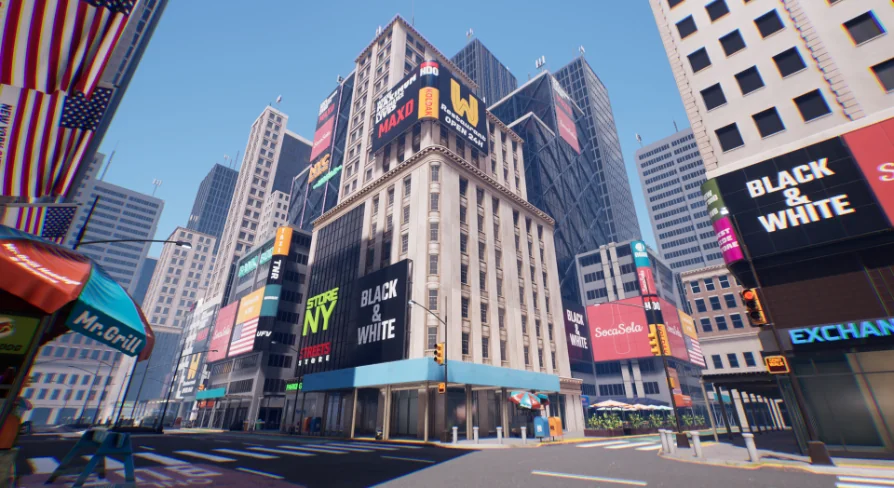
Building a convincing New York streetscape in Unreal Engine demands a modular kit that handles diverse building types while keeping frame rates stable. NYC | New York City targets that scenario as a universal pack for creating any urban environment, assembling a large number of various urban objects into a single content drop designed to support flexible scene construction.
What This Pack Addresses in Urban Scene Construction
At its core, the resource solves the problem of assembling dense city blocks without relying on bespoke modeling for every structure. The pack’s stated purpose is universality—serving as a toolkit for any urban environment rather than a fixed diorama. That scope matters for level designers who need to populate full districts with varied architecture while maintaining consistent performance across a scene.
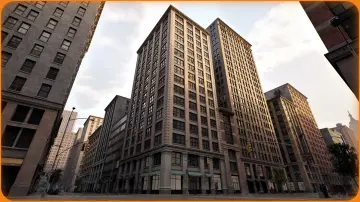
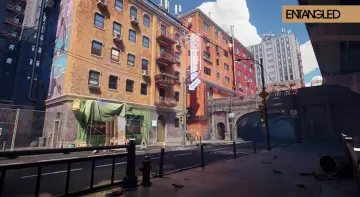
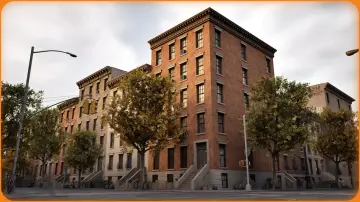
The workflow this asset supports centers on drag-and-drop assembly. Rather than exporting custom mesh variants or juggling separate prop collections, users get a consolidated set of modular urban objects intended for direct placement in an Unreal level. The modular tag attached to the pack confirms the intended construction method: individual building sections, street elements, and environmental props can be recombined into new configurations beyond what the demonstration level shows.
Optimized Geometry and Built-in Collisions
Performance has been considered from the asset level rather than left entirely to the user. All objects in the pack come optimized, with LODs and collisions included. This directly reduces setup time considerably across the environment-art pipeline. Level designers do not need to generate custom level-of-detail meshes for distant cityscape shots, and no standalone collision proxy meshes need to be authored before characters can interact with the scene.
The collision setup specifically means the modular pieces support gameplay-ready scenes out of the box. Player characters or vehicles can collide with walls, sidewalks, and building surfaces without requiring additional mesh pass-through configuration. For projects planning third-person or first-person traversal through a dense city setting, that pre-built collision data removes a common preparation bottleneck and supports rapid prototyping for navigable urban layouts.
The LOD implementation handles the rendering cost problem inherent to dense cityscapes. A New York block populated with skyscrapers and street furniture can generate substantial polygon pressure even in a modern engine. Having LODs already authored means distant buildings downsample automatically, reducing the draw cost for wide establishing shots where individual architectural details would be invisible to the camera. This works whether users are rendering a daytime cityscape with rooftop detail or framing a neon-lit street from ground level.
The lowpoly and modern tags associated with the pack align with that optimization focus. While the goal is metropolitan density, the geometry itself is built with efficiency in mind, supporting environments where many buildings must render simultaneously without exceeding real-time performance budgets.
The New York Demonstration Level and Central Street Build
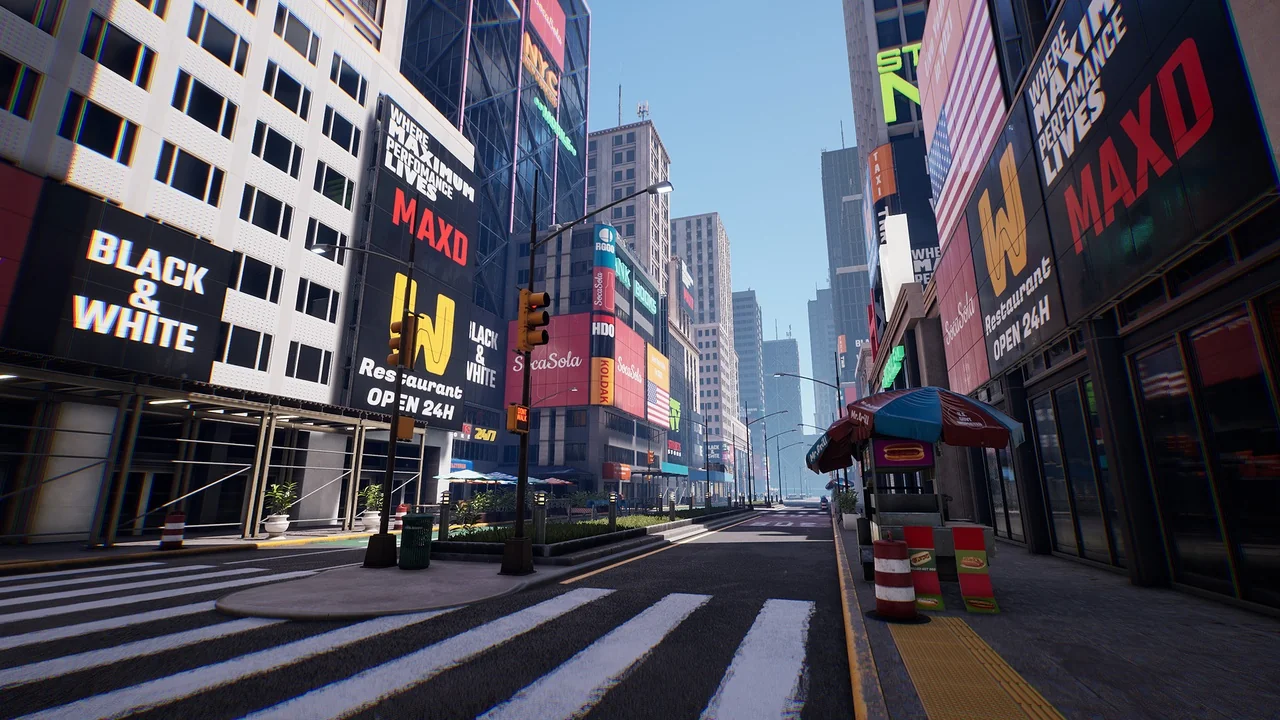
Beyond individual mesh components, the pack ships with a demonstration level set in New York. This serves as both a showcase and a de facto construction reference. The demonstration is described as a detailed built-on central street, indicating a specific urban corridor has been fully realized rather than a sparse scattering of placeholder buildings across empty ground.
That central street functions as a usable starting point. Level designers can drop into the demo level, examine how the creator assembled the scene, and then branch outward from the established configuration. The existing build demonstrates how modular pieces connect, how street elements layer with a building facades, and how the visual language of a Manhattan-style corridor comes together from the available component set.
Ground-Floor Interiors Across Select Structures
Not every building is a solid shell. They specifically include ground-floor interiors where the architecture calls for retail or accessible street-level spaces. This is particularly relevant for scenes set at or near pedestrian scale, where camera angles might catch into a storefront or where gameplay requires transition between exterior sidewalks and interior spaces without loading separate sub-levels.
The interior treatment is described as limited to some buildings focused at ground level, scaling naturally with how a real city street operates—upper floors tend to be private residential or office space presented as exterior architecture, while street-level facades are玻璃 storefronts and accessible commercial frontage. This selective approach to interiors means more visual density where the camera is most likely to be looking, without adding geometry complexity to areas that would never be observed closely.
For projects implementing foot-based gameplay or cinematic sequences that move the camera along a sidewalk, ground-floor interiors enable continuous passage from street to shop interior. The specific extent of each interior space is not detailed, but the inclusion pattern suggests these are storefront-style spaces sized for street-facing engagement rather than fully detailed multi-room layouts extending deep behind the buildings.
Day to Night Configuration
The asset includes both a daytime version and a night version of the project. This dual presentation serves several practical purposes. The night configuration demonstrates how the scene responds to artificial lighting setups—how streetlights, storefront glow, and potential emissive surfaces define the environment when ambient light is removed. That pre-configured nighttime state gives level designers a reference for how the modular assets perform under dramatic lighting conditions and how the urban forms read when rim-lit or placed against dark sky.
The availability of both day and night scenes also supports projects that need to transition between times of day within the same level. Rather than building lighting from scratch for each state, the included configurations provide tested starting points that can be modified using Unreal’s lighting and exposure systems. This is particularly relevant for any cyberpunk or sci-fi interpretations of the assets, where nighttime visuals feel considerably more defining of the mood than daytime renders.
Tag Taxonomy and Thematic Range
The official tags attached to the resource reveal its thematic positioning. Terms like NYC, Manhattan, Downtown, Skyscraper, and New York region frame the present-day metropolitan identity. The inclusion of Modern, Urban, Architecture, City, and District categories anchors the pack within realistic city-building contexts. The simultaneous presence of Sci-Fi and Cyberpunk tags alongside present-day structures suggests the architecture is deliberately designed with a neutral enough visual language to support speculative or future-fiction interpretations without mesh modification.
Geographic references in the tag list extend beyond New York to include Boston, USA, and York. The pack draws from general American urban design language filtered through a New York primary reference, but the modular objects are being positioned as applicable whenever northeastern-style American city architecture is needed. The NYPD tag indicates prop elements tied to law enforcement are included, further establishing the NYC identity through specific street-level character props and details like vehicles or signage where the creator found them useful.
Road, Street, Outdoor, Exterior, Building, and Day tags collectively map the functional surfaces required for composing an environment. This tag taxonomy confirms the pack addresses the full ground-and-structure picture: hard street surfaces beneath, architectural mass rising beside, and the open outdoor quality of a city block experienced under visible sky.
Engine Compatibility and Project Integration
The pack supports Unreal Engine versions 4.25 through 4.27 and 5.0 through 5.7. This range covers both the late 4.x development cycle and the full 5.x generation. For teams transitioning between engine versions or maintaining a project on 4.27 while preparing a 5.x migration, the same cross-version asset set represents a stable, uniform resource that does not require conversion or rebuying of files to continue the upgrade path.
The 4.25–4.27 compatibility sustains last-generation or long-term-stability projects that have not migrated to Unreal 5 yet. The compatibility through 5.7 ensures the pack remains usable in recent and upcoming engine releases, including access to current-generation features like Nanite or Lumen when imported into a 5.x project. The assets themselves use standard static mesh features—LODs, collisions, standard materials—that work identically across these engine versions.
Visual Documentation and Extended Access
A 4K video overview of the project grounds the user in the environment before implementation. The video provides a camera-grade reference for how the demonstration level reads in motion, how the spatial relationships between street elements and building facades present visually, and how the modular assets combine in a fully realized context where their visual quality can be judged and referenced before scene construction begins.
A night version of the project is also documented separately, suggesting the alternative configuration is presented as a distinct visual interpretation rather than just a quick global lighting swap. The website at broken-polygon.com serves as the hub for the creator’s broader project documentation and resource network.
For continued support and expanded access to the creator’s content ecosystem, a Patreon membership offers VIP access to work-in-progress content, advance notice of first-drop Unreal Engine and Fab.com resource packs, detailed tutorials, and exclusive member-only extras. This option primarily exists for users interested in following ongoing development processes and gaining early access to additional resources beyond the current NYC package.
Practical Fit for Urban Environment Projects
NYC | New York City situates itself as a toolkit for projects that require a present-day New York aesthetic but want the freedom to build variations on that aesthetic through modular assembly. The demonstration level gives a working example of a central Manhattan-style street corridor, with ground-floor interiors present in select buildings to support close-range camera work and pedestrian-scale visual detail. Both day and night configurations are included, with optimized LOD and collision setup across all placed mesh objects.
For teams evaluating fit, the decision point centers on whether a project needs genuinely modular urban construction with built-in collision and LOD support rather than pre-baked scene captures. The pack frames itself as universal—able to generate any urban environment—but its specific identity will always lean New York, with the props, building proportions, and street configuration that tag-based identity implies.