"c14ff6bd758dadb1"{"id":"1000536","slug":"modular-sci-fi-environment-a","title":"Modular sci-fi Environment A","category":"Sci-Fi","engine":"4.26+,5.0+","assetVersion":"","engineVersion":"Engine Version: 4.26+,5.0+","tag":"Sci-Fi","accent":"blue","visual":"city","summary":"43 modular sci-fi environment blocks with unique PBR materials, textures from 32x32 to 4096x4096. Compatible with engine versions 5.4 through 5.8.","platform":"Unreal Engine","publishedAt":"2026-07-15T02:23:25.573Z","updatedAt":"2026-07-15T02:23:25.573Z","sourceNotes":[],"fileContents":[],"compatibility":["Unreal Engine","Engine Version: 4.26+,5.0+"],"featuredImage":{"alt":"Modular sci-fi Environment A","src":"/wp-content/uploads/published/2026/07/80f6aa4b0162-b2149a7e-1bc0-4fb3-a26b-4a4e774d5064-a75ebe76f4.webp"},"hasDownloadLink":true,"downloads":0,"terms":[{"taxonomy":"category","slug":"sci-fi","name":"Sci-Fi"}],"galleryImages":[{"src":"/wp-content/uploads/published/2026/07/ecea2b9e7156-4ab5567c-e0f8-4103-91ee-64340975bcbe-98bfae048e.webp","alt":"Modular sci-fi Environment A"},{"src":"/wp-content/uploads/published/2026/07/ec16cb8ea876-dde67428-ba9b-4468-b427-47082621e020-e41e1418d0.webp","alt":"Modular sci-fi Environment A"},{"src":"/wp-content/uploads/published/2026/07/493ce4257a69-66476dd4-cce4-413f-aba1-d36c46c88a6e-b2d20b77fc.webp","alt":"Modular sci-fi Environment A"},{"src":"/wp-content/uploads/published/2026/07/3d45b26fd10a-ace1ba7d-df3d-4a09-9c82-253a1e4ecf3a-e3bd274e38.webp","alt":"Modular sci-fi Environment A"},{"src":"/wp-content/uploads/published/2026/07/4a919a19c546-7a98ae80-8e21-4717-9552-61f9459c04c2-25aacae29b.webp","alt":"Modular sci-fi Environment A"},{"src":"/wp-content/uploads/published/2026/07/c4a4765b85ef-a72bd302-8289-47ca-90b3-3152fecf603b-5279acf80a.webp","alt":"Modular sci-fi Environment A"},{"src":"/wp-content/uploads/published/2026/07/1cb85e64ee36-13b84554-e1ee-48fc-8540-8bba341c153a-d14246578e.webp","alt":"Modular sci-fi Environment A"},{"src":"/wp-content/uploads/published/2026/07/92da8b7f9356-5aa2417c-ff82-478d-9b40-ba74515592dd-f821e20242.webp","alt":"Modular sci-fi Environment A"},{"src":"/wp-content/uploads/published/2026/07/34b220e6443b-8975dd74-8cbd-426f-9f23-e05e18b9e93d-d500e5f7af.webp","alt":"Modular sci-fi Environment A"},{"src":"/wp-content/uploads/published/2026/07/ffa6ef406f71-28c581fc-413d-43c8-bcc3-0048663b05ef-37af66f9dd.webp","alt":"Modular sci-fi Environment A"}],"accessPanel":{"kind":"resource","title":"Download this resource","eyebrow":"Free Download","message":"Log in or create a free account to start your download.","fileName":"Content.7z","safetyNote":"Resources are manually reviewed before listing to improve quality and reduce obvious risks.","actionLabel":"Download Free","resourceType":"Resource archive"},"contentHtml":"\u003cp\u003eDropping a modular set into a level editor should immediately change how a space reads to the player. With the 43 environment blocks included here, a single corridor can widen into an engineering bay, climb into an overhead walkway, or collapse into a cluttered maintenance crawl space. The collection belongs to the Modular SciFi Series' engineering collection part A, and every piece ships with unique PBR materials that respond to lighting the way real surfaces do.\u003c/p\u003e \u003ch2\u003eAn Engineering Collection Built for Variation\u003c/h2\u003e \u003cp\u003ePart A of the engineering collection is all about quantity feeding quality. 43 distinct block types mean the visual language stays consistent across a level—wall panels share metal profiles, floor segments share the same wear patterns—but no two rooms have to look identical. Because each block carries its own unique PBR material set, ambient occlusion, roughness, and albedo behave subtly different on every surface. A corridor lit by flickering emergency strips reads differently from one washed in cold overhead floods, even if the underlying geometry is shared.\u003c/p\u003e \u003cp\u003eThat material individuality matters most when you are building environments meant to be explored up close. Horror-tagged levels often force the player into tight spaces where repetitive textures become immediately obvious. With unique PBR materials per block type, the walls in a darkened duct can feel slick, corroded, or polished without the artist reaching for custom texture work.\u003c/p\u003e \u003ch3\u003eTexture Range From 32x32 to 4096x4096\u003c/h3\u003e \u003cp\u003eThe texture resolution spread runs from 32x32 up to 4096x4096. That is a deliberate pipeline choice rather than a technical oversight. Small detail objects—wall bolts, pipe junctions, hidden panel seams—do not need 4K maps, and keeping those at 32x32 frees memory for hero pieces. Large floor expanses, faction signage, or hero wall panels can draw on the full 4096x4096 range to hold up under close inspection.\u003c/p\u003e \u003cp\u003eFor teams targeting multiple platforms, that spread also simplifies budgeting. The artist can accept the higher resolutions for cinematic cutscene environments and let the engine stream lower-resolution versions for distant or background geometry. Because the materials are already authored across that range, there is no need to generate fallback textures manually.\u003c/p\u003e \u003ch2\u003eConstructing With 43 Modular SciFi Environment Blocks\u003c/h2\u003e \u003cp\u003e43 block types give a level designer enough vocabulary to assemble complex routing without breaking modular grid conventions. Straight walls, corners, door frames, floor tiles, ceiling caps, and structural braces can snap together predictably. The realism tag attached to the collection suggests the proportions are grounded—corridor widths, ceiling heights, and panel dimensions likely conform to expectations players already have about industrial spaces. That grounds the environment before any dressing props are added.\u003c/p\u003e \u003cp\u003eWhen a scene needs to pivot from pure engineering to tension, those same blocks can be recombined. A level tagged for horror can use the engineering pieces as the baseline reality—the clean, working station—and then let lighting, fog, and damage decals twist that baseline into something threatening. The blocks themselves do not dictate mood, which is exactly what makes them reusable across different narrative beats.\u003c/p\u003e \u003ch3\u003eTagging and Scene Application\u003c/h3\u003e \u003cp\u003eThe tags associated with this collection—Modular, SciFi, Environment, Level, Realistic, Environmental, Horror—map directly onto the kinds of scenes it can populate. A realistic level needs geometry that does not shout its modularity at the player. Properly aligned seams, consistent edge wear, and material continuity all contribute to that. The horror tag implies the pieces can support low-light scenarios where silhouette readability matters more than color fidelity.\u003c/p\u003e \u003cp\u003eBecause the blocks are modular, scene assembly becomes iterative. A designer can block out a full station layout in an afternoon, test sight lines, and then swap individual segments to alter flow. If a corridor feels too long, a junction block can break it up. If a room reads too uniform, a different wall panel can introduce asymmetry. The constraint is not the toolset but the designer's willingness to recombine.\u003c/p\u003e \u003ch2\u003eEngine Compatibility Across Versions 5.4 Through 5.8\u003c/h2\u003e \u003cp\u003eWorking compatibility spans versions 5.4 through 5.8, meaning the collection is ready to drop into current-generation projects without forcing a migration or reimport cycle. For teams already on one of those versions, the modular set slots into existing scenes alongside previously placed assets. There is no need to freeze production pending an engine update.\u003c/p\u003e \u003cp\u003eIn use, that compatibility means the PBR material workflow likely matches the engine's native shader model. Materials can be adjusted, masked, or blended using standard material editor nodes without resorting to custom HLSL or plugin dependencies. For a level art team, that reduces the friction between asset authoring and in-engine placement.\u003c/p\u003e \u003ch2\u003eScaling Environments With a Huge Number of Variations\u003c/h2\u003e \u003cp\u003eThe promise of a huge number of variations is not just marketing. With 43 blocks each carrying unique materials, the combinatorial space grows quickly. Three wall types, two floor types, and a ceiling variant can produce dozens of distinct room configurations. Multiply that across a full level with lighting changes, prop placement, and narrative context, and the same modular kit can serve a research station, a derelict freighter, and an underground bunker without needing new art.\u003c/p\u003e \u003cp\u003eTexture resolution flexibility compounds that advantage. Environment blocks using 32x32 textures for background detail can sit comfortably in the same scene as a hero panel using a 4096x4096 map. The player sees a cohesive space; the artist sees a manageable workload.\u003c/p\u003e \u003cp\u003eFor teams planning a multi-level game, the engineering focus of part A means these blocks define the functional spine of a location. Living quarters, command decks, or recreational zones may require their own collections, but the structural, mechanical, and service spaces that connect everything can be built from this set alone.\u003c/p\u003e \u003ch2\u003eA Practical Fit for Level Construction\u003c/h2\u003e \u003cp\u003eThe strongest takeaway for teams evaluating this collection is straightforward: 43 modular blocks with unique PBR materials and a texture range from 32x32 to 4096x4096 cover the engineering backbone of a sci-fi level. Engine compatibility from 5.4 through 5.8 means no pipeline friction, and the realistic and horror tags confirm the pieces can hold up under both clean lighting and atmospheric tension. If the project needs engineering corridors, structural junctions, and modular bays, this set is ready to assemble them.\u003c/p\u003e\n\n\u003ch2\u003eContinue Browsing Similar Packs\u003c/h2\u003e\n\u003cul\u003e\n\u003cli\u003e\u003ca href=\"https://3dcghub.com/sci-fi-orion-mars-living-quarters/\" title=\"Sci Fi Orion Mars Living Quarters\"\u003eSci Fi Orion Mars Living Quarters\u003c/a\u003e\u003c/li\u003e\n\u003cli\u003e\u003ca href=\"https://3dcghub.com/iss-international-space-station/\" title=\"ISS INTERNATIONAL SPACE STATION\"\u003eISS INTERNATIONAL SPACE STATION\u003c/a\u003e\u003c/li\u003e\n\u003cli\u003e\u003ca href=\"https://3dcghub.com/lunar-modular-base/\" title=\"Lunar Modular Base\"\u003eLunar Modular Base\u003c/a\u003e\u003c/li\u003e\n\u003cli\u003e\u003ca href=\"https://3dcghub.com/sci-fi-orion-mars-med-lab/\" title=\"Sci Fi Orion Mars Med Lab\"\u003eSci Fi Orion Mars Med Lab\u003c/a\u003e\u003c/li\u003e\n\u003cli\u003e\u003ca href=\"https://3dcghub.com/subway-hyperloop-train-station-modular-futuristic-sci-fi/\" title=\"SUBWAY HYPERLOOP TRAIN STATION MODULAR FUTURISTIC SCI FI\"\u003eSUBWAY HYPERLOOP TRAIN STATION MODULAR FUTURISTIC SCI FI\u003c/a\u003e\u003c/li\u003e\n\u003c/ul\u003e","contentTextLength":6859,"navigation":{"current":1326,"total":3719,"previous":{"id":"1000537","slug":"modular-sci-fi-environment-engineer","title":"Modular Sci-Fi Environment: Engineer","category":"Sci-Fi","platform":"Unreal Engine","updatedAt":"2026-07-15T02:28:28.001Z"},"next":{"id":"1000535","slug":"icy-snow-environment-asset-pack","title":"Icy Snow Environment - Asset Pack","category":"Nature \u0026 Plants","platform":"Unreal Engine","updatedAt":"2026-07-15T02:17:38.579Z"}},"relatedResources":[{"id":"1001680","slug":"modular-sci-fi-interior","title":"Modular Sci-Fi Interior","category":"Sci-Fi","engine":"4.26+,5.0+","assetVersion":"","engineVersion":"Engine Version: 4.26+,5.0+","tag":"Sci-Fi","accent":"blue","visual":"mech","summary":"Build AAA spaceship corridors, engineering bays, and laboratories with Modular Sci-Fi Interior, featuring 68 compatible parts and customizable materials.","platform":"Unreal Engine","publishedAt":"2026-10-13T15:31:32.670Z","updatedAt":"2026-10-13T15:31:32.670Z","sourceNotes":[],"fileContents":[],"compatibility":["Unreal Engine","Engine Version: 4.26+,5.0+"],"featuredImage":{"alt":"Modular Sci-Fi Interior","src":"/wp-content/uploads/published/2026/10/5f742de1385a-81f27987-eea8-4083-8247-e2f32ed77b80-110aed85b4.webp"},"hasDownloadLink":true,"downloads":1},{"id":"1001665","slug":"scifi-corridor-environment","title":"SciFi Corridor Environment","category":"Sci-Fi","engine":"4.20+,5.0+","assetVersion":"","engineVersion":"Engine Version: 4.20+,5.0+","tag":"Sci-Fi","accent":"blue","visual":"city","summary":"Explore the SciFi Corridor Environment, a modular lowpoly level scene built for current gen games with customizable PBR materials and prop compatibility.","platform":"Unreal Engine","publishedAt":"2026-10-13T15:05:15.324Z","updatedAt":"2026-10-13T15:05:15.324Z","sourceNotes":[],"fileContents":[],"compatibility":["Unreal Engine","Engine Version: 4.20+,5.0+"],"featuredImage":{"alt":"SciFi Corridor Environment","src":"/wp-content/uploads/published/2026/10/522388a562b7-365997bb-848d-475f-be61-3d69c5e3307e-42292051e6.webp"},"hasDownloadLink":true,"downloads":1},{"id":"1001660","slug":"sci-fi-interior-pack","title":"Sci-Fi Interior Pack","category":"Sci-Fi","engine":"4.16+,5.0+","assetVersion":"","engineVersion":"Engine Version: 4.16+,5.0+","tag":"Sci-Fi","accent":"blue","visual":"mech","summary":"Build AAA sci-fi corridors, rooms, and space station halls with the modular meshes, props, and realistic PBR materials in the Sci-Fi Interior Pack.","platform":"Unreal Engine","publishedAt":"2026-10-13T14:49:18.243Z","updatedAt":"2026-10-13T14:49:18.243Z","sourceNotes":[],"fileContents":[],"compatibility":["Unreal Engine","Engine Version: 4.16+,5.0+"],"featuredImage":{"alt":"Sci-Fi Interior Pack","src":"/wp-content/uploads/published/2026/10/feeee675490c-ab3f77c7-91c9-47ea-82e1-43d047947c91-e6293b0541.webp"},"hasDownloadLink":true,"downloads":1}]}
Sci-Fi
Modular sci-fi Environment A
43 modular sci-fi environment blocks with unique PBR materials, textures from 32x32 to 4096x4096. Compatible with engine versions 5.4 through 5.8.
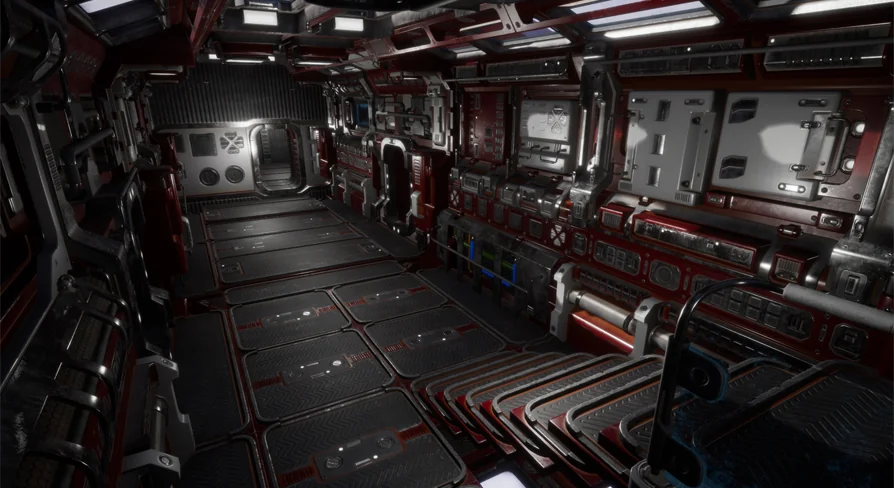
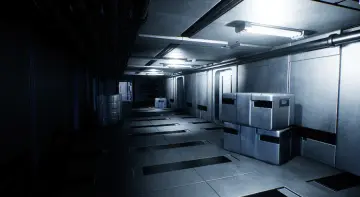
Dropping a modular set into a level editor should immediately change how a space reads to the player. With the 43 environment blocks included here, a single corridor can widen into an engineering bay, climb into an overhead walkway, or collapse into a cluttered maintenance crawl space. The collection belongs to the Modular SciFi Series' engineering collection part A, and every piece ships with unique PBR materials that respond to lighting the way real surfaces do.
An Engineering Collection Built for Variation
Part A of the engineering collection is all about quantity feeding quality. 43 distinct block types mean the visual language stays consistent across a level—wall panels share metal profiles, floor segments share the same wear patterns—but no two rooms have to look identical. Because each block carries its own unique PBR material set, ambient occlusion, roughness, and albedo behave subtly different on every surface. A corridor lit by flickering emergency strips reads differently from one washed in cold overhead floods, even if the underlying geometry is shared.
That material individuality matters most when you are building environments meant to be explored up close. Horror-tagged levels often force the player into tight spaces where repetitive textures become immediately obvious. With unique PBR materials per block type, the walls in a darkened duct can feel slick, corroded, or polished without the artist reaching for custom texture work.
Texture Range From 32x32 to 4096x4096
The texture resolution spread runs from 32x32 up to 4096x4096. That is a deliberate pipeline choice rather than a technical oversight. Small detail objects—wall bolts, pipe junctions, hidden panel seams—do not need 4K maps, and keeping those at 32x32 frees memory for hero pieces. Large floor expanses, faction signage, or hero wall panels can draw on the full 4096x4096 range to hold up under close inspection.
For teams targeting multiple platforms, that spread also simplifies budgeting. The artist can accept the higher resolutions for cinematic cutscene environments and let the engine stream lower-resolution versions for distant or background geometry. Because the materials are already authored across that range, there is no need to generate fallback textures manually.
Constructing With 43 Modular SciFi Environment Blocks
43 block types give a level designer enough vocabulary to assemble complex routing without breaking modular grid conventions. Straight walls, corners, door frames, floor tiles, ceiling caps, and structural braces can snap together predictably. The realism tag attached to the collection suggests the proportions are grounded—corridor widths, ceiling heights, and panel dimensions likely conform to expectations players already have about industrial spaces. That grounds the environment before any dressing props are added.
When a scene needs to pivot from pure engineering to tension, those same blocks can be recombined. A level tagged for horror can use the engineering pieces as the baseline reality—the clean, working station—and then let lighting, fog, and damage decals twist that baseline into something threatening. The blocks themselves do not dictate mood, which is exactly what makes them reusable across different narrative beats.
Tagging and Scene Application
The tags associated with this collection—Modular, SciFi, Environment, Level, Realistic, Environmental, Horror—map directly onto the kinds of scenes it can populate. A realistic level needs geometry that does not shout its modularity at the player. Properly aligned seams, consistent edge wear, and material continuity all contribute to that. The horror tag implies the pieces can support low-light scenarios where silhouette readability matters more than color fidelity.
Because the blocks are modular, scene assembly becomes iterative. A designer can block out a full station layout in an afternoon, test sight lines, and then swap individual segments to alter flow. If a corridor feels too long, a junction block can break it up. If a room reads too uniform, a different wall panel can introduce asymmetry. The constraint is not the toolset but the designer's willingness to recombine.
Engine Compatibility Across Versions 5.4 Through 5.8
Working compatibility spans versions 5.4 through 5.8, meaning the collection is ready to drop into current-generation projects without forcing a migration or reimport cycle. For teams already on one of those versions, the modular set slots into existing scenes alongside previously placed assets. There is no need to freeze production pending an engine update.
In use, that compatibility means the PBR material workflow likely matches the engine's native shader model. Materials can be adjusted, masked, or blended using standard material editor nodes without resorting to custom HLSL or plugin dependencies. For a level art team, that reduces the friction between asset authoring and in-engine placement.
Scaling Environments With a Huge Number of Variations
The promise of a huge number of variations is not just marketing. With 43 blocks each carrying unique materials, the combinatorial space grows quickly. Three wall types, two floor types, and a ceiling variant can produce dozens of distinct room configurations. Multiply that across a full level with lighting changes, prop placement, and narrative context, and the same modular kit can serve a research station, a derelict freighter, and an underground bunker without needing new art.
Texture resolution flexibility compounds that advantage. Environment blocks using 32x32 textures for background detail can sit comfortably in the same scene as a hero panel using a 4096x4096 map. The player sees a cohesive space; the artist sees a manageable workload.
For teams planning a multi-level game, the engineering focus of part A means these blocks define the functional spine of a location. Living quarters, command decks, or recreational zones may require their own collections, but the structural, mechanical, and service spaces that connect everything can be built from this set alone.
A Practical Fit for Level Construction
The strongest takeaway for teams evaluating this collection is straightforward: 43 modular blocks with unique PBR materials and a texture range from 32x32 to 4096x4096 cover the engineering backbone of a sci-fi level. Engine compatibility from 5.4 through 5.8 means no pipeline friction, and the realistic and horror tags confirm the pieces can hold up under both clean lighting and atmospheric tension. If the project needs engineering corridors, structural junctions, and modular bays, this set is ready to assemble them.
 Sci-Fi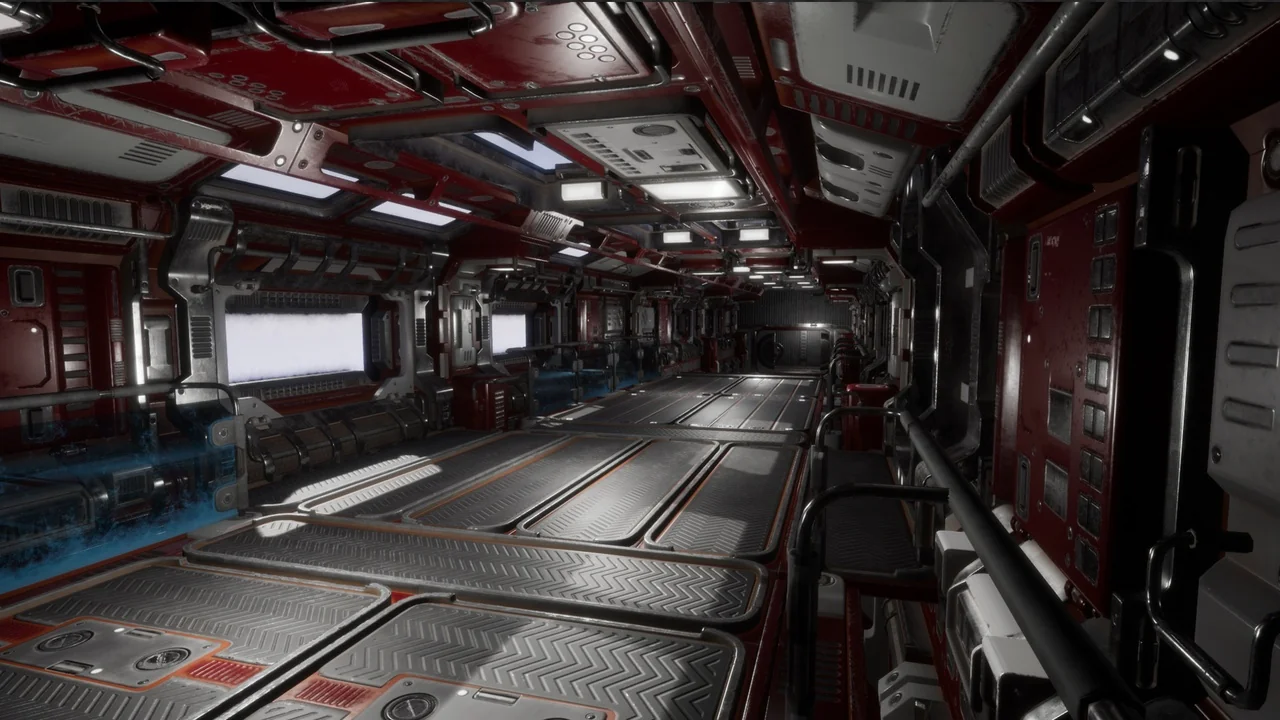
 Sci-Fi
 Sci-Fi
 Sci-Fi