"c14ff6bd758dadb1"{"id":"1000549","slug":"spider-tank","title":"Spider Tank","category":"Characters \u0026 Creatures","engine":"5.1+","assetVersion":"","engineVersion":"Engine Version: 5.1+","tag":"Characters","accent":"blue","visual":"character","summary":"Spider Tank is a fully customizable Unreal Engine robot asset with 4K textures, 4 LODs, 10 animations, SFX, AnimBPs, and single-slot master material.","platform":"Unreal Engine","publishedAt":"2026-07-15T06:05:04.002Z","updatedAt":"2026-07-15T06:05:04.002Z","sourceNotes":[],"fileContents":[],"compatibility":["Unreal Engine","Engine Version: 5.1+"],"featuredImage":{"alt":"Spider Tank","src":"/wp-content/uploads/published/2026/07/f2fc51502ac4-bb470fe7-e03b-491e-b261-e46d7177cba3-f1b3b70f9b.webp"},"hasDownloadLink":true,"downloads":1,"terms":[{"taxonomy":"category","slug":"characters-and-creatures","name":"Characters \u0026 Creatures"}],"galleryImages":[{"src":"/wp-content/uploads/published/2026/07/965fb1afab1e-fcf5705c-9e41-4de4-9358-687c95435df8-81b3787895.webp","alt":"Spider Tank"},{"src":"/wp-content/uploads/published/2026/07/413004378140-66a74d50-2ad0-4494-ade2-9730a2f356ac-8a71161e53.webp","alt":"Spider Tank"},{"src":"/wp-content/uploads/published/2026/07/ebc5ee5433b1-6f46c9e8-c6f0-4e0c-a09c-9965355dad4e-8c3f92f82c.webp","alt":"Spider Tank"},{"src":"/wp-content/uploads/published/2026/07/8962ed8a146a-2792d5f5-0301-4f2f-b107-ad9569897d6a-1f2b69aea8.webp","alt":"Spider Tank"},{"src":"/wp-content/uploads/published/2026/07/c1980fe35a1e-ffdd8f2b-e9ea-4260-9a6b-26edb1dcdb4a-2819fa30a2.webp","alt":"Spider Tank"},{"src":"/wp-content/uploads/published/2026/07/baa814a874a3-896f2aaf-d68b-43b0-9ee2-c531ef32bb2c-25205118c6.webp","alt":"Spider Tank"},{"src":"/wp-content/uploads/published/2026/07/9aa0ec78df8a-690c9bef-1ed1-495b-b85d-3293e34876c1-ce87c5fe1d.webp","alt":"Spider Tank"},{"src":"/wp-content/uploads/published/2026/07/32712faacfbd-27182685-cf4d-4026-92ee-8617e79c592b-ba06de854a.webp","alt":"Spider Tank"}],"accessPanel":{"kind":"resource","title":"Download this resource","eyebrow":"Free Download","message":"Log in or create a free account to start your download.","fileName":"Content.7z","safetyNote":"Resources are manually reviewed before listing to improve quality and reduce obvious risks.","actionLabel":"Download Free","resourceType":"Resource archive"},"contentHtml":"\u003cp\u003eCombat scenes, military engagements, and robotic warfare scenarios all demand a type of enemy unit that moves with deliberate menace and mechanical precision. The Spider Tank is built to fill that specific role in a production pipeline. Whether deployed as an AI-driven adversary or a player-driveable machine, this asset provides the visual and functional foundation needed to populate hostile rosters or expand the range of controllable vehicles in a game. With 4K textures and realistic detailing, the Spider Tank can hold up across multiple genres and perspectives.\u003c/p\u003e \u003ch2\u003eSingle-Slot Master Material and Army Color Schemes\u003c/h2\u003e \u003cp\u003eOne of the defining characteristics of the Spider Tank is its material setup. The asset uses a 1-slot only master material, which might sound restrictive at first glance, but it is actually a strategic advantage for production teams. A single-slot material means that customizing the overall look of the Spider Tank is incredibly straightforward. By swapping out one color value or texture parameter, developers can match the Spider Tank to an existing army color scheme, adapt it to specific level colour guides, or create visual variations across multiple units without needing to retexture the entire model. This approach allows for rapid iteration and visual consistency, which is crucial when populating scenes with multiple mechanical units that need to feel like part of a cohesive faction.\u003c/p\u003e \u003cp\u003eThe single-slot material also contributes to what the creator describes as a “sweet optimization level.” By simplifying the material pipeline, the Spider Tank keeps rendering costs low. This efficiency does not come at the expense of visual quality, thanks to 4K textures that ensure the model looks sharp and detailed whether the camera is positioned in a first-person shooter view or a third-person perspective. The 4K texture resolution accounts for the fact that players might get close to the unit during gameplay, and the asset needs to maintain detail without becoming a blurry mess. The Spider Tank bridges the gap between high-fidelity rendering and performance-conscious design, making it a practical choice for projects that need both visual impact and technical efficiency.\u003c/p\u003e \u003cp\u003eThe ability to match the Spider Tank to any color scheme also makes it a versatile addition to a wide range of fictional settings. A science fiction military campaign might require a specific faction color palette spread across dozens of units. With this asset, a single material adjustment ensures the tank integrates into that visual identity instantly. The same principle applies to level colour guides, where art directors define specific color scripts for environments and the entities within them. The Spider Tank can adapt to these guides without requiring bespoke textures for every variation.\u003c/p\u003e \u003ch3\u003e4 LODs for Versatile Platform Fit\u003c/h3\u003e \u003cp\u003ePerformance scalability is another critical factor when integrating a complex mechanical asset into a game engine. The Spider Tank addresses this through the inclusion of 4 LODs. Each level of detail provides a progressively simplified version of the model, which can be swapped based on the camera's distance from the asset. This means that when the Spider Tank is far away from the player's viewpoint, the engine can switch to a lower-polygon version to save rendering resources, and when the player gets close, the high-detail version kicks in to maintain visual fidelity.\u003c/p\u003e \u003cp\u003eHaving four LODs supports flexibility across development platforms. The highest LOD can be used for high-end PC releases where visual fidelity is paramount, while the lower LODs can be utilized for mobile builds, VR applications, or large-scale battle scenes where dozens or hundreds of Spider Tanks might be on screen simultaneously. This scalability ensures that the asset can be a part of a project from its inception through to final release, regardless of the target hardware.\u003c/p\u003e \u003ch2\u003e10 Animations, SFX, and Animation Blueprints\u003c/h2\u003e \u003cp\u003eThe Spider Tank is not just a static model; it comes with built-in functionality to get moving quickly. The asset includes 10 animations and accompanying sound effects (SFX), which are essential for bringing the mechanical unit to life. These animations cover the range of movements a robotic tank would need, from traversal to combat actions, providing a library of motions that can be triggered in-game.\u003c/p\u003e \u003cp\u003eFor a quick deploy, the Spider Tank also includes Animation Blueprints (AnimBPs), a State Machine, and an Anim montage. The Animation Blueprint handles the logic that determines which animation should play based on the game's state and the unit's current actions. The State Machine provides a structured way to manage transitions between different animations, ensuring that the Spider Tank moves smoothly from one action to another without visual glitches or awkward pauses. The Anim montage allows for specific animation sequences to be played over the base movement, which is particularly useful for combat actions or special movements that need to override the standard locomotion.\u003c/p\u003e \u003cp\u003eThe inclusion of these systems means that a developer can get the Spider Tank functioning in a game with minimal setup. Instead of building animation logic from scratch, they can leverage the included AnimBP and State Machine to establish a baseline of behavior, then tweak and expand as needed for their specific gameplay requirements. The sound effects tied to the animations add another layer of immersion, ensuring that each movement and action is accompanied by the appropriate audio feedback.\u003c/p\u003e \u003ch2\u003eCustom Physical Assets for Accurate Collision\u003c/h2\u003e \u003cp\u003eCollision is a foundational aspect of any game asset that interacts with the world or other objects. The Spider Tank includes custom Physical Assets, which are used to define the shape and behavior of the model's collision boundaries. Accurate collision is crucial for a mechanical unit like a tank, as it needs to interact properly with terrain, structures, and other units in a believable way. Poorly defined collision can lead to units floating above the ground, clipping through walls, or behaving unpredictably during combat.\u003c/p\u003e \u003cp\u003eThe Spider Tank provides these custom Physical Assets with and without constraints. The version with constraints likely applies physical limitations to certain parts of the model, potentially simulating mechanical joints or rigid body physics that affect how the tank moves and reacts to forces. The version without constraints offers a simpler collision model that might be more suitable for basic interactions or performance-sensitive scenarios where complex physics calculations are not necessary. Providing both options gives developers the flexibility to choose the collision setup that best matches their project's gameplay mechanics and performance budget.\u003c/p\u003e \u003cp\u003eThe inclusion of custom Physical Assets also speaks to the level of consideration given to the Spider Tank's integration into Unreal Engine. This is not just a collection of static meshes; it is a package built with an understanding of how game assets function within a real production environment. The collision setup, animation systems, and material design all work together to create an asset that is ready to be dropped into a scene and function as intended.\u003c/p\u003e \u003ch2\u003eSpider Tank in Action: Real-World Game Integration\u003c/h2\u003e \u003cp\u003eThe Spider Tank has already been deployed in real-world game projects, which is perhaps the strongest indicator of its utility as a production-ready asset. It was spotted and utilized in promotional material for a game developed by a talented group from Sri Lanka, demonstrating that the asset can hold its own in a commercial context. The fact that the Spider Tank was chosen for promotional material suggests that the developers found it visually compelling enough to represent their project to a wider audience.\u003c/p\u003e \u003cp\u003eThe asset also appears in a tower defense style game by 100 Hr Games, which is described as a stunning entry in the genre. The Spider Tank, created by the original developer, was featured in this project, highlighting its suitability for game mechanics that involve robotic enemies and defensive scenarios. A game like Artificial Extinction, which is a first-person tower defense with robots, represents exactly the kind of environment where a Spider Tank would excel. The asset's design, with its arachnid-inspired mechanical structure and military aesthetic, fits naturally into a setting where players are fending off waves of robotic threats.\u003c/p\u003e \u003cp\u003eThe tags associated with the Spider Tank—Skeleton, Vehicle, Customizable, Script, Robot, Realistic, Military, Blueprint, Character, Animationblueprint—further reinforce its identity as a fully-featured character asset rather than a simple prop. The use of \"Skeleton\" and \"Character\" tags indicates that the model is properly rigged and ready for animation. \"Vehicle\" and \"Military\" tags point to its intended thematic role. \"Customizable\" and \"Script\" highlight the functional flexibility provided by the single-slot material and included Blueprint logic. Together, these tags paint a picture of an asset that is prepared to slot into a game's character roster and perform a specific gameplay function.\u003c/p\u003e \u003ch2\u003eWorkflow Fit for Unreal Engine Projects\u003c/h2\u003e \u003cp\u003eWhen considering where the Spider Tank fits within a real production workflow, the answer is in any scene that requires a high-quality, mechanical combat unit. For a first-person shooter, the Spider Tank can serve as a formidable enemy that players encounter in a level. Its 4K textures and detailed model ensure that it looks impressive when players get close to it during combat. The included animations and sound effects provide immediate feedback for its movements and attacks, enhancing the immersion of the encounter.\u003c/p\u003e \u003cp\u003eIn a third-person game, the Spider Tank could function as a player-driveable vehicle or a boss-level enemy. The Animation Blueprint and State Machine provide a solid foundation for controlling the unit's movements, whether it is being directed by AI or player input. The ability to customize the material means that the tank can be visually adapted to match the player's faction if it is driveable, or to distinguish it as a unique enemy variant if it is an AI-controlled threat.\u003c/p\u003e \u003cp\u003eThe Spider Tank is also a natural fit for tower defense and strategy games, as evidenced by its real-world deployment. In these genres, the asset can serve as a specialized enemy unit that marches toward the player's defenses. The four LODs become particularly valuable in this context, as strategy games often involve viewing the battlefield from a zoomed-out perspective where multiple units are visible at once. The ability to switch to lower-detail models ensures that the game can render a large number of Spider Tanks without overwhelming the system's resources.\u003c/p\u003e \u003cp\u003eThe compatibility of the Spider Tank spans Unreal Engine versions from 4.19 through 4.27 and extends into the 5.0 through 5.8 range. This broad compatibility means that the asset can be used in both previous-generation and current-generation Unreal Engine projects. Teams that are still maintaining or developing titles in Unreal Engine 4 can integrate the Spider Tank just as easily as those working on cutting-edge projects in Unreal Engine 5. This cross-version support protects the investment in the asset and ensures that it remains a viable part of a developer's toolkit as they transition between engine versions.\u003c/p\u003e \u003cp\u003eFor developers looking to add a mechanical threat to their game, the Spider Tank offers a package that is ready to be deployed. From its 4K textures to its animation logic, the asset is built to function within the Unreal Engine ecosystem. The creator has clearly designed the Spider Tank with an understanding of what a game developer needs: an asset that looks good, performs well, and is easy to integrate into a variety of game scenarios. The fact that it has already been used in released and upcoming games only solidifies its position as a practical choice for game development.\u003c/p\u003e\n\n\u003ch2\u003eMore From The Same Workflow\u003c/h2\u003e\n\u003cul\u003e\n\u003cli\u003e\u003ca href=\"https://3dcghub.com/spideeye/\" title=\"SpideEye\"\u003eSpideEye\u003c/a\u003e\u003c/li\u003e\n\u003cli\u003e\u003ca href=\"https://3dcghub.com/stellar-girl-celeste/\" title=\"Stellar Girl Celeste\"\u003eStellar Girl Celeste\u003c/a\u003e\u003c/li\u003e\n\u003cli\u003e\u003ca href=\"https://3dcghub.com/bear-female/\" title=\"Bear - Female\"\u003eBear - Female\u003c/a\u003e\u003c/li\u003e\n\u003cli\u003e\u003ca href=\"https://3dcghub.com/vulture/\" title=\"Vulture\"\u003eVulture\u003c/a\u003e\u003c/li\u003e\n\u003cli\u003e\u003ca href=\"https://3dcghub.com/zombie-hazmat/\" title=\"Zombie - Hazmat\"\u003eZombie - Hazmat\u003c/a\u003e\u003c/li\u003e\n\u003c/ul\u003e","contentTextLength":12069,"navigation":{"current":1314,"total":3719,"previous":{"id":"1000550","slug":"survival-npc-maria-mimi-estrada","title":"Survival NPC - Maria \"Mimi\" Estrada","category":"Characters \u0026 Creatures","platform":"Unreal Engine","updatedAt":"2026-07-15T06:11:10.481Z"},"next":{"id":"1000548","slug":"shanty-town-slums","title":"Shanty Town Slums","category":"Abandoned","platform":"Unreal Engine","updatedAt":"2026-07-15T06:00:38.648Z"}},"relatedResources":[{"id":"3571","slug":"spideeye","title":"SpideEye","category":"Characters \u0026 Creatures","engine":"4.26+,5.0+","assetVersion":"Engine version: 4.26+,5.0+","engineVersion":"4.18","tag":"Characters","accent":"blue","visual":"character","summary":"Enhance your game with SpideEye, a low-poly arachnid featuring 3 color variations and PBR textures. Perfect for horror and fantasy projects. Learn more!","platform":"Unreal Engine","publishedAt":"2026-02-09T08:35:52.000Z","updatedAt":"2026-04-19T15:57:36.000Z","sourceNotes":[],"fileContents":[],"compatibility":["Unreal Engine","Engine version: 4.26+,5.0+"],"featuredImage":{"alt":"SpideEye","src":"https://3dcghub.com/wp-content/uploads/2026/02/67c5cc5d-594b-483d-b81a-14000bc9f0f7.webp"},"hasDownloadLink":true,"downloads":0},{"id":"1001364","slug":"spiders-pack","title":"Spiders pack","category":"Animals","engine":"4.23+,5.0+","assetVersion":"","engineVersion":"Engine Version: 4.23+,5.0+","tag":"Animals","accent":"blue","visual":"mech","summary":"Explore Spiders pack, featuring three unique meshes, six materials, and thirteen animations for cave, forest, and swamp fantasy creature encounters.","platform":"Unreal Engine","publishedAt":"2026-10-04T10:33:17.972Z","updatedAt":"2026-10-04T10:33:17.972Z","sourceNotes":[],"fileContents":[],"compatibility":["Unreal Engine","Engine Version: 4.23+,5.0+"],"featuredImage":{"alt":"Spiders pack","src":"/wp-content/uploads/published/2026/10/7fa8ce563f7a-bbb98fb7-f42c-41e4-b9bd-2282c79826c7-486fdee7a2.webp"},"hasDownloadLink":true,"downloads":1},{"id":"1001015","slug":"shooterstarter-fps-arm-a","title":"ShooterStarter FPS Arm A","category":"Characters \u0026 Creatures","engine":"5.1+","assetVersion":"","engineVersion":"Engine Version: 5.1+","tag":"Characters","accent":"blue","visual":"character","summary":"A first-person arm and rifle set with 4K textures, LOD-based mobile optimization, and compatibility with Tactical Shooter Framework for FPS and cinematic projec","platform":"Unreal Engine","publishedAt":"2026-08-22T13:57:23.604Z","updatedAt":"2026-08-22T13:57:23.604Z","sourceNotes":[],"fileContents":[],"compatibility":["Unreal Engine","Engine Version: 5.1+"],"featuredImage":{"alt":"ShooterStarter FPS Arm A","src":"/wp-content/uploads/published/2026/08/7319995e5f9f-93732300-fb18-49f2-836a-f9d01c9b4412-69c0d5de01.webp"},"hasDownloadLink":true,"downloads":2}]}
Characters
Spider Tank
Spider Tank is a fully customizable Unreal Engine robot asset with 4K textures, 4 LODs, 10 animations, SFX, AnimBPs, and single-slot master material.
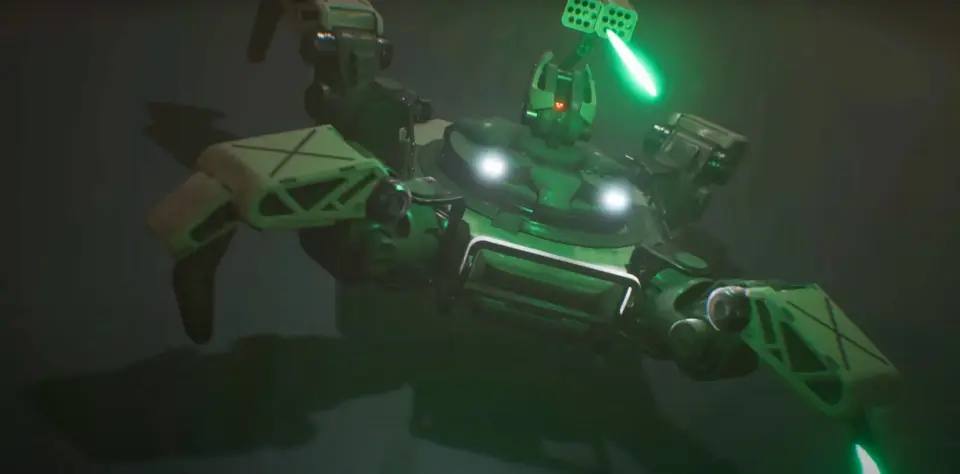
Combat scenes, military engagements, and robotic warfare scenarios all demand a type of enemy unit that moves with deliberate menace and mechanical precision. The Spider Tank is built to fill that specific role in a production pipeline. Whether deployed as an AI-driven adversary or a player-driveable machine, this asset provides the visual and functional foundation needed to populate hostile rosters or expand the range of controllable vehicles in a game. With 4K textures and realistic detailing, the Spider Tank can hold up across multiple genres and perspectives.
Single-Slot Master Material and Army Color Schemes
One of the defining characteristics of the Spider Tank is its material setup. The asset uses a 1-slot only master material, which might sound restrictive at first glance, but it is actually a strategic advantage for production teams. A single-slot material means that customizing the overall look of the Spider Tank is incredibly straightforward. By swapping out one color value or texture parameter, developers can match the Spider Tank to an existing army color scheme, adapt it to specific level colour guides, or create visual variations across multiple units without needing to retexture the entire model. This approach allows for rapid iteration and visual consistency, which is crucial when populating scenes with multiple mechanical units that need to feel like part of a cohesive faction.
The single-slot material also contributes to what the creator describes as a “sweet optimization level.” By simplifying the material pipeline, the Spider Tank keeps rendering costs low. This efficiency does not come at the expense of visual quality, thanks to 4K textures that ensure the model looks sharp and detailed whether the camera is positioned in a first-person shooter view or a third-person perspective. The 4K texture resolution accounts for the fact that players might get close to the unit during gameplay, and the asset needs to maintain detail without becoming a blurry mess. The Spider Tank bridges the gap between high-fidelity rendering and performance-conscious design, making it a practical choice for projects that need both visual impact and technical efficiency.
The ability to match the Spider Tank to any color scheme also makes it a versatile addition to a wide range of fictional settings. A science fiction military campaign might require a specific faction color palette spread across dozens of units. With this asset, a single material adjustment ensures the tank integrates into that visual identity instantly. The same principle applies to level colour guides, where art directors define specific color scripts for environments and the entities within them. The Spider Tank can adapt to these guides without requiring bespoke textures for every variation.
4 LODs for Versatile Platform Fit
Performance scalability is another critical factor when integrating a complex mechanical asset into a game engine. The Spider Tank addresses this through the inclusion of 4 LODs. Each level of detail provides a progressively simplified version of the model, which can be swapped based on the camera's distance from the asset. This means that when the Spider Tank is far away from the player's viewpoint, the engine can switch to a lower-polygon version to save rendering resources, and when the player gets close, the high-detail version kicks in to maintain visual fidelity.
Having four LODs supports flexibility across development platforms. The highest LOD can be used for high-end PC releases where visual fidelity is paramount, while the lower LODs can be utilized for mobile builds, VR applications, or large-scale battle scenes where dozens or hundreds of Spider Tanks might be on screen simultaneously. This scalability ensures that the asset can be a part of a project from its inception through to final release, regardless of the target hardware.
10 Animations, SFX, and Animation Blueprints
The Spider Tank is not just a static model; it comes with built-in functionality to get moving quickly. The asset includes 10 animations and accompanying sound effects (SFX), which are essential for bringing the mechanical unit to life. These animations cover the range of movements a robotic tank would need, from traversal to combat actions, providing a library of motions that can be triggered in-game.
For a quick deploy, the Spider Tank also includes Animation Blueprints (AnimBPs), a State Machine, and an Anim montage. The Animation Blueprint handles the logic that determines which animation should play based on the game's state and the unit's current actions. The State Machine provides a structured way to manage transitions between different animations, ensuring that the Spider Tank moves smoothly from one action to another without visual glitches or awkward pauses. The Anim montage allows for specific animation sequences to be played over the base movement, which is particularly useful for combat actions or special movements that need to override the standard locomotion.
The inclusion of these systems means that a developer can get the Spider Tank functioning in a game with minimal setup. Instead of building animation logic from scratch, they can leverage the included AnimBP and State Machine to establish a baseline of behavior, then tweak and expand as needed for their specific gameplay requirements. The sound effects tied to the animations add another layer of immersion, ensuring that each movement and action is accompanied by the appropriate audio feedback.
Custom Physical Assets for Accurate Collision
Collision is a foundational aspect of any game asset that interacts with the world or other objects. The Spider Tank includes custom Physical Assets, which are used to define the shape and behavior of the model's collision boundaries. Accurate collision is crucial for a mechanical unit like a tank, as it needs to interact properly with terrain, structures, and other units in a believable way. Poorly defined collision can lead to units floating above the ground, clipping through walls, or behaving unpredictably during combat.
The Spider Tank provides these custom Physical Assets with and without constraints. The version with constraints likely applies physical limitations to certain parts of the model, potentially simulating mechanical joints or rigid body physics that affect how the tank moves and reacts to forces. The version without constraints offers a simpler collision model that might be more suitable for basic interactions or performance-sensitive scenarios where complex physics calculations are not necessary. Providing both options gives developers the flexibility to choose the collision setup that best matches their project's gameplay mechanics and performance budget.
The inclusion of custom Physical Assets also speaks to the level of consideration given to the Spider Tank's integration into Unreal Engine. This is not just a collection of static meshes; it is a package built with an understanding of how game assets function within a real production environment. The collision setup, animation systems, and material design all work together to create an asset that is ready to be dropped into a scene and function as intended.
Spider Tank in Action: Real-World Game Integration
The Spider Tank has already been deployed in real-world game projects, which is perhaps the strongest indicator of its utility as a production-ready asset. It was spotted and utilized in promotional material for a game developed by a talented group from Sri Lanka, demonstrating that the asset can hold its own in a commercial context. The fact that the Spider Tank was chosen for promotional material suggests that the developers found it visually compelling enough to represent their project to a wider audience.
The asset also appears in a tower defense style game by 100 Hr Games, which is described as a stunning entry in the genre. The Spider Tank, created by the original developer, was featured in this project, highlighting its suitability for game mechanics that involve robotic enemies and defensive scenarios. A game like Artificial Extinction, which is a first-person tower defense with robots, represents exactly the kind of environment where a Spider Tank would excel. The asset's design, with its arachnid-inspired mechanical structure and military aesthetic, fits naturally into a setting where players are fending off waves of robotic threats.
The tags associated with the Spider Tank—Skeleton, Vehicle, Customizable, Script, Robot, Realistic, Military, Blueprint, Character, Animationblueprint—further reinforce its identity as a fully-featured character asset rather than a simple prop. The use of "Skeleton" and "Character" tags indicates that the model is properly rigged and ready for animation. "Vehicle" and "Military" tags point to its intended thematic role. "Customizable" and "Script" highlight the functional flexibility provided by the single-slot material and included Blueprint logic. Together, these tags paint a picture of an asset that is prepared to slot into a game's character roster and perform a specific gameplay function.
Workflow Fit for Unreal Engine Projects
When considering where the Spider Tank fits within a real production workflow, the answer is in any scene that requires a high-quality, mechanical combat unit. For a first-person shooter, the Spider Tank can serve as a formidable enemy that players encounter in a level. Its 4K textures and detailed model ensure that it looks impressive when players get close to it during combat. The included animations and sound effects provide immediate feedback for its movements and attacks, enhancing the immersion of the encounter.
In a third-person game, the Spider Tank could function as a player-driveable vehicle or a boss-level enemy. The Animation Blueprint and State Machine provide a solid foundation for controlling the unit's movements, whether it is being directed by AI or player input. The ability to customize the material means that the tank can be visually adapted to match the player's faction if it is driveable, or to distinguish it as a unique enemy variant if it is an AI-controlled threat.
The Spider Tank is also a natural fit for tower defense and strategy games, as evidenced by its real-world deployment. In these genres, the asset can serve as a specialized enemy unit that marches toward the player's defenses. The four LODs become particularly valuable in this context, as strategy games often involve viewing the battlefield from a zoomed-out perspective where multiple units are visible at once. The ability to switch to lower-detail models ensures that the game can render a large number of Spider Tanks without overwhelming the system's resources.
The compatibility of the Spider Tank spans Unreal Engine versions from 4.19 through 4.27 and extends into the 5.0 through 5.8 range. This broad compatibility means that the asset can be used in both previous-generation and current-generation Unreal Engine projects. Teams that are still maintaining or developing titles in Unreal Engine 4 can integrate the Spider Tank just as easily as those working on cutting-edge projects in Unreal Engine 5. This cross-version support protects the investment in the asset and ensures that it remains a viable part of a developer's toolkit as they transition between engine versions.
For developers looking to add a mechanical threat to their game, the Spider Tank offers a package that is ready to be deployed. From its 4K textures to its animation logic, the asset is built to function within the Unreal Engine ecosystem. The creator has clearly designed the Spider Tank with an understanding of what a game developer needs: an asset that looks good, performs well, and is easy to integrate into a variety of game scenarios. The fact that it has already been used in released and upcoming games only solidifies its position as a practical choice for game development.
 Characters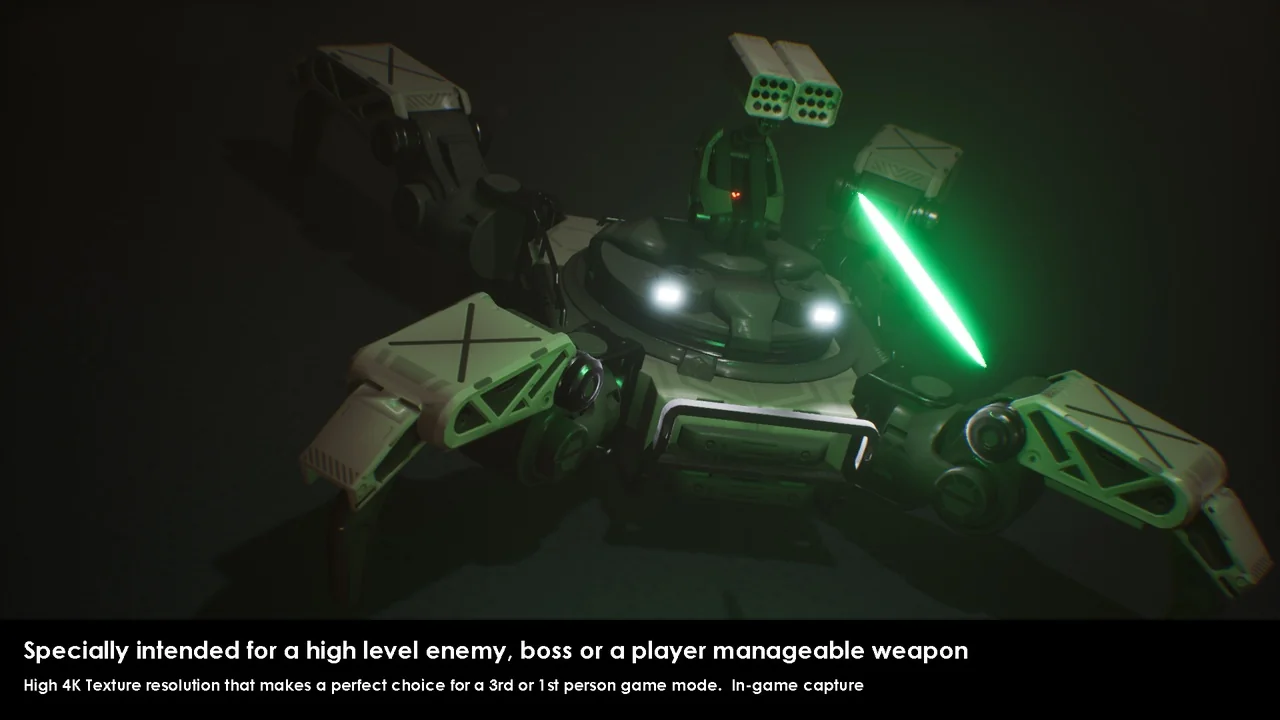
 Characters
 Animals
 Characters