"7b46a695175d8694"{"id":"1000034","slug":"zombie-hazmat","title":"Zombie - Hazmat","category":"Characters \u0026 Creatures","engine":"5.1+","assetVersion":"","engineVersion":"5.1+","tag":"Characters","accent":"blue","visual":"character","summary":"Zombie - Hazmat is a fully rigged, game-ready horror character with clean topology and PBR textures for outbreak, sci-fi, and survival scenes.","platform":"Unreal Engine","publishedAt":"2026-05-21T09:43:51.218Z","updatedAt":"2026-05-21T09:43:51.218Z","sourceNotes":[],"fileContents":[],"compatibility":["Unreal Engine","Engine version: 5.1+"],"featuredImage":{"alt":"Zombie - Hazmat","src":"/wp-content/uploads/published/2026/05/12b53f62fa6d-fa0f5c6b-4976-440e-a9bb-dc6be68bbe60-a6d39a96ff.webp"},"hasDownloadLink":true,"downloads":1,"terms":[{"taxonomy":"category","slug":"characters-and-creatures","name":"Characters \u0026 Creatures"}],"galleryImages":[{"src":"/wp-content/uploads/published/2026/05/472819bd7994-ac8a6b67-45c0-44ac-a830-a8d0781d732f-b3da8e87d3.webp","alt":"Zombie - Hazmat"},{"src":"/wp-content/uploads/published/2026/05/ae2bb03e4ada-0fb27dcc-8609-4cee-a812-6e462519a60e-946cc2d636.webp","alt":"Zombie - Hazmat"},{"src":"/wp-content/uploads/published/2026/05/2c23b9c323b6-b73990fa-bc2e-4674-b754-f170d302192f-57b5654d6c.webp","alt":"Zombie - Hazmat"},{"src":"/wp-content/uploads/published/2026/05/6d6ece472782-28a29cb7-bf74-4868-b264-50b2d8d0b752-83290d68f2.webp","alt":"Zombie - Hazmat"}],"accessPanel":{"kind":"resource","title":"Access this resource","eyebrow":"Free Download","message":"Log in or create a free account to start your download.","fileName":"Content.7z","safetyNote":"Resources are manually reviewed before listing to improve quality and reduce obvious risks.","actionLabel":"Download Free","resourceType":"Resource archive"},"contentHtml":"\u003cp\u003ePost-apocalyptic streets, quarantine zones, outbreak facilities, and sci-fi horror interiors all need enemy designs that communicate danger before a character even moves. \u003cstrong\u003eZombie - Hazmat\u003c/strong\u003e Is aimed squarely at that kind of scene. It presents an infected former defender against contagion, now transformed into a walking biohazard, giving horror projects a threat that feels specific rather than interchangeable.\u003c/p\u003e \u003cp\u003eThe character leans into a strong visual contrast: protective gear that once belonged to containment and emergency response is now part of the horror. That shift gives the model a clear identity in outbreak-driven settings. Instead of reading as a generic undead enemy, it carries the aftermath of failed protection with it, which makes it useful in scenarios where contamination, exposure, or collapse of frontline defense is part of the atmosphere.\u003c/p\u003e \u003ch2\u003eWhere Zombie - Hazmat fits best\u003c/h2\u003e\n\u003cp\u003eThis character is especially well suited to projects focused on survival horror. In that context, the hazmat suit immediately supports environments shaped by infection control, restricted areas, and biological threat. A player entering an abandoned lab, a contaminated ward, or a sealed industrial zone would read this enemy differently from a standard zombie. The visual language already suggests a world where the outbreak demanded specialized protection and where even that protection was not enough.\u003c/p\u003e \u003cp\u003eSci-fi horror projects also benefit from that same angle. The hazmat element pushes the character beyond simple decay and into contamination-driven storytelling. It can sit naturally inside sterile corridors, emergency lockdown sequences, and response scenes where technology and biohazard risk exist side by side. That leaves a monster that feels linked to a specific crisis rather than dropped in from a broader undead category.\u003c/p\u003e \u003cp\u003eOutbreak scenarios are another clear match. The character works as a formidable threat because it carries the signs of both infection and failed containment. That combination can reinforce the sense that the situation has escalated past control. Whether the scene needs a roaming enemy, a memorable infected responder, or a visual cue that a location has been overrun, the model supports that role directly.\u003c/p\u003e \u003ch2\u003eThe Hazmat Zombie as a walking biohazard\u003c/h2\u003e\n\u003cp\u003eThe strongest idea behind the character is its backstory in visual form: once a frontline defender against the contagion, now fully consumed by it. That makes the model useful even before animation or gameplay enters the picture. The concept itself tells a story. A contaminated suit and decaying flesh do not just define surface appearance; they suggest exposure, failure of protection, and the horror of a responder becoming the threat.\u003c/p\u003e \u003cp\u003eThat identity gives the asset more weight in scenes that depend on environmental storytelling. A hazmat zombie implies a larger event around it. It hints at panic, emergency measures, and containment efforts that broke down. For creators building levels or sequences where every enemy should reinforce the world, that specificity matters. The character does not need extra explanation to feel at home in infected zones, sealed facilities, or ruined response lines.\u003c/p\u003e \u003cp\u003eThe tags tied to the character—hazmat, zombie, enemy, undead, monster, horror, and character—also point to a practical range of roles. It can function as a direct combatant, a set-piece threat, or a recurring infected type in projects where the enemy roster needs a contaminated specialist rather than another anonymous undead figure.\u003c/p\u003e \u003ch2\u003eFully rigged and ready for standard humanoid animations\u003c/h2\u003e\n\u003cp\u003eOn the production side, the model is fully rigged and described as animation-ready. That matters for teams that want to bring the character into gameplay or cinematic scenes without first treating it as a static figure. A full rig gives the model immediate value in motion-based work, where enemy behavior, chase sequences, attack cycles, or dramatic reveals depend on a character being prepared for animation use.\u003c/p\u003e \u003cp\u003eCompatibility with standard humanoid animations adds another practical advantage. For many workflows, that means the character can fit more easily into animation setups that already rely on common humanoid movement. If a project has an existing pool of humanoid actions, this kind of compatibility helps the model slot into that structure more smoothly. The emphasis here is not on novelty for its own sake, but on making the character easier to bring into an active production pipeline.\u003c/p\u003e \u003cp\u003eThat seamless integration is reinforced by the broader description of the model as optimized for use in games. The asset is not framed as a display-only sculpt or a purely cinematic statue. It is positioned for actual implementation, with rigging and optimization working together to support in-engine use.\u003c/p\u003e \u003ch2\u003eClean topology and real-time performance\u003c/h2\u003e\n\u003cp\u003e\u003cstrong\u003eZombie - Hazmat\u003c/strong\u003e Is presented as game-ready, with clean topology and optimization for real-time performance. Those details are central to how the character is meant to be used. In use, the focus is on bringing a detailed horror enemy into interactive scenes where performance matters. That is relevant for gameplay encounters, repeated enemy appearances, or any situation where a character needs to hold up inside a running project rather than only in an offline render.\u003c/p\u003e \u003cp\u003eClean topology also supports the model's role as a rigged character. A horror enemy with visible clothing damage, body decay, and contaminated gear still needs a structure that behaves well in motion. By pairing the visual idea with a game-ready build, the character aims to serve both atmosphere and implementation.\u003c/p\u003e \u003cp\u003eThis is especially useful in projects where enemy models need to do more than look threatening in a still frame. A hazard-themed undead character often appears in tense gameplay spaces, close-up confrontations, or repeat encounters. A build optimized for real-time use makes that kind of placement more practical, particularly when the character is not just a background prop but part of the active threat inside a scene.\u003c/p\u003e \u003ch2\u003ePBR textures that sell the contaminated suit and decaying flesh\u003c/h2\u003e\n\u003cp\u003eThe material work is another major part of the package. The model includes high-quality PBR textures, with detailed materials specifically called out for bringing the contaminated suit and decaying flesh to life. That pairing is important because the character's impact depends on both halves of its design. The suit establishes its former role in biohazard response, while the flesh communicates the extent of infection and physical breakdown.\u003c/p\u003e \u003cp\u003eIn horror projects, surface detail does a lot of storytelling. A contaminated suit carries the marks of exposure and misuse; decaying flesh pushes the enemy fully into monster territory. When both are handled through detailed PBR materials, the character can read clearly in close scenes and maintain a stronger sense of physical presence. That is especially useful for cinematic sequences and VR experiences, both of which are named as fitting uses for the model.\u003c/p\u003e \u003cp\u003eVR in particular benefits from enemy designs that are instantly legible. A hazard suit wrapped around an undead body gives players a fast visual read of danger and theme. Cinematic sequences benefit in a different way: the contrast between protection and decay can hold up in more deliberate framing, where the model's identity needs to come across through detail and silhouette.\u003c/p\u003e \u003ch2\u003eBest fit for survival horror, VR, and cinematic sequences\u003c/h2\u003e\n\u003cp\u003eThe clearest audience for \u003cstrong\u003eZombie - Hazmat\u003c/strong\u003e Is creators working on survival horror games, VR experiences, and cinematic sequences that need a specific kind of infected enemy. It suits projects where contamination is not just background lore but a visible part of the threat. The fully rigged setup supports animation use, the game-ready build supports real-time scenes, and the PBR textures reinforce the contaminated responder concept that defines the character.\u003c/p\u003e \u003cp\u003eTeams and solo creators who need an undead monster with a stronger outbreak identity than a standard zombie will get the most from it. The model is at its best when the setting involves quarantine failure, biohazard tension, or sci-fi horror environments where a former frontline defender turned monster can carry both the scene's fear and its history.\u003c/p\u003e\n\n\u003ch2\u003eRelated Resources Worth Checking\u003c/h2\u003e\n\u003cul\u003e\n\u003cli\u003e\u003ca href=\"https://3dcghub.com/urbanzombie3/\" title=\"UrbanZombie3\"\u003eUrbanZombie3\u003c/a\u003e\u003c/li\u003e\n\u003cli\u003e\u003ca href=\"https://3dcghub.com/superzombie8/\" title=\"SuperZombie8\"\u003eSuperZombie8\u003c/a\u003e\u003c/li\u003e\n\u003cli\u003e\u003ca href=\"https://3dcghub.com/parasite-zombie-04-game-assets-extra/\" title=\"Parasite Zombie 04 - Game Assets + Extra\"\u003eParasite Zombie 04 - Game Assets + Extra\u003c/a\u003e\u003c/li\u003e\n\u003cli\u003e\u003ca href=\"https://3dcghub.com/big-zombie/\" title=\"Big Zombie\"\u003eBig Zombie\u003c/a\u003e\u003c/li\u003e\n\u003cli\u003e\u003ca href=\"https://3dcghub.com/urban-zombie-pack/\" title=\"Urban Zombie Pack\"\u003eUrban Zombie Pack\u003c/a\u003e\u003c/li\u003e\n\u003c/ul\u003e","contentTextLength":8387,"navigation":{"current":1590,"total":3481,"previous":{"id":"1000035","slug":"car-vfx","title":"Car VFX","category":"Variety","platform":"Unreal Engine","updatedAt":"2026-05-21T10:13:16.908Z"},"next":{"id":"1000033","slug":"working-night-vision-goggles","title":"Working Night Vision Goggles","category":"Gameplay Features","platform":"Unreal Engine","updatedAt":"2026-05-21T09:41:07.954Z"}},"relatedResources":[{"id":"3186","slug":"parasite-zombie-04-game-assets-extra","title":"Parasite Zombie 04 - Game Assets + Extra","category":"Characters \u0026 Creatures","engine":"5.0+","assetVersion":"Engine version: 5.0+","engineVersion":"4.27","tag":"Characters","accent":"blue","visual":"character","summary":"Enhance your horror game with the Parasite Zombie 04 character asset. Featuring modular materials and cross-genre compatibility for modern and medieval settings","platform":"Unreal Engine","publishedAt":"2026-02-08T16:28:56.000Z","updatedAt":"2026-04-19T15:57:41.000Z","sourceNotes":[],"fileContents":[],"compatibility":["Unreal Engine","Engine version: 5.0+"],"featuredImage":{"alt":"Parasite Zombie 04 - Game Assets + Extra","src":"https://3dcghub.com/wp-content/uploads/2026/02/e26e84ab-57b5-4795-a55f-cbc490e1ddd1.webp"},"hasDownloadLink":true,"downloads":1},{"id":"3632","slug":"superzombie8","title":"SuperZombie8","category":"Characters \u0026 Creatures","engine":"5.0+","assetVersion":"Engine version: 5.0+","engineVersion":"4.19","tag":"Characters","accent":"blue","visual":"character","summary":"Enhance your horror game with this detailed zombie character. Featuring 33 animations, 4K textures, and multiple skins for maximum variety in your project.","platform":"Unreal Engine","publishedAt":"2026-02-09T08:49:36.000Z","updatedAt":"2026-04-19T15:57:36.000Z","sourceNotes":[],"fileContents":[],"compatibility":["Unreal Engine","Engine version: 5.0+"],"featuredImage":{"alt":"SuperZombie8","src":"https://3dcghub.com/wp-content/uploads/2026/02/ec429f7f-aba2-4d8a-85a5-13620ef9827d.webp"},"hasDownloadLink":true,"downloads":0},{"id":"3773","slug":"urbanzombie3","title":"UrbanZombie3","category":"Characters \u0026 Creatures","engine":"5.0+","assetVersion":"Engine version: 5.0+","engineVersion":"4.18","tag":"Characters","accent":"blue","visual":"character","summary":"Enhance your horror game with UrbanZombie3. This high-quality, animated zombie character features 4K textures, 22 animations, and a detailed rig for Unreal Engi","platform":"Unreal Engine","publishedAt":"2026-02-09T09:30:54.000Z","updatedAt":"2026-04-19T15:57:34.000Z","sourceNotes":[],"fileContents":[],"compatibility":["Unreal Engine","Engine version: 5.0+"],"featuredImage":{"alt":"UrbanZombie3","src":"https://3dcghub.com/wp-content/uploads/2026/02/9501beeb-27b9-41b6-aa32-602890ee9eb1.webp"},"hasDownloadLink":true,"downloads":0}]}
Characters
Zombie - Hazmat
Zombie - Hazmat is a fully rigged, game-ready horror character with clean topology and PBR textures for outbreak, sci-fi, and survival scenes.
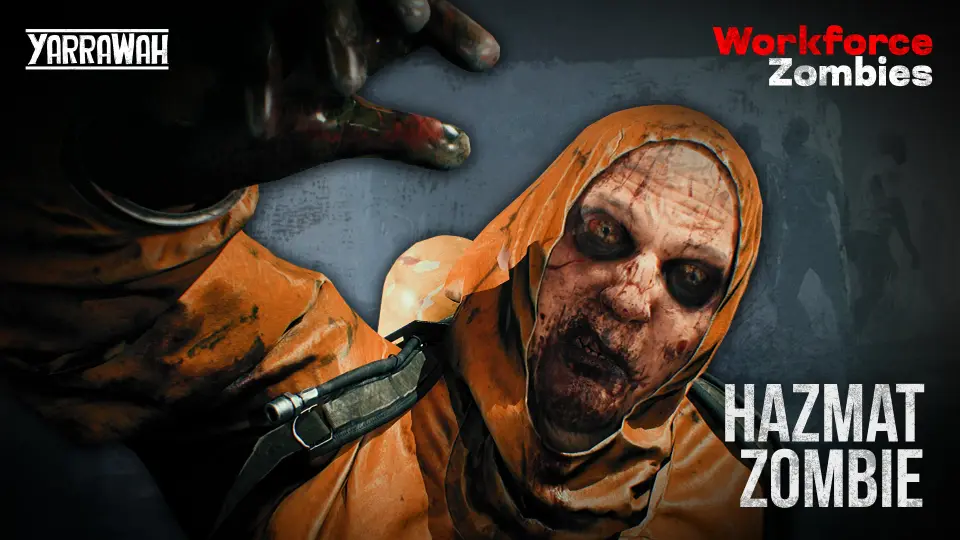
Post-apocalyptic streets, quarantine zones, outbreak facilities, and sci-fi horror interiors all need enemy designs that communicate danger before a character even moves. Zombie - Hazmat Is aimed squarely at that kind of scene. It presents an infected former defender against contagion, now transformed into a walking biohazard, giving horror projects a threat that feels specific rather than interchangeable.
The character leans into a strong visual contrast: protective gear that once belonged to containment and emergency response is now part of the horror. That shift gives the model a clear identity in outbreak-driven settings. Instead of reading as a generic undead enemy, it carries the aftermath of failed protection with it, which makes it useful in scenarios where contamination, exposure, or collapse of frontline defense is part of the atmosphere.
Where Zombie - Hazmat fits best
This character is especially well suited to projects focused on survival horror. In that context, the hazmat suit immediately supports environments shaped by infection control, restricted areas, and biological threat. A player entering an abandoned lab, a contaminated ward, or a sealed industrial zone would read this enemy differently from a standard zombie. The visual language already suggests a world where the outbreak demanded specialized protection and where even that protection was not enough.
Sci-fi horror projects also benefit from that same angle. The hazmat element pushes the character beyond simple decay and into contamination-driven storytelling. It can sit naturally inside sterile corridors, emergency lockdown sequences, and response scenes where technology and biohazard risk exist side by side. That leaves a monster that feels linked to a specific crisis rather than dropped in from a broader undead category.
Outbreak scenarios are another clear match. The character works as a formidable threat because it carries the signs of both infection and failed containment. That combination can reinforce the sense that the situation has escalated past control. Whether the scene needs a roaming enemy, a memorable infected responder, or a visual cue that a location has been overrun, the model supports that role directly.
The Hazmat Zombie as a walking biohazard
The strongest idea behind the character is its backstory in visual form: once a frontline defender against the contagion, now fully consumed by it. That makes the model useful even before animation or gameplay enters the picture. The concept itself tells a story. A contaminated suit and decaying flesh do not just define surface appearance; they suggest exposure, failure of protection, and the horror of a responder becoming the threat.
That identity gives the asset more weight in scenes that depend on environmental storytelling. A hazmat zombie implies a larger event around it. It hints at panic, emergency measures, and containment efforts that broke down. For creators building levels or sequences where every enemy should reinforce the world, that specificity matters. The character does not need extra explanation to feel at home in infected zones, sealed facilities, or ruined response lines.
The tags tied to the character—hazmat, zombie, enemy, undead, monster, horror, and character—also point to a practical range of roles. It can function as a direct combatant, a set-piece threat, or a recurring infected type in projects where the enemy roster needs a contaminated specialist rather than another anonymous undead figure.
Fully rigged and ready for standard humanoid animations
On the production side, the model is fully rigged and described as animation-ready. That matters for teams that want to bring the character into gameplay or cinematic scenes without first treating it as a static figure. A full rig gives the model immediate value in motion-based work, where enemy behavior, chase sequences, attack cycles, or dramatic reveals depend on a character being prepared for animation use.
Compatibility with standard humanoid animations adds another practical advantage. For many workflows, that means the character can fit more easily into animation setups that already rely on common humanoid movement. If a project has an existing pool of humanoid actions, this kind of compatibility helps the model slot into that structure more smoothly. The emphasis here is not on novelty for its own sake, but on making the character easier to bring into an active production pipeline.
That seamless integration is reinforced by the broader description of the model as optimized for use in games. The asset is not framed as a display-only sculpt or a purely cinematic statue. It is positioned for actual implementation, with rigging and optimization working together to support in-engine use.
Clean topology and real-time performance
Zombie - Hazmat Is presented as game-ready, with clean topology and optimization for real-time performance. Those details are central to how the character is meant to be used. In use, the focus is on bringing a detailed horror enemy into interactive scenes where performance matters. That is relevant for gameplay encounters, repeated enemy appearances, or any situation where a character needs to hold up inside a running project rather than only in an offline render.
Clean topology also supports the model's role as a rigged character. A horror enemy with visible clothing damage, body decay, and contaminated gear still needs a structure that behaves well in motion. By pairing the visual idea with a game-ready build, the character aims to serve both atmosphere and implementation.
This is especially useful in projects where enemy models need to do more than look threatening in a still frame. A hazard-themed undead character often appears in tense gameplay spaces, close-up confrontations, or repeat encounters. A build optimized for real-time use makes that kind of placement more practical, particularly when the character is not just a background prop but part of the active threat inside a scene.
PBR textures that sell the contaminated suit and decaying flesh
The material work is another major part of the package. The model includes high-quality PBR textures, with detailed materials specifically called out for bringing the contaminated suit and decaying flesh to life. That pairing is important because the character's impact depends on both halves of its design. The suit establishes its former role in biohazard response, while the flesh communicates the extent of infection and physical breakdown.
In horror projects, surface detail does a lot of storytelling. A contaminated suit carries the marks of exposure and misuse; decaying flesh pushes the enemy fully into monster territory. When both are handled through detailed PBR materials, the character can read clearly in close scenes and maintain a stronger sense of physical presence. That is especially useful for cinematic sequences and VR experiences, both of which are named as fitting uses for the model.
VR in particular benefits from enemy designs that are instantly legible. A hazard suit wrapped around an undead body gives players a fast visual read of danger and theme. Cinematic sequences benefit in a different way: the contrast between protection and decay can hold up in more deliberate framing, where the model's identity needs to come across through detail and silhouette.
Best fit for survival horror, VR, and cinematic sequences
The clearest audience for Zombie - Hazmat Is creators working on survival horror games, VR experiences, and cinematic sequences that need a specific kind of infected enemy. It suits projects where contamination is not just background lore but a visible part of the threat. The fully rigged setup supports animation use, the game-ready build supports real-time scenes, and the PBR textures reinforce the contaminated responder concept that defines the character.
Teams and solo creators who need an undead monster with a stronger outbreak identity than a standard zombie will get the most from it. The model is at its best when the setting involves quarantine failure, biohazard tension, or sci-fi horror environments where a former frontline defender turned monster can carry both the scene's fear and its history.
 Characters
 Characters
 Characters
 Characters