"c14ff6bd758dadb1"{"id":"1000548","slug":"shanty-town-slums","title":"Shanty Town Slums","category":"Abandoned","engine":"5.0+","assetVersion":"","engineVersion":"Engine Version: 5.0+","tag":"Abandoned","accent":"blue","visual":"mech","summary":"Shanty Town Slums delivers environment assets for constructing a full village and dockside scene, compatible with Unreal Engine 5.0 through 5.6.","platform":"Unreal Engine","publishedAt":"2026-07-15T06:00:38.648Z","updatedAt":"2026-07-15T06:00:38.648Z","sourceNotes":[],"fileContents":[],"compatibility":["Unreal Engine","Engine Version: 5.0+"],"featuredImage":{"alt":"Shanty Town Slums","src":"/wp-content/uploads/published/2026/07/b708d2da2119-acb8297c-f33d-43e5-a8fd-a10cc25251f5-f9a26702e0.webp"},"hasDownloadLink":true,"downloads":0,"terms":[{"taxonomy":"category","slug":"abandoned","name":"Abandoned"}],"galleryImages":[{"src":"/wp-content/uploads/published/2026/07/768d6d67142b-08955301-0745-46c3-8407-0a184daba8ba-9055edb85e.webp","alt":"Shanty Town Slums"},{"src":"/wp-content/uploads/published/2026/07/39fe0bd55da7-e35e353b-362d-41c9-83a1-b829ce59405c-a5d125ac4c.webp","alt":"Shanty Town Slums"},{"src":"/wp-content/uploads/published/2026/07/752ea24f8de3-515e3b0d-48fc-423a-b09e-da854d40471d-d1b66146e4.webp","alt":"Shanty Town Slums"},{"src":"/wp-content/uploads/published/2026/07/d3c936658c34-afa71c21-43a7-4d09-a764-82668d43738f-7ab025ad64.webp","alt":"Shanty Town Slums"},{"src":"/wp-content/uploads/published/2026/07/4ac850009d41-ac75a93e-1a45-48d7-994a-d5162ba60715-94413d6cea.webp","alt":"Shanty Town Slums"},{"src":"/wp-content/uploads/published/2026/07/470e126d0567-4b9ddb7d-377b-4f12-b7ce-4c8934fa70d1-d5564e7779.webp","alt":"Shanty Town Slums"},{"src":"/wp-content/uploads/published/2026/07/b2933c37f9e6-89427f26-4a5d-4764-991d-15a89e6e25da-88889d3af7.webp","alt":"Shanty Town Slums"},{"src":"/wp-content/uploads/published/2026/07/a8967af4260e-7d7a2eff-7293-4909-8e83-272095ff1fb7-6270b9a996.webp","alt":"Shanty Town Slums"},{"src":"/wp-content/uploads/published/2026/07/57a043e1615d-2883a75e-76e2-4bc8-935f-af44e02d65ae-35d756d422.webp","alt":"Shanty Town Slums"},{"src":"/wp-content/uploads/published/2026/07/c1d1faaffe21-57cf69e7-05e3-4f2e-a98a-d025bd1d2303-be8641615a.webp","alt":"Shanty Town Slums"}],"accessPanel":{"kind":"resource","title":"Download this resource","eyebrow":"Free Download","message":"Log in or create a free account to start your download.","fileName":"Content.7z","safetyNote":"Resources are manually reviewed before listing to improve quality and reduce obvious risks.","actionLabel":"Download Free","resourceType":"Resource archive"},"contentHtml":"\u003cp\u003eDropping a collection of prefabricated shanty structures into an Unreal Engine level provides an immediate foundation for a struggling coastal settlement. Shanty Town Slums functions as this kind of baseline building block, delivering the environmental pieces required to assemble a complete dockside village. By scattering the provided assets across a shoreline terrain, a developer can rapidly block out the visual identity of an impoverished maritime outpost without needing to model each ramshackle hut from scratch.\u003c/p\u003e\u003ch2\u003eEstablishing the Dockside and Village Parameter\u003c/h2\u003e\u003cp\u003eThe specific scope of this package centers on two intertwined environmental themes: the village and the dockside. Building a convincing slum environment requires more than placing decrepit houses on flat ground. The dockside designation indicates that the assets are intended to interact with a waterfront. Creators can use the pieces to construct dwellings that cling to the edge of a pier,赖 on stilts over shallow water, or sit clustered along a muddy shoreline. The village aspect suggests a collection of varied structures meant to be grouped densely together, simulating the claustrophobic and organic growth typical of an improvised settlement. Artists can arrange the buildings to create narrow alleyways and crowded compounds, dictating the flow of pedestrian movement and establishing distinct micro-districts within the larger shanty town.\u003c/p\u003e\u003ch2\u003eCreating the Slum Aesthetic\u003c/h2\u003e\u003cp\u003eGenerating a believable slum aesthetic relies heavily on the visual language of scavenged materials and structural decay. The tags associated with this package—Town, Level, Slum, Shanty—highlight that the asset collection is built to communicate poverty, temporary construction, and dense urban squalor. When populating a scene, a developer arranges these elements to emphasize instability and weathering. Walls might lean, roofs might appear patched with mismatched materials, and the overall silhouette of the assembled town should feel asymmetrical and fragile. This allows level designers to craft spaces that tell a story of survival and hardship. The visual weight of the shanty town relies on how these assets are clustered. Placing them in tight configurations with overlapping geometry can hide the edges of individual pieces, selling the illusion of a sprawling, unplanned settlement that grew piece by piece over time.\u003c/p\u003e\u003ch2\u003eUnreal Engine 5.0 to 5.6 Integration\u003c/h2\u003e\u003cp\u003eFrom a pipeline perspective, Shanty Town Slums is verified to function within Unreal Engine versions 5.0 through 5.6. This broad compatibility range means the assets leverage the modern toolset introduced in the current generation of the engine. When importing the collection into a UE5 project, developers can expect the components to behave predictably within the latest rendering frameworks. Setting up the level involves dragging the village and dockside components into the Nanite-driven environment, allowing for high geometric detail across the clustered shanties without crippling frame rates. The lighting setup for a slum scene often relies heavily on Lumen, Unreal Engine 5's global illumination system. The tight alleyways and overhanging shanty roofs create complex shadow dynamics. The assets are built to sit within this lighting model, meaning the gaps between poorly constructed walls and the uneven rooftops will catch and bounce light naturally. Because the package spans both early 5.0 releases and the later 5.6 iterations, creators working on long-term projects can upgrade their engine version without fear of breaking the assembled dockside level.\u003c/p\u003e\u003ch3\u003eScene Composition and Gameplay Implications\u003c/h3\u003e\u003cp\u003eBeyond the visual facade, the way a developer positions these shanty town assets directly impacts gameplay mechanics. A dense slum environment dictates cover placement, sightlines, and traversal routes. By manipulating the dockside assets, a developer can create natural chokepoints on piers or conceal hidden pathways beneath stilt-supported structures. The modular nature of a town package allows level designers to adjust the difficulty of navigation by simply shifting buildings closer together or widening the gaps over virtual water. The structures can be used to guide a player toward a specific objective or to obscure distant landmarks until the player navigates out of the cramped village center.\u003c/p\u003e\u003ch2\u003eFinalizing the Waterfront Settlement\u003c/h2\u003e\u003cp\u003ePutting the final touches on a Shanty Town Slums scene requires attention to how the village meets the water. Because the package specifically includes dockside elements, the transition between land and water is a critical focus. Developers can line the edges of the terrain with the provided dock assets to create rickety boardwalks and extended piers. This allows the shanty structures to extend out over the virtual water, creating a dynamic and layered silhouette for the coastline. The production readiness of a level built with these assets comes down to how convincingly the improvised structures blend with the terrain and water planes. The collection provides the necessary density to make a believable slum, but the authenticity of the environment relies on the artist's ability to ground the assets firmly within the Unreal Engine landscape, ensuring the dockside settlement feels anchored to its specific waterside location.\u003c/p\u003e\n\n\u003ch2\u003eRelated Resources Worth Checking\u003c/h2\u003e\n\u003cul\u003e\n\u003cli\u003e\u003ca href=\"https://3dcghub.com/modular-night-market-market-environment-food-market-bazaar-grocery-market/\" title=\"Modular Night Market (Market Environment, Food Market, Bazaar, Grocery Market)\"\u003eModular Night Market (Market Environment, Food Market, Bazaar, Grocery Market)\u003c/a\u003e\u003c/li\u003e\n\u003cli\u003e\u003ca href=\"https://3dcghub.com/eastern-europe-slums/\" title=\"Eastern Europe Slums\"\u003eEastern Europe Slums\u003c/a\u003e\u003c/li\u003e\n\u003cli\u003e\u003ca href=\"https://3dcghub.com/modular-slum-environment/\" title=\"Modular Slum Environment\"\u003eModular Slum Environment\u003c/a\u003e\u003c/li\u003e\n\u003cli\u003e\u003ca href=\"https://3dcghub.com/ghost-town-vol-4-abandoned-houses/\" title=\"Ghost Town VOL.4 - Abandoned Houses\"\u003eGhost Town VOL.4 - Abandoned Houses\u003c/a\u003e\u003c/li\u003e\n\u003cli\u003e\u003ca href=\"https://3dcghub.com/highschool-classroom/\" title=\"HighSchool Classroom\"\u003eHighSchool Classroom\u003c/a\u003e\u003c/li\u003e\n\u003c/ul\u003e","contentTextLength":5525,"navigation":{"current":1315,"total":3719,"previous":{"id":"1000549","slug":"spider-tank","title":"Spider Tank","category":"Characters \u0026 Creatures","platform":"Unreal Engine","updatedAt":"2026-07-15T06:05:04.002Z"},"next":{"id":"1000547","slug":"roof-city-pack","title":"Roof - City Pack","category":"Cities","platform":"Unreal Engine","updatedAt":"2026-07-15T05:47:33.330Z"}},"relatedResources":[{"id":"9981","slug":"modular-night-market-market-environment-food-market-bazaar-grocery-market","title":"Modular Night Market (Market Environment, Food Market, Bazaar, Grocery Market)","category":"Towns \u0026 Villages","engine":"5.0+","assetVersion":"Engine version: 5.0+","engineVersion":"5.0","tag":"Towns \u0026 Villages","accent":"blue","visual":"city","summary":"Build detailed urban bazaars with the Modular Night Market pack. This Unreal Engine 5 environment features 172 static meshes, Lumen rendering, and a flexible spline system.","platform":"Unreal Engine","publishedAt":"2026-03-02T16:57:33.000Z","updatedAt":"2026-04-19T15:50:07.000Z","sourceNotes":[],"fileContents":[],"compatibility":["Unreal Engine","Engine version: 5.0+"],"featuredImage":{"alt":"Modular Night Market (Market Environment, Food Market, Bazaar, Grocery Market)","src":"https://3dcghub.com/wp-content/uploads/2026/03/79fd3b2f-94e7-47d8-8062-2724bb923945.webp"},"hasDownloadLink":true,"downloads":0},{"id":"9928","slug":"eastern-europe-slums","title":"Eastern Europe Slums","category":"Towns \u0026 Villages","engine":"4.26+,5.0+","assetVersion":"Engine version: 4.26+,5.0+","engineVersion":"4.25","tag":"Towns \u0026 Villages","accent":"blue","visual":"city","summary":"Discover the Eastern Europe Slums environment pack, featuring game-ready assets created through photogrammetry. This collection includes buildings, foliage, and concrete pieces for realistic level design.","platform":"Unreal Engine","publishedAt":"2026-03-02T16:40:17.000Z","updatedAt":"2026-04-19T15:50:08.000Z","sourceNotes":[],"fileContents":[],"compatibility":["Unreal Engine","Engine version: 4.26+,5.0+"],"featuredImage":{"alt":"Eastern Europe Slums","src":"https://3dcghub.com/wp-content/uploads/2026/03/285c786e-a623-4c64-b708-772467cab53e.webp"},"hasDownloadLink":true,"downloads":0},{"id":"9990","slug":"modular-slum-environment","title":"Modular Slum Environment","category":"Towns \u0026 Villages","engine":"4.26+,5.0+","assetVersion":"Engine version: 4.26+,5.0+","engineVersion":"4.20","tag":"Towns \u0026 Villages","accent":"blue","visual":"city","summary":"Build immersive and detailed village settings with the Modular Slum Environment pack. This versatile collection includes everything from building blueprints to landscape elements for various project genres.","platform":"Unreal Engine","publishedAt":"2026-03-02T17:01:32.000Z","updatedAt":"2026-04-19T15:50:07.000Z","sourceNotes":[],"fileContents":[],"compatibility":["Unreal Engine","Engine version: 4.26+,5.0+"],"featuredImage":{"alt":"Modular Slum Environment","src":"https://3dcghub.com/wp-content/uploads/2026/03/36d81e8e-6eb5-4d55-b666-42eb61013b3a.webp"},"hasDownloadLink":true,"downloads":0}]}
Abandoned
Shanty Town Slums
Shanty Town Slums delivers environment assets for constructing a full village and dockside scene, compatible with Unreal Engine 5.0 through 5.6.
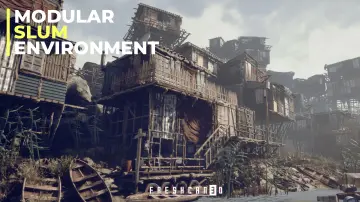
Dropping a collection of prefabricated shanty structures into an Unreal Engine level provides an immediate foundation for a struggling coastal settlement. Shanty Town Slums functions as this kind of baseline building block, delivering the environmental pieces required to assemble a complete dockside village. By scattering the provided assets across a shoreline terrain, a developer can rapidly block out the visual identity of an impoverished maritime outpost without needing to model each ramshackle hut from scratch.
Establishing the Dockside and Village Parameter
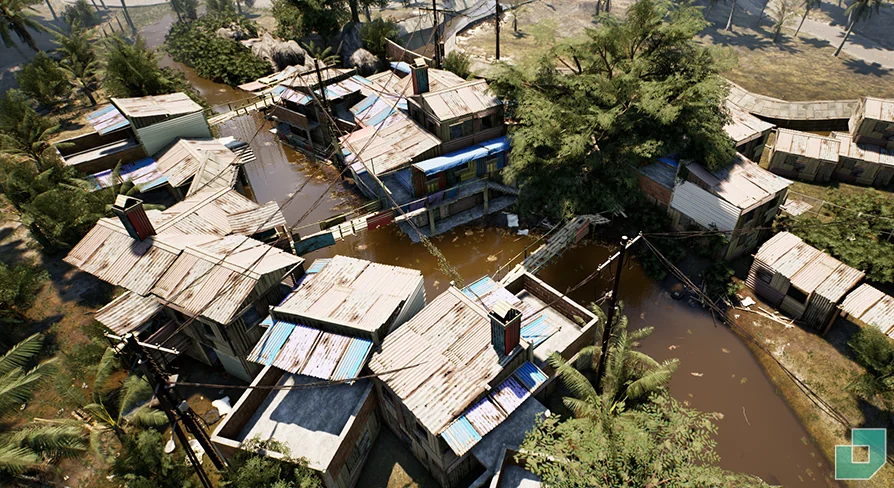
The specific scope of this package centers on two intertwined environmental themes: the village and the dockside. Building a convincing slum environment requires more than placing decrepit houses on flat ground. The dockside designation indicates that the assets are intended to interact with a waterfront. Creators can use the pieces to construct dwellings that cling to the edge of a pier,赖 on stilts over shallow water, or sit clustered along a muddy shoreline. The village aspect suggests a collection of varied structures meant to be grouped densely together, simulating the claustrophobic and organic growth typical of an improvised settlement. Artists can arrange the buildings to create narrow alleyways and crowded compounds, dictating the flow of pedestrian movement and establishing distinct micro-districts within the larger shanty town.
Creating the Slum Aesthetic
Generating a believable slum aesthetic relies heavily on the visual language of scavenged materials and structural decay. The tags associated with this package—Town, Level, Slum, Shanty—highlight that the asset collection is built to communicate poverty, temporary construction, and dense urban squalor. When populating a scene, a developer arranges these elements to emphasize instability and weathering. Walls might lean, roofs might appear patched with mismatched materials, and the overall silhouette of the assembled town should feel asymmetrical and fragile. This allows level designers to craft spaces that tell a story of survival and hardship. The visual weight of the shanty town relies on how these assets are clustered. Placing them in tight configurations with overlapping geometry can hide the edges of individual pieces, selling the illusion of a sprawling, unplanned settlement that grew piece by piece over time.
Unreal Engine 5.0 to 5.6 Integration
From a pipeline perspective, Shanty Town Slums is verified to function within Unreal Engine versions 5.0 through 5.6. This broad compatibility range means the assets leverage the modern toolset introduced in the current generation of the engine. When importing the collection into a UE5 project, developers can expect the components to behave predictably within the latest rendering frameworks. Setting up the level involves dragging the village and dockside components into the Nanite-driven environment, allowing for high geometric detail across the clustered shanties without crippling frame rates. The lighting setup for a slum scene often relies heavily on Lumen, Unreal Engine 5's global illumination system. The tight alleyways and overhanging shanty roofs create complex shadow dynamics. The assets are built to sit within this lighting model, meaning the gaps between poorly constructed walls and the uneven rooftops will catch and bounce light naturally. Because the package spans both early 5.0 releases and the later 5.6 iterations, creators working on long-term projects can upgrade their engine version without fear of breaking the assembled dockside level.
Scene Composition and Gameplay Implications
Beyond the visual facade, the way a developer positions these shanty town assets directly impacts gameplay mechanics. A dense slum environment dictates cover placement, sightlines, and traversal routes. By manipulating the dockside assets, a developer can create natural chokepoints on piers or conceal hidden pathways beneath stilt-supported structures. The modular nature of a town package allows level designers to adjust the difficulty of navigation by simply shifting buildings closer together or widening the gaps over virtual water. The structures can be used to guide a player toward a specific objective or to obscure distant landmarks until the player navigates out of the cramped village center.
Finalizing the Waterfront Settlement
Putting the final touches on a Shanty Town Slums scene requires attention to how the village meets the water. Because the package specifically includes dockside elements, the transition between land and water is a critical focus. Developers can line the edges of the terrain with the provided dock assets to create rickety boardwalks and extended piers. This allows the shanty structures to extend out over the virtual water, creating a dynamic and layered silhouette for the coastline. The production readiness of a level built with these assets comes down to how convincingly the improvised structures blend with the terrain and water planes. The collection provides the necessary density to make a believable slum, but the authenticity of the environment relies on the artist's ability to ground the assets firmly within the Unreal Engine landscape, ensuring the dockside settlement feels anchored to its specific waterside location.
 Abandoned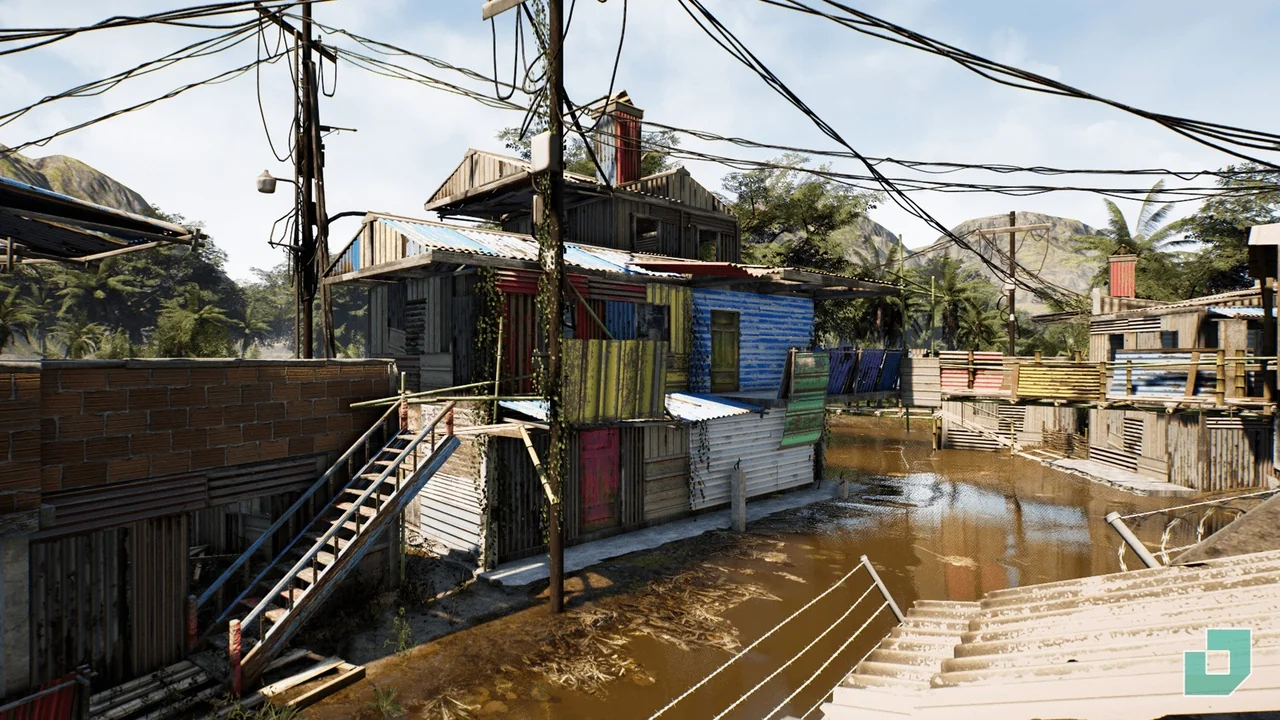
 Towns & Villages
 Towns & Villages
 Towns & Villages