"6989f03aa91a233c"{"id":"1000013","slug":"ghost-town-vol-4-abandoned-houses","title":"Ghost Town VOL.4 - Abandoned Houses","category":"Buildings \u0026 Architecture","engine":"5.1+","assetVersion":"","engineVersion":"5.1+","tag":"Buildings","accent":"blue","visual":"mech","summary":"A 146-mesh Unreal Engine 5.4 pack of abandoned wooden houses and modular parts for ghost towns, horror scenes, and cinematic environment work.","platform":"Unreal Engine","publishedAt":"2026-05-19T18:11:54.983Z","updatedAt":"2026-05-22T20:13:21.456Z","sourceNotes":[],"fileContents":[],"compatibility":["Unreal Engine","Engine version: 5.1+"],"featuredImage":{"alt":"Ghost Town VOL.4 - Abandoned Houses","src":"/wp-content/uploads/published/2026/05/c2a9f8a13b62-88496c60-0822-49e7-8648-63135b487172-ca279bfeae.webp"},"hasDownloadLink":true,"downloads":1,"terms":[{"taxonomy":"category","slug":"buildings-and-architecture","name":"Buildings \u0026 Architecture"}],"galleryImages":[{"src":"/wp-content/uploads/published/2026/05/3acaa36061d6-a04cb403-d245-447b-93df-3c5ced585408-1b8575aaef.webp","alt":"Ghost Town VOL.4 - Abandoned Houses"},{"src":"/wp-content/uploads/published/2026/05/5e0d4758c89b-1f30a8bc-a948-4e87-8b79-24ac110ffb68-429f58172c.webp","alt":"Ghost Town VOL.4 - Abandoned Houses"},{"src":"/wp-content/uploads/published/2026/05/ac801e8efe84-66659f12-48be-4950-9d94-98d02e9991f4-4cc4b012d4.webp","alt":"Ghost Town VOL.4 - Abandoned Houses"},{"src":"/wp-content/uploads/published/2026/05/a6ef04f06e30-e27bc4d7-e9b4-4ba5-96c7-d79c1f26d090-cfa8cafca6.webp","alt":"Ghost Town VOL.4 - Abandoned Houses"},{"src":"/wp-content/uploads/published/2026/05/678042745cdf-0aae38d5-9a12-46f2-a118-e4bdd8f2df0c-489bb2c5bc.webp","alt":"Ghost Town VOL.4 - Abandoned Houses"},{"src":"/wp-content/uploads/published/2026/05/f776a37c8486-0fcdf66c-d78b-4952-a5c5-806d8de127b9-7f20862c30.webp","alt":"Ghost Town VOL.4 - Abandoned Houses"},{"src":"/wp-content/uploads/published/2026/05/f5ac46a21042-6dc14e78-afb3-44ab-a423-914c752af792-fdc38348a1.webp","alt":"Ghost Town VOL.4 - Abandoned Houses"},{"src":"/wp-content/uploads/published/2026/05/970cd5b2292a-c7a718d6-6fe0-4e9c-8f02-5b179ad0a78c-5503debdf2.webp","alt":"Ghost Town VOL.4 - Abandoned Houses"},{"src":"/wp-content/uploads/published/2026/05/a29321568086-daad960f-aefc-4c5d-84a4-90cf749b39d4-28d42a9b35.webp","alt":"Ghost Town VOL.4 - Abandoned Houses"},{"src":"/wp-content/uploads/published/2026/05/b9d74d35fad8-95a78853-19ad-4b98-87d4-17fd080b4d00-c025e7ca85.webp","alt":"Ghost Town VOL.4 - Abandoned Houses"}],"accessPanel":{"kind":"resource","title":"Access this resource","eyebrow":"Free Download","message":"Log in or create a free account to start your download.","fileName":"Content.7z","safetyNote":"Resources are manually reviewed before listing to improve quality and reduce obvious risks.","actionLabel":"Download Free","resourceType":"Resource archive"},"contentHtml":"\u003cp\u003eGhost Town VOL.4 - Abandoned Houses is a focused environment pack made up of 146 highly detailed meshes, with old wooden houses as the central element. The set leans into abandoned, damaged architecture weathered by time, giving projects a clear visual direction from the moment the assets are placed into a scene.\u003c/p\u003e\n\u003cp\u003eIts scope is narrow in a useful way. Instead of spreading across unrelated props or broad environment themes, it concentrates on ghost town structures and the modular parts needed to shape them. That makes it easier to treat the pack as a production building block rather than a loose assortment of scenery.\u003c/p\u003e \u003ch2\u003e146 meshes of abandoned wooden houses and damaged architecture\u003c/h2\u003e\n\u003cp\u003eThe pack’s strongest identity comes from its architecture. Old wooden houses, worn surfaces, broken-down details, and a visibly aged condition define the collection. The tags attached to the set reinforce that direction: abandoned, damaged, destroyed, old, realistic, and horror all point to the same style target. Windows, doors, buildings, and architectural elements are part of that visual language, helping the set stay grounded in structures rather than drifting into decorative filler.\u003c/p\u003e\n\u003cp\u003eThat concentration matters in a real production workflow. When a scene needs a convincing cluster of deserted buildings, consistency across the houses is often just as important as raw detail. Here, the meshes are described as highly detailed and intended to deliver cinematic-quality visuals, so the pack is positioned for scenes where the camera is expected to read age, neglect, and material wear clearly.\u003c/p\u003e\n\u003cp\u003eThe ghost town theme is specific, but not locked to one narrow scenario. A hauntingly realistic ghost town is the obvious use, yet the same weathered wooden architecture can also support other immersive environments that need old or damaged town structures. The resource is not framed as a complete world by itself; it is framed as a foundation for one.\u003c/p\u003e \u003ch2\u003eModular components and custom blueprints in Ghost Town VOL.4\u003c/h2\u003e\n\u003cp\u003eBeyond the standalone house meshes, the modular side of the pack is one of its most practical features. Modular components are included to enable custom blueprints, which shifts the resource from a static art set into something more adaptable during scene assembly. Instead of treating each building as a fixed endpoint, teams can use the parts to build variations, arrange structures more freely, and establish layouts that match the needs of a particular sequence or level space.\u003c/p\u003e\n\u003cp\u003eThat modularity is where the pack fits naturally into environment production. Early scene blocking can start with the larger house forms, while later passes can use modular pieces to break repetition or create custom arrangements. If the goal is a town that feels abandoned rather than duplicated, the ability to construct blueprints from modular parts helps move the work in that direction without changing the pack’s established visual tone.\u003c/p\u003e\n\u003cp\u003eThe wording around custom blueprints also suggests a workflow that values speed in assembly. The pack is presented as making that process effortless, which places it in the middle of environment building rather than only at the final dressing stage. It is not just a set of finished buildings to drop into view; it supports layout creation and reconfiguration as part of the production process.\u003c/p\u003e \u003ch2\u003eCinematic-quality visuals rendered in Unreal Engine 5.4\u003c/h2\u003e\n\u003cp\u003eAll assets have been rendered in Unreal Engine 5.4, which gives the pack a clear engine context. That matters for teams already working inside Unreal, especially on scenes where visual presentation is expected to hold up under close framing or moody lighting. The emphasis on cinematic-quality visuals places the set closer to dramatic environment work than to placeholder geometry or rough concept staging.\u003c/p\u003e\n\u003cp\u003eThe realistic angle of the asset pack is also important. Horror environments often depend on texture, decay, and believable structural wear more than on exaggerated stylization. This set stays on the realistic side of that spectrum, which makes it suitable for scenes where the unease comes from place and atmosphere rather than from overt fantasy design. An abandoned wooden house with damaged details can carry tension effectively when its materials and age feel credible.\u003c/p\u003e\n\u003cp\u003eBecause the pack was showcased under the Ghost Town name, its visual target remains easy to read: neglected architecture arranged into a setting that can support isolation, suspense, and environmental storytelling. In workflow terms, it can serve as a primary scene base for cinematic shots, exploration spaces, or background town structures that need to maintain the same worn, unsettling character.\u003c/p\u003e \u003ch2\u003eWhat is included and what is not\u003c/h2\u003e\n\u003cp\u003eOne practical note defines the boundaries of the pack very clearly: it does not include environment maps. Only the 3D assets are provided. That keeps expectations grounded and also clarifies where the resource sits in a pipeline. It handles the structural side of the environment, not the full atmospheric setup.\u003c/p\u003e\n\u003cp\u003eFor production teams, that means the houses, building parts, and related architectural elements can be brought into an existing scene framework without forcing a complete replacement of skies, surrounding world setup, or broader map construction. It is a straightforward fit for projects that already have terrain, lighting direction, or world composition plans in place and need abandoned town architecture to complete them.\u003c/p\u003e\n\u003cp\u003eThis limitation is not a drawback so much as a definition of purpose. The pack is about authored structures and modular assembly. It gives productions the visual core of a ghost town while leaving the wider environment context open. That can be useful when the same houses need to appear in different surrounding conditions, or when the art team wants full control over how much of the world beyond the buildings is visible.\u003c/p\u003e \u003ch2\u003eVirtual texturing support and commercial use\u003c/h2\u003e\n\u003cp\u003eThere is one setup requirement that should be addressed before using the pack: virtual texturing support needs to be enabled in the project. That is a concrete implementation note, and it is the kind of detail that matters before assets move from selection into active scene work. Ignoring it could interrupt integration, so it belongs early in production planning rather than as an afterthought.\u003c/p\u003e\n\u003cp\u003eThe pack is also described as free of legal issues and safe for use in commercial projects. For studios, freelancers, and teams building deliverable work, that kind of clarity removes uncertainty around whether the resource can be used in production beyond testing or private experiments. It does not change the artistic profile of the set, but it does affect how confidently it can be placed into real project pipelines.\u003c/p\u003e\n\u003cp\u003eArt for the pack was created by Rendertale Artists, and this gives a resource with a very clear lane: abandoned houses, modular construction, realistic damage, and cinematic presentation within Unreal Engine 5.4. It is set up to handle the architectural backbone of a ghost town or similarly immersive environment, especially when a project needs weathered wooden buildings that can be arranged, customized, and brought into a broader world setup already in progress.\u003c/p\u003e\n\n\u003ch2\u003eRelated Resources Worth Checking\u003c/h2\u003e\n\u003cul\u003e\n\u003cli\u003e\u003ca href=\"https://3dcghub.com/elven-modular-architecture/\" title=\"Elven Modular Architecture\"\u003eElven Modular Architecture\u003c/a\u003e\u003c/li\u003e\n\u003cli\u003e\u003ca href=\"https://3dcghub.com/ghost-town-vol-3-modular-fences/\" title=\"Ghost Town VOL.3 - Modular Fences\"\u003eGhost Town VOL.3 - Modular Fences\u003c/a\u003e\u003c/li\u003e\n\u003cli\u003e\u003ca href=\"https://3dcghub.com/ghost-town-vol-1-176-modular-old-cabin-assets-for-ue5/\" title=\"Ghost Town VOL.1 - Old Cabins\"\u003eGhost Town VOL.1 - Old Cabins\u003c/a\u003e\u003c/li\u003e\n\u003cli\u003e\u003ca href=\"https://3dcghub.com/signage-vol-4-small-town/\" title=\"Signage VOL.4 - Small Town\"\u003eSignage VOL.4 - Small Town\u003c/a\u003e\u003c/li\u003e\n\u003cli\u003e\u003ca href=\"https://3dcghub.com/ghost-town-vol-2-abandoned-houses/\" title=\"Ghost Town VOL.2 - Abandoned Houses\"\u003eGhost Town VOL.2 - Abandoned Houses\u003c/a\u003e\u003c/li\u003e\n\u003c/ul\u003e","contentTextLength":7378,"navigation":{"current":1437,"total":3353,"previous":{"id":"1000012","slug":"ghost-town-vol-2-abandoned-houses","title":"Ghost Town VOL.2 - Abandoned Houses","category":"Buildings \u0026 Architecture","platform":"Unreal Engine","updatedAt":"2026-05-22T20:13:28.985Z"},"next":{"id":"1000021","slug":"road-bike","title":"Road Bike","category":"Vehicles \u0026 Transportation","platform":"Unreal Engine","updatedAt":"2026-05-22T20:13:10.843Z"}},"relatedResources":[{"id":"1000012","slug":"ghost-town-vol-2-abandoned-houses","title":"Ghost Town VOL.2 - Abandoned Houses","category":"Buildings \u0026 Architecture","engine":"5.1+","assetVersion":"","engineVersion":"5.1+","tag":"Buildings","accent":"blue","visual":"mech","summary":"Ghost Town VOL.2 - Abandoned Houses includes 81 detailed meshes, modular parts, and weathered wooden structures rendered in Unreal Engine 5.4.","platform":"Unreal Engine","publishedAt":"2026-05-19T17:52:50.617Z","updatedAt":"2026-05-22T20:13:28.985Z","sourceNotes":[],"fileContents":[],"compatibility":["Unreal Engine","Engine version: 5.1+"],"featuredImage":{"alt":"Ghost Town VOL.2 - Abandoned Houses","src":"/wp-content/uploads/published/2026/05/7f2664310d73-68a4378a-e060-4a40-9d89-bc1be7165f21-a9f14d2975.webp"},"hasDownloadLink":true,"downloads":1},{"id":"1000025","slug":"signage-vol-4-small-town","title":"Signage VOL.4 - Small Town","category":"Buildings \u0026 Architecture","engine":"5.1+","assetVersion":"","engineVersion":"5.1+","tag":"Buildings","accent":"blue","visual":"mech","summary":"A small-town signage collection for Unreal Engine with 416 meshes, 4K textures, Nanite and low poly versions, master materials, and Lumen support.","platform":"Unreal Engine","publishedAt":"2026-05-20T13:23:30.361Z","updatedAt":"2026-05-20T13:23:30.361Z","sourceNotes":[],"fileContents":[],"compatibility":["Unreal Engine","Engine version: 5.1+"],"featuredImage":{"alt":"Signage VOL.4 - Small Town","src":"/wp-content/uploads/published/2026/05/06d30df1da7b-994ddd19-8eac-4094-a2c8-3b1bc01234cb-7bf0bec89d.webp"},"hasDownloadLink":true,"downloads":0},{"id":"27618","slug":"elven-modular-architecture","title":"Elven Modular Architecture","category":"Buildings \u0026 Architecture","engine":"5.0+","assetVersion":"Engine version: 5.0+","engineVersion":"5.0","tag":"Buildings","accent":"blue","visual":"mech","summary":"Elven Modular Architecture brings together modular fantasy building pieces for towns, houses, mansions, castles, and city scenes. It combines Nanite-ready meshes, custom collision, and material controls for moss, dirt, and debris so the look can be adjusted...","platform":"Unreal Engine","publishedAt":"2026-04-26T13:27:49.000Z","updatedAt":"2026-04-26T13:27:50.000Z","sourceNotes":[],"fileContents":[],"compatibility":["Unreal Engine","Engine version: 5.0+"],"featuredImage":{"alt":"Elven Modular Architecture","src":"https://3dcghub.com/wp-content/uploads/2026/04/f362aaf7e1bd_188b6bc3-ef8d-4595-8ec8-e273f7835607.webp"},"hasDownloadLink":true,"downloads":0}]}
Buildings
Ghost Town VOL.4 - Abandoned Houses
A 146-mesh Unreal Engine 5.4 pack of abandoned wooden houses and modular parts for ghost towns, horror scenes, and cinematic environment work.
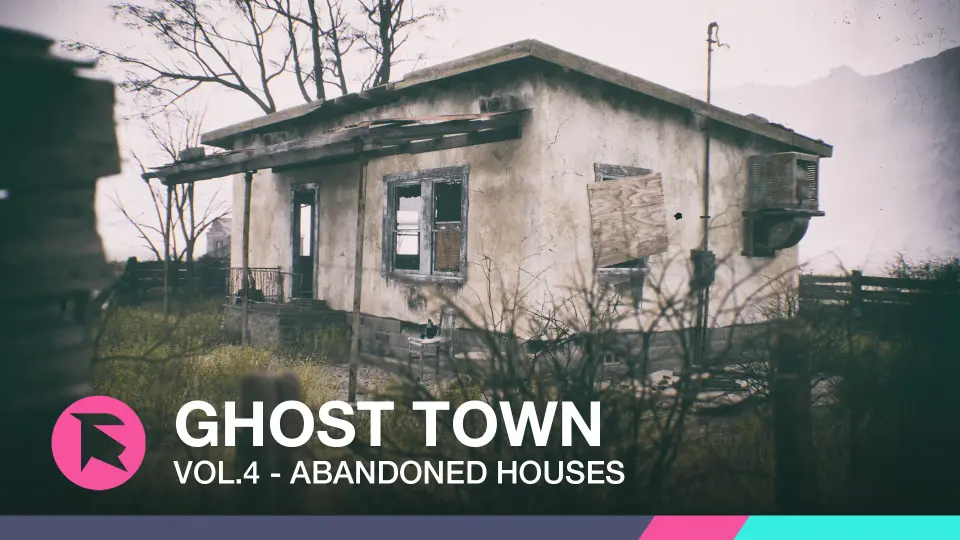
Ghost Town VOL.4 - Abandoned Houses is a focused environment pack made up of 146 highly detailed meshes, with old wooden houses as the central element. The set leans into abandoned, damaged architecture weathered by time, giving projects a clear visual direction from the moment the assets are placed into a scene.
Its scope is narrow in a useful way. Instead of spreading across unrelated props or broad environment themes, it concentrates on ghost town structures and the modular parts needed to shape them. That makes it easier to treat the pack as a production building block rather than a loose assortment of scenery.
146 meshes of abandoned wooden houses and damaged architecture
The pack’s strongest identity comes from its architecture. Old wooden houses, worn surfaces, broken-down details, and a visibly aged condition define the collection. The tags attached to the set reinforce that direction: abandoned, damaged, destroyed, old, realistic, and horror all point to the same style target. Windows, doors, buildings, and architectural elements are part of that visual language, helping the set stay grounded in structures rather than drifting into decorative filler.
That concentration matters in a real production workflow. When a scene needs a convincing cluster of deserted buildings, consistency across the houses is often just as important as raw detail. Here, the meshes are described as highly detailed and intended to deliver cinematic-quality visuals, so the pack is positioned for scenes where the camera is expected to read age, neglect, and material wear clearly.
The ghost town theme is specific, but not locked to one narrow scenario. A hauntingly realistic ghost town is the obvious use, yet the same weathered wooden architecture can also support other immersive environments that need old or damaged town structures. The resource is not framed as a complete world by itself; it is framed as a foundation for one.
Modular components and custom blueprints in Ghost Town VOL.4
Beyond the standalone house meshes, the modular side of the pack is one of its most practical features. Modular components are included to enable custom blueprints, which shifts the resource from a static art set into something more adaptable during scene assembly. Instead of treating each building as a fixed endpoint, teams can use the parts to build variations, arrange structures more freely, and establish layouts that match the needs of a particular sequence or level space.
That modularity is where the pack fits naturally into environment production. Early scene blocking can start with the larger house forms, while later passes can use modular pieces to break repetition or create custom arrangements. If the goal is a town that feels abandoned rather than duplicated, the ability to construct blueprints from modular parts helps move the work in that direction without changing the pack’s established visual tone.
The wording around custom blueprints also suggests a workflow that values speed in assembly. The pack is presented as making that process effortless, which places it in the middle of environment building rather than only at the final dressing stage. It is not just a set of finished buildings to drop into view; it supports layout creation and reconfiguration as part of the production process.
Cinematic-quality visuals rendered in Unreal Engine 5.4
All assets have been rendered in Unreal Engine 5.4, which gives the pack a clear engine context. That matters for teams already working inside Unreal, especially on scenes where visual presentation is expected to hold up under close framing or moody lighting. The emphasis on cinematic-quality visuals places the set closer to dramatic environment work than to placeholder geometry or rough concept staging.
The realistic angle of the asset pack is also important. Horror environments often depend on texture, decay, and believable structural wear more than on exaggerated stylization. This set stays on the realistic side of that spectrum, which makes it suitable for scenes where the unease comes from place and atmosphere rather than from overt fantasy design. An abandoned wooden house with damaged details can carry tension effectively when its materials and age feel credible.
Because the pack was showcased under the Ghost Town name, its visual target remains easy to read: neglected architecture arranged into a setting that can support isolation, suspense, and environmental storytelling. In workflow terms, it can serve as a primary scene base for cinematic shots, exploration spaces, or background town structures that need to maintain the same worn, unsettling character.
What is included and what is not
One practical note defines the boundaries of the pack very clearly: it does not include environment maps. Only the 3D assets are provided. That keeps expectations grounded and also clarifies where the resource sits in a pipeline. It handles the structural side of the environment, not the full atmospheric setup.
For production teams, that means the houses, building parts, and related architectural elements can be brought into an existing scene framework without forcing a complete replacement of skies, surrounding world setup, or broader map construction. It is a straightforward fit for projects that already have terrain, lighting direction, or world composition plans in place and need abandoned town architecture to complete them.
This limitation is not a drawback so much as a definition of purpose. The pack is about authored structures and modular assembly. It gives productions the visual core of a ghost town while leaving the wider environment context open. That can be useful when the same houses need to appear in different surrounding conditions, or when the art team wants full control over how much of the world beyond the buildings is visible.
Virtual texturing support and commercial use
There is one setup requirement that should be addressed before using the pack: virtual texturing support needs to be enabled in the project. That is a concrete implementation note, and it is the kind of detail that matters before assets move from selection into active scene work. Ignoring it could interrupt integration, so it belongs early in production planning rather than as an afterthought.
The pack is also described as free of legal issues and safe for use in commercial projects. For studios, freelancers, and teams building deliverable work, that kind of clarity removes uncertainty around whether the resource can be used in production beyond testing or private experiments. It does not change the artistic profile of the set, but it does affect how confidently it can be placed into real project pipelines.
Art for the pack was created by Rendertale Artists, and this gives a resource with a very clear lane: abandoned houses, modular construction, realistic damage, and cinematic presentation within Unreal Engine 5.4. It is set up to handle the architectural backbone of a ghost town or similarly immersive environment, especially when a project needs weathered wooden buildings that can be arranged, customized, and brought into a broader world setup already in progress.
 Buildings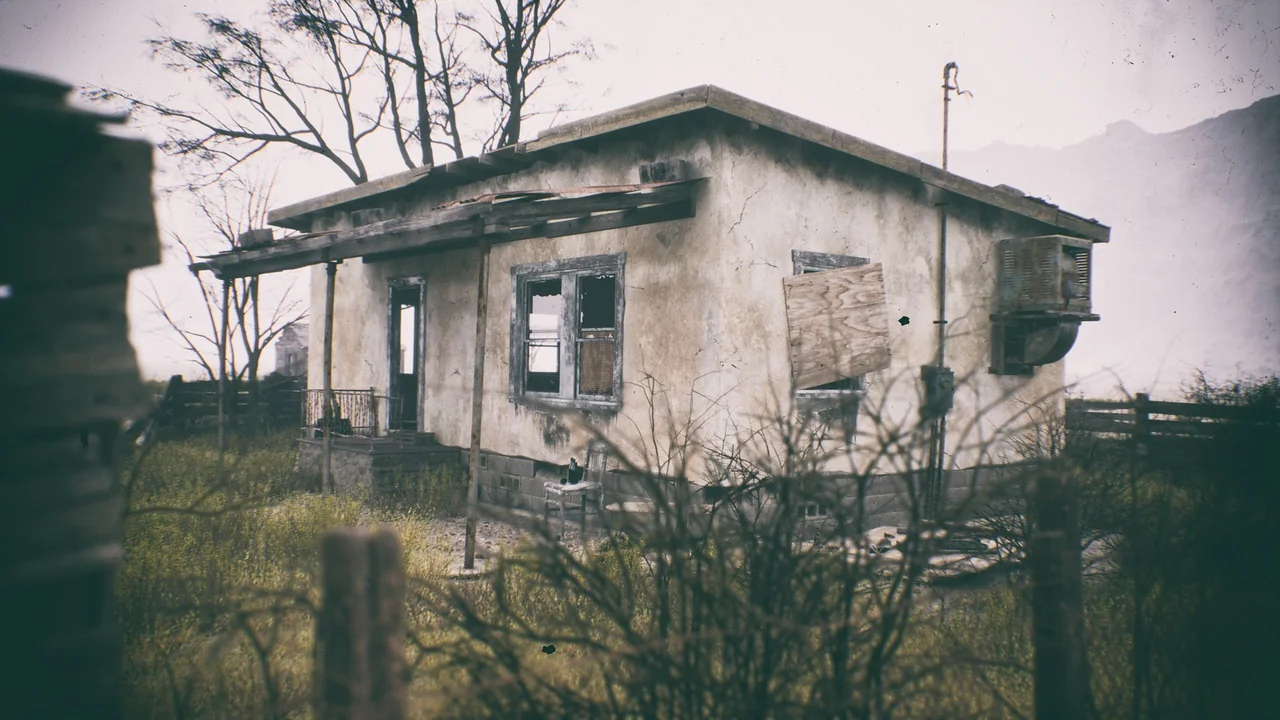
 Buildings
 Buildings
 Buildings