"0283a5a6392d9fd6"{"id":"1000012","slug":"ghost-town-vol-2-abandoned-houses","title":"Ghost Town VOL.2 - Abandoned Houses","category":"Buildings \u0026 Architecture","engine":"5.1+","assetVersion":"","engineVersion":"5.1+","tag":"Buildings","accent":"blue","visual":"mech","summary":"Ghost Town VOL.2 - Abandoned Houses includes 81 detailed meshes, modular parts, and weathered wooden structures rendered in Unreal Engine 5.4.","platform":"Unreal Engine","publishedAt":"2026-05-19T17:52:50.617Z","updatedAt":"2026-05-22T20:13:28.985Z","sourceNotes":[],"fileContents":[],"compatibility":["Unreal Engine","Engine version: 5.1+"],"featuredImage":{"alt":"Ghost Town VOL.2 - Abandoned Houses","src":"/wp-content/uploads/published/2026/05/7f2664310d73-68a4378a-e060-4a40-9d89-bc1be7165f21-a9f14d2975.webp"},"hasDownloadLink":true,"downloads":1,"terms":[{"taxonomy":"category","slug":"buildings-and-architecture","name":"Buildings \u0026 Architecture"}],"galleryImages":[{"src":"/wp-content/uploads/published/2026/05/2442ad1c11cf-742a6a89-44f8-4809-a53a-c7c6ba91bd0f-3b61457e5b.webp","alt":"Ghost Town VOL.2 - Abandoned Houses"},{"src":"/wp-content/uploads/published/2026/05/99abf1d04038-81c64f6b-dcc5-4b59-b96e-c4a5284a084e-d48e57de7c.webp","alt":"Ghost Town VOL.2 - Abandoned Houses"},{"src":"/wp-content/uploads/published/2026/05/e46490b15ed7-169d2291-eeec-403a-92bc-178a2b77296b-286f30c035.webp","alt":"Ghost Town VOL.2 - Abandoned Houses"},{"src":"/wp-content/uploads/published/2026/05/d34fad52dc29-617a6fce-0473-40fe-b22e-97f7c115198c-1aa1542f55.webp","alt":"Ghost Town VOL.2 - Abandoned Houses"},{"src":"/wp-content/uploads/published/2026/05/7dc3111cfdb4-a74114ec-2847-4c6e-ab94-f52baadab964-d894170524.webp","alt":"Ghost Town VOL.2 - Abandoned Houses"},{"src":"/wp-content/uploads/published/2026/05/8d06af9a5d04-336a9df3-52b2-4ae7-94a7-ca6be1b525e0-30635e9dd7.webp","alt":"Ghost Town VOL.2 - Abandoned Houses"},{"src":"/wp-content/uploads/published/2026/05/696e501b3a0d-56391892-2613-4759-8d9b-ef1dd9181a64-bf104b2638.webp","alt":"Ghost Town VOL.2 - Abandoned Houses"},{"src":"/wp-content/uploads/published/2026/05/3c91469ff346-ae8fd362-c5ac-4679-b489-f778ee640e05-06c7d54e68.webp","alt":"Ghost Town VOL.2 - Abandoned Houses"},{"src":"/wp-content/uploads/published/2026/05/21c650d75f8d-b5f9351e-d780-4833-a48f-fa5616e0ae3a-688728b080.webp","alt":"Ghost Town VOL.2 - Abandoned Houses"},{"src":"/wp-content/uploads/published/2026/05/c6b754cbc129-5c772c99-eeb8-4ccb-ac21-7027e0481e58-0dbd990c48.webp","alt":"Ghost Town VOL.2 - Abandoned Houses"}],"accessPanel":{"kind":"resource","title":"Access this resource","eyebrow":"Free Download","message":"Log in or create a free account to start your download.","fileName":"Content.7z","safetyNote":"Resources are manually reviewed before listing to improve quality and reduce obvious risks.","actionLabel":"Download Free","resourceType":"Resource archive"},"contentHtml":"\u003cp\u003eBuilding a convincing abandoned settlement usually means solving two problems at once: the scene needs enough detail to feel lived in, and it also needs enough flexibility to avoid every street and structure looking repeated. Ghost Town VOL.2 - Abandoned Houses addresses both sides with a collection of 81 highly detailed meshes focused on old wooden houses that look abandoned and weathered by time.\u003c/p\u003e\n\u003cp\u003eThe pack leans into a realistic, atmospheric identity. Broken-down building forms, aged wood, windows, doors, and the broader language of a ghost town all point toward spaces that feel neglected rather than merely old. That distinction matters when a project needs places that suggest history, isolation, or unease. The assets are presented as a foundation not only for a hauntingly realistic ghost town, but also for other immersive environments where decay and age are part of the visual story.\u003c/p\u003e \u003ch2\u003eSetting up a ghost town with 81 detailed meshes\u003c/h2\u003e\n\u003cp\u003eA set of 81 meshes gives environment artists more than a single hero building or a few decorative ruins. It creates room to assemble a larger scene with variation across structures, facades, and supporting elements. In use, that means a town can feel scattered and naturally worn instead of built from a tiny set of repeating shapes.\u003c/p\u003e\n\u003cp\u003eThe visual focus stays on abandoned wooden houses, and that focus gives the collection a clear production role. This is not a broad, all-purpose architecture pack trying to cover every style at once. It is aimed at weathered, old, realistic structures that can carry a horror tone, a deserted town backdrop, or any environment where damaged buildings and timeworn surfaces are central to the mood. Tags such as abandoned, weathered, town, ghost, house, realistic, old, window, building, destroyed, door, wooden, and horror reinforce that identity and help define the kinds of scenes it naturally supports.\u003c/p\u003e\n\u003cp\u003eFor level layout, that kind of concentrated theme is useful. Instead of spending time forcing unrelated buildings to fit together, artists can work within a consistent visual language from the start. A cluster of houses can read as one settlement, while still allowing enough mesh variety to avoid a copy-and-paste look. This gives especially suited to roadsides, empty residential stretches, collapsed neighborhoods, or focal points within a larger haunted environment.\u003c/p\u003e \u003ch2\u003eUsing the modular parts for custom blueprints\u003c/h2\u003e\n\u003cp\u003eOne of the most practical parts of the pack is its use of modular components. That moves it beyond a static set of finished houses and into something more flexible for scene building.\u003c/p\u003e\n\u003cp\u003eModular pieces let developers and artists shape custom blueprints more easily, which changes how the pack can be used inside production. A structure can be treated as a starting point rather than a final arrangement. That is useful when a project needs multiple house silhouettes, damaged variations, or altered layouts while keeping the same abandoned wooden style. Instead of relying only on precomposed placement, a team can build custom combinations that better fit a gameplay route, camera path, or environmental beat.\u003c/p\u003e\n\u003cp\u003eThis also opens up creative use beyond a straightforward town block. A modular workflow can help when a scene calls for partial destruction, irregular spacing, or structures that need to frame a shot in a particular way. In a cinematic setup, a doorway or window line might need to guide the eye toward a character or a light source. In an explorable space, the shape of a building may need to support navigation or suggest a safe path through a ruined area. The pack does not promise specialized gameplay systems, but the presence of modular components clearly supports that sort of practical adaptation.\u003c/p\u003e\n\u003cp\u003eBecause the visual theme is so specific, custom blueprint work can still remain coherent. Even when different combinations are assembled, the weathered and abandoned character of the assets keeps the environment from drifting into a mixed-style result. That consistency is often what sells a ghost town scene: not just damage, but damage that feels as though it belongs to the same place and the same passage of time.\u003c/p\u003e \u003ch2\u003eWeathered wooden houses for horror and realistic scenes\u003c/h2\u003e\n\u003cp\u003eOld wood is one of the defining traits here, and it does a lot of the atmospheric work. Wooden houses that have been abandoned and worn down by time naturally carry visual tension. They can feel fragile, exposed, and quiet in a way that cleaner architecture cannot.\u003c/p\u003e\n\u003cp\u003eThat makes the pack well suited to horror scenes, but it is not limited to a single genre mood. The same structures can serve realistic rural decay, post-event emptiness, or historical neglect depending on how they are staged. The important part is that the houses already communicate age and deterioration. An artist does not need to invent that feeling from scratch through extensive modification; the identity is built into the meshes themselves.\u003c/p\u003e\n\u003cp\u003eWindows and doors are also part of the tagged visual language, and those details are more important than they first appear. In abandoned architecture, openings define a lot of the mood. Dark windows suggest emptiness. Broken or aged doors shape the impression of access, threat, or disuse. When these details are handled within the same weathered style, scenes become easier to stage for tension and realism. A close camera can linger on façade details, while a distant establishing shot can still read the larger abandoned town silhouette.\u003c/p\u003e\n\u003cp\u003eCinematic-quality visuals push this even further. That phrase points to assets capable of holding up in presentation-focused work where composition, atmosphere, and texture presence need to carry a shot. For creators producing trailers, cutscenes, cinematic flythroughs, or highly curated environment stills, the pack’s emphasis on visual quality matters as much as the modularity.\u003c/p\u003e \u003ch2\u003eUnreal Engine 5.4 rendering and project boundaries\u003c/h2\u003e\n\u003cp\u003eAll assets have been rendered in Unreal Engine 5.4. That gives a clear technical anchor for teams already working in that environment.\u003c/p\u003e\n\u003cp\u003eThis note is useful less as a marketing label and more as a pipeline expectation. When an asset collection has been rendered in Unreal Engine 5.4, it gives artists a direct sense of the context in which its presentation was produced. For Unreal-based work, that helps connect the pack’s cinematic presentation with the engine workflow many teams are already using for environment production, look development, and scene assembly.\u003c/p\u003e\n\u003cp\u003eThere is also an important boundary around what the project includes. Environment maps are not part of the pack; only the 3D assets are provided. That means the houses and related pieces are the focus, not a complete ready-made world with surrounding map content. For some productions, that is a benefit rather than a limitation. It lets teams place these abandoned structures into their own landscapes, settlements, lighting setups, and worldbuilding contexts without having to strip out prebuilt map content first.\u003c/p\u003e\n\u003cp\u003eIn practice, that makes the pack most suitable for creators who want control over the wider scene. A developer can place these houses inside an original town layout. A cinematic artist can build a custom backdrop around them. A horror environment can borrow the structures while giving the terrain, sky, and atmosphere a different identity. The pack handles the architectural decay; the broader world remains open to the project’s own direction.\u003c/p\u003e \u003ch2\u003eWhere Ghost Town VOL.2 - Abandoned Houses fits in production\u003c/h2\u003e\n\u003cp\u003eGhost Town VOL.2 - Abandoned Houses works best when a project needs believable abandoned architecture without losing flexibility at the layout stage. Its 81 highly detailed meshes establish a substantial base, while the modular components support custom blueprint creation that can adapt to different scene structures.\u003c/p\u003e\n\u003cp\u003eThe fit is strongest for realistic ghost towns, horror environments, and other immersive spaces shaped by old wooden buildings, damaged details, and the visual weight of time. Since only the 3D assets are included, it sits comfortably inside productions that already have their own environment direction and need strong architectural pieces to carry that world. The pack’s legal-clear status for commercial projects also makes it easier to place within active production use, especially when a team wants abandoned houses that can move from prototype scenes into finished work without changing the visual theme midway through development.\u003c/p\u003e\n\n\u003ch2\u003eRelated Resources Worth Checking\u003c/h2\u003e\n\u003cul\u003e\n\u003cli\u003e\u003ca href=\"https://3dcghub.com/elven-modular-architecture/\" title=\"Elven Modular Architecture\"\u003eElven Modular Architecture\u003c/a\u003e\u003c/li\u003e\n\u003cli\u003e\u003ca href=\"https://3dcghub.com/ghost-town-vol-4-abandoned-houses/\" title=\"Ghost Town VOL.4 - Abandoned Houses\"\u003eGhost Town VOL.4 - Abandoned Houses\u003c/a\u003e\u003c/li\u003e\n\u003cli\u003e\u003ca href=\"https://3dcghub.com/ghost-town-vol-3-modular-fences/\" title=\"Ghost Town VOL.3 - Modular Fences\"\u003eGhost Town VOL.3 - Modular Fences\u003c/a\u003e\u003c/li\u003e\n\u003cli\u003e\u003ca href=\"https://3dcghub.com/ghost-town-vol-1-176-modular-old-cabin-assets-for-ue5/\" title=\"Ghost Town VOL.1 - Old Cabins\"\u003eGhost Town VOL.1 - Old Cabins\u003c/a\u003e\u003c/li\u003e\n\u003cli\u003e\u003ca href=\"https://3dcghub.com/lake-house-01-with-interiors-4k-pbr/\" title=\"LAKE HOUSE 01 with INTERIORS 4K PBR\"\u003eLAKE HOUSE 01 with INTERIORS 4K PBR\u003c/a\u003e\u003c/li\u003e\n\u003c/ul\u003e","contentTextLength":8624,"navigation":{"current":1437,"total":3354,"previous":{"id":"1000038","slug":"ceratosaurus-lite-version","title":"Ceratosaurus Lite Version","category":"Characters \u0026 Creatures","platform":"Unreal Engine","updatedAt":"2026-05-22T20:16:13.775Z"},"next":{"id":"1000013","slug":"ghost-town-vol-4-abandoned-houses","title":"Ghost Town VOL.4 - Abandoned Houses","category":"Buildings \u0026 Architecture","platform":"Unreal Engine","updatedAt":"2026-05-22T20:13:21.456Z"}},"relatedResources":[{"id":"1000013","slug":"ghost-town-vol-4-abandoned-houses","title":"Ghost Town VOL.4 - Abandoned Houses","category":"Buildings \u0026 Architecture","engine":"5.1+","assetVersion":"","engineVersion":"5.1+","tag":"Buildings","accent":"blue","visual":"mech","summary":"A 146-mesh Unreal Engine 5.4 pack of abandoned wooden houses and modular parts for ghost towns, horror scenes, and cinematic environment work.","platform":"Unreal Engine","publishedAt":"2026-05-19T18:11:54.983Z","updatedAt":"2026-05-22T20:13:21.456Z","sourceNotes":[],"fileContents":[],"compatibility":["Unreal Engine","Engine version: 5.1+"],"featuredImage":{"alt":"Ghost Town VOL.4 - Abandoned Houses","src":"/wp-content/uploads/published/2026/05/c2a9f8a13b62-88496c60-0822-49e7-8648-63135b487172-ca279bfeae.webp"},"hasDownloadLink":true,"downloads":1},{"id":"27618","slug":"elven-modular-architecture","title":"Elven Modular Architecture","category":"Buildings \u0026 Architecture","engine":"5.0+","assetVersion":"Engine version: 5.0+","engineVersion":"5.0","tag":"Buildings","accent":"blue","visual":"mech","summary":"Elven Modular Architecture brings together modular fantasy building pieces for towns, houses, mansions, castles, and city scenes. It combines Nanite-ready meshes, custom collision, and material controls for moss, dirt, and debris so the look can be adjusted...","platform":"Unreal Engine","publishedAt":"2026-04-26T13:27:49.000Z","updatedAt":"2026-04-26T13:27:50.000Z","sourceNotes":[],"fileContents":[],"compatibility":["Unreal Engine","Engine version: 5.0+"],"featuredImage":{"alt":"Elven Modular Architecture","src":"https://3dcghub.com/wp-content/uploads/2026/04/f362aaf7e1bd_188b6bc3-ef8d-4595-8ec8-e273f7835607.webp"},"hasDownloadLink":true,"downloads":0},{"id":"1117","slug":"ghost-town-vol-1-176-modular-old-cabin-assets-for-ue5","title":"Ghost Town VOL.1 - Old Cabins","category":"Buildings \u0026 Architecture","engine":"5.1+","assetVersion":"Engine version: 5.1+","engineVersion":"5.1","tag":"Buildings","accent":"blue","visual":"luts","summary":"Create hauntingly realistic environments with Ghost Town VOL.1. This pack features 176 modular meshes for Unreal Engine 5.4, including cabins, sheds, and fences","platform":"Unreal Engine","publishedAt":"2026-02-06T16:30:57.000Z","updatedAt":"2026-04-19T15:58:13.000Z","sourceNotes":[],"fileContents":[],"compatibility":["Unreal Engine","Engine version: 5.1+"],"featuredImage":{"alt":"Ghost Town VOL.1 - Old Cabins","src":"https://3dcghub.com/wp-content/uploads/2026/02/7b4261f5-d729-42b3-868e-8bedf666c1d7.jpg"},"hasDownloadLink":true,"downloads":0}]}
Buildings
Ghost Town VOL.2 - Abandoned Houses
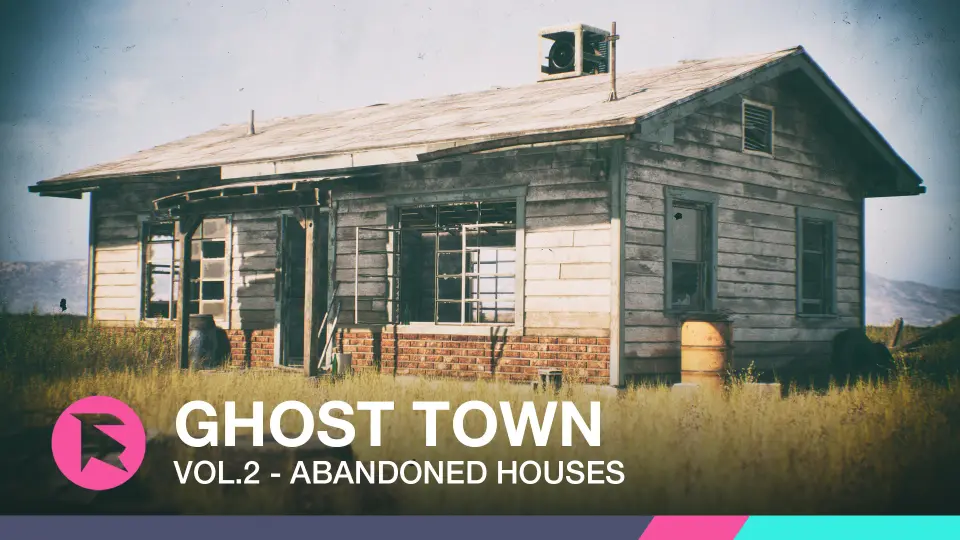
Ghost Town VOL.2 - Abandoned Houses includes 81 detailed meshes, modular parts, and weathered wooden structures rendered in Unreal Engine 5.4.
Building a convincing abandoned settlement usually means solving two problems at once: the scene needs enough detail to feel lived in, and it also needs enough flexibility to avoid every street and structure looking repeated. Ghost Town VOL.2 - Abandoned Houses addresses both sides with a collection of 81 highly detailed meshes focused on old wooden houses that look abandoned and weathered by time.
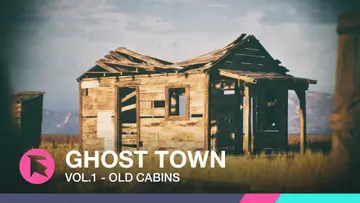
The pack leans into a realistic, atmospheric identity. Broken-down building forms, aged wood, windows, doors, and the broader language of a ghost town all point toward spaces that feel neglected rather than merely old. That distinction matters when a project needs places that suggest history, isolation, or unease. The assets are presented as a foundation not only for a hauntingly realistic ghost town, but also for other immersive environments where decay and age are part of the visual story.
Setting up a ghost town with 81 detailed meshes
A set of 81 meshes gives environment artists more than a single hero building or a few decorative ruins. It creates room to assemble a larger scene with variation across structures, facades, and supporting elements. In use, that means a town can feel scattered and naturally worn instead of built from a tiny set of repeating shapes.
The visual focus stays on abandoned wooden houses, and that focus gives the collection a clear production role. This is not a broad, all-purpose architecture pack trying to cover every style at once. It is aimed at weathered, old, realistic structures that can carry a horror tone, a deserted town backdrop, or any environment where damaged buildings and timeworn surfaces are central to the mood. Tags such as abandoned, weathered, town, ghost, house, realistic, old, window, building, destroyed, door, wooden, and horror reinforce that identity and help define the kinds of scenes it naturally supports.
For level layout, that kind of concentrated theme is useful. Instead of spending time forcing unrelated buildings to fit together, artists can work within a consistent visual language from the start. A cluster of houses can read as one settlement, while still allowing enough mesh variety to avoid a copy-and-paste look. This gives especially suited to roadsides, empty residential stretches, collapsed neighborhoods, or focal points within a larger haunted environment.
Using the modular parts for custom blueprints
One of the most practical parts of the pack is its use of modular components. That moves it beyond a static set of finished houses and into something more flexible for scene building.
Modular pieces let developers and artists shape custom blueprints more easily, which changes how the pack can be used inside production. A structure can be treated as a starting point rather than a final arrangement. That is useful when a project needs multiple house silhouettes, damaged variations, or altered layouts while keeping the same abandoned wooden style. Instead of relying only on precomposed placement, a team can build custom combinations that better fit a gameplay route, camera path, or environmental beat.
This also opens up creative use beyond a straightforward town block. A modular workflow can help when a scene calls for partial destruction, irregular spacing, or structures that need to frame a shot in a particular way. In a cinematic setup, a doorway or window line might need to guide the eye toward a character or a light source. In an explorable space, the shape of a building may need to support navigation or suggest a safe path through a ruined area. The pack does not promise specialized gameplay systems, but the presence of modular components clearly supports that sort of practical adaptation.
Because the visual theme is so specific, custom blueprint work can still remain coherent. Even when different combinations are assembled, the weathered and abandoned character of the assets keeps the environment from drifting into a mixed-style result. That consistency is often what sells a ghost town scene: not just damage, but damage that feels as though it belongs to the same place and the same passage of time.
Weathered wooden houses for horror and realistic scenes
Old wood is one of the defining traits here, and it does a lot of the atmospheric work. Wooden houses that have been abandoned and worn down by time naturally carry visual tension. They can feel fragile, exposed, and quiet in a way that cleaner architecture cannot.
That makes the pack well suited to horror scenes, but it is not limited to a single genre mood. The same structures can serve realistic rural decay, post-event emptiness, or historical neglect depending on how they are staged. The important part is that the houses already communicate age and deterioration. An artist does not need to invent that feeling from scratch through extensive modification; the identity is built into the meshes themselves.
Windows and doors are also part of the tagged visual language, and those details are more important than they first appear. In abandoned architecture, openings define a lot of the mood. Dark windows suggest emptiness. Broken or aged doors shape the impression of access, threat, or disuse. When these details are handled within the same weathered style, scenes become easier to stage for tension and realism. A close camera can linger on façade details, while a distant establishing shot can still read the larger abandoned town silhouette.
Cinematic-quality visuals push this even further. That phrase points to assets capable of holding up in presentation-focused work where composition, atmosphere, and texture presence need to carry a shot. For creators producing trailers, cutscenes, cinematic flythroughs, or highly curated environment stills, the pack’s emphasis on visual quality matters as much as the modularity.
Unreal Engine 5.4 rendering and project boundaries
All assets have been rendered in Unreal Engine 5.4. That gives a clear technical anchor for teams already working in that environment.
This note is useful less as a marketing label and more as a pipeline expectation. When an asset collection has been rendered in Unreal Engine 5.4, it gives artists a direct sense of the context in which its presentation was produced. For Unreal-based work, that helps connect the pack’s cinematic presentation with the engine workflow many teams are already using for environment production, look development, and scene assembly.
There is also an important boundary around what the project includes. Environment maps are not part of the pack; only the 3D assets are provided. That means the houses and related pieces are the focus, not a complete ready-made world with surrounding map content. For some productions, that is a benefit rather than a limitation. It lets teams place these abandoned structures into their own landscapes, settlements, lighting setups, and worldbuilding contexts without having to strip out prebuilt map content first.
In practice, that makes the pack most suitable for creators who want control over the wider scene. A developer can place these houses inside an original town layout. A cinematic artist can build a custom backdrop around them. A horror environment can borrow the structures while giving the terrain, sky, and atmosphere a different identity. The pack handles the architectural decay; the broader world remains open to the project’s own direction.
Where Ghost Town VOL.2 - Abandoned Houses fits in production
Ghost Town VOL.2 - Abandoned Houses works best when a project needs believable abandoned architecture without losing flexibility at the layout stage. Its 81 highly detailed meshes establish a substantial base, while the modular components support custom blueprint creation that can adapt to different scene structures.
The fit is strongest for realistic ghost towns, horror environments, and other immersive spaces shaped by old wooden buildings, damaged details, and the visual weight of time. Since only the 3D assets are included, it sits comfortably inside productions that already have their own environment direction and need strong architectural pieces to carry that world. The pack’s legal-clear status for commercial projects also makes it easier to place within active production use, especially when a team wants abandoned houses that can move from prototype scenes into finished work without changing the visual theme midway through development.
 Buildings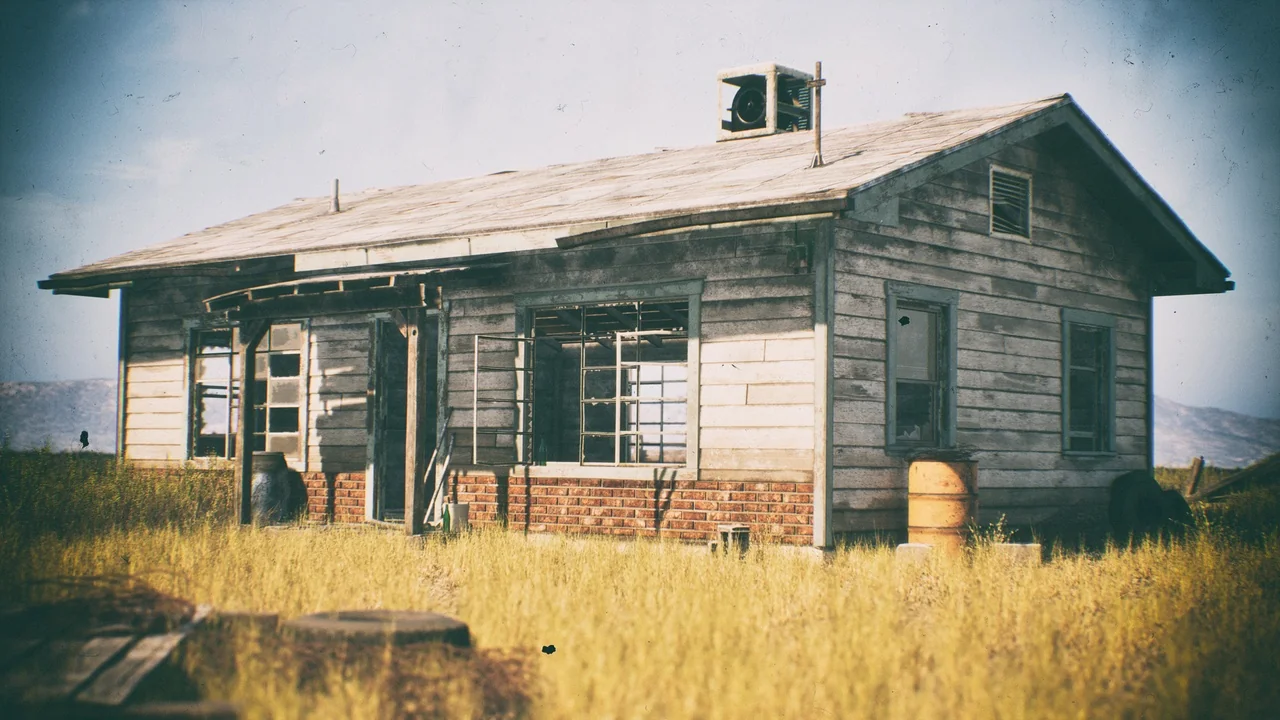
 Buildings
 Buildings
 Buildings