"b9100eca121078f1"{"id":"1000011","slug":"modular-drone-system-replicated","title":"Modular Drone System (Replicated)","category":"Game Mechanics","engine":"4.26+,5.0+","assetVersion":"","engineVersion":"4.26+,5.0+","tag":"Game Mechanics","accent":"blue","visual":"mech","summary":"A fully replicated Unreal Engine drone system that lets players take control of a customizable drone with an easy-to-use setup.","platform":"Unreal Engine","publishedAt":"2026-05-19T17:32:00.230Z","updatedAt":"2026-05-19T17:32:00.230Z","sourceNotes":[],"fileContents":[],"compatibility":["Unreal Engine","Engine version: 4.26+,5.0+"],"featuredImage":{"alt":"Modular Drone System (Replicated)","src":"/wp-content/uploads/published/2026/05/aac6b1a73b8a-00-1920x1080-c917d9c8113d581e48d3670bf28e1351-3c90e5fa67.webp"},"hasDownloadLink":true,"downloads":0,"terms":[{"taxonomy":"category","slug":"game-mechanics","name":"Game Mechanics"}],"galleryImages":[{"src":"/wp-content/uploads/published/2026/05/904579cf8898-00a-1920x1080-6e362c41e5cee020bc8bf39c0a1c0589-492c2164c0.webp","alt":"Modular Drone System (Replicated)"},{"src":"/wp-content/uploads/published/2026/05/75eacee7cb4d-01-1920x1080-ae75c96b8f75619ee369c96ead3afb4f-b69d539302.webp","alt":"Modular Drone System (Replicated)"},{"src":"/wp-content/uploads/published/2026/05/1ab4cc20cbb9-02-1920x1080-aa8b43661c8866b575ba4f65ae5c52bd-49f3a2d6f1.webp","alt":"Modular Drone System (Replicated)"},{"src":"/wp-content/uploads/published/2026/05/e25b3edda101-03-1920x1080-c641f9c0fc332b7a7ef2c8304125ce11-3f0ceef752.webp","alt":"Modular Drone System (Replicated)"},{"src":"/wp-content/uploads/published/2026/05/87cfcec383b3-03a-1920x1080-eaad9559b5c1ecaee70d40c8ff561d73-fdcdaebdae.webp","alt":"Modular Drone System (Replicated)"},{"src":"/wp-content/uploads/published/2026/05/fb04070aaa79-03b-1920x1080-3d588423589fdd7a91ca012c4f126e65-82dbe26bee.webp","alt":"Modular Drone System (Replicated)"},{"src":"/wp-content/uploads/published/2026/05/bb35dae5cb1d-04-1920x1080-c04e1c6df62cc41981907de6fa46a113-c732f661c2.webp","alt":"Modular Drone System (Replicated)"},{"src":"/wp-content/uploads/published/2026/05/ca993dc65a63-05-1920x1080-44ba95d730a13081fe7705125dcc9ed8-1275830d66.webp","alt":"Modular Drone System (Replicated)"},{"src":"/wp-content/uploads/published/2026/05/a656f7f3f694-06-1920x1080-4d84d346ac8ba0e381cac9b930e8a820-fc3e496a9f.webp","alt":"Modular Drone System (Replicated)"},{"src":"/wp-content/uploads/published/2026/05/767946f200fa-07-1920x1080-edee3c294c0b07118ea80054ca73f053-3ef772ad97.webp","alt":"Modular Drone System (Replicated)"}],"accessPanel":{"kind":"resource","title":"Access this resource","eyebrow":"Free Download","message":"Log in or create a free account to start your download.","fileName":"Content.7z","safetyNote":"Resources are manually reviewed before listing to improve quality and reduce obvious risks.","actionLabel":"Download Free","resourceType":"Resource archive"},"contentHtml":"\u003cp\u003eA drone changes the feel of a scene the moment a player takes control of it. Perspective shifts, movement becomes more deliberate, and the game suddenly has room for scouting, remote interaction, or simply a different way to move through space. Modular Drone System (Replicated) focuses on that handoff. It adds a fully replicated drone system to a game and gives players control over a drone that comes with many features, while keeping the setup easy to use and fully customizable.\u003c/p\u003e \u003cp\u003eThat combination sets the tone for how this resource fits into production. It is not framed as a static prop or a narrow gameplay gimmick. It is a system: something meant to be integrated, adjusted, and used as part of a larger player experience. The emphasis on replication, player control, ease of use, and customization points to a tool that is meant to function inside real gameplay rather than sit at the edge of it.\u003c/p\u003e \u003ch2\u003eWhen players take control of the drone\u003c/h2\u003e\n\u003cp\u003eThe core behavior here is straightforward and immediately useful: players can take control of a drone. That detail matters because it defines the asset around interaction rather than appearance alone. The drone is not just present in the world; it becomes something the player actively operates.\u003c/p\u003e \u003cp\u003eInside a project, that kind of control can change how a level is approached. A controllable drone introduces a secondary mode of play inside the same project. Even without naming specific mechanics beyond what is confirmed, the basic act of switching into drone control creates a distinct gameplay state. It can alter pacing, camera feel, and player attention. Teams looking at this system are evaluating a resource that supports that shift directly.\u003c/p\u003e \u003cp\u003eThe mention of many features also signals that the drone experience is not limited to bare movement or a single action. The exact feature set is not spelled out here, so the most responsible way to read that detail is as breadth within the drone system itself. It suggests a more rounded implementation than a minimal prototype, while still leaving room for teams to shape the system around their own project needs.\u003c/p\u003e \u003ch2\u003eFully replicated drone gameplay in Unreal Engine\u003c/h2\u003e\n\u003cp\u003eThe word replicated is one of the most important parts of the resource name, and it is reinforced in the description with fully replicated drone system. That tells developers where a significant part of the work has been aimed: the drone system is intended to function in replicated play.\u003c/p\u003e \u003cp\u003eFor teams working in Unreal Engine, replication is rarely a cosmetic detail. A system can feel solid in a local test and still become difficult to use once multiple players are involved. Calling this drone system fully replicated places network-aware behavior at the center of the package rather than treating it as an afterthought. If a project needs drone control in a multiplayer or shared gameplay context, that is a meaningful point of distinction.\u003c/p\u003e \u003cp\u003eJust as important, replication changes how a feature is judged during implementation. A drone mechanic is not only about movement and responsiveness; it also has to exist reliably as part of the game state. A fully replicated system speaks to that production concern directly. It tells teams that the drone concept has been addressed as gameplay infrastructure, not only as a local interaction.\u003c/p\u003e \u003cp\u003eBecause the confirmed details stop at full replication, there is no need to force extra technical claims around network structure, supported modes, or synchronization specifics. The key fact is strong enough on its own: this is a drone system prepared for replicated use, which can save development effort for projects that need that layer from the beginning.\u003c/p\u003e \u003ch2\u003eModular Drone System as an implementation tool\u003c/h2\u003e\n\u003cp\u003eThe other important word in the title is modular. Combined with the note that the system is fully customizable, it frames the package as something adaptable rather than locked into one exact design. That has a direct effect on implementation planning.\u003c/p\u003e \u003cp\u003eA modular system is easier to evaluate when a project already has its own visual identity, gameplay rules, and progression structure. Teams do not always need a finished mechanic that stays exactly as shipped. Often they need a working foundation that can be adjusted to match the rest of the game. The promise of full customization fits that need well. It suggests that the drone system can be shaped to suit different project directions instead of forcing every game into the same drone experience.\u003c/p\u003e \u003cp\u003eThat flexibility matters at both small and larger scales. A solo developer may want a system that works quickly without heavy setup, then adjust it over time. A team may need a feature that is easy to bring into a project but still open to changes during iteration. Ease of use and customization together support that kind of workflow. One reduces friction at the start, and the other leaves room for revision later.\u003c/p\u003e \u003cp\u003eThis is also where the resource becomes easier to place within production. It is not described as a rigid one-off blueprint with a single purpose. It is positioned as a reusable gameplay system that can be integrated and then tailored. That makes it relevant not only for experimenting with drone control, but also for teams trying to fit drone gameplay into an existing project structure.\u003c/p\u003e \u003ch2\u003eEasy to use does not mean narrowly scoped\u003c/h2\u003e\n\u003cp\u003eEasy to use is a short phrase, but in a game-development context it carries real weight. A system can be feature-rich and still become difficult to adopt if its setup is awkward or if basic implementation takes too long. Here, the description puts usability near the front. That makes the asset easier to read as a practical production tool rather than a concept piece.\u003c/p\u003e \u003cp\u003eEase of use is especially relevant for gameplay systems that sit between player input, game logic, and replication. Even when a feature sounds exciting, teams often hesitate if integration looks time-consuming. By presenting the drone system as easy to use, the resource addresses one of the first concerns developers tend to have: how painful it will be to get a controllable, replicated gameplay feature into a project.\u003c/p\u003e \u003cp\u003eWhat makes that detail more useful is that it appears alongside full customization rather than in place of it. Sometimes ease of use can imply a closed setup with little room to change anything. That is not the picture here. The resource is presented as both approachable and adjustable. For implementation, that balance is important. Developers can look at it as something intended to get moving without making the rest of the project bend around it.\u003c/p\u003e \u003ch2\u003eCreative uses for a player-controlled drone\u003c/h2\u003e\n\u003cp\u003eSince the package centers on giving players control of a drone, its creative value comes from how naturally that idea can reshape game flow. The system supports a mode of interaction that is separate from standard player control, and that alone opens up design space inside many kinds of projects.\u003c/p\u003e \u003cp\u003eThe most grounded way to think about its creative use is not through a list of assumed mechanics, but through the shift in player relationship to the world. A player-controlled drone can create moments of distance, observation, or remote presence simply because control has moved from the player character to another device in the scene. That kind of shift can be useful whether the drone is a central mechanic or an occasional tool.\u003c/p\u003e \u003cp\u003eBecause the system is fully customizable, teams are not boxed into one fixed expression of that idea. The drone can serve the tone and structure of the game it is added to, rather than requiring the surrounding project to imitate a preset design. The value here is in the combination: a controllable drone system, already fully replicated, that still leaves room for project-specific choices.\u003c/p\u003e \u003cp\u003eThat makes the resource easier to evaluate from a production angle. It is not only about whether a drone appears in the game. It is about whether a team wants a ready-to-integrate framework for drone control that already addresses replication and remains open to customization.\u003c/p\u003e \u003ch2\u003eThe strongest practical takeaway\u003c/h2\u003e\n\u003cp\u003eModular Drone System (Replicated) is most useful for teams that need drone gameplay to function as a real part of their project rather than as an isolated experiment. It adds a fully replicated drone system, lets players take control of the drone, includes many features, stays easy to use, and remains fully customizable. For developers weighing implementation effort against flexibility, that combination is the clearest reason to pay attention.\u003c/p\u003e\n\n\u003ch2\u003eRelated Resources Worth Checking\u003c/h2\u003e\n\u003cul\u003e\n\u003cli\u003e\u003ca href=\"https://3dcghub.com/physically-accurate-quadcopter/\" title=\"Physically Accurate Quadcopter\"\u003ePhysically Accurate Quadcopter\u003c/a\u003e\u003c/li\u003e\n\u003cli\u003e\u003ca href=\"https://3dcghub.com/replicated-modular-vehicle-v2/\" title=\"Replicated Modular Vehicle V2\"\u003eReplicated Modular Vehicle V2\u003c/a\u003e\u003c/li\u003e\n\u003cli\u003e\u003ca href=\"https://3dcghub.com/sci-fi-survey-drones/\" title=\"Sci-fi Survey Drones\"\u003eSci-fi Survey Drones\u003c/a\u003e\u003c/li\u003e\n\u003cli\u003e\u003ca href=\"https://3dcghub.com/battle-of-drones-multiplayer/\" title=\"Battle of Drones Multiplayer\"\u003eBattle of Drones Multiplayer\u003c/a\u003e\u003c/li\u003e\n\u003cli\u003e\u003ca href=\"https://3dcghub.com/enforcer-rig/\" title=\"Enforcer Rig\"\u003eEnforcer Rig\u003c/a\u003e\u003c/li\u003e\n\u003c/ul\u003e","contentTextLength":8632,"navigation":{"current":1475,"total":3352,"previous":{"id":"1000014","slug":"gun-weapon-grenade","title":"Gun Weapon Grenade","category":"Guns","platform":"Unreal Engine","updatedAt":"2026-05-19T18:17:17.267Z"},"next":{"id":"1000010","slug":"fps-sniper-rifle-large-calibre-animations","title":"FPS Sniper Rifle Large Calibre (Animations)","category":"Combat","platform":"Unreal Engine","updatedAt":"2026-05-19T17:14:55.459Z"}},"relatedResources":[{"id":"10428","slug":"physically-accurate-quadcopter","title":"Physically Accurate Quadcopter","category":"Game Mechanics","engine":"4.26+,5.0+","assetVersion":"Engine version: 4.26+,5.0+","engineVersion":"4.26","tag":"Game Mechanics","accent":"blue","visual":"mech","summary":"Integrate a professional-grade drone simulation into your project with the Physically Accurate Quadcopter. This asset features realistic physics, multiple flight modes, and stabilization tools approved for pilot training.","platform":"Unreal Engine","publishedAt":"2026-03-03T15:20:32.000Z","updatedAt":"2026-04-19T15:50:02.000Z","sourceNotes":[],"fileContents":[],"compatibility":["Unreal Engine","Engine version: 4.26+,5.0+"],"featuredImage":{"alt":"Physically Accurate Quadcopter","src":"https://3dcghub.com/wp-content/uploads/2026/03/95f8558c-9161-402b-a2ac-47b8dce4f896.webp"},"hasDownloadLink":true,"downloads":0},{"id":"1001298","slug":"advanced-phone-system-v3-replicated","title":"Advanced Phone System V3 Replicated","category":"Game Mechanics","engine":"5.1+","assetVersion":"","engineVersion":"Engine Version: 5.1+","tag":"Game Mechanics","accent":"blue","visual":"mech","summary":"Explore the Advanced Phone System V3 Replicated for Unreal Engine, featuring 15 Blueprints, multiplayer sync, NPC dialogue, and in-game smartphone apps.","platform":"Unreal Engine","publishedAt":"2026-10-02T06:00:01.725Z","updatedAt":"2026-10-02T06:00:01.725Z","sourceNotes":[],"fileContents":[],"compatibility":["Unreal Engine","Engine Version: 5.1+"],"featuredImage":{"alt":"Advanced Phone System V3 Replicated","src":"/wp-content/uploads/published/2026/10/085245bcd14e-a13d28d0-643a-4a32-bc84-d79f901d6112-a65bc3e443.webp"},"hasDownloadLink":true,"downloads":0},{"id":"25115","slug":"replicated-modular-vehicle-v2","title":"Replicated Modular Vehicle V2","category":"Game Mechanics","engine":"5.0+","assetVersion":"Engine version: 5.0+","engineVersion":"","tag":"Game Mechanics","accent":"blue","visual":"luts","summary":"Replicated Modular Vehicle V2 brings a Blueprint-only vehicle system to multiplayer Unreal Engine projects. It includes five game-ready vehicle models, modular placement options, and example blueprints for both 2-seater and 4-seater setups.","platform":"Unreal Engine","publishedAt":"2026-04-19T06:08:54.000Z","updatedAt":"2026-04-20T06:12:32.000Z","sourceNotes":[],"fileContents":[],"compatibility":["Unreal Engine","Engine version: 5.0+"],"featuredImage":{"alt":"Replicated Modular Vehicle V2","src":"https://3dcghub.com/wp-content/uploads/2026/04/be84efcf1880_96c4bb56-ed09-4e2c-8675-750650ec87e5.webp"},"hasDownloadLink":true,"downloads":1}]}
Game Mechanics
Modular Drone System (Replicated)
A fully replicated Unreal Engine drone system that lets players take control of a customizable drone with an easy-to-use setup.
Category:Unreal Engine,Game MechanicsPlatform: Unreal EngineEngine version: 4.26+,5.0+Published: May 19, 2026
Game Mechanics
Resource overview
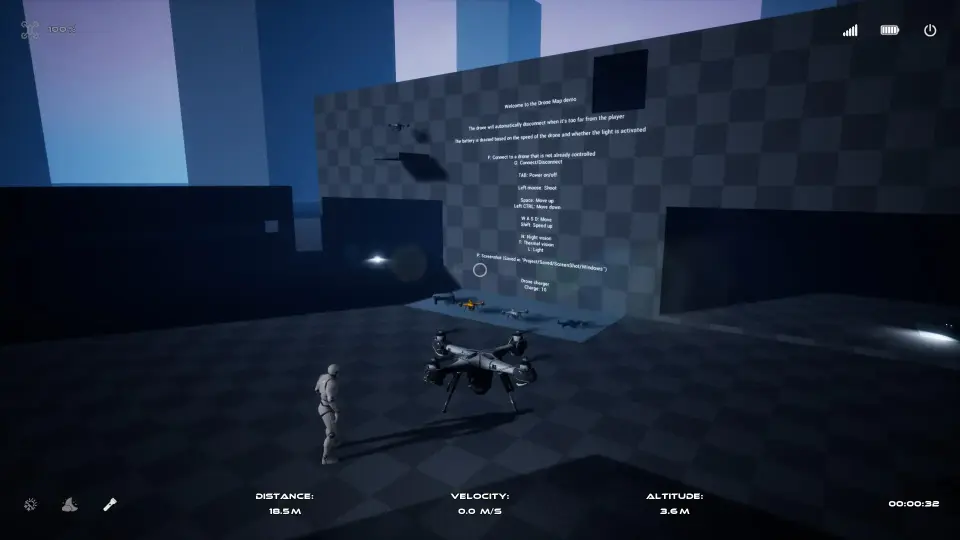
A drone changes the feel of a scene the moment a player takes control of it. Perspective shifts, movement becomes more deliberate, and the game suddenly has room for scouting, remote interaction, or simply a different way to move through space. Modular Drone System (Replicated) focuses on that handoff. It adds a fully replicated drone system to a game and gives players control over a drone that comes with many features, while keeping the setup easy to use and fully customizable.
That combination sets the tone for how this resource fits into production. It is not framed as a static prop or a narrow gameplay gimmick. It is a system: something meant to be integrated, adjusted, and used as part of a larger player experience. The emphasis on replication, player control, ease of use, and customization points to a tool that is meant to function inside real gameplay rather than sit at the edge of it.
When players take control of the drone
The core behavior here is straightforward and immediately useful: players can take control of a drone. That detail matters because it defines the asset around interaction rather than appearance alone. The drone is not just present in the world; it becomes something the player actively operates.
Inside a project, that kind of control can change how a level is approached. A controllable drone introduces a secondary mode of play inside the same project. Even without naming specific mechanics beyond what is confirmed, the basic act of switching into drone control creates a distinct gameplay state. It can alter pacing, camera feel, and player attention. Teams looking at this system are evaluating a resource that supports that shift directly.
The mention of many features also signals that the drone experience is not limited to bare movement or a single action. The exact feature set is not spelled out here, so the most responsible way to read that detail is as breadth within the drone system itself. It suggests a more rounded implementation than a minimal prototype, while still leaving room for teams to shape the system around their own project needs.
Fully replicated drone gameplay in Unreal Engine
The word replicated is one of the most important parts of the resource name, and it is reinforced in the description with fully replicated drone system. That tells developers where a significant part of the work has been aimed: the drone system is intended to function in replicated play.
For teams working in Unreal Engine, replication is rarely a cosmetic detail. A system can feel solid in a local test and still become difficult to use once multiple players are involved. Calling this drone system fully replicated places network-aware behavior at the center of the package rather than treating it as an afterthought. If a project needs drone control in a multiplayer or shared gameplay context, that is a meaningful point of distinction.
Just as important, replication changes how a feature is judged during implementation. A drone mechanic is not only about movement and responsiveness; it also has to exist reliably as part of the game state. A fully replicated system speaks to that production concern directly. It tells teams that the drone concept has been addressed as gameplay infrastructure, not only as a local interaction.
Because the confirmed details stop at full replication, there is no need to force extra technical claims around network structure, supported modes, or synchronization specifics. The key fact is strong enough on its own: this is a drone system prepared for replicated use, which can save development effort for projects that need that layer from the beginning.
Modular Drone System as an implementation tool
The other important word in the title is modular. Combined with the note that the system is fully customizable, it frames the package as something adaptable rather than locked into one exact design. That has a direct effect on implementation planning.
A modular system is easier to evaluate when a project already has its own visual identity, gameplay rules, and progression structure. Teams do not always need a finished mechanic that stays exactly as shipped. Often they need a working foundation that can be adjusted to match the rest of the game. The promise of full customization fits that need well. It suggests that the drone system can be shaped to suit different project directions instead of forcing every game into the same drone experience.
That flexibility matters at both small and larger scales. A solo developer may want a system that works quickly without heavy setup, then adjust it over time. A team may need a feature that is easy to bring into a project but still open to changes during iteration. Ease of use and customization together support that kind of workflow. One reduces friction at the start, and the other leaves room for revision later.
This is also where the resource becomes easier to place within production. It is not described as a rigid one-off blueprint with a single purpose. It is positioned as a reusable gameplay system that can be integrated and then tailored. That makes it relevant not only for experimenting with drone control, but also for teams trying to fit drone gameplay into an existing project structure.
Easy to use does not mean narrowly scoped
Easy to use is a short phrase, but in a game-development context it carries real weight. A system can be feature-rich and still become difficult to adopt if its setup is awkward or if basic implementation takes too long. Here, the description puts usability near the front. That makes the asset easier to read as a practical production tool rather than a concept piece.
Ease of use is especially relevant for gameplay systems that sit between player input, game logic, and replication. Even when a feature sounds exciting, teams often hesitate if integration looks time-consuming. By presenting the drone system as easy to use, the resource addresses one of the first concerns developers tend to have: how painful it will be to get a controllable, replicated gameplay feature into a project.
What makes that detail more useful is that it appears alongside full customization rather than in place of it. Sometimes ease of use can imply a closed setup with little room to change anything. That is not the picture here. The resource is presented as both approachable and adjustable. For implementation, that balance is important. Developers can look at it as something intended to get moving without making the rest of the project bend around it.
Creative uses for a player-controlled drone
Since the package centers on giving players control of a drone, its creative value comes from how naturally that idea can reshape game flow. The system supports a mode of interaction that is separate from standard player control, and that alone opens up design space inside many kinds of projects.
The most grounded way to think about its creative use is not through a list of assumed mechanics, but through the shift in player relationship to the world. A player-controlled drone can create moments of distance, observation, or remote presence simply because control has moved from the player character to another device in the scene. That kind of shift can be useful whether the drone is a central mechanic or an occasional tool.
Because the system is fully customizable, teams are not boxed into one fixed expression of that idea. The drone can serve the tone and structure of the game it is added to, rather than requiring the surrounding project to imitate a preset design. The value here is in the combination: a controllable drone system, already fully replicated, that still leaves room for project-specific choices.
That makes the resource easier to evaluate from a production angle. It is not only about whether a drone appears in the game. It is about whether a team wants a ready-to-integrate framework for drone control that already addresses replication and remains open to customization.
The strongest practical takeaway
Modular Drone System (Replicated) is most useful for teams that need drone gameplay to function as a real part of their project rather than as an isolated experiment. It adds a fully replicated drone system, lets players take control of the drone, includes many features, stays easy to use, and remains fully customizable. For developers weighing implementation effort against flexibility, that combination is the clearest reason to pay attention.
 Game Mechanics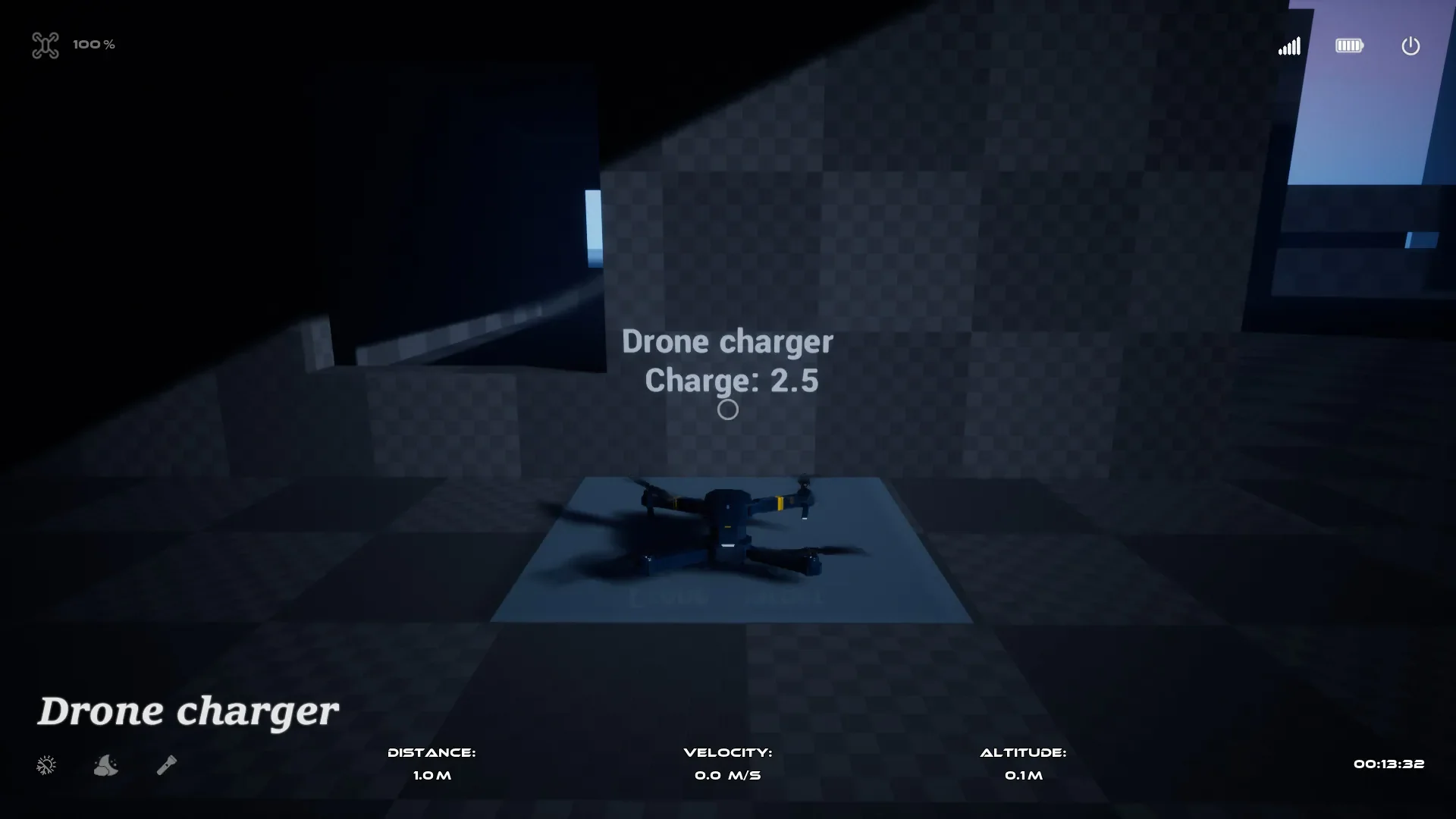
 Game Mechanics
 Game Mechanics
 Game Mechanics