"70b3cb896aae0d3c"{"id":"1000554","slug":"advanced-actor-transform","title":"Advanced Actor Transform","category":"Automations","engine":"4.26+,5.0+","assetVersion":"","engineVersion":"Engine Version: 4.26+,5.0+","tag":"Automations","accent":"blue","visual":"mech","summary":"GPU-optimized Unreal Engine shader plugin for transforming actors via World Position Offset, supporting hundreds of thousands of instances across multiplayer an","platform":"Unreal Engine","publishedAt":"2026-07-15T07:33:14.715Z","updatedAt":"2026-07-15T07:33:14.715Z","sourceNotes":[],"fileContents":[],"compatibility":["Unreal Engine","Engine Version: 4.26+,5.0+"],"featuredImage":{"alt":"Advanced Actor Transform","src":"/wp-content/uploads/published/2026/07/005ee67e0428-e9331e0c-3598-449d-8b8b-c7f2f1a9f64f-f0fceddfd3.webp"},"hasDownloadLink":true,"downloads":0,"terms":[{"taxonomy":"category","slug":"automations","name":"Automations"}],"galleryImages":[{"src":"/wp-content/uploads/published/2026/07/f5c518edbc44-7d23b67b-bc06-4bbd-b3e6-5f447decd239-2de4b3970e.webp","alt":"Advanced Actor Transform"},{"src":"/wp-content/uploads/published/2026/07/c8a280723a45-b1678af5-ffdb-40dc-ad62-88d3007ad3f8-9c59b31fba.webp","alt":"Advanced Actor Transform"},{"src":"/wp-content/uploads/published/2026/07/4e7c98a5ceb6-15e039fc-3c54-47c0-b715-9c85af87d71d-b0545de977.webp","alt":"Advanced Actor Transform"},{"src":"/wp-content/uploads/published/2026/07/cd5324e09355-acfb87f8-a12c-4f83-ba94-0ead326b6d51-97dda484c5.webp","alt":"Advanced Actor Transform"},{"src":"/wp-content/uploads/published/2026/07/fae7244b85c5-b907a9f9-d4cf-4cb2-8167-48815a9385ab-967fc52a93.webp","alt":"Advanced Actor Transform"}],"accessPanel":{"kind":"resource","title":"Download this resource","eyebrow":"Free Download","message":"Log in or create a free account to start your download.","fileName":"AAT.7z","safetyNote":"Resources are manually reviewed before listing to improve quality and reduce obvious risks.","actionLabel":"Download Free","resourceType":"Resource archive"},"contentHtml":"\u003ch2\u003eShader-driven actor movement without blueprint overhead\u003c/h2\u003e\n\u003cp\u003eAdvanced Actor Transform tackles a specific production problem: moving, rotating, scaling, and transforming large numbers of actors without driving that motion through Blueprint logic or CPU-based tag systems. The plugin pushes transformation work onto the GPU through a material function connected to the World Position Offset input of any material. This makes it possible to animate or displace vast crowds of meshes—hundreds of thousands of instances simultaneously—while keeping the CPU free for gameplay and simulation work.\u003c/p\u003e\n\u003cp\u003eThe tool sits at the intersection of motion graphics, cinematic sequences, and game environments. Because the transform is purely visual, the plugin is recommended for areas players cannot physically reach, avoiding mismatch between visible geometry and invisible collision shells. This makes it a fit for background cities, distant terrain features, ambient particle meshes, and decorative motion setups where visual fidelity matters more than physical interaction.\u003c/p\u003e \u003ch2\u003eThe November 2024 refactor and how it changed the workflow\u003c/h2\u003e\n\u003cp\u003eA significant refactor in November 2024 rebuilt the plugin for better performance and stripped away its earlier dependency on actor tags. The current workflow requires only that a material function be wired into the World Position Offset node of whatever material the user wants to drive. This aligns the tool with standard Unreal material pipeline practices and removes a layer of management that previously made scenes harder to maintain.\u003c/p\u003e\n\u003cp\u003eThis refactor simplifies adoption considerably. Instead of tagging every actor, users apply a material function directly within their existing material graph. The transformation logic executes on the GPU through the shader, which allows the plugin to scale to massive instance counts without adding per-actor overhead.\u003c/p\u003e \u003ch3\u003eUnreal 5.3 compatibility note\u003c/h3\u003e\n\u003cp\u003eUsers on Unreal Engine 5.3 should be aware that the file \u003cem\u003eAAU_AdvancedActorTransformUtilities\u003c/em\u003e Exists only for backward compatibility and can cause compilation issues. Deleting that file resolves the problem. The issue has been fixed for Unreal Engine versions 5.4 and later.\u003c/p\u003e \u003ch2\u003eFour control modes and their multiplayer behavior\u003c/h2\u003e\n\u003cp\u003eAdvanced Actor Transform provides four control modes that define how transformations are driven and how they behave in networked environments. Each mode fits different creative scenarios, and understanding the distinction matters when building scenes for multiplayer games versus single-player cinematics.\u003c/p\u003e \u003cul\u003e\n\u003cli\u003e\u003cstrong\u003eCamera Distance Based\u003c/strong\u003e — Transformations respond to each viewer's camera distance. In multiplayer, every player sees a different result because the calculation is tied to that individual player's camera position. This mode is useful when a scene should react uniquely to each observer.\u003c/li\u003e\n\u003cli\u003e\u003cstrong\u003eTime Based\u003c/strong\u003e — Transformations are driven by time, and every player in a multiplayer session sees the same thing. This is well suited for synchronized ambient motion that should appear consistent across all clients.\u003c/li\u003e\n\u003cli\u003e\u003cstrong\u003eComponent Distance Based\u003c/strong\u003e — Uses a component's distance to drive the transform. In multiplayer, only one player needs to set the location value in the Material Parameter Collection, and every other player will see the same result. This centralizes control without requiring each client to compute independently.\u003c/li\u003e\n\u003cli\u003e\u003cstrong\u003eMPC Based\u003c/strong\u003e — Functions similarly to Component Distance Based, using a Material Parameter Collection as the driving mechanism. A single player sets the value, and all players see the synchronized result.\u003c/li\u003e\n\u003c/ul\u003e \u003cp\u003eThe distinction between per-player and shared visibility is important for level designers and technical artists working on networked titles. Camera Distance Based allows personalized visual responses, while Time Based and the two MPC modes ensure consistency across the network. For single-player cinematics, any mode can be used, and the multiplayer behavior becomes a non-issue.\u003c/p\u003e \u003ch2\u003eCollision limitations and recommended placement\u003c/h2\u003e\n\u003cp\u003eBecause Advanced Actor Transform is a shader-based solution, the plugin does not update collision. The visual mesh moves, scales, or rotates, but the underlying collision body remains in its original position. The plugin documentation warns about this directly: using the effect in reachable areas can cause players to collide with invisible objects or pass through visually displaced geometry.\u003c/p\u003e\n\u003cp\u003eThe recommendation is to restrict the effect to unreachable areas. Distant terrain features like mountains or moving clouds that sit beyond the player's navigable space are prime candidates. Background building clusters in a cityscape can be animated without worrying about physical interaction. Decorative or ambient visual layers benefit because the shader handles the visual transform while the collision system is bypassed entirely.\u003c/p\u003e\n\u003cp\u003eFor game environment artists, this constraint guides placement decisions. The plugin excels when used as a set dressing tool for far-field visuals, where the player can see the effect but never touch it. Cinematic sequences where the camera flies through an area but no character physically interacts with the environment are also safe contexts for full deployment.\u003c/p\u003e \u003ch2\u003eEditorScriptingUtilities and tag-based scripting\u003c/h2\u003e\n\u003cp\u003eAlthough the November 2024 refactor removed the plugin's dependency on tags for its core operation, the scripts for adding and removing actor tags still require Unreal Engine's built-in \u003cstrong\u003eEditorScriptingUtilities\u003c/strong\u003e Plugin to be enabled. This engine plugin must be turned on for those tag manipulation scripts to function.\u003c/p\u003e\n\u003cp\u003eFor users who have fully migrated to the material function workflow, this requirement may not surface often. However, projects that still rely on actor tag management or scripts that automate tagging workflows will need EditorScriptingUtilities active in their plugin list.\u003c/p\u003e \u003ch2\u003eArticle snapshot: scenes, scale, and where it fits\u003c/h2\u003e\n\u003cp\u003eAdvanced Actor Transform is ideal for motion graphics, cinematics, and games where large-scale visual transformation is needed without CPU overhead. The plugin's ability to support hundreds of thousands of instances simultaneously makes it relevant for crowd-scale visuals, ambient environment motion, and decorative effects that would be costly to drive through traditional Blueprint or actor-based systems.\u003c/p\u003e\n\u003cp\u003eTechnical artists building cinematic sequences can use any of the four control modes to drive visual motion synced across shots. Level designers working on multiplayer maps can choose between per-player and shared visibility modes depending on whether the effect should respond uniquely to each viewer or remain consistent across the network. The tool's GPU optimization keeps frame rates stable even at extreme instance counts.\u003c/p\u003e \u003ch3\u003eWho benefits most from this tool\u003c/h3\u003e\n\u003cp\u003eTechnical artists, shader artists, and level designers working on visually dense Unreal Engine projects will find the most value here. The plugin rewards users comfortable working within the material graph and who understand when to leverage GPU-driven motion over actor-based animation. For cinematics where collision is not a concern, and for game environments where the effect sits beyond player reach, Advanced Actor Transform offers a performant path to large-scale transformation work.\u003c/p\u003e\n\n\u003ch2\u003eRelated Resources Worth Checking\u003c/h2\u003e\n\u003cul\u003e\n\u003cli\u003e\u003ca href=\"https://3dcghub.com/liquid-bottle-simulation-vfx/\" title=\"Liquid Bottle Simulation VFX\"\u003eLiquid Bottle Simulation VFX\u003c/a\u003e\u003c/li\u003e\n\u003cli\u003e\u003ca href=\"https://3dcghub.com/multiplayer-world-origin-rebase-tool/\" title=\"Multiplayer World Origin Rebase Tool\"\u003eMultiplayer World Origin Rebase Tool\u003c/a\u003e\u003c/li\u003e\n\u003cli\u003e\u003ca href=\"https://3dcghub.com/fps-booster-static-mesh-optimizer/\" title=\"FPS Booster: Static Mesh Optimizer\"\u003eFPS Booster: Static Mesh Optimizer\u003c/a\u003e\u003c/li\u003e\n\u003cli\u003e\u003ca href=\"https://3dcghub.com/234-advanced-light-function/\" title=\"234 Advanced Light Function\"\u003e234 Advanced Light Function\u003c/a\u003e\u003c/li\u003e\n\u003cli\u003e\u003ca href=\"https://3dcghub.com/pivot-tool/\" title=\"Pivot Tool\"\u003ePivot Tool\u003c/a\u003e\u003c/li\u003e\n\u003c/ul\u003e","contentTextLength":7398,"navigation":{"current":1303,"total":3713,"previous":{"id":"1000555","slug":"adventure-characters-pack","title":"Adventure Characters (Pack)","category":"Characters \u0026 Creatures","platform":"Unreal Engine","updatedAt":"2026-07-15T07:58:52.143Z"},"next":{"id":"1000553","slug":"3d-scanned-venice-and-north-of-italy-assets-full-pack","title":"3D-Scanned Venice \u0026 North of Italy Assets - Full Pack","category":"Interior","platform":"Unreal Engine","updatedAt":"2026-07-15T07:24:46.371Z"}},"relatedResources":[{"id":"10337","slug":"liquid-bottle-simulation-vfx","title":"Liquid Bottle Simulation VFX","category":"Automations","engine":"4.26+,5.0+","assetVersion":"Engine version: 4.26+,5.0+","engineVersion":"4.25","tag":"Automations","accent":"blue","visual":"mech","summary":"Enhance your project's realism with a liquid simulation system that reacts to movement and velocity. This customizable asset is designed for easy implementation on custom 3D models.","platform":"Unreal Engine","publishedAt":"2026-03-03T15:07:02.000Z","updatedAt":"2026-04-19T15:50:04.000Z","sourceNotes":[],"fileContents":[],"compatibility":["Unreal Engine","Engine version: 4.26+,5.0+"],"featuredImage":{"alt":"Liquid Bottle Simulation VFX","src":"https://3dcghub.com/wp-content/uploads/2026/03/238a989d-14ef-4207-b1f4-f981e6595e80.webp"},"hasDownloadLink":true,"downloads":0},{"id":"10366","slug":"multiplayer-world-origin-rebase-tool","title":"Multiplayer World Origin Rebase Tool","category":"Automations","engine":"4.26+,5.0+","assetVersion":"Engine version: 4.26+,5.0+","engineVersion":"4.24","tag":"Automations","accent":"blue","visual":"luts","summary":"The Multiplayer World Origin Rebase Tool provides an algorithmic solution for managing world origins in large-scale multiplayer environments. It eliminates floating point precision errors by repositioning the origin based on player movement.","platform":"Unreal Engine","publishedAt":"2026-03-03T15:10:28.000Z","updatedAt":"2026-04-19T15:50:03.000Z","sourceNotes":[],"fileContents":[],"compatibility":["Unreal Engine","Engine version: 4.26+,5.0+"],"featuredImage":{"alt":"Multiplayer World Origin Rebase Tool","src":"https://3dcghub.com/wp-content/uploads/2026/03/1ee7411a-3e4c-40b6-9ca8-e13aa12d7d2f.webp"},"hasDownloadLink":true,"downloads":0},{"id":"10329","slug":"fps-booster-static-mesh-optimizer","title":"FPS Booster: Static Mesh Optimizer","category":"Automations","engine":"5.3+","assetVersion":"Engine version: 5.3+","engineVersion":"4.26","tag":"Automations","accent":"blue","visual":"city","summary":"Improve your project performance with the FPS Booster: Static Mesh Optimizer. This tool converts static mesh actors into instanced versions to significantly reduce lighting build times.","platform":"Unreal Engine","publishedAt":"2026-03-03T15:05:39.000Z","updatedAt":"2026-04-19T15:50:04.000Z","sourceNotes":[],"fileContents":[],"compatibility":["Unreal Engine"],"featuredImage":{"alt":"FPS Booster: Static Mesh Optimizer","src":"https://3dcghub.com/wp-content/uploads/2026/03/0713c682-b5a8-4676-9fc5-e7e2477a6083.webp"},"hasDownloadLink":true,"downloads":0}]}
Automations
Advanced Actor Transform
GPU-optimized Unreal Engine shader plugin for transforming actors via World Position Offset, supporting hundreds of thousands of instances across multiplayer an
Shader-driven actor movement without blueprint overhead
Advanced Actor Transform tackles a specific production problem: moving, rotating, scaling, and transforming large numbers of actors without driving that motion through Blueprint logic or CPU-based tag systems. The plugin pushes transformation work onto the GPU through a material function connected to the World Position Offset input of any material. This makes it possible to animate or displace vast crowds of meshes—hundreds of thousands of instances simultaneously—while keeping the CPU free for gameplay and simulation work.
The tool sits at the intersection of motion graphics, cinematic sequences, and game environments. Because the transform is purely visual, the plugin is recommended for areas players cannot physically reach, avoiding mismatch between visible geometry and invisible collision shells. This makes it a fit for background cities, distant terrain features, ambient particle meshes, and decorative motion setups where visual fidelity matters more than physical interaction.
The November 2024 refactor and how it changed the workflow
A significant refactor in November 2024 rebuilt the plugin for better performance and stripped away its earlier dependency on actor tags. The current workflow requires only that a material function be wired into the World Position Offset node of whatever material the user wants to drive. This aligns the tool with standard Unreal material pipeline practices and removes a layer of management that previously made scenes harder to maintain.
This refactor simplifies adoption considerably. Instead of tagging every actor, users apply a material function directly within their existing material graph. The transformation logic executes on the GPU through the shader, which allows the plugin to scale to massive instance counts without adding per-actor overhead.
Unreal 5.3 compatibility note
Users on Unreal Engine 5.3 should be aware that the file AAU_AdvancedActorTransformUtilities Exists only for backward compatibility and can cause compilation issues. Deleting that file resolves the problem. The issue has been fixed for Unreal Engine versions 5.4 and later.
Four control modes and their multiplayer behavior
Advanced Actor Transform provides four control modes that define how transformations are driven and how they behave in networked environments. Each mode fits different creative scenarios, and understanding the distinction matters when building scenes for multiplayer games versus single-player cinematics.
Camera Distance Based — Transformations respond to each viewer's camera distance. In multiplayer, every player sees a different result because the calculation is tied to that individual player's camera position. This mode is useful when a scene should react uniquely to each observer.
Time Based — Transformations are driven by time, and every player in a multiplayer session sees the same thing. This is well suited for synchronized ambient motion that should appear consistent across all clients.
Component Distance Based — Uses a component's distance to drive the transform. In multiplayer, only one player needs to set the location value in the Material Parameter Collection, and every other player will see the same result. This centralizes control without requiring each client to compute independently.
MPC Based — Functions similarly to Component Distance Based, using a Material Parameter Collection as the driving mechanism. A single player sets the value, and all players see the synchronized result.
The distinction between per-player and shared visibility is important for level designers and technical artists working on networked titles. Camera Distance Based allows personalized visual responses, while Time Based and the two MPC modes ensure consistency across the network. For single-player cinematics, any mode can be used, and the multiplayer behavior becomes a non-issue.
Collision limitations and recommended placement
Because Advanced Actor Transform is a shader-based solution, the plugin does not update collision. The visual mesh moves, scales, or rotates, but the underlying collision body remains in its original position. The plugin documentation warns about this directly: using the effect in reachable areas can cause players to collide with invisible objects or pass through visually displaced geometry.
The recommendation is to restrict the effect to unreachable areas. Distant terrain features like mountains or moving clouds that sit beyond the player's navigable space are prime candidates. Background building clusters in a cityscape can be animated without worrying about physical interaction. Decorative or ambient visual layers benefit because the shader handles the visual transform while the collision system is bypassed entirely.
For game environment artists, this constraint guides placement decisions. The plugin excels when used as a set dressing tool for far-field visuals, where the player can see the effect but never touch it. Cinematic sequences where the camera flies through an area but no character physically interacts with the environment are also safe contexts for full deployment.
EditorScriptingUtilities and tag-based scripting
Although the November 2024 refactor removed the plugin's dependency on tags for its core operation, the scripts for adding and removing actor tags still require Unreal Engine's built-in EditorScriptingUtilities Plugin to be enabled. This engine plugin must be turned on for those tag manipulation scripts to function.
For users who have fully migrated to the material function workflow, this requirement may not surface often. However, projects that still rely on actor tag management or scripts that automate tagging workflows will need EditorScriptingUtilities active in their plugin list.
Article snapshot: scenes, scale, and where it fits
Advanced Actor Transform is ideal for motion graphics, cinematics, and games where large-scale visual transformation is needed without CPU overhead. The plugin's ability to support hundreds of thousands of instances simultaneously makes it relevant for crowd-scale visuals, ambient environment motion, and decorative effects that would be costly to drive through traditional Blueprint or actor-based systems.
Technical artists building cinematic sequences can use any of the four control modes to drive visual motion synced across shots. Level designers working on multiplayer maps can choose between per-player and shared visibility modes depending on whether the effect should respond uniquely to each viewer or remain consistent across the network. The tool's GPU optimization keeps frame rates stable even at extreme instance counts.
Who benefits most from this tool
Technical artists, shader artists, and level designers working on visually dense Unreal Engine projects will find the most value here. The plugin rewards users comfortable working within the material graph and who understand when to leverage GPU-driven motion over actor-based animation. For cinematics where collision is not a concern, and for game environments where the effect sits beyond player reach, Advanced Actor Transform offers a performant path to large-scale transformation work.
 Automations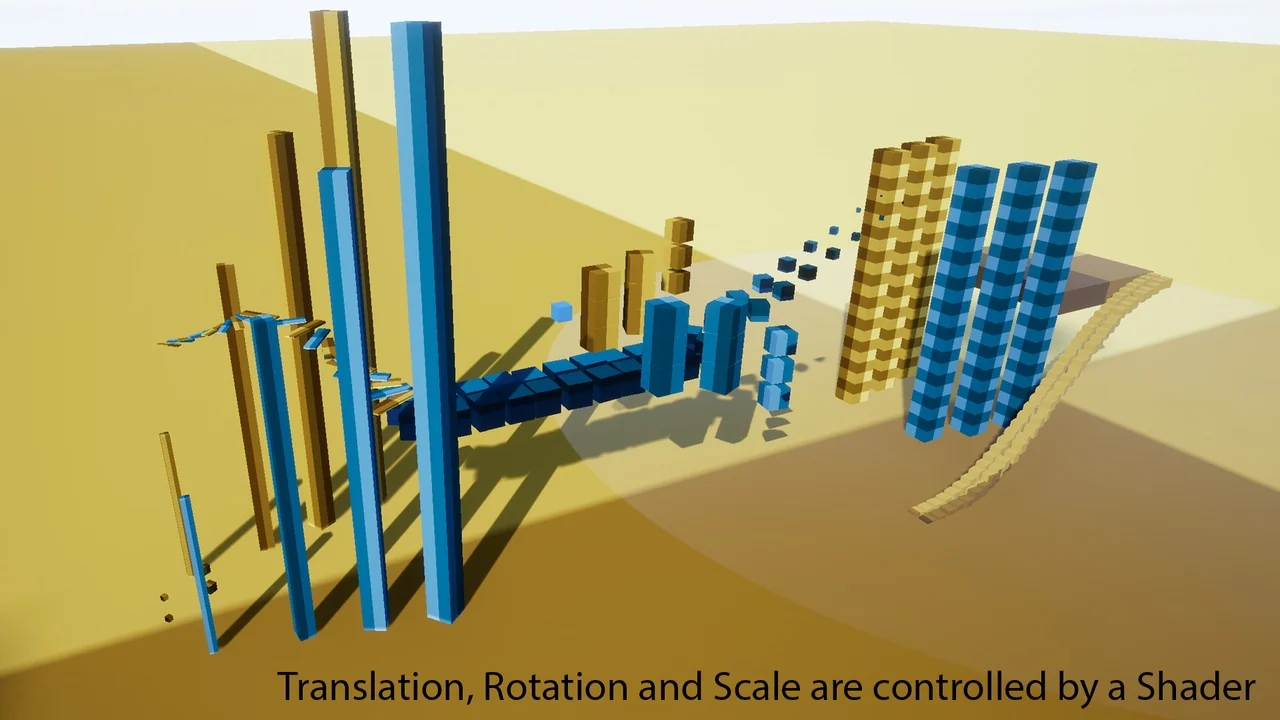
 Automations
 Automations
 Automations