"ddd0e3fb95b0aec2"{"id":"1001545","slug":"post-apocalyptic-office","title":"Post Apocalyptic Office","category":"Buildings \u0026 Architecture","engine":"5.1+","assetVersion":"","engineVersion":"Engine Version: 5.1+","tag":"Buildings","accent":"blue","visual":"mech","summary":"Explore how the Post Apocalyptic Office uses texture baking to achieve real-time rendering fidelity for web 3D viewers and VR art gallery environments.","platform":"Unreal Engine","publishedAt":"2026-10-10T03:08:38.961Z","updatedAt":"2026-10-10T03:08:38.961Z","sourceNotes":[],"fileContents":[],"compatibility":["Unreal Engine","Engine Version: 5.1+"],"featuredImage":{"alt":"Post Apocalyptic Office","src":"/wp-content/uploads/published/2026/10/ea2a4ed6d14d-a58794dc-33d3-40c4-90b9-bc15d8c233c1-1206803040.webp"},"hasDownloadLink":true,"downloads":0,"terms":[{"taxonomy":"category","slug":"buildings-and-architecture","name":"Buildings \u0026 Architecture"}],"galleryImages":[{"src":"/wp-content/uploads/published/2026/10/b8d5f5b8296a-cb5ff613-e765-4907-86b8-5b3096a43f2e-8bf0e5a0aa.webp","alt":"Post Apocalyptic Office"},{"src":"/wp-content/uploads/published/2026/10/f9c87abff8a6-42404ffa-279e-4f40-9dc7-ed808fb7bde8-59b4621263.webp","alt":"Post Apocalyptic Office"}],"accessPanel":{"kind":"resource","title":"Download this resource","eyebrow":"Free Download","message":"Log in or create a free account to start your download.","fileName":"Content.7z","safetyNote":"Resources are manually reviewed before listing to improve quality and reduce obvious risks.","actionLabel":"Download Free","resourceType":"Resource archive"},"contentHtml":"\u003ch2\u003eSolving Illumination Limits in Browser 3D Viewers\u003c/h2\u003e\u003cp\u003eDelivering convincing illumination inside browser-based 3D viewers often collides with strict client-side performance constraints. When interactive viewports cannot run heavy dynamic light calculations, visual depth can collapse into flat, unconvincing surfaces.\u003c/p\u003e\u003cp\u003eThe Post Apocalyptic Office tackles this performance bottleneck through the direct application of the texture baking technique. By committing light values and shadow falloff directly into the texture maps, the interior reproduces the atmosphere of real-time rendering within lightweight online platforms such as Sketchfab. The resulting visuals carry realistic ambient occlusion, directional shading, and subtle surface highlights without demanding active calculations from the visitor's hardware. This method ensures that the complex mood of a dark, ruined workplace remains intact whether viewed on high-end desktop hardware or standard web browsers.\u003c/p\u003e\u003ch2\u003eStaging Cyberpunk and Sci-Fi Office Interiors\u003c/h2\u003e\u003cp\u003eDystopian workplace environments rely heavily on the visual contrast between mundane utility and speculative technology. Capturing that friction requires furniture and architectural pieces that evoke both administrative familiarity and futuristic collapse.\u003c/p\u003e\u003cp\u003eIn this setting, interior office elements merge cyberpunk aesthetics with sci-fi themes to build an apocalyptic corporate narrative. Desks, equipment, and structural furniture are not simply generic waste; they reflect an advanced society whose commercial machinery has ground to a halt. The interplay of futuristic shapes with post-apocalyptic dilapidation creates a readable indoor environment where every piece of furniture supports the theme of a collapsed corporate sector. Artists can study or repurpose these interior assets to ground their apocalyptic projects in recognizable yet distinct sci-fi office spaces.\u003c/p\u003e\u003ch2\u003eTexture Baking Technique Versus Non-Baked Material Pipelines\u003c/h2\u003e\u003cp\u003eStatic lighting maps deliver undeniable rendering efficiency, but dynamic world-building frequently demands clean materials unencumbered by pre-calculated illumination. Relying on a single texture setup can restrict how an environment behaves across different software workflows.\u003c/p\u003e\u003cp\u003eTo address varying production needs, the Post Apocalyptic Office exists across two separate material configurations: pre-baked textures and non-baked textures. The baked version is specifically tuned to mirror complete lighting conditions inside web viewports, providing instant visual fidelity for direct display. Conversely, having the scene and assets available with non-baked textures grants technical artists total freedom when migrating props into custom game engines or rendering packages. Unbaked textures allow for real-time directional lights, interactive light switches, and player-driven illumination without fighting against painted-in shadows.\u003c/p\u003e\u003ch2\u003eNavigating the Post Apocalyptic Office in VR Art Gallery Setups\u003c/h2\u003e\u003cp\u003eImmersive virtual reality places unforgiving demands on rendering budgets, where erratic framerates immediately induce discomfort and break presence. Achieving visual density in VR requires asset pipelines that respect high refresh rate requirements.\u003c/p\u003e\u003cp\u003eConfigured for VR art gallery compatibility, this office interior leverages pre-baked lighting to sustain consistent visual fidelity inside headset displays. Because the computational load of bounce light and ambient shading is already solved in the texture maps, the VR application avoids expensive per-frame lighting passes. Visitors can step directly inside the post-apocalyptic office, inspecting the cyberpunk workstations and deteriorated room layout up close while maintaining fluid, comfortable tracking. The balance of pre-rendered shading and three-dimensional immersion makes the scene a viable showpiece for virtual exhibitions and architectural walkthroughs.\u003c/p\u003e\u003ch2\u003eLighting Realism and Surface Shadow Integration\u003c/h2\u003e\u003cp\u003eInterior scenes live or die by the credibility of their contact shadows, corner darkening, and light decay. Without careful illumination modeling, interior geometry can appear detached from its surroundings.\u003c/p\u003e\u003cp\u003eBy capturing these lighting subtleties through baked maps, the Post Apocalyptic Office preserves delicate shadow contacts between office furniture and floor planes. Subtle gradients across wall surfaces, soft occlusion under desks, and realistic highlights on sci-fi consoles communicate tangible weight and spatial continuity. The baked lighting technique mimics advanced ray-traced real-time rendering, granting every corner of the room grounded physical depth. This allows creators showcasing interior art to present complex illumination that looks sophisticated from any camera perspective within the viewer.\u003c/p\u003e\u003ch2\u003ePractical Placement in Interactive and Exhibition Workflows\u003c/h2\u003e\u003cp\u003eBalancing high visual impact with lightweight distribution is a constant challenge when preparing scenes for modern digital distribution and virtual showcases.\u003c/p\u003e\u003cp\u003eWithin a real-time production or exhibition pipeline, the Post Apocalyptic Office functions as both a standalone digital display and a versatile asset repository. Teams looking to deploy an instant virtual showcase can load the baked configuration into online viewers or VR gallery spaces without spending time tuning runtime lights. Meanwhile, developers assembling larger cyberpunk or apocalyptic environments can draw from the non-baked furniture pieces to populate broader interior levels where dynamic game lights dictate the scene. The asset setup bridges the gap between quick interactive presentation and flexible asset utilization.\u003c/p\u003e\n\n\u003ch2\u003eExplore Similar Assets\u003c/h2\u003e\n\u003cul\u003e\n\u003cli\u003e\u003ca href=\"https://3dcghub.com/post-apocalyptic-signs-vol-2/\" title=\"Post Apocalyptic Signs - VOL 2\"\u003ePost Apocalyptic Signs - VOL 2\u003c/a\u003e\u003c/li\u003e\n\u003cli\u003e\u003ca href=\"https://3dcghub.com/post-apocalyptic-mansion-albert-manor-day-and-night-lighting/\" title=\"Post Apocalyptic Mansion Albert Manor (Day and Night Lighting)\"\u003ePost Apocalyptic Mansion Albert Manor (Day and Night Lighting)\u003c/a\u003e\u003c/li\u003e\n\u003cli\u003e\u003ca href=\"https://3dcghub.com/airport-terminal-interior/\" title=\"Airport Terminal Interior\"\u003eAirport Terminal Interior\u003c/a\u003e\u003c/li\u003e\n\u003cli\u003e\u003ca href=\"https://3dcghub.com/decay-oil-drums-district-rusty-industrial-slum/\" title=\"Decay: Oil Drums District - [Rusty Industrial Slum]\"\u003eDecay: Oil Drums District - [Rusty Industrial Slum]\u003c/a\u003e\u003c/li\u003e\n\u003cli\u003e\u003ca href=\"https://3dcghub.com/abandoned-gas-station-post-apocalyptic/\" title=\"Abandoned Gas Station - Post Apocalyptic\"\u003eAbandoned Gas Station - Post Apocalyptic\u003c/a\u003e\u003c/li\u003e\n\u003c/ul\u003e","contentTextLength":5840,"navigation":{"current":29,"total":3511,"previous":{"id":"1001546","slug":"post-apocalyptic-industrial-scene","title":"Post-Apocalyptic Industrial Scene","category":"Cities","platform":"Unreal Engine","updatedAt":"2026-10-10T03:09:50.108Z"},"next":{"id":"1001544","slug":"pine-forest-photogrammetry-based-high-poly-biome","title":"Pine forest - Photogrammetry based High poly Biome","category":"Forest \u0026 Jungle","platform":"Unreal Engine","updatedAt":"2026-10-10T03:08:19.926Z"}},"relatedResources":[{"id":"1000019","slug":"post-apocalyptic-signs-vol-2","title":"Post Apocalyptic Signs - VOL 2","category":"Buildings \u0026 Architecture","engine":"4.26+,5.0+","assetVersion":"","engineVersion":"4.26+,5.0+","tag":"Buildings","accent":"blue","visual":"mech","summary":"An Unreal Engine sign pack with 13 meshes, 2K-focused texture sets, master material controls, and a test lighting scene for post-apocalyptic environments.","platform":"Unreal Engine","publishedAt":"2026-05-20T08:56:10.607Z","updatedAt":"2026-05-20T08:56:10.607Z","sourceNotes":[],"fileContents":[],"compatibility":["Unreal Engine","Engine version: 4.26+,5.0+"],"featuredImage":{"alt":"Post Apocalyptic Signs - VOL 2","src":"/wp-content/uploads/published/2026/05/e6ffdf8a377c-71495d9c-c13f-4d54-880a-c78595efa7f4-fdcef70fe3.webp"},"hasDownloadLink":true,"downloads":0},{"id":"1001129","slug":"post-apocalyptic-mansion-albert-manor-day-and-night-lighting","title":"Post Apocalyptic Mansion Albert Manor (Day and Night Lighting)","category":"Horror","engine":"5.3+","assetVersion":"","engineVersion":"Engine Version: 5.3+","tag":"Horror","accent":"blue","visual":"mech","summary":"Post-apocalyptic mansion Albert Manor delivers a ruined exterior for Unreal Engine with 300 meshes, master material controls, day/night dynamic lighting, foliag","platform":"Unreal Engine","publishedAt":"2026-09-07T18:33:34.153Z","updatedAt":"2026-09-07T18:33:34.153Z","sourceNotes":[],"fileContents":[],"compatibility":["Unreal Engine","Engine Version: 5.3+"],"featuredImage":{"alt":"Post Apocalyptic Mansion Albert Manor (Day and Night Lighting)","src":"/wp-content/uploads/published/2026/09/8ba08547c7f3-1351b525-aca0-4fc9-ae54-559f87377a0a-01fd175d01.webp"},"hasDownloadLink":true,"downloads":0},{"id":"1001045","slug":"airport-terminal-interior","title":"Airport Terminal Interior","category":"Apocalyptic / Post-apocalyptic","engine":"5.1+","assetVersion":"","engineVersion":"Engine Version: 5.1+","tag":"Apocalyptic","accent":"blue","visual":"mech","summary":"An Unreal Engine 5 airport terminal environment featuring over 250 modular assets, advanced master materials, Lumen lighting, and blueprint-driven controls for","platform":"Unreal Engine","publishedAt":"2026-08-27T15:15:18.323Z","updatedAt":"2026-08-27T15:15:18.323Z","sourceNotes":[],"fileContents":[],"compatibility":["Unreal Engine","Engine Version: 5.1+"],"featuredImage":{"alt":"Airport Terminal Interior","src":"/wp-content/uploads/published/2026/08/40189474eb31-0b21dda8-4ad5-440c-89b8-46954fb7eb3a-71576db436.webp"},"hasDownloadLink":true,"downloads":0}]}
Buildings
Post Apocalyptic Office
Explore how the Post Apocalyptic Office uses texture baking to achieve real-time rendering fidelity for web 3D viewers and VR art gallery environments.
Delivering convincing illumination inside browser-based 3D viewers often collides with strict client-side performance constraints. When interactive viewports cannot run heavy dynamic light calculations, visual depth can collapse into flat, unconvincing surfaces.
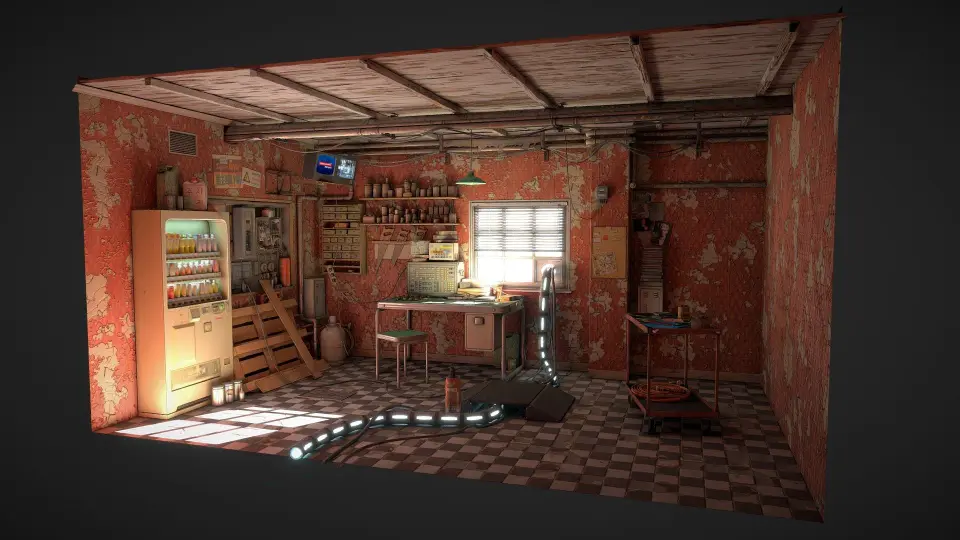
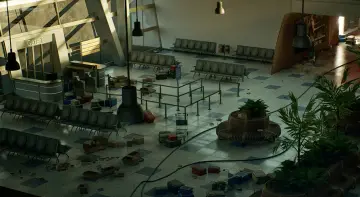
The Post Apocalyptic Office tackles this performance bottleneck through the direct application of the texture baking technique. By committing light values and shadow falloff directly into the texture maps, the interior reproduces the atmosphere of real-time rendering within lightweight online platforms such as Sketchfab. The resulting visuals carry realistic ambient occlusion, directional shading, and subtle surface highlights without demanding active calculations from the visitor's hardware. This method ensures that the complex mood of a dark, ruined workplace remains intact whether viewed on high-end desktop hardware or standard web browsers.
Staging Cyberpunk and Sci-Fi Office Interiors
Dystopian workplace environments rely heavily on the visual contrast between mundane utility and speculative technology. Capturing that friction requires furniture and architectural pieces that evoke both administrative familiarity and futuristic collapse.
In this setting, interior office elements merge cyberpunk aesthetics with sci-fi themes to build an apocalyptic corporate narrative. Desks, equipment, and structural furniture are not simply generic waste; they reflect an advanced society whose commercial machinery has ground to a halt. The interplay of futuristic shapes with post-apocalyptic dilapidation creates a readable indoor environment where every piece of furniture supports the theme of a collapsed corporate sector. Artists can study or repurpose these interior assets to ground their apocalyptic projects in recognizable yet distinct sci-fi office spaces.
Texture Baking Technique Versus Non-Baked Material Pipelines
Static lighting maps deliver undeniable rendering efficiency, but dynamic world-building frequently demands clean materials unencumbered by pre-calculated illumination. Relying on a single texture setup can restrict how an environment behaves across different software workflows.
To address varying production needs, the Post Apocalyptic Office exists across two separate material configurations: pre-baked textures and non-baked textures. The baked version is specifically tuned to mirror complete lighting conditions inside web viewports, providing instant visual fidelity for direct display. Conversely, having the scene and assets available with non-baked textures grants technical artists total freedom when migrating props into custom game engines or rendering packages. Unbaked textures allow for real-time directional lights, interactive light switches, and player-driven illumination without fighting against painted-in shadows.
Navigating the Post Apocalyptic Office in VR Art Gallery Setups
Immersive virtual reality places unforgiving demands on rendering budgets, where erratic framerates immediately induce discomfort and break presence. Achieving visual density in VR requires asset pipelines that respect high refresh rate requirements.
Configured for VR art gallery compatibility, this office interior leverages pre-baked lighting to sustain consistent visual fidelity inside headset displays. Because the computational load of bounce light and ambient shading is already solved in the texture maps, the VR application avoids expensive per-frame lighting passes. Visitors can step directly inside the post-apocalyptic office, inspecting the cyberpunk workstations and deteriorated room layout up close while maintaining fluid, comfortable tracking. The balance of pre-rendered shading and three-dimensional immersion makes the scene a viable showpiece for virtual exhibitions and architectural walkthroughs.
Lighting Realism and Surface Shadow Integration
Interior scenes live or die by the credibility of their contact shadows, corner darkening, and light decay. Without careful illumination modeling, interior geometry can appear detached from its surroundings.
By capturing these lighting subtleties through baked maps, the Post Apocalyptic Office preserves delicate shadow contacts between office furniture and floor planes. Subtle gradients across wall surfaces, soft occlusion under desks, and realistic highlights on sci-fi consoles communicate tangible weight and spatial continuity. The baked lighting technique mimics advanced ray-traced real-time rendering, granting every corner of the room grounded physical depth. This allows creators showcasing interior art to present complex illumination that looks sophisticated from any camera perspective within the viewer.
Practical Placement in Interactive and Exhibition Workflows
Balancing high visual impact with lightweight distribution is a constant challenge when preparing scenes for modern digital distribution and virtual showcases.
Within a real-time production or exhibition pipeline, the Post Apocalyptic Office functions as both a standalone digital display and a versatile asset repository. Teams looking to deploy an instant virtual showcase can load the baked configuration into online viewers or VR gallery spaces without spending time tuning runtime lights. Meanwhile, developers assembling larger cyberpunk or apocalyptic environments can draw from the non-baked furniture pieces to populate broader interior levels where dynamic game lights dictate the scene. The asset setup bridges the gap between quick interactive presentation and flexible asset utilization.
 Buildings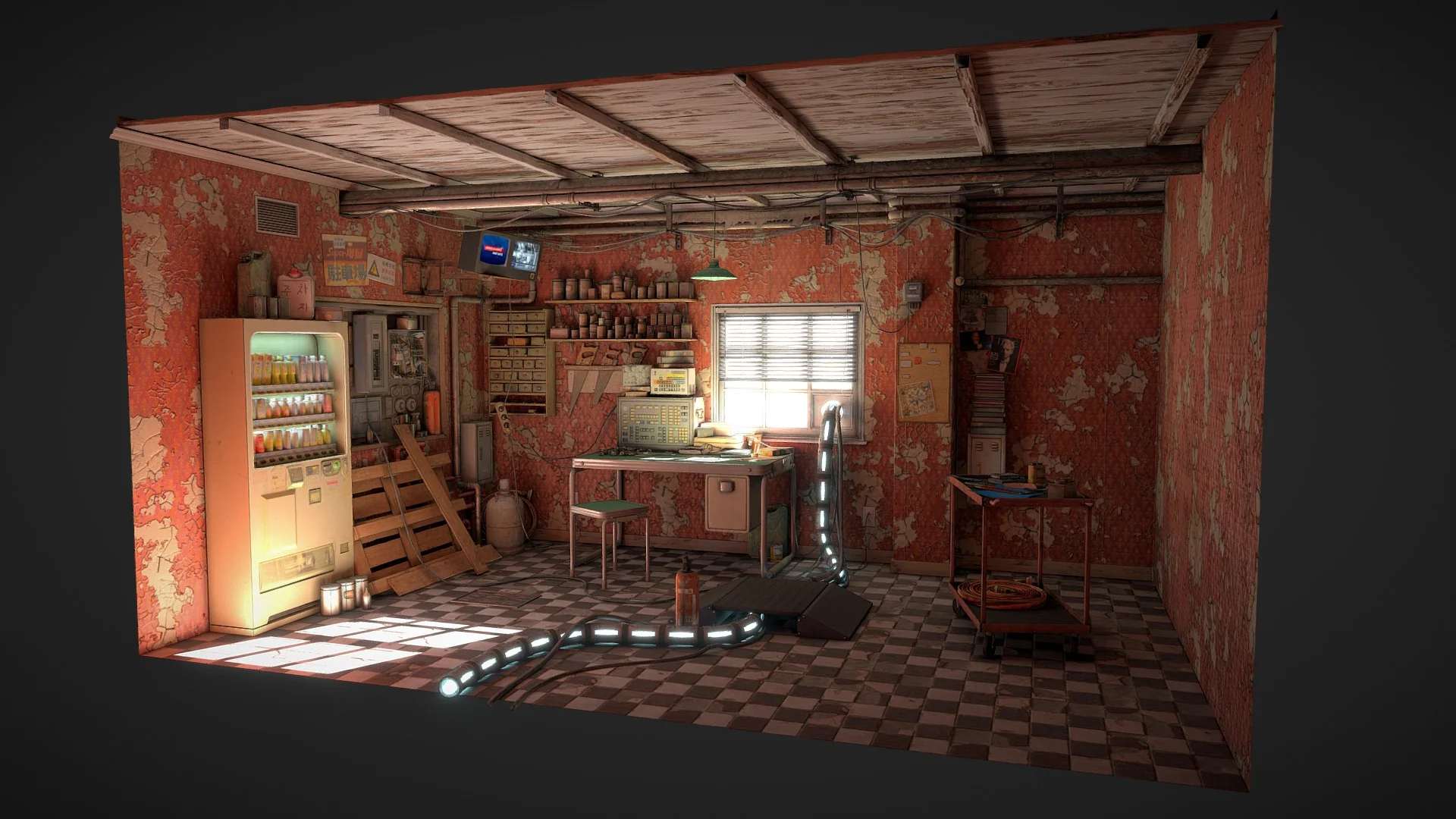
 Buildings
 Horror
 Apocalyptic