"ddd0e3fb95b0aec2"{"id":"1001544","slug":"pine-forest-photogrammetry-based-high-poly-biome","title":"Pine forest - Photogrammetry based High poly Biome","category":"Forest \u0026 Jungle","engine":"5.1+","assetVersion":"","engineVersion":"Engine Version: 5.1+","tag":"Forest \u0026 Jungle","accent":"blue","visual":"mech","summary":"Explore the Pine forest photogrammetry biome, featuring 95 procedural assets, 8K terrain support, RHA texture maps, and high-fidelity wind animation.","platform":"Unreal Engine","publishedAt":"2026-10-10T03:08:19.926Z","updatedAt":"2026-10-10T03:08:19.926Z","sourceNotes":[],"fileContents":[],"compatibility":["Unreal Engine","Engine Version: 5.1+"],"featuredImage":{"alt":"Pine forest - Photogrammetry based High poly Biome","src":"/wp-content/uploads/published/2026/10/82885d3ff947-ab7d61f5-70cf-4902-a8eb-c017c5314e67-95b32130bb.webp"},"hasDownloadLink":true,"downloads":0,"terms":[{"taxonomy":"category","slug":"forest-and-jungle","name":"Forest \u0026 Jungle"}],"galleryImages":[{"src":"/wp-content/uploads/published/2026/10/1631b17e1915-06441ac7-dcdb-481b-a5de-c3f00edec046-f940758465.webp","alt":"Pine forest - Photogrammetry based High poly Biome"},{"src":"/wp-content/uploads/published/2026/10/a8142f33a926-8f3ecd8f-96de-4995-8d40-80c3a0b749b6-62c98519d6.webp","alt":"Pine forest - Photogrammetry based High poly Biome"},{"src":"/wp-content/uploads/published/2026/10/90fe799dc1e0-ceda137b-3d72-46e4-8319-c6f74fc805e8-69208eb9a7.webp","alt":"Pine forest - Photogrammetry based High poly Biome"},{"src":"/wp-content/uploads/published/2026/10/484727e5a4a2-250fa555-c688-43eb-aa88-b657997b046b-3e0827e24f.webp","alt":"Pine forest - Photogrammetry based High poly Biome"},{"src":"/wp-content/uploads/published/2026/10/5e22b25afb84-cfc4e2c5-13cf-4588-9759-0452127a875a-a0b84ffc44.webp","alt":"Pine forest - Photogrammetry based High poly Biome"},{"src":"/wp-content/uploads/published/2026/10/b7fb94093707-cddf2d2b-fb04-44e0-949a-c0b52d855414-c651a57b75.webp","alt":"Pine forest - Photogrammetry based High poly Biome"},{"src":"/wp-content/uploads/published/2026/10/f0a3299b42e4-c09679d2-6f1f-4a8e-9378-f606d0ac6a9e-1a86557d14.webp","alt":"Pine forest - Photogrammetry based High poly Biome"},{"src":"/wp-content/uploads/published/2026/10/2c96ff9bb049-b3765ceb-fbfc-4293-b906-7a237f89b732-ba49345d15.webp","alt":"Pine forest - Photogrammetry based High poly Biome"},{"src":"/wp-content/uploads/published/2026/10/14b52b351dc3-57d44b72-ccfa-4a62-9e8e-b09ccdac26bc-ffb59bedfc.webp","alt":"Pine forest - Photogrammetry based High poly Biome"}],"accessPanel":{"kind":"resource","title":"Download this resource","eyebrow":"Free Download","message":"Log in or create a free account to start your download.","fileName":"Pine forest - Photogrammetry based High poly Biome.7z","safetyNote":"Resources are manually reviewed before listing to improve quality and reduce obvious risks.","actionLabel":"Download Free","resourceType":"Resource archive"},"contentHtml":"\u003cp\u003eOutdoor wilderness environments that demand true-to-life surface definition often struggle with repetitive tiling and flat foliage silhouettes. Setting up a believable woodland requires balancing individual tree fidelity against sprawling landscape coverage. Pine forest - Photogrammetry based High poly Biome tackles this production challenge by supplying 95 dedicated assets captured with high-resolution camera equipment and sharp optical lenses, giving exterior scenes immediate structural realism right down to bark fissures and ground litter.\u003c/p\u003e \u003ch2\u003eProcedural Forest Assembly with LGT Layers and Biome Volumes\u003c/h2\u003e\n\u003cp\u003ePopulating wide terrain expanses by hand is time-consuming and often introduces unnatural cluster patterns. This collection completely avoids hand placement, shifting the world-building workload into an automated ruleset. The environment setup operates through four landscape LGT layers alongside three distinct procedural volumes dedicated to Birch, Akacia, and Snag distributions.\u003c/p\u003e\n\u003cp\u003eBy routing distribution through procedural volumes, deadwood and secondary tree varieties populate the woodland logically. Snags congregate where forest decay naturally occurs, while Birch and Akacia groupings intersperse throughout the dominant pine canopy. The four LGT layers manage ground transitions beneath these clusters, ensuring the terrain beneath fallen trunks and dense brush reflects the appropriate soil and ground cover.\u003c/p\u003e\n\u003cp\u003eThis layout operates seamlessly across versatile high-poly terrains and landscapes up to 8K in scale. Large open-world sectors can be populated quickly because the underlying procedural logic populates the 95 individual components across hills, clearings, and ridgelines without requiring manual adjustment for every trunk or shrub.\u003c/p\u003e \u003ch2\u003ePhotogrammetry Assets and High-Resolution Landscape Coverage\u003c/h2\u003e\n\u003cp\u003eEvery asset in the biome originates from real-world photogrammetry scans. Rather than relying on synthetic surface approximations, the capture pipeline includes dedicated scans for standing tree trunks, forest grass, individual fallen logs, and tileable surface grounds. Optical capture with pin-sharp lenses preserves authentic micro-relief on rough bark and organic matter, preventing textures from blurring when viewed at close distances.\u003c/p\u003e\n\u003cp\u003eTileable materials within the package maintain acute surface definition across broad terrain spans. When applied over expansive 8K landscapes, these tileable textures preserve the crisp delineation of pine needle beds, damp forest soil, and rocky ground patches. Because the trunks and logs originate from matching photogrammetry sessions, placed debris shares the identical visual language, lighting response, and weathering characteristics of the living trees.\u003c/p\u003e\n\u003cp\u003eThe collection prioritizes sheer mesh detail on the pine trees themselves. Branch structures, needle clusters, and trunk contours carry substantial polygon counts to eliminate polygonal stepping, delivering authentic natural silhouettes against skyboxes and ambient fog passes.\u003c/p\u003e \u003ch2\u003eTexture Mapping Schemes and RHA Channel Packing\u003c/h2\u003e\n\u003cp\u003eManaging high-fidelity foliage assets requires structured asset naming and clean texture organization to maintain rendering efficiency. Assets follow a strict file naming convention that maps directly into modern material workflows using PNG files.\u003c/p\u003e\n\u003cp\u003eBase color data is designated with the _D.png suffix. Surface normal maps are separated by visual fidelity requirements: _N.png supplies the normal map for LOD03, while mesh-specific naming conventions such as N_LOD00-02 handle the high-detail normal information for the closer levels of detail (LOD00 through LOD02). Splitting the normal maps relative to mesh LOD states preserves clean transitions from foreground views into distant vistas without wasting texture bandwidth on distant geometry.\u003c/p\u003e\n\u003cp\u003eSurface properties are packed into composite RHA.png files. This channel-packed layout routes Roughness into the Red channel, Height into the Green channel, and Ambient Occlusion into the Blue channel. Storing three essential material parameters in a single texture sample reduces texture fetch overhead within the master material, simplifying shader logic across the grass, bark, and tileable ground surfaces.\u003c/p\u003e \u003ch2\u003eFoliage Motion Driven by the Wind Material Function\u003c/h2\u003e\n\u003cp\u003eStatic woodland assets quickly break immersion in real-time scenes. To establish dynamic movement throughout the forest floor and canopy, both trees and grass are procedurally animated through a dedicated wind material function. This procedural approach computes realistic wind displacement directly within the shader.\u003c/p\u003e\n\u003cp\u003eNeedle clusters, branches, and field grass respond dynamically to wind vectors without relying on baked skeletal rigs or costly vertex caches. The shader-based displacement mimics light atmospheric breezes as well as heavier gusts, ensuring that broad expanses of photogrammetry grass react synchronously with towering pine crowns. Because the animation is driven procedurally through the material system, foliage movement stays continuous and variable across massive landscape sectors.\u003c/p\u003e \u003ch2\u003eHardware Targets and Framerate Profiles in Unreal Engine 5.1\u003c/h2\u003e\n\u003cp\u003eBecause tree geometric detail is treated as the primary priority in this biome, the asset density carries significant rendering demands. In Unreal Engine 5.1, the complete procedural scene runs at approximately 30 frames per second on an NVIDIA RTX 3090 graphics card at a rendering resolution of 2560x1440.\u003c/p\u003e\n\u003cp\u003eThis performance profile reflects the heavy computational weight of dense, photogrammetry-based tree geometry combined with 8K landscape materials and complex material-based wind evaluation. Teams targeting high-framerate competitive gaming experiences would need to aggressively tune density volumes or restrict the procedural volumes to contained visual zones.\u003c/p\u003e\n\u003cp\u003eThe resource is ideally tailored for cinematic productions, virtual production backgrounds, architectural visualization exteriors, and high-end benchmark environments where visual density and photorealistic fidelity take precedence over high-framerate budgets. Artists working on offline renders or cinematic sequencing benefit immediately from the pre-configured procedural scattering, razor-sharp tileables, and photogrammetry bark scans that hold up under close-up inspection.\u003c/p\u003e\n\n\u003ch2\u003eContinue Browsing Similar Packs\u003c/h2\u003e\n\u003cul\u003e\n\u003cli\u003e\u003ca href=\"https://3dcghub.com/stylized-landscape-5-biomes-stylized-low-poly-forest-orasot-bundle/\" title=\"Stylized Landscape 5 Biomes + Stylized + Low poly forest : Orasot Bundle\"\u003eStylized Landscape 5 Biomes + Stylized + Low poly forest : Orasot Bundle\u003c/a\u003e\u003c/li\u003e\n\u003cli\u003e\u003ca href=\"https://3dcghub.com/rain-forest-pack/\" title=\"Rain Forest Pack\"\u003eRain Forest Pack\u003c/a\u003e\u003c/li\u003e\n\u003cli\u003e\u003ca href=\"https://3dcghub.com/red-pine-biome/\" title=\"Red Pine Biome\"\u003eRed Pine Biome\u003c/a\u003e\u003c/li\u003e\n\u003cli\u003e\u003ca href=\"https://3dcghub.com/procedural-biomes/\" title=\"Procedural Biomes\"\u003eProcedural Biomes\u003c/a\u003e\u003c/li\u003e\n\u003cli\u003e\u003ca href=\"https://3dcghub.com/wildlands-stylized-nature-pine-forest-trees-foliage-nature-forest-biome/\" title=\"Wildlands: Stylized Nature (Pine Forest, Trees, Foliage, Nature, Forest, Biome)\"\u003eWildlands: Stylized Nature (Pine Forest, Trees, Foliage, Nature, Forest, Biome)\u003c/a\u003e\u003c/li\u003e\n\u003c/ul\u003e","contentTextLength":6515,"navigation":{"current":30,"total":3511,"previous":{"id":"1001545","slug":"post-apocalyptic-office","title":"Post Apocalyptic Office","category":"Buildings \u0026 Architecture","platform":"Unreal Engine","updatedAt":"2026-10-10T03:08:38.961Z"},"next":{"id":"1001543","slug":"safe-house","title":"Safe House","category":"Environments","platform":"Unreal Engine","updatedAt":"2026-10-09T17:36:04.770Z"}},"relatedResources":[{"id":"1000892","slug":"stylized-landscape-5-biomes-stylized-low-poly-forest-orasot-bundle","title":"Stylized Landscape 5 Biomes + Stylized + Low poly forest : Orasot Bundle","category":"Forest \u0026 Jungle","engine":"5.2+","assetVersion":"","engineVersion":"Engine Version: 5.2+","tag":"Forest \u0026 Jungle","accent":"blue","visual":"city","summary":"This bundle merges stylized forest, five-biome landscape, and low-poly forest assets with a practical exposure fix for DefaultEngine.ini and virtual texture set","platform":"Unreal Engine","publishedAt":"2026-08-06T04:37:15.039Z","updatedAt":"2026-08-06T04:37:15.039Z","sourceNotes":[],"fileContents":[],"compatibility":["Unreal Engine","Engine Version: 5.2+"],"featuredImage":{"alt":"Stylized Landscape 5 Biomes + Stylized + Low poly forest : Orasot Bundle","src":"/wp-content/uploads/published/2026/08/d7e4432aba24-96cbb20e-4693-449f-94da-c2b94b1eecfe-b7d03925eb.webp"},"hasDownloadLink":true,"downloads":2},{"id":"1000256","slug":"rain-forest-pack","title":"Rain Forest Pack","category":"Forest \u0026 Jungle","engine":"5.0+","assetVersion":"","engineVersion":"Engine Version: 5.0+","tag":"Forest \u0026 Jungle","accent":"blue","visual":"mech","summary":"A fully procedural, photogrammetry-based tropical forest environment for Unreal Engine, featuring shader-based foliage interactivity and 4K textures.","platform":"Unreal Engine","publishedAt":"2026-06-30T22:45:14.446Z","updatedAt":"2026-06-30T22:45:14.446Z","sourceNotes":[],"fileContents":[],"compatibility":["Unreal Engine","Engine Version: 5.0+"],"featuredImage":{"alt":"Rain Forest Pack","src":"/wp-content/uploads/published/2026/06/73c675f710b9-a9b259e6-bdd0-4fa4-b8af-3c472531ddd4-559a55a7d4.webp"},"hasDownloadLink":true,"downloads":4},{"id":"1000663","slug":"red-pine-biome","title":"Red Pine Biome","category":"Forest \u0026 Jungle","engine":"5.4+","assetVersion":"","engineVersion":"Engine Version: 5.4+","tag":"Forest \u0026 Jungle","accent":"blue","visual":"mech","summary":"Red Pine Biome delivers Mediterranean red pine trees, endemic vegetation, cliffs, and scatter with landscape material, procedural foliage, and wind interaction.","platform":"Unreal Engine","publishedAt":"2026-07-22T06:41:11.442Z","updatedAt":"2026-07-22T06:41:11.442Z","sourceNotes":[],"fileContents":[],"compatibility":["Unreal Engine","Engine Version: 5.4+"],"featuredImage":{"alt":"Red Pine Biome","src":"/wp-content/uploads/published/2026/07/b774421f9718-c6d49ccf-c1a0-425a-bc09-3d64bdd79653-d7a4531c7f.webp"},"hasDownloadLink":true,"downloads":1}]}
Forest & Jungle
Pine forest - Photogrammetry based High poly Biome
Explore the Pine forest photogrammetry biome, featuring 95 procedural assets, 8K terrain support, RHA texture maps, and high-fidelity wind animation.
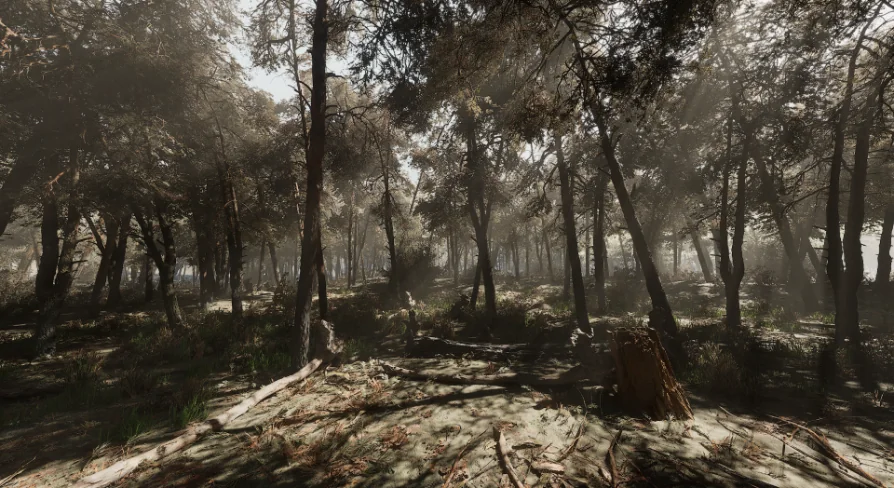
Outdoor wilderness environments that demand true-to-life surface definition often struggle with repetitive tiling and flat foliage silhouettes. Setting up a believable woodland requires balancing individual tree fidelity against sprawling landscape coverage. Pine forest - Photogrammetry based High poly Biome tackles this production challenge by supplying 95 dedicated assets captured with high-resolution camera equipment and sharp optical lenses, giving exterior scenes immediate structural realism right down to bark fissures and ground litter.
Procedural Forest Assembly with LGT Layers and Biome Volumes
Populating wide terrain expanses by hand is time-consuming and often introduces unnatural cluster patterns. This collection completely avoids hand placement, shifting the world-building workload into an automated ruleset. The environment setup operates through four landscape LGT layers alongside three distinct procedural volumes dedicated to Birch, Akacia, and Snag distributions.
By routing distribution through procedural volumes, deadwood and secondary tree varieties populate the woodland logically. Snags congregate where forest decay naturally occurs, while Birch and Akacia groupings intersperse throughout the dominant pine canopy. The four LGT layers manage ground transitions beneath these clusters, ensuring the terrain beneath fallen trunks and dense brush reflects the appropriate soil and ground cover.
This layout operates seamlessly across versatile high-poly terrains and landscapes up to 8K in scale. Large open-world sectors can be populated quickly because the underlying procedural logic populates the 95 individual components across hills, clearings, and ridgelines without requiring manual adjustment for every trunk or shrub.
Photogrammetry Assets and High-Resolution Landscape Coverage
Every asset in the biome originates from real-world photogrammetry scans. Rather than relying on synthetic surface approximations, the capture pipeline includes dedicated scans for standing tree trunks, forest grass, individual fallen logs, and tileable surface grounds. Optical capture with pin-sharp lenses preserves authentic micro-relief on rough bark and organic matter, preventing textures from blurring when viewed at close distances.
Tileable materials within the package maintain acute surface definition across broad terrain spans. When applied over expansive 8K landscapes, these tileable textures preserve the crisp delineation of pine needle beds, damp forest soil, and rocky ground patches. Because the trunks and logs originate from matching photogrammetry sessions, placed debris shares the identical visual language, lighting response, and weathering characteristics of the living trees.
The collection prioritizes sheer mesh detail on the pine trees themselves. Branch structures, needle clusters, and trunk contours carry substantial polygon counts to eliminate polygonal stepping, delivering authentic natural silhouettes against skyboxes and ambient fog passes.
Texture Mapping Schemes and RHA Channel Packing
Managing high-fidelity foliage assets requires structured asset naming and clean texture organization to maintain rendering efficiency. Assets follow a strict file naming convention that maps directly into modern material workflows using PNG files.
Base color data is designated with the _D.png suffix. Surface normal maps are separated by visual fidelity requirements: _N.png supplies the normal map for LOD03, while mesh-specific naming conventions such as N_LOD00-02 handle the high-detail normal information for the closer levels of detail (LOD00 through LOD02). Splitting the normal maps relative to mesh LOD states preserves clean transitions from foreground views into distant vistas without wasting texture bandwidth on distant geometry.
Surface properties are packed into composite RHA.png files. This channel-packed layout routes Roughness into the Red channel, Height into the Green channel, and Ambient Occlusion into the Blue channel. Storing three essential material parameters in a single texture sample reduces texture fetch overhead within the master material, simplifying shader logic across the grass, bark, and tileable ground surfaces.
Foliage Motion Driven by the Wind Material Function
Static woodland assets quickly break immersion in real-time scenes. To establish dynamic movement throughout the forest floor and canopy, both trees and grass are procedurally animated through a dedicated wind material function. This procedural approach computes realistic wind displacement directly within the shader.
Needle clusters, branches, and field grass respond dynamically to wind vectors without relying on baked skeletal rigs or costly vertex caches. The shader-based displacement mimics light atmospheric breezes as well as heavier gusts, ensuring that broad expanses of photogrammetry grass react synchronously with towering pine crowns. Because the animation is driven procedurally through the material system, foliage movement stays continuous and variable across massive landscape sectors.
Hardware Targets and Framerate Profiles in Unreal Engine 5.1
Because tree geometric detail is treated as the primary priority in this biome, the asset density carries significant rendering demands. In Unreal Engine 5.1, the complete procedural scene runs at approximately 30 frames per second on an NVIDIA RTX 3090 graphics card at a rendering resolution of 2560x1440.
This performance profile reflects the heavy computational weight of dense, photogrammetry-based tree geometry combined with 8K landscape materials and complex material-based wind evaluation. Teams targeting high-framerate competitive gaming experiences would need to aggressively tune density volumes or restrict the procedural volumes to contained visual zones.
The resource is ideally tailored for cinematic productions, virtual production backgrounds, architectural visualization exteriors, and high-end benchmark environments where visual density and photorealistic fidelity take precedence over high-framerate budgets. Artists working on offline renders or cinematic sequencing benefit immediately from the pre-configured procedural scattering, razor-sharp tileables, and photogrammetry bark scans that hold up under close-up inspection.
 Forest & Jungle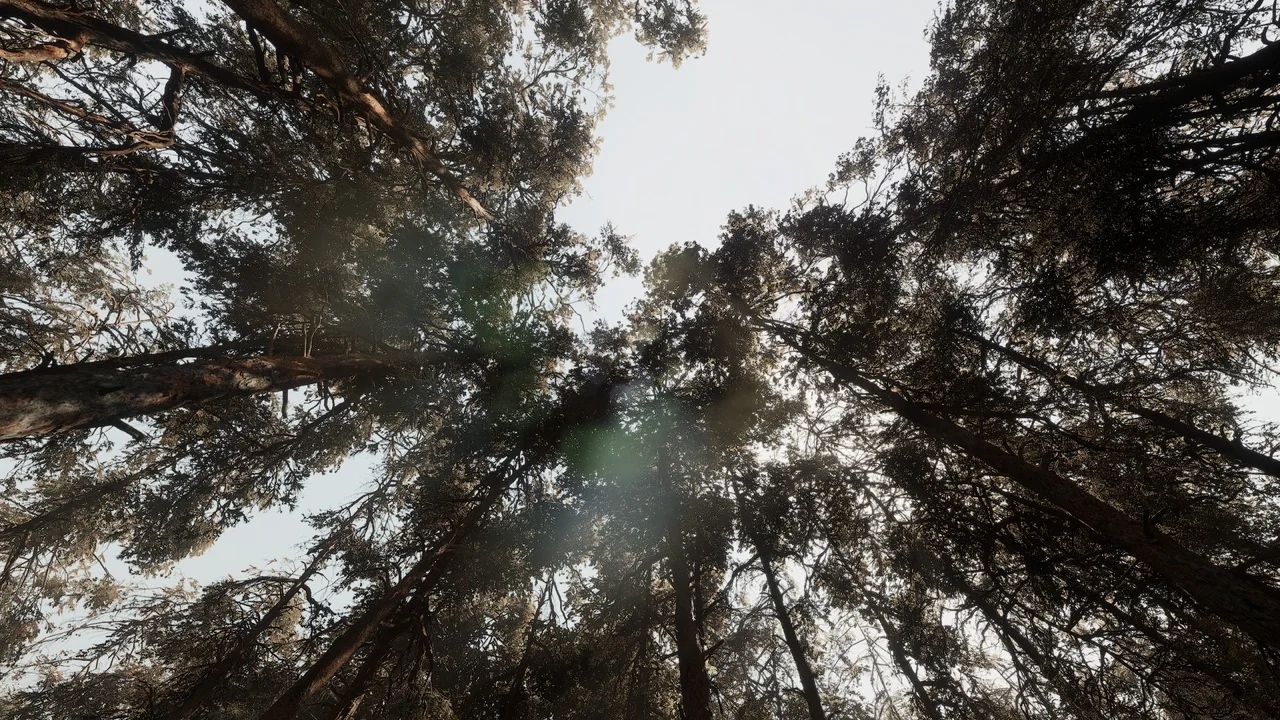
 Forest & Jungle
 Forest & Jungle
 Forest & Jungle