"d33c94b0a941547b"{"id":"1002754","slug":"xeric-hammock-habitat-brush","title":"Xeric Hammock Habitat Brush","category":"Forest \u0026 Jungle","engine":"5.0+","assetVersion":"","engineVersion":"Engine Version: 5.0+","tag":"Forest \u0026 Jungle","accent":"blue","visual":"mech","summary":"Populate realistic Central Florida biomes with 78 low-poly foliage meshes, SSS materials, wind leaf rustle, and GIS-informed ecosystem distributions.","platform":"Unreal Engine","indexPolicy":"index","publishedAt":"2026-11-19T07:40:53.059Z","updatedAt":"2026-11-19T07:40:53.059Z","sourceNotes":[],"fileContents":[],"compatibility":["Unreal Engine","Engine Version: 5.0+"],"featuredImage":{"alt":"Xeric Hammock Habitat Brush","src":"/wp-content/uploads/published/2026/11/8cfd2dc2c3d2-7c806d38-d3d7-42fb-8cd1-a174fce52883-40ff564e84.webp"},"fileSizeBytes":182045831,"hasDownloadLink":true,"downloads":0,"terms":[{"taxonomy":"category","slug":"forest-and-jungle","name":"Forest \u0026 Jungle"}],"galleryImages":[{"src":"/wp-content/uploads/published/2026/11/6c73106674e6-ed950223-c400-4589-9908-15e1fcb26d7b-3d7db3b18b.webp","alt":"Xeric Hammock Habitat Brush"},{"src":"/wp-content/uploads/published/2026/11/3edea54817d4-738b33aa-fea4-49af-8443-208339b3dd89-e4ef4a3324.webp","alt":"Xeric Hammock Habitat Brush"}],"accessPanel":{"kind":"resource","title":"Get this resource","safetyNote":"Resources are manually reviewed before listing to improve quality and reduce obvious risks.","fileName":"Content.7z","resourceType":"Resource archive","versions":[]},"contentHtml":"\u003ch2\u003eRecreating Florida Scrub with the Xeric Hammock Botanical Species\u003c/h2\u003e\u003cp\u003eWild subtropical environments present distinct structural layers, shifting from sprawling canopies down to dense ground cover adapted to sandy, well-drained soils. The asset collection captures this ecology through 15 photorealistic, low-polygon plant varieties sourced directly from photographs taken in the wild across Central Florida. Each species reflects the dry, scrubby balance typical of the region, providing botanical building blocks that span tall trees, mid-tier shrubs, succulents, lichens, and grasses.\u003c/p\u003e\u003cp\u003eCanopy and sub-canopy structures depend on distinctive woody trees. Longleaf Pine stands tall with characteristic needle clumps, while Pond Cypress introduces needle configurations suited for wetland borders and transition zones. Sand Live Oak provides wide, gnarled branching habits essential for dense woods, complemented by the tall, fan-shaped fronds of Sabal Palm. Hanging directly from these canopies, Spanish Moss functions as an epiphyte layer, draping across limbs to break up branch silhouettes and establish environmental depth.\u003c/p\u003e\u003cp\u003eLower elevation growth shifts toward hardy understory plants and ground cover. Saw Palmetto anchors the immediate understory with its fan-like clusters, working alongside the tight branches of Wax Myrtle and the needle-like foliage of Scrub Rosemary. At ground level, flowering species and native perennials punctuate the terrain. Florida Tickseed, Goldenrod, and Shortleaf Rosegentian add subtle seasonal color across sandy clearings. Prickly Pear pads introduce fleshy, arid succulent forms, contrasting with the pale, sprawling mats of Reindeer Moss. Tall, sweeping strands of Lopsided Indiangrass and clumps of Wiregrass complete the floor, filling the spaces between larger root systems with light, wind-reactive ground cover.\u003c/p\u003e\u003ch2\u003eMesh Variation, Levels of Detail, and AR/VR Performance\u003c/h2\u003e\u003cp\u003eCreating believable wilderness requires avoiding visible repetition across repeating instances. The 15 plant varieties are divided into 78 unique meshes, giving artists multiple geometric variations for each species. Distributing these individual meshes across a scene allows groves of Sand Live Oak or clusters of Saw Palmetto to exhibit irregular, organic branching without exposing identical leaf distributions to the player camera.\u003c/p\u003e\u003cp\u003eEvery mesh is configured with low-polygon geometry specifically targeting real-time constraints in virtual reality and augmented reality platforms. Immersive head-mounted displays demand strict polygon budgets to sustain high frame rates and prevent motion disorientation. To reinforce this efficiency, the meshes include integrated Levels of Detail (LODs). As the camera draws back across rolling terrain, the foliage steps down through its geometric levels, shedding unnecessary edge loops while preserving plant volume, outline, and silhouette from a distance.\u003c/p\u003e\u003ch2\u003eEditable Wind Motion and Foliage Surface Shading\u003c/h2\u003e\u003cp\u003eStatic vegetation quickly breaks the illusion of natural space. To maintain dynamic movement in open fields, the foliage uses an editable wind material capable of producing leaf rustle across fronds, grasses, and tree branches. Artists can calibrate the intensity, frequency, and movement patterns of the wind logic to simulate gentle coastal breezes or violent storm fronts moving through the tree lines.\u003c/p\u003e\u003cp\u003eLighting interactions receive equal attention through dedicated subsurface scattering (SSS) maps. Thin leaves, needles, and grass blades naturally permit partial light transmission when backlit by direct sunlight. The subsurface maps govern how light scatters through interior plant tissue and reflects across exterior leaf surfaces. Sunlight filtering through a canopy of Sand Live Oak leaves or glancing across the waxy blades of Saw Palmetto captures the characteristic translucency of living foliage rather than appearing as opaque, rigid sheets of card geometry.\u003c/p\u003e\u003ch2\u003eLarge-Scale Brush Painting Across Layered Ground Materials\u003c/h2\u003e\u003cp\u003eCovering extensive terrain with vegetation requires tools designed to handle broad coverage without slowing manual world-building. Included in the package is a landscape specifically set up for large-scale foliage painting, configured to operate effectively with wide brush sweeps. A recommended foliage brush size of 4000 enables artists to deposit balanced vegetation sweeps over wide acreage in single strokes.\u003c/p\u003e\u003cp\u003eTo bypass tedious manual spacing adjustments, the brush system features preset foliage densities. These presets handle plant spacing automatically, distributing tall trees, medium undergrowth, and low grass clumps at stable, balanced ratios across wide landscapes. The distribution mimics natural spacing, ensuring heavy underbrush does not unbalance the underlying terrain or overcrowd canopy trees.\u003c/p\u003e\u003cp\u003eGround-level visual interest is supported by six landscape painting materials. These surfaces let creators blend varied soil, sand, and organic earth layers across the terrain. Scattered weed meshes act as ground surface noise, breaking up flat texture seams where plant stalks emerge from the soil. Combining the layered earth materials, surface weeds, and preset density painting allows expansive terrains to be detailed efficiently without repetitive surface tiling.\u003c/p\u003e\u003ch2\u003eAssembling GIS-Accurate Habitat Ecosystems\u003c/h2\u003e\u003cp\u003eFoliage placement in nature is rarely random; it follows precise patterns shaped by hydrology, soil nutrients, and microclimates. Rather than relying on guesswork, the package provides an example natural community and ecosystem reconstructed from authentic plant inventory records and geographic information system (GIS) plant distribution data from Central Florida.\u003c/p\u003e\u003cp\u003eThis data-driven foundation demonstrates how species naturally group together in native subtropical habitats. Wiregrass sits tightly beside Longleaf Pine stands, while Saw Palmetto forms dense thickets near Sand Live Oaks, and Reindeer Moss carpets open sandy patches. By referencing this GIS-informed layout, environment artists can design biomes that reflect genuine ecological relationships, yielding immersive digital landscapes grounded in scientific real-world distribution.\u003c/p\u003e\n\n\u003ch2\u003eContinue Browsing Similar Packs\u003c/h2\u003e\n\u003cul\u003e\n\u003cli\u003e\u003ca href=\"https://3dcghub.com/wet-flatwoods-habitat-brush/\" rel=\"noopener noreferrer\"\u003eWet Flatwoods Habitat Brush\u003c/a\u003e\u003c/li\u003e\n\u003cli\u003e\u003ca href=\"https://3dcghub.com/subtropical-waterbody-habitat-brush/\" rel=\"noopener noreferrer\"\u003eSubtropical Waterbody Habitat Brush\u003c/a\u003e\u003c/li\u003e\n\u003cli\u003e\u003ca href=\"https://3dcghub.com/scrubby-flatwoods-habitat-brush/\" rel=\"noopener noreferrer\"\u003eScrubby Flatwoods Habitat Brush\u003c/a\u003e\u003c/li\u003e\n\u003cli\u003e\u003ca href=\"https://3dcghub.com/mesic-flatwoods-habitat-brush/\" rel=\"noopener noreferrer\"\u003eMesic Flatwoods Habitat Brush\u003c/a\u003e\u003c/li\u003e\n\u003cli\u003e\u003ca href=\"https://3dcghub.com/basin-swamp-habitat-brush/\" rel=\"noopener noreferrer\"\u003eBasin Swamp Habitat Brush\u003c/a\u003e\u003c/li\u003e\n\u003c/ul\u003e","contentTextLength":6352,"navigation":{"current":3,"total":4676,"previous":{"id":"1001866","slug":"butterfly-particles","title":"Butterfly Particles","category":"Variety","platform":"Unreal Engine","updatedAt":"2026-11-19T12:32:03.720Z"},"next":{"id":"1002753","slug":"modular-low-poly-factory-desktop-and-mobile","title":"Modular Low Poly Factory [Desktop \u0026 Mobile]","category":"Industrial","platform":"Unreal Engine","updatedAt":"2026-11-19T07:08:41.828Z"}},"relatedResources":[{"id":"1002749","slug":"wet-flatwoods-habitat-brush","title":"Wet Flatwoods Habitat Brush","category":"Forest \u0026 Jungle","engine":"5.0+","assetVersion":"","engineVersion":"Engine Version: 5.0+","tag":"Forest \u0026 Jungle","accent":"blue","visual":"mech","summary":"Examine the technical layout, plant rosters, and foliage painting workflows of the Wet Flatwoods Habitat Brush for real-time Central Florida biomes.","platform":"Unreal Engine","indexPolicy":"index","publishedAt":"2026-11-19T07:00:46.783Z","updatedAt":"2026-11-19T07:00:46.783Z","sourceNotes":[],"fileContents":[],"compatibility":["Unreal Engine","Engine Version: 5.0+"],"featuredImage":{"alt":"Wet Flatwoods Habitat Brush","src":"/wp-content/uploads/published/2026/11/0a738504eaca-9c23a913-6cc0-4239-9953-3a16ef0acbab-cafe8bd1be.webp"},"fileSizeBytes":214714185,"hasDownloadLink":true,"downloads":0},{"id":"1002735","slug":"subtropical-waterbody-habitat-brush","title":"Subtropical Waterbody Habitat Brush","category":"Forest \u0026 Jungle","engine":"5.0+","assetVersion":"","engineVersion":"Engine Version: 5.0+","tag":"Forest \u0026 Jungle","accent":"blue","visual":"mech","summary":"Build authentic Central Florida biomes with the Subtropical Waterbody Habitat Brush, featuring 126 meshes, 34 low-poly species, and Unreal Water setup.","platform":"Unreal Engine","indexPolicy":"index","publishedAt":"2026-11-17T19:11:11.403Z","updatedAt":"2026-11-17T19:11:11.403Z","sourceNotes":[],"fileContents":[],"compatibility":["Unreal Engine","Engine Version: 5.0+"],"featuredImage":{"alt":"Subtropical Waterbody Habitat Brush","src":"/wp-content/uploads/published/2026/11/f3fe860005f2-41a62504-6541-4515-9efd-ab0bdd338c1d-b433c99355.webp"},"fileSizeBytes":234140247,"hasDownloadLink":true,"downloads":0},{"id":"1002688","slug":"scrubby-flatwoods-habitat-brush","title":"Scrubby Flatwoods Habitat Brush","category":"Forest \u0026 Jungle","engine":"5.0+","assetVersion":"","engineVersion":"Engine Version: 5.0+","tag":"Forest \u0026 Jungle","accent":"blue","visual":"mech","summary":"Examine the Scrubby Flatwoods Habitat Brush, featuring Central Florida plant species like Longleaf Pine, Saw Palmetto, and Wiregrass for virtual environments.","platform":"Unreal Engine","indexPolicy":"index","publishedAt":"2026-11-16T22:45:18.155Z","updatedAt":"2026-11-16T22:45:18.155Z","sourceNotes":[],"fileContents":[],"compatibility":["Unreal Engine","Engine Version: 5.0+"],"featuredImage":{"alt":"Scrubby Flatwoods Habitat Brush","src":"/wp-content/uploads/published/2026/11/685ed7892533-26771ffd-4d04-4070-ba79-cea84eac19f3-2307013c68.webp"},"fileSizeBytes":214594549,"hasDownloadLink":true,"downloads":0}]}
Resource screenshots
1 / 2
Join our channel
Follow 3DCGHUB on Telegram for new resource drops, migration updates, and community notices.
Recreating Florida Scrub with the Xeric Hammock Botanical Species
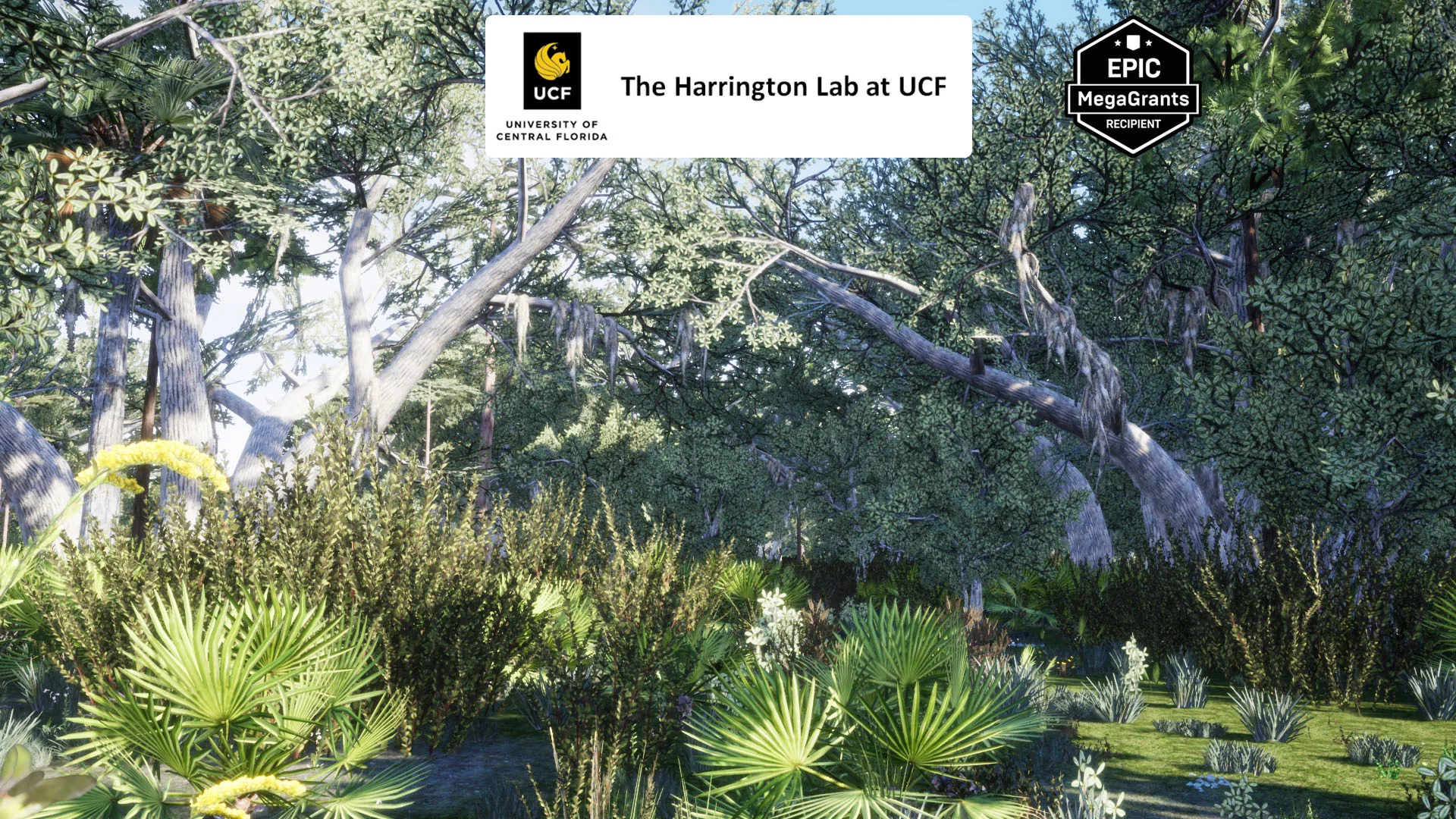
Wild subtropical environments present distinct structural layers, shifting from sprawling canopies down to dense ground cover adapted to sandy, well-drained soils. The asset collection captures this ecology through 15 photorealistic, low-polygon plant varieties sourced directly from photographs taken in the wild across Central Florida. Each species reflects the dry, scrubby balance typical of the region, providing botanical building blocks that span tall trees, mid-tier shrubs, succulents, lichens, and grasses.
Canopy and sub-canopy structures depend on distinctive woody trees. Longleaf Pine stands tall with characteristic needle clumps, while Pond Cypress introduces needle configurations suited for wetland borders and transition zones. Sand Live Oak provides wide, gnarled branching habits essential for dense woods, complemented by the tall, fan-shaped fronds of Sabal Palm. Hanging directly from these canopies, Spanish Moss functions as an epiphyte layer, draping across limbs to break up branch silhouettes and establish environmental depth.
Lower elevation growth shifts toward hardy understory plants and ground cover. Saw Palmetto anchors the immediate understory with its fan-like clusters, working alongside the tight branches of Wax Myrtle and the needle-like foliage of Scrub Rosemary. At ground level, flowering species and native perennials punctuate the terrain. Florida Tickseed, Goldenrod, and Shortleaf Rosegentian add subtle seasonal color across sandy clearings. Prickly Pear pads introduce fleshy, arid succulent forms, contrasting with the pale, sprawling mats of Reindeer Moss. Tall, sweeping strands of Lopsided Indiangrass and clumps of Wiregrass complete the floor, filling the spaces between larger root systems with light, wind-reactive ground cover.
Mesh Variation, Levels of Detail, and AR/VR Performance
Creating believable wilderness requires avoiding visible repetition across repeating instances. The 15 plant varieties are divided into 78 unique meshes, giving artists multiple geometric variations for each species. Distributing these individual meshes across a scene allows groves of Sand Live Oak or clusters of Saw Palmetto to exhibit irregular, organic branching without exposing identical leaf distributions to the player camera.
Every mesh is configured with low-polygon geometry specifically targeting real-time constraints in virtual reality and augmented reality platforms. Immersive head-mounted displays demand strict polygon budgets to sustain high frame rates and prevent motion disorientation. To reinforce this efficiency, the meshes include integrated Levels of Detail (LODs). As the camera draws back across rolling terrain, the foliage steps down through its geometric levels, shedding unnecessary edge loops while preserving plant volume, outline, and silhouette from a distance.
Editable Wind Motion and Foliage Surface Shading
Static vegetation quickly breaks the illusion of natural space. To maintain dynamic movement in open fields, the foliage uses an editable wind material capable of producing leaf rustle across fronds, grasses, and tree branches. Artists can calibrate the intensity, frequency, and movement patterns of the wind logic to simulate gentle coastal breezes or violent storm fronts moving through the tree lines.
Lighting interactions receive equal attention through dedicated subsurface scattering (SSS) maps. Thin leaves, needles, and grass blades naturally permit partial light transmission when backlit by direct sunlight. The subsurface maps govern how light scatters through interior plant tissue and reflects across exterior leaf surfaces. Sunlight filtering through a canopy of Sand Live Oak leaves or glancing across the waxy blades of Saw Palmetto captures the characteristic translucency of living foliage rather than appearing as opaque, rigid sheets of card geometry.
Large-Scale Brush Painting Across Layered Ground Materials
Covering extensive terrain with vegetation requires tools designed to handle broad coverage without slowing manual world-building. Included in the package is a landscape specifically set up for large-scale foliage painting, configured to operate effectively with wide brush sweeps. A recommended foliage brush size of 4000 enables artists to deposit balanced vegetation sweeps over wide acreage in single strokes.
To bypass tedious manual spacing adjustments, the brush system features preset foliage densities. These presets handle plant spacing automatically, distributing tall trees, medium undergrowth, and low grass clumps at stable, balanced ratios across wide landscapes. The distribution mimics natural spacing, ensuring heavy underbrush does not unbalance the underlying terrain or overcrowd canopy trees.
Ground-level visual interest is supported by six landscape painting materials. These surfaces let creators blend varied soil, sand, and organic earth layers across the terrain. Scattered weed meshes act as ground surface noise, breaking up flat texture seams where plant stalks emerge from the soil. Combining the layered earth materials, surface weeds, and preset density painting allows expansive terrains to be detailed efficiently without repetitive surface tiling.
Assembling GIS-Accurate Habitat Ecosystems
Foliage placement in nature is rarely random; it follows precise patterns shaped by hydrology, soil nutrients, and microclimates. Rather than relying on guesswork, the package provides an example natural community and ecosystem reconstructed from authentic plant inventory records and geographic information system (GIS) plant distribution data from Central Florida.
This data-driven foundation demonstrates how species naturally group together in native subtropical habitats. Wiregrass sits tightly beside Longleaf Pine stands, while Saw Palmetto forms dense thickets near Sand Live Oaks, and Reindeer Moss carpets open sandy patches. By referencing this GIS-informed layout, environment artists can design biomes that reflect genuine ecological relationships, yielding immersive digital landscapes grounded in scientific real-world distribution.
 Forest & Jungle
 Forest & Jungle
 Forest & Jungle