"d037b61901c110d2"{"id":"1002652","slug":"basin-swamp-habitat-brush","title":"Basin Swamp Habitat Brush","category":"Forest \u0026 Jungle","engine":"5.0+","assetVersion":"","engineVersion":"Engine Version: 5.0+","tag":"Forest \u0026 Jungle","accent":"blue","visual":"mech","summary":"Explore the Basin Swamp Habitat Brush, featuring 17 photorealistic low-poly plant species, 73 unique meshes, GIS-based ecosystems, and terrain painting tools.","platform":"Unreal Engine","indexPolicy":"index","publishedAt":"2026-11-16T21:51:27.105Z","updatedAt":"2026-11-16T21:51:27.105Z","sourceNotes":[],"fileContents":[],"compatibility":["Unreal Engine","Engine Version: 5.0+"],"featuredImage":{"alt":"Basin Swamp Habitat Brush","src":"/wp-content/uploads/published/2026/11/9654da7ee0c1-3a2a75b8-9cbc-41fe-9dbe-399c0dbbb761-9f225abda9.webp"},"fileSizeBytes":204506307,"hasDownloadLink":true,"downloads":0,"terms":[{"taxonomy":"category","slug":"forest-and-jungle","name":"Forest \u0026 Jungle"}],"galleryImages":[{"src":"/wp-content/uploads/published/2026/11/e68f5bb97369-2da64644-f1c6-4121-9fb3-c6f7f6fc14d6-8bcb846323.webp","alt":"Basin Swamp Habitat Brush"},{"src":"/wp-content/uploads/published/2026/11/0141b0ecce42-a8ec487a-9ff7-408b-ba29-3e533d6996d8-5f641a534d.webp","alt":"Basin Swamp Habitat Brush"}],"accessPanel":{"kind":"resource","title":"Get this resource","eyebrow":"Free resource","message":"Download this resource in your browser.","fileName":"Content.7z","safetyNote":"Resources are manually reviewed before listing to improve quality and reduce obvious risks.","actionLabel":"Get this resource","resourceType":"Resource archive","versions":[]},"contentHtml":"\u003cp\u003eA library of 17 AR/VR photorealistic, low-polygon plant species and 73 unique meshes forms the foundation of the Basin Swamp Habitat Brush. Intended for reconstructing Central Florida environments, the collection draws directly from photographic surveys captured in natural settings. By structuring real-time vegetation around both individual asset detail and broad terrain application tools, the kit bridges the gap between botanical accuracy and performant scene assembly.\u003c/p\u003e \u003ch2\u003eInventory of the Basin Swamp Botanical Library\u003c/h2\u003e\n\u003cp\u003eThe collection provides a comprehensive selection of subtropical vegetation native to Central Florida wetlands and flatwoods. Rather than relying on generic representations of marsh flora, the library defines 17 specific plant types translated into 73 distinct mesh variations. This variety prevents unnatural repetition across dense forest floors and open wetland expanses, giving level designers distinct silhouettes across multiple growth stages and clusters.\u003c/p\u003e\n\u003cp\u003eCanopy trees and prominent understory palms are represented by signature regional species, including the Pond Cypress, Sabal Palm, and Saw Palmetto. Mid-tier shrubs and woody plants balance the vertical transition between the tree layer and the ground cover. These include Dahoon Holly, Wax Myrtle, Fetterbush, and St. John's Wort. Together, these structural species outline the dense, clustered thickets typical of undisturbed subtropical basin swamps and border ecotones.\u003c/p\u003e\n\u003cp\u003eLower vegetation layers are populated by specialized wetland and transitional ground flora. The package supplies flowering perennials, carnivorous plants, and aquatic species adapted to saturated soils, comprising:\u003c/p\u003e\n\u003cul\u003e\n\u003cli\u003eHooded Pitcher Plant\u003c/li\u003e\n\u003cli\u003eWaterlily\u003c/li\u003e\n\u003cli\u003eFlorida Tickseed\u003c/li\u003e\n\u003cli\u003eFeay's Palafox\u003c/li\u003e\n\u003cli\u003eFlattop Goldenrod\u003c/li\u003e\n\u003cli\u003eGoldenrod\u003c/li\u003e\n\u003cli\u003eRayless Sunflower\u003c/li\u003e\n\u003cli\u003eShortleaf Rosegentian\u003c/li\u003e\n\u003cli\u003eChalky Bluestem\u003c/li\u003e\n\u003cli\u003eWiregrass\u003c/li\u003e\n\u003c/ul\u003e\n\u003cp\u003eGraminoids such as Chalky Bluestem and Wiregrass provide the base cover needed to fill pine flatwood margins and open swamp edges. Aquatic and moisture-loving additions like the Waterlily and Hooded Pitcher Plant supply distinct focal points along standing water and boggy clearings. Because every plant is built with low-polygon geometry and integrated levels of detail (LODs), the 73 unique meshes maintain visual clarity across close-up AR/VR inspection without overloading real-time rendering pipelines.\u003c/p\u003e \u003ch2\u003eSubsurface Scattering and Wind Reaction Across Meshes\u003c/h2\u003e\n\u003cp\u003eThe material architecture relies on photographic references to replicate real-world light transmission and mechanical movement. Leaf and stem surfaces incorporate subsurface scattering maps that govern light transparency and surface reflection. When directional light strikes foliage elements, these maps allow sunlight to filter through thin organic structures, producing natural backlighting effects across broadleaf species like the Dahoon Holly as well as delicate floral structures like the Shortleaf Rosegentian.\u003c/p\u003e\n\u003cp\u003eDynamic movement is handled through an editable wind material featuring leaf rustle effects. Instead of applying rigid global displacement, the shader system allows adjustment of foliage sway and micro-motion on leaf surfaces. This procedural rustle preserves structural silhouette definition while conveying wind currents passing through flexible grasses, palmetto fronds, and canopy boughs.\u003c/p\u003e\n\u003cp\u003eEvery plant variant integrates individual visual variations and dedicated LOD transitions. This ensures that assets maintain consistency under changing light conditions and viewing distances. By using wild-captured photography as the base for diffuse and scattering data, the meshes reflect genuine wear, organic variation, and species-accurate surface properties without artificial tiling or synthetic pigmentation.\u003c/p\u003e \u003ch2\u003eLandscape Painting with Habitat Brush Density Presets\u003c/h2\u003e\n\u003cp\u003eTo transition from individual plant placement to broad-scale world building, the package includes dedicated painting parameters and terrain-level assets. A specialized landscape template is configured specifically for large-scale foliage distribution, carrying an operational recommendation of brush size 4000. Operating at this scale allows expansive swaths of terrain to be dressed quickly with ecologically coherent plant groups rather than requiring manual single-mesh placement.\u003c/p\u003e\n\u003cp\u003ePreset foliage densities govern the distribution ratios of the included species. When applying foliage across large landscape areas, these density presets regulate how grasses, shrubs, and emergent trees interlock, avoiding unrealistic over-concentration of high-profile plants. Ground surfaces are supported by six dedicated ground materials intended for landscape painting, accompanied by ground weeds designed to add procedural surface noise across bare patches of terrain.\u003c/p\u003e\n\u003cp\u003eThe interaction between the six painted ground materials and the weed meshes prevents hard, repetitive transitions across soil, muck, and dry sand. By stamping density presets across large terrain patches with a 4000-size brush, level designers can rapidly establish foundational undergrowth, layering Wiregrass and ground weeds directly over painted terrain layers before placing prominent accent species.\u003c/p\u003e \u003ch2\u003eGIS Distribution and Ecosystem Structuring in Central Florida\u003c/h2\u003e\n\u003cp\u003eRather than arranging foliage purely on aesthetic balance, the collection provides an example natural community and ecosystem structured directly from botanical inventory data and plant distribution GIS datasets for Central Florida. This data-informed design establishes how native species naturally congregate based on real-world moisture gradients, soil drainage, and plant community associations.\u003c/p\u003e\n\u003cp\u003eIn actual subtropical habitats, species like the Hooded Pitcher Plant and Pond Cypress occupy saturated depressions, while Saw Palmetto and Wiregrass dominate slightly elevated, fire-prone sandy soils. By utilizing GIS-informed distribution maps, the included ecosystem layout demonstrates the spatial hierarchy between wet basin interiors and surrounding transitional flatwoods. This provides developers with a clear template for setting up credible environmental biomes where plant associations mirror documented field botany.\u003c/p\u003e\n\u003cp\u003eThe combination of GIS-based layout principles, low-polygon optimization, tailored wind materials, and large-scale brush presets equips developers to assemble complete subtropical wetland environments suitable for real-time virtual simulation and level design.\u003c/p\u003e\n\n\u003ch2\u003eContinue Browsing Similar Packs\u003c/h2\u003e\n\u003cul\u003e\n\u003cli\u003e\u003ca href=\"https://3dcghub.com/stylized-swamp-forest/\" rel=\"noopener noreferrer\"\u003eStylized Swamp Forest\u003c/a\u003e\u003c/li\u003e\n\u003cli\u003e\u003ca href=\"https://3dcghub.com/alien-planet-fantasy-environment-swamp-plants/\" rel=\"noopener noreferrer\"\u003eAlien Planet Fantasy Environment - Swamp Plants\u003c/a\u003e\u003c/li\u003e\n\u003cli\u003e\u003ca href=\"https://3dcghub.com/forest-environment-riverside-forest-with-pine-and-tropical-trees/\" rel=\"noopener noreferrer\"\u003eForest Environment ( Riverside Forest with Pine and Tropical Trees )\u003c/a\u003e\u003c/li\u003e\n\u003cli\u003e\u003ca href=\"https://3dcghub.com/the-pine-environment-foliage-island-pcg-nature-river-nature-nature-biom/\" rel=\"noopener noreferrer\"\u003eThe Pine Environment ( Foliage Island PCG Nature River Nature Nature Biom )\u003c/a\u003e\u003c/li\u003e\n\u003cli\u003e\u003ca href=\"https://3dcghub.com/broadleaf-poplar-forest-pcg-biome/\" rel=\"noopener noreferrer\"\u003eBroadleaf Poplar Forest - PCG Biome\u003c/a\u003e\u003c/li\u003e\n\u003c/ul\u003e","contentTextLength":6678,"navigation":{"current":37,"total":4611,"previous":{"id":"1002653","slug":"brushify-desert-mountains-pack","title":"Brushify - Desert Mountains Pack","category":"Desert","platform":"Unreal Engine","updatedAt":"2026-11-16T21:52:14.584Z"},"next":{"id":"1002651","slug":"atlantis-ruins-37-assets","title":"Atlantis Ruins / 37 Assets","category":"Historical","platform":"Unreal Engine","updatedAt":"2026-11-16T21:50:54.415Z"}},"relatedResources":[{"id":"1002688","slug":"scrubby-flatwoods-habitat-brush","title":"Scrubby Flatwoods Habitat Brush","category":"Forest \u0026 Jungle","engine":"5.0+","assetVersion":"","engineVersion":"Engine Version: 5.0+","tag":"Forest \u0026 Jungle","accent":"blue","visual":"mech","summary":"Examine the Scrubby Flatwoods Habitat Brush, featuring Central Florida plant species like Longleaf Pine, Saw Palmetto, and Wiregrass for virtual environments.","platform":"Unreal Engine","indexPolicy":"index","publishedAt":"2026-11-16T22:45:18.155Z","updatedAt":"2026-11-16T22:45:18.155Z","sourceNotes":[],"fileContents":[],"compatibility":["Unreal Engine","Engine Version: 5.0+"],"featuredImage":{"alt":"Scrubby Flatwoods Habitat Brush","src":"/wp-content/uploads/published/2026/11/685ed7892533-26771ffd-4d04-4070-ba79-cea84eac19f3-2307013c68.webp"},"fileSizeBytes":214594549,"hasDownloadLink":true,"downloads":0},{"id":"1002679","slug":"mesic-flatwoods-habitat-brush","title":"Mesic Flatwoods Habitat Brush","category":"Forest \u0026 Jungle","engine":"5.0+","assetVersion":"","engineVersion":"Engine Version: 5.0+","tag":"Forest \u0026 Jungle","accent":"blue","visual":"mech","summary":"Create authentic Central Florida environments with Mesic Flatwoods Habitat Brush, featuring 134 meshes, GIS-based ecosystems, and foliage painting presets.","platform":"Unreal Engine","indexPolicy":"index","publishedAt":"2026-11-16T22:29:57.567Z","updatedAt":"2026-11-16T22:29:57.567Z","sourceNotes":[],"fileContents":[],"compatibility":["Unreal Engine","Engine Version: 5.0+"],"featuredImage":{"alt":"Mesic Flatwoods Habitat Brush","src":"/wp-content/uploads/published/2026/11/03fc5d7d5f3d-3e037f39-c3ce-41f3-940e-e68fe5760859-23ef5ead28.webp"},"fileSizeBytes":248979374,"hasDownloadLink":true,"downloads":0},{"id":"1001764","slug":"stylized-swamp-forest","title":"Stylized Swamp Forest","category":"Forest \u0026 Jungle","engine":"4.20+,5.0+","assetVersion":"","engineVersion":"Engine Version: 4.20+,5.0+","tag":"Forest \u0026 Jungle","accent":"blue","visual":"mech","summary":"Explore the Stylized Swamp Forest environment package, featuring fantasy level design elements, demo testing, and Stylized Urban Street compatibility.","platform":"Unreal Engine","indexPolicy":"index","publishedAt":"2026-10-20T03:09:47.949Z","updatedAt":"2026-10-20T03:09:47.949Z","sourceNotes":[],"fileContents":[],"compatibility":["Unreal Engine","Engine Version: 4.20+,5.0+"],"featuredImage":{"alt":"Stylized Swamp Forest","src":"/wp-content/uploads/published/2026/10/34d40a4dc685-379a0889-4ca7-4690-b7fb-c68ee5baaa27-31aa9426da.webp"},"fileSizeBytes":360481578,"hasDownloadLink":true,"downloads":1}]}
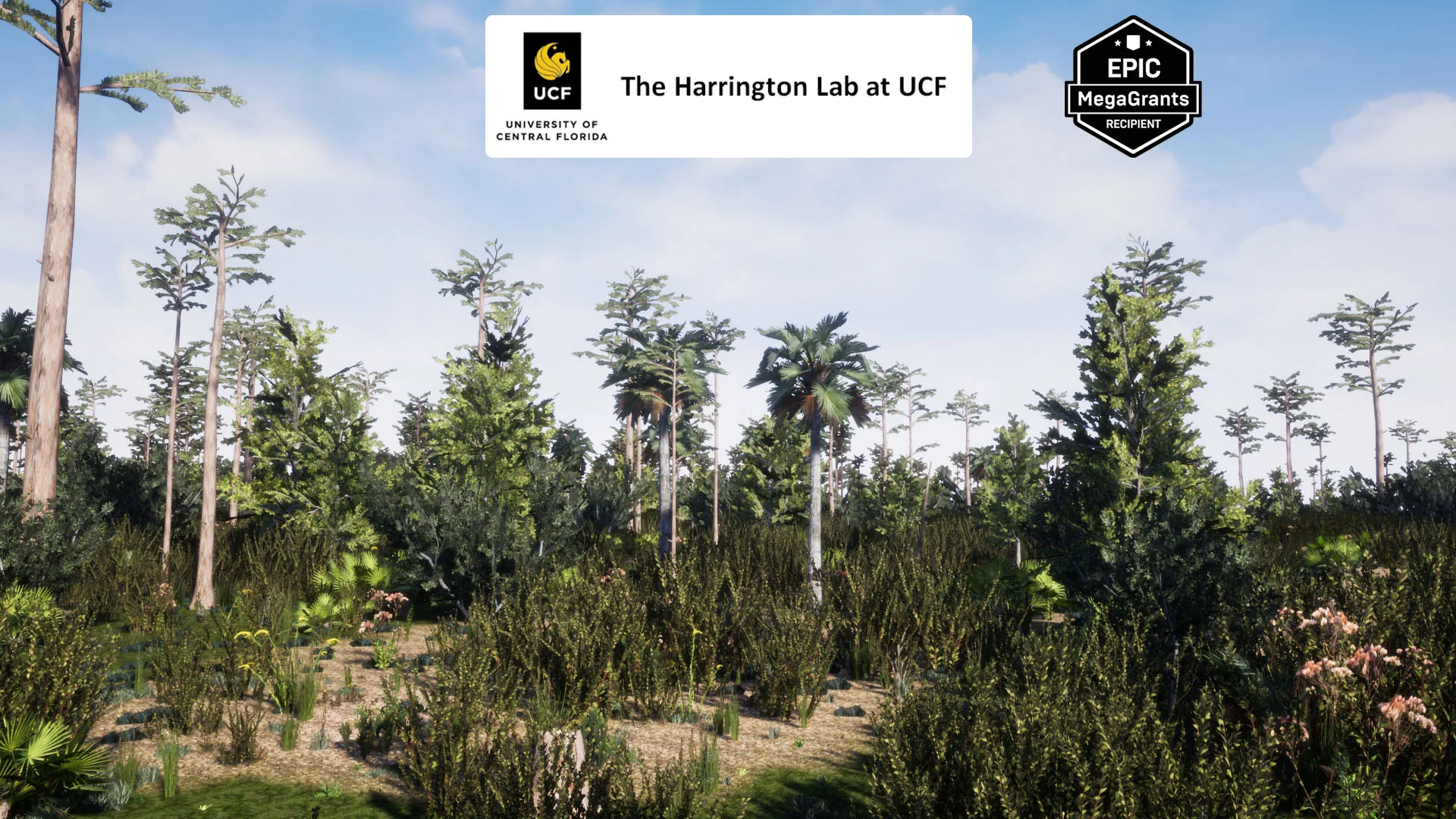
A library of 17 AR/VR photorealistic, low-polygon plant species and 73 unique meshes forms the foundation of the Basin Swamp Habitat Brush. Intended for reconstructing Central Florida environments, the collection draws directly from photographic surveys captured in natural settings. By structuring real-time vegetation around both individual asset detail and broad terrain application tools, the kit bridges the gap between botanical accuracy and performant scene assembly.
Inventory of the Basin Swamp Botanical Library
The collection provides a comprehensive selection of subtropical vegetation native to Central Florida wetlands and flatwoods. Rather than relying on generic representations of marsh flora, the library defines 17 specific plant types translated into 73 distinct mesh variations. This variety prevents unnatural repetition across dense forest floors and open wetland expanses, giving level designers distinct silhouettes across multiple growth stages and clusters.
Canopy trees and prominent understory palms are represented by signature regional species, including the Pond Cypress, Sabal Palm, and Saw Palmetto. Mid-tier shrubs and woody plants balance the vertical transition between the tree layer and the ground cover. These include Dahoon Holly, Wax Myrtle, Fetterbush, and St. John's Wort. Together, these structural species outline the dense, clustered thickets typical of undisturbed subtropical basin swamps and border ecotones.
Lower vegetation layers are populated by specialized wetland and transitional ground flora. The package supplies flowering perennials, carnivorous plants, and aquatic species adapted to saturated soils, comprising:
Hooded Pitcher Plant
Waterlily
Florida Tickseed
Feay's Palafox
Flattop Goldenrod
Goldenrod
Rayless Sunflower
Shortleaf Rosegentian
Chalky Bluestem
Wiregrass
Graminoids such as Chalky Bluestem and Wiregrass provide the base cover needed to fill pine flatwood margins and open swamp edges. Aquatic and moisture-loving additions like the Waterlily and Hooded Pitcher Plant supply distinct focal points along standing water and boggy clearings. Because every plant is built with low-polygon geometry and integrated levels of detail (LODs), the 73 unique meshes maintain visual clarity across close-up AR/VR inspection without overloading real-time rendering pipelines.
Subsurface Scattering and Wind Reaction Across Meshes
The material architecture relies on photographic references to replicate real-world light transmission and mechanical movement. Leaf and stem surfaces incorporate subsurface scattering maps that govern light transparency and surface reflection. When directional light strikes foliage elements, these maps allow sunlight to filter through thin organic structures, producing natural backlighting effects across broadleaf species like the Dahoon Holly as well as delicate floral structures like the Shortleaf Rosegentian.
Dynamic movement is handled through an editable wind material featuring leaf rustle effects. Instead of applying rigid global displacement, the shader system allows adjustment of foliage sway and micro-motion on leaf surfaces. This procedural rustle preserves structural silhouette definition while conveying wind currents passing through flexible grasses, palmetto fronds, and canopy boughs.
Every plant variant integrates individual visual variations and dedicated LOD transitions. This ensures that assets maintain consistency under changing light conditions and viewing distances. By using wild-captured photography as the base for diffuse and scattering data, the meshes reflect genuine wear, organic variation, and species-accurate surface properties without artificial tiling or synthetic pigmentation.
Landscape Painting with Habitat Brush Density Presets
To transition from individual plant placement to broad-scale world building, the package includes dedicated painting parameters and terrain-level assets. A specialized landscape template is configured specifically for large-scale foliage distribution, carrying an operational recommendation of brush size 4000. Operating at this scale allows expansive swaths of terrain to be dressed quickly with ecologically coherent plant groups rather than requiring manual single-mesh placement.
Preset foliage densities govern the distribution ratios of the included species. When applying foliage across large landscape areas, these density presets regulate how grasses, shrubs, and emergent trees interlock, avoiding unrealistic over-concentration of high-profile plants. Ground surfaces are supported by six dedicated ground materials intended for landscape painting, accompanied by ground weeds designed to add procedural surface noise across bare patches of terrain.
The interaction between the six painted ground materials and the weed meshes prevents hard, repetitive transitions across soil, muck, and dry sand. By stamping density presets across large terrain patches with a 4000-size brush, level designers can rapidly establish foundational undergrowth, layering Wiregrass and ground weeds directly over painted terrain layers before placing prominent accent species.
GIS Distribution and Ecosystem Structuring in Central Florida
Rather than arranging foliage purely on aesthetic balance, the collection provides an example natural community and ecosystem structured directly from botanical inventory data and plant distribution GIS datasets for Central Florida. This data-informed design establishes how native species naturally congregate based on real-world moisture gradients, soil drainage, and plant community associations.
In actual subtropical habitats, species like the Hooded Pitcher Plant and Pond Cypress occupy saturated depressions, while Saw Palmetto and Wiregrass dominate slightly elevated, fire-prone sandy soils. By utilizing GIS-informed distribution maps, the included ecosystem layout demonstrates the spatial hierarchy between wet basin interiors and surrounding transitional flatwoods. This provides developers with a clear template for setting up credible environmental biomes where plant associations mirror documented field botany.
The combination of GIS-based layout principles, low-polygon optimization, tailored wind materials, and large-scale brush presets equips developers to assemble complete subtropical wetland environments suitable for real-time virtual simulation and level design.
 Forest & Jungle
 Forest & Jungle
 Forest & Jungle