"c14ff6bd758dadb1"{"id":"1001764","slug":"stylized-swamp-forest","title":"Stylized Swamp Forest","category":"Forest \u0026 Jungle","engine":"4.20+,5.0+","assetVersion":"","engineVersion":"Engine Version: 4.20+,5.0+","tag":"Forest \u0026 Jungle","accent":"blue","visual":"mech","summary":"Explore the Stylized Swamp Forest environment package, featuring fantasy level design elements, demo testing, and Stylized Urban Street compatibility.","platform":"Unreal Engine","publishedAt":"2026-10-20T03:09:47.949Z","updatedAt":"2026-10-20T03:09:47.949Z","sourceNotes":[],"fileContents":[],"compatibility":["Unreal Engine","Engine Version: 4.20+,5.0+"],"featuredImage":{"alt":"Stylized Swamp Forest","src":"/wp-content/uploads/published/2026/10/34d40a4dc685-379a0889-4ca7-4690-b7fb-c68ee5baaa27-31aa9426da.webp"},"hasDownloadLink":true,"downloads":0,"terms":[{"taxonomy":"category","slug":"forest-and-jungle","name":"Forest \u0026 Jungle"}],"galleryImages":[{"src":"/wp-content/uploads/published/2026/10/bc7fe3173957-70468be4-4629-4ccf-829d-7a4ada09dc3d-8486147cd6.webp","alt":"Stylized Swamp Forest"},{"src":"/wp-content/uploads/published/2026/10/21d0eea4696e-f3af86f0-c397-463d-acea-098257b15f54-0ac7b7223a.webp","alt":"Stylized Swamp Forest"},{"src":"/wp-content/uploads/published/2026/10/b36265b680c6-8535f757-bd2f-49cc-ade4-6ac4cfc6ace2-be7754beee.webp","alt":"Stylized Swamp Forest"},{"src":"/wp-content/uploads/published/2026/10/401397a20864-18794006-67a7-4bdc-bbeb-89538597a42a-0b3a1f231b.webp","alt":"Stylized Swamp Forest"},{"src":"/wp-content/uploads/published/2026/10/d48345c422ee-d1bc90ac-696b-43b1-b80b-96869bc41fbf-31bcde5064.webp","alt":"Stylized Swamp Forest"},{"src":"/wp-content/uploads/published/2026/10/79ef64ed625b-ef66c696-3c12-4a71-8f80-262d7a3fadab-9e1ac48236.webp","alt":"Stylized Swamp Forest"},{"src":"/wp-content/uploads/published/2026/10/5c84186b5759-0cca6c8b-44b3-4e85-af48-fd3327c20d0d-492fff8b60.webp","alt":"Stylized Swamp Forest"},{"src":"/wp-content/uploads/published/2026/10/be71f74f02a7-5940cdca-72e4-41d1-9e0b-adc0c1d3fce0-dbdbf611ec.webp","alt":"Stylized Swamp Forest"},{"src":"/wp-content/uploads/published/2026/10/1890ad7ad641-843b197f-41b0-4fc7-b8f6-535de5c978bf-99f8ca2119.webp","alt":"Stylized Swamp Forest"}],"accessPanel":{"kind":"resource","title":"Download this resource","eyebrow":"Free Download","message":"Log in or create a free account to start your download.","fileName":"Content.7z","safetyNote":"Resources are manually reviewed before listing to improve quality and reduce obvious risks.","actionLabel":"Download Free","resourceType":"Resource archive"},"contentHtml":"\u003ch2\u003eVisual Rhythm in Stylized Swamp Forest Environments\u003c/h2\u003e\u003cp\u003eStylized swamp landscapes depend on distinct visual silhouettes rather than dense photorealistic scatter. By paring back micro-detail in favor of defined shapes, stylized swamp forest environments let level artists shape readable pathways through murky terrain, twisted woodland vegetation, and murky water surfaces. Translating the dense, chaotic nature of a bog into a clear game level requires careful management of sightlines and terrain height. In fantasy level production, maintaining structural clarity across swamp biomes keeps navigation intuitive while preserving the damp, secluded character expected from wetlands.\u003c/p\u003e\u003cp\u003eClean geometry and readable textures also influence how dynamic lighting responds across forest clearings. Exaggerated shapes in stylized vegetation catch directional light cleanly, preventing the noisy specular highlights common to wet foliage in high-density realistic assets. Level designers can anchor encounter spaces with recognizable wetland landmarks, establishing distinct gameplay spaces while keeping environmental clutter under control.\u003c/p\u003e\u003ch2\u003eLevel Staging with a Compact Fantasy Environment Set\u003c/h2\u003e\u003cp\u003eBecause the package provides a small set of stylized swamp forest environments, production workflows center on targeted scene composition rather than endless biome variety. Compact environment packs demand thoughtful placement: artists rotate, rescale, and cluster available elements to construct distinct clearings, hidden alcoves, and perimeter boundaries without exhausting asset variation too quickly.\u003c/p\u003e\u003cp\u003eIn fantasy quest scenarios, small environment sets often form tight transitional corridors or self-contained challenge rooms. A designer might assemble an isolated pool, an ancient hollow, or a swamp crossing by clustering the available pieces around a central focal asset. Working with a constrained inventory prevents visual drift across the level, ensuring that every corner of the swamp maintains aesthetic consistency across geometry, texturing, and scale.\u003c/p\u003e\u003ch2\u003eEvaluating Assets Through Video Footage and Standalone Demos\u003c/h2\u003e\u003cp\u003eEvaluating an environmental asset pack before integrating it into a production scene saves significant layout time. Stylized Swamp Forest includes both a video walkthrough and a standalone demo build, offering two distinct perspectives on how the assets behave in real time.\u003c/p\u003e\u003cp\u003eVideo footage allows environment artists to observe camera movements, post-processing choices, and ambient density exactly as the creator intended. It reveals how the environment set pieces fit together into a cohesive composition, showcasing the intended spatial density and lighting balance of the stylized forest.\u003c/p\u003e\u003cp\u003eThe dedicated demo build provides an interactive look at geometry, camera clearance, and player-scale relationships. Navigating the environment directly helps teams verify collision boundaries, assess ground slope traversal, and inspect asset silhouette readability from standard gameplay angles. Testing assets inside an executable environment clarifies whether the stylized proportions align with an existing project's movement mechanics and camera perspective.\u003c/p\u003e\u003ch2\u003eStylized Urban Street Compatibility in Mixed Environments\u003c/h2\u003e\u003cp\u003eCross-environment consistency is an essential consideration when building expansive worlds that transition across different biome types. Stylized Swamp Forest maintains compatibility with Stylized Urban Street, giving designers a visual bridge between built environments and outlying natural settings.\u003c/p\u003e\u003cp\u003eBridging urban streets and swamp wilderness invites interesting narrative contrasts. A fantasy town perimeter can degrade naturally into stagnant waters, weed-choked drainage channels, and overgrown timber without abrupt shifts in visual language. Shared aesthetic rules across both kits ensure that edge bevels, color vibrancy, and stylized material properties match, preventing harsh tonal boundaries where urban borders touch wilderness outskirts.\u003c/p\u003e\u003cp\u003eTeams developing hub-and-spoke level maps can stage civilized zones using urban elements before sending players into adjacent swamp forest sectors. The shared design philosophy between these packs helps maintain visual unity across varied narrative zones, saving artists from manually redrawing textures or matching edge wear across disparate environment kits.\u003c/p\u003e\u003ch2\u003eTargeted Adjustments and Direct Developer Support\u003c/h2\u003e\u003cp\u003eEven tightly conceived environment packs sometimes require specific adjustments when placed into custom game pipelines. The creator provides direct support for questions, general assistance, and targeted changes or fixes needed to adapt the assets to a project's technical specifications.\u003c/p\u003e\u003cp\u003eDirect access to creator adjustments proves valuable when an environment needs minor alterations to fit unique collision systems, pivot alignments, or mesh export requirements. In projects where asset sets must blend into bespoke rendering setups, having an open communication channel for fixes ensures that small environmental hurdles do not stall level production.\u003c/p\u003e\n\n\u003ch2\u003eExplore Similar Assets\u003c/h2\u003e\n\u003cul\u003e\n\u003cli\u003e\u003ca href=\"https://3dcghub.com/camp-in-the-tropic-forest/\" title=\"Camp in the Tropic Forest\"\u003eCamp in the Tropic Forest\u003c/a\u003e\u003c/li\u003e\n\u003cli\u003e\u003ca href=\"https://3dcghub.com/lowpoly-style-woodlands-pack/\" title=\"Lowpoly Style Woodlands Pack\"\u003eLowpoly Style Woodlands Pack\u003c/a\u003e\u003c/li\u003e\n\u003cli\u003e\u003ca href=\"https://3dcghub.com/stylized-forest-cave/\" title=\"Stylized Forest Cave\"\u003eStylized Forest Cave\u003c/a\u003e\u003c/li\u003e\n\u003cli\u003e\u003ca href=\"https://3dcghub.com/stylized-lost-paradise/\" title=\"Stylized Lost Paradise\"\u003eStylized Lost Paradise\u003c/a\u003e\u003c/li\u003e\n\u003cli\u003e\u003ca href=\"https://3dcghub.com/stylized-forest-pack-v2/\" title=\"Stylized Forest Pack V2\"\u003eStylized Forest Pack V2\u003c/a\u003e\u003c/li\u003e\n\u003c/ul\u003e","contentTextLength":5189,"navigation":{"current":19,"total":3719,"previous":{"id":"1001765","slug":"survivor-s-safe-house","title":"Survivor's Safe House","category":"Apocalyptic / Post-apocalyptic","platform":"Unreal Engine","updatedAt":"2026-10-20T03:10:21.705Z"},"next":{"id":"1001763","slug":"stylized-modular-dungeon","title":"Stylized Modular Dungeon","category":"Dungeon","platform":"Unreal Engine","updatedAt":"2026-10-20T03:09:16.281Z"}},"relatedResources":[{"id":"1001621","slug":"camp-in-the-tropic-forest","title":"Camp in the Tropic Forest","category":"Forest \u0026 Jungle","engine":"4.26+,5.0+","assetVersion":"","engineVersion":"Engine Version: 4.26+,5.0+","tag":"Forest \u0026 Jungle","accent":"blue","visual":"mech","summary":"Explore Camp in the Tropic Forest, a compact stylized environment collection designed for fantasy levels and compatible with 50 terrain materials.","platform":"Unreal Engine","publishedAt":"2026-10-13T01:53:26.798Z","updatedAt":"2026-10-13T01:53:26.798Z","sourceNotes":[],"fileContents":[],"compatibility":["Unreal Engine","Engine Version: 4.26+,5.0+"],"featuredImage":{"alt":"Camp in the Tropic Forest","src":"https://media.fab.com/image_previews/gallery_images/19d2eefd-80cc-4eb8-9315-bde8ed8a63fc/eb1cd14c-0c66-40db-be2c-e5a6ba509794.png"},"hasDownloadLink":true,"downloads":1},{"id":"1001735","slug":"lowpoly-style-woodlands-pack","title":"Lowpoly Style Woodlands Pack","category":"Forest \u0026 Jungle","engine":"4.26+,5.0+","assetVersion":"","engineVersion":"Engine Version: 4.26+,5.0+","tag":"Forest \u0026 Jungle","accent":"blue","visual":"mech","summary":"Construct stylized alpine landscapes and woodland camps using the Lowpoly Style Woodlands Pack, featuring unified material batching and modular nature assets.","platform":"Unreal Engine","publishedAt":"2026-10-20T02:40:02.803Z","updatedAt":"2026-10-20T02:40:02.803Z","sourceNotes":[],"fileContents":[],"compatibility":["Unreal Engine","Engine Version: 4.26+,5.0+"],"featuredImage":{"alt":"Lowpoly Style Woodlands Pack","src":"/wp-content/uploads/published/2026/10/066b0cf4ab99-f8e12b2e-0c2b-4e5d-9ccd-60d3246ca57a-d7f06bb336.webp"},"hasDownloadLink":true,"downloads":0},{"id":"1001668","slug":"stylized-forest-cave","title":"Stylized Forest Cave","category":"Forest \u0026 Jungle","engine":"4.20+,5.0+","assetVersion":"","engineVersion":"Engine Version: 4.20+,5.0+","tag":"Forest \u0026 Jungle","accent":"blue","visual":"mech","summary":"Explore Stylized Forest Cave, featuring simple landscape terrain, cave geometry, fantasy props, and compatibility with the Stylized Terrain Pack of 50 Materials","platform":"Unreal Engine","publishedAt":"2026-10-13T15:10:51.205Z","updatedAt":"2026-10-13T15:10:51.205Z","sourceNotes":[],"fileContents":[],"compatibility":["Unreal Engine","Engine Version: 4.20+,5.0+"],"featuredImage":{"alt":"Stylized Forest Cave","src":"/wp-content/uploads/published/2026/10/5d10bd76e713-41574d66-e077-40a6-85b2-5240bc197b46-a5a75e7023.webp"},"hasDownloadLink":true,"downloads":0}]}
Forest & Jungle
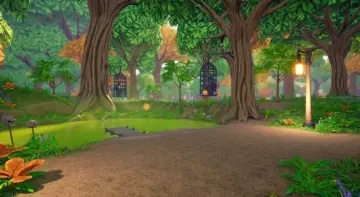
Stylized Swamp Forest
Explore the Stylized Swamp Forest environment package, featuring fantasy level design elements, demo testing, and Stylized Urban Street compatibility.
Visual Rhythm in Stylized Swamp Forest Environments
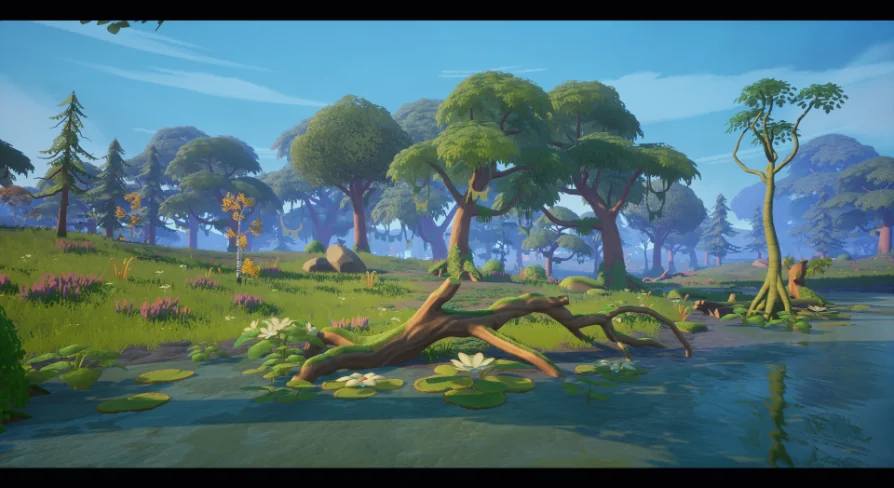
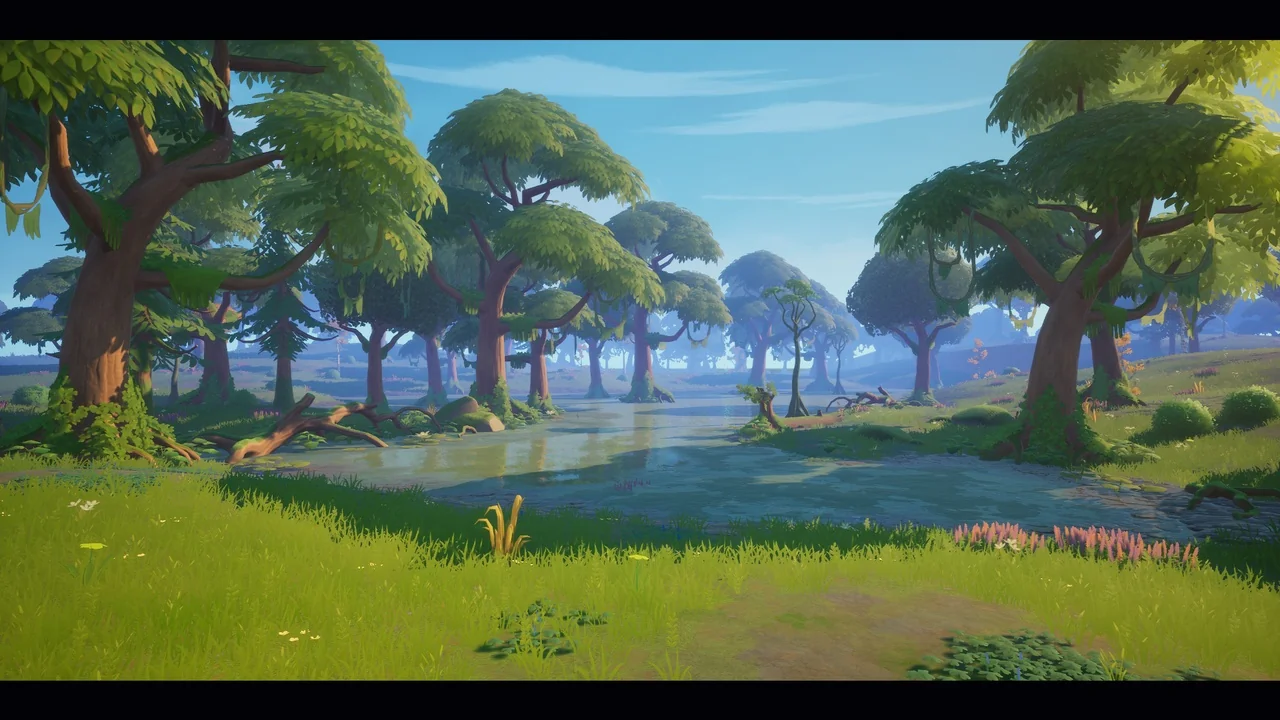
Stylized swamp landscapes depend on distinct visual silhouettes rather than dense photorealistic scatter. By paring back micro-detail in favor of defined shapes, stylized swamp forest environments let level artists shape readable pathways through murky terrain, twisted woodland vegetation, and murky water surfaces. Translating the dense, chaotic nature of a bog into a clear game level requires careful management of sightlines and terrain height. In fantasy level production, maintaining structural clarity across swamp biomes keeps navigation intuitive while preserving the damp, secluded character expected from wetlands.
Clean geometry and readable textures also influence how dynamic lighting responds across forest clearings. Exaggerated shapes in stylized vegetation catch directional light cleanly, preventing the noisy specular highlights common to wet foliage in high-density realistic assets. Level designers can anchor encounter spaces with recognizable wetland landmarks, establishing distinct gameplay spaces while keeping environmental clutter under control.
Level Staging with a Compact Fantasy Environment Set
Because the package provides a small set of stylized swamp forest environments, production workflows center on targeted scene composition rather than endless biome variety. Compact environment packs demand thoughtful placement: artists rotate, rescale, and cluster available elements to construct distinct clearings, hidden alcoves, and perimeter boundaries without exhausting asset variation too quickly.
In fantasy quest scenarios, small environment sets often form tight transitional corridors or self-contained challenge rooms. A designer might assemble an isolated pool, an ancient hollow, or a swamp crossing by clustering the available pieces around a central focal asset. Working with a constrained inventory prevents visual drift across the level, ensuring that every corner of the swamp maintains aesthetic consistency across geometry, texturing, and scale.
Evaluating Assets Through Video Footage and Standalone Demos
Evaluating an environmental asset pack before integrating it into a production scene saves significant layout time. Stylized Swamp Forest includes both a video walkthrough and a standalone demo build, offering two distinct perspectives on how the assets behave in real time.
Video footage allows environment artists to observe camera movements, post-processing choices, and ambient density exactly as the creator intended. It reveals how the environment set pieces fit together into a cohesive composition, showcasing the intended spatial density and lighting balance of the stylized forest.
The dedicated demo build provides an interactive look at geometry, camera clearance, and player-scale relationships. Navigating the environment directly helps teams verify collision boundaries, assess ground slope traversal, and inspect asset silhouette readability from standard gameplay angles. Testing assets inside an executable environment clarifies whether the stylized proportions align with an existing project's movement mechanics and camera perspective.
Stylized Urban Street Compatibility in Mixed Environments
Cross-environment consistency is an essential consideration when building expansive worlds that transition across different biome types. Stylized Swamp Forest maintains compatibility with Stylized Urban Street, giving designers a visual bridge between built environments and outlying natural settings.
Bridging urban streets and swamp wilderness invites interesting narrative contrasts. A fantasy town perimeter can degrade naturally into stagnant waters, weed-choked drainage channels, and overgrown timber without abrupt shifts in visual language. Shared aesthetic rules across both kits ensure that edge bevels, color vibrancy, and stylized material properties match, preventing harsh tonal boundaries where urban borders touch wilderness outskirts.
Teams developing hub-and-spoke level maps can stage civilized zones using urban elements before sending players into adjacent swamp forest sectors. The shared design philosophy between these packs helps maintain visual unity across varied narrative zones, saving artists from manually redrawing textures or matching edge wear across disparate environment kits.
Targeted Adjustments and Direct Developer Support
Even tightly conceived environment packs sometimes require specific adjustments when placed into custom game pipelines. The creator provides direct support for questions, general assistance, and targeted changes or fixes needed to adapt the assets to a project's technical specifications.
Direct access to creator adjustments proves valuable when an environment needs minor alterations to fit unique collision systems, pivot alignments, or mesh export requirements. In projects where asset sets must blend into bespoke rendering setups, having an open communication channel for fixes ensures that small environmental hurdles do not stall level production.
 Forest & Jungle
 Forest & Jungle
 Forest & Jungle
 Forest & Jungle