"d037b61901c110d2"{"id":"1002688","slug":"scrubby-flatwoods-habitat-brush","title":"Scrubby Flatwoods Habitat Brush","category":"Forest \u0026 Jungle","engine":"5.0+","assetVersion":"","engineVersion":"Engine Version: 5.0+","tag":"Forest \u0026 Jungle","accent":"blue","visual":"mech","summary":"Examine the Scrubby Flatwoods Habitat Brush, featuring Central Florida plant species like Longleaf Pine, Saw Palmetto, and Wiregrass for virtual environments.","platform":"Unreal Engine","indexPolicy":"index","publishedAt":"2026-11-16T22:45:18.155Z","updatedAt":"2026-11-16T22:45:18.155Z","sourceNotes":[],"fileContents":[],"compatibility":["Unreal Engine","Engine Version: 5.0+"],"featuredImage":{"alt":"Scrubby Flatwoods Habitat Brush","src":"/wp-content/uploads/published/2026/11/685ed7892533-26771ffd-4d04-4070-ba79-cea84eac19f3-2307013c68.webp"},"fileSizeBytes":214594549,"hasDownloadLink":true,"downloads":0,"terms":[{"taxonomy":"category","slug":"forest-and-jungle","name":"Forest \u0026 Jungle"}],"galleryImages":[{"src":"/wp-content/uploads/published/2026/11/9affeb9486b6-24724f05-fb2d-49c9-82ac-6729234e7eb9-40c62fe1e7.webp","alt":"Scrubby Flatwoods Habitat Brush"},{"src":"/wp-content/uploads/published/2026/11/58d5b24b3d72-9a6b1c0b-59d5-4963-a018-b6ba87f3a80d-f097ae6143.webp","alt":"Scrubby Flatwoods Habitat Brush"},{"src":"/wp-content/uploads/published/2026/11/eddce01dc91d-7fb8df3f-a965-45e3-bd61-acd8e81a7887-ca30f1fa6e.webp","alt":"Scrubby Flatwoods Habitat Brush"}],"accessPanel":{"kind":"resource","title":"Get this resource","eyebrow":"Free resource","message":"Download this resource in your browser.","fileName":"Content.7z","safetyNote":"Resources are manually reviewed before listing to improve quality and reduce obvious risks.","actionLabel":"Get this resource","resourceType":"Resource archive","versions":[]},"contentHtml":"\u003cp\u003eLongleaf Pine, Sand Live Oak, Sabal Palm, Saw Palmetto, Scrub Rosemary, Wiregrass, and Spanish Moss form the recognizable botanical foundation of the Scrubby Flatwoods Habitat Brush. Built to represent the distinct vegetation profile of Central Florida, this asset collection brings together lowpoly foliage assets spanning tall canopy trees, mid-tier scrub shrubs, low grasses, epiphytic plants, and a broad array of regional wildflowers. Rather than presenting generic greenery, the collection isolates the actual floral composition that defines realistic scrub and flatwoods terrain.\u003c/p\u003e \u003ch2\u003eCentral Florida Species in the Scrubby Flatwoods Habitat Brush\u003c/h2\u003e\n\u003cp\u003eThe botanical roster focuses squarely on species native to and characteristic of Central Florida. At the structural level, environments modeled after scrubby flatwoods rely on an open canopy punctuated by specific pine and hardwood types, transitioning into a dense, fire-adapted understory. The inclusion of species such as Longleaf Pine (Pinus palustris), Sand Live Oak (Quercus geminata), and Sabal Palm (Sabal palmetto) establishes the primary vertical silhouettes necessary for assembling realistic forest and woodland scenes.\u003c/p\u003e \u003cp\u003eBeneath the overstory, secondary trees and resilient shrubs shape the horizontal sightlines of an environment. The brush incorporates Dahoon Holly and Wax Myrtle, both of which commonly inhabit the transitional edges between upland scrub and wetter flatwoods depressions. Paired alongside low-growing woody perennials like Scrub Rosemary and Fetterbush, these assets allow environmental artists and simulation designers to recreate the complex layering found in wild Florida landscapes without substituting unrelated temperate foliage.\u003c/p\u003e \u003ch2\u003eCanopy Trees and Woody Understory in Flatwoods Environments\u003c/h2\u003e\n\u003cp\u003eConstructing believable natural levels requires careful balance between tree silhouettes and ground obstruction. In scrubby flatwoods, Saw Palmetto often forms dense, sprawling patches that dominate the immediate ground view. Its fan-shaped fronds contrast sharply with the vertical trunks of Longleaf Pine and the twisted, spreading forms of Sand Live Oak. Having both species present alongside Sabal Palm ensures that the dominant character of southeastern pine flatwoods can be captured across different elevations and spatial densities.\u003c/p\u003e \u003cp\u003eComplementing the large palmettos and oaks are specialized shrubs adapted to sandy, nutrient-poor soil. Scrub Rosemary provides dense, needle-like foliage that sits close to the ground, while Fetterbush offers arching woody branches and evergreen leaves. Prickly Pear adds a distinct succulent texture rarely seen in standard woodland packs, representing the dry, sandy clearings where bare ground and arid-tolerant flora break up continuous brush cover. This variety lets level designers create natural transitions between dense thickets and open, sun-baked sand patches.\u003c/p\u003e \u003ch2\u003eNative Grasses, Ground Cover, and Epiphytes\u003c/h2\u003e\n\u003cp\u003eThe ground layer of a flatwoods ecosystem is heavily defined by its graminoid cover and specialized surface plants. Wiregrass is an ecological cornerstone in Central Florida flatwoods, providing the primary fuel and continuous matrix for the entire understory. The package includes Wiregrass along with Chalky Bluestem and Lopsided Indiangrass, supplying three distinct grass silhouettes with varying heights, growth habits, and foliage coloration. These grasses break up open terrain and provide the necessary density between taller shrubs.\u003c/p\u003e \u003cp\u003eGround-level diversity is further expanded through Bracken Fern and Reindeer Moss. Reindeer Moss forms pale, intricate ground cushions over exposed sandy patches, offering immediate visual contrast against fallen needles and dark soil. Bracken Fern introduces broad, triangular fronds that populate shaded understory pockets and open woodland clearings alike. Hanging from the branches above, Spanish Moss completes the environmental profile, introducing the signature trailing epiphyte growth essential for realistic southeastern trees, particularly Live Oaks and Sabal Palms.\u003c/p\u003e \u003ch2\u003eWildflower Diversity Across the Habitat Brush Selection\u003c/h2\u003e\n\u003cp\u003eFlowering forbs play a crucial role in bringing color, ecological realism, and visual interest to virtual forest floors. The Scrubby Flatwoods Habitat Brush includes an extensive selection of indigenous flowering plants, making it possible to scatter realistic blooms throughout grass matrices and trail borders. Among these are coastal and flatwoods staples such as Blazing Star, Flattop Goldenrod, Goldenrod, Florida Paintbrush, and Florida Tickseed.\u003c/p\u003e \u003cp\u003eThe wildflower list also captures localized and delicate species that bring specific seasonal or geographical accuracy to a project:\u003c/p\u003e\n\u003cul\u003e\n\u003cli\u003eCoastalplain Honeycomb, presenting dense, textured flower heads suited for open sandy swales.\u003c/li\u003e\n\u003cli\u003eForked Bluecurl, introducing low, intricate blue-purple flowering forms.\u003c/li\u003e\n\u003cli\u003eScarlet Calamint, offering vibrant, red-toned tubular blossoms on compact woody stems.\u003c/li\u003e\n\u003cli\u003eShortleaf Rosegentian, providing delicate pink petals that stand out against dark pine litter.\u003c/li\u003e\n\u003cli\u003eTall Jointweed, displaying slender, upright flowering spikes that blend naturally into dry sand zones.\u003c/li\u003e\n\u003cli\u003eTitusville Balm, adding a geographically distinctive mint-family perennial native to east-central Florida scrub margins.\u003c/li\u003e\n\u003c/ul\u003e \u003cp\u003eBy supplying this broad array of flowering plants rather than relying on one or two generic blossoms, the brush enables environmental artists to scatter ecologically coherent wildflower patches across terrain levels. The differing heights, from the low growth of Rosegentian to the tall, upright stalks of Blazing Star and Jointweed, naturally establish varied vertical rhythm across meadow clearings and path verges.\u003c/p\u003e \u003ch2\u003eSimulation, Education, and Museum Level Production\u003c/h2\u003e\n\u003cp\u003eBecause the included models are designated as lowpoly assets, the collection is tailored for applications where performance budgets and scene density must coexist. Real-time environments, virtual reality applications, and interactive simulations benefit significantly from optimized geometry, especially when rendering dense undergrowth comprising hundreds of individual plant instances. The lowpoly construction allows extensive instancing across large terrain levels without overwhelming draw call counts or polygon budgets.\u003c/p\u003e \u003cp\u003eThe fidelity to actual Central Florida plant taxonomy gives this brush particular relevance in educational and museum contexts. Virtual field trips, habitat recreations, ecological simulations, and interactive exhibits require verifiable species representation rather than stylized or inaccurate fantasy vegetation. Whether used to reconstruct a pre-development wilderness area, simulate wildland fire behavior in fire-dependent pine flatwoods, or construct an interactive walking tour for a digital museum installation, the Scrubby Flatwoods Habitat Brush delivers the specific components needed to assemble an accurate digital ecosystem.\u003c/p\u003e\n\n\u003ch2\u003eContinue Browsing Similar Packs\u003c/h2\u003e\n\u003cul\u003e\n\u003cli\u003e\u003ca href=\"https://3dcghub.com/mesic-flatwoods-habitat-brush/\" rel=\"noopener noreferrer\"\u003eMesic Flatwoods Habitat Brush\u003c/a\u003e\u003c/li\u003e\n\u003cli\u003e\u003ca href=\"https://3dcghub.com/basin-swamp-habitat-brush/\" rel=\"noopener noreferrer\"\u003eBasin Swamp Habitat Brush\u003c/a\u003e\u003c/li\u003e\n\u003cli\u003e\u003ca href=\"https://3dcghub.com/mediterranean-coast/\" rel=\"noopener noreferrer\"\u003eMediterranean Coast\u003c/a\u003e\u003c/li\u003e\n\u003cli\u003e\u003ca href=\"https://3dcghub.com/mae-oak-forest/\" rel=\"noopener noreferrer\"\u003eMAE Oak Forest\u003c/a\u003e\u003c/li\u003e\n\u003cli\u003e\u003ca href=\"https://3dcghub.com/lush-stylized-environment-set/\" rel=\"noopener noreferrer\"\u003eLUSH: Stylized Environment Set\u003c/a\u003e\u003c/li\u003e\n\u003c/ul\u003e","contentTextLength":7060,"navigation":{"current":1,"total":4611,"next":{"id":"1002687","slug":"platformer-8-underworld-low-poly-3d-models-pack","title":"Platformer 8 Underworld - Low Poly 3D Models Pack","category":"Dungeon","platform":"Unreal Engine","updatedAt":"2026-11-16T22:38:43.033Z"}},"relatedResources":[{"id":"1002679","slug":"mesic-flatwoods-habitat-brush","title":"Mesic Flatwoods Habitat Brush","category":"Forest \u0026 Jungle","engine":"5.0+","assetVersion":"","engineVersion":"Engine Version: 5.0+","tag":"Forest \u0026 Jungle","accent":"blue","visual":"mech","summary":"Create authentic Central Florida environments with Mesic Flatwoods Habitat Brush, featuring 134 meshes, GIS-based ecosystems, and foliage painting presets.","platform":"Unreal Engine","indexPolicy":"index","publishedAt":"2026-11-16T22:29:57.567Z","updatedAt":"2026-11-16T22:29:57.567Z","sourceNotes":[],"fileContents":[],"compatibility":["Unreal Engine","Engine Version: 5.0+"],"featuredImage":{"alt":"Mesic Flatwoods Habitat Brush","src":"/wp-content/uploads/published/2026/11/03fc5d7d5f3d-3e037f39-c3ce-41f3-940e-e68fe5760859-23ef5ead28.webp"},"fileSizeBytes":248979374,"hasDownloadLink":true,"downloads":0},{"id":"1002652","slug":"basin-swamp-habitat-brush","title":"Basin Swamp Habitat Brush","category":"Forest \u0026 Jungle","engine":"5.0+","assetVersion":"","engineVersion":"Engine Version: 5.0+","tag":"Forest \u0026 Jungle","accent":"blue","visual":"mech","summary":"Explore the Basin Swamp Habitat Brush, featuring 17 photorealistic low-poly plant species, 73 unique meshes, GIS-based ecosystems, and terrain painting tools.","platform":"Unreal Engine","indexPolicy":"index","publishedAt":"2026-11-16T21:51:27.105Z","updatedAt":"2026-11-16T21:51:27.105Z","sourceNotes":[],"fileContents":[],"compatibility":["Unreal Engine","Engine Version: 5.0+"],"featuredImage":{"alt":"Basin Swamp Habitat Brush","src":"/wp-content/uploads/published/2026/11/9654da7ee0c1-3a2a75b8-9cbc-41fe-9dbe-399c0dbbb761-9f225abda9.webp"},"fileSizeBytes":204506307,"hasDownloadLink":true,"downloads":0},{"id":"1002678","slug":"mediterranean-coast","title":"Mediterranean Coast","category":"Forest \u0026 Jungle","engine":"5.0+","assetVersion":"","engineVersion":"Engine Version: 5.0+","tag":"Forest \u0026 Jungle","accent":"blue","visual":"mech","summary":"Explore the Mediterranean Coast environment map, featuring Nanite-enabled foliage in 5.1, landscape paint tools, background mountains, and wind systems.","platform":"Unreal Engine","indexPolicy":"index","publishedAt":"2026-11-16T22:29:16.177Z","updatedAt":"2026-11-16T22:29:16.177Z","sourceNotes":[],"fileContents":[],"compatibility":["Unreal Engine","Engine Version: 5.0+"],"featuredImage":{"alt":"Mediterranean Coast","src":"/wp-content/uploads/published/2026/11/7041f9ea0799-84990bdf-13d6-4a55-88be-17e2c46330b3-2a4df54cf2.webp"},"fileSizeBytes":4510029460,"hasDownloadLink":true,"downloads":0}]}
Resource screenshots
1 / 3
Forest & Jungle
Scrubby Flatwoods Habitat Brush
Examine the Scrubby Flatwoods Habitat Brush, featuring Central Florida plant species like Longleaf Pine, Saw Palmetto, and Wiregrass for virtual environments.
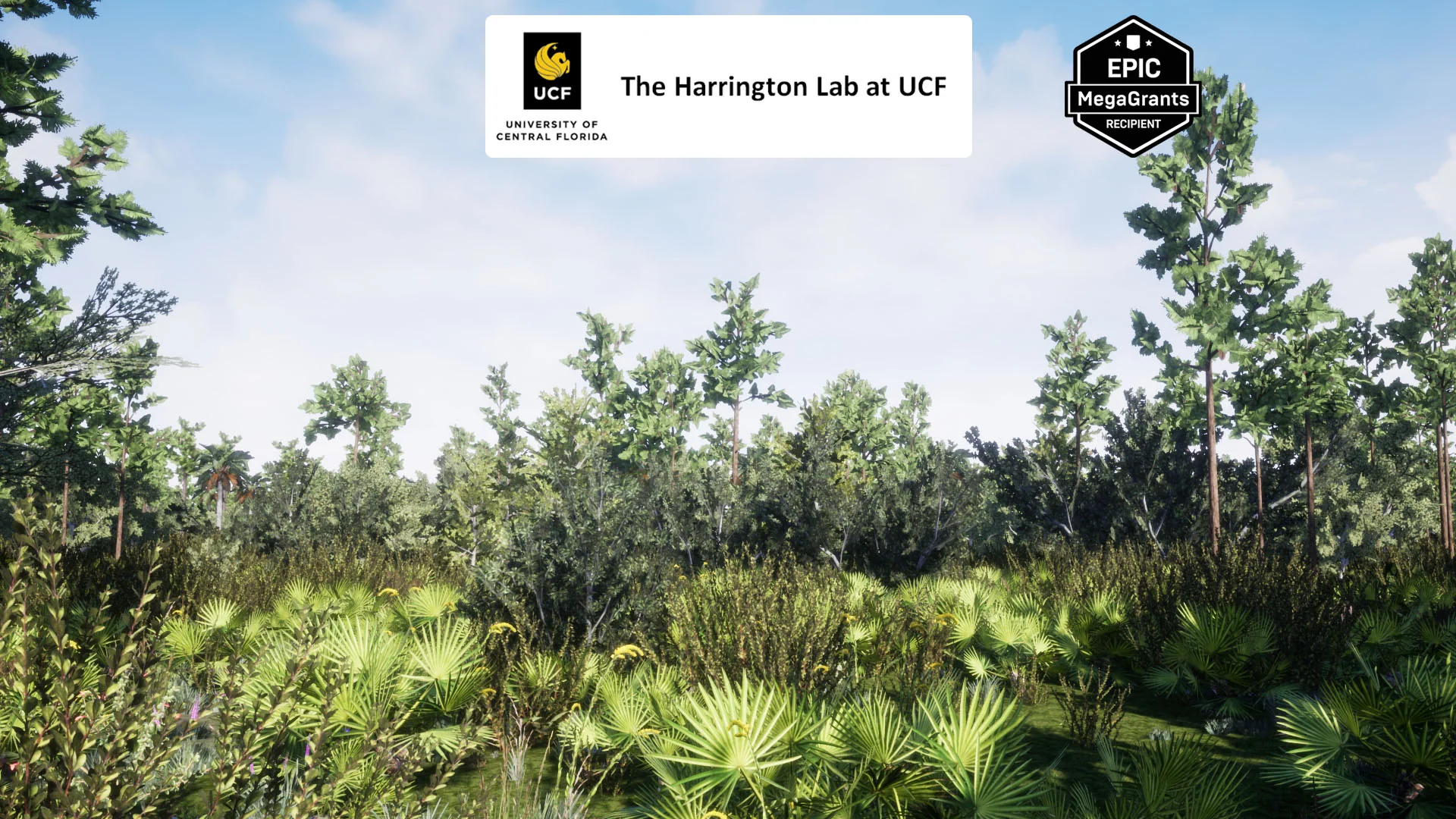
Longleaf Pine, Sand Live Oak, Sabal Palm, Saw Palmetto, Scrub Rosemary, Wiregrass, and Spanish Moss form the recognizable botanical foundation of the Scrubby Flatwoods Habitat Brush. Built to represent the distinct vegetation profile of Central Florida, this asset collection brings together lowpoly foliage assets spanning tall canopy trees, mid-tier scrub shrubs, low grasses, epiphytic plants, and a broad array of regional wildflowers. Rather than presenting generic greenery, the collection isolates the actual floral composition that defines realistic scrub and flatwoods terrain.
Central Florida Species in the Scrubby Flatwoods Habitat Brush
The botanical roster focuses squarely on species native to and characteristic of Central Florida. At the structural level, environments modeled after scrubby flatwoods rely on an open canopy punctuated by specific pine and hardwood types, transitioning into a dense, fire-adapted understory. The inclusion of species such as Longleaf Pine (Pinus palustris), Sand Live Oak (Quercus geminata), and Sabal Palm (Sabal palmetto) establishes the primary vertical silhouettes necessary for assembling realistic forest and woodland scenes.
Beneath the overstory, secondary trees and resilient shrubs shape the horizontal sightlines of an environment. The brush incorporates Dahoon Holly and Wax Myrtle, both of which commonly inhabit the transitional edges between upland scrub and wetter flatwoods depressions. Paired alongside low-growing woody perennials like Scrub Rosemary and Fetterbush, these assets allow environmental artists and simulation designers to recreate the complex layering found in wild Florida landscapes without substituting unrelated temperate foliage.
Canopy Trees and Woody Understory in Flatwoods Environments
Constructing believable natural levels requires careful balance between tree silhouettes and ground obstruction. In scrubby flatwoods, Saw Palmetto often forms dense, sprawling patches that dominate the immediate ground view. Its fan-shaped fronds contrast sharply with the vertical trunks of Longleaf Pine and the twisted, spreading forms of Sand Live Oak. Having both species present alongside Sabal Palm ensures that the dominant character of southeastern pine flatwoods can be captured across different elevations and spatial densities.
Complementing the large palmettos and oaks are specialized shrubs adapted to sandy, nutrient-poor soil. Scrub Rosemary provides dense, needle-like foliage that sits close to the ground, while Fetterbush offers arching woody branches and evergreen leaves. Prickly Pear adds a distinct succulent texture rarely seen in standard woodland packs, representing the dry, sandy clearings where bare ground and arid-tolerant flora break up continuous brush cover. This variety lets level designers create natural transitions between dense thickets and open, sun-baked sand patches.
Native Grasses, Ground Cover, and Epiphytes
The ground layer of a flatwoods ecosystem is heavily defined by its graminoid cover and specialized surface plants. Wiregrass is an ecological cornerstone in Central Florida flatwoods, providing the primary fuel and continuous matrix for the entire understory. The package includes Wiregrass along with Chalky Bluestem and Lopsided Indiangrass, supplying three distinct grass silhouettes with varying heights, growth habits, and foliage coloration. These grasses break up open terrain and provide the necessary density between taller shrubs.
Ground-level diversity is further expanded through Bracken Fern and Reindeer Moss. Reindeer Moss forms pale, intricate ground cushions over exposed sandy patches, offering immediate visual contrast against fallen needles and dark soil. Bracken Fern introduces broad, triangular fronds that populate shaded understory pockets and open woodland clearings alike. Hanging from the branches above, Spanish Moss completes the environmental profile, introducing the signature trailing epiphyte growth essential for realistic southeastern trees, particularly Live Oaks and Sabal Palms.
Wildflower Diversity Across the Habitat Brush Selection
Flowering forbs play a crucial role in bringing color, ecological realism, and visual interest to virtual forest floors. The Scrubby Flatwoods Habitat Brush includes an extensive selection of indigenous flowering plants, making it possible to scatter realistic blooms throughout grass matrices and trail borders. Among these are coastal and flatwoods staples such as Blazing Star, Flattop Goldenrod, Goldenrod, Florida Paintbrush, and Florida Tickseed.
The wildflower list also captures localized and delicate species that bring specific seasonal or geographical accuracy to a project:
Coastalplain Honeycomb, presenting dense, textured flower heads suited for open sandy swales.
Shortleaf Rosegentian, providing delicate pink petals that stand out against dark pine litter.
Tall Jointweed, displaying slender, upright flowering spikes that blend naturally into dry sand zones.
Titusville Balm, adding a geographically distinctive mint-family perennial native to east-central Florida scrub margins.
By supplying this broad array of flowering plants rather than relying on one or two generic blossoms, the brush enables environmental artists to scatter ecologically coherent wildflower patches across terrain levels. The differing heights, from the low growth of Rosegentian to the tall, upright stalks of Blazing Star and Jointweed, naturally establish varied vertical rhythm across meadow clearings and path verges.
Simulation, Education, and Museum Level Production
Because the included models are designated as lowpoly assets, the collection is tailored for applications where performance budgets and scene density must coexist. Real-time environments, virtual reality applications, and interactive simulations benefit significantly from optimized geometry, especially when rendering dense undergrowth comprising hundreds of individual plant instances. The lowpoly construction allows extensive instancing across large terrain levels without overwhelming draw call counts or polygon budgets.
The fidelity to actual Central Florida plant taxonomy gives this brush particular relevance in educational and museum contexts. Virtual field trips, habitat recreations, ecological simulations, and interactive exhibits require verifiable species representation rather than stylized or inaccurate fantasy vegetation. Whether used to reconstruct a pre-development wilderness area, simulate wildland fire behavior in fire-dependent pine flatwoods, or construct an interactive walking tour for a digital museum installation, the Scrubby Flatwoods Habitat Brush delivers the specific components needed to assemble an accurate digital ecosystem.
 Forest & Jungle
 Forest & Jungle
 Forest & Jungle