"7b46a695175d8694"{"id":"1001490","slug":"the-pine-environment-foliage-island-pcg-nature-river-nature-nature-biom","title":"The Pine Environment ( Foliage Island PCG Nature River Nature Nature Biom )","category":"Forest \u0026 Jungle","engine":"5.4+","assetVersion":"","engineVersion":"Engine Version: 5.4+","tag":"Forest \u0026 Jungle","accent":"blue","visual":"city","summary":"Explore The Pine Environment, featuring 53 unique meshes, procedural PCG scattering, river biomes, Nanite and Lumen support, and ULAT modular integration.","platform":"Unreal Engine","publishedAt":"2026-10-08T10:04:47.716Z","updatedAt":"2026-10-08T10:04:47.716Z","sourceNotes":[],"fileContents":[],"compatibility":["Unreal Engine","Engine Version: 5.4+"],"featuredImage":{"alt":"The Pine Environment ( Foliage Island PCG Nature River Nature Nature Biom )","src":"/wp-content/uploads/published/2026/10/3ea4f6900e86-b4efa431-bc2a-403b-8c5c-6b72af4180f0-c94ccb1b90.webp"},"hasDownloadLink":true,"downloads":1,"terms":[{"taxonomy":"category","slug":"forest-and-jungle","name":"Forest \u0026 Jungle"}],"galleryImages":[{"src":"/wp-content/uploads/published/2026/10/86fcb7a51db0-b211a58e-00bb-4d3a-9091-90ffece9b9ba-b1f37f294f.webp","alt":"The Pine Environment ( Foliage Island PCG Nature River Nature Nature Biom )"},{"src":"/wp-content/uploads/published/2026/10/11fd631c3ce2-5ed9d5f5-90d4-47d5-885c-c6a1bbfce4fe-1734c11666.webp","alt":"The Pine Environment ( Foliage Island PCG Nature River Nature Nature Biom )"},{"src":"/wp-content/uploads/published/2026/10/e5d57afd363e-a76c3278-cb69-4230-af34-0046a03b71b5-c69edbec07.webp","alt":"The Pine Environment ( Foliage Island PCG Nature River Nature Nature Biom )"},{"src":"/wp-content/uploads/published/2026/10/ac52d6a734ce-755bd802-88ac-48a7-a3a9-e1e27443c1f9-6889d03f85.webp","alt":"The Pine Environment ( Foliage Island PCG Nature River Nature Nature Biom )"},{"src":"/wp-content/uploads/published/2026/10/de92d7589393-29bff0fe-119c-413b-a79b-680244750bcd-b486958364.webp","alt":"The Pine Environment ( Foliage Island PCG Nature River Nature Nature Biom )"},{"src":"/wp-content/uploads/published/2026/10/9c627e077a15-334be585-eca9-4d9c-8ff5-01ee54296412-4650e3b751.webp","alt":"The Pine Environment ( Foliage Island PCG Nature River Nature Nature Biom )"},{"src":"/wp-content/uploads/published/2026/10/b6d1c2419cb0-b8c12619-c2e2-4950-95f1-ac919835e898-142a7b3b47.webp","alt":"The Pine Environment ( Foliage Island PCG Nature River Nature Nature Biom )"},{"src":"/wp-content/uploads/published/2026/10/59b5e19eb090-3abc55f9-9e98-4501-9bd8-4a9832301bdb-db9063a5e2.webp","alt":"The Pine Environment ( Foliage Island PCG Nature River Nature Nature Biom )"},{"src":"/wp-content/uploads/published/2026/10/bab6fea98117-016c3fc9-0a15-4a00-bfee-a04261581d7b-2d71fe5d7e.webp","alt":"The Pine Environment ( Foliage Island PCG Nature River Nature Nature Biom )"}],"accessPanel":{"kind":"resource","title":"Download this resource","eyebrow":"Free Download","message":"Log in or create a free account to start your download.","fileName":"The Pine Environment ( Foliage Island PCG Nature River Nature Nature Biom ).7z","safetyNote":"Resources are manually reviewed before listing to improve quality and reduce obvious risks.","actionLabel":"Download Free","resourceType":"Resource archive"},"contentHtml":"\u003cp\u003eDense pine canopies, rocky riverbanks, and layered forest undergrowth define the terrain inside The Pine Environment. Designed to represent a serene island biome, the environment centers on a realistic river system carving through rich woodland vegetation. Rather than presenting isolated props in a void, the asset delivers an integrated ecosystem where water, terrain, and plant life interact as a coherent natural setting suitable for both interactive game projects and cinematic virtual production stages.\u003c/p\u003e\u003ch2\u003eAssembling Island Landscapes Around River Biomes and Pine Foliage\u003c/h2\u003e\u003cp\u003eThe layout of the environment balances broad open waterlines with enclosed, shaded woodland corridors. A realistic flowing river acts as the primary visual anchor, winding between rocky banks, exposed soil, and dense clusters of pine trees. Surrounding the watercourse, diverse foliage meshes fill the understory, creating natural gradations from shoreline vegetation to tall, mature tree cover.\u003c/p\u003e\u003cp\u003eArtists working on woodland journeys, wilderness exploration levels, or quiet open-world clearings can draw directly from the included preassembled scene. Having the complete showcase space pre-built gives technical artists and level designers an immediate reference for scale, foliage distribution density, and lighting balance. Because every showcased element is bundled together, the assembly demonstrates how trees, underbrush, and shoreline rocks fit together without requiring scene assembly from scratch.\u003c/p\u003e\u003ch2\u003e53 Unique Meshes and Game-Ready Performance\u003c/h2\u003e\u003cp\u003eAt the center of the environment is a focused collection of 53 unique meshes. Restricting the library to a clean set of 53 assets allows production teams to maintain visual cohesion across extensive forest expanses while avoiding unnecessary asset bloat and performance overhead. Every mesh in the set is tuned with level of detail optimizations specifically configured for game-ready deployment.\u003c/p\u003e\u003cp\u003eThe modularity of these 53 meshes enables flexible reconfiguration across different natural layouts:\u003c/p\u003e\u003cul\u003e\u003cli\u003eTall pine tree variations to establish canopies, broken skylines, and forest borders.\u003c/li\u003e\u003cli\u003eRiverbank rocks, terrain edges, and shoreline accents that contour water surfaces.\u003c/li\u003e\u003cli\u003eLush bushes, ground-cover vegetation, and forest floor foliage that break up terrain repetition.\u003c/li\u003e\u003cli\u003eStructural natural elements suitable for building winding pathways, island shores, and dense woodland clusters.\u003c/li\u003e\u003c/ul\u003e\u003cp\u003eBy relying on a tightly curated group of high-fidelity meshes, scenes can maintain visual variety through rotation, scaling, and organic procedural clustering rather than demanding hundreds of unique models that strain memory budgets.\u003c/p\u003e\u003ch2\u003eRendering Behavior Across Nanite, Lumen, and Path Tracing\u003c/h2\u003e\u003cp\u003eModern visual fidelity within the environment relies on modern engine geometry and illumination systems. Meshes throughout the pack integrate with Nanite, allowing complex geometry with rich surface detail to render efficiently without traditional manual level-of-detail management compromises. This high geometric density ensures tree trunks, ground formations, and stone clusters maintain sharp, crisp silhouettes up close and across long sightlines.\u003c/p\u003e\u003cp\u003eLighting behavior is configured for dynamic global illumination through Lumen. Light bounces realistically off the forest floor, filters through needle canopies, and catches the edges of water features, providing immediate atmospheric feedback during level editing. While final offline portfolio captures of the environment utilize path tracing, real-time engine viewports rely on Lumen's dynamic calculations. Teams evaluating the asset can reference engine flythrough sequences to observe how foliage shading, shadows, and water surfaces behave under real-time conditions versus path-traced rendering passes.\u003c/p\u003e\u003ch2\u003ePCG Plugin Configuration and Geometry Script Interoperability\u003c/h2\u003e\u003cp\u003ePopulating large-scale natural biomes manually can be time-prohibitive. This environment incorporates procedural workflows to automate foliage scattering and terrain coverage. For the automated procedural systems to function properly in engine, two specific plugins must be enabled in the project configuration:\u003c/p\u003e\u003cul\u003e\u003cli\u003e\u003cstrong\u003ePCG (Procedural Content Generation) Plugin:\u003c/strong\u003e Manages the rule-based logic for scattering trees, undergrowth, and environmental elements across landscape actors.\u003c/li\u003e\u003cli\u003e\u003cstrong\u003ePCGGeometryScriptInterop:\u003c/strong\u003e Bridges geometry scripting functionality directly with the procedural generation graphs, enabling dynamic procedural evaluation of surface topology and boundary intersections.\u003c/li\u003e\u003c/ul\u003e\u003cp\u003eWith both plugins enabled, the environment can evaluate terrain shapes dynamically, placing shoreline foliage along river margins and planting dense pine clusters across higher elevations. This algorithmic distribution speeds up the development of expansive open-world zones while maintaining natural distribution patterns across rolling hills and island shorelines.\u003c/p\u003e\u003ch2\u003eIntegrating the Ultimate Level Art Tool for Modular Scene Population\u003c/h2\u003e\u003cp\u003eAlongside its nature assets, the package includes the Ultimate Level Art Tool (ULAT). Originating as a modular design development tool for mobile and web-based systems, ULAT is incorporated to expand level dressing capabilities. The tool enables rapid creation of custom modular structures and establishes a seamless mechanism to populate game scenes naturally.\u003c/p\u003e\u003cp\u003eBecause The Pine Environment is fully compatible with ULAT, level artists are not restricted solely to raw nature scattering. Designers can introduce architectural elements, establish custom modular buildings, and interweave structured spaces into the wilderness. The tool provides a unified framework for staging environmental storytelling elements, helping artists transition smoothly between constructed camps or outposts and the surrounding untamed pine biome.\u003c/p\u003e\u003ch2\u003eProduction Deployment Across Real-Time Games and Virtual Production\u003c/h2\u003e\u003cp\u003eBeyond traditional interactive game design, the environment is structured to support virtual production pipelines. Virtual sets require assets that hold up under close camera inspection while sustaining real-time framerates on stage volumes. The high mesh detail, paired with Nanite handling and Lumen illumination, makes the biome a reliable background canvas for digital scouting, backdrop projection, and real-time cinematic sequence generation.\u003c/p\u003e\u003cp\u003eThe environment also maintains workflow compatibility with NWIRO - AI Integration Kit (Unreal Copilot \u0026amp; MCP \u0026amp; IK \u0026amp; Ultimate AI Bridge MCP), giving technical setups access to modern integration and development frameworks. For teams evaluating natural biome kits, The Pine Environment pairs a solid 53-mesh natural kit with procedural PCG generation rules and ULAT layout flexibility, delivering a ready-to-use foundation for island forests and dynamic river settings.\u003c/p\u003e\n\n\u003ch2\u003eMore From The Same Workflow\u003c/h2\u003e\n\u003cul\u003e\n\u003cli\u003e\u003ca href=\"https://3dcghub.com/broadleaf-poplar-forest-pcg-biome/\" title=\"Broadleaf Poplar Forest - PCG Biome\"\u003eBroadleaf Poplar Forest - PCG Biome\u003c/a\u003e\u003c/li\u003e\n\u003cli\u003e\u003ca href=\"https://3dcghub.com/stylized-nature-vol-1-stylized-environment-bundle/\" title=\"Stylized Nature Vol. 1 | Stylized Environment Bundle\"\u003eStylized Nature Vol. 1 | Stylized Environment Bundle\u003c/a\u003e\u003c/li\u003e\n\u003cli\u003e\u003ca href=\"https://3dcghub.com/red-pine-biome/\" title=\"Red Pine Biome\"\u003eRed Pine Biome\u003c/a\u003e\u003c/li\u003e\n\u003cli\u003e\u003ca href=\"https://3dcghub.com/realistic-riverrock/\" title=\"Realistic RiverRock\"\u003eRealistic RiverRock\u003c/a\u003e\u003c/li\u003e\n\u003cli\u003e\u003ca href=\"https://3dcghub.com/wildlands-stylized-nature-pine-forest-trees-foliage-nature-forest-biome/\" title=\"Wildlands: Stylized Nature (Pine Forest, Trees, Foliage, Nature, Forest, Biome)\"\u003eWildlands: Stylized Nature (Pine Forest, Trees, Foliage, Nature, Forest, Biome)\u003c/a\u003e\u003c/li\u003e\n\u003c/ul\u003e","contentTextLength":6987,"navigation":{"current":57,"total":3481,"previous":{"id":"1001491","slug":"vr-hands-grab-system-legacy-version","title":"VR Hands Grab System (Legacy version)","category":"Weapons \u0026 Combat","platform":"Unreal Engine","updatedAt":"2026-10-08T10:07:52.665Z"},"next":{"id":"1001489","slug":"surroundead-survival-game-assets-bundle","title":"SurrounDead - Survival Game Assets (Bundle)","category":"Apocalyptic / Post-apocalyptic","platform":"Unreal Engine","updatedAt":"2026-10-08T10:04:09.253Z"}},"relatedResources":[{"id":"1001107","slug":"broadleaf-poplar-forest-pcg-biome","title":"Broadleaf Poplar Forest - PCG Biome","category":"Forest \u0026 Jungle","engine":"5.4+","assetVersion":"","engineVersion":"Engine Version: 5.4+","tag":"Forest \u0026 Jungle","accent":"blue","visual":"mech","summary":"Fully procedural PCG poplar biome for Unreal Engine: photoscanned trees, dynamic wind and foliage interaction, plus World Partition and runtime generation.","platform":"Unreal Engine","publishedAt":"2026-09-07T06:21:06.743Z","updatedAt":"2026-09-07T06:21:06.743Z","sourceNotes":[],"fileContents":[],"compatibility":["Unreal Engine","Engine Version: 5.4+"],"featuredImage":{"alt":"Broadleaf Poplar Forest - PCG Biome","src":"/wp-content/uploads/published/2026/09/62ee8e5ec890-f775a27c-8e9d-49c5-bb9a-6fd09118f806-4aeeb75b35.webp"},"hasDownloadLink":true,"downloads":3},{"id":"1000481","slug":"stylized-nature-vol-1-stylized-environment-bundle","title":"Stylized Nature Vol. 1 | Stylized Environment Bundle","category":"Forest \u0026 Jungle","engine":"5.2+","assetVersion":"","engineVersion":"Engine Version: 5.2+","tag":"Forest \u0026 Jungle","accent":"blue","visual":"city","summary":"A stylized environment bundle for Unreal Engine featuring landscape tools for cliffs, grass distribution, runtime virtual textures, interactive foliage, and dyn","platform":"Unreal Engine","publishedAt":"2026-07-12T06:08:17.870Z","updatedAt":"2026-07-12T06:08:17.870Z","sourceNotes":[],"fileContents":[],"compatibility":["Unreal Engine","Engine Version: 5.2+"],"featuredImage":{"alt":"Stylized Nature Vol. 1 | Stylized Environment Bundle","src":"/wp-content/uploads/published/2026/07/26ef167c9a89-bc3026b6-a0c9-4dcc-82d5-8ee5de21e891-9887ed431f.webp"},"hasDownloadLink":true,"downloads":3},{"id":"1000663","slug":"red-pine-biome","title":"Red Pine Biome","category":"Forest \u0026 Jungle","engine":"5.4+","assetVersion":"","engineVersion":"Engine Version: 5.4+","tag":"Forest \u0026 Jungle","accent":"blue","visual":"mech","summary":"Red Pine Biome delivers Mediterranean red pine trees, endemic vegetation, cliffs, and scatter with landscape material, procedural foliage, and wind interaction.","platform":"Unreal Engine","publishedAt":"2026-07-22T06:41:11.442Z","updatedAt":"2026-07-22T06:41:11.442Z","sourceNotes":[],"fileContents":[],"compatibility":["Unreal Engine","Engine Version: 5.4+"],"featuredImage":{"alt":"Red Pine Biome","src":"/wp-content/uploads/published/2026/07/b774421f9718-c6d49ccf-c1a0-425a-bc09-3d64bdd79653-d7a4531c7f.webp"},"hasDownloadLink":true,"downloads":1}]}
Forest & Jungle
The Pine Environment ( Foliage Island PCG Nature River Nature Nature Biom )
Explore The Pine Environment, featuring 53 unique meshes, procedural PCG scattering, river biomes, Nanite and Lumen support, and ULAT modular integration.
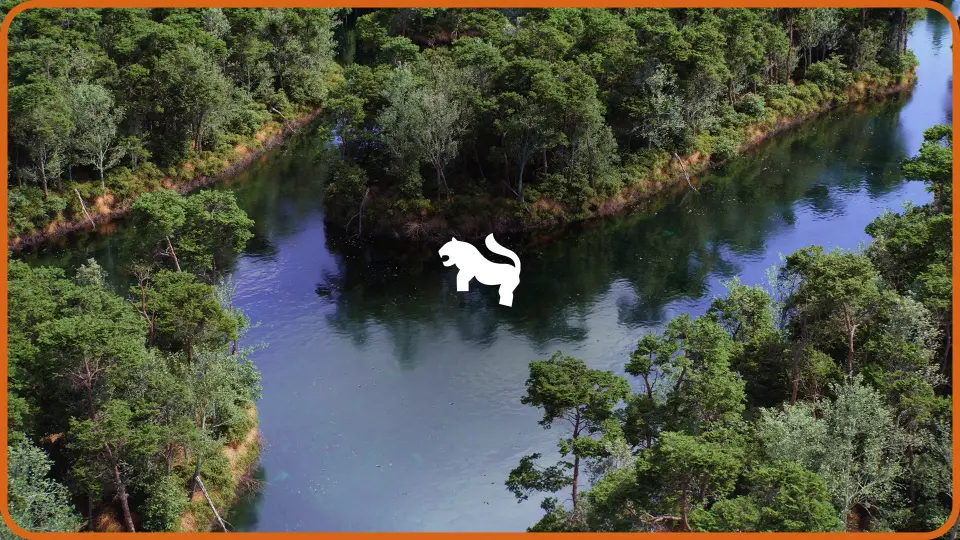
Dense pine canopies, rocky riverbanks, and layered forest undergrowth define the terrain inside The Pine Environment. Designed to represent a serene island biome, the environment centers on a realistic river system carving through rich woodland vegetation. Rather than presenting isolated props in a void, the asset delivers an integrated ecosystem where water, terrain, and plant life interact as a coherent natural setting suitable for both interactive game projects and cinematic virtual production stages.
Assembling Island Landscapes Around River Biomes and Pine Foliage
The layout of the environment balances broad open waterlines with enclosed, shaded woodland corridors. A realistic flowing river acts as the primary visual anchor, winding between rocky banks, exposed soil, and dense clusters of pine trees. Surrounding the watercourse, diverse foliage meshes fill the understory, creating natural gradations from shoreline vegetation to tall, mature tree cover.
Artists working on woodland journeys, wilderness exploration levels, or quiet open-world clearings can draw directly from the included preassembled scene. Having the complete showcase space pre-built gives technical artists and level designers an immediate reference for scale, foliage distribution density, and lighting balance. Because every showcased element is bundled together, the assembly demonstrates how trees, underbrush, and shoreline rocks fit together without requiring scene assembly from scratch.
53 Unique Meshes and Game-Ready Performance
At the center of the environment is a focused collection of 53 unique meshes. Restricting the library to a clean set of 53 assets allows production teams to maintain visual cohesion across extensive forest expanses while avoiding unnecessary asset bloat and performance overhead. Every mesh in the set is tuned with level of detail optimizations specifically configured for game-ready deployment.
The modularity of these 53 meshes enables flexible reconfiguration across different natural layouts:
Tall pine tree variations to establish canopies, broken skylines, and forest borders.
Riverbank rocks, terrain edges, and shoreline accents that contour water surfaces.
Lush bushes, ground-cover vegetation, and forest floor foliage that break up terrain repetition.
Structural natural elements suitable for building winding pathways, island shores, and dense woodland clusters.
By relying on a tightly curated group of high-fidelity meshes, scenes can maintain visual variety through rotation, scaling, and organic procedural clustering rather than demanding hundreds of unique models that strain memory budgets.
Rendering Behavior Across Nanite, Lumen, and Path Tracing
Modern visual fidelity within the environment relies on modern engine geometry and illumination systems. Meshes throughout the pack integrate with Nanite, allowing complex geometry with rich surface detail to render efficiently without traditional manual level-of-detail management compromises. This high geometric density ensures tree trunks, ground formations, and stone clusters maintain sharp, crisp silhouettes up close and across long sightlines.
Lighting behavior is configured for dynamic global illumination through Lumen. Light bounces realistically off the forest floor, filters through needle canopies, and catches the edges of water features, providing immediate atmospheric feedback during level editing. While final offline portfolio captures of the environment utilize path tracing, real-time engine viewports rely on Lumen's dynamic calculations. Teams evaluating the asset can reference engine flythrough sequences to observe how foliage shading, shadows, and water surfaces behave under real-time conditions versus path-traced rendering passes.
PCG Plugin Configuration and Geometry Script Interoperability
Populating large-scale natural biomes manually can be time-prohibitive. This environment incorporates procedural workflows to automate foliage scattering and terrain coverage. For the automated procedural systems to function properly in engine, two specific plugins must be enabled in the project configuration:
PCG (Procedural Content Generation) Plugin: Manages the rule-based logic for scattering trees, undergrowth, and environmental elements across landscape actors.
PCGGeometryScriptInterop: Bridges geometry scripting functionality directly with the procedural generation graphs, enabling dynamic procedural evaluation of surface topology and boundary intersections.
With both plugins enabled, the environment can evaluate terrain shapes dynamically, placing shoreline foliage along river margins and planting dense pine clusters across higher elevations. This algorithmic distribution speeds up the development of expansive open-world zones while maintaining natural distribution patterns across rolling hills and island shorelines.
Integrating the Ultimate Level Art Tool for Modular Scene Population
Alongside its nature assets, the package includes the Ultimate Level Art Tool (ULAT). Originating as a modular design development tool for mobile and web-based systems, ULAT is incorporated to expand level dressing capabilities. The tool enables rapid creation of custom modular structures and establishes a seamless mechanism to populate game scenes naturally.
Because The Pine Environment is fully compatible with ULAT, level artists are not restricted solely to raw nature scattering. Designers can introduce architectural elements, establish custom modular buildings, and interweave structured spaces into the wilderness. The tool provides a unified framework for staging environmental storytelling elements, helping artists transition smoothly between constructed camps or outposts and the surrounding untamed pine biome.
Production Deployment Across Real-Time Games and Virtual Production
Beyond traditional interactive game design, the environment is structured to support virtual production pipelines. Virtual sets require assets that hold up under close camera inspection while sustaining real-time framerates on stage volumes. The high mesh detail, paired with Nanite handling and Lumen illumination, makes the biome a reliable background canvas for digital scouting, backdrop projection, and real-time cinematic sequence generation.
The environment also maintains workflow compatibility with NWIRO - AI Integration Kit (Unreal Copilot & MCP & IK & Ultimate AI Bridge MCP), giving technical setups access to modern integration and development frameworks. For teams evaluating natural biome kits, The Pine Environment pairs a solid 53-mesh natural kit with procedural PCG generation rules and ULAT layout flexibility, delivering a ready-to-use foundation for island forests and dynamic river settings.
 Forest & Jungle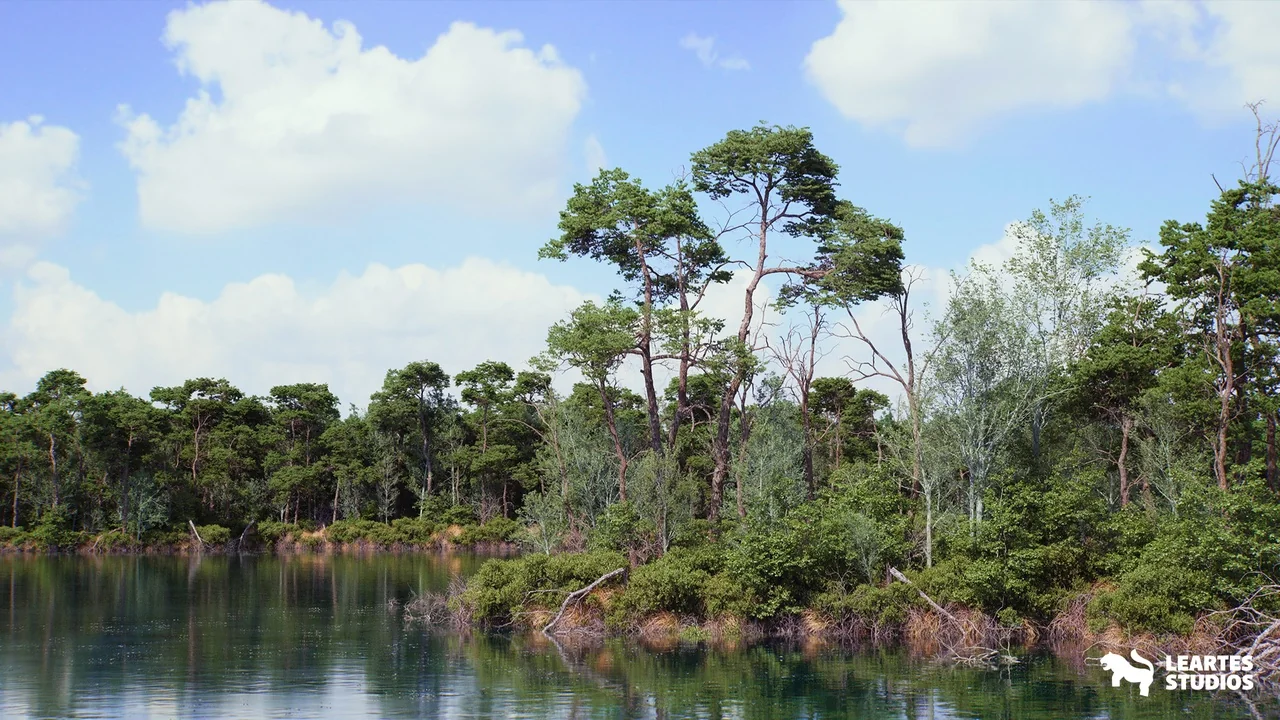
 Forest & Jungle
 Forest & Jungle
 Forest & Jungle