"d33c94b0a941547b"{"id":"1002748","slug":"watermills-nature-environment-watermills-nature-environment-nature-ruin","title":"Watermills / Nature Environment ( Watermills Nature Environment Nature Ruin )","category":"Forest \u0026 Jungle","engine":"5.0+","assetVersion":"","engineVersion":"Engine Version: 5.0+","tag":"Forest \u0026 Jungle","accent":"blue","visual":"city","summary":"Create detailed medieval valleys, abandoned river settlements, and ruined fantasy outposts with the game-ready Watermills / Nature Environment asset set.","platform":"Unreal Engine","indexPolicy":"index","publishedAt":"2026-11-19T07:00:18.097Z","updatedAt":"2026-11-19T07:00:18.097Z","sourceNotes":[],"fileContents":[],"compatibility":["Unreal Engine","Engine Version: 5.0+"],"featuredImage":{"alt":"Watermills / Nature Environment ( Watermills Nature Environment Nature Ruin )","src":"/wp-content/uploads/published/2026/11/5e4b6763255c-d80aab8c-6c59-43cf-8ae8-81a3cab33f40-df87f45056.webp"},"fileSizeBytes":1836904514,"hasDownloadLink":true,"downloads":0,"terms":[{"taxonomy":"category","slug":"forest-and-jungle","name":"Forest \u0026 Jungle"}],"galleryImages":[{"src":"/wp-content/uploads/published/2026/11/538dca83f335-4b403107-4928-4cec-b8f1-1808adb1ffa2-0f446501d2.webp","alt":"Watermills / Nature Environment ( Watermills Nature Environment Nature Ruin )"},{"src":"/wp-content/uploads/published/2026/11/c33c3150a7b3-05720fda-9bef-4315-9408-44b46b6cf9e0-af91a610fd.webp","alt":"Watermills / Nature Environment ( Watermills Nature Environment Nature Ruin )"},{"src":"/wp-content/uploads/published/2026/11/07738ea393c8-744d78ce-b6bf-4794-8932-9354c900510d-d8cf127245.webp","alt":"Watermills / Nature Environment ( Watermills Nature Environment Nature Ruin )"},{"src":"/wp-content/uploads/published/2026/11/fe4bae616c43-2d5292fd-d099-440f-9802-7702b744e48f-3acc46496a.webp","alt":"Watermills / Nature Environment ( Watermills Nature Environment Nature Ruin )"},{"src":"/wp-content/uploads/published/2026/11/62f0750a9ee4-19242540-7f5a-42dd-8baf-f87792722f96-07c3ae3824.webp","alt":"Watermills / Nature Environment ( Watermills Nature Environment Nature Ruin )"},{"src":"/wp-content/uploads/published/2026/11/d9b8a168fc0b-5876f56f-f8de-4761-baaa-052fa29d8c43-a19e1da6a5.webp","alt":"Watermills / Nature Environment ( Watermills Nature Environment Nature Ruin )"},{"src":"/wp-content/uploads/published/2026/11/7a64caf87d76-3cb6cbae-b8a7-40e3-8635-3b0c17fcd681-fbf6f53972.webp","alt":"Watermills / Nature Environment ( Watermills Nature Environment Nature Ruin )"},{"src":"/wp-content/uploads/published/2026/11/826780c57379-b13b2441-829c-456a-9e3f-dc01eab9601e-51e428020f.webp","alt":"Watermills / Nature Environment ( Watermills Nature Environment Nature Ruin )"},{"src":"/wp-content/uploads/published/2026/11/84cc299f82dc-5c6e038f-06a1-4e46-be7c-fd58bb9701b8-759358fced.webp","alt":"Watermills / Nature Environment ( Watermills Nature Environment Nature Ruin )"}],"accessPanel":{"kind":"resource","title":"Get this resource","safetyNote":"Resources are manually reviewed before listing to improve quality and reduce obvious risks.","fileName":"Content.7z","resourceType":"Resource archive","versions":[]},"contentHtml":"\u003cp\u003eDense woodland riverbanks, secluded mountain valleys, and decaying settlements along rushing streams define the aesthetic territory of this collection. Built for Unreal Engine, the asset suite provides the foundational pieces needed to assemble medieval hamlets, forgotten riverside outposts, and rugged fantasy landscapes where rustic architecture slowly yields to climbing vegetation. Rather than presenting static, single-purpose meshes, the environment delivers a cohesive kit of rustic elements that capture the mood of abandoned waterways and weathered stone foundations.\u003c/p\u003e \u003ch2\u003eCrafting Riverside Settlements with Watermills and Timber Frameworks\u003c/h2\u003e\n\u003cp\u003eAt the center of the thematic design is the interplay between moving water and working architecture. The package supplies the structural components required to erect functioning or decayed watermills, complete with weathered wood timbers, water wheels, stone runoffs, and adjacent outbuildings. These structures reflect an age of manual industry, fitting naturally into medieval hamlets, remote frontier outposts, or magical woodland realms.\u003c/p\u003e\n\u003cp\u003eWooden bridges, weathered piers, and rustic support beams allow level designers to link disparate sections of riverbanks across uneven terrain. Because the structural assets feature a weathered, lived-in patina, they blend cleanly into wild terrain without appearing artificially clean or newly constructed. Timber planks exhibit grain and edge wear, while stonework incorporates chipped corners and aged mortar lines. This level of physical grounding lets artists construct everything from quiet riverside workshops to half-collapsed millworks reclaimed by mountain floods.\u003c/p\u003e\n\u003cp\u003eThe preassembled showcase scene included in the package serves as a direct template for how these architecture pieces sit against dynamic topography. By dissecting the arrangement of retaining walls, timber walkways, and water channeling troughs in the demonstration layout, creators can observe practical methods for guiding player sightlines across stepped watercourses and mist-filled hollows.\u003c/p\u003e \u003ch2\u003eLayering Wild Foliage and Weathered Nature Ruin Assets\u003c/h2\u003e\n\u003cp\u003eAtmospheric fantasy environments depend on believable transitions between wild growth and decaying masonry. This asset set supports that dynamic with a rich array of plant life, mossy surfaces, tumbled walls, and natural rock formations. Broken stone steps, cracked archways, and collapsed foundations can be paired with creeping ivy, ferns, and dense shrubs to suggest decades of abandonment.\u003c/p\u003e\n\u003cp\u003eNatural water courses represent a major structural pillar of the environment. The kit accommodates cascading waterfalls, quiet pools, rocky creek beds, and muddy shorelines. By placing moss-covered river boulders and damp rock faces along the water’s edge, designers can establish realistic erosion patterns that frame the man-made structures. The varied vegetation—ranging from forest floor ground cover to delicate flowering wild plants—helps break up terrain repetitions across wide exterior spaces.\u003c/p\u003e\n\u003cp\u003eAtmospheric conditions like low-lying river mist, damp earth, and filtered forest light interact cleanly with the materials. The balance of damp, dark stone, weathered wood grains, and vibrant green moss creates strong value contrast, making it straightforward to establish specific moods such as foggy dawn riverbanks, damp rainy crossings, or warm late-afternoon clearings.\u003c/p\u003e \u003ch2\u003eModular Building Workflows Powered by the Ultimate Level Art Tool\u003c/h2\u003e\n\u003cp\u003eConstructing sprawling outdoor levels piece by piece can rapidly become bottlenecked by manual alignment and repetitive object placement. To resolve this friction, the package incorporates ULAT, known as the Ultimate Level Art Tool. Originally developed as a modular design development tool for mobile and web-based systems, this utility is integrated directly with the pack's modular pieces.\u003c/p\u003e\n\u003cp\u003eThe tool accelerates the assembly of custom modular buildings, allowing artists to snap, align, and generate structural variations without breaking production flow. Instead of placing individual wall panels, support beams, and roof segments by hand on every structure, developers can generate coherent architectural clusters that match the scale and logic of the surrounding landscape. This capability significantly cuts down the time required to turn an empty riverbed into an established mill village.\u003c/p\u003e\n\u003cp\u003eBeyond structural assembly, the Ultimate Level Art Tool provides a seamless method for populating scenes naturally. Prop scattering, foliage layering, and debris distribution along walls or water paths can be carried out rapidly, ensuring that exterior scenes feel organic rather than rigid or tiled. Because the environment assets are built with ULAT compatibility in mind, modular wall segments, stone foundations, and decorative accents respond immediately to the tool’s placement rules.\u003c/p\u003e \u003ch2\u003eBalancing High Visual Detail for Virtual Production and Game Projects\u003c/h2\u003e\n\u003cp\u003eMeeting the performance standards of real-time interactive gameplay while preserving the visual fidelity demanded by virtual production requires balanced asset construction. The meshes in this set maintain high visual detail across close-up perspectives, showcasing distinct texture maps for damp moss, eroded wood grains, and chipped masonry without generating excessive geometry overhead.\u003c/p\u003e\n\u003cp\u003eIn virtual production scenarios, background sets must hold up under sharp camera focus, variable focal lengths, and dynamic stage lighting. The depth of the foliage assets, combined with multi-layered stone and timber materials, ensures that cinematic backdrops avoid a flat, synthetic appearance. Shadows fall realistically into the crevices of stacked masonry walls, and water reflections read cleanly across rock-strewn riverbeds.\u003c/p\u003e\n\u003cp\u003eFor playable game projects, optimization remains steady across sweeping vista angles and dense, enclosed forest trails. Meshes feature efficient level-of-detail transitions, keeping frame rates consistent whether a scene displays a single isolated ruin or an entire river valley populated with functioning mills, cascading falls, and thick riverside canopies.\u003c/p\u003e \u003ch2\u003ePractical Applications Across Diverse Project Settings\u003c/h2\u003e\n\u003cp\u003eThe assets adapt fluidly across multiple historical and speculative genres:\u003c/p\u003e\n\u003cul\u003e \u003cli\u003e\u003cstrong\u003eMedieval Open-World Titles:\u003c/strong\u003e Creating working agricultural valleys, remote trading crossings, and hidden wilderness waystations.\u003c/li\u003e \u003cli\u003e\u003cstrong\u003eDark Fantasy Adventures:\u003c/strong\u003e Assembling overgrown ruins, abandoned riverside shrines, and shadowy forest sanctuaries.\u003c/li\u003e \u003cli\u003e\u003cstrong\u003eVirtual Sets and Cinematics:\u003c/strong\u003e Establishing realistic nature backdrops with dynamic water, rocky shores, and ancient timber structures.\u003c/li\u003e \u003cli\u003e\u003cstrong\u003eExploration and Survival Games:\u003c/strong\u003e Furnishing shelter areas, broken bridges that restrict movement, and repairable outpost settlements.\u003c/li\u003e\n\u003c/ul\u003e\n\u003cp\u003eBy blending modular architecture, detailed terrain props, and dedicated placement tooling, the package removes the repetitive friction from large-scale natural level design, letting artists focus directly on mood, composition, and visual storytelling.\u003c/p\u003e\n\n\u003ch2\u003eMore From The Same Workflow\u003c/h2\u003e\n\u003cul\u003e\n\u003cli\u003e\u003ca href=\"https://3dcghub.com/low-poly-nature/\" rel=\"noopener noreferrer\"\u003eLow Poly Nature\u003c/a\u003e\u003c/li\u003e\n\u003cli\u003e\u003ca href=\"https://3dcghub.com/the-pine-environment-foliage-island-pcg-nature-river-nature-nature-biom/\" rel=\"noopener noreferrer\"\u003eThe Pine Environment ( Foliage Island PCG Nature River Nature Nature Biom )\u003c/a\u003e\u003c/li\u003e\n\u003cli\u003e\u003ca href=\"https://3dcghub.com/stylized-nature-vol-1-stylized-environment-bundle/\" rel=\"noopener noreferrer\"\u003eStylized Nature Vol. 1 | Stylized Environment Bundle\u003c/a\u003e\u003c/li\u003e\n\u003cli\u003e\u003ca href=\"https://3dcghub.com/realistic-riverrock/\" rel=\"noopener noreferrer\"\u003eRealistic RiverRock\u003c/a\u003e\u003c/li\u003e\n\u003cli\u003e\u003ca href=\"https://3dcghub.com/wildlands-stylized-nature-pine-forest-trees-foliage-nature-forest-biome/\" rel=\"noopener noreferrer\"\u003eWildlands: Stylized Nature (Pine Forest, Trees, Foliage, Nature, Forest, Biome)\u003c/a\u003e\u003c/li\u003e\n\u003c/ul\u003e","contentTextLength":7262,"navigation":{"current":9,"total":4676,"previous":{"id":"1002749","slug":"wet-flatwoods-habitat-brush","title":"Wet Flatwoods Habitat Brush","category":"Forest \u0026 Jungle","platform":"Unreal Engine","updatedAt":"2026-11-19T07:00:46.783Z"},"next":{"id":"1002747","slug":"warehouse-environment","title":"Warehouse Environment","category":"Industrial","platform":"Unreal Engine","updatedAt":"2026-11-19T06:58:01.055Z"}},"relatedResources":[{"id":"1002674","slug":"low-poly-nature","title":"Low Poly Nature","category":"Forest \u0026 Jungle","engine":"5.0+","assetVersion":"","engineVersion":"Engine Version: 5.0+","tag":"Forest \u0026 Jungle","accent":"blue","visual":"mech","summary":"Explore the Low Poly Nature asset pack, featuring over 800 game-ready models, botanical flora, terrain, modular props, and Nanite and Lumen support.","platform":"Unreal Engine","indexPolicy":"index","publishedAt":"2026-11-16T22:24:45.110Z","updatedAt":"2026-11-16T22:24:45.110Z","sourceNotes":[],"fileContents":[],"compatibility":["Unreal Engine","Engine Version: 5.0+"],"featuredImage":{"alt":"Low Poly Nature","src":"/wp-content/uploads/published/2026/11/02d40754b7fb-2bf5d15c-d60b-4c05-9761-c6388af8d6b5-5cfbb89cae.webp"},"fileSizeBytes":123287532,"hasDownloadLink":true,"downloads":0},{"id":"1001490","slug":"the-pine-environment-foliage-island-pcg-nature-river-nature-nature-biom","title":"The Pine Environment ( Foliage Island PCG Nature River Nature Nature Biom )","category":"Forest \u0026 Jungle","engine":"5.4+","assetVersion":"","engineVersion":"Engine Version: 5.4+","tag":"Forest \u0026 Jungle","accent":"blue","visual":"city","summary":"Explore The Pine Environment, featuring 53 unique meshes, procedural PCG scattering, river biomes, Nanite and Lumen support, and ULAT modular integration.","platform":"Unreal Engine","indexPolicy":"index","publishedAt":"2026-10-08T10:04:47.716Z","updatedAt":"2026-10-08T10:04:47.716Z","sourceNotes":[],"fileContents":[],"compatibility":["Unreal Engine","Engine Version: 5.4+"],"featuredImage":{"alt":"The Pine Environment ( Foliage Island PCG Nature River Nature Nature Biom )","src":"/wp-content/uploads/published/2026/10/3ea4f6900e86-b4efa431-bc2a-403b-8c5c-6b72af4180f0-c94ccb1b90.webp"},"fileSizeBytes":732456049,"hasDownloadLink":true,"downloads":2},{"id":"1000481","slug":"stylized-nature-vol-1-stylized-environment-bundle","title":"Stylized Nature Vol. 1 | Stylized Environment Bundle","category":"Forest \u0026 Jungle","engine":"5.2+","assetVersion":"","engineVersion":"Engine Version: 5.2+","tag":"Forest \u0026 Jungle","accent":"blue","visual":"city","summary":"A stylized environment bundle for Unreal Engine featuring landscape tools for cliffs, grass distribution, runtime virtual textures, interactive foliage, and dyn","platform":"Unreal Engine","indexPolicy":"index","publishedAt":"2026-07-12T06:08:17.870Z","updatedAt":"2026-07-12T06:08:17.870Z","sourceNotes":[],"fileContents":[],"compatibility":["Unreal Engine","Engine Version: 5.2+"],"featuredImage":{"alt":"Stylized Nature Vol. 1 | Stylized Environment Bundle","src":"/wp-content/uploads/published/2026/07/26ef167c9a89-bc3026b6-a0c9-4dcc-82d5-8ee5de21e891-9887ed431f.webp"},"fileSizeBytes":341399543,"hasDownloadLink":true,"downloads":3}]}
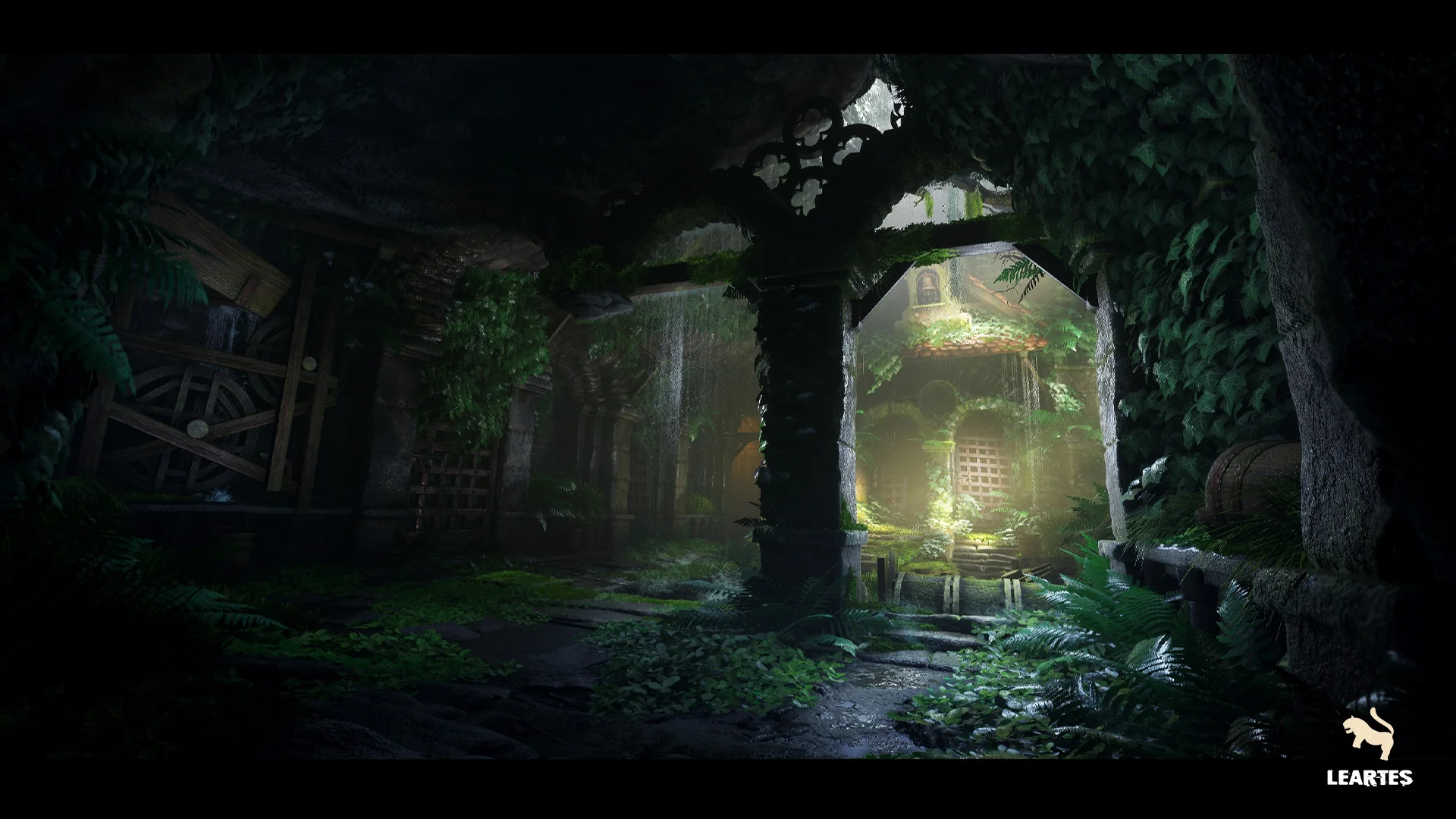
Resource screenshots
1 / 9
Join our channel
Follow 3DCGHUB on Telegram for new resource drops, migration updates, and community notices.
Create detailed medieval valleys, abandoned river settlements, and ruined fantasy outposts with the game-ready Watermills / Nature Environment asset set.
Dense woodland riverbanks, secluded mountain valleys, and decaying settlements along rushing streams define the aesthetic territory of this collection. Built for Unreal Engine, the asset suite provides the foundational pieces needed to assemble medieval hamlets, forgotten riverside outposts, and rugged fantasy landscapes where rustic architecture slowly yields to climbing vegetation. Rather than presenting static, single-purpose meshes, the environment delivers a cohesive kit of rustic elements that capture the mood of abandoned waterways and weathered stone foundations.
Crafting Riverside Settlements with Watermills and Timber Frameworks
At the center of the thematic design is the interplay between moving water and working architecture. The package supplies the structural components required to erect functioning or decayed watermills, complete with weathered wood timbers, water wheels, stone runoffs, and adjacent outbuildings. These structures reflect an age of manual industry, fitting naturally into medieval hamlets, remote frontier outposts, or magical woodland realms.
Wooden bridges, weathered piers, and rustic support beams allow level designers to link disparate sections of riverbanks across uneven terrain. Because the structural assets feature a weathered, lived-in patina, they blend cleanly into wild terrain without appearing artificially clean or newly constructed. Timber planks exhibit grain and edge wear, while stonework incorporates chipped corners and aged mortar lines. This level of physical grounding lets artists construct everything from quiet riverside workshops to half-collapsed millworks reclaimed by mountain floods.
The preassembled showcase scene included in the package serves as a direct template for how these architecture pieces sit against dynamic topography. By dissecting the arrangement of retaining walls, timber walkways, and water channeling troughs in the demonstration layout, creators can observe practical methods for guiding player sightlines across stepped watercourses and mist-filled hollows.
Layering Wild Foliage and Weathered Nature Ruin Assets
Atmospheric fantasy environments depend on believable transitions between wild growth and decaying masonry. This asset set supports that dynamic with a rich array of plant life, mossy surfaces, tumbled walls, and natural rock formations. Broken stone steps, cracked archways, and collapsed foundations can be paired with creeping ivy, ferns, and dense shrubs to suggest decades of abandonment.
Natural water courses represent a major structural pillar of the environment. The kit accommodates cascading waterfalls, quiet pools, rocky creek beds, and muddy shorelines. By placing moss-covered river boulders and damp rock faces along the water’s edge, designers can establish realistic erosion patterns that frame the man-made structures. The varied vegetation—ranging from forest floor ground cover to delicate flowering wild plants—helps break up terrain repetitions across wide exterior spaces.
Atmospheric conditions like low-lying river mist, damp earth, and filtered forest light interact cleanly with the materials. The balance of damp, dark stone, weathered wood grains, and vibrant green moss creates strong value contrast, making it straightforward to establish specific moods such as foggy dawn riverbanks, damp rainy crossings, or warm late-afternoon clearings.
Modular Building Workflows Powered by the Ultimate Level Art Tool
Constructing sprawling outdoor levels piece by piece can rapidly become bottlenecked by manual alignment and repetitive object placement. To resolve this friction, the package incorporates ULAT, known as the Ultimate Level Art Tool. Originally developed as a modular design development tool for mobile and web-based systems, this utility is integrated directly with the pack's modular pieces.
The tool accelerates the assembly of custom modular buildings, allowing artists to snap, align, and generate structural variations without breaking production flow. Instead of placing individual wall panels, support beams, and roof segments by hand on every structure, developers can generate coherent architectural clusters that match the scale and logic of the surrounding landscape. This capability significantly cuts down the time required to turn an empty riverbed into an established mill village.
Beyond structural assembly, the Ultimate Level Art Tool provides a seamless method for populating scenes naturally. Prop scattering, foliage layering, and debris distribution along walls or water paths can be carried out rapidly, ensuring that exterior scenes feel organic rather than rigid or tiled. Because the environment assets are built with ULAT compatibility in mind, modular wall segments, stone foundations, and decorative accents respond immediately to the tool’s placement rules.
Balancing High Visual Detail for Virtual Production and Game Projects
Meeting the performance standards of real-time interactive gameplay while preserving the visual fidelity demanded by virtual production requires balanced asset construction. The meshes in this set maintain high visual detail across close-up perspectives, showcasing distinct texture maps for damp moss, eroded wood grains, and chipped masonry without generating excessive geometry overhead.
In virtual production scenarios, background sets must hold up under sharp camera focus, variable focal lengths, and dynamic stage lighting. The depth of the foliage assets, combined with multi-layered stone and timber materials, ensures that cinematic backdrops avoid a flat, synthetic appearance. Shadows fall realistically into the crevices of stacked masonry walls, and water reflections read cleanly across rock-strewn riverbeds.
For playable game projects, optimization remains steady across sweeping vista angles and dense, enclosed forest trails. Meshes feature efficient level-of-detail transitions, keeping frame rates consistent whether a scene displays a single isolated ruin or an entire river valley populated with functioning mills, cascading falls, and thick riverside canopies.
Practical Applications Across Diverse Project Settings
The assets adapt fluidly across multiple historical and speculative genres:
Medieval Open-World Titles: Creating working agricultural valleys, remote trading crossings, and hidden wilderness waystations.
Dark Fantasy Adventures: Assembling overgrown ruins, abandoned riverside shrines, and shadowy forest sanctuaries.
Virtual Sets and Cinematics: Establishing realistic nature backdrops with dynamic water, rocky shores, and ancient timber structures.
Exploration and Survival Games: Furnishing shelter areas, broken bridges that restrict movement, and repairable outpost settlements.
By blending modular architecture, detailed terrain props, and dedicated placement tooling, the package removes the repetitive friction from large-scale natural level design, letting artists focus directly on mood, composition, and visual storytelling.
 Forest & Jungle
 Forest & Jungle
 Forest & Jungle