"971b1eb9dc4dbc59"{"id":"1001129","slug":"post-apocalyptic-mansion-albert-manor-day-and-night-lighting","title":"Post Apocalyptic Mansion Albert Manor (Day and Night Lighting)","category":"Horror","engine":"5.3+","assetVersion":"","engineVersion":"Engine Version: 5.3+","tag":"Horror","accent":"blue","visual":"mech","summary":"Post-apocalyptic mansion Albert Manor delivers a ruined exterior for Unreal Engine with 300 meshes, master material controls, day/night dynamic lighting, foliag","platform":"Unreal Engine","publishedAt":"2026-09-07T18:33:34.153Z","updatedAt":"2026-09-07T18:33:34.153Z","sourceNotes":[],"fileContents":[],"compatibility":["Unreal Engine","Engine Version: 5.3+"],"featuredImage":{"alt":"Post Apocalyptic Mansion Albert Manor (Day and Night Lighting)","src":"/wp-content/uploads/published/2026/09/8ba08547c7f3-1351b525-aca0-4fc9-ae54-559f87377a0a-01fd175d01.webp"},"hasDownloadLink":true,"downloads":0,"terms":[{"taxonomy":"category","slug":"horror","name":"Horror"}],"galleryImages":[{"src":"/wp-content/uploads/published/2026/09/3c70ed2c5873-1e832b52-256a-4473-99ec-01f70d362155-02a6b2c0e8.webp","alt":"Post Apocalyptic Mansion Albert Manor (Day and Night Lighting)"},{"src":"/wp-content/uploads/published/2026/09/4ed3cd8a3fe5-918ece9a-9d01-4237-a651-d93dd93dfc76-75ddb58b5d.webp","alt":"Post Apocalyptic Mansion Albert Manor (Day and Night Lighting)"},{"src":"/wp-content/uploads/published/2026/09/327a8c78b929-252cdc29-e3d5-4a0a-ad56-76e7d85d5d8f-7e29d0d115.webp","alt":"Post Apocalyptic Mansion Albert Manor (Day and Night Lighting)"},{"src":"/wp-content/uploads/published/2026/09/31044f74d518-ca50430c-714b-405c-a5c3-b7724ff01293-f01b170819.webp","alt":"Post Apocalyptic Mansion Albert Manor (Day and Night Lighting)"},{"src":"/wp-content/uploads/published/2026/09/cac4b0f66681-ba4a8ba5-1b6f-4c68-8b99-a61a05f4a87c-68ddc3cc7c.webp","alt":"Post Apocalyptic Mansion Albert Manor (Day and Night Lighting)"},{"src":"/wp-content/uploads/published/2026/09/b9f9dc42ce05-b8e870a7-d28d-49d0-ac86-b0ecf6516c87-8998c8fd77.webp","alt":"Post Apocalyptic Mansion Albert Manor (Day and Night Lighting)"},{"src":"/wp-content/uploads/published/2026/09/ea2c6f1f71ea-a7828ed9-7df0-4bce-a808-d551ede44d35-bd805b9bf7.webp","alt":"Post Apocalyptic Mansion Albert Manor (Day and Night Lighting)"},{"src":"/wp-content/uploads/published/2026/09/f7af4715e255-63f72d43-5f19-4a53-a54a-446c838f198b-211204de29.webp","alt":"Post Apocalyptic Mansion Albert Manor (Day and Night Lighting)"},{"src":"/wp-content/uploads/published/2026/09/d97b1c957873-d03abfe2-1d80-4c60-8063-9572e3ade4e6-4031d501b0.webp","alt":"Post Apocalyptic Mansion Albert Manor (Day and Night Lighting)"},{"src":"/wp-content/uploads/published/2026/09/854a03cb708d-6e2d3cc0-5eed-462c-8b31-99fdce2ae008-a895540df1.webp","alt":"Post Apocalyptic Mansion Albert Manor (Day and Night Lighting)"}],"accessPanel":{"kind":"resource","title":"Download this resource","eyebrow":"Free Download","message":"Log in or create a free account to start your download.","fileName":"Post Apocalyptic Mansion Albert Manor (Day and Night Lighting).7z","safetyNote":"Resources are manually reviewed before listing to improve quality and reduce obvious risks.","actionLabel":"Download Free","resourceType":"Resource archive"},"contentHtml":"\u003cp\u003ePost Apocalyptic Mansion Albert Manor brings an abandoned estate into Unreal Engine with two times of day already staged. It is an exterior environment in the strictest sense: the building has no interior geometry, and the creator confirms there are no plans to model one. That positioning makes the asset instantly useful for scenes where the mansion is a visual anchor, a sealed objective, or a backdrop seen from the outside. Instead of asking a team to block in rooms that will never be seen, the set concentrates its detail on the facade and the land around it.\u003c/p\u003e\u003ch2\u003eAn Exterior-Only Shell, Fully Detailed From Every Angle\u003c/h2\u003e\u003cp\u003eAlbert Manor is designed around the exterior experience. Because there is no interior, all 300 meshes contribute to what can be seen from outside: the mansion body, the boundaries of the property, and props that make the location feel like it survived something. The models are fully detailed from all sides, a practical requirement for this kind of open environment. Players or camera rigs moving around the estate will notice that even the rear walls and rooflines have proper geometry rather than being simplified backfaces.\u003c/p\u003e\u003cp\u003eThe creator’s decision not to include an interior is disclosed upfront. That keeps the download from containing unused rooms, hidden corridors, or a second half of a game level that never gets seen. When a production wants to make the mansion a forbidden zone or a locked location, the exterior-only model is enough.\u003c/p\u003e\u003ch2\u003e300 Meshes and the Master Material at the Core\u003c/h2\u003e\u003cp\u003eThe set supplies 300 individual meshes across the manor and its surroundings, giving level artists a wide catalog to dress the location. On top of the count, the scene uses a master material setup that controls all props and models. This is a scene-level approach: artists can tune the master material and see changes across multiple assets instead of opening every mesh’s material separately.\u003c/p\u003e\u003cp\u003eThat master setup includes controls for roughness, albedo, normals, subsurface, tiling, and more. For an apocalyptic exterior, those are the overrides needed to shift the overall look of the environment in one pass. The modular construction of the mansion also supports alternative designs, meaning a level designer can combine the pieces in different sequences to avoid repeating the same floor plan every time the asset appears in a project.\u003c/p\u003e\u003ch2\u003ePacked Texture Channels and Vertex Painted Walls\u003c/h2\u003e\u003cp\u003eTextures are managed on a channel-packed workflow. Roughness, metalness, and ambient occlusion live inside packed data, which keeps material complexity controlled while still giving surfaces the expected reflection and shadow response. The scene also includes a vertex paint setup for walls and surfaces, so artists can vary areas directly on the mesh without adding a second material or texture set. That kind of direct control is useful for broad exterior walls where uniform tiling would quickly look artificial.\u003c/p\u003e\u003cp\u003eThe texture resolution table shows a sensible distribution for a scene of this size: one texture at 8k, five at 4k, and 217 at 2k. Smaller formats cover the low-impact assets—nine 1k textures, four 512 textures, five 256, and four 128 textures. The heavy 2k majority means high visual consistency, while the handful of 4k and the single 8k maps provide extra definition on surfaces that really matter in close framing.\u003c/p\u003e\u003ch2\u003eDay and Night Lighting With Dynamic Sources and Post Look\u003c/h2\u003e\u003cp\u003eAlbert Manor includes two times of day, day and night, and all lighting in both versions is dynamic. The advantage is that a single map can switch between a sunlit ruined estate and a moonlit horror location without changing light types or rebuilding global illumination. To keep the two versions in the right mood, the project uses realistic post-process settings and a look-up table (LUT) for consistent color grading.\u003c/p\u003e\u003cp\u003eOn the default settings, the project enables many high-end visual features to preserve quality. Optimizing this scene for specific production needs is covered in the documentation, so the same asset can be tuned down for a particular target frame rate. A live demonstration video accompanies the scene, allowing a quick preview before committing the environment to a larger pipeline.\u003c/p\u003e\u003ch2\u003eFoliage, Layered Landscape, and the Optional Low-Poly Ivy\u003c/h2\u003e\u003cp\u003eBeyond the architecture, the environment is fortified by its vegetation. Multiple grass and foliage types surround the estate, and the ground relies on an advanced landscape layered material. This gives the terrain a surface that can blend the many vegetation types into a single continuous ground material, helping the whole estate feel settled into its environment. The abundance of foliage is also a practical tool for hiding the edge of the playable area or for establishing that the mansion has been abandoned long enough for greenery to take over.\u003c/p\u003e\u003cp\u003eThe asset list also notes compatibility with Foliage VOL.23 - Ivy (Low Poly). Adding that low-poly ivy pack lets artists push the vegetation story into the masonry itself, with climbing strands covering corners and window edges with minimal impact on render cost.\u003c/p\u003e\u003ch2\u003eThe Estate as Production Backdrop\u003c/h2\u003e\u003cp\u003eAll maps, materials, and assets in the package are created in Unreal Engine, making it straightforward to embed the scene in an existing UE workflow. The building’s branding and labels are original designs made specifically by the studio, so the environment avoids third-party logos, trademarks, or other legal clutter that might have to be scrubbed before release. That sort of cleanliness matters in a scene built for post-apocalyptic or horror contexts, where every detail is visible in prolonged shots. The environment is also optimized for games, so the visual style is paired with playable frame rates.\u003c/p\u003e\u003cp\u003eDekogon Studios created the environment, and the overall package points toward realistic AAA-grade visuals wrapped around a limited, intentional scope. That scope—the manor’s exterior and its immediate landscape—makes Albert Manor useful for game levels that need a high-end ruined estate with no interiors, and gives art leads a single cohesive location to dress with day or night lighting as the scene demands.\u003c/p\u003e\n\n\u003ch2\u003eContinue Browsing Similar Packs\u003c/h2\u003e\n\u003cul\u003e\n\u003cli\u003e\u003ca href=\"https://3dcghub.com/apocalyptic-hospital/\" title=\"Apocalyptic Hospital\"\u003eApocalyptic Hospital\u003c/a\u003e\u003c/li\u003e\n\u003cli\u003e\u003ca href=\"https://3dcghub.com/airport-terminal-interior/\" title=\"Airport Terminal Interior\"\u003eAirport Terminal Interior\u003c/a\u003e\u003c/li\u003e\n\u003cli\u003e\u003ca href=\"https://3dcghub.com/sicka-mansion/\" title=\"SICKA MANSION\"\u003eSICKA MANSION\u003c/a\u003e\u003c/li\u003e\n\u003cli\u003e\u003ca href=\"https://3dcghub.com/decay-oil-drums-district-rusty-industrial-slum/\" title=\"Decay: Oil Drums District - [Rusty Industrial Slum]\"\u003eDecay: Oil Drums District - [Rusty Industrial Slum]\u003c/a\u003e\u003c/li\u003e\n\u003cli\u003e\u003ca href=\"https://3dcghub.com/abandoned-gas-station-post-apocalyptic/\" title=\"Abandoned Gas Station - Post Apocalyptic\"\u003eAbandoned Gas Station - Post Apocalyptic\u003c/a\u003e\u003c/li\u003e\n\u003c/ul\u003e","contentTextLength":6317,"navigation":{"current":890,"total":3903,"previous":{"id":"1001130","slug":"incredible-earth-80k-photorealistic-planet","title":"Incredible Earth 80K - Photorealistic Planet","category":"Sky \u0026 Space","platform":"Unreal Engine","updatedAt":"2026-09-09T01:54:42.653Z"},"next":{"id":"1000444","slug":"trail-hunter-pro-footprints-and-tracks-with-multiplayer-and-worldpartition","title":"Trail Hunter PRO - Footprints and Tracks with Multiplayer \u0026 WorldPartition","category":"Game Mechanics","platform":"Unreal Engine","updatedAt":"2026-09-07T16:47:15.348Z"}},"relatedResources":[{"id":"1000273","slug":"apocalyptic-hospital","title":"Apocalyptic Hospital","category":"Horror","engine":"5.0+","assetVersion":"","engineVersion":"Engine Version: 5.0+","tag":"Horror","accent":"blue","visual":"mech","summary":"Construct abandoned clinics and ruined ICUs with the Apocalyptic Hospital environment, featuring nearly 900 modular assets, prefabs, and global shaders.","platform":"Unreal Engine","publishedAt":"2026-07-02T17:04:38.453Z","updatedAt":"2026-07-02T17:04:38.453Z","sourceNotes":[],"fileContents":[],"compatibility":["Unreal Engine","Engine Version: 5.0+"],"featuredImage":{"alt":"Apocalyptic Hospital","src":"/wp-content/uploads/published/2026/07/b5775f1689af-9c7ca78e-5e53-4b54-bc26-482ccd8638a3-da53250d71.webp"},"hasDownloadLink":true,"downloads":9},{"id":"1001698","slug":"post-apocalyptic-abandoned-coffee-shop-drive-thru","title":"Post Apocalyptic Abandoned Coffee Shop Drive Thru","category":"Apocalyptic / Post-apocalyptic","engine":"5.0+","assetVersion":"","engineVersion":"Engine Version: 5.0+","tag":"Apocalyptic","accent":"blue","visual":"mech","summary":"Examine the modular architecture, layered materials, texture budgets, and layout options in the Post Apocalyptic Abandoned Coffee Shop Drive Thru environment.","platform":"Unreal Engine","publishedAt":"2026-10-14T10:07:50.072Z","updatedAt":"2026-10-14T10:07:50.072Z","sourceNotes":[],"fileContents":[],"compatibility":["Unreal Engine","Engine Version: 5.0+"],"featuredImage":{"alt":"Post Apocalyptic Abandoned Coffee Shop Drive Thru","src":"/wp-content/uploads/published/2026/10/ef17473c3bd0-03682c0d-ee73-4661-9dba-feedf93c0a9d-516d90a349.webp"},"hasDownloadLink":true,"downloads":2},{"id":"1001545","slug":"post-apocalyptic-office","title":"Post Apocalyptic Office","category":"Buildings \u0026 Architecture","engine":"5.1+","assetVersion":"","engineVersion":"Engine Version: 5.1+","tag":"Buildings","accent":"blue","visual":"mech","summary":"Explore how the Post Apocalyptic Office uses texture baking to achieve real-time rendering fidelity for web 3D viewers and VR art gallery environments.","platform":"Unreal Engine","publishedAt":"2026-10-10T03:08:38.961Z","updatedAt":"2026-10-10T03:08:38.961Z","sourceNotes":[],"fileContents":[],"compatibility":["Unreal Engine","Engine Version: 5.1+"],"featuredImage":{"alt":"Post Apocalyptic Office","src":"/wp-content/uploads/published/2026/10/ea2a4ed6d14d-a58794dc-33d3-40c4-90b9-bc15d8c233c1-1206803040.webp"},"hasDownloadLink":true,"downloads":0}]}
Horror
Post Apocalyptic Mansion Albert Manor (Day and Night Lighting)
Post-apocalyptic mansion Albert Manor delivers a ruined exterior for Unreal Engine with 300 meshes, master material controls, day/night dynamic lighting, foliag
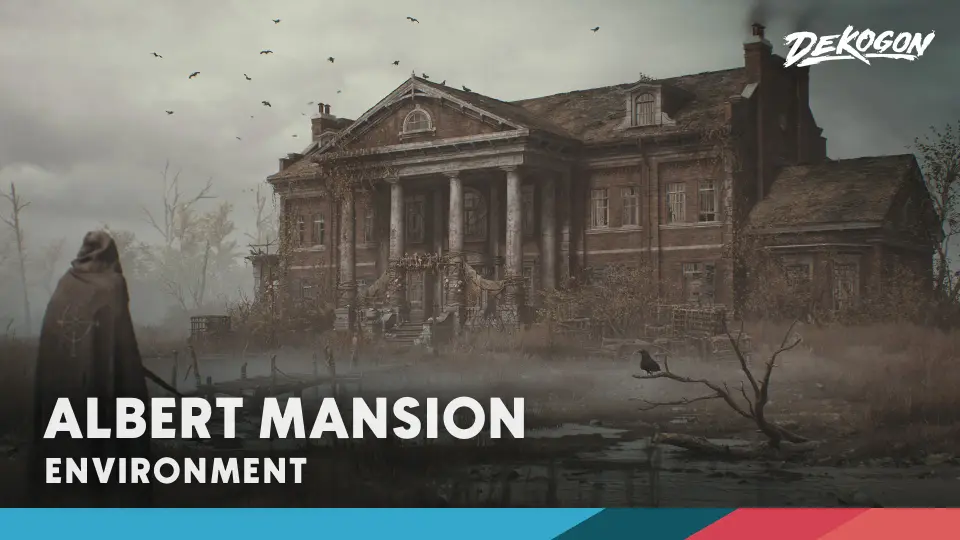
Post Apocalyptic Mansion Albert Manor brings an abandoned estate into Unreal Engine with two times of day already staged. It is an exterior environment in the strictest sense: the building has no interior geometry, and the creator confirms there are no plans to model one. That positioning makes the asset instantly useful for scenes where the mansion is a visual anchor, a sealed objective, or a backdrop seen from the outside. Instead of asking a team to block in rooms that will never be seen, the set concentrates its detail on the facade and the land around it.
An Exterior-Only Shell, Fully Detailed From Every Angle
Albert Manor is designed around the exterior experience. Because there is no interior, all 300 meshes contribute to what can be seen from outside: the mansion body, the boundaries of the property, and props that make the location feel like it survived something. The models are fully detailed from all sides, a practical requirement for this kind of open environment. Players or camera rigs moving around the estate will notice that even the rear walls and rooflines have proper geometry rather than being simplified backfaces.
The creator’s decision not to include an interior is disclosed upfront. That keeps the download from containing unused rooms, hidden corridors, or a second half of a game level that never gets seen. When a production wants to make the mansion a forbidden zone or a locked location, the exterior-only model is enough.
300 Meshes and the Master Material at the Core
The set supplies 300 individual meshes across the manor and its surroundings, giving level artists a wide catalog to dress the location. On top of the count, the scene uses a master material setup that controls all props and models. This is a scene-level approach: artists can tune the master material and see changes across multiple assets instead of opening every mesh’s material separately.
That master setup includes controls for roughness, albedo, normals, subsurface, tiling, and more. For an apocalyptic exterior, those are the overrides needed to shift the overall look of the environment in one pass. The modular construction of the mansion also supports alternative designs, meaning a level designer can combine the pieces in different sequences to avoid repeating the same floor plan every time the asset appears in a project.
Packed Texture Channels and Vertex Painted Walls
Textures are managed on a channel-packed workflow. Roughness, metalness, and ambient occlusion live inside packed data, which keeps material complexity controlled while still giving surfaces the expected reflection and shadow response. The scene also includes a vertex paint setup for walls and surfaces, so artists can vary areas directly on the mesh without adding a second material or texture set. That kind of direct control is useful for broad exterior walls where uniform tiling would quickly look artificial.
The texture resolution table shows a sensible distribution for a scene of this size: one texture at 8k, five at 4k, and 217 at 2k. Smaller formats cover the low-impact assets—nine 1k textures, four 512 textures, five 256, and four 128 textures. The heavy 2k majority means high visual consistency, while the handful of 4k and the single 8k maps provide extra definition on surfaces that really matter in close framing.
Day and Night Lighting With Dynamic Sources and Post Look
Albert Manor includes two times of day, day and night, and all lighting in both versions is dynamic. The advantage is that a single map can switch between a sunlit ruined estate and a moonlit horror location without changing light types or rebuilding global illumination. To keep the two versions in the right mood, the project uses realistic post-process settings and a look-up table (LUT) for consistent color grading.
On the default settings, the project enables many high-end visual features to preserve quality. Optimizing this scene for specific production needs is covered in the documentation, so the same asset can be tuned down for a particular target frame rate. A live demonstration video accompanies the scene, allowing a quick preview before committing the environment to a larger pipeline.
Foliage, Layered Landscape, and the Optional Low-Poly Ivy
Beyond the architecture, the environment is fortified by its vegetation. Multiple grass and foliage types surround the estate, and the ground relies on an advanced landscape layered material. This gives the terrain a surface that can blend the many vegetation types into a single continuous ground material, helping the whole estate feel settled into its environment. The abundance of foliage is also a practical tool for hiding the edge of the playable area or for establishing that the mansion has been abandoned long enough for greenery to take over.
The asset list also notes compatibility with Foliage VOL.23 - Ivy (Low Poly). Adding that low-poly ivy pack lets artists push the vegetation story into the masonry itself, with climbing strands covering corners and window edges with minimal impact on render cost.
The Estate as Production Backdrop
All maps, materials, and assets in the package are created in Unreal Engine, making it straightforward to embed the scene in an existing UE workflow. The building’s branding and labels are original designs made specifically by the studio, so the environment avoids third-party logos, trademarks, or other legal clutter that might have to be scrubbed before release. That sort of cleanliness matters in a scene built for post-apocalyptic or horror contexts, where every detail is visible in prolonged shots. The environment is also optimized for games, so the visual style is paired with playable frame rates.
Dekogon Studios created the environment, and the overall package points toward realistic AAA-grade visuals wrapped around a limited, intentional scope. That scope—the manor’s exterior and its immediate landscape—makes Albert Manor useful for game levels that need a high-end ruined estate with no interiors, and gives art leads a single cohesive location to dress with day or night lighting as the scene demands.
 Horror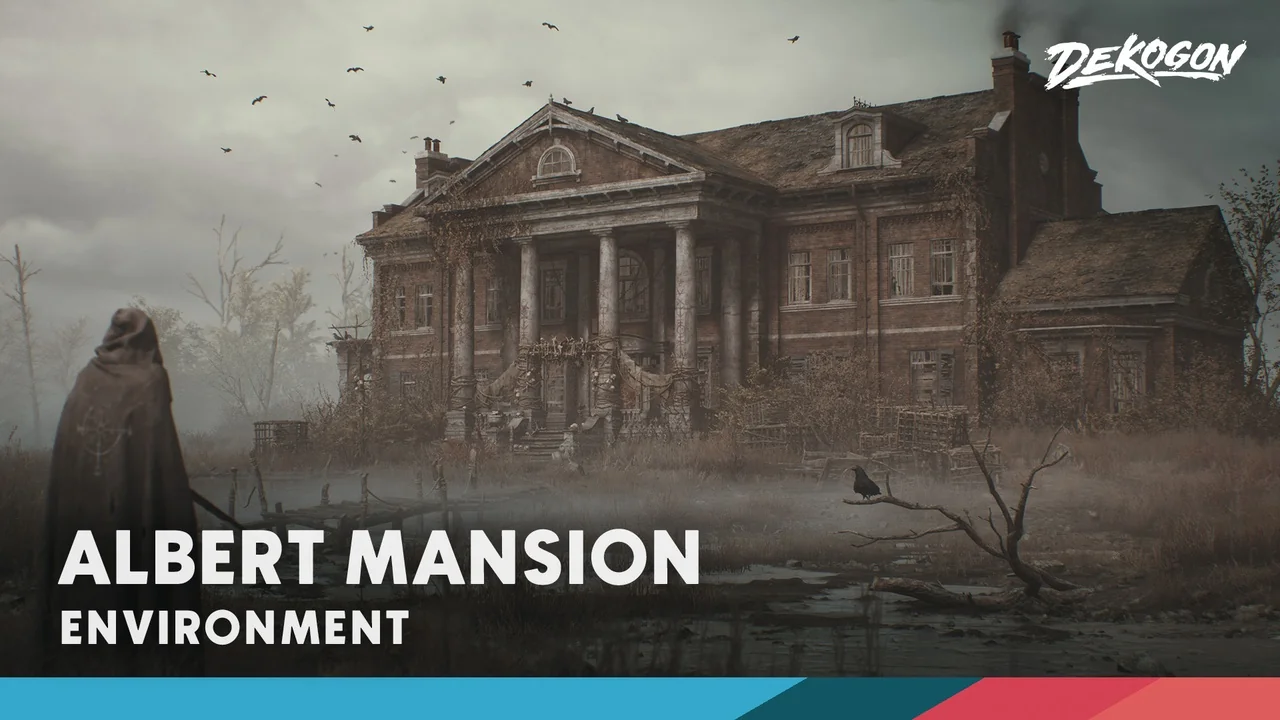
 Horror
 Apocalyptic
 Buildings