"7b46a695175d8694"{"id":"1001522","slug":"interactive-procedural-city-generator","title":"Interactive Procedural City Generator","category":"Procedural Systems","engine":"5.1+","assetVersion":"","engineVersion":"Engine Version: 5.1+","tag":"Procedural Systems","accent":"blue","visual":"city","summary":"Generate custom urban environments in Unreal Engine with the Interactive Procedural City Creator, featuring modular roads, grammar-based buildings, and Data Lay","platform":"Unreal Engine","publishedAt":"2026-10-09T13:34:43.038Z","updatedAt":"2026-10-09T13:34:43.038Z","sourceNotes":[],"fileContents":[],"compatibility":["Unreal Engine","Engine Version: 5.1+"],"featuredImage":{"alt":"Interactive Procedural City Generator","src":"/wp-content/uploads/published/2026/10/9d51a3d4b98c-9afe2843-cc4d-4de0-81d0-38721ad9d314-b5e158ce4d.webp"},"hasDownloadLink":true,"downloads":0,"terms":[{"taxonomy":"category","slug":"procedural-systems","name":"Procedural Systems"}],"galleryImages":[{"src":"/wp-content/uploads/published/2026/10/cc693bc84dfa-28cf3b12-30b3-43fc-8783-f312e2dc6277-a4432cd2d7.webp","alt":"Interactive Procedural City Generator"},{"src":"/wp-content/uploads/published/2026/10/d6162b08212e-9387b4e1-1054-4d05-b67a-9b5a842b2cc2-ebe1fdd55b.webp","alt":"Interactive Procedural City Generator"},{"src":"/wp-content/uploads/published/2026/10/611d2083e741-e8153ae2-3769-4f67-9405-879aa1be6b1c-9d6953ccce.webp","alt":"Interactive Procedural City Generator"},{"src":"/wp-content/uploads/published/2026/10/a5d0a87042ee-b20f4d84-ea75-4bd5-a541-b68d44633268-104c730ad1.webp","alt":"Interactive Procedural City Generator"},{"src":"/wp-content/uploads/published/2026/10/62fd1dbe82c6-fdc0f8ee-30b5-441f-8aee-2a39c8750b6e-fcfe7e0e96.webp","alt":"Interactive Procedural City Generator"},{"src":"/wp-content/uploads/published/2026/10/cf562b9eda3f-769a7fb9-225b-40f6-9515-da1a6d576648-540e079dc9.webp","alt":"Interactive Procedural City Generator"},{"src":"/wp-content/uploads/published/2026/10/44edfd1deaf1-fbd66065-949e-4233-ac5c-1212bfacd350-3e2579873f.webp","alt":"Interactive Procedural City Generator"},{"src":"/wp-content/uploads/published/2026/10/d3acd3f262fa-30035936-2789-4087-ac50-ab92c5bb89ca-73841c2f43.webp","alt":"Interactive Procedural City Generator"},{"src":"/wp-content/uploads/published/2026/10/f3690c27e50c-f3847719-388d-4ad2-8761-9f743719cb0e-b8605317ea.webp","alt":"Interactive Procedural City Generator"},{"src":"/wp-content/uploads/published/2026/10/4244d81af58e-7b1bb9d8-e598-4f44-89c2-ed5c238dbc4a-3e429a60bf.webp","alt":"Interactive Procedural City Generator"}],"accessPanel":{"kind":"resource","title":"Download this resource","eyebrow":"Free Download","message":"Log in or create a free account to start your download.","fileName":"Content.7z","safetyNote":"Resources are manually reviewed before listing to improve quality and reduce obvious risks.","actionLabel":"Download Free","resourceType":"Resource archive"},"contentHtml":"\u003ch2\u003eRoad Networks, Freeways, and Transit Infrastructure in iPCC\u003c/h2\u003e\n\u003cp\u003eInteractive Procedural City Creator, also referred to as iPCC or PCC, operates as a procedural framework constructed to handle multi-tier urban transit layouts. The tool suite contains dedicated systems for establishing foundational road networks alongside complex civil engineering elements, including highways, freeways, elevated ramps, tunnels, and bridges. Rather than enforcing fixed, automated outcomes that overwrite manual adjustments, iPCC relies on a multi-process generation model. This staged approach isolates distinct phases of creation, giving designers the ability to establish road curves, assign junctions, and place structural infrastructure sequentially without discarding artistic control along the way.\u003c/p\u003e\n\u003cp\u003eWaterways and terrain cuts integrate directly into the layout pass through integrated river generation tools. Roadside furnishings and contextual street accessories populate alongside transit lines through automated road prop rules. Because computation executes across discrete stages rather than a monolithic background task, the multi-process workflow prevents heavy performance freezes during active level design. Creators can manipulate custom mesh inputs from A to Z across asphalt lanes, street curbs, barriers, and structural overpasses, adapting the underlying spline or placement math to custom project specifications.\u003c/p\u003e \u003ch2\u003eGrammar-Based Procedural Building Generator and Asset Pipeline\u003c/h2\u003e\n\u003cp\u003eArchitectural creation within the system is split across two primary workflows: modular procedural assembly and premade structural placement. At the core of the procedural track is a built-in grammar-based procedural building generator. This sub-system interprets modular structural pieces, such as individual wall segments, window trims, and roof modules sourced from modular asset sets like Quixel, assembling them into cohesive exterior structures along realistic building footprints.\u003c/p\u003e\n\u003cp\u003eAlongside grammar-driven generation, iPCC natively accepts premade structural meshes, such as full-block building assets from libraries like Kitbash. The tool suite allows artists to mix premade structural shells directly with procedurally generated modular towers inside the same city block or district. This hybrid capability ensures high-density metropolitan skylines can maintain distinct silhouettes without requiring artists to manually align hundreds of repeated facade assets or rely entirely on uniform procedural variations.\u003c/p\u003e \u003ch2\u003eArea Detailing with Parking Lots and Arbitrary Prop Spawning\u003c/h2\u003e\n\u003cp\u003eBeyond structural volumes and primary roadways, city realism hinges on secondary spatial dressing. IPCC includes dedicated generation modules for designated car parking facilities, organizing stalls, lane markings, and vehicle distribution across chosen boundaries. Vehicle meshes integrate into these lots using user-supplied assets, mirroring the open asset pipeline applied to the architecture and roadway modules.\u003c/p\u003e\n\u003cp\u003eSecondary dressing expands to arbitrary zones through open prop spawning algorithms. Designers can target specific land parcels, courtyards, alleys, or street corners to distribute clutter, utility installations, and vegetation at both macro and micro scales. When full-scale regional generation is unnecessary, every individual module inside iPCC can run in standalone mode. This allows level designers to deploy the prop spawner, parking generator, or single street segment exclusively within an isolated hero space or targeted set piece without generating adjacent districts.\u003c/p\u003e \u003ch2\u003eInstanced Static Meshes and Data Layer Management\u003c/h2\u003e\n\u003cp\u003eGenerating sprawling metropolitan environments presents substantial memory and draw-call challenges inside real-time viewports. IPCC counters engine bottlenecks by instantiating environment actors via Instanced Static Mesh (ISM) components right out of the box. This architectural setup integrates cleanly with Unreal Engine core rendering technologies, delivering high performance alongside Nanite virtualized geometry, Virtual Shadow Maps (VSM), and Lumen lighting across both Software and Hardware ray tracing pipelines.\u003c/p\u003e\n\u003cp\u003eTo keep massive city sectors workable inside the Unreal Engine editor, the package includes a dedicated custom editor widget. This utility manages automated optimization by reorganizing and grouping spawned city actors directly into engine Data Layers. By compartmentalizing blocks, props, and road networks into structured layers, production teams can construct expansive, dense urban territories—comparable in scope to open-world benchmarks like the Matrix Awakens city project—without overloading editor viewport responsiveness or cluttering the world outliner.\u003c/p\u003e \u003ch2\u003eEngine Version Alignment and Environment Adaptability\u003c/h2\u003e\n\u003cp\u003eThe system spans multiple engine releases, transitioning from legacy PCC iterations supported on Unreal Engine 5.1 and 5.2 to the modernized iPCC architecture updated across versions 5.3 through 5.7 and above. The procedural modules adapt across diverse architectural styles, having demonstrated functionality for dense canal-based settings like Venice within brief setup windows, as well as expansive horizontal layouts like California-style municipal grids. Built to scale across distinct world archetypes, the tool suite handles transit corridors, zoning boundaries, and modular component distributions entirely through user-assigned 3D content.\u003c/p\u003e\n\n\u003ch2\u003eContinue Browsing Similar Packs\u003c/h2\u003e\n\u003cul\u003e\n\u003cli\u003e\u003ca href=\"https://3dcghub.com/crossroad-generator/\" title=\"Crossroad Generator\"\u003eCrossroad Generator\u003c/a\u003e\u003c/li\u003e\n\u003cli\u003e\u003ca href=\"https://3dcghub.com/ultimate-archvis-kit/\" title=\"Ultimate Archvis Kit\"\u003eUltimate Archvis Kit\u003c/a\u003e\u003c/li\u003e\n\u003cli\u003e\u003ca href=\"https://3dcghub.com/calysto-village-procedural-villages-farms-with-pcg/\" title=\"Calysto Village Procedural villages, farms with PCG\"\u003eCalysto Village Procedural villages, farms with PCG\u003c/a\u003e\u003c/li\u003e\n\u003cli\u003e\u003ca href=\"https://3dcghub.com/autoenv-procedural-rock-cliffs/\" title=\"AutoEnv Procedural Rock Cliffs\"\u003eAutoEnv Procedural Rock Cliffs\u003c/a\u003e\u003c/li\u003e\n\u003cli\u003e\u003ca href=\"https://3dcghub.com/simple-fence-generator/\" title=\"Simple Fence Generator\"\u003eSimple Fence Generator\u003c/a\u003e\u003c/li\u003e\n\u003c/ul\u003e","contentTextLength":5577,"navigation":{"current":23,"total":3481,"previous":{"id":"1001523","slug":"cemetery-forgotten-churchyard","title":"Cemetery - Forgotten Churchyard","category":"Horror","platform":"Unreal Engine","updatedAt":"2026-10-09T13:35:28.174Z"},"next":{"id":"1001521","slug":"interactive-foliage-and-vegetation-system","title":"Interactive Foliage and Vegetation System","category":"Game Mechanics","platform":"Unreal Engine","updatedAt":"2026-10-09T13:33:45.442Z"}},"relatedResources":[{"id":"28604","slug":"crossroad-generator","title":"Crossroad Generator","category":"Procedural Systems","engine":"5.2+","assetVersion":"Engine version: 5.2+","engineVersion":"","tag":"Procedural Systems","accent":"blue","visual":"animation","summary":"Crossroad Generator turns road layout work into a fast in-editor workflow inside Unreal Engine 5. It focuses on procedural street infrastructure, from crossroads and bridges to sidewalks, guardrails, signs, and power lines, while also supporting landscape d...","platform":"Unreal Engine","publishedAt":"2026-05-17T14:06:52.000Z","updatedAt":"2026-05-17T14:06:53.000Z","sourceNotes":[],"fileContents":[],"compatibility":["Unreal Engine","Engine version: 5.2+"],"featuredImage":{"alt":"Crossroad Generator","src":"https://3dcghub.com/wp-content/uploads/2026/05/1d8705b678ec_331a5188-8aeb-45e7-98d2-a7863a4aab3f.webp"},"hasDownloadLink":true,"downloads":4},{"id":"1000407","slug":"ultimate-archvis-kit","title":"Ultimate Archvis Kit","category":"Procedural Systems","engine":"5.1+","assetVersion":"","engineVersion":"Engine Version: 5.1+","tag":"Procedural Systems","accent":"blue","visual":"mech","summary":"A comprehensive Blueprint toolkit for architectural visualization, featuring dynamic UI controls, material swapping, interactive lighting, and profile managemen","platform":"Unreal Engine","publishedAt":"2026-07-08T11:46:44.936Z","updatedAt":"2026-07-08T11:46:44.936Z","sourceNotes":[],"fileContents":[],"compatibility":["Unreal Engine","Engine Version: 5.1+"],"featuredImage":{"alt":"Ultimate Archvis Kit","src":"/wp-content/uploads/published/2026/07/060c703e9991-c4935242-c4ab-41df-bdd0-12d5f98e689c-b6473af33f.webp"},"hasDownloadLink":true,"downloads":0},{"id":"11470","slug":"calysto-village-procedural-villages-farms-with-pcg","title":"Calysto Village Procedural villages, farms with PCG","category":"Procedural Systems","engine":"5.3+","assetVersion":"Engine version: 5.3+","engineVersion":"5.4","tag":"Procedural Systems","accent":"blue","visual":"animation","summary":"Streamline your level design with Calysto Village, a procedural tool for creating detailed villages and farms. Leverage the power of PCG and World Partition to build massive, high-performance environments with ease.","platform":"Unreal Engine","publishedAt":"2026-03-05T17:27:28.000Z","updatedAt":"2026-04-19T15:48:12.000Z","sourceNotes":[],"fileContents":[],"compatibility":["Unreal Engine","Engine version: 5.3+"],"featuredImage":{"alt":"Calysto Village Procedural villages, farms with PCG","src":"https://3dcghub.com/wp-content/uploads/2026/03/c9af98d7-f979-466d-a8d7-7720567e386e.webp"},"hasDownloadLink":true,"downloads":1}]}
Procedural Systems
Interactive Procedural City Generator
Generate custom urban environments in Unreal Engine with the Interactive Procedural City Creator, featuring modular roads, grammar-based buildings, and Data Lay
Road Networks, Freeways, and Transit Infrastructure in iPCC
Interactive Procedural City Creator, also referred to as iPCC or PCC, operates as a procedural framework constructed to handle multi-tier urban transit layouts. The tool suite contains dedicated systems for establishing foundational road networks alongside complex civil engineering elements, including highways, freeways, elevated ramps, tunnels, and bridges. Rather than enforcing fixed, automated outcomes that overwrite manual adjustments, iPCC relies on a multi-process generation model. This staged approach isolates distinct phases of creation, giving designers the ability to establish road curves, assign junctions, and place structural infrastructure sequentially without discarding artistic control along the way.
Waterways and terrain cuts integrate directly into the layout pass through integrated river generation tools. Roadside furnishings and contextual street accessories populate alongside transit lines through automated road prop rules. Because computation executes across discrete stages rather than a monolithic background task, the multi-process workflow prevents heavy performance freezes during active level design. Creators can manipulate custom mesh inputs from A to Z across asphalt lanes, street curbs, barriers, and structural overpasses, adapting the underlying spline or placement math to custom project specifications.
Grammar-Based Procedural Building Generator and Asset Pipeline
Architectural creation within the system is split across two primary workflows: modular procedural assembly and premade structural placement. At the core of the procedural track is a built-in grammar-based procedural building generator. This sub-system interprets modular structural pieces, such as individual wall segments, window trims, and roof modules sourced from modular asset sets like Quixel, assembling them into cohesive exterior structures along realistic building footprints.
Alongside grammar-driven generation, iPCC natively accepts premade structural meshes, such as full-block building assets from libraries like Kitbash. The tool suite allows artists to mix premade structural shells directly with procedurally generated modular towers inside the same city block or district. This hybrid capability ensures high-density metropolitan skylines can maintain distinct silhouettes without requiring artists to manually align hundreds of repeated facade assets or rely entirely on uniform procedural variations.
Area Detailing with Parking Lots and Arbitrary Prop Spawning
Beyond structural volumes and primary roadways, city realism hinges on secondary spatial dressing. IPCC includes dedicated generation modules for designated car parking facilities, organizing stalls, lane markings, and vehicle distribution across chosen boundaries. Vehicle meshes integrate into these lots using user-supplied assets, mirroring the open asset pipeline applied to the architecture and roadway modules.
Secondary dressing expands to arbitrary zones through open prop spawning algorithms. Designers can target specific land parcels, courtyards, alleys, or street corners to distribute clutter, utility installations, and vegetation at both macro and micro scales. When full-scale regional generation is unnecessary, every individual module inside iPCC can run in standalone mode. This allows level designers to deploy the prop spawner, parking generator, or single street segment exclusively within an isolated hero space or targeted set piece without generating adjacent districts.
Instanced Static Meshes and Data Layer Management
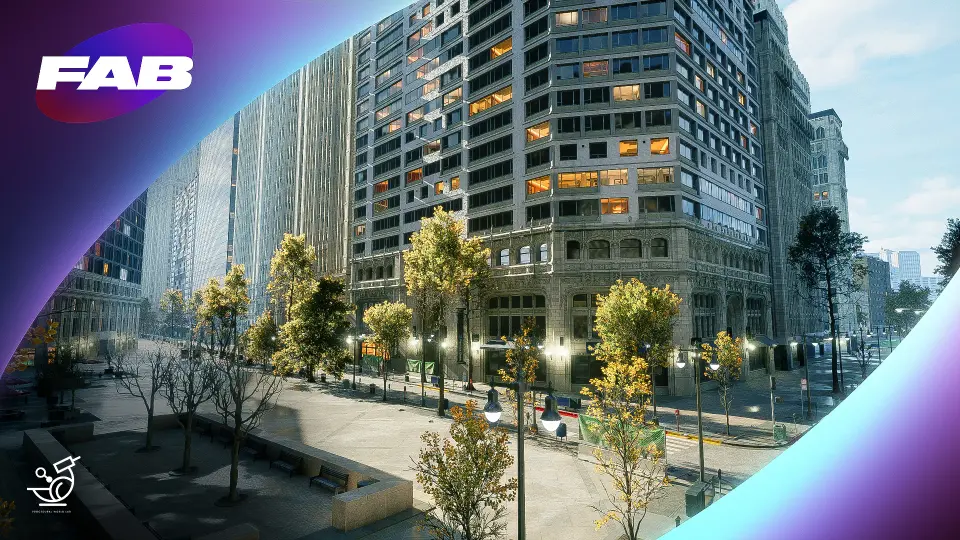
Generating sprawling metropolitan environments presents substantial memory and draw-call challenges inside real-time viewports. IPCC counters engine bottlenecks by instantiating environment actors via Instanced Static Mesh (ISM) components right out of the box. This architectural setup integrates cleanly with Unreal Engine core rendering technologies, delivering high performance alongside Nanite virtualized geometry, Virtual Shadow Maps (VSM), and Lumen lighting across both Software and Hardware ray tracing pipelines.
To keep massive city sectors workable inside the Unreal Engine editor, the package includes a dedicated custom editor widget. This utility manages automated optimization by reorganizing and grouping spawned city actors directly into engine Data Layers. By compartmentalizing blocks, props, and road networks into structured layers, production teams can construct expansive, dense urban territories—comparable in scope to open-world benchmarks like the Matrix Awakens city project—without overloading editor viewport responsiveness or cluttering the world outliner.
Engine Version Alignment and Environment Adaptability
The system spans multiple engine releases, transitioning from legacy PCC iterations supported on Unreal Engine 5.1 and 5.2 to the modernized iPCC architecture updated across versions 5.3 through 5.7 and above. The procedural modules adapt across diverse architectural styles, having demonstrated functionality for dense canal-based settings like Venice within brief setup windows, as well as expansive horizontal layouts like California-style municipal grids. Built to scale across distinct world archetypes, the tool suite handles transit corridors, zoning boundaries, and modular component distributions entirely through user-assigned 3D content.
 Procedural Systems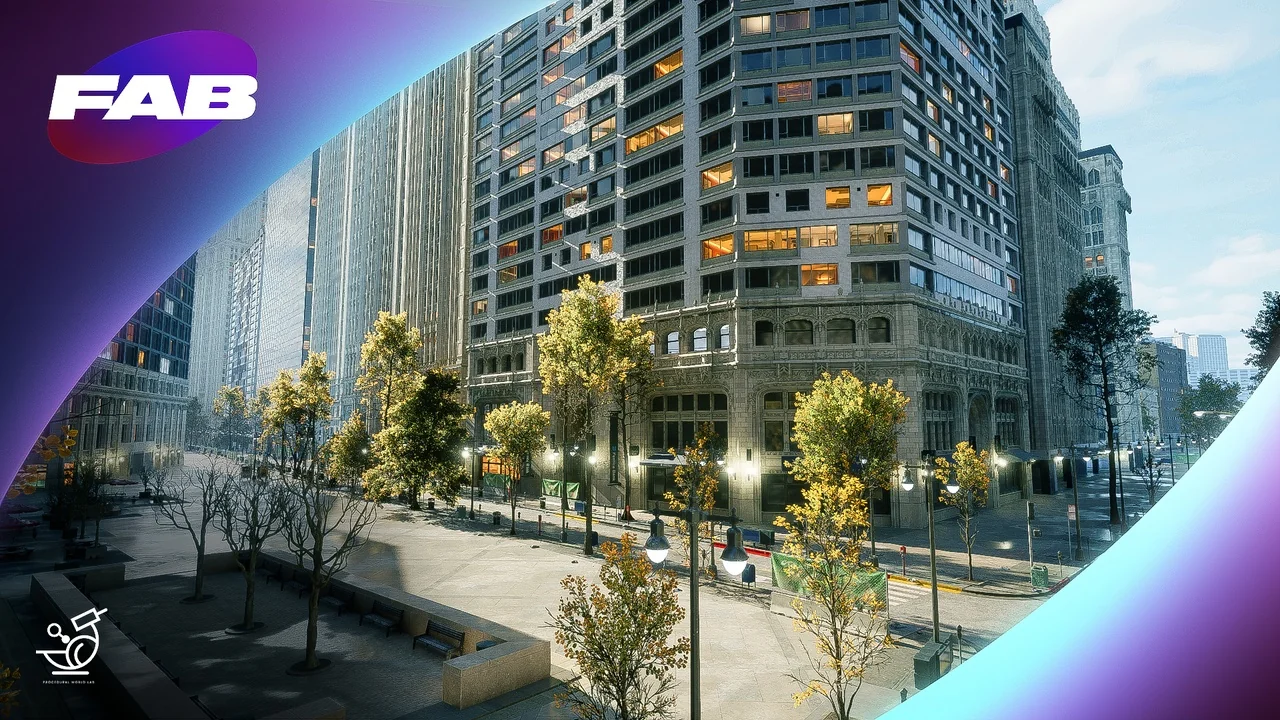
 Procedural Systems
 Procedural Systems
 Procedural Systems