"6c6413bef81af556"{"id":"1000833","slug":"glass-mirrors-windows","title":"Glass Mirrors Windows","category":"Buildings \u0026 Architecture","engine":"4.26+,5.0+","assetVersion":"","engineVersion":"Engine Version: 4.26+,5.0+","tag":"Buildings","accent":"blue","visual":"mech","summary":"A collection of 17 glass, mirror, and window materials for high-end games and architectural visualization, covering frosted, cracked, stained, and reflective su","platform":"Unreal Engine","publishedAt":"2026-08-03T13:08:49.613Z","updatedAt":"2026-08-03T13:08:49.613Z","sourceNotes":[],"fileContents":[],"compatibility":["Unreal Engine","Engine Version: 4.26+,5.0+"],"featuredImage":{"alt":"Glass Mirrors Windows","src":"/wp-content/uploads/published/2026/08/6e72e6f37488-c676653f-47a0-48c1-a49d-6d606982f755-0ce49077ed.webp"},"hasDownloadLink":true,"downloads":0,"terms":[{"taxonomy":"category","slug":"buildings-and-architecture","name":"Buildings \u0026 Architecture"}],"galleryImages":[{"src":"/wp-content/uploads/published/2026/08/a188f55c0f3a-916e8884-6e22-43f2-aa14-bb2888caa3bf-d495ccef70.webp","alt":"Glass Mirrors Windows"},{"src":"/wp-content/uploads/published/2026/08/dc2c3fb94b43-88748781-60e2-4493-b331-92966df5382a-f1921d0360.webp","alt":"Glass Mirrors Windows"},{"src":"/wp-content/uploads/published/2026/08/29e2b697bbc4-27a55a51-3af8-4786-b427-1e3a3fa1e6d5-7fa3a3c11d.webp","alt":"Glass Mirrors Windows"},{"src":"/wp-content/uploads/published/2026/08/abe27ac272d6-a0f3e0e9-db8e-4e7e-b2a9-48c3dd87df5a-ea7b5181c8.webp","alt":"Glass Mirrors Windows"},{"src":"/wp-content/uploads/published/2026/08/4d5b7fb5c00f-edd9dc10-4fad-4fa2-b2bd-25e2303c259e-6880056338.webp","alt":"Glass Mirrors Windows"},{"src":"/wp-content/uploads/published/2026/08/6504dd40cb7c-1be9c532-be20-4e74-b78d-ba8b788a29de-a15c6cc305.webp","alt":"Glass Mirrors Windows"},{"src":"/wp-content/uploads/published/2026/08/0479f71baaaf-f687b7ca-018b-496c-ba2e-97305b8e5eb0-3f53bd6a96.webp","alt":"Glass Mirrors Windows"},{"src":"/wp-content/uploads/published/2026/08/35e840376b97-d4f1868d-461e-47f3-b71d-78deaeaa72d7-edb6d7ab84.webp","alt":"Glass Mirrors Windows"}],"accessPanel":{"kind":"resource","title":"Download this resource","eyebrow":"Free Download","message":"Log in or create a free account to start your download.","fileName":"Content.7z","safetyNote":"Resources are manually reviewed before listing to improve quality and reduce obvious risks.","actionLabel":"Download Free","resourceType":"Resource archive"},"contentHtml":"\u003cp\u003eArchitectural visualization (ArchViz) and high-end game production share a stubborn bottleneck: transparent and reflective surfaces. A glass facade, a rain-streaked storefront window, a cracked mirror, or a pane of warped stained glass can define the visual tone of a scene. Getting those surfaces right takes specialized material work, and that is exactly the gap this package targets.\u003c/p\u003e\n\n\u003cp\u003e\u003cem\u003eGlass Mirrors Windows\u003c/em\u003e is a collection of 17 materials built specifically for high-end games and ArchViz rendering. Rather than shipping a single shader that tries to do everything, the package breaks glass and mirror behavior into distinct, named variants. That structure lets artists pick the exact surface type a scene demands without re-engineering a Master Shader from scratch.\u003c/p\u003e\n\n\u003ch2\u003eFrom Clean Transparency to Damaged Realism: The 13 Glass Variants\u003c/h2\u003e\n\u003cp\u003eThe glass category carries the bulk of the collection, and the naming convention tells you exactly what each material does. The set starts with fundamental surface treatments and moves progressively into specific physical and textural scenarios.\u003c/p\u003e\n\n\u003cp\u003eThe baseline materials cover the fundamentals. \u003ccode\u003eM_Glass_Simple\u003c/code\u003e provides straightforward transparent glass, while \u003ccode\u003eM_Glass_Cubemap\u003c/code\u003e leverages environment captures for reflection behavior without relying on real-time scene data. These 2 form the starting point for any glass surface where complex interaction with the scene is unnecessary.\u003c/p\u003e\n\n\u003cp\u003eSurface condition is where the specificity begins. \u003ccode\u003eM_Glass_Dirty\u003c/code\u003e simulates grime buildup, a critical detail for grounding realism in both game environments and architectural renders. Sterile glass rarely looks convincing, and this material addresses that directly. \u003ccode\u003eM_Glass_Frosted\u003c/code\u003e introduces the diffused, semi-opaque quality of treated or weathered glass. \u003ccode\u003eM_Glass_Blocks\u003c/code\u003e handles glass block construction, which has entirely different light transmission and refraction characteristics than a flat pane.\u003c/p\u003e\n\n\u003cp\u003eStructural reinforcement and safety glass get their own treatment with \u003ccode\u003eM_Glass_WireReinforced\u003c/code\u003e. This simulates the wire mesh embedded in certain types of glass used in commercial and industrial architecture. The pattern of the mesh interacting with light and shadow adds a layer of detail that matters when capturing specific architectural periods or building types.\u003c/p\u003e\n\n\u003cp\u003eEnvironmental storytelling drives the next group. \u003ccode\u003eM_Glass_Rain\u003c/code\u003e simulates water droplets running down the surface, a dynamic effect that drastically changes how a window reads during a storm scene or in a humid environment. \u003ccode\u003eM_Glass_Stained\u003c/code\u003e handles the colored, segmented look of cathedral or decorative glass, bringing light transmission color play into the Material rather than relying on separate textures. \u003ccode\u003eM_Glass_Patterned\u003c/code\u003e covers textured or rolled glass with regular geometric surface relief.\u003c/p\u003e\n\n\u003cp\u003eDamage states are covered by \u003ccode\u003eM_Glass_Cracked\u003c/code\u003e and \u003ccode\u003eM_Glass_Broken\u003c/code\u003e. Cracked glass simulates the fracture pattern before the pane falls out, useful for scenes showing recent impact or stress. Broken glass handles the state after the material has failed, which might mean missing shards, sharper edges, or the fragmented remnants still held in a frame.\u003c/p\u003e\n\n\u003cp\u003e\u003ccode\u003eM_Glass_Blurred\u003c/code\u003e simulates glass that obscures the background, useful for privacy glass or shower enclosures in architectural scenes and depth-of-field tricks in game environments.\u003c/p\u003e\n\n\u003ch2\u003e\u003ccode\u003eM_Glass_Advanced\u003c/code\u003e: The Combined Master Material\u003c/h2\u003e\n\u003cp\u003ePlaced at the end of the glass list but arguably the most important entry is \u003ccode\u003eM_Glass_Advanced\u003c/code\u003e. This is a single Master Material that combines the functionality of the individual glass shaders listed above. Rather than forcing artists to swap materials when a glass surface changes type, this Master Shader allows switching between behaviors within one instance.\u003c/p\u003e\n\n\u003cp\u003eFor production workflows, this matters. A building facade might use frosted glass on lower floors and clean glass on upper floors. With the individual materials, that requires 2 separate Material Instances. With \u003ccode\u003eM_Glass_Advanced\u003c/code\u003e, the switch happens through parameters within the same master, reducing material clutter and simplifying the iteration process when art direction changes.\u003c/p\u003e\n\n\u003ch2\u003eApproaches to Mirror Reflection: Screen Space, Planar, and Scene Capture\u003c/h2\u003e\n\u003cp\u003eMirrors present a separate challenge from glass. The package includes 3 distinct solutions, each with different performance and visual tradeoffs.\u003c/p\u003e\n\n\u003cp\u003e\u003ccode\u003eM_Mirror_ScreenSpace\u003c/code\u003e uses Screen Space Reflections (SSR) to fake real-time mirroring. This approach is cheaper to render but has limitations: it cannot reflect objects that are off-screen. For a wall mirror or a reflective floor where the reflected area is within the camera view, it works efficiently. For a mirror reflecting a complex room behind the camera, it falls short.\u003c/p\u003e\n\n\u003cp\u003e\u003ccode\u003eM_Mirror_Planar\u003c/code\u003e provides actual real-time Planar Reflections. This method captures a true reflection of the scene, including off-screen objects, by rendering the scene from the mirror's perspective. The tradeoff is performance cost. The material requires the \u003ccode\u003eGlobal Clip Plane\u003c/code\u003e setting to be enabled in the project settings. This is not optional; the material cannot function without it. Artists using this variant need to ensure that setting is active in their project configuration before applying the material.\u003c/p\u003e\n\n\u003cp\u003e\u003ccode\u003eM_Mirror_SceneCapture\u003c/code\u003e uses a Scene Capture Component to drive the reflection texture. This approach places a capture point at the mirror and renders the scene to a texture, which is then applied to the mirror surface. It sits between the Screen Space and Planar methods in terms of quality and performance, offering a controlled reflection that updates on a set interval rather than every frame, which can be tuned for performance.\u003c/p\u003e\n\n\u003ch2\u003eFaking Interior Depth with the Window Material\u003c/h2\u003e\n\u003cp\u003eThe single window material, \u003ccode\u003eM_Window_FakeInterior\u003c/code\u003e, addresses a common architectural visualization problem: windows that look into rooms. Rendering actual room interiors behind every window in a building facade is expensive and often unnecessary. \u003ccode\u003eM_Window_FakeInterior\u003c/code\u003e simulates the appearance of an interior space without requiring actual modeled geometry behind the glass. It fakes the depth, lighting, and silhouette of a room, allowing a building exterior to read as occupied and detailed without the overhead of interior meshes.\u003c/p\u003e\n\n\u003ch2\u003eWhere This Fits in a Production Pipeline\u003c/h2\u003e\n\u003cp\u003eThe package is suited to 2 main audiences: creators working on high-end games and those working in ArchViz. For game environments, the individual damage and condition materials (\u003ccode\u003eM_Glass_Cracked\u003c/code\u003e, \u003ccode\u003eM_Glass_Broken\u003c/code\u003e, \u003ccode\u003eM_Glass_Rain\u003c/code\u003e) support storytelling and environmental narrative. The advanced Master Material lets environment artists iterate quickly on glass types without managing a large material library.\u003c/p\u003e\n\n\u003cp\u003eFor ArchViz, the focus shifts slightly. Materials like \u003ccode\u003eM_Glass_Blocks\u003c/code\u003e, \u003ccode\u003eM_Glass_WireReinforced\u003c/code\u003e, \u003ccode\u003eM_Glass_Stained\u003c/code\u003e, and \u003ccode\u003eM_Glass_Patterned\u003c/code\u003e map directly to real construction materials. The planar mirror and fake interior window material solve specific presentation challenges, namely realistic reflective surfaces and believable building depth without full interior modeling.\u003c/p\u003e\n\n\u003ch2\u003eWho Benefits Most from This Collection\u003c/h2\u003e\n\u003cp\u003eEnvironment artists and ArchViz specialists who have spent time building custom glass shaders will immediately see the value. The package removes the need to build 17 distinct surface behaviors from scratch. The inclusion of a combining Master Material means the individual variants are not redundant; they serve as presets and reference while the Master Material serves as the production workhorse.\u003c/p\u003e\n\n\u003cp\u003eProjects that need conditional glass surfaces, varied building facades, or realistic reflective floors and mirrors without full scene capture overhead will find the most utility here. The clear naming convention and separated approach to mirror techniques make it easy to test which reflection method suits a scene's performance budget before committing.\u003c/p\u003e\n\n\u003ch2\u003eExplore Similar Assets\u003c/h2\u003e\n\u003cul\u003e\n\u003cli\u003e\u003ca href=\"https://3dcghub.com/castle-windows-pack/\" title=\"Castle Windows Pack\"\u003eCastle Windows Pack\u003c/a\u003e\u003c/li\u003e\n\u003cli\u003e\u003ca href=\"https://3dcghub.com/japanese-street/\" title=\"Japanese Street\"\u003eJapanese Street\u003c/a\u003e\u003c/li\u003e\n\u003cli\u003e\u003ca href=\"https://3dcghub.com/scl-restaurant-002/\" title=\"SCL Restaurant 002\"\u003eSCL Restaurant 002\u003c/a\u003e\u003c/li\u003e\n\u003cli\u003e\u003ca href=\"https://3dcghub.com/oil-refinery-pack/\" title=\"Oil Refinery Pack\"\u003eOil Refinery Pack\u003c/a\u003e\u003c/li\u003e\n\u003cli\u003e\u003ca href=\"https://3dcghub.com/industrial-vol-4-electricity-hydro-and-water-treatment/\" title=\"Industrial VOL.4 - Electricity, Hydro, and Water Treatment\"\u003eIndustrial VOL.4 - Electricity, Hydro, and Water Treatment\u003c/a\u003e\u003c/li\u003e\n\u003c/ul\u003e","contentTextLength":7999,"navigation":{"current":390,"total":3140,"previous":{"id":"1000834","slug":"good-fx-ui-icon-trail","title":"Good FX : UI Icon Trail","category":"Shaders","platform":"Unreal Engine","updatedAt":"2026-08-03T13:13:06.882Z"},"next":{"id":"1000832","slug":"get-away-system","title":"Get Away System","category":"Gameplay Features","platform":"Unreal Engine","updatedAt":"2026-08-03T12:46:53.642Z"}},"relatedResources":[{"id":"1000499","slug":"castle-windows-pack","title":"Castle Windows Pack","category":"Buildings \u0026 Architecture","engine":"4.27,5.0+","assetVersion":"","engineVersion":"Engine Version: 4.27,5.0+","tag":"Buildings","accent":"blue","visual":"mech","summary":"Castle Windows Pack provides 318 mix-and-match PNGs of window designs, grids, and glass panes with PBR materials, emissive controls, and curved wall support.","platform":"Unreal Engine","publishedAt":"2026-07-13T09:27:51.037Z","updatedAt":"2026-07-13T09:27:51.037Z","sourceNotes":[],"fileContents":[],"compatibility":["Unreal Engine","Engine Version: 4.27,5.0+"],"featuredImage":{"alt":"Castle Windows Pack","src":"/wp-content/uploads/published/2026/07/04dd48555aeb-6040f920-1f7f-49ab-aa22-06741499e5cc-0f4dfaf830.webp"},"hasDownloadLink":true,"downloads":0},{"id":"1000228","slug":"japanese-street","title":"Japanese Street","category":"Buildings \u0026 Architecture","engine":"4.26+,5.0+","assetVersion":"","engineVersion":"Engine Version: 4.26+,5.0+","tag":"Buildings","accent":"blue","visual":"mech","summary":"Construct dense urban layouts with the Japanese Street asset, featuring modular cozy houses, material swapping, and functional interior door systems.","platform":"Unreal Engine","publishedAt":"2026-06-27T18:42:28.315Z","updatedAt":"2026-06-27T18:42:28.315Z","sourceNotes":[],"fileContents":[],"compatibility":["Unreal Engine","Engine Version: 4.26+,5.0+"],"featuredImage":{"alt":"Japanese Street","src":"/wp-content/uploads/published/2026/06/3de2d3bd432a-b89297f6-a639-4d09-9015-f7c5f39252c0-ee5d879f21.webp"},"hasDownloadLink":true,"downloads":3},{"id":"1000474","slug":"oil-refinery-pack","title":"Oil Refinery Pack","category":"Buildings \u0026 Architecture","engine":"4.27,5.0+","assetVersion":"","engineVersion":"Engine Version: 4.27,5.0+","tag":"Buildings","accent":"blue","visual":"mech","summary":"Real-world scaled low-poly oil refinery asset pack with 46 unique meshes, complex collision, Nanite support, and PBR textures for Unreal Engine.","platform":"Unreal Engine","publishedAt":"2026-07-11T18:37:51.055Z","updatedAt":"2026-07-11T18:37:51.055Z","sourceNotes":[],"fileContents":[],"compatibility":["Unreal Engine","Engine Version: 4.27,5.0+"],"featuredImage":{"alt":"Oil Refinery Pack","src":"/wp-content/uploads/published/2026/07/ad4481259130-266202c7-b4eb-441e-8fbf-ef44680dca4b-d7d7205c5e.webp"},"hasDownloadLink":true,"downloads":0}]}
Buildings
Glass Mirrors Windows
A collection of 17 glass, mirror, and window materials for high-end games and architectural visualization, covering frosted, cracked, stained, and reflective su
Architectural visualization (ArchViz) and high-end game production share a stubborn bottleneck: transparent and reflective surfaces. A glass facade, a rain-streaked storefront window, a cracked mirror, or a pane of warped stained glass can define the visual tone of a scene. Getting those surfaces right takes specialized material work, and that is exactly the gap this package targets.
Glass Mirrors Windows is a collection of 17 materials built specifically for high-end games and ArchViz rendering. Rather than shipping a single shader that tries to do everything, the package breaks glass and mirror behavior into distinct, named variants. That structure lets artists pick the exact surface type a scene demands without re-engineering a Master Shader from scratch.
From Clean Transparency to Damaged Realism: The 13 Glass Variants
The glass category carries the bulk of the collection, and the naming convention tells you exactly what each material does. The set starts with fundamental surface treatments and moves progressively into specific physical and textural scenarios.
The baseline materials cover the fundamentals. M_Glass_Simple provides straightforward transparent glass, while M_Glass_Cubemap leverages environment captures for reflection behavior without relying on real-time scene data. These 2 form the starting point for any glass surface where complex interaction with the scene is unnecessary.
Surface condition is where the specificity begins. M_Glass_Dirty simulates grime buildup, a critical detail for grounding realism in both game environments and architectural renders. Sterile glass rarely looks convincing, and this material addresses that directly. M_Glass_Frosted introduces the diffused, semi-opaque quality of treated or weathered glass. M_Glass_Blocks handles glass block construction, which has entirely different light transmission and refraction characteristics than a flat pane.
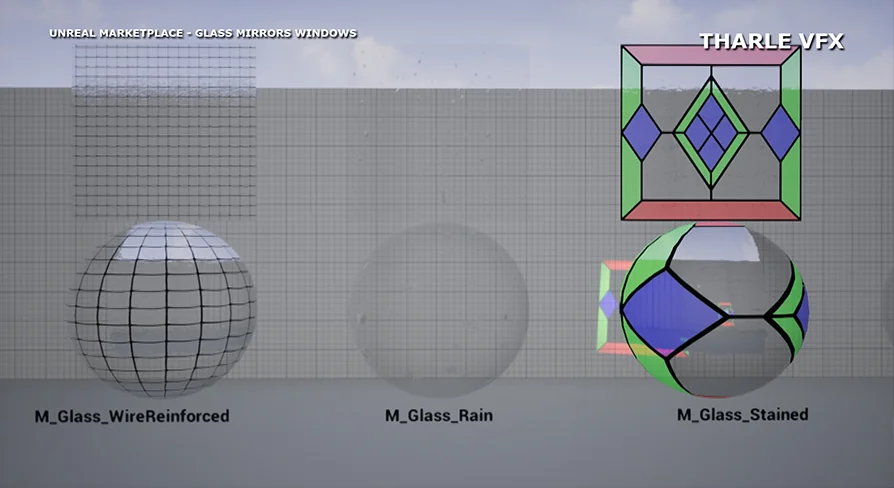
Structural reinforcement and safety glass get their own treatment with M_Glass_WireReinforced. This simulates the wire mesh embedded in certain types of glass used in commercial and industrial architecture. The pattern of the mesh interacting with light and shadow adds a layer of detail that matters when capturing specific architectural periods or building types.
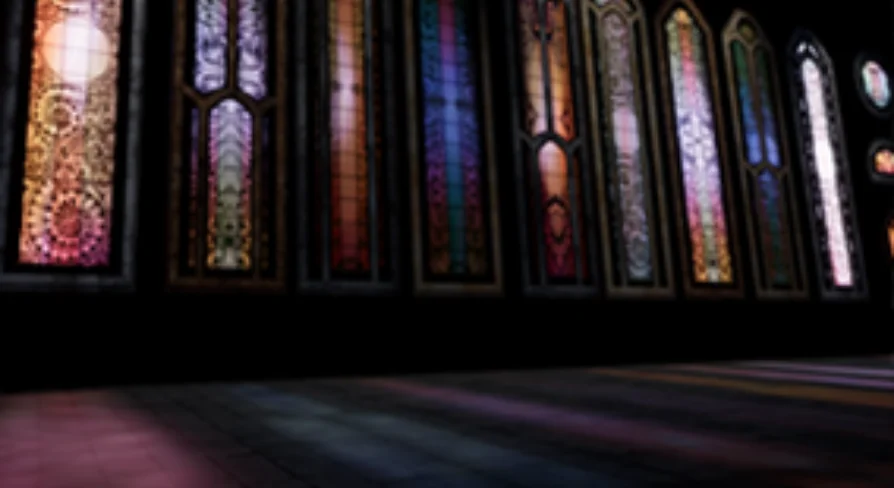
Environmental storytelling drives the next group. M_Glass_Rain simulates water droplets running down the surface, a dynamic effect that drastically changes how a window reads during a storm scene or in a humid environment. M_Glass_Stained handles the colored, segmented look of cathedral or decorative glass, bringing light transmission color play into the Material rather than relying on separate textures. M_Glass_Patterned covers textured or rolled glass with regular geometric surface relief.
Damage states are covered by M_Glass_Cracked and M_Glass_Broken. Cracked glass simulates the fracture pattern before the pane falls out, useful for scenes showing recent impact or stress. Broken glass handles the state after the material has failed, which might mean missing shards, sharper edges, or the fragmented remnants still held in a frame.
M_Glass_Blurred simulates glass that obscures the background, useful for privacy glass or shower enclosures in architectural scenes and depth-of-field tricks in game environments.
M_Glass_Advanced: The Combined Master Material
Placed at the end of the glass list but arguably the most important entry is M_Glass_Advanced. This is a single Master Material that combines the functionality of the individual glass shaders listed above. Rather than forcing artists to swap materials when a glass surface changes type, this Master Shader allows switching between behaviors within one instance.
For production workflows, this matters. A building facade might use frosted glass on lower floors and clean glass on upper floors. With the individual materials, that requires 2 separate Material Instances. With M_Glass_Advanced, the switch happens through parameters within the same master, reducing material clutter and simplifying the iteration process when art direction changes.
Approaches to Mirror Reflection: Screen Space, Planar, and Scene Capture
Mirrors present a separate challenge from glass. The package includes 3 distinct solutions, each with different performance and visual tradeoffs.
M_Mirror_ScreenSpace uses Screen Space Reflections (SSR) to fake real-time mirroring. This approach is cheaper to render but has limitations: it cannot reflect objects that are off-screen. For a wall mirror or a reflective floor where the reflected area is within the camera view, it works efficiently. For a mirror reflecting a complex room behind the camera, it falls short.
M_Mirror_Planar provides actual real-time Planar Reflections. This method captures a true reflection of the scene, including off-screen objects, by rendering the scene from the mirror's perspective. The tradeoff is performance cost. The material requires the Global Clip Plane setting to be enabled in the project settings. This is not optional; the material cannot function without it. Artists using this variant need to ensure that setting is active in their project configuration before applying the material.
M_Mirror_SceneCapture uses a Scene Capture Component to drive the reflection texture. This approach places a capture point at the mirror and renders the scene to a texture, which is then applied to the mirror surface. It sits between the Screen Space and Planar methods in terms of quality and performance, offering a controlled reflection that updates on a set interval rather than every frame, which can be tuned for performance.
Faking Interior Depth with the Window Material
The single window material, M_Window_FakeInterior, addresses a common architectural visualization problem: windows that look into rooms. Rendering actual room interiors behind every window in a building facade is expensive and often unnecessary. M_Window_FakeInterior simulates the appearance of an interior space without requiring actual modeled geometry behind the glass. It fakes the depth, lighting, and silhouette of a room, allowing a building exterior to read as occupied and detailed without the overhead of interior meshes.
Where This Fits in a Production Pipeline
The package is suited to 2 main audiences: creators working on high-end games and those working in ArchViz. For game environments, the individual damage and condition materials (M_Glass_Cracked, M_Glass_Broken, M_Glass_Rain) support storytelling and environmental narrative. The advanced Master Material lets environment artists iterate quickly on glass types without managing a large material library.
For ArchViz, the focus shifts slightly. Materials like M_Glass_Blocks, M_Glass_WireReinforced, M_Glass_Stained, and M_Glass_Patterned map directly to real construction materials. The planar mirror and fake interior window material solve specific presentation challenges, namely realistic reflective surfaces and believable building depth without full interior modeling.
Who Benefits Most from This Collection
Environment artists and ArchViz specialists who have spent time building custom glass shaders will immediately see the value. The package removes the need to build 17 distinct surface behaviors from scratch. The inclusion of a combining Master Material means the individual variants are not redundant; they serve as presets and reference while the Master Material serves as the production workhorse.
Projects that need conditional glass surfaces, varied building facades, or realistic reflective floors and mirrors without full scene capture overhead will find the most utility here. The clear naming convention and separated approach to mirror techniques make it easy to test which reflection method suits a scene's performance budget before committing.
 Buildings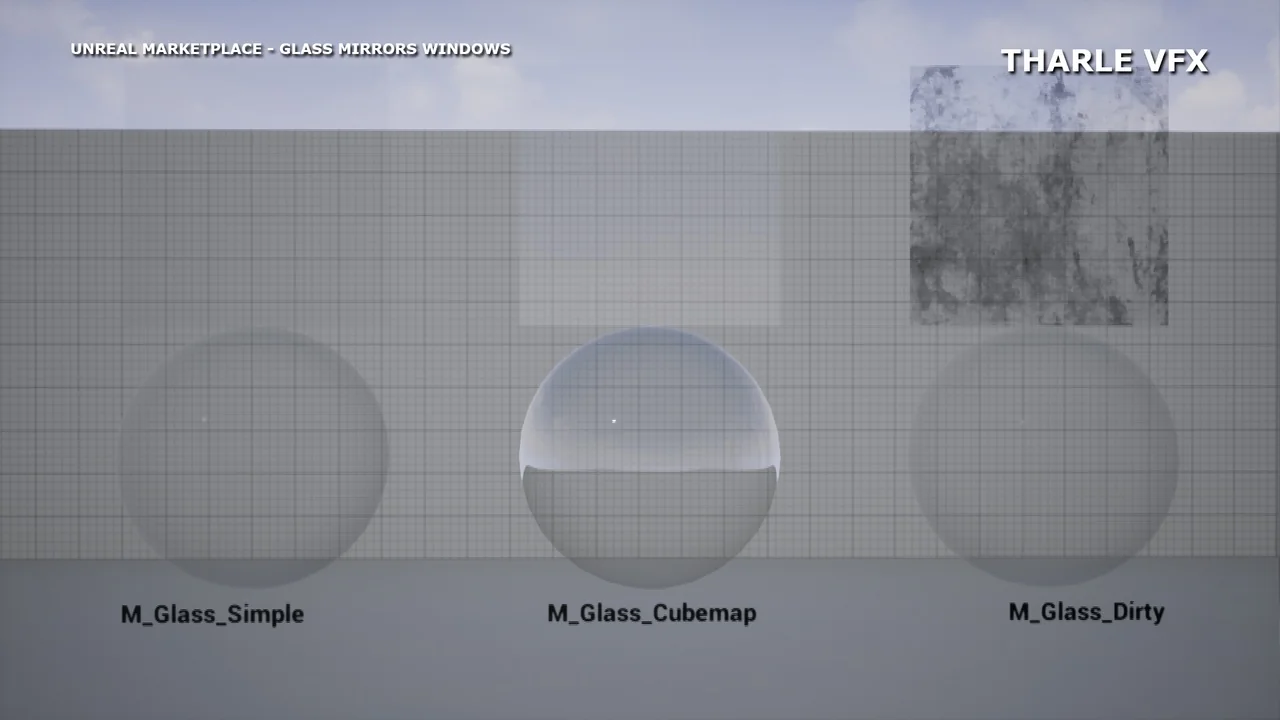
 Buildings
 Buildings
 Buildings