"1a0e4ac4dc71d030"{"id":"1000201","slug":"scl-restaurant-002","title":"SCL Restaurant 002","category":"Buildings \u0026 Architecture","engine":"4.26+,5.0+","assetVersion":"","engineVersion":"Engine Version: 4.26+,5.0+","tag":"Buildings","accent":"blue","visual":"mech","summary":"SCL Restaurant 002 is an Unreal Engine restaurant project set in a night scene, combining exterior and interior architectural space with creator-made textures.","platform":"Unreal Engine","publishedAt":"2026-06-23T18:50:46.932Z","updatedAt":"2026-06-23T18:50:46.932Z","sourceNotes":[],"fileContents":[],"compatibility":["Unreal Engine","Engine Version: 4.26+,5.0+"],"featuredImage":{"alt":"SCL Restaurant 002","src":"/wp-content/uploads/published/2026/06/951f73cf004f-3a70d932-68e4-4cfc-840b-a720da9b2d5a-1045bd3c86.webp"},"hasDownloadLink":true,"downloads":0,"terms":[{"taxonomy":"category","slug":"buildings-and-architecture","name":"Buildings \u0026 Architecture"}],"galleryImages":[{"src":"/wp-content/uploads/published/2026/06/119925e58ada-17cbe2bf-80b0-41d4-8aa7-52012735e0c0-0d49fd0965.webp","alt":"SCL Restaurant 002"},{"src":"/wp-content/uploads/published/2026/06/757812df5925-50d453dc-f3d7-453c-9aca-3af65077012b-7e9398894b.webp","alt":"SCL Restaurant 002"},{"src":"/wp-content/uploads/published/2026/06/7b3cbf969f62-4a6f3792-5eb1-4004-b046-f7ae0e3795f5-494044027e.webp","alt":"SCL Restaurant 002"},{"src":"/wp-content/uploads/published/2026/06/85db7c29a584-b0439f56-86da-426d-b2dc-e5fcd31a90e9-2bb38f9974.webp","alt":"SCL Restaurant 002"},{"src":"/wp-content/uploads/published/2026/06/32cb63957b49-b07a06ce-41ad-4001-b95f-79311447729a-c3eb212568.webp","alt":"SCL Restaurant 002"},{"src":"/wp-content/uploads/published/2026/06/932ee4dc3ce4-3802ca3a-4ee2-4460-8fb8-730ba5508a12-48482b8735.webp","alt":"SCL Restaurant 002"},{"src":"/wp-content/uploads/published/2026/06/0833105b63bb-c520cd04-8cff-4867-ae2a-a0a6eddd5d54-246c568c29.webp","alt":"SCL Restaurant 002"},{"src":"/wp-content/uploads/published/2026/06/24d7103d242b-eabdfd3c-d391-450d-b1f2-3135a79d1445-09d4901d26.webp","alt":"SCL Restaurant 002"},{"src":"/wp-content/uploads/published/2026/06/fe0b26ed2bfe-f627bd4e-3bd4-4e77-9e7a-3c3bbc148131-365f50eaba.webp","alt":"SCL Restaurant 002"},{"src":"/wp-content/uploads/published/2026/06/a4cc8a3bcdf7-d9b2e4da-d3b8-4645-b00d-192f27988119-c561f6db3d.webp","alt":"SCL Restaurant 002"}],"accessPanel":{"kind":"resource","title":"Download this resource","eyebrow":"Free Download","message":"Log in or create a free account to start your download.","fileName":"SCLRestaurant002.7z","safetyNote":"Resources are manually reviewed before listing to improve quality and reduce obvious risks.","actionLabel":"Download Free","resourceType":"Resource archive"},"contentHtml":"\u003cp\u003eSCL Restaurant 002 starts at the project level. Instead of approaching a restaurant setting as a loose collection of separate pieces, it presents the restaurant together with its building in a night scene created in Unreal Engine. That immediately places it in a practical part of production where a team needs an environment with a clear visual condition already established, not just a standalone object waiting to be contextualized later.\u003c/p\u003e \u003cp\u003eThe setting is specific enough to guide use from the beginning. This is a restaurant environment, and it is shown at night. Those two facts do a lot of the heavy lifting. A restaurant carries recognizable architectural and spatial expectations, while a night scene introduces a defined mood and visual frame. In production terms, that makes the project easier to position: it belongs to environment work where space, atmosphere, and architecture are all active at once.\u003c/p\u003e \u003ch2\u003eEntering SCL Restaurant 002 through the Unreal Engine project\u003c/h2\u003e\n\u003cp\u003eBecause SCL Restaurant 002 is created in Unreal Engine as a project, the entry point is the scene itself. The focus is not on a single prop or on one architectural fragment in isolation. The work is already described as a restaurant with its building, which means the environment is framed as a whole place. That matters in day-to-day workflow because scene-wide resources serve a different role than individual modular pieces. They are often brought in when a team needs a cohesive location to inspect, present, block around, or develop further.\u003c/p\u003e \u003cp\u003eThe Unreal Engine context also keeps the resource close to real-time environment work. It sits naturally in pipelines that already revolve around engine-based scene building and visual review. Even with very limited stated detail, the structure is clear: this is an engine scene anchored in architecture, and it arrives with its own visual identity instead of requiring the user to establish one from scratch.\u003c/p\u003e \u003cp\u003eThe creator-made textures strengthen that reading. When the project and textures come from the same creator, the environment carries a unified authorship. For a scene like a restaurant at night, that kind of consistency is especially useful, since architectural surfaces and the broader environment need to feel like they belong to the same location rather than looking assembled from unrelated sources.\u003c/p\u003e \u003ch2\u003eRestaurant, building, exterior, interior\u003c/h2\u003e\n\u003cp\u003eThe most useful thing about the scope of SCL Restaurant 002 is that it does not stop at one side of the space. The verified tags point to both exterior and interior, and that gives the project a broader production role than a facade study or a room-only setup. A restaurant building often needs to read correctly from the street as well as from within, and this project is positioned around that full architectural experience.\u003c/p\u003e \u003cp\u003eExterior and interior working together changes how an environment can be used. An exterior alone is often enough for distant framing or establishing context, while an interior alone serves closer spatial work. Combining them makes the restaurant environment more flexible for scene planning, presentation, and development. The building can function as a visible architectural object, while the interior supports the idea that the space is not just a shell.\u003c/p\u003e \u003cp\u003eThe architecture tag also helps define the project’s place. This is not framed as a character set, a vehicle setup, or an abstract game arena. It is architecture-focused, with the restaurant and its building providing the central structure. That keeps the resource grounded in spatial design and environment composition. It can support work where the location itself carries much of the visual and practical weight.\u003c/p\u003e \u003ch2\u003eWhat the night scene changes in a realistic environment\u003c/h2\u003e\n\u003cp\u003eThe night scene is one of the clearest identifying traits of SCL Restaurant 002. It gives the project a specific time condition and separates it from general-purpose daylight architecture scenes. Time is even reflected in the tags, alongside real and realistic, which signals that the setting is meant to read as a believable place rather than a stylized interpretation.\u003c/p\u003e \u003cp\u003eNight has a strong effect on how a restaurant environment is perceived. Even without adding unstated technical details, it is fair to say that a night setting narrows the focus of the scene into a more controlled visual moment. In production, that helps when a team is not looking for an all-purpose neutral environment but for a location with an already defined atmosphere. The realistic tag supports this further. The intent is not simply to show a restaurant as a category, but to present it in a way that aims at real-world presence.\u003c/p\u003e \u003cp\u003eThat combination of realistic, architectural, interior-exterior coverage and nighttime staging gives the project a fairly distinct identity. It is not just any building scene. It is a restaurant environment where the time of day is part of the artistic and practical framing of the location. A production that needs that specific visual condition gains a more direct starting point than it would from a generic restaurant model dropped into an empty level.\u003c/p\u003e \u003ch2\u003eWhere SCL Restaurant 002 fits in production workflow\u003c/h2\u003e\n\u003cp\u003eSCL Restaurant 002 fits best where a full environment is more useful than a raw asset library. Since it is a project in Unreal Engine, it aligns with workflows that need a ready environment context. That can include scene review, layout exploration, visual reference inside the engine, or architecture-driven environment work where the user benefits from beginning with a complete place.\u003c/p\u003e \u003cp\u003eThe interior and exterior coverage makes it relevant when a production needs continuity across different parts of the same location. A restaurant is rarely understood through one angle alone. The building presence establishes the site, while the interior side supports the use of the restaurant as an inhabited architectural space. That kind of continuity can reduce the gap between establishing a setting and actually working inside it.\u003c/p\u003e \u003cp\u003eThe realistic direction is also important in deciding how the project is used. Stylized environments and realistic environments tend to answer different production needs. Here, the tags clearly point toward real and realistic presentation. That places SCL Restaurant 002 closer to work that values recognizable architectural credibility and a grounded scene identity.\u003c/p\u003e \u003cp\u003eSince the textures were created by the creator along with the project itself, the environment reads less like a patchwork and more like a single authored scene package. In workflow terms, unified creation can simplify early evaluation because the visual language is already coherent. For teams or artists assessing an environment, that can make the scene easier to read as a complete location instead of a technical assembly of unrelated components.\u003c/p\u003e \u003ch2\u003eCreator-made textures and scene cohesion\u003c/h2\u003e\n\u003cp\u003eOne of the few explicit production details available is also one of the more useful ones: the project and textures were created by the creator. In a scene anchored in architecture, this matters because surfaces are inseparable from how the space is understood. Restaurants are read through structure, layout, and visible material treatment together, not through geometry alone.\u003c/p\u003e \u003cp\u003eThat shared authorship suggests a consistent visual approach across the environment. For a night scene in particular, cohesion is a practical advantage. A believable nighttime setting depends on the whole location feeling like one place, and texture work is part of that identity. Even without further technical specifications, the stated fact that the textures come from the same creator helps define the project as a unified environment rather than a simple container for borrowed materials.\u003c/p\u003e \u003cp\u003eFrom a maintenance and handoff standpoint, that same unity makes the project easier to classify. It is a restaurant scene with a clear thematic focus, a fixed time condition, architectural scope, and creator-produced textures. Those qualities make it straightforward to evaluate for productions that need a realistic restaurant building at night inside Unreal Engine.\u003c/p\u003e \u003cp\u003eThe practical takeaway is simple: SCL Restaurant 002 is most useful when the need is not an isolated restaurant asset but a complete Unreal Engine restaurant environment with both exterior and interior architectural presence, set in a realistic night scene and held together by creator-made textures.\u003c/p\u003e\n\n\u003ch2\u003eExplore Similar Assets\u003c/h2\u003e\n\u003cul\u003e\n\u003cli\u003e\u003ca href=\"https://3dcghub.com/industrial-vol-4-electricity-hydro-and-water-treatment/\" title=\"Industrial VOL.4 - Electricity, Hydro, and Water Treatment\"\u003eIndustrial VOL.4 - Electricity, Hydro, and Water Treatment\u003c/a\u003e\u003c/li\u003e\n\u003cli\u003e\u003ca href=\"https://3dcghub.com/post-apocalyptic-signs-vol-2/\" title=\"Post Apocalyptic Signs - VOL 2\"\u003ePost Apocalyptic Signs - VOL 2\u003c/a\u003e\u003c/li\u003e\n\u003cli\u003e\u003ca href=\"https://3dcghub.com/r2-realistic-house-pack/\" title=\"R2 - REALISTIC HOUSE PACK\"\u003eR2 - REALISTIC HOUSE PACK\u003c/a\u003e\u003c/li\u003e\n\u003cli\u003e\u003ca href=\"https://3dcghub.com/tropical-house-plants/\" title=\"Tropical House Plants\"\u003eTropical House Plants\u003c/a\u003e\u003c/li\u003e\n\u003cli\u003e\u003ca href=\"https://3dcghub.com/elven-modular-architecture/\" title=\"Elven Modular Architecture\"\u003eElven Modular Architecture\u003c/a\u003e\u003c/li\u003e\n\u003c/ul\u003e","contentTextLength":8564,"navigation":{"current":1101,"total":3200,"previous":{"id":"1000202","slug":"sea-animals-12-meshes","title":"Sea Animals / 12 Meshes","category":"Animals","platform":"Unreal Engine","updatedAt":"2026-06-23T18:56:26.879Z"},"next":{"id":"1000200","slug":"sci-fi-fruit-market-nanite","title":"Sci-Fi Fruit Market - Nanite","category":"Sci-Fi","platform":"Unreal Engine","updatedAt":"2026-06-23T14:28:16.189Z"}},"relatedResources":[{"id":"1000228","slug":"japanese-street","title":"Japanese Street","category":"Buildings \u0026 Architecture","engine":"4.26+,5.0+","assetVersion":"","engineVersion":"Engine Version: 4.26+,5.0+","tag":"Buildings","accent":"blue","visual":"mech","summary":"Construct dense urban layouts with the Japanese Street asset, featuring modular cozy houses, material swapping, and functional interior door systems.","platform":"Unreal Engine","publishedAt":"2026-06-27T18:42:28.315Z","updatedAt":"2026-06-27T18:42:28.315Z","sourceNotes":[],"fileContents":[],"compatibility":["Unreal Engine","Engine Version: 4.26+,5.0+"],"featuredImage":{"alt":"Japanese Street","src":"/wp-content/uploads/published/2026/06/3de2d3bd432a-b89297f6-a639-4d09-9015-f7c5f39252c0-ee5d879f21.webp"},"hasDownloadLink":true,"downloads":3},{"id":"1000833","slug":"glass-mirrors-windows","title":"Glass Mirrors Windows","category":"Buildings \u0026 Architecture","engine":"4.26+,5.0+","assetVersion":"","engineVersion":"Engine Version: 4.26+,5.0+","tag":"Buildings","accent":"blue","visual":"mech","summary":"A collection of 17 glass, mirror, and window materials for high-end games and architectural visualization, covering frosted, cracked, stained, and reflective su","platform":"Unreal Engine","publishedAt":"2026-08-03T13:08:49.613Z","updatedAt":"2026-08-03T13:08:49.613Z","sourceNotes":[],"fileContents":[],"compatibility":["Unreal Engine","Engine Version: 4.26+,5.0+"],"featuredImage":{"alt":"Glass Mirrors Windows","src":"/wp-content/uploads/published/2026/08/6e72e6f37488-c676653f-47a0-48c1-a49d-6d606982f755-0ce49077ed.webp"},"hasDownloadLink":true,"downloads":0},{"id":"1000499","slug":"castle-windows-pack","title":"Castle Windows Pack","category":"Buildings \u0026 Architecture","engine":"4.27,5.0+","assetVersion":"","engineVersion":"Engine Version: 4.27,5.0+","tag":"Buildings","accent":"blue","visual":"mech","summary":"Castle Windows Pack provides 318 mix-and-match PNGs of window designs, grids, and glass panes with PBR materials, emissive controls, and curved wall support.","platform":"Unreal Engine","publishedAt":"2026-07-13T09:27:51.037Z","updatedAt":"2026-07-13T09:27:51.037Z","sourceNotes":[],"fileContents":[],"compatibility":["Unreal Engine","Engine Version: 4.27,5.0+"],"featuredImage":{"alt":"Castle Windows Pack","src":"/wp-content/uploads/published/2026/07/04dd48555aeb-6040f920-1f7f-49ab-aa22-06741499e5cc-0f4dfaf830.webp"},"hasDownloadLink":true,"downloads":0}]}
Buildings
SCL Restaurant 002
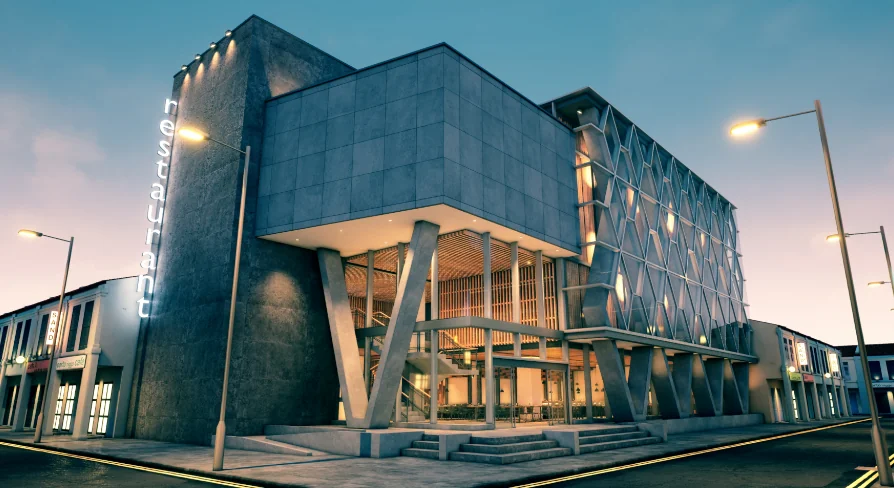
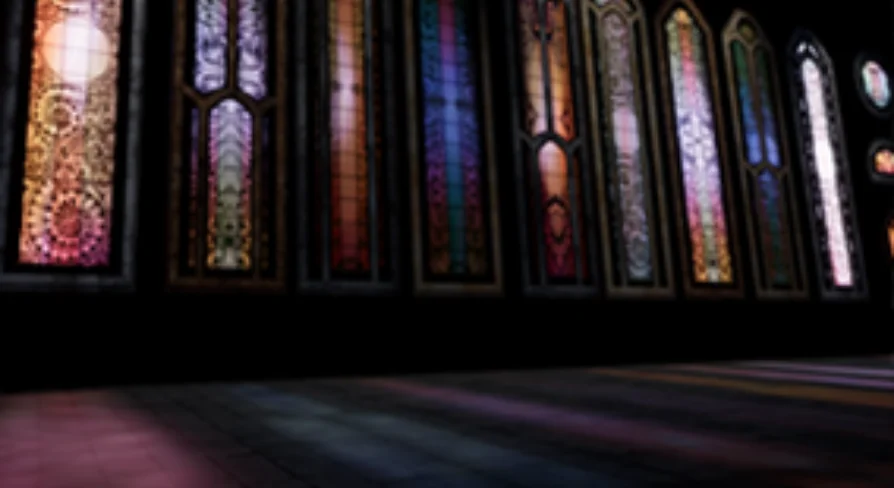
SCL Restaurant 002 is an Unreal Engine restaurant project set in a night scene, combining exterior and interior architectural space with creator-made textures.
SCL Restaurant 002 starts at the project level. Instead of approaching a restaurant setting as a loose collection of separate pieces, it presents the restaurant together with its building in a night scene created in Unreal Engine. That immediately places it in a practical part of production where a team needs an environment with a clear visual condition already established, not just a standalone object waiting to be contextualized later.
The setting is specific enough to guide use from the beginning. This is a restaurant environment, and it is shown at night. Those two facts do a lot of the heavy lifting. A restaurant carries recognizable architectural and spatial expectations, while a night scene introduces a defined mood and visual frame. In production terms, that makes the project easier to position: it belongs to environment work where space, atmosphere, and architecture are all active at once.
Entering SCL Restaurant 002 through the Unreal Engine project
Because SCL Restaurant 002 is created in Unreal Engine as a project, the entry point is the scene itself. The focus is not on a single prop or on one architectural fragment in isolation. The work is already described as a restaurant with its building, which means the environment is framed as a whole place. That matters in day-to-day workflow because scene-wide resources serve a different role than individual modular pieces. They are often brought in when a team needs a cohesive location to inspect, present, block around, or develop further.
The Unreal Engine context also keeps the resource close to real-time environment work. It sits naturally in pipelines that already revolve around engine-based scene building and visual review. Even with very limited stated detail, the structure is clear: this is an engine scene anchored in architecture, and it arrives with its own visual identity instead of requiring the user to establish one from scratch.
The creator-made textures strengthen that reading. When the project and textures come from the same creator, the environment carries a unified authorship. For a scene like a restaurant at night, that kind of consistency is especially useful, since architectural surfaces and the broader environment need to feel like they belong to the same location rather than looking assembled from unrelated sources.
Restaurant, building, exterior, interior
The most useful thing about the scope of SCL Restaurant 002 is that it does not stop at one side of the space. The verified tags point to both exterior and interior, and that gives the project a broader production role than a facade study or a room-only setup. A restaurant building often needs to read correctly from the street as well as from within, and this project is positioned around that full architectural experience.
Exterior and interior working together changes how an environment can be used. An exterior alone is often enough for distant framing or establishing context, while an interior alone serves closer spatial work. Combining them makes the restaurant environment more flexible for scene planning, presentation, and development. The building can function as a visible architectural object, while the interior supports the idea that the space is not just a shell.
The architecture tag also helps define the project’s place. This is not framed as a character set, a vehicle setup, or an abstract game arena. It is architecture-focused, with the restaurant and its building providing the central structure. That keeps the resource grounded in spatial design and environment composition. It can support work where the location itself carries much of the visual and practical weight.
What the night scene changes in a realistic environment
The night scene is one of the clearest identifying traits of SCL Restaurant 002. It gives the project a specific time condition and separates it from general-purpose daylight architecture scenes. Time is even reflected in the tags, alongside real and realistic, which signals that the setting is meant to read as a believable place rather than a stylized interpretation.
Night has a strong effect on how a restaurant environment is perceived. Even without adding unstated technical details, it is fair to say that a night setting narrows the focus of the scene into a more controlled visual moment. In production, that helps when a team is not looking for an all-purpose neutral environment but for a location with an already defined atmosphere. The realistic tag supports this further. The intent is not simply to show a restaurant as a category, but to present it in a way that aims at real-world presence.
That combination of realistic, architectural, interior-exterior coverage and nighttime staging gives the project a fairly distinct identity. It is not just any building scene. It is a restaurant environment where the time of day is part of the artistic and practical framing of the location. A production that needs that specific visual condition gains a more direct starting point than it would from a generic restaurant model dropped into an empty level.
Where SCL Restaurant 002 fits in production workflow
SCL Restaurant 002 fits best where a full environment is more useful than a raw asset library. Since it is a project in Unreal Engine, it aligns with workflows that need a ready environment context. That can include scene review, layout exploration, visual reference inside the engine, or architecture-driven environment work where the user benefits from beginning with a complete place.
The interior and exterior coverage makes it relevant when a production needs continuity across different parts of the same location. A restaurant is rarely understood through one angle alone. The building presence establishes the site, while the interior side supports the use of the restaurant as an inhabited architectural space. That kind of continuity can reduce the gap between establishing a setting and actually working inside it.
The realistic direction is also important in deciding how the project is used. Stylized environments and realistic environments tend to answer different production needs. Here, the tags clearly point toward real and realistic presentation. That places SCL Restaurant 002 closer to work that values recognizable architectural credibility and a grounded scene identity.
Since the textures were created by the creator along with the project itself, the environment reads less like a patchwork and more like a single authored scene package. In workflow terms, unified creation can simplify early evaluation because the visual language is already coherent. For teams or artists assessing an environment, that can make the scene easier to read as a complete location instead of a technical assembly of unrelated components.
Creator-made textures and scene cohesion
One of the few explicit production details available is also one of the more useful ones: the project and textures were created by the creator. In a scene anchored in architecture, this matters because surfaces are inseparable from how the space is understood. Restaurants are read through structure, layout, and visible material treatment together, not through geometry alone.
That shared authorship suggests a consistent visual approach across the environment. For a night scene in particular, cohesion is a practical advantage. A believable nighttime setting depends on the whole location feeling like one place, and texture work is part of that identity. Even without further technical specifications, the stated fact that the textures come from the same creator helps define the project as a unified environment rather than a simple container for borrowed materials.
From a maintenance and handoff standpoint, that same unity makes the project easier to classify. It is a restaurant scene with a clear thematic focus, a fixed time condition, architectural scope, and creator-produced textures. Those qualities make it straightforward to evaluate for productions that need a realistic restaurant building at night inside Unreal Engine.
The practical takeaway is simple: SCL Restaurant 002 is most useful when the need is not an isolated restaurant asset but a complete Unreal Engine restaurant environment with both exterior and interior architectural presence, set in a realistic night scene and held together by creator-made textures.
 Buildings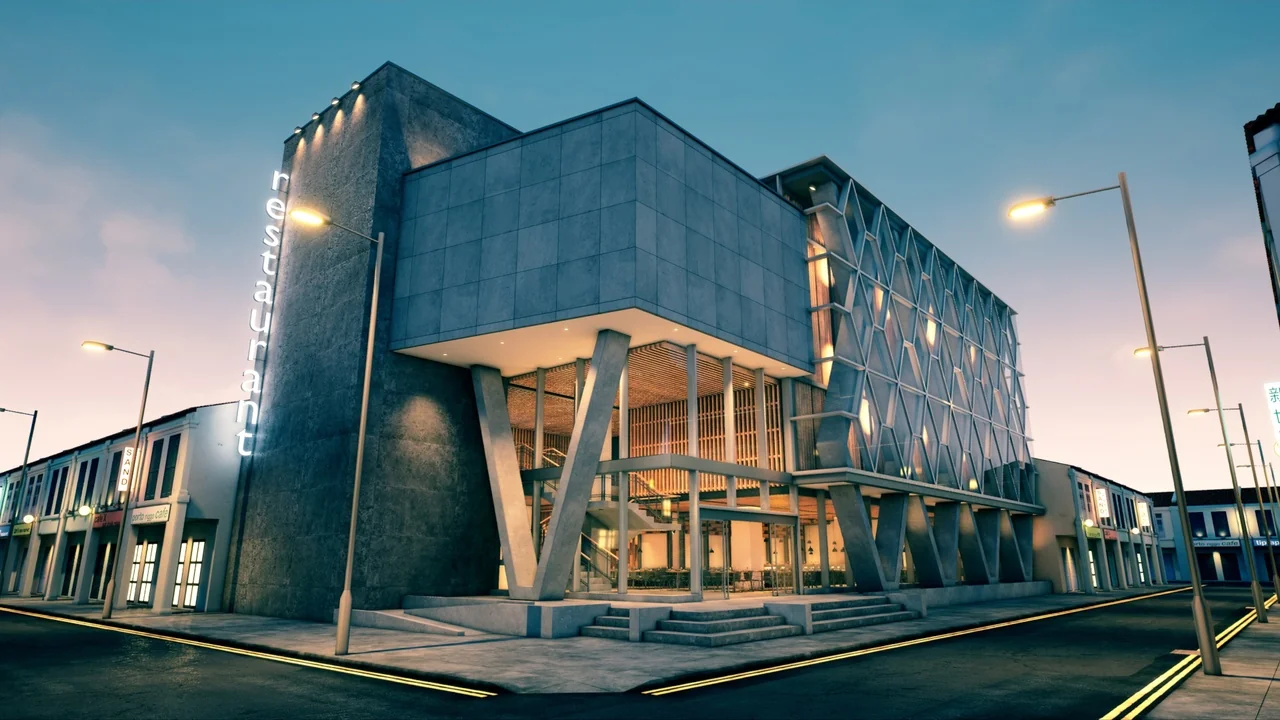
 Buildings
 Buildings
 Buildings