"031373f479d9561a"{"id":"1000228","slug":"japanese-street","title":"Japanese Street","category":"Buildings \u0026 Architecture","engine":"4.26+,5.0+","assetVersion":"","engineVersion":"Engine Version: 4.26+,5.0+","tag":"Buildings","accent":"blue","visual":"mech","summary":"Construct dense urban layouts with the Japanese Street asset, featuring modular cozy houses, material swapping, and functional interior door systems.","platform":"Unreal Engine","publishedAt":"2026-06-27T18:42:28.315Z","updatedAt":"2026-06-27T18:42:28.315Z","sourceNotes":[],"fileContents":[],"compatibility":["Unreal Engine","Engine Version: 4.26+,5.0+"],"featuredImage":{"alt":"Japanese Street","src":"/wp-content/uploads/published/2026/06/3de2d3bd432a-b89297f6-a639-4d09-9015-f7c5f39252c0-ee5d879f21.webp"},"hasDownloadLink":true,"downloads":3,"terms":[{"taxonomy":"category","slug":"buildings-and-architecture","name":"Buildings \u0026 Architecture"}],"galleryImages":[{"src":"/wp-content/uploads/published/2026/06/65f3f3f6e623-99700dc2-6695-444f-9554-b7858ab3a062-fd9cb33bf4.webp","alt":"Japanese Street"},{"src":"/wp-content/uploads/published/2026/06/c39893380fe0-06dd8570-950d-4268-ac07-1190a7ce7a52-2e2ea8d526.webp","alt":"Japanese Street"},{"src":"/wp-content/uploads/published/2026/06/6fd24262a169-6680e8d5-08f3-48a6-b63f-b79d54c92736-8af89df460.webp","alt":"Japanese Street"},{"src":"/wp-content/uploads/published/2026/06/c9e634513aa7-eae752e8-3cb0-4781-aa7b-195d9684b38e-2295cf14ac.webp","alt":"Japanese Street"},{"src":"/wp-content/uploads/published/2026/06/e0b0c1d5c95b-15a51c87-c954-4e2d-88a0-397fccec936c-28341bd3fd.webp","alt":"Japanese Street"},{"src":"/wp-content/uploads/published/2026/06/9f0f317b5240-80b3d66a-22cf-4eb1-b2fb-3ae05fb1590d-1e690f1b0c.webp","alt":"Japanese Street"},{"src":"/wp-content/uploads/published/2026/06/7d25f78abb32-c2e129d0-d593-4ccb-a8ad-f472b36adb20-4c4cbcb4bd.webp","alt":"Japanese Street"},{"src":"/wp-content/uploads/published/2026/06/79d737b5cc45-e60f6ba3-2ddb-459e-9247-26c77ddf65be-3f2793cd32.webp","alt":"Japanese Street"},{"src":"/wp-content/uploads/published/2026/06/fcb7aaa1d81f-471f4fc2-7c07-4ddf-9298-8c6fe6013e26-69fd9046cf.webp","alt":"Japanese Street"},{"src":"/wp-content/uploads/published/2026/06/06187517833a-eccb3f35-d45d-4b11-9e61-707f97098832-79ca4764a0.webp","alt":"Japanese Street"}],"accessPanel":{"kind":"resource","title":"Download this resource","eyebrow":"Free Download","message":"Log in or create a free account to start your download.","fileName":"Content.7z","safetyNote":"Resources are manually reviewed before listing to improve quality and reduce obvious risks.","actionLabel":"Download Free","resourceType":"Resource archive"},"contentHtml":"\u003cp\u003eBuilding convincing, dense urban environments requires balancing intricate, region-specific details with modular flexibility. Constructing a cohesive, tightly packed neighborhood layout piece-by-piece can bottleneck level design, especially when aiming for a specific cultural aesthetic. The Japanese Street environment provides a framework to bypass these layout hurdles. It supplies a fully modular architecture set designed to capture the distinct atmosphere of a narrow, residential thoroughfare, bridging the gap between realistic detailing and stylized proportions.\u003c/p\u003e \u003ch2\u003eDrafting the Narrow Road and Sidewalk Infrastructure\u003c/h2\u003e\n\u003cp\u003eCreating the foundational layout of a neighborhood requires precise control over the terrain and pathing. The asset addresses this early stage of development by breaking down the core infrastructure into interchangeable pieces.\u003c/p\u003e\n\u003cp\u003eRoads and sidewalks are fully modular, allowing developers to design custom street lengths, detailed intersections, and winding pedestrian pathways. Because the environment focuses heavily on the narrow road setting typical of an ordinary Japanese street, these modular ground pieces help establish the tight, intimate scale necessary for the scene. Level designers can snap these ground components together to draft the initial footprint of the neighborhood. This ensures the pathways seamlessly integrate with the adjacent residential plots, keeping the walkable space constrained yet highly detailed for any simulation or exploration project.\u003c/p\u003e \u003ch2\u003eConstructing Cozy Houses and Swapping Materials\u003c/h2\u003e\n\u003cp\u003eThe structural identity of the street relies heavily on the architectural variety of its buildings. Rather than relying on static, pre-built structures, all the houses in this set are assembled entirely in modules, offering granular control over the final structural shapes and neighborhood density.\u003c/p\u003e\n\u003cp\u003eThis modular approach extends well beyond just the physical geometry of the walls and roofs. Creators can easily change the materials in the individual modules to generate distinct visual variations from a single set of core building blocks. This material swapping capability makes it significantly easier to break up visual repetition across a long stretch of small cozy houses. To further enhance the lived-in atmosphere, the environment includes endless flower pots that can be scattered heavily along the modular sidewalks and building facades. These organic details cement the dense, heavily decorated look characteristic of these ordinary residential areas, contrasting nicely against the more industrial elements of the pack.\u003c/p\u003e \u003ch2\u003eEnabling Interior Access with the Door Opening System\u003c/h2\u003e\n\u003cp\u003eEnvironmental architecture packs often restrict players to exterior views, limiting the playable space to the streets and alleys. This package actively removes that traditional barrier by ensuring that the architectural modules fully support interior exploration.\u003c/p\u003e\n\u003cp\u003ePlayers can actually enter the house, moving directly from the narrow exterior street into the enclosed living spaces. A dedicated door opening system has been created specifically to facilitate this transition, allowing characters to seamlessly pass through the exterior thresholds. This functional interactivity transforms the street from a simple background facade into a fully explorable simulation space. It provides level designers with immediate opportunities to route gameplay objectives, narrative sequences, or exploration loops directly into the cozy houses without needing to build custom interaction logic from scratch.\u003c/p\u003e \u003ch2\u003ePopulating the Environment with Vehicles and Props\u003c/h2\u003e\n\u003cp\u003eA static residential street requires distinct everyday props to bridge the gap between a purely stylized environment and a believable simulation. The inclusion of specific vehicular assets helps ground the modular architecture in a recognizable reality.\u003c/p\u003e\n\u003cp\u003eEnvironment artists can populate the narrow roads and tight driveways with a variety of provided transport props, specifically including a minivan, a moped, and a bicycle. Placing a bicycle leaning against a cluster of endless flower pots or parking a minivan along the tight sidewalk instantly communicates human scale and active habitation. These specific vehicular elements support both realistic and stylized art directions. They introduce subtle industrial touches to the otherwise cozy, residential Asia-themed backdrop, ensuring the street feels like a functional part of a larger, active city layout.\u003c/p\u003e \u003ch2\u003eMaintaining Texel Density and Managing Triangle Reduction\u003c/h2\u003e\n\u003cp\u003eHandling dense clusters of modular houses, overlapping flower pots, and grouped vehicles requires strict adherence to performance standards. The assets are manufactured in accordance with industry standards to ensure stable performance even when the narrow streets are fully populated.\u003c/p\u003e\n\u003cp\u003eModels are intentionally grouped together to maintain consistent Texel density across the entire environment, ensuring that heavy material swapping does not result in mismatched or blurry texture resolutions. For more complex objects, nodes were created by reducing triangles by 50% or more, significantly lightening the rendering load of the dense neighborhood geometry. Custom colliders have been created for all complex-shaped houses and suites. This precise collision geometry ensures that characters interacting with the door opening system or navigating around the parked mopeds and minivans experience smooth, accurate physics responses without getting snagged on the intricate modular edges.\u003c/p\u003e \u003cp\u003eBy combining material-swappable architecture with functional, accessible interiors, the asset sets up a highly optimized foundation for localized urban level design. The modular road systems and heavy triangle reductions ensure the tight neighborhood fits seamlessly into both lightweight stylized games and demanding realistic simulations.\u003c/p\u003e\n\n\u003ch2\u003eContinue Browsing Similar Packs\u003c/h2\u003e\n\u003cul\u003e\n\u003cli\u003e\u003ca href=\"https://3dcghub.com/tokyo-stylized-environment/\" title=\"Tokyo Stylized Environment\"\u003eTokyo Stylized Environment\u003c/a\u003e\u003c/li\u003e\n\u003cli\u003e\u003ca href=\"https://3dcghub.com/tokyo-street-part-2/\" title=\"Tokyo Street Part 2\"\u003eTokyo Street Part 2\u003c/a\u003e\u003c/li\u003e\n\u003cli\u003e\u003ca href=\"https://3dcghub.com/industrial-vol-4-electricity-hydro-and-water-treatment/\" title=\"Industrial VOL.4 - Electricity, Hydro, and Water Treatment\"\u003eIndustrial VOL.4 - Electricity, Hydro, and Water Treatment\u003c/a\u003e\u003c/li\u003e\n\u003cli\u003e\u003ca href=\"https://3dcghub.com/scl-restaurant-002/\" title=\"SCL Restaurant 002\"\u003eSCL Restaurant 002\u003c/a\u003e\u003c/li\u003e\n\u003cli\u003e\u003ca href=\"https://3dcghub.com/post-apocalyptic-signs-vol-2/\" title=\"Post Apocalyptic Signs - VOL 2\"\u003ePost Apocalyptic Signs - VOL 2\u003c/a\u003e\u003c/li\u003e\n\u003c/ul\u003e","contentTextLength":6017,"navigation":{"current":1121,"total":3223,"previous":{"id":"1000229","slug":"king-wash-laundromat-legacy-version","title":"King Wash Laundromat (LEGACY VERSION)","category":"Horror","platform":"Unreal Engine","updatedAt":"2026-06-27T19:49:53.349Z"},"next":{"id":"1000227","slug":"interior-toolkit","title":"Interior Toolkit","category":"Historical","platform":"Unreal Engine","updatedAt":"2026-06-27T18:29:02.492Z"}},"relatedResources":[{"id":"1000967","slug":"tokyo-back-alleys-buildings","title":"Tokyo Back Alleys - Buildings","category":"Buildings \u0026 Architecture","engine":"5.3+","assetVersion":"","engineVersion":"Engine Version: 5.3+","tag":"Buildings","accent":"blue","visual":"mech","summary":"Modular buildings for Unreal Engine that fill Tokyo street scenes with hero structures, background volumes, posed characters, bikes, and a day/night blueprint c","platform":"Unreal Engine","publishedAt":"2026-08-15T12:13:52.457Z","updatedAt":"2026-08-15T12:13:52.457Z","sourceNotes":[],"fileContents":[],"compatibility":["Unreal Engine","Engine Version: 5.3+"],"featuredImage":{"alt":"Tokyo Back Alleys - Buildings","src":"/wp-content/uploads/published/2026/08/cb8b4c6ab294-2e8f8dfa-2db0-4571-bb98-4d269a507e93-56cc6ae33c.webp"},"hasDownloadLink":true,"downloads":1},{"id":"7470","slug":"tokyo-stylized-environment","title":"Tokyo Stylized Environment","category":"Cities","engine":"5.2+","assetVersion":"Engine version: 5.2+","engineVersion":"5.2","tag":"Cities","accent":"blue","visual":"city","summary":"Build a stunning Japanese cityscape with this modular Tokyo Stylized Environment. Designed for Unreal Engine 5, it features high-quality assets and Lumen support for realistic lighting.","platform":"Unreal Engine","publishedAt":"2026-02-21T13:38:54.000Z","updatedAt":"2026-04-19T15:55:59.000Z","sourceNotes":[],"fileContents":[],"compatibility":["Unreal Engine","Engine version: 5.2+"],"featuredImage":{"alt":"Tokyo Stylized Environment","src":"https://3dcghub.com/wp-content/uploads/2026/02/906b2e50-804c-4b9c-943e-b0d0916eb9c4.webp"},"hasDownloadLink":true,"downloads":2},{"id":"7453","slug":"tokyo-street-part-2","title":"Tokyo Street Part 2","category":"Cities","engine":"5.2+","assetVersion":"Engine version: 5.2+","engineVersion":"5.2","tag":"Cities","accent":"blue","visual":"city","summary":"Create stunning Japanese cityscapes with this detailed urban environment pack. It features optimized assets, professional lighting, and a ready-to-use demo level for your next project.","platform":"Unreal Engine","publishedAt":"2026-02-21T13:31:50.000Z","updatedAt":"2026-04-19T15:55:59.000Z","sourceNotes":[],"fileContents":[],"compatibility":["Unreal Engine","Engine version: 5.2+"],"featuredImage":{"alt":"Tokyo Street Part 2","src":"https://3dcghub.com/wp-content/uploads/2026/02/57a41dee-eba7-4333-b424-2272c491afc3.webp"},"hasDownloadLink":true,"downloads":1}]}
Buildings
Japanese Street
Construct dense urban layouts with the Japanese Street asset, featuring modular cozy houses, material swapping, and functional interior door systems.
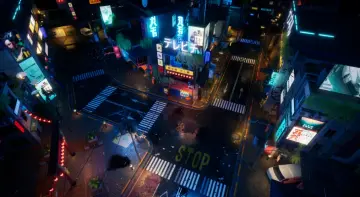
Building convincing, dense urban environments requires balancing intricate, region-specific details with modular flexibility. Constructing a cohesive, tightly packed neighborhood layout piece-by-piece can bottleneck level design, especially when aiming for a specific cultural aesthetic. The Japanese Street environment provides a framework to bypass these layout hurdles. It supplies a fully modular architecture set designed to capture the distinct atmosphere of a narrow, residential thoroughfare, bridging the gap between realistic detailing and stylized proportions.
Drafting the Narrow Road and Sidewalk Infrastructure
Creating the foundational layout of a neighborhood requires precise control over the terrain and pathing. The asset addresses this early stage of development by breaking down the core infrastructure into interchangeable pieces.
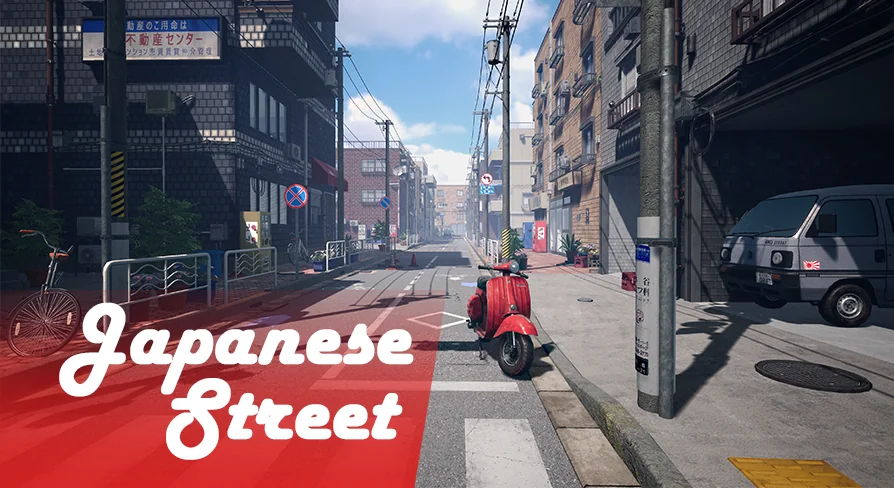
Roads and sidewalks are fully modular, allowing developers to design custom street lengths, detailed intersections, and winding pedestrian pathways. Because the environment focuses heavily on the narrow road setting typical of an ordinary Japanese street, these modular ground pieces help establish the tight, intimate scale necessary for the scene. Level designers can snap these ground components together to draft the initial footprint of the neighborhood. This ensures the pathways seamlessly integrate with the adjacent residential plots, keeping the walkable space constrained yet highly detailed for any simulation or exploration project.
Constructing Cozy Houses and Swapping Materials
The structural identity of the street relies heavily on the architectural variety of its buildings. Rather than relying on static, pre-built structures, all the houses in this set are assembled entirely in modules, offering granular control over the final structural shapes and neighborhood density.
This modular approach extends well beyond just the physical geometry of the walls and roofs. Creators can easily change the materials in the individual modules to generate distinct visual variations from a single set of core building blocks. This material swapping capability makes it significantly easier to break up visual repetition across a long stretch of small cozy houses. To further enhance the lived-in atmosphere, the environment includes endless flower pots that can be scattered heavily along the modular sidewalks and building facades. These organic details cement the dense, heavily decorated look characteristic of these ordinary residential areas, contrasting nicely against the more industrial elements of the pack.
Enabling Interior Access with the Door Opening System
Environmental architecture packs often restrict players to exterior views, limiting the playable space to the streets and alleys. This package actively removes that traditional barrier by ensuring that the architectural modules fully support interior exploration.
Players can actually enter the house, moving directly from the narrow exterior street into the enclosed living spaces. A dedicated door opening system has been created specifically to facilitate this transition, allowing characters to seamlessly pass through the exterior thresholds. This functional interactivity transforms the street from a simple background facade into a fully explorable simulation space. It provides level designers with immediate opportunities to route gameplay objectives, narrative sequences, or exploration loops directly into the cozy houses without needing to build custom interaction logic from scratch.
Populating the Environment with Vehicles and Props
A static residential street requires distinct everyday props to bridge the gap between a purely stylized environment and a believable simulation. The inclusion of specific vehicular assets helps ground the modular architecture in a recognizable reality.
Environment artists can populate the narrow roads and tight driveways with a variety of provided transport props, specifically including a minivan, a moped, and a bicycle. Placing a bicycle leaning against a cluster of endless flower pots or parking a minivan along the tight sidewalk instantly communicates human scale and active habitation. These specific vehicular elements support both realistic and stylized art directions. They introduce subtle industrial touches to the otherwise cozy, residential Asia-themed backdrop, ensuring the street feels like a functional part of a larger, active city layout.
Maintaining Texel Density and Managing Triangle Reduction
Handling dense clusters of modular houses, overlapping flower pots, and grouped vehicles requires strict adherence to performance standards. The assets are manufactured in accordance with industry standards to ensure stable performance even when the narrow streets are fully populated.
Models are intentionally grouped together to maintain consistent Texel density across the entire environment, ensuring that heavy material swapping does not result in mismatched or blurry texture resolutions. For more complex objects, nodes were created by reducing triangles by 50% or more, significantly lightening the rendering load of the dense neighborhood geometry. Custom colliders have been created for all complex-shaped houses and suites. This precise collision geometry ensures that characters interacting with the door opening system or navigating around the parked mopeds and minivans experience smooth, accurate physics responses without getting snagged on the intricate modular edges.
By combining material-swappable architecture with functional, accessible interiors, the asset sets up a highly optimized foundation for localized urban level design. The modular road systems and heavy triangle reductions ensure the tight neighborhood fits seamlessly into both lightweight stylized games and demanding realistic simulations.
 Buildings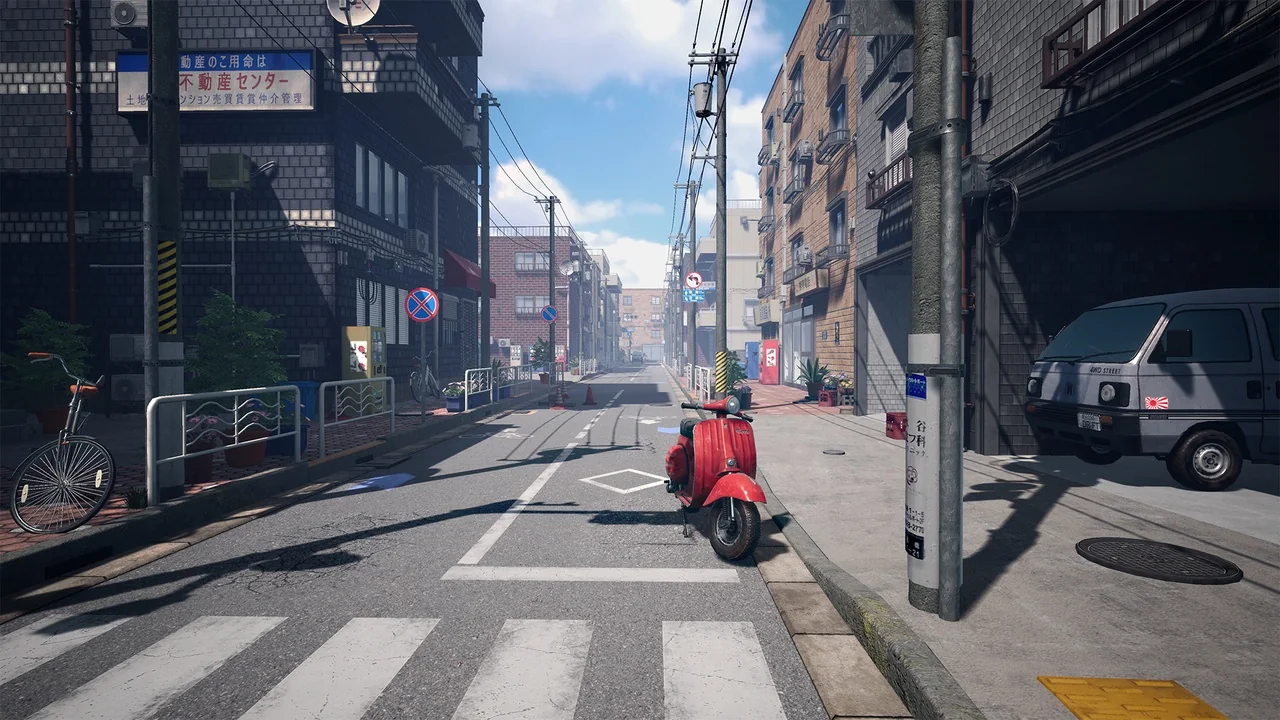
 Buildings
 Cities
 Cities