"4481da9c895ef786"{"id":"1001331","slug":"ancient-mountain-temple-nanite","title":"Ancient Mountain Temple (Nanite)","category":"Historical","engine":"5.2+","assetVersion":"","engineVersion":"Engine Version: 5.2+","tag":"Historical","accent":"blue","visual":"mech","summary":"Detailed breakdown of the Ancient Mountain Temple package for Unreal Engine 5.0+, covering Nanite modular meshes, Lumen dynamic lighting, and 4K textures.","platform":"Unreal Engine","publishedAt":"2026-10-03T17:12:02.776Z","updatedAt":"2026-10-03T17:12:02.776Z","sourceNotes":[],"fileContents":[],"compatibility":["Unreal Engine","Engine Version: 5.2+"],"featuredImage":{"alt":"Ancient Mountain Temple (Nanite)","src":"/wp-content/uploads/published/2026/10/2ddd03aba3c6-c5c44e63-c1c3-4c4a-8cc2-42afd2fff140-1a24528ea5.webp"},"hasDownloadLink":true,"downloads":0,"terms":[{"taxonomy":"category","slug":"historical","name":"Historical"}],"galleryImages":[{"src":"/wp-content/uploads/published/2026/10/4c4f584f7230-4b22c24e-9db1-4a3f-b48b-ec6ab3e4d0e5-f2bc4a2ff0.webp","alt":"Ancient Mountain Temple (Nanite)"},{"src":"/wp-content/uploads/published/2026/10/950ff505d375-a194f471-79dd-4579-8db7-6c7fe62dcc77-5a20e68dda.webp","alt":"Ancient Mountain Temple (Nanite)"},{"src":"/wp-content/uploads/published/2026/10/a84d8ae57a2c-8c6492a0-7b59-4556-b412-344569194c1c-6314598cc2.webp","alt":"Ancient Mountain Temple (Nanite)"},{"src":"/wp-content/uploads/published/2026/10/c22657ea8a4a-5b92b307-0610-44ff-af07-a5ef975f93d5-443a201d9f.webp","alt":"Ancient Mountain Temple (Nanite)"},{"src":"/wp-content/uploads/published/2026/10/f230b7a47925-868b97f1-3282-439f-babf-93d07c0b0bb2-1510fc82b3.webp","alt":"Ancient Mountain Temple (Nanite)"},{"src":"/wp-content/uploads/published/2026/10/c4e958692ebd-c120cb33-58e0-4345-acec-fe7f3b288667-d481c614ad.webp","alt":"Ancient Mountain Temple (Nanite)"},{"src":"/wp-content/uploads/published/2026/10/bdba0fab958e-f43c9e8b-4548-4f15-8151-c126db53f624-6138006865.webp","alt":"Ancient Mountain Temple (Nanite)"},{"src":"/wp-content/uploads/published/2026/10/5f37631379d6-7af56f23-5d9d-466d-b9ff-ab502d678134-d4b1d7c46b.webp","alt":"Ancient Mountain Temple (Nanite)"},{"src":"/wp-content/uploads/published/2026/10/eb39b6faa9dc-67c5ab27-5348-4a96-8a1b-c67309398482-374878c60c.webp","alt":"Ancient Mountain Temple (Nanite)"},{"src":"/wp-content/uploads/published/2026/10/53a41e794572-e889bfa7-12f4-4ffd-a50e-e2945154ff0b-a847f07217.webp","alt":"Ancient Mountain Temple (Nanite)"}],"accessPanel":{"kind":"resource","title":"Download this resource","eyebrow":"Free Download","message":"Log in or create a free account to start your download.","fileName":"Ancient Mountain Temple (Nanite).7z","safetyNote":"Resources are manually reviewed before listing to improve quality and reduce obvious risks.","actionLabel":"Download Free","resourceType":"Resource archive"},"contentHtml":"\u003cp\u003eConstructing believable ancient sanctuaries requires balanced architecture, weathered masonry, and scale that feels imposing. Mountain-top shrines dedicated to worship, royal courts, and sacred Greek temples rely on monumental transitions: broad stone stairs leading to grand colonnades, secret inner chambers, decorative pottery, and monumental statuary honoring Zeus and ancient figures. Delivering this depth at AAA visual standards within a real-time game engine demands both detailed geometry and efficient material organization.\u003c/p\u003e \u003cp\u003eThe Ancient Mountain Temple project provides a complete environment framework developed directly in Unreal Engine. Conceived around high-density geometry and realistic art direction, the environment supplies the structural pieces, statuary, and environmental props needed to stage exterior worship grounds or secluded interior sanctums without falling back on low-fidelity approximations.\u003c/p\u003e \u003ch2\u003eModular Architecture and the 199 Nanite Temple Meshes\u003c/h2\u003e \u003cp\u003eAt the center of the package is a collection of 199 meshes, a total that includes both primary structural pieces and individual mesh variants. These pieces form a modular building kit designed to click together into expansive temple layouts, high-altitude complexes, or intimate royal sanctuaries. Modular elements include functional stone stairs, broad temple foundations, elevated platforms, and towering architectural columns typical of Greek building design.\u003c/p\u003e \u003cp\u003eEvery asset within the assembly is built with Unreal Engine 5 Nanite geometry. Because these models are authored as Nanite meshes, artists can assemble dense, sprawling levels without the traditional constraints of polycount budgeting or the visual popping associated with discrete LOD transitions. The high-density polygon count remains intact directly on the models, preserving crisp chiseled stone edges, micro-fractures in carved masonry, and smooth curvilinear surfaces across royal pillars, worship pedestals, and ancient pottery props.\u003c/p\u003e \u003ch2\u003eIntegrated Stone Sculptures and the 14 GB Texture Pipeline\u003c/h2\u003e \u003cp\u003eTo flesh out the sacred character of the sanctuary, the environment integrates the complete contents of Stone Sculptures VOL.1 and Stone Sculptures VOL.2. Rather than relying on generic monoliths, the temple setting incorporates fully detailed figurative statues suitable for central worship courtyards, decorative perimeter niches, and ceremonial pathways. These sculptures match the classical stone treatment of the primary temple masonry, allowing the entire site to read as a unified architectural build.\u003c/p\u003e \u003cp\u003eBecause the environment bundles these supplementary sculpture packs alongside the primary temple meshes, the total project size reaches 14 GB. A significant portion of this storage footprint comes from the texture sets, which are authored at full 4K resolution. These 4K maps capture intricate mineral veining, surface pits, and deep erosion across all stone faces.\u003c/p\u003e \u003cp\u003eTo maintain balance out of the box, textures inside the engine project are initially scaled down using built-in texture overrides. This setup ensures responsive performance during level editing while still keeping the full-resolution data accessible. When a project requires extreme close-ups, cinematic virtual photography, or ultra-high-definition presentation, developers can bypass the overrides and scale the textures back up to their native 4K fidelity directly within the texture settings.\u003c/p\u003e \u003ch2\u003eMaster Material Architecture and Surface Calibration\u003c/h2\u003e \u003cp\u003eUniformity across hundreds of distinct meshes depends heavily on material hierarchy. The project uses a centralized master material setup that governs the vast majority of all assets in the scene. Driving surfaces through a unified master structure prevents visual disparity between structural stone blocks, decorative pots, and figurative statues while simplifying global scene adjustments.\u003c/p\u003e \u003cp\u003eThe master material includes dedicated user controls for the core physical channels:\u003c/p\u003e\n\u003cul\u003e \u003cli\u003e\u003cstrong\u003eRoughness:\u003c/strong\u003e Granular adjustment sliders to alter the sheen of dry stone, polished ceremonial surfaces, or moisture accumulation.\u003c/li\u003e \u003cli\u003e\u003cstrong\u003eAlbedo:\u003c/strong\u003e Tint and exposure adjustments to shift stone coloration between stark limestone, aged marble, or weathered mountaintop rock.\u003c/li\u003e \u003cli\u003e\u003cstrong\u003eNormals:\u003c/strong\u003e Intensity controls to dial the perceived depth of stone chiseling, fractures, and surface relief up or down.\u003c/li\u003e\n\u003c/ul\u003e \u003cp\u003eData efficiency is maintained through packed texture maps. Texture channels are organized with Roughness, Metalness, and Ambient Occlusion combined into single packed image files. Packing these three maps into the red, green, and blue color channels reduces texture sampler overhead, conserves memory bandwidth, and streamlines material lookups across the scene. For teams needing extra surface wear or age variation, the environment is also suited to compatibility with Decals VOL.5 - Grunge, allowing layers of dirt, soot, and staining to be projected cleanly across temple floors and walls.\u003c/p\u003e \u003ch2\u003eDynamic Lighting Scenes, Lumen Support, and Volumetrics\u003c/h2\u003e \u003cp\u003eLighting ancient architecture requires careful treatment of bounced light, cavernous shadows, and atmospheric depth. The package supports dynamic global illumination and reflections via Lumen in Unreal Engine 5.0 and newer versions. As light strikes open courtyards and bounces between tall colonnades, Lumen resolves secondary illumination across both Nanite geometry and detailed props without requiring precomputed lightmaps.\u003c/p\u003e \u003cp\u003eTo demonstrate these rendering capabilities, the project ships with a dedicated test dynamic lighting scene. This showcase level enables level designers and technical artists to inspect asset behavior under live sun movements, evaluate ambient shadowing within deep corridors, and verify how post-processing filters color response across the stone surfaces. A realistic post-process profile is included to dial in exposure, contrast, and tone mapping straight out of the box.\u003c/p\u003e \u003cp\u003eOne critical technical requirement applies to the sky presentation: the project requires the engine's built-in VOLUMETRICS plugin to be enabled. When active, the plugin allows the included sky dome system to calculate atmospheric scattering and volumetric cloud density correctly, creating the high-altitude, wind-swept mountain horizon needed to contextualize the temple compound.\u003c/p\u003e \u003ch2\u003eProduction Alignment and Scene Staging\u003c/h2\u003e \u003cp\u003eDeploying this package into an Unreal Engine 5.0+ project provides an immediate AAA-grade architectural foundation. Its modular assembly makes it suitable for open-world mountain vistas, narrative-driven exploration games set in historical or mythological Greece, or enclosed challenge arenas staged around temple ruins. With Nanite handling the dense polygonal surfaces, Lumen driving dynamic light bounces, and high-fidelity 4K source textures ready for selective scaling, the environment functions as a complete, ready-to-run exterior level or a flexible toolkit for custom historical worldbuilding.\u003c/p\u003e\n\n\u003ch2\u003eRelated Resources Worth Checking\u003c/h2\u003e\n\u003cul\u003e\n\u003cli\u003e\u003ca href=\"https://3dcghub.com/pharaoh-s-legacy-egyptian-temple-megapack/\" title=\"Pharaoh\u0026#039;s Legacy: Egyptian Temple Megapack\"\u003ePharaoh\u0026#039;s Legacy: Egyptian Temple Megapack\u003c/a\u003e\u003c/li\u003e\n\u003cli\u003e\u003ca href=\"https://3dcghub.com/ancient-mayan-ruins/\" title=\"Ancient Mayan Ruins\"\u003eAncient Mayan Ruins\u003c/a\u003e\u003c/li\u003e\n\u003cli\u003e\u003ca href=\"https://3dcghub.com/roman-street-environment-roman-street-street-ancient-historical-vintage-3d/\" title=\"Roman Street Environment ( Roman Street Street Ancient Historical Vintage 3D )\"\u003eRoman Street Environment ( Roman Street Street Ancient Historical Vintage 3D )\u003c/a\u003e\u003c/li\u003e\n\u003cli\u003e\u003ca href=\"https://3dcghub.com/vp-temples-of-cambodia-ruins-exterior-and-interior/\" title=\"[VP] Temples of Cambodia - Ruins exterior and interior\"\u003e[VP] Temples of Cambodia - Ruins exterior and interior\u003c/a\u003e\u003c/li\u003e\n\u003cli\u003e\u003ca href=\"https://3dcghub.com/roman-volcanic-temple-ancient-medieval-village-greek-buildings-city-street/\" title=\"Roman Volcanic Temple ( Ancient Medieval Village Greek Buildings City Street )\"\u003eRoman Volcanic Temple ( Ancient Medieval Village Greek Buildings City Street )\u003c/a\u003e\u003c/li\u003e\n\u003c/ul\u003e","contentTextLength":7216,"navigation":{"current":2,"total":3269,"previous":{"id":"1000276","slug":"archvis-tools","title":"ArchVis Tools","category":"Engine Tools","platform":"Unreal Engine","updatedAt":"2026-10-03T17:43:32.771Z"},"next":{"id":"1001330","slug":"105-zombie-animations-mocap-281-bonus-zombie-audio","title":"105 Zombie Animations Mocap + 281 Bonus Zombie Audio","category":"Gestures","platform":"Unreal Engine","updatedAt":"2026-10-03T14:12:15.323Z"}},"relatedResources":[{"id":"1000962","slug":"pharaoh-s-legacy-egyptian-temple-megapack","title":"Pharaoh's Legacy: Egyptian Temple Megapack","category":"Historical","engine":"5.1+","assetVersion":"","engineVersion":"Engine Version: 5.1+","tag":"Historical","accent":"blue","visual":"mech","summary":"Over 300 Egyptian temple assets for UE 5.4, with Nanite/Lumen support, modular prefabs, and master materials. Epic Water and Volumetric plugins required.","platform":"Unreal Engine","publishedAt":"2026-08-14T16:36:17.986Z","updatedAt":"2026-08-14T16:36:17.986Z","sourceNotes":[],"fileContents":[],"compatibility":["Unreal Engine","Engine Version: 5.1+"],"featuredImage":{"alt":"Pharaoh's Legacy: Egyptian Temple Megapack","src":"/wp-content/uploads/published/2026/08/4ce06b0e30f6-34cb77c7-10e2-4330-b954-9b021c0df487-573e8d99ad.webp"},"hasDownloadLink":true,"downloads":1},{"id":"25055","slug":"ancient-mayan-ruins","title":"Ancient Mayan Ruins","category":"Historical","engine":"5.2+","assetVersion":"Engine version: 5.2+","engineVersion":"5.2","tag":"Historical","accent":"blue","visual":"city","summary":"Ancient Mayan Ruins brings together weathered stone architecture, ruined temple forms, and jungle atmosphere in a compact environment. It fits historical and adventure scenes that need a clear ancient identity without a large level footprint.","platform":"Unreal Engine","publishedAt":"2026-04-18T16:36:05.000Z","updatedAt":"2026-04-20T06:12:33.000Z","sourceNotes":[],"fileContents":[],"compatibility":["Unreal Engine","Engine version: 5.2+"],"featuredImage":{"alt":"Ancient Mayan Ruins","src":"https://3dcghub.com/wp-content/uploads/2026/04/c004353b90eb_f01535e2-4bc8-4d12-bf45-2cb3c0a2f2ae.webp"},"hasDownloadLink":true,"downloads":0},{"id":"1001112","slug":"roman-street-environment-roman-street-street-ancient-historical-vintage-3d","title":"Roman Street Environment ( Roman Street Street Ancient Historical Vintage 3D )","category":"Historical","engine":"5.1+","assetVersion":"","engineVersion":"Engine Version: 5.1+","tag":"Historical","accent":"blue","visual":"city","summary":"Roman Street Environment provides 168 unique game-ready meshes for Unreal Engine, with Lumen, Nanite, plus a bundled Ultimate Level Art Tool.","platform":"Unreal Engine","publishedAt":"2026-09-07T11:44:59.285Z","updatedAt":"2026-09-07T11:44:59.285Z","sourceNotes":[],"fileContents":[],"compatibility":["Unreal Engine","Engine Version: 5.1+"],"featuredImage":{"alt":"Roman Street Environment ( Roman Street Street Ancient Historical Vintage 3D )","src":"/wp-content/uploads/published/2026/09/e871fb4b6275-3e30f4f4-148c-4e7e-a29e-2c907bd682e5-49178064b6.webp"},"hasDownloadLink":true,"downloads":1}]}
Historical
Ancient Mountain Temple (Nanite)
Detailed breakdown of the Ancient Mountain Temple package for Unreal Engine 5.0+, covering Nanite modular meshes, Lumen dynamic lighting, and 4K textures.
Category:Unreal Engine,HistoricalPlatform: Unreal EngineEngine Version: 5.2+Published: Oct 3, 2026
Historical
Resource overview
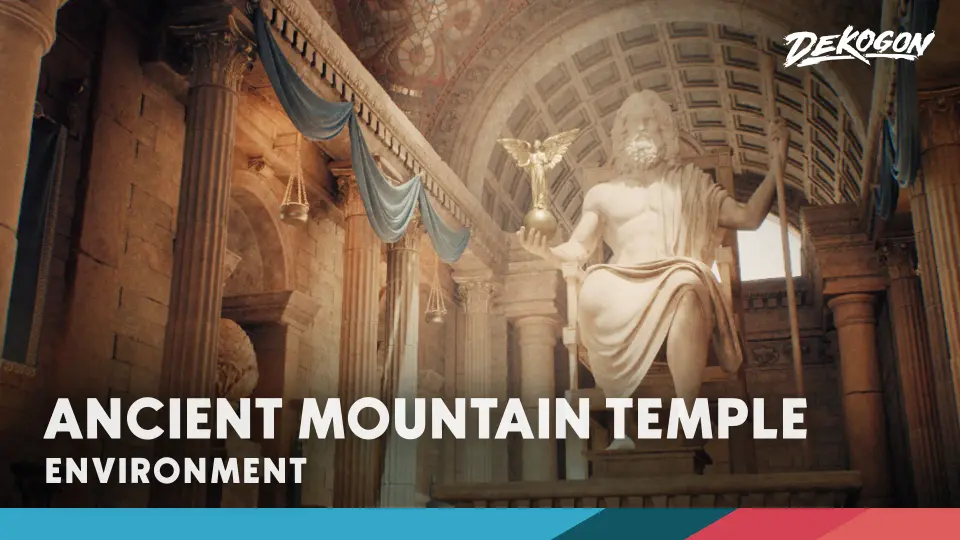
Constructing believable ancient sanctuaries requires balanced architecture, weathered masonry, and scale that feels imposing. Mountain-top shrines dedicated to worship, royal courts, and sacred Greek temples rely on monumental transitions: broad stone stairs leading to grand colonnades, secret inner chambers, decorative pottery, and monumental statuary honoring Zeus and ancient figures. Delivering this depth at AAA visual standards within a real-time game engine demands both detailed geometry and efficient material organization.
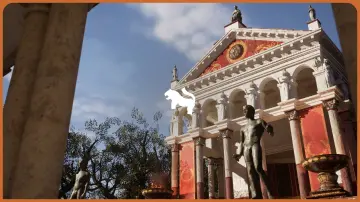
The Ancient Mountain Temple project provides a complete environment framework developed directly in Unreal Engine. Conceived around high-density geometry and realistic art direction, the environment supplies the structural pieces, statuary, and environmental props needed to stage exterior worship grounds or secluded interior sanctums without falling back on low-fidelity approximations.
Modular Architecture and the 199 Nanite Temple Meshes
At the center of the package is a collection of 199 meshes, a total that includes both primary structural pieces and individual mesh variants. These pieces form a modular building kit designed to click together into expansive temple layouts, high-altitude complexes, or intimate royal sanctuaries. Modular elements include functional stone stairs, broad temple foundations, elevated platforms, and towering architectural columns typical of Greek building design.
Every asset within the assembly is built with Unreal Engine 5 Nanite geometry. Because these models are authored as Nanite meshes, artists can assemble dense, sprawling levels without the traditional constraints of polycount budgeting or the visual popping associated with discrete LOD transitions. The high-density polygon count remains intact directly on the models, preserving crisp chiseled stone edges, micro-fractures in carved masonry, and smooth curvilinear surfaces across royal pillars, worship pedestals, and ancient pottery props.
Integrated Stone Sculptures and the 14 GB Texture Pipeline
To flesh out the sacred character of the sanctuary, the environment integrates the complete contents of Stone Sculptures VOL.1 and Stone Sculptures VOL.2. Rather than relying on generic monoliths, the temple setting incorporates fully detailed figurative statues suitable for central worship courtyards, decorative perimeter niches, and ceremonial pathways. These sculptures match the classical stone treatment of the primary temple masonry, allowing the entire site to read as a unified architectural build.
Because the environment bundles these supplementary sculpture packs alongside the primary temple meshes, the total project size reaches 14 GB. A significant portion of this storage footprint comes from the texture sets, which are authored at full 4K resolution. These 4K maps capture intricate mineral veining, surface pits, and deep erosion across all stone faces.
To maintain balance out of the box, textures inside the engine project are initially scaled down using built-in texture overrides. This setup ensures responsive performance during level editing while still keeping the full-resolution data accessible. When a project requires extreme close-ups, cinematic virtual photography, or ultra-high-definition presentation, developers can bypass the overrides and scale the textures back up to their native 4K fidelity directly within the texture settings.
Master Material Architecture and Surface Calibration
Uniformity across hundreds of distinct meshes depends heavily on material hierarchy. The project uses a centralized master material setup that governs the vast majority of all assets in the scene. Driving surfaces through a unified master structure prevents visual disparity between structural stone blocks, decorative pots, and figurative statues while simplifying global scene adjustments.
The master material includes dedicated user controls for the core physical channels:
Roughness: Granular adjustment sliders to alter the sheen of dry stone, polished ceremonial surfaces, or moisture accumulation.
Albedo: Tint and exposure adjustments to shift stone coloration between stark limestone, aged marble, or weathered mountaintop rock.
Normals: Intensity controls to dial the perceived depth of stone chiseling, fractures, and surface relief up or down.
Data efficiency is maintained through packed texture maps. Texture channels are organized with Roughness, Metalness, and Ambient Occlusion combined into single packed image files. Packing these three maps into the red, green, and blue color channels reduces texture sampler overhead, conserves memory bandwidth, and streamlines material lookups across the scene. For teams needing extra surface wear or age variation, the environment is also suited to compatibility with Decals VOL.5 - Grunge, allowing layers of dirt, soot, and staining to be projected cleanly across temple floors and walls.
Dynamic Lighting Scenes, Lumen Support, and Volumetrics
Lighting ancient architecture requires careful treatment of bounced light, cavernous shadows, and atmospheric depth. The package supports dynamic global illumination and reflections via Lumen in Unreal Engine 5.0 and newer versions. As light strikes open courtyards and bounces between tall colonnades, Lumen resolves secondary illumination across both Nanite geometry and detailed props without requiring precomputed lightmaps.
To demonstrate these rendering capabilities, the project ships with a dedicated test dynamic lighting scene. This showcase level enables level designers and technical artists to inspect asset behavior under live sun movements, evaluate ambient shadowing within deep corridors, and verify how post-processing filters color response across the stone surfaces. A realistic post-process profile is included to dial in exposure, contrast, and tone mapping straight out of the box.
One critical technical requirement applies to the sky presentation: the project requires the engine's built-in VOLUMETRICS plugin to be enabled. When active, the plugin allows the included sky dome system to calculate atmospheric scattering and volumetric cloud density correctly, creating the high-altitude, wind-swept mountain horizon needed to contextualize the temple compound.
Production Alignment and Scene Staging
Deploying this package into an Unreal Engine 5.0+ project provides an immediate AAA-grade architectural foundation. Its modular assembly makes it suitable for open-world mountain vistas, narrative-driven exploration games set in historical or mythological Greece, or enclosed challenge arenas staged around temple ruins. With Nanite handling the dense polygonal surfaces, Lumen driving dynamic light bounces, and high-fidelity 4K source textures ready for selective scaling, the environment functions as a complete, ready-to-run exterior level or a flexible toolkit for custom historical worldbuilding.
 Historical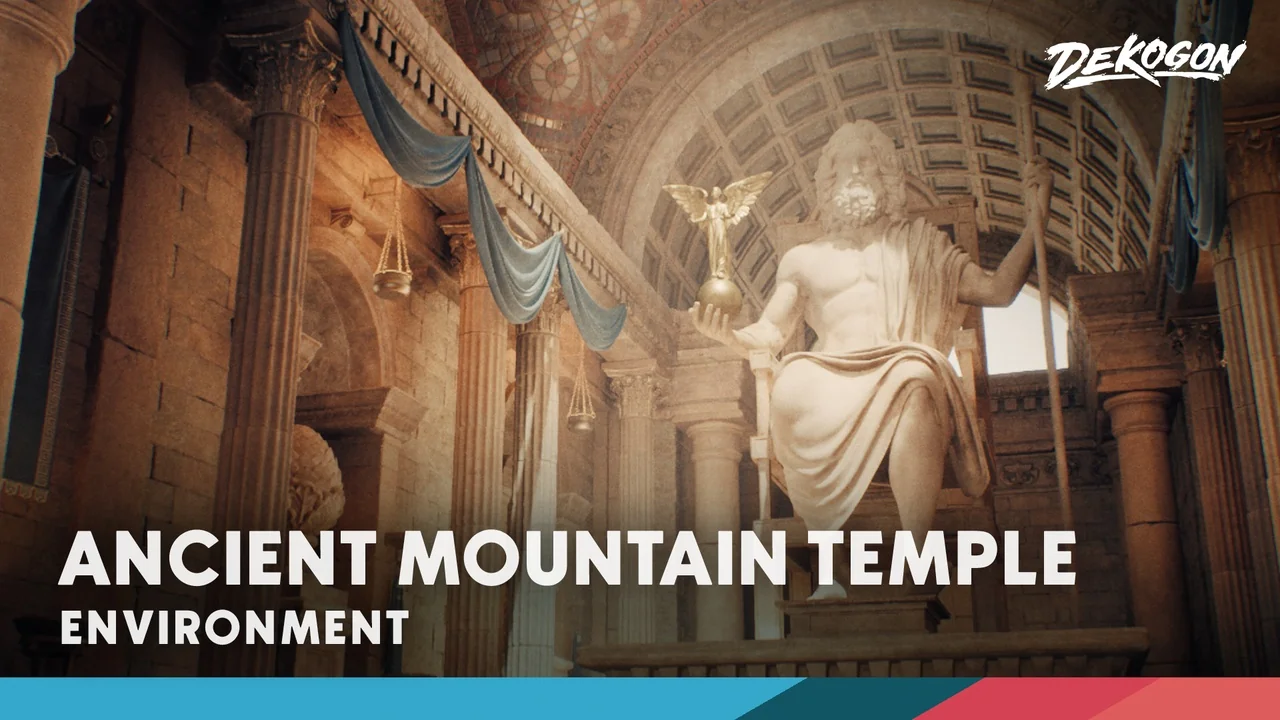
 Historical
 Historical
 Historical