"c68a05d5e51405b3"{"id":"25055","slug":"ancient-mayan-ruins","title":"Ancient Mayan Ruins","category":"Historical","engine":"5.2+","assetVersion":"Engine version: 5.2+","engineVersion":"5.2","tag":"Historical","accent":"blue","visual":"city","summary":"Ancient Mayan Ruins brings together weathered stone architecture, ruined temple forms, and jungle atmosphere in a compact environment. It fits historical and adventure scenes that need a clear ancient identity without a large level footprint.","platform":"Unreal Engine","publishedAt":"2026-04-18T16:36:05.000Z","updatedAt":"2026-04-20T06:12:33.000Z","sourceNotes":[],"fileContents":[],"compatibility":["Unreal Engine","Engine version: 5.2+"],"featuredImage":{"alt":"Ancient Mayan Ruins","src":"https://3dcghub.com/wp-content/uploads/2026/04/c004353b90eb_f01535e2-4bc8-4d12-bf45-2cb3c0a2f2ae.webp"},"hasDownloadLink":true,"downloads":1,"terms":[{"taxonomy":"category","slug":"historical","name":"Historical"},{"taxonomy":"post_tag","slug":"characters","name":"Characters"},{"taxonomy":"post_tag","slug":"environment","name":"Environment"},{"taxonomy":"post_tag","slug":"textures","name":"Textures"}],"galleryImages":[{"src":"https://3dcghub.com/wp-content/uploads/2026/04/e498a2c746a0_015ca09f-ad3e-42b1-b6df-f18ec196687e.webp","alt":"Ancient Mayan Ruins"},{"src":"https://3dcghub.com/wp-content/uploads/2026/04/3bc55f1e8ea4_2be51f9d-5adf-4060-b19c-c6d1f12d48d2.webp","alt":"Ancient Mayan Ruins"},{"src":"https://3dcghub.com/wp-content/uploads/2026/04/612d7682bf64_6199a34f-8519-49b1-be96-47a08586dab5.webp","alt":"Ancient Mayan Ruins"},{"src":"https://3dcghub.com/wp-content/uploads/2026/04/df44f7ea1ffa_41dcb72d-ae87-43ce-983a-f4563ad195b6.webp","alt":"Ancient Mayan Ruins"},{"src":"https://3dcghub.com/wp-content/uploads/2026/04/26758cc2e9fd_22f7676b-2f4e-4b99-b9a9-8154f1b88ddd.webp","alt":"Ancient Mayan Ruins"},{"src":"https://3dcghub.com/wp-content/uploads/2026/04/8f5986bc844f_998d7010-9de7-490e-9246-e4db24a4342c.webp","alt":"Ancient Mayan Ruins"},{"src":"https://3dcghub.com/wp-content/uploads/2026/04/88f3fbf895e0_2e13ef91-9c22-4a80-86f0-cad5268c27c6.webp","alt":"Ancient Mayan Ruins"},{"src":"https://3dcghub.com/wp-content/uploads/2026/04/699819feb07a_2407ce55-c680-473f-8ef6-e44c40bc71dc.webp","alt":"Ancient Mayan Ruins"},{"src":"https://3dcghub.com/wp-content/uploads/2026/04/42c603b965ad_149c61ad-bfc6-4972-9ae3-ee1633690170.webp","alt":"Ancient Mayan Ruins"},{"src":"https://3dcghub.com/wp-content/uploads/2026/04/6df2fb6665f2_98dc8b3b-43eb-4567-920e-d0dbd3bb15d5.webp","alt":"Ancient Mayan Ruins"}],"accessPanel":{"kind":"resource","title":"Access this resource","eyebrow":"Free Download","message":"Log in or create a free account to start your download.","fileName":"Content.7z","safetyNote":"All resources are 100% manually reviewed to eliminate all risks.","actionLabel":"Download Free","resourceType":"Resource archive"},"contentHtml":"\u003cp\u003eAncient Mayan Ruins gives historical and adventure scenes an immediate sense of place: weathered stone, ruined architecture, tropical jungle context, and the visual weight of a lost ceremonial site. It is the kind of environment that can carry mood on its own, especially when a project needs Mayan architecture without drifting into a generic ruin.\u003c/p\u003e\u003ch2\u003eStone architecture with a specific identity\u003c/h2\u003e\u003cp\u003eThe strongest signal in the environment is its architectural character. The ruins capture the look and feel of Mayan construction through detailed, realistic assets, which makes the setting feel anchored in a recognizable visual language rather than a loose fantasy interpretation. Pillars, temples, statues, and stone surfaces all point toward a site with structure and history.\u003c/p\u003e\u003cp\u003eThat matters in scenes where the architecture itself has to do part of the storytelling. A temple facade, a stone pillar line, or a statue-covered area does more than fill space. It tells the viewer they are in a place shaped by age, ceremony, and erosion. The result is a setting that feels rooted in archaeology and ancient design, with the ruined quality adding weight instead of ornament.\u003c/p\u003e\u003ch2\u003eSmall in footprint, useful in scale\u003c/h2\u003e\u003cp\u003eThis is not a large level, and that detail shapes how it fits into a project. A smaller footprint can be an advantage when the goal is a focused environment rather than a wide open world. The asset stays flexible and is easy to scale to fit different needs, which makes it practical for scenes that need adjustment in size, framing, or emphasis.\u003c/p\u003e\u003cp\u003eThat flexibility gives the environment room to serve different kinds of shots and scene needs. A compact ruin can read as a complete location on its own, while the ability to scale helps it adapt to a broader composition if a project needs a more expansive feel. The key point is not size alone, but control: the environment offers a defined visual base that can be adjusted without losing its identity.\u003c/p\u003e\u003ch2\u003eJungle, tropical weathering, and a mystical edge\u003c/h2\u003e\u003cp\u003eThe supporting atmosphere comes through in the surrounding themes. Jungle, tropical, ancient, mystical, cave, and ruined all appear in the visual vocabulary, and together they create a setting that feels overgrown, worn, and slightly mysterious. Those cues are important because they keep the environment from reading as a clean architectural exhibit. Instead, it feels lived-in by time.\u003c/p\u003e\u003cp\u003eThat mix of stone and vegetation is what gives the scene its mood. The ruin is not just a structure; it is a place marked by weathering, hidden spaces, and layers of history. When a project needs a rich atmospheric touch, this kind of environment can supply it through the interaction of architecture and landscape rather than through heavy visual complexity.\u003c/p\u003e\u003ch2\u003eWhere it fits in a historical or adventure project\u003c/h2\u003e\u003cp\u003eThe most direct fit is any project that needs a historical or adventure setting with a strong ancient identity. Because the environment captures Mayan architecture and carries clear ruin imagery, it can support scenes that lean into archaeology, exploration, mystery, or ancient-world storytelling. The tag set reinforces that direction: historical, temple, archaeology, ancient, and level all point to a location that functions as part of a larger scene rather than a standalone decorative asset.\u003c/p\u003e\u003cp\u003eIn practice, that makes it a useful choice when a project needs a location that communicates age immediately. The viewer does not have to guess what kind of place it is. Stone pillars, temple forms, statues, and jungle-wrapped ruins establish the location quickly, while the realistic treatment keeps it grounded. For teams working on a historical or adventure project, that kind of clarity helps the environment support the story instead of competing with it.\u003c/p\u003e\u003ch2\u003eWhat the environment communicates at a glance\u003c/h2\u003e\u003cp\u003eAncient Mayan Ruins carries a clear visual message: ancient stonework, ruined ceremonial architecture, jungle atmosphere, and a compact but adaptable layout. It is not trying to be a sprawling landscape. It is a focused environment with enough detail to feel convincing and enough flexibility to fit different scene needs.\u003c/p\u003e\u003cp\u003eFor a project that needs a rich, atmospheric location with Mayan character, this environment gives a direct path into the setting. The final result is best suited to scenes where architecture, history, and mood need to work together without extra noise.\u003c/p\u003e\n\n\u003ch2\u003eRelated Resources Worth Checking\u003c/h2\u003e\n\u003cul\u003e\n\u003cli\u003e\u003ca href=\"https://3dcghub.com/nature-package-forest-environment/\" title=\"Nature Package – Forest Environment\"\u003eNature Package – Forest Environment\u003c/a\u003e\u003c/li\u003e\n\u003cli\u003e\u003ca href=\"https://3dcghub.com/forest-environment-dynamic-nature/\" title=\"Forest Environment – Dynamic Nature\"\u003eForest Environment – Dynamic Nature\u003c/a\u003e\u003c/li\u003e\n\u003cli\u003e\u003ca href=\"https://3dcghub.com/underwater-sunken-ship-environment/\" title=\"Underwater Sunken Ship Environment\"\u003eUnderwater Sunken Ship Environment\u003c/a\u003e\u003c/li\u003e\n\u003cli\u003e\u003ca href=\"https://3dcghub.com/the-carnival-environment/\" title=\"The Carnival Environment\"\u003eThe Carnival Environment\u003c/a\u003e\u003c/li\u003e\n\u003cli\u003e\u003ca href=\"https://3dcghub.com/pizza-bar-environment-by-gamertose/\" title=\"Pizza Bar Environment by Gamertose\"\u003ePizza Bar Environment by Gamertose\u003c/a\u003e\u003c/li\u003e\n\u003c/ul\u003e","contentTextLength":4618,"navigation":{"current":2215,"total":3860,"previous":{"id":"25079","slug":"master-materials-and-layer-system-for-daz3d-imports","title":"Master Materials and Layer System for Daz3D Imports","category":"Variety","platform":"Unreal Engine","updatedAt":"2026-04-20T06:12:33.000Z"},"next":{"id":"25042","slug":"alien-dog","title":"Alien dog","category":"Characters \u0026 Creatures","platform":"Unreal Engine","updatedAt":"2026-04-20T06:12:33.000Z"}},"relatedResources":[{"id":"1001745","slug":"modular-ancient-ruins","title":"Modular Ancient Ruins","category":"Historical","engine":"4.26+,5.0+","assetVersion":"","engineVersion":"Engine Version: 4.26+,5.0+","tag":"Historical","accent":"blue","visual":"mech","summary":"Modular Ancient Ruins pairs modular ruin meshes and flexible materials with biome-specific plants, starter layouts, and broad stylistic versatility.","platform":"Unreal Engine","publishedAt":"2026-10-20T02:51:08.967Z","updatedAt":"2026-10-20T02:51:08.967Z","sourceNotes":[],"fileContents":[],"compatibility":["Unreal Engine","Engine Version: 4.26+,5.0+"],"featuredImage":{"alt":"Modular Ancient Ruins","src":"/wp-content/uploads/published/2026/10/772d7890cd77-c93248a4-9dfe-42e2-8e71-1f715921f251-58b712778f.webp"},"hasDownloadLink":true,"downloads":0},{"id":"8389","slug":"egypt-ruins-environment","title":"Egypt Ruins Environment","category":"Historical","engine":"4.27,5.0+","assetVersion":"Engine version: 4.27,5.0+","engineVersion":"4.26","tag":"Historical","accent":"blue","visual":"city","summary":"Transform your digital world with a high-quality Egypt Ruins Environment. This asset pack offers modular components and realistic textures perfect for creating immersive desert levels and historical adventure games.","platform":"Unreal Engine","publishedAt":"2026-02-23T17:06:48.000Z","updatedAt":"2026-04-19T15:55:28.000Z","sourceNotes":[],"fileContents":[],"compatibility":["Unreal Engine","Engine version: 4.27,5.0+"],"featuredImage":{"alt":"Egypt Ruins Environment","src":"https://3dcghub.com/wp-content/uploads/2026/02/65e67c05-43b4-4a3f-8c23-87cee1d3e9b2.webp"},"hasDownloadLink":true,"downloads":0},{"id":"27336","slug":"ancient-cave-ruins-ancient-temple-ruins-ancient-valley","title":"Ancient Cave Ruins (Ancient Temple Ruins, Ancient Valley )","category":"Dungeon","engine":"4.26+,5.0+","assetVersion":"Engine version: 4.26+,5.0+","engineVersion":"","tag":"Dungeon","accent":"blue","visual":"city","summary":"Ancient Cave Ruins focuses on stone-heavy cave and ruin pieces for fantasy spaces above or below ground. Its mix of cliffs, rocks, columns, slabs, Blueprint meshes, and landscape handling gives the scene a practical starting point.","platform":"Unreal Engine","publishedAt":"2026-04-24T06:21:26.000Z","updatedAt":"2026-04-24T06:21:28.000Z","sourceNotes":[],"fileContents":[],"compatibility":["Unreal Engine","Engine version: 4.26+,5.0+"],"featuredImage":{"alt":"Ancient Cave Ruins (Ancient Temple Ruins, Ancient Valley )","src":"https://3dcghub.com/wp-content/uploads/2026/04/df0c90184d5e_562c282a-fccc-4389-bd9c-084caf5e1f98.webp"},"hasDownloadLink":true,"downloads":0}]}
Historical
Ancient Mayan Ruins
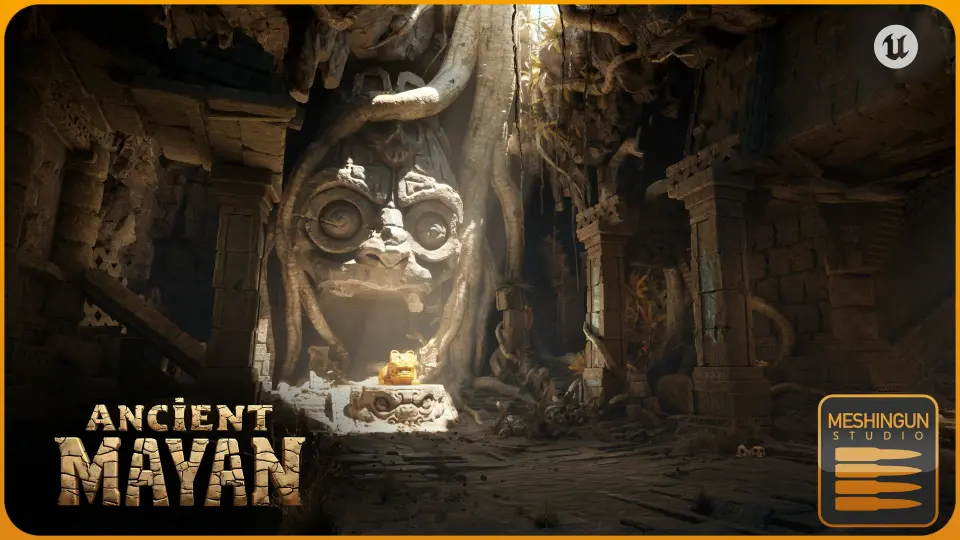
Ancient Mayan Ruins brings together weathered stone architecture, ruined temple forms, and jungle atmosphere in a compact environment. It fits historical and adventure scenes that need a clear ancient identity without a large level footprint.
Ancient Mayan Ruins gives historical and adventure scenes an immediate sense of place: weathered stone, ruined architecture, tropical jungle context, and the visual weight of a lost ceremonial site. It is the kind of environment that can carry mood on its own, especially when a project needs Mayan architecture without drifting into a generic ruin.
Stone architecture with a specific identity
The strongest signal in the environment is its architectural character. The ruins capture the look and feel of Mayan construction through detailed, realistic assets, which makes the setting feel anchored in a recognizable visual language rather than a loose fantasy interpretation. Pillars, temples, statues, and stone surfaces all point toward a site with structure and history.
That matters in scenes where the architecture itself has to do part of the storytelling. A temple facade, a stone pillar line, or a statue-covered area does more than fill space. It tells the viewer they are in a place shaped by age, ceremony, and erosion. The result is a setting that feels rooted in archaeology and ancient design, with the ruined quality adding weight instead of ornament.
Small in footprint, useful in scale
This is not a large level, and that detail shapes how it fits into a project. A smaller footprint can be an advantage when the goal is a focused environment rather than a wide open world. The asset stays flexible and is easy to scale to fit different needs, which makes it practical for scenes that need adjustment in size, framing, or emphasis.
That flexibility gives the environment room to serve different kinds of shots and scene needs. A compact ruin can read as a complete location on its own, while the ability to scale helps it adapt to a broader composition if a project needs a more expansive feel. The key point is not size alone, but control: the environment offers a defined visual base that can be adjusted without losing its identity.
Jungle, tropical weathering, and a mystical edge
The supporting atmosphere comes through in the surrounding themes. Jungle, tropical, ancient, mystical, cave, and ruined all appear in the visual vocabulary, and together they create a setting that feels overgrown, worn, and slightly mysterious. Those cues are important because they keep the environment from reading as a clean architectural exhibit. Instead, it feels lived-in by time.
That mix of stone and vegetation is what gives the scene its mood. The ruin is not just a structure; it is a place marked by weathering, hidden spaces, and layers of history. When a project needs a rich atmospheric touch, this kind of environment can supply it through the interaction of architecture and landscape rather than through heavy visual complexity.
Where it fits in a historical or adventure project
The most direct fit is any project that needs a historical or adventure setting with a strong ancient identity. Because the environment captures Mayan architecture and carries clear ruin imagery, it can support scenes that lean into archaeology, exploration, mystery, or ancient-world storytelling. The tag set reinforces that direction: historical, temple, archaeology, ancient, and level all point to a location that functions as part of a larger scene rather than a standalone decorative asset.
In practice, that makes it a useful choice when a project needs a location that communicates age immediately. The viewer does not have to guess what kind of place it is. Stone pillars, temple forms, statues, and jungle-wrapped ruins establish the location quickly, while the realistic treatment keeps it grounded. For teams working on a historical or adventure project, that kind of clarity helps the environment support the story instead of competing with it.
What the environment communicates at a glance
Ancient Mayan Ruins carries a clear visual message: ancient stonework, ruined ceremonial architecture, jungle atmosphere, and a compact but adaptable layout. It is not trying to be a sprawling landscape. It is a focused environment with enough detail to feel convincing and enough flexibility to fit different scene needs.
For a project that needs a rich, atmospheric location with Mayan character, this environment gives a direct path into the setting. The final result is best suited to scenes where architecture, history, and mood need to work together without extra noise.
 Historical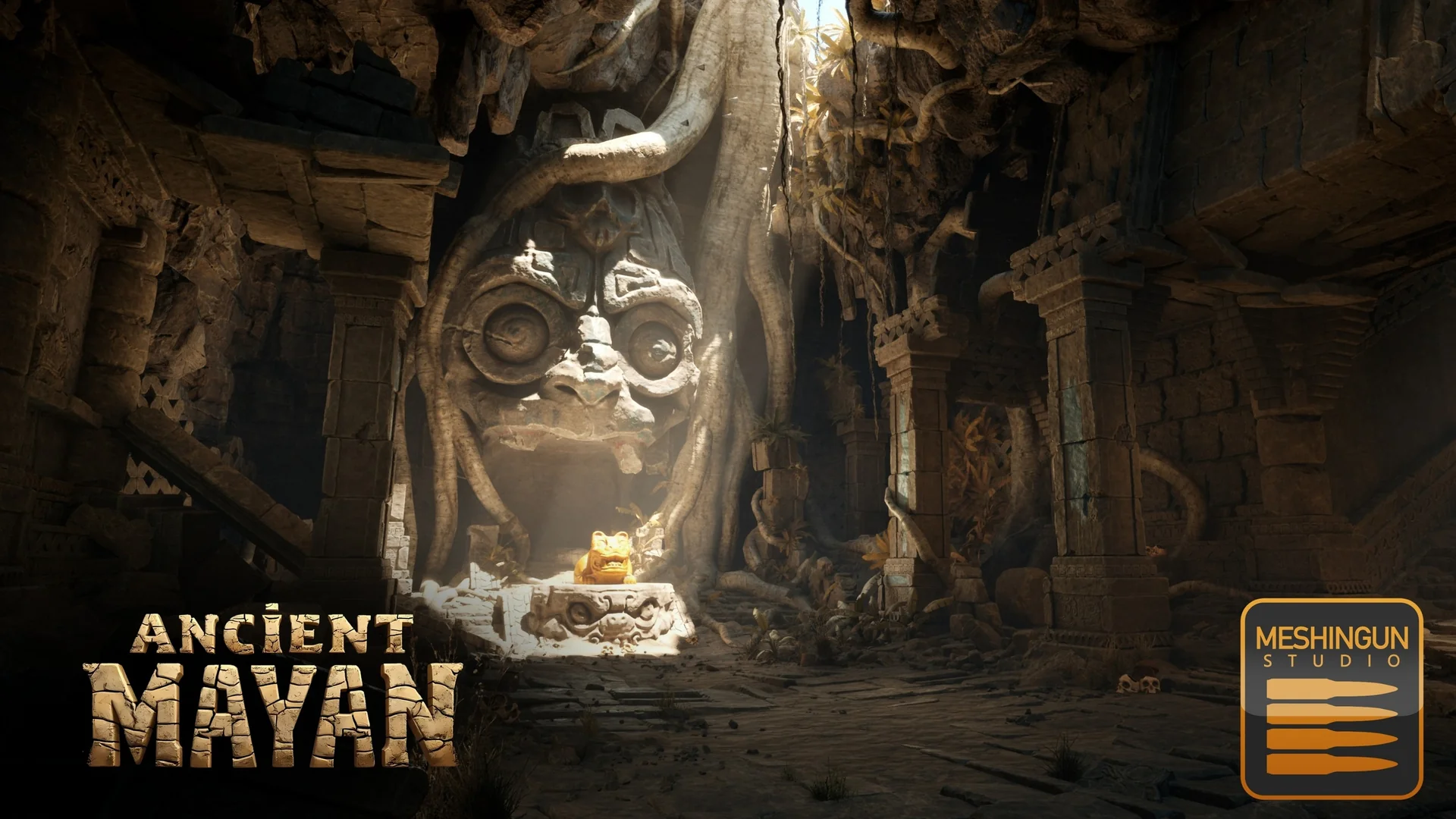
 Historical
 Historical
 Dungeon