"c68a05d5e51405b3"{"id":"25042","slug":"alien-dog","title":"Alien dog","category":"Characters \u0026 Creatures","engine":"4.27,5.0+","assetVersion":"Engine version: 4.27,5.0+","engineVersion":"4.26","tag":"Characters","accent":"blue","visual":"character","summary":"Alien Dog is a low-poly animated character for games and animated films. The set includes project files for Maya, Unreal, and Marmoset, while the Unreal project already carries a customized body, materials, and textures for the character.","platform":"Unreal Engine","publishedAt":"2026-04-18T16:25:47.000Z","updatedAt":"2026-04-20T06:12:33.000Z","sourceNotes":[],"fileContents":[],"compatibility":["Unreal Engine","Engine version: 4.27,5.0+"],"featuredImage":{"alt":"Alien dog","src":"https://3dcghub.com/wp-content/uploads/2026/04/c89a450e4a07_9d8e605b-0402-48b6-9c7c-ab990c5adc17.webp"},"hasDownloadLink":true,"downloads":1,"terms":[{"taxonomy":"category","slug":"characters-and-creatures","name":"Characters \u0026 Creatures"},{"taxonomy":"post_tag","slug":"characters","name":"Characters"},{"taxonomy":"post_tag","slug":"materials","name":"Materials"},{"taxonomy":"post_tag","slug":"unreal-engine-5","name":"Unreal Engine 5"}],"galleryImages":[{"src":"https://3dcghub.com/wp-content/uploads/2026/04/a10d1edc2a0f_221fad11-f2f2-41b5-8f7e-38b7de88b9e8.webp","alt":"Alien dog"},{"src":"https://3dcghub.com/wp-content/uploads/2026/04/c7ecb9ca3ac0_cafc968d-11fa-472e-9123-e14f6e385de1.webp","alt":"Alien dog"},{"src":"https://3dcghub.com/wp-content/uploads/2026/04/26aeb979993b_a69c0160-5fe1-4c87-aa8a-f579a61f169c.webp","alt":"Alien dog"},{"src":"https://3dcghub.com/wp-content/uploads/2026/04/668495c7c504_576454fe-87e7-4fa9-a0b4-5a0249bf887a.webp","alt":"Alien dog"},{"src":"https://3dcghub.com/wp-content/uploads/2026/04/c014c98beb1a_8e5d48ec-9d8c-4ade-814b-4a583dd86b57.webp","alt":"Alien dog"},{"src":"https://3dcghub.com/wp-content/uploads/2026/04/48a1b9d2c8d8_9ea19a3e-c46e-4172-b185-52c6b45a240e.webp","alt":"Alien dog"},{"src":"https://3dcghub.com/wp-content/uploads/2026/04/d079e9beb923_b51216b8-d079-4424-b72a-f7641f6e08d6.webp","alt":"Alien dog"}],"accessPanel":{"kind":"resource","title":"Access this resource","eyebrow":"Free Download","message":"Log in or create a free account to start your download.","fileName":"Content.7z","safetyNote":"All resources are 100% manually reviewed to eliminate all risks.","actionLabel":"Download Free","resourceType":"Resource archive"},"contentHtml":"\u003ch2\u003eA low-poly creature built for animated character work\u003c/h2\u003e\n\u003cp\u003eAlien Dog is a low-poly animated model meant for games and animated films. The character name points directly to a creature design that sits between an animal form and a science-fiction monster, which makes it a natural fit for scenes that need something stranger than a standard dog and less abstract than a fully alien beast.\u003c/p\u003e\n\u003cp\u003eThe model also lands in a very specific visual lane: creature work with a simplified polygon style. That combination keeps the focus on the character shape itself rather than surface complexity. It suits projects that want a readable silhouette and an animated figure that can be placed into a scene without needing to be built from scratch every time.\u003c/p\u003e \u003ch2\u003eProject files for Maya, Unreal, and Marmoset\u003c/h2\u003e\n\u003cp\u003eThe set includes project files for Maya, Unreal, and Marmoset. That gives the character a multi-software workflow instead of a single locked presentation file, which matters when a project moves between modeling, engine setup, and display.\u003c/p\u003e\n\u003cul\u003e \u003cli\u003eMaya project files\u003c/li\u003e \u003cli\u003eUnreal project files\u003c/li\u003e \u003cli\u003eMarmoset project files\u003c/li\u003e\n\u003c/ul\u003e\n\u003cp\u003eHaving the character available across these environments keeps the workflow centered on the same asset rather than treating each step as a separate build. Maya covers the character side of the pipeline, Unreal places it in the engine, and Marmoset keeps the model in the same package for another project context. Nothing in the set needs to be treated as isolated from the rest; the pieces are already arranged around the same alien dog character.\u003c/p\u003e \u003ch2\u003eWhat is already set up in Unreal\u003c/h2\u003e\n\u003cp\u003eThe Unreal Engine project already includes a customized body, materials, and textures for the character. That means the engine-side version is not just a blank import; it already carries character-specific setup that has been adjusted for this model.\u003c/p\u003e\n\u003cp\u003eFor production work, that is the most concrete part of the package. The body is not left in a generic state, and the materials and textures are already tailored to the alien dog. In practice, that makes the Unreal project the most direct starting point for anyone who wants to inspect the character in-engine, review how the surface treatment reads, or continue building the scene around an already prepared creature setup.\u003c/p\u003e\n\u003cp\u003eThe project also sits naturally alongside animation workflow needs. The tags attached to the character include Animation Blueprint, which places the asset in the same general space as Unreal character animation work. Combined with the customized body, materials, and textures, the Unreal project feels aimed at a character pipeline where the model is meant to be handled as part of an animated creature setup rather than as a static prop.\u003c/p\u003e \u003ch2\u003eScenes where the alien dog fits naturally\u003c/h2\u003e\n\u003cp\u003eThe clearest uses come from the character’s own naming and tags: beast, zombie, wolf, alien, werewolf, monster, horror, character, and animation blueprint. Those labels point to creature-driven scenes rather than everyday environments. The model belongs in projects that need an odd, threatening, or hybrid animal shape.\u003c/p\u003e\n\u003cp\u003eThat makes the alien dog suitable for game encounters, animated film creatures, and horror or monster scenes where a low-poly style can support a stylized look. The design language also supports a broad range of creature roles. It can read as a beast in one project, a wolf-like figure in another, or an alien monster when the scene leans harder into science-fiction.\u003c/p\u003e\n\u003cp\u003eBecause it is already presented as an animated model, the character is especially relevant when the scene needs movement as well as appearance. A low-poly creature with dedicated project files is easier to place into a production flow that expects animation to be part of the asset rather than an afterthought.\u003c/p\u003e \u003ch2\u003eWhere it makes the most sense in production\u003c/h2\u003e\n\u003cp\u003eAlien Dog fits best in a production line that needs a creature character ready for modeling work, engine setup, and presentation inside the same package. The Maya, Unreal, and Marmoset files keep the asset tied to practical production tools, while the Unreal project’s customized body, materials, and textures make the in-engine version immediately relevant.\u003c/p\u003e\n\u003cp\u003eIt is a straightforward match for teams or creators working on game characters, animated film creatures, or horror-themed scenes that call for an alien dog, monster dog, or other hybrid beast. The character’s low-poly direction keeps it visually direct, and the included project setup keeps it grounded in a workflow that can move from creation to Unreal without needing to re-establish the character from nothing.\u003c/p\u003e\n\u003cp\u003eFor productions that need a stylized creature with a clear place in a game or animated film pipeline, this alien dog sits in the right zone: low-poly, animated, and already prepared across Maya, Unreal, and Marmoset.\u003c/p\u003e\n\n\u003ch2\u003eContinue Browsing Similar Packs\u003c/h2\u003e\n\u003cul\u003e\n\u003cli\u003e\u003ca href=\"https://3dcghub.com/advanced-unreal-engine-5-multiplayer-gameplay-programming/\" title=\"Advanced Unreal Engine 5 Multiplayer Gameplay Programming\"\u003eAdvanced Unreal Engine 5 Multiplayer Gameplay Programming\u003c/a\u003e\u003c/li\u003e\n\u003cli\u003e\u003ca href=\"https://3dcghub.com/niagara-beginners-to-advanced-in-unreal-engine-5/\" title=\"Niagara Beginners to advanced in Unreal Engine 5\"\u003eNiagara Beginners to advanced in Unreal Engine 5\u003c/a\u003e\u003c/li\u003e\n\u003cli\u003e\u003ca href=\"https://3dcghub.com/create-zelda-like-skills-with-c-in-unreal-engine-5-2/\" title=\"Create Zelda-like skills with C++ in unreal engine 5\"\u003eCreate Zelda-like skills with C++ in unreal engine 5\u003c/a\u003e\u003c/li\u003e\n\u003cli\u003e\u003ca href=\"https://3dcghub.com/main-menus-beginner-class-unreal-engine-5/\" title=\"Main Menus Beginner Class – Unreal Engine 5\"\u003eMain Menus Beginner Class – Unreal Engine 5\u003c/a\u003e\u003c/li\u003e\n\u003cli\u003e\u003ca href=\"https://3dcghub.com/create-zelda-like-skills-with-c-in-unreal-engine-5/\" title=\"Create Zelda-like skills with C++ in unreal engine 5\"\u003eCreate Zelda-like skills with C++ in unreal engine 5\u003c/a\u003e\u003c/li\u003e\n\u003c/ul\u003e","contentTextLength":5082,"navigation":{"current":2216,"total":3860,"previous":{"id":"25055","slug":"ancient-mayan-ruins","title":"Ancient Mayan Ruins","category":"Historical","platform":"Unreal Engine","updatedAt":"2026-04-20T06:12:33.000Z"},"next":{"id":"25145","slug":"shootlikeme-unreal-engine-third-person-shooter-template","title":"ShootLikeMe - Unreal Engine Third Person Shooter Template","category":"Shooter","platform":"Unreal Engine","updatedAt":"2026-04-20T06:12:32.000Z"}},"relatedResources":[{"id":"3360","slug":"sci-fi-quick-sand-worm","title":"SCI FI: QUICK SAND WORM","category":"Characters \u0026 Creatures","engine":"4.26+,5.0+","assetVersion":"Engine version: 4.26+,5.0+","engineVersion":"4.15","tag":"Characters","accent":"blue","visual":"character","summary":"Discover the massive 70-meter Sci-Fi Sand Worm for your next game. This high-quality 3D alien monster features 8K PBR textures and a professional 90-bone rig.","platform":"Unreal Engine","publishedAt":"2026-02-09T06:50:06.000Z","updatedAt":"2026-04-19T15:57:39.000Z","sourceNotes":[],"fileContents":[],"compatibility":["Unreal Engine","Engine version: 4.26+,5.0+"],"featuredImage":{"alt":"SCI FI: QUICK SAND WORM","src":"https://3dcghub.com/wp-content/uploads/2026/02/deefdd1a.webp"},"hasDownloadLink":true,"downloads":4},{"id":"28054","slug":"daemon-girl-deluxe-version-game-ready","title":"Daemon Girl Deluxe Version - Game Ready","category":"Characters \u0026 Creatures","engine":"4.26+,5.0+","assetVersion":"Engine version: 4.26+,5.0+","engineVersion":"","tag":"Characters","accent":"blue","visual":"character","summary":"Daemon Girl Deluxe Version - Game Ready presents a clearly defined character asset with a game-oriented label built into its name. A 2/4/2025 update changes it into a merged bundle, which matters when planning how the asset is grouped and used in production.","platform":"Unreal Engine","publishedAt":"2026-05-01T08:42:00.000Z","updatedAt":"2026-05-01T08:42:01.000Z","sourceNotes":[],"fileContents":[],"compatibility":["Unreal Engine","Engine version: 4.26+,5.0+"],"featuredImage":{"alt":"Daemon Girl Deluxe Version - Game Ready","src":"https://3dcghub.com/wp-content/uploads/2026/05/8154a561101e_file.webp"},"hasDownloadLink":true,"downloads":5},{"id":"1000954","slug":"military-drone","title":"Military Drone","category":"Characters \u0026 Creatures","engine":"4.26+,5.0+","assetVersion":"","engineVersion":"Engine Version: 4.26+,5.0+","tag":"Characters","accent":"blue","visual":"character","summary":"A rigged military drone with 4096px PBR material and six basic animations for sci-fi and near-future scenes. Seen in Aliens: Dark Descent and more.","platform":"Unreal Engine","publishedAt":"2026-08-14T05:42:15.189Z","updatedAt":"2026-08-14T05:42:15.189Z","sourceNotes":[],"fileContents":[],"compatibility":["Unreal Engine","Engine Version: 4.26+,5.0+"],"featuredImage":{"alt":"Military Drone","src":"/wp-content/uploads/published/2026/08/977e0c2a89c8-f992d788-b6ce-4f82-bf59-1a8a840f75a9-1005abbefc.webp"},"hasDownloadLink":true,"downloads":0}]}
Characters
Alien dog
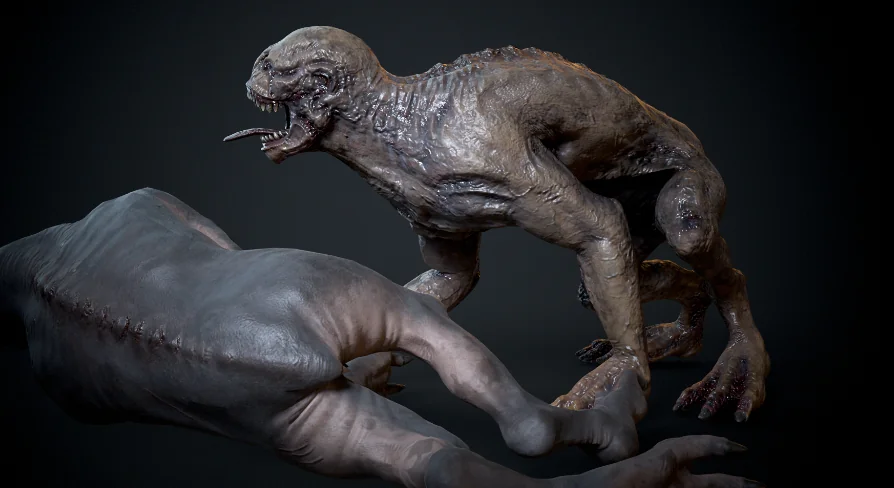
Alien Dog is a low-poly animated character for games and animated films. The set includes project files for Maya, Unreal, and Marmoset, while the Unreal project already carries a customized body, materials, and textures for the character.
A low-poly creature built for animated character work
Alien Dog is a low-poly animated model meant for games and animated films. The character name points directly to a creature design that sits between an animal form and a science-fiction monster, which makes it a natural fit for scenes that need something stranger than a standard dog and less abstract than a fully alien beast.
The model also lands in a very specific visual lane: creature work with a simplified polygon style. That combination keeps the focus on the character shape itself rather than surface complexity. It suits projects that want a readable silhouette and an animated figure that can be placed into a scene without needing to be built from scratch every time.
Project files for Maya, Unreal, and Marmoset
The set includes project files for Maya, Unreal, and Marmoset. That gives the character a multi-software workflow instead of a single locked presentation file, which matters when a project moves between modeling, engine setup, and display.
Maya project files
Unreal project files
Marmoset project files
Having the character available across these environments keeps the workflow centered on the same asset rather than treating each step as a separate build. Maya covers the character side of the pipeline, Unreal places it in the engine, and Marmoset keeps the model in the same package for another project context. Nothing in the set needs to be treated as isolated from the rest; the pieces are already arranged around the same alien dog character.
What is already set up in Unreal
The Unreal Engine project already includes a customized body, materials, and textures for the character. That means the engine-side version is not just a blank import; it already carries character-specific setup that has been adjusted for this model.
For production work, that is the most concrete part of the package. The body is not left in a generic state, and the materials and textures are already tailored to the alien dog. In practice, that makes the Unreal project the most direct starting point for anyone who wants to inspect the character in-engine, review how the surface treatment reads, or continue building the scene around an already prepared creature setup.
The project also sits naturally alongside animation workflow needs. The tags attached to the character include Animation Blueprint, which places the asset in the same general space as Unreal character animation work. Combined with the customized body, materials, and textures, the Unreal project feels aimed at a character pipeline where the model is meant to be handled as part of an animated creature setup rather than as a static prop.
Scenes where the alien dog fits naturally
The clearest uses come from the character’s own naming and tags: beast, zombie, wolf, alien, werewolf, monster, horror, character, and animation blueprint. Those labels point to creature-driven scenes rather than everyday environments. The model belongs in projects that need an odd, threatening, or hybrid animal shape.
That makes the alien dog suitable for game encounters, animated film creatures, and horror or monster scenes where a low-poly style can support a stylized look. The design language also supports a broad range of creature roles. It can read as a beast in one project, a wolf-like figure in another, or an alien monster when the scene leans harder into science-fiction.
Because it is already presented as an animated model, the character is especially relevant when the scene needs movement as well as appearance. A low-poly creature with dedicated project files is easier to place into a production flow that expects animation to be part of the asset rather than an afterthought.
Where it makes the most sense in production
Alien Dog fits best in a production line that needs a creature character ready for modeling work, engine setup, and presentation inside the same package. The Maya, Unreal, and Marmoset files keep the asset tied to practical production tools, while the Unreal project’s customized body, materials, and textures make the in-engine version immediately relevant.
It is a straightforward match for teams or creators working on game characters, animated film creatures, or horror-themed scenes that call for an alien dog, monster dog, or other hybrid beast. The character’s low-poly direction keeps it visually direct, and the included project setup keeps it grounded in a workflow that can move from creation to Unreal without needing to re-establish the character from nothing.
For productions that need a stylized creature with a clear place in a game or animated film pipeline, this alien dog sits in the right zone: low-poly, animated, and already prepared across Maya, Unreal, and Marmoset.
 Characters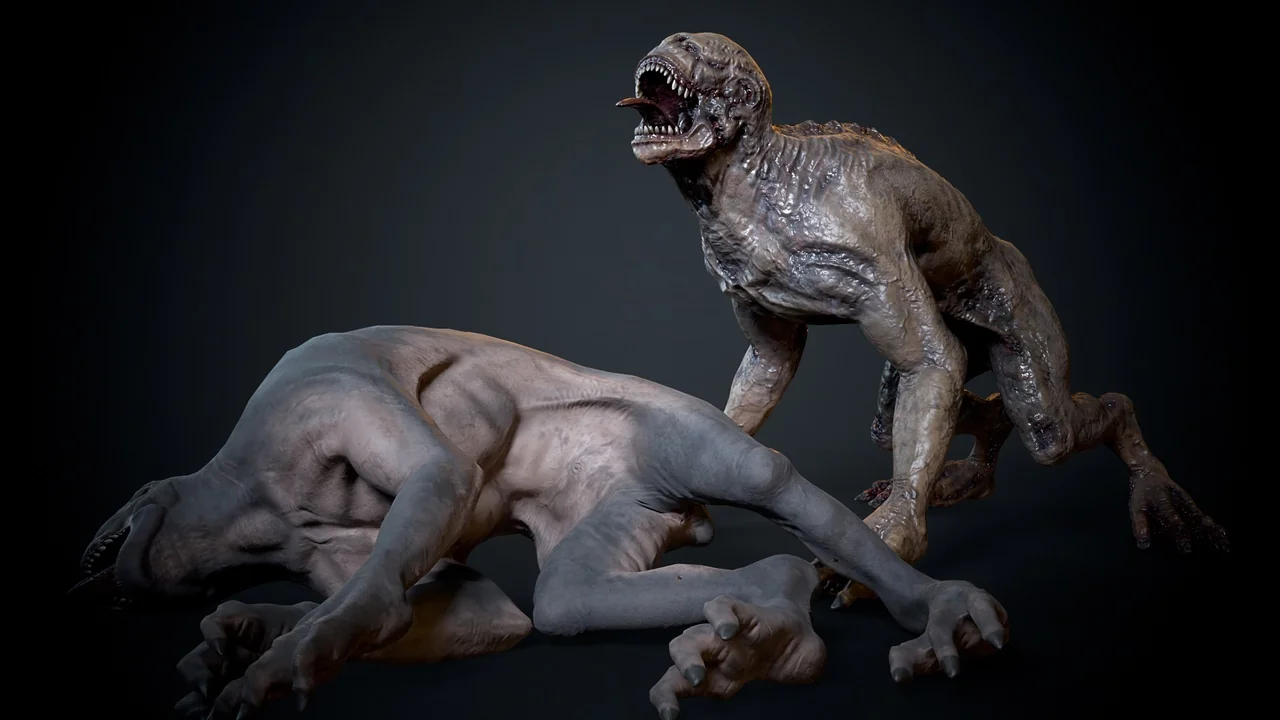
 Characters
 Characters
 Characters