"f813c18d2170b1f6"{"id":"24587","slug":"create-zelda-like-skills-with-c-in-unreal-engine-5-2","title":"Create Zelda-like skills with C++ in unreal engine 5","category":"Unreal Engine","engine":"Video language: English","assetVersion":"Video language: English","engineVersion":"File content: video + supporting files + English subtitles","tag":"Unreal Engine","accent":"blue","visual":"animation","summary":"This Unreal Engine 5 C++ course focuses on the problem of keeping skills, movement states, and interactable scene actors in one working system. It walks through a Zelda-like setup with named abilities, stamina-based locomotion, and blueprint communication.","platform":"Unreal Engine","publishedAt":"2026-04-15T14:07:16.000Z","updatedAt":"2026-04-20T06:12:42.000Z","sourceNotes":[],"fileContents":[],"compatibility":["Unreal Engine","Video language: English","File content: video + supporting files + English subtitles"],"featuredImage":{"alt":"Create Zelda-like skills with C++ in unreal engine 5","src":"https://3dcghub.com/wp-content/uploads/2026/04/4a5e864b1691_6210843_6075.webp"},"hasDownloadLink":true,"downloads":0,"terms":[{"taxonomy":"category","slug":"tutoriallibrary-unrealengine","name":"Unreal Engine"},{"taxonomy":"post_tag","slug":"environment","name":"Environment"},{"taxonomy":"post_tag","slug":"game-systems","name":"Game Systems"},{"taxonomy":"post_tag","slug":"unreal-engine-5","name":"Unreal Engine 5"}],"galleryImages":[],"accessPanel":{"kind":"video-resource","title":"Access this video resource","eyebrow":"Free Download","message":"Log in or create a free account to start your download.","fileName":"Create Zeldar-like skills with C in unreal engine 5.rar","safetyNote":"All resources are 100% manually reviewed to eliminate all risks.","actionLabel":"Download Free","resourceType":"Video package"},"contentHtml":"\u003ch2\u003eSetting up movement states before the skills stack\u003c/h2\u003e\u003cp\u003eThis Unreal Engine 5 C++ course tackles a practical problem in skill-heavy third-person projects: keeping locomotion, abilities, and interactable objects organized instead of scattering the logic across the project. It runs for 8h 10m, sits at an intermediate level, and stays focused on designing skill and locomotion management in C++.\u003c/p\u003e\u003cp\u003eThe workflow begins with project setup and basic locomotion states, then moves into a skills management framework. From there, the movement side is handled with sprint, gliding, exhausted, and normal states, all tied to a stamina system so the characterâs behavior stays in one connected flow rather than becoming a set of isolated cases.\u003c/p\u003e\u003ch2\u003eBuilding a skill framework for named abilities\u003c/h2\u003e\u003cp\u003eA large part of the material is spent on creating a framework that can handle several abilities without turning the project into a collection of one-off scripts. The course walks through a powerful skill system and then applies it to specific abilities that match a Zelda-like style of play.\u003c/p\u003e\u003cul\u003e\u003cli\u003eRemote bomb\u003c/li\u003e\u003cli\u003eMagnesis\u003c/li\u003e\u003cli\u003eIce actor\u003c/li\u003e\u003cli\u003eStasis\u003c/li\u003e\u003c/ul\u003e\u003cp\u003eThe curriculum also includes five skills creation, which keeps the work anchored in actual implementation rather than staying at the level of abstract architecture. The named abilities show the kind of mechanics the framework is expected to support: different actions can share the same management structure while still behaving as separate skills inside the project.\u003c/p\u003e\u003ch2\u003eScene objects and UI that follow the gameplay\u003c/h2\u003e\u003cp\u003eThe project does not stop at the player character. A robust and neat UI system is part of the package for multiple gameplay mechanical actors, including wind tunnel, pressure plate, pickable object, breakable wall, and skill selection. That makes the system relevant for scenes where the player needs to read the world and choose the right action in response.\u003c/p\u003e\u003cp\u003eThese mechanical actors are the kind of pieces that give a third-person puzzle game its structure. When a wind tunnel, a pressure plate, or a breakable wall has to work together with skill choice, the UI and the underlying gameplay logic need to stay aligned. This course keeps those elements in the same conversation, which is what makes the workflow useful for a project with several layered interactions rather than a single mechanic.\u003c/p\u003e\u003ch2\u003eKeeping C++ and Blueprint in the same workflow\u003c/h2\u003e\u003cp\u003eAnother concrete part of the material is communication between C++ and blueprint. That link matters because the project is not framed as a purely code-side exercise or a purely visual one; the logic needs to move between the two cleanly so gameplay behavior can be managed without splitting the system apart.\u003c/p\u003e\u003cp\u003eThe curriculum order reflects that approach: setup project and basic locomotion states, skills management framework, five skills creation, other gameplay mechanical actors, and a bonus section. The flow is direct and task-based, which makes it easier to follow the path from movement foundations into the ability system and then into the scene objects that react to it.\u003c/p\u003e\u003ch2\u003eWhere this fits in a third-person puzzle project\u003c/h2\u003e\u003cp\u003eThe target audience is straightforward: learners who want to build a project with multiple skills, apply C++ knowledge to a game project, or create a Zelda-like third-person puzzle game. The material is a fit when the project needs stamina-based movement, named abilities, and interactable objects to work together under one gameplay structure.\u003c/p\u003e\u003cp\u003eThat makes it useful for a production path where movement rules, skill selection, and puzzle-facing actors all need to be established in the same Unreal Engine 5 workflow. If the goal is to keep those systems connected from the start, this is the kind of intermediate C++ setup that matches that need.\u003c/p\u003e\n\n\u003ch2\u003eExplore Similar Assets\u003c/h2\u003e\n\u003cul\u003e\n\u003cli\u003e\u003ca href=\"https://3dcghub.com/make-a-2d-action-platformer-in-unreal-engine-5/\" title=\"Make a 2D Action Platformer in Unreal Engine 5\"\u003eMake a 2D Action Platformer in Unreal Engine 5\u003c/a\u003e\u003c/li\u003e\n\u003cli\u003e\u003ca href=\"https://3dcghub.com/master-unreal-engine-5-advanced-door-systems-blueprints/\" title=\"Master Unreal Engine 5 Advanced Door Systems Blueprints\"\u003eMaster Unreal Engine 5 Advanced Door Systems Blueprints\u003c/a\u003e\u003c/li\u003e\n\u003cli\u003e\u003ca href=\"https://3dcghub.com/the-ultimate-2d-top-down-unreal-engine-course/\" title=\"The Ultimate 2D Top Down Unreal Engine Course\"\u003eThe Ultimate 2D Top Down Unreal Engine Course\u003c/a\u003e\u003c/li\u003e\n\u003cli\u003e\u003ca href=\"https://3dcghub.com/unreal-engine-5-c-make-your-own-action-combat-game/\" title=\"Unreal Engine 5 C++: Make Your Own Action Combat Game\"\u003eUnreal Engine 5 C++: Make Your Own Action Combat Game\u003c/a\u003e\u003c/li\u003e\n\u003cli\u003e\u003ca href=\"https://3dcghub.com/unreal-engine-5-for-beginners-create-your-first-game/\" title=\"Unreal Engine 5 for Beginners – Create your first game\"\u003eUnreal Engine 5 for Beginners – Create your first game\u003c/a\u003e\u003c/li\u003e\n\u003c/ul\u003e","contentTextLength":4039,"navigation":{"current":1964,"total":3651,"previous":{"id":"24593","slug":"niagara-beginners-to-advanced-in-unreal-engine-5","title":"Niagara Beginners to advanced in Unreal Engine 5","category":"Unreal Engine","platform":"Unreal Engine","updatedAt":"2026-04-20T06:12:42.000Z"},"next":{"id":"24584","slug":"main-menus-beginner-class-unreal-engine-5","title":"Main Menus Beginner Class - Unreal Engine 5","category":"Unreal Engine","platform":"Unreal Engine","updatedAt":"2026-04-20T06:12:42.000Z"}},"relatedResources":[{"id":"24590","slug":"create-zelda-like-skills-with-c-in-unreal-engine-5","title":"Create Zelda-like skills with C++ in unreal engine 5","category":"Unreal Engine","engine":"Video language: English","assetVersion":"Video language: English","engineVersion":"File content: video + supporting files + English subtitles","tag":"Unreal Engine","accent":"blue","visual":"character","summary":"This Unreal Engine 5 course focuses on a skill framework and locomotion state handling in C++, with five gameplay skills, stamina states, and supporting UI. It also covers communication between C++ and Blueprint for third-person puzzle projects.","platform":"Unreal Engine","publishedAt":"2026-04-15T14:06:48.000Z","updatedAt":"2026-04-20T06:12:43.000Z","sourceNotes":[],"fileContents":[],"compatibility":["Unreal Engine","Video language: English","File content: video + supporting files + English subtitles"],"featuredImage":{"alt":"Create Zelda-like skills with C++ in unreal engine 5","src":"https://3dcghub.com/wp-content/uploads/2026/04/4a5e864b1691_6210843_6075-1.webp"},"hasDownloadLink":true,"downloads":0},{"id":"1001157","slug":"unreal-engine-5-create-and-publish-a-3d-action-mobile-game","title":"Unreal Engine 5: Create and Publish a 3D Action Mobile Game","category":"Unreal Engine","engine":"File Content: video + English subtitles","assetVersion":"Video Language: English","engineVersion":"File Content: video + English subtitles","tag":"Unreal Engine","accent":"blue","visual":"mech","summary":"Learn to create a Sekiro-like melee combat framework, build advanced AI, optimize performance, and publish to Google Play using Unreal Engine 5.","platform":"Unreal Engine","publishedAt":"2026-09-11T01:53:32.696Z","updatedAt":"2026-09-11T01:53:32.696Z","sourceNotes":[],"fileContents":[],"compatibility":["Unreal Engine","Video Language: English","File Content: video + English subtitles"],"featuredImage":{"alt":"Unreal Engine 5: Create and Publish a 3D Action Mobile Game","src":"/wp-content/uploads/published/2026/09/145b4cf1b3c1-4900408-8371-2-4eb752900c.webp"},"hasDownloadLink":true,"downloads":0},{"id":"1000695","slug":"unreal-engine-5-create-a-top-down-2d-survivors-style-game","title":"Unreal Engine 5: Create a top-down 2D survivors style game","category":"Unreal Engine","engine":"File Content: video + English subtitles","assetVersion":"Video Language: English","engineVersion":"File Content: video + English subtitles","tag":"Unreal Engine","accent":"blue","visual":"mech","summary":"Intermediate Unreal Engine 5 course teaching top-down 2D roguelike development with Blueprints, pooling systems, skill modules, shop mechanics, and real-time le","platform":"Unreal Engine","publishedAt":"2026-07-23T12:33:28.920Z","updatedAt":"2026-07-23T12:33:28.920Z","sourceNotes":[],"fileContents":[],"compatibility":["Unreal Engine","Video Language: English","File Content: video + English subtitles"],"featuredImage":{"alt":"Unreal Engine 5: Create a top-down 2D survivors style game","src":"/wp-content/uploads/published/2026/07/2ec25d9d06f4-5653334-0375-8-7d5dfb7cd3.webp"},"hasDownloadLink":true,"downloads":0}]}
Unreal Engine
Create Zelda-like skills with C++ in unreal engine 5
This Unreal Engine 5 C++ course focuses on the problem of keeping skills, movement states, and interactable scene actors in one working system. It walks through a Zelda-like setup with named abilities, stamina-based locomotion, and blueprint communication.
Category:Unreal EnginePlatform: Unreal EngineVideo language: EnglishFile content: video + supporting files + English subtitlesPublished: Apr 15, 2026Updated: Apr 20, 2026
Unreal Engine
Resource overview
Setting up movement states before the skills stack
This Unreal Engine 5 C++ course tackles a practical problem in skill-heavy third-person projects: keeping locomotion, abilities, and interactable objects organized instead of scattering the logic across the project. It runs for 8h 10m, sits at an intermediate level, and stays focused on designing skill and locomotion management in C++.
The workflow begins with project setup and basic locomotion states, then moves into a skills management framework. From there, the movement side is handled with sprint, gliding, exhausted, and normal states, all tied to a stamina system so the characterâs behavior stays in one connected flow rather than becoming a set of isolated cases.
Building a skill framework for named abilities
A large part of the material is spent on creating a framework that can handle several abilities without turning the project into a collection of one-off scripts. The course walks through a powerful skill system and then applies it to specific abilities that match a Zelda-like style of play.
Remote bomb
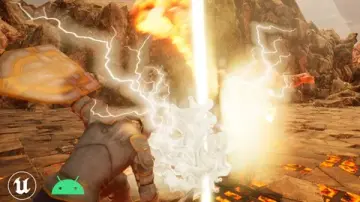
Magnesis
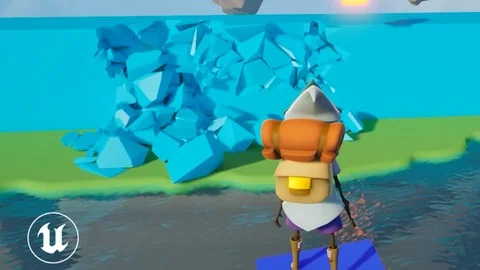
Ice actor
Stasis
The curriculum also includes five skills creation, which keeps the work anchored in actual implementation rather than staying at the level of abstract architecture. The named abilities show the kind of mechanics the framework is expected to support: different actions can share the same management structure while still behaving as separate skills inside the project.
Scene objects and UI that follow the gameplay
The project does not stop at the player character. A robust and neat UI system is part of the package for multiple gameplay mechanical actors, including wind tunnel, pressure plate, pickable object, breakable wall, and skill selection. That makes the system relevant for scenes where the player needs to read the world and choose the right action in response.
These mechanical actors are the kind of pieces that give a third-person puzzle game its structure. When a wind tunnel, a pressure plate, or a breakable wall has to work together with skill choice, the UI and the underlying gameplay logic need to stay aligned. This course keeps those elements in the same conversation, which is what makes the workflow useful for a project with several layered interactions rather than a single mechanic.
Keeping C++ and Blueprint in the same workflow
Another concrete part of the material is communication between C++ and blueprint. That link matters because the project is not framed as a purely code-side exercise or a purely visual one; the logic needs to move between the two cleanly so gameplay behavior can be managed without splitting the system apart.
The curriculum order reflects that approach: setup project and basic locomotion states, skills management framework, five skills creation, other gameplay mechanical actors, and a bonus section. The flow is direct and task-based, which makes it easier to follow the path from movement foundations into the ability system and then into the scene objects that react to it.
Where this fits in a third-person puzzle project
The target audience is straightforward: learners who want to build a project with multiple skills, apply C++ knowledge to a game project, or create a Zelda-like third-person puzzle game. The material is a fit when the project needs stamina-based movement, named abilities, and interactable objects to work together under one gameplay structure.
That makes it useful for a production path where movement rules, skill selection, and puzzle-facing actors all need to be established in the same Unreal Engine 5 workflow. If the goal is to keep those systems connected from the start, this is the kind of intermediate C++ setup that matches that need.
 Unreal Engine
 Unreal Engine
 Unreal Engine
 Unreal Engine