"f813c18d2170b1f6"{"id":"24575","slug":"the-ultimate-2d-top-down-unreal-engine-course","title":"The Ultimate 2D Top Down Unreal Engine Course","category":"Unreal Engine","engine":"Video language: English","assetVersion":"Video language: English","engineVersion":"File content: video + supporting files + English subtitles","tag":"Unreal Engine","accent":"blue","visual":"audio","summary":"This Unreal Engine 5 course focuses on Paper 2D and PaperZD for building 2D top-down games and 2D/3D hybrid top-down projects. It moves through Paper 2D basics, three project builds, Sequencer cutscenes, dialogue systems, and Blueprint usage from the basics...","platform":"Unreal Engine","publishedAt":"2026-04-15T13:45:13.000Z","updatedAt":"2026-04-20T06:12:44.000Z","sourceNotes":[],"fileContents":[],"compatibility":["Unreal Engine","Video language: English","File content: video + supporting files + English subtitles"],"featuredImage":{"alt":"The Ultimate 2D Top Down Unreal Engine Course","src":"https://3dcghub.com/wp-content/uploads/2026/04/e485d7881def_6155939_4d44.webp"},"hasDownloadLink":true,"downloads":2,"terms":[{"taxonomy":"category","slug":"tutoriallibrary-unrealengine","name":"Unreal Engine"},{"taxonomy":"post_tag","slug":"characters","name":"Characters"},{"taxonomy":"post_tag","slug":"environment","name":"Environment"},{"taxonomy":"post_tag","slug":"unreal-engine-5","name":"Unreal Engine 5"}],"galleryImages":[],"accessPanel":{"kind":"video-resource","title":"Access this video resource","eyebrow":"Free Download","message":"Log in or create a free account to start your download.","fileName":"The Ultimate 2D Top Down Unreal Engine Course.rar","safetyNote":"All resources are 100% manually reviewed to eliminate all risks.","actionLabel":"Download Free","resourceType":"Video package"},"contentHtml":"\u003ch2\u003eTop-down 2D work in Unreal Engine 5\u003c/h2\u003e\n\u003cp\u003eThis course is built for projects that need a top-down view and a 2D workflow inside Unreal Engine 5. It focuses on Paper 2D and PaperZD, making it relevant when the goal is to build 2D top-down games or combine 2D sprites with 3D backgrounds in the same scene. That makes it a practical fit for game setups where the camera stays overhead, the character presentation stays sprite-based, and the world still needs depth from 3D environments.\u003c/p\u003e\n\u003cp\u003eThe course runs for 17h 3m and is marked for all levels, but the audience is clearly centered on beginner and intermediate Unreal Engine developers who want to make top-down 2D games. Instead of treating the topic as a quick demo, it moves through the tools and systems that show up in real production work: basic Unreal Engine 5 knowledge, Paper 2D fundamentals, project-based practice, and workflow pieces that help a top-down game feel complete.\u003c/p\u003e \u003ch2\u003eFrom Paper 2D basics to hybrid scenes\u003c/h2\u003e\n\u003cp\u003eThe structure starts with Course Orientation, an Unreal Engine 5 Crash Course, and Paper 2D Basics before moving into larger builds. That opening matters because it places the course in a learning path rather than dropping straight into a finished project. For developers who are new to top-down 2D work in Unreal Engine, that order gives space to understand the engine first, then the Paper 2D layer, then the gameplay-specific projects.\u003c/p\u003e\n\u003cp\u003eOne of the clearest strengths here is the hybrid direction. The course teaches how to mix 2D sprites with 3D backgrounds to create 2D/3D hybrid games. In practice, that means it is not limited to purely flat presentation. It addresses the kind of production where characters, effects, or other foreground elements are kept in 2D while the background scene uses 3D assets. For a top-down game, that can be the difference between a simple sprite setup and a more layered scene presentation.\u003c/p\u003e\n\u003cp\u003eThe course also says it covers best practices for 2D and 2D/3D hybrid games in Unreal Engine. That keeps the focus on usable workflow decisions rather than isolated features. The tools are introduced in a way that supports actual project building, not just experimentation inside a blank test level.\u003c/p\u003e \u003ch2\u003eThree project builds that put the tools in context\u003c/h2\u003e\n\u003cp\u003eThe curriculum is organized around three main projects: Monster World, Dungeon Adventure, and Hybrid RPG. Those project names show the range of settings the course is trying to cover, with different art styles and different top-down game structures. Rather than learning only one narrow example, developers get repeated practice through separate builds that each use the same core engine knowledge in a different way.\u003c/p\u003e\n\u003cp\u003eThat kind of structure is useful in a production workflow because it mirrors how top-down games often evolve. A project may start with basic movement and camera framing, then move into level presentation, dialogue, cutscenes, and scene-to-scene structure. Working through multiple projects helps connect those pieces to different visual directions. The course explicitly says the learner will create three top-down games with various art styles, which makes the curriculum feel tied to actual game-building stages instead of isolated tutorials.\u003c/p\u003e\n\u003cp\u003eThe later project name, Hybrid RPG, points directly at the courseâs hybrid focus. It brings together the 2D and 3D ideas already introduced earlier, which is useful for developers who want to see how those elements fit in a more RPG-shaped workflow.\u003c/p\u003e \u003ch2\u003eSequencer, dialogue, and Blueprints inside the workflow\u003c/h2\u003e\n\u003cp\u003eBeyond the scene setup, the course includes systems that often become necessary once a top-down game starts to feel like a real project. It covers RPG cutscenes using Sequencer, a dialogue system built with Data Tables and UI Widgets, and Unreal Engine Blueprints from the basics up to advanced usage. Those topics are not extra decoration; they are the pieces that give the project structure once movement and rendering are already in place.\u003c/p\u003e\n\u003cul\u003e \u003cli\u003e\u003cstrong\u003eSequencer\u003c/strong\u003e For RPG cutscenes\u003c/li\u003e \u003cli\u003e\u003cstrong\u003eData Tables\u003c/strong\u003e And \u003cstrong\u003eUI Widgets\u003c/strong\u003e For dialogue systems\u003c/li\u003e \u003cli\u003e\u003cstrong\u003eBlueprints\u003c/strong\u003e From basic use to advanced use\u003c/li\u003e \u003cli\u003e\u003cstrong\u003eBest practices\u003c/strong\u003e For 2D and hybrid top-down games\u003c/li\u003e\n\u003c/ul\u003e\n\u003cp\u003eThis mix is important because it connects the visual side of a top-down game with the interactive side. A scene can look good with sprites and 3D backgrounds, but it still needs cutscenes, dialogue, and gameplay logic to hold together. The course places those systems alongside the visual workflow instead of separating them into a different track. That makes it easier to see how top-down game development in Unreal Engine 5 moves from scene setup into playable content.\u003c/p\u003e \u003ch2\u003eWhere this course fits in a real development path\u003c/h2\u003e\n\u003cp\u003eThe curriculum order shows a clear path: orientation, Unreal Engine 5 fundamentals, Paper 2D basics, then project work, optional lessons, and a final bonus section called Whatâs next? That shape makes the course suitable for developers who want a guided route through top-down 2D development rather than a scattered collection of isolated lessons. The optional lessons also suggest there is room to go further without forcing every learner through the same path at the same pace.\u003c/p\u003e\n\u003cp\u003eFor anyone starting from the basics, the course gives a controlled entry into Paper 2D and PaperZD inside Unreal Engine 5. For developers who already know some Unreal Engine and want to move into top-down 2D or hybrid RPG-style scenes, it offers a structured way to connect engine basics, project builds, cutscenes, dialogue, and Blueprint usage. That is where it fits best: at the point where a simple top-down prototype needs to grow into something with scene dressing, gameplay systems, and a clearer production workflow.\u003c/p\u003e\n\u003cp\u003eThe practical takeaway is straightforward. If the goal is to build a 2D top-down game, or a 2D/3D hybrid top-down game, in Unreal Engine 5, this course covers the core path from Paper 2D fundamentals through multi-project practice and the systems that make the game playable.\u003c/p\u003e\u003c/p\u003e\n\n\u003ch2\u003eMore From The Same Workflow\u003c/h2\u003e\n\u003cul\u003e\n\u003cli\u003e\u003ca href=\"https://3dcghub.com/unreal-engine-5-c-make-your-own-action-combat-game/\" title=\"Unreal Engine 5 C++: Make Your Own Action Combat Game\"\u003eUnreal Engine 5 C++: Make Your Own Action Combat Game\u003c/a\u003e\u003c/li\u003e\n\u003cli\u003e\u003ca href=\"https://3dcghub.com/unreal-engine-5-for-beginners-create-your-first-game/\" title=\"Unreal Engine 5 for Beginners – Create your first game\"\u003eUnreal Engine 5 for Beginners – Create your first game\u003c/a\u003e\u003c/li\u003e\n\u003cli\u003e\u003ca href=\"https://3dcghub.com/unreal-engine-5-one-course-solution-for-material/\" title=\"Unreal Engine 5: One Course Solution For Material\"\u003eUnreal Engine 5: One Course Solution For Material\u003c/a\u003e\u003c/li\u003e\n\u003cli\u003e\u003ca href=\"https://3dcghub.com/unreal-engine-5-c-advanced-action-rpg/\" title=\"Unreal Engine 5 C++: Advanced Action RPG\"\u003eUnreal Engine 5 C++: Advanced Action RPG\u003c/a\u003e\u003c/li\u003e\n\u003cli\u003e\u003ca href=\"https://3dcghub.com/unreal-engine-5-one-course-solution-for-niagara-vfx/\" title=\"Unreal Engine 5: One Course Solution For Niagara VFX\"\u003eUnreal Engine 5: One Course Solution For Niagara VFX\u003c/a\u003e\u003c/li\u003e\n\u003c/ul\u003e","contentTextLength":6227,"navigation":{"current":1954,"total":3651,"previous":{"id":"24545","slug":"build-a-poker-game-in-unity-complete-development-course","title":"Build a Poker Game in Unity: Complete Development Course","category":"Unity","platform":"Unity","updatedAt":"2026-04-20T06:12:45.000Z"},"next":{"id":"24572","slug":"unreal-engine-5-c-make-your-own-action-combat-game","title":"Unreal Engine 5 C++: Make Your Own Action Combat Game","category":"Unreal Engine","platform":"Unreal Engine","updatedAt":"2026-04-20T06:12:44.000Z"}},"relatedResources":[{"id":"24500","slug":"c-fundamentals-game-programming-for-beginners","title":"C++ Fundamentals: Game Programming For Beginners","category":"Unreal Engine","engine":"Video language: English","assetVersion":"Video language: English","engineVersion":"File content: video + supporting files + English subtitles","tag":"Unreal Engine","accent":"cyan","visual":"city","summary":"This beginner course focuses on making games in pure C++ with Raylib. It moves from variables, loops, and if-statements into object-oriented programming, debugging, clean coding, and 2D character animation through a sequence of small projects.","platform":"Unity","publishedAt":"2026-04-14T14:55:19.000Z","updatedAt":"2026-04-20T06:12:47.000Z","sourceNotes":[],"fileContents":[],"compatibility":["Unity","Video language: English","File content: video + supporting files + English subtitles"],"featuredImage":{"alt":"C++ Fundamentals: Game Programming For Beginners","src":"https://3dcghub.com/wp-content/uploads/2026/04/7307b27664a0_3926772_101e_4.webp"},"hasDownloadLink":true,"downloads":1},{"id":"24581","slug":"make-a-2d-action-platformer-in-unreal-engine-5","title":"Make a 2D Action Platformer in Unreal Engine 5","category":"Unreal Engine","engine":"Video language: English","assetVersion":"Video language: English","engineVersion":"File content: video + supporting files + English subtitles","tag":"Unreal Engine","accent":"blue","visual":"audio","summary":"A side-scrolling action game in Unreal Engine 5 needs responsive movement, readable enemy behavior, and levels that support fast platforming. This training walks through that workflow with Paper 2D, from basics and Blueprints to combat, AI, UI, and level cr...","platform":"Unreal Engine","publishedAt":"2026-04-15T13:51:52.000Z","updatedAt":"2026-04-20T06:12:43.000Z","sourceNotes":[],"fileContents":[],"compatibility":["Unreal Engine","Video language: English","File content: video + supporting files + English subtitles"],"featuredImage":{"alt":"Make a 2D Action Platformer in Unreal Engine 5","src":"https://3dcghub.com/wp-content/uploads/2026/04/269b76c038ae_5706222_3889.webp"},"hasDownloadLink":true,"downloads":1},{"id":"24568","slug":"unreal-engine-5-for-beginners-create-your-first-game","title":"Unreal Engine 5 for Beginners - Create your first game","category":"Unreal Engine","engine":"Video language: English","assetVersion":"Video language: English","engineVersion":"File content: video + supporting files + English subtitles","tag":"Unreal Engine","accent":"blue","visual":"city","summary":"This beginner course walks through Unreal Engine 5 basics, then moves into Blueprints, character animation, UI widgets, and the steps needed to create a real 3D game. It is aimed at beginner game developers who want a practical starting point.","platform":"Unreal Engine","publishedAt":"2026-04-15T13:30:22.000Z","updatedAt":"2026-04-20T06:12:44.000Z","sourceNotes":[],"fileContents":[],"compatibility":["Unreal Engine","Video language: English","File content: video + supporting files + English subtitles"],"featuredImage":{"alt":"Unreal Engine 5 for Beginners - Create your first game","src":"https://3dcghub.com/wp-content/uploads/2026/04/d35b769681b1_5098972_a916_5.webp"},"hasDownloadLink":true,"downloads":0}]}
Unreal Engine
The Ultimate 2D Top Down Unreal Engine Course
This Unreal Engine 5 course focuses on Paper 2D and PaperZD for building 2D top-down games and 2D/3D hybrid top-down projects. It moves through Paper 2D basics, three project builds, Sequencer cutscenes, dialogue systems, and Blueprint usage from the basics...
Category:Unreal EnginePlatform: Unreal EngineVideo language: EnglishFile content: video + supporting files + English subtitlesPublished: Apr 15, 2026Updated: Apr 20, 2026
Unreal Engine
Resource overview
Top-down 2D work in Unreal Engine 5
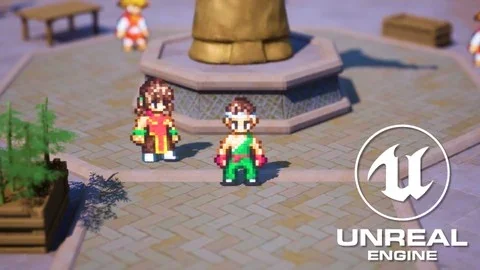
This course is built for projects that need a top-down view and a 2D workflow inside Unreal Engine 5. It focuses on Paper 2D and PaperZD, making it relevant when the goal is to build 2D top-down games or combine 2D sprites with 3D backgrounds in the same scene. That makes it a practical fit for game setups where the camera stays overhead, the character presentation stays sprite-based, and the world still needs depth from 3D environments.
The course runs for 17h 3m and is marked for all levels, but the audience is clearly centered on beginner and intermediate Unreal Engine developers who want to make top-down 2D games. Instead of treating the topic as a quick demo, it moves through the tools and systems that show up in real production work: basic Unreal Engine 5 knowledge, Paper 2D fundamentals, project-based practice, and workflow pieces that help a top-down game feel complete.
From Paper 2D basics to hybrid scenes
The structure starts with Course Orientation, an Unreal Engine 5 Crash Course, and Paper 2D Basics before moving into larger builds. That opening matters because it places the course in a learning path rather than dropping straight into a finished project. For developers who are new to top-down 2D work in Unreal Engine, that order gives space to understand the engine first, then the Paper 2D layer, then the gameplay-specific projects.
One of the clearest strengths here is the hybrid direction. The course teaches how to mix 2D sprites with 3D backgrounds to create 2D/3D hybrid games. In practice, that means it is not limited to purely flat presentation. It addresses the kind of production where characters, effects, or other foreground elements are kept in 2D while the background scene uses 3D assets. For a top-down game, that can be the difference between a simple sprite setup and a more layered scene presentation.
The course also says it covers best practices for 2D and 2D/3D hybrid games in Unreal Engine. That keeps the focus on usable workflow decisions rather than isolated features. The tools are introduced in a way that supports actual project building, not just experimentation inside a blank test level.
Three project builds that put the tools in context
The curriculum is organized around three main projects: Monster World, Dungeon Adventure, and Hybrid RPG. Those project names show the range of settings the course is trying to cover, with different art styles and different top-down game structures. Rather than learning only one narrow example, developers get repeated practice through separate builds that each use the same core engine knowledge in a different way.
That kind of structure is useful in a production workflow because it mirrors how top-down games often evolve. A project may start with basic movement and camera framing, then move into level presentation, dialogue, cutscenes, and scene-to-scene structure. Working through multiple projects helps connect those pieces to different visual directions. The course explicitly says the learner will create three top-down games with various art styles, which makes the curriculum feel tied to actual game-building stages instead of isolated tutorials.
The later project name, Hybrid RPG, points directly at the courseâs hybrid focus. It brings together the 2D and 3D ideas already introduced earlier, which is useful for developers who want to see how those elements fit in a more RPG-shaped workflow.
Sequencer, dialogue, and Blueprints inside the workflow
Beyond the scene setup, the course includes systems that often become necessary once a top-down game starts to feel like a real project. It covers RPG cutscenes using Sequencer, a dialogue system built with Data Tables and UI Widgets, and Unreal Engine Blueprints from the basics up to advanced usage. Those topics are not extra decoration; they are the pieces that give the project structure once movement and rendering are already in place.
Sequencer For RPG cutscenes
Data Tables And UI Widgets For dialogue systems
Blueprints From basic use to advanced use
Best practices For 2D and hybrid top-down games
This mix is important because it connects the visual side of a top-down game with the interactive side. A scene can look good with sprites and 3D backgrounds, but it still needs cutscenes, dialogue, and gameplay logic to hold together. The course places those systems alongside the visual workflow instead of separating them into a different track. That makes it easier to see how top-down game development in Unreal Engine 5 moves from scene setup into playable content.
Where this course fits in a real development path
The curriculum order shows a clear path: orientation, Unreal Engine 5 fundamentals, Paper 2D basics, then project work, optional lessons, and a final bonus section called Whatâs next? That shape makes the course suitable for developers who want a guided route through top-down 2D development rather than a scattered collection of isolated lessons. The optional lessons also suggest there is room to go further without forcing every learner through the same path at the same pace.
For anyone starting from the basics, the course gives a controlled entry into Paper 2D and PaperZD inside Unreal Engine 5. For developers who already know some Unreal Engine and want to move into top-down 2D or hybrid RPG-style scenes, it offers a structured way to connect engine basics, project builds, cutscenes, dialogue, and Blueprint usage. That is where it fits best: at the point where a simple top-down prototype needs to grow into something with scene dressing, gameplay systems, and a clearer production workflow.
The practical takeaway is straightforward. If the goal is to build a 2D top-down game, or a 2D/3D hybrid top-down game, in Unreal Engine 5, this course covers the core path from Paper 2D fundamentals through multi-project practice and the systems that make the game playable.
 Unreal Engine
 Unreal Engine
 Unreal Engine
 Unreal Engine