"c68a05d5e51405b3"{"id":"1001112","slug":"roman-street-environment-roman-street-street-ancient-historical-vintage-3d","title":"Roman Street Environment ( Roman Street Street Ancient Historical Vintage 3D )","category":"Historical","engine":"5.1+","assetVersion":"","engineVersion":"Engine Version: 5.1+","tag":"Historical","accent":"blue","visual":"city","summary":"Roman Street Environment provides 168 unique game-ready meshes for Unreal Engine, with Lumen, Nanite, plus a bundled Ultimate Level Art Tool.","platform":"Unreal Engine","publishedAt":"2026-09-07T11:44:59.285Z","updatedAt":"2026-09-07T11:44:59.285Z","sourceNotes":[],"fileContents":[],"compatibility":["Unreal Engine","Engine Version: 5.1+"],"featuredImage":{"alt":"Roman Street Environment ( Roman Street Street Ancient Historical Vintage 3D )","src":"/wp-content/uploads/published/2026/09/e871fb4b6275-3e30f4f4-148c-4e7e-a29e-2c907bd682e5-49178064b6.webp"},"hasDownloadLink":true,"downloads":1,"terms":[{"taxonomy":"category","slug":"historical","name":"Historical"}],"galleryImages":[{"src":"/wp-content/uploads/published/2026/09/92fffad6a9d4-ed33e247-2820-4416-b81d-75e0ff0348b1-9983bab7ea.webp","alt":"Roman Street Environment ( Roman Street Street Ancient Historical Vintage 3D )"},{"src":"/wp-content/uploads/published/2026/09/44c5ca95474c-95fb54ec-d494-4d05-a8f4-26974fe3ed73-248d6151f8.webp","alt":"Roman Street Environment ( Roman Street Street Ancient Historical Vintage 3D )"},{"src":"/wp-content/uploads/published/2026/09/3816d157a704-b4f2385e-19d5-440c-9868-7eab35c3125b-bd9c29e4f1.webp","alt":"Roman Street Environment ( Roman Street Street Ancient Historical Vintage 3D )"},{"src":"/wp-content/uploads/published/2026/09/961d49ebedae-b5cb6161-7640-47ae-b341-451f6d5f8f8b-7dfb33e176.webp","alt":"Roman Street Environment ( Roman Street Street Ancient Historical Vintage 3D )"},{"src":"/wp-content/uploads/published/2026/09/8e1d6a986f5b-26467bce-e956-45b8-b2e3-b6e7dc10934f-fc52b82807.webp","alt":"Roman Street Environment ( Roman Street Street Ancient Historical Vintage 3D )"},{"src":"/wp-content/uploads/published/2026/09/a6306c91ce58-ed24e1d6-c653-46ef-978e-bf435d9e0db1-cfb9aa1df6.webp","alt":"Roman Street Environment ( Roman Street Street Ancient Historical Vintage 3D )"},{"src":"/wp-content/uploads/published/2026/09/027df79a1d80-f148f19a-46ac-4afa-bae2-53f510889714-7a563fee46.webp","alt":"Roman Street Environment ( Roman Street Street Ancient Historical Vintage 3D )"},{"src":"/wp-content/uploads/published/2026/09/865cfb72f71b-d79ed8ef-e767-4a5b-ab2b-d9347b2af926-cb9eb37f7e.webp","alt":"Roman Street Environment ( Roman Street Street Ancient Historical Vintage 3D )"},{"src":"/wp-content/uploads/published/2026/09/83a180e60945-4f85af68-11f8-4e01-85f9-4cea8b07b7d3-dc1d7d4263.webp","alt":"Roman Street Environment ( Roman Street Street Ancient Historical Vintage 3D )"},{"src":"/wp-content/uploads/published/2026/09/80ec23b40377-45549977-a8e5-46c2-93e3-081c186f60ea-4b5270e22d.webp","alt":"Roman Street Environment ( Roman Street Street Ancient Historical Vintage 3D )"}],"accessPanel":{"kind":"resource","title":"Download this resource","eyebrow":"Free Download","message":"Log in or create a free account to start your download.","fileName":"RomanStreet51.7z","safetyNote":"Resources are manually reviewed before listing to improve quality and reduce obvious risks.","actionLabel":"Download Free","resourceType":"Resource archive"},"contentHtml":"\u003cp\u003eAn environment pack named Roman Street Environment is expected to cover more than a single alley. This Unreal Engine kit answers with 168 unique meshes. These meshes correspond to every asset presented in the pack’s showcase, so the visual pitch and the actual content are designed to match.\u003c/p\u003e\u003cp\u003eThe pack is structured through two stated quality targets: a high-quality look with a good level of detail, and optimization that keeps assets ready for game projects. Those targets affect how the meshes should integrate into real-time scenes, especially when Lumen and Nanite enter the workflow.\u003c/p\u003e\u003ch2\u003eOne Roman street, 168 unique meshes\u003c/h2\u003e\u003cp\u003eCounting the mesh list is the most reliable path into a set: 168 unique pieces rather than a few re-skinned props. The total includes every asset shown in the promotional showcase, so environment artists receive the columns, walls, ground elements, and street details without leaving polished visuals unused. The combination of high visual quality and game-ready optimization places the pack between simple whitebox props and pure hero cinematic assets. For a Roman street, this is a practical zone to work in because architecture such as columns and moldings benefits from both solid detail and reliable performance.\u003c/p\u003e\u003cp\u003eBecause the pack is ready for game projects, it can be dropped into a level and further shaped with lighting and material tweaks. The level of detail is meant to hold up in real time, not just in a turntable view. That means walls, stonework, handrails, roads, and the small pieces that make a street feel occupied are all kept within a performance-oriented structure.\u003c/p\u003e\u003ch2\u003eLumen and Nanite are part of the specification\u003c/h2\u003e\u003cp\u003eThe showcase for this environment was produced with Lumen enabled. The package includes Nanite meshes. Lumen gives a real-time global illumination and reflection behavior that matches the bright, bounced light commonly seen in ancient stone plazas. To reproduce the scene exactly as previewed, Lumen should stay on in the final level.\u003c/p\u003e\u003cp\u003eNanite meshes allow high geometric density without the typical draw call and LOD management overhead. This matters for a street environment packed with stone blocks, carved details, and scattered rubble. Small and distant geometry can retain a consistent silhouette. The pack does not claim that every mesh is Nanite; it includes nanite meshes, so mixing a few standard assets alongside Nanite ones is acceptable. Teams can still tune shadow distance and texture streaming to keep a full street block stable.\u003c/p\u003e\u003ch2\u003eInside the kit: Ultimate Level Art Tool\u003c/h2\u003e\u003cp\u003eRoman Street Environment bundles a substantial tool with its static content: Ultimate Level Art Tool, shortened to ULAT. ULAT itself is a modular design development tool. The product provides it as part of the environment, not as a separate one-off. ULAT is meant to make fast, custom modular building possible. It also offers a seamless and distinctive way to populate scenes naturally. For a street kit, that means the artist does not have to snap every element by hand; the tool creates structures and places objects in a way that keeps the layout organic.\u003c/p\u003e\u003cp\u003eThe environment and ULAT are listed as compatible, so connecting the tool to these meshes is a direct workflow rather than an unsupported add-on. A level designer can use ULAT to first construct modular buildings, then dress those buildings with the included Roman street assets. The final distribution of props across the scene can follow ULAT’s population logic instead of requiring laborious manual placement. The developer also states that this product includes ULAT as part of the purchase, and that buyers can receive ULAT by creating a ticket. Once that support step is complete, the tool and the environment operate together.\u003c/p\u003e\u003ch2\u003eFrom Roman forums to abandoned ruins\u003c/h2\u003e\u003cp\u003eThe thematic anchor of the pack is Roman history, classical street layouts, and the visual language of the Roman Empire. Clearly intended subjects include Roman forums, basilicas, bathhouses, columns, stone bridges, city gates, and marketplaces. At the same time, ruins, overgrowth, and abandoned settlements are part of that visual identity. That tension between a living city and a ruin is exactly what a scene artist often needs.\u003c/p\u003e\u003cp\u003eThe same asset base can support a medieval fantasy town with an ancient under-layer, an open-world RPG area filled with classical fragments, or a cinematic reconstruction of a forum. The modeling direction points to grandeur, stonework, and imperial detailing, while the more decayed keywords suggest a pass of broken walls and naturally worn surfaces. It is not a generic tileable street; the pack wants to support storytelling through a specific architectural culture.\u003c/p\u003e\u003ch2\u003ePractical evaluation for a real-time scene\u003c/h2\u003e\u003cp\u003eA team deciding whether to bring the pack into a production should weigh a few practical details. The pack requires the standard level-building routine: placing assets, matching material IDs, setting up lighting, and checking performance. With 168 meshes, there is enough inventory to block out an entire district, but a map still needs layout decisions, terrain blending, and narrative dressing.\u003c/p\u003e\u003cp\u003eThe integration of ULAT is the factor that makes this environment different from a plain mesh collection. The intended workflow is to use ULAT to assemble and populate the street, then switch into shading and lighting tasks with the result in hand. Lumen and Nanite support further tie the experience to Unreal Engine’s current rendering features. For an environment artist or level designer focused on a historical Roman setting, this pack offers both an asset set and a construction system in the same product.\u003c/p\u003e\n\n\u003ch2\u003eRelated Resources Worth Checking\u003c/h2\u003e\n\u003cul\u003e\n\u003cli\u003e\u003ca href=\"https://3dcghub.com/market-street-environment-kit/\" title=\"Market Street Environment Kit\"\u003eMarket Street Environment Kit\u003c/a\u003e\u003c/li\u003e\n\u003cli\u003e\u003ca href=\"https://3dcghub.com/roman-volcanic-temple-ancient-medieval-village-greek-buildings-city-street/\" title=\"Roman Volcanic Temple ( Ancient Medieval Village Greek Buildings City Street )\"\u003eRoman Volcanic Temple ( Ancient Medieval Village Greek Buildings City Street )\u003c/a\u003e\u003c/li\u003e\n\u003cli\u003e\u003ca href=\"https://3dcghub.com/gladiator-arena-environment-kit/\" title=\"Gladiator Arena Environment Kit\"\u003eGladiator Arena Environment Kit\u003c/a\u003e\u003c/li\u003e\n\u003cli\u003e\u003ca href=\"https://3dcghub.com/neptune-s-roman-bath-roman-roman-baths-neptune-roman-medieval-greek-bath-3d/\" title=\"Neptune\u0026#039;s Roman Bath ( Roman Roman Baths Neptune Roman Medieval Greek Bath 3D )\"\u003eNeptune\u0026#039;s Roman Bath ( Roman Roman Baths Neptune Roman Medieval Greek Bath 3D )\u003c/a\u003e\u003c/li\u003e\n\u003cli\u003e\u003ca href=\"https://3dcghub.com/historical-museum-historical-museum-history-museum-environment-3d-ancient/\" title=\"Historical Museum ( Historical Museum History Museum Environment 3D Ancient )\"\u003eHistorical Museum ( Historical Museum History Museum Environment 3D Ancient )\u003c/a\u003e\u003c/li\u003e\n\u003c/ul\u003e","contentTextLength":5967,"navigation":{"current":863,"total":3860,"previous":{"id":"1001113","slug":"science-fiction-valley-town","title":"Science Fiction Valley Town","category":"Sci-Fi","platform":"Unreal Engine","updatedAt":"2026-09-07T11:59:23.919Z"},"next":{"id":"1001111","slug":"post-apocalypse-city-2","title":"Post Apocalypse City","category":"Cities","platform":"Unreal Engine","updatedAt":"2026-09-07T11:32:13.364Z"}},"relatedResources":[{"id":"8407","slug":"market-street-environment-kit","title":"Market Street Environment Kit","category":"Historical","engine":"5.1+","assetVersion":"Engine version: 5.1+","engineVersion":"5.1","tag":"Historical","accent":"blue","visual":"city","summary":"The Market Street Environment Kit provides a versatile collection of modular assets for building vibrant market scenes. Whether you are working on a realistic historical project or a stylized fantasy world, this kit offers everything you need.","platform":"Unreal Engine","publishedAt":"2026-02-23T17:11:56.000Z","updatedAt":"2026-04-19T15:55:28.000Z","sourceNotes":[],"fileContents":[],"compatibility":["Unreal Engine","Engine version: 5.1+"],"featuredImage":{"alt":"Market Street Environment Kit","src":"https://3dcghub.com/wp-content/uploads/2026/02/9b78fb92-baac-4e68-938c-7105f050eb35.webp"},"hasDownloadLink":true,"downloads":0},{"id":"8425","slug":"roman-volcanic-temple-ancient-medieval-village-greek-buildings-city-street","title":"Roman Volcanic Temple ( Ancient Medieval Village Greek Buildings City Street )","category":"Historical","engine":"5.0+","assetVersion":"Engine version: 5.0+","engineVersion":"5.0","tag":"Historical","accent":"blue","visual":"city","summary":"Create breathtaking historical landscapes with this professional environment pack. Featuring 178 unique meshes and advanced modular tools, it is perfectly optimized for modern game engines.","platform":"Unreal Engine","publishedAt":"2026-02-23T17:15:27.000Z","updatedAt":"2026-04-19T15:55:27.000Z","sourceNotes":[],"fileContents":[],"compatibility":["Unreal Engine","Engine version: 5.0+"],"featuredImage":{"alt":"Roman Volcanic Temple ( Ancient Medieval Village Greek Buildings City Street )","src":"https://3dcghub.com/wp-content/uploads/2026/02/8467189c-8385-4dbb-8cdb-da000bb759bb.webp"},"hasDownloadLink":true,"downloads":0},{"id":"1001331","slug":"ancient-mountain-temple-nanite","title":"Ancient Mountain Temple (Nanite)","category":"Historical","engine":"5.2+","assetVersion":"","engineVersion":"Engine Version: 5.2+","tag":"Historical","accent":"blue","visual":"mech","summary":"Detailed breakdown of the Ancient Mountain Temple package for Unreal Engine 5.0+, covering Nanite modular meshes, Lumen dynamic lighting, and 4K textures.","platform":"Unreal Engine","publishedAt":"2026-10-03T17:12:02.776Z","updatedAt":"2026-10-03T17:12:02.776Z","sourceNotes":[],"fileContents":[],"compatibility":["Unreal Engine","Engine Version: 5.2+"],"featuredImage":{"alt":"Ancient Mountain Temple (Nanite)","src":"/wp-content/uploads/published/2026/10/2ddd03aba3c6-c5c44e63-c1c3-4c4a-8cc2-42afd2fff140-1a24528ea5.webp"},"hasDownloadLink":true,"downloads":2}]}
Historical
Roman Street Environment ( Roman Street Street Ancient Historical Vintage 3D )
Roman Street Environment provides 168 unique game-ready meshes for Unreal Engine, with Lumen, Nanite, plus a bundled Ultimate Level Art Tool.
An environment pack named Roman Street Environment is expected to cover more than a single alley. This Unreal Engine kit answers with 168 unique meshes. These meshes correspond to every asset presented in the pack’s showcase, so the visual pitch and the actual content are designed to match.
The pack is structured through two stated quality targets: a high-quality look with a good level of detail, and optimization that keeps assets ready for game projects. Those targets affect how the meshes should integrate into real-time scenes, especially when Lumen and Nanite enter the workflow.
One Roman street, 168 unique meshes
Counting the mesh list is the most reliable path into a set: 168 unique pieces rather than a few re-skinned props. The total includes every asset shown in the promotional showcase, so environment artists receive the columns, walls, ground elements, and street details without leaving polished visuals unused. The combination of high visual quality and game-ready optimization places the pack between simple whitebox props and pure hero cinematic assets. For a Roman street, this is a practical zone to work in because architecture such as columns and moldings benefits from both solid detail and reliable performance.
Because the pack is ready for game projects, it can be dropped into a level and further shaped with lighting and material tweaks. The level of detail is meant to hold up in real time, not just in a turntable view. That means walls, stonework, handrails, roads, and the small pieces that make a street feel occupied are all kept within a performance-oriented structure.
Lumen and Nanite are part of the specification
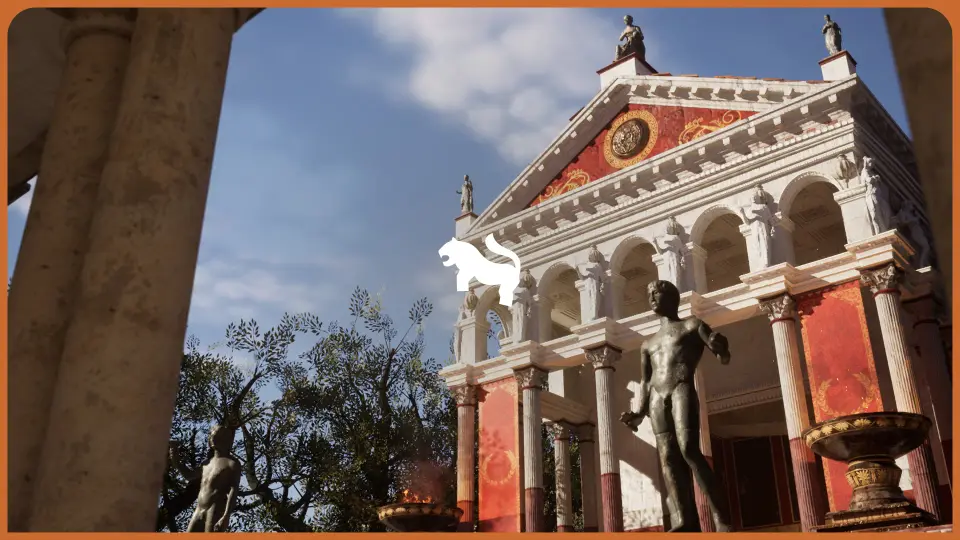
The showcase for this environment was produced with Lumen enabled. The package includes Nanite meshes. Lumen gives a real-time global illumination and reflection behavior that matches the bright, bounced light commonly seen in ancient stone plazas. To reproduce the scene exactly as previewed, Lumen should stay on in the final level.
Nanite meshes allow high geometric density without the typical draw call and LOD management overhead. This matters for a street environment packed with stone blocks, carved details, and scattered rubble. Small and distant geometry can retain a consistent silhouette. The pack does not claim that every mesh is Nanite; it includes nanite meshes, so mixing a few standard assets alongside Nanite ones is acceptable. Teams can still tune shadow distance and texture streaming to keep a full street block stable.
Inside the kit: Ultimate Level Art Tool
Roman Street Environment bundles a substantial tool with its static content: Ultimate Level Art Tool, shortened to ULAT. ULAT itself is a modular design development tool. The product provides it as part of the environment, not as a separate one-off. ULAT is meant to make fast, custom modular building possible. It also offers a seamless and distinctive way to populate scenes naturally. For a street kit, that means the artist does not have to snap every element by hand; the tool creates structures and places objects in a way that keeps the layout organic.
The environment and ULAT are listed as compatible, so connecting the tool to these meshes is a direct workflow rather than an unsupported add-on. A level designer can use ULAT to first construct modular buildings, then dress those buildings with the included Roman street assets. The final distribution of props across the scene can follow ULAT’s population logic instead of requiring laborious manual placement. The developer also states that this product includes ULAT as part of the purchase, and that buyers can receive ULAT by creating a ticket. Once that support step is complete, the tool and the environment operate together.
From Roman forums to abandoned ruins
The thematic anchor of the pack is Roman history, classical street layouts, and the visual language of the Roman Empire. Clearly intended subjects include Roman forums, basilicas, bathhouses, columns, stone bridges, city gates, and marketplaces. At the same time, ruins, overgrowth, and abandoned settlements are part of that visual identity. That tension between a living city and a ruin is exactly what a scene artist often needs.
The same asset base can support a medieval fantasy town with an ancient under-layer, an open-world RPG area filled with classical fragments, or a cinematic reconstruction of a forum. The modeling direction points to grandeur, stonework, and imperial detailing, while the more decayed keywords suggest a pass of broken walls and naturally worn surfaces. It is not a generic tileable street; the pack wants to support storytelling through a specific architectural culture.
Practical evaluation for a real-time scene
A team deciding whether to bring the pack into a production should weigh a few practical details. The pack requires the standard level-building routine: placing assets, matching material IDs, setting up lighting, and checking performance. With 168 meshes, there is enough inventory to block out an entire district, but a map still needs layout decisions, terrain blending, and narrative dressing.
The integration of ULAT is the factor that makes this environment different from a plain mesh collection. The intended workflow is to use ULAT to assemble and populate the street, then switch into shading and lighting tasks with the result in hand. Lumen and Nanite support further tie the experience to Unreal Engine’s current rendering features. For an environment artist or level designer focused on a historical Roman setting, this pack offers both an asset set and a construction system in the same product.
 Historical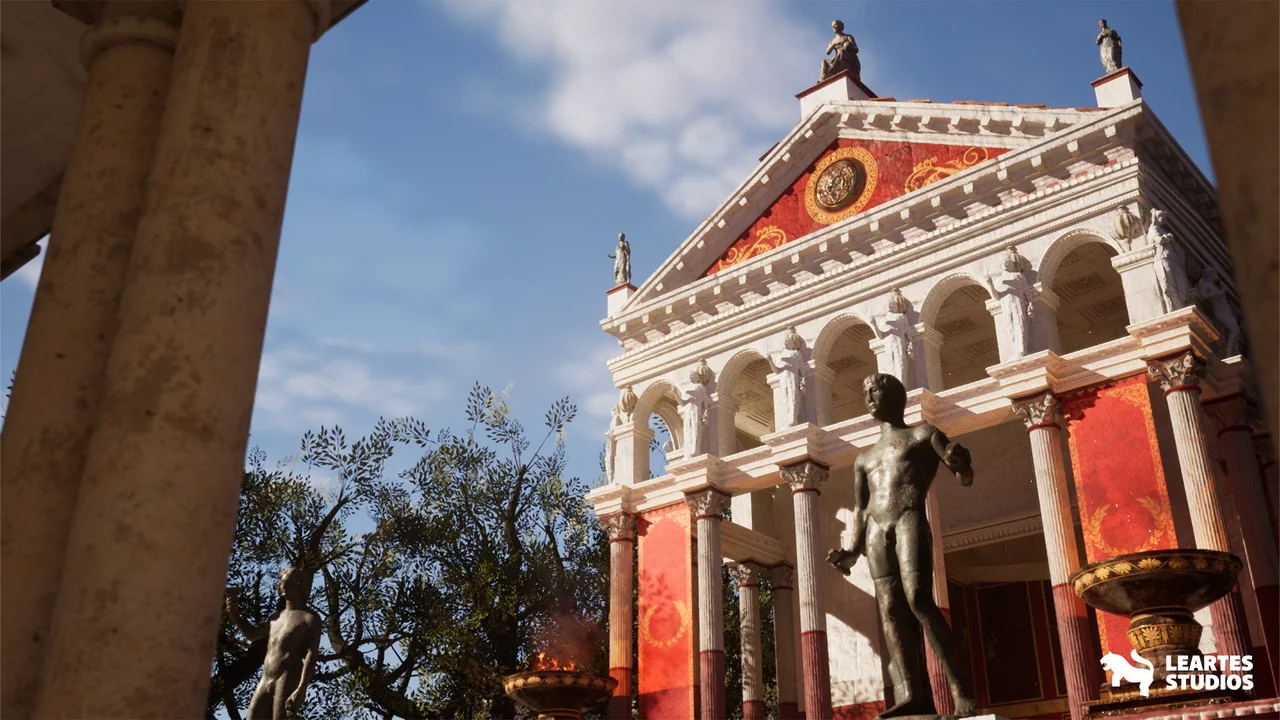
 Historical
 Historical
 Historical