"c68a05d5e51405b3"{"id":"1001113","slug":"science-fiction-valley-town","title":"Science Fiction Valley Town","category":"Sci-Fi","engine":"5.1+","assetVersion":"","engineVersion":"Engine Version: 5.1+","tag":"Sci-Fi","accent":"blue","visual":"mech","summary":"Science Fiction Valley Town provides 99 game-ready static meshes, a modular four-zone showcase, interiors, landing pads, houses, open areas, and flying ships.","platform":"Unreal Engine","publishedAt":"2026-09-07T11:59:23.919Z","updatedAt":"2026-09-07T11:59:23.919Z","sourceNotes":[],"fileContents":[],"compatibility":["Unreal Engine","Engine Version: 5.1+"],"featuredImage":{"alt":"Science Fiction Valley Town","src":"/wp-content/uploads/published/2026/09/f860c3b6b9d5-cfdbd442-1dcf-48ac-bdcb-d40bec2b3094-c95dcafb13.webp"},"hasDownloadLink":true,"downloads":0,"terms":[{"taxonomy":"category","slug":"sci-fi","name":"Sci-Fi"}],"galleryImages":[{"src":"/wp-content/uploads/published/2026/09/2c7abab43cc2-619d1572-647f-4ad8-a248-ba94492ae395-962c6b697f.webp","alt":"Science Fiction Valley Town"},{"src":"/wp-content/uploads/published/2026/09/8ff5a280ab44-e6256c52-9367-4ab7-926c-09812a3a1bbd-7d3955baaa.webp","alt":"Science Fiction Valley Town"},{"src":"/wp-content/uploads/published/2026/09/a74cafe844d8-1f1e880a-1779-476c-addc-02804a76edb6-a8a3479124.webp","alt":"Science Fiction Valley Town"},{"src":"/wp-content/uploads/published/2026/09/c1706cfa77a5-9f82513f-a22c-4bb4-bfa7-322f08b67945-bb214f22fc.webp","alt":"Science Fiction Valley Town"},{"src":"/wp-content/uploads/published/2026/09/8087f931688d-c4bafab2-2a09-4fc7-96df-fb36cc58611b-5b90da8ee0.webp","alt":"Science Fiction Valley Town"},{"src":"/wp-content/uploads/published/2026/09/af9e619f7a73-d475440e-aadc-44aa-a572-9351dde21c3d-5af28949f4.webp","alt":"Science Fiction Valley Town"},{"src":"/wp-content/uploads/published/2026/09/c92b23242495-0069c1b8-2d37-4593-a746-edf44dc223f5-b43f2900ef.webp","alt":"Science Fiction Valley Town"},{"src":"/wp-content/uploads/published/2026/09/f8a69cee8592-76499241-369d-43b6-bff3-e9a994eff868-a23be247fd.webp","alt":"Science Fiction Valley Town"},{"src":"/wp-content/uploads/published/2026/09/bfb5464df46a-f6ece2ae-1a81-495f-95aa-82423add42ff-02f485e79d.webp","alt":"Science Fiction Valley Town"},{"src":"/wp-content/uploads/published/2026/09/9ad3d8e049c5-1bff41f1-ab2e-4ef8-848e-62545f2d3952-7f31ec7028.webp","alt":"Science Fiction Valley Town"}],"accessPanel":{"kind":"resource","title":"Download this resource","eyebrow":"Free Download","message":"Log in or create a free account to start your download.","fileName":"Content.7z","safetyNote":"Resources are manually reviewed before listing to improve quality and reduce obvious risks.","actionLabel":"Download Free","resourceType":"Resource archive"},"contentHtml":"\u003cp\u003eFuturistic towns in games and real-time videos usually need two things at the same time: enough detail to feel real, and enough order to navigate easily. Science Fiction Valley Town covers both with a system of 99 game-ready static meshes and a modular showcase level. That level divides a futuristic valley village into four connected zones—interiors, landing pads, houses, and open areas—so the environment reads as a planned town from the moment the scene loads. Above it, ships pass through the air, giving the ground layout a constantly moving sky.\u003c/p\u003e \u003ch2\u003eA four-zone layout designed to be rearranged\u003c/h2\u003e\n\u003cp\u003eThe modular showcase level is not a hardcoded map. It is a working example, one where the four zone types establish the core grammar of the settlement. Interiors give the project a set of closed volumes, useful for mission areas, cutscene spaces, or simple shelter from the open landscape. Landing pads connect the town to the vehicles that fly over it, providing a point of origin for those ships and a destination for new arrivals. Houses fill the residential layer with repeated but variable silhouettes, and open areas keep the layout from becoming a corridor of unbroken rooftops.\u003c/p\u003e\n\u003cp\u003eFor a level designer, the four-zone breakdown signals where in the world these pieces are meant to appear. The modular descriptor means the zones can be lifted out, copied, and used in other configurations. One house zone could become the seed for a settlement expansion. An open area could be redesigned from scratch and fed with elements from the mesh set. The initial layout communicates the intended rhythm of the asset kit, not a final match.\u003c/p\u003e\n\u003cp\u003eThe focus on functional zones also helps storytelling. A landing pad surrounded by houses creates a small commercial or transport hub; an open area ringed by interiors can feel like a community square. Since the assets are provided as static meshes, the layout is easy to adapt to the pacing of a game quest or a cinematic walkthrough.\u003c/p\u003e \u003ch2\u003e99 game-ready static meshes and the detail budget\u003c/h2\u003e\n\u003cp\u003eWith 99 static meshes in the pack, scene builders have a broad palette. The “game-ready” wording indicates they are prepared for use within an interactive engine workflow, so they can support level assembly where meshes need to be accepted directly into the build. A triple-digit asset count also reduces the temptation to over-rely on duplicate props. Careful placement can produce clusters of buildings whose facades differ in enough ways to feel handmade.\u003c/p\u003e\n\u003cp\u003eThose meshes do not exist only for the showcase layout. Because they are modular and supplied as separate pieces, they can be pulled anywhere in a project. A house mesh from the residential section can be dropped into an alien landscape, a landing pad platform can become a raised stage, and an interior chunk can serve as an escape capsule interior if its anchoring points line up with the player scale. The demonstrated four zones are only a starting point for the same set.\u003c/p\u003e\n\u003cp\u003eThe design sits in the science fiction and futurism space, touching on retrofuturism, alien settings, and planetary towns. The pack’s science-fiction, futurist, retrofuturism, and planet tags point to a frontier-colony visual context rather than a polished urban future. The player is not walking through a modern city with a few holograms; the whole architectural language agrees with the valley-town premise.\u003c/p\u003e \u003ch2\u003eOverhead ships add an active vertical layer\u003c/h2\u003e\n\u003cp\u003eOne of the most distinctive features is the presence of ships flying over the landscape during exploration. This turns the pack into an immersive world rather than a static diorama. A settlement without overhead movement might feel abandoned; with ships moving across the sky, the valley stays in contact with a larger space-based culture. The landing pads become functional staging points, and the houses appear as homes for people who use those ships.\u003c/p\u003e\n\u003cp\u003eThis feature has specific value in cinematic development. A moving ship creates a natural reason to frame wide establishing shots, pulling the camera upward from the landing pads to the sky. In virtual experiences, ship movements keep the eye busy between points of interest. Even when the player remains near the ground, periodic flyovers create a sense of time, direction, and scale.\u003c/p\u003e \u003ch2\u003eUE4 setup and the distance field instruction\u003c/h2\u003e\n\u003cp\u003ePerformance is called out in the pack description, and the accompanying technical direction is specific: enable distance fields for proper lighting in UE4. That is the kind of instruction an environment kit needs when its look depends on engine settings rather than content customizers. When working in Unreal Engine 4, the first action is to ensure distance field rendering is active. With that enabled, static meshes across the four zones will interact with the light as intended.\u003c/p\u003e\n\u003cp\u003eCustomization is also a central point. The assets are fully customizable, meaning the built-in material and mesh setup is meant to be edited. A team painting a different environmental mood can modify the pieces to fit their own fog, palette, or time of day. The presence of a customizable kit prevents the 99 meshes from becoming a fixed set.\u003c/p\u003e \u003ch2\u003eGame, cinematic, and virtual experience angles\u003c/h2\u003e\n\u003cp\u003eThe pack is directly aimed at three destinations: games, cinematics, and virtual experiences. In a game context, the showcase level can be converted into the opening map, with its four zones serving as objectives or spawn regions. In a cinematic context, the modular interiors and open areas can be dressed for a particular shot, layering the static assets around hero geometry. In a virtual experience, the town presents a compact but visually dense area to wander through, with overhead activity to signal that the world continues beyond the player’s reach.\u003c/p\u003e\n\u003cp\u003eAs a practical starting point, the intended workflow is to open the showcase level, check the UE4 project’s distance field state, and then either use the four zones as-is or reshape them with the modular pieces. With 99 game-ready meshes in one style family, a fairly complete futuristic valley town—and any number of variations—comes from a single source.\u003c/p\u003e\n\n\u003ch2\u003eContinue Browsing Similar Packs\u003c/h2\u003e\n\u003cul\u003e\n\u003cli\u003e\u003ca href=\"https://3dcghub.com/modular-sci-fi-hangar-area-environment/\" title=\"Modular Sci-fi Hangar Area Environment\"\u003eModular Sci-fi Hangar Area Environment\u003c/a\u003e\u003c/li\u003e\n\u003cli\u003e\u003ca href=\"https://3dcghub.com/desert-science-fiction-city-modular-pack/\" title=\"Desert Science Fiction City Modular Pack\"\u003eDesert Science Fiction City Modular Pack\u003c/a\u003e\u003c/li\u003e\n\u003cli\u003e\u003ca href=\"https://3dcghub.com/scifi-kitbash-level-builder/\" title=\"Scifi Kitbash Level Builder\"\u003eScifi Kitbash Level Builder\u003c/a\u003e\u003c/li\u003e\n\u003cli\u003e\u003ca href=\"https://3dcghub.com/scifi-town/\" title=\"SCIFI TOWN\"\u003eSCIFI TOWN\u003c/a\u003e\u003c/li\u003e\n\u003cli\u003e\u003ca href=\"https://3dcghub.com/alien-growth-environment/\" title=\"Alien Growth Environment\"\u003eAlien Growth Environment\u003c/a\u003e\u003c/li\u003e\n\u003c/ul\u003e","contentTextLength":6260,"navigation":{"current":862,"total":3860,"previous":{"id":"1001114","slug":"multi-color-masking","title":"Multi Color Masking","category":"Variety","platform":"Unreal Engine","updatedAt":"2026-09-07T12:03:13.869Z"},"next":{"id":"1001112","slug":"roman-street-environment-roman-street-street-ancient-historical-vintage-3d","title":"Roman Street Environment ( Roman Street Street Ancient Historical Vintage 3D )","category":"Historical","platform":"Unreal Engine","updatedAt":"2026-09-07T11:44:59.285Z"}},"relatedResources":[{"id":"1001909","slug":"science-fiction-desert-city-kit","title":"Science Fiction Desert City Kit","category":"Sci-Fi","engine":"5.1+","assetVersion":"","engineVersion":"Engine Version: 5.1+","tag":"Sci-Fi","accent":"blue","visual":"city","summary":"Examine the Science Fiction Desert City Kit, featuring 120 static meshes, interior-ready modular prefabs, procedural foliage, and landscape materials.","platform":"Unreal Engine","publishedAt":"2026-10-22T11:47:01.772Z","updatedAt":"2026-10-22T11:47:01.772Z","sourceNotes":[],"fileContents":[],"compatibility":["Unreal Engine","Engine Version: 5.1+"],"featuredImage":{"alt":"Science Fiction Desert City Kit","src":"/wp-content/uploads/published/2026/10/1c20b9096d3a-c30bb945-3fb1-4718-883c-dedb767f6d3e-9f98158c7c.webp"},"hasDownloadLink":true,"downloads":0},{"id":"1000636","slug":"modular-sci-fi-hangar-area-environment","title":"Modular Sci-fi Hangar Area Environment","category":"Sci-Fi","engine":"5.3+","assetVersion":"","engineVersion":"Engine Version: 5.3+","tag":"Sci-Fi","accent":"blue","visual":"city","summary":"A modular science fiction hangar facility for UE4/5 with corridors, control center, animated sci-fi doors, terrain, sound effects, and extra surface texture til","platform":"Unreal Engine","publishedAt":"2026-07-21T16:59:42.611Z","updatedAt":"2026-07-21T17:01:12.782Z","sourceNotes":[],"fileContents":[],"compatibility":["Unreal Engine","Engine Version: 5.3+"],"featuredImage":{"alt":"Modular Sci-fi Hangar Area Environment","src":"/wp-content/uploads/published/2026/07/45bc4d86939c-79324c73-0de0-4d34-8848-7303602b3c32-8009ac1883.webp"},"hasDownloadLink":true,"downloads":1},{"id":"9648","slug":"scifi-kitbash-level-builder","title":"Scifi Kitbash Level Builder","category":"Sci-Fi","engine":"4.26+,5.0+","assetVersion":"Engine version: 4.26+,5.0+","engineVersion":"","tag":"Sci-Fi","accent":"blue","visual":"city","summary":"Create realistic science-fiction environments with this modular kit. It features high-quality assets, including a jet, props, and a finished hangar map.","platform":"Unreal Engine","publishedAt":"2026-03-01T17:29:55.000Z","updatedAt":"2026-04-19T15:51:04.000Z","sourceNotes":[],"fileContents":[],"compatibility":["Unreal Engine","Engine version: 4.26+,5.0+"],"featuredImage":{"alt":"Scifi Kitbash Level Builder","src":"https://3dcghub.com/wp-content/uploads/2026/03/8d5bba7e-5431-46c1-9b89-ba7576dbc66e.webp"},"hasDownloadLink":true,"downloads":1}]}
Sci-Fi
Science Fiction Valley Town
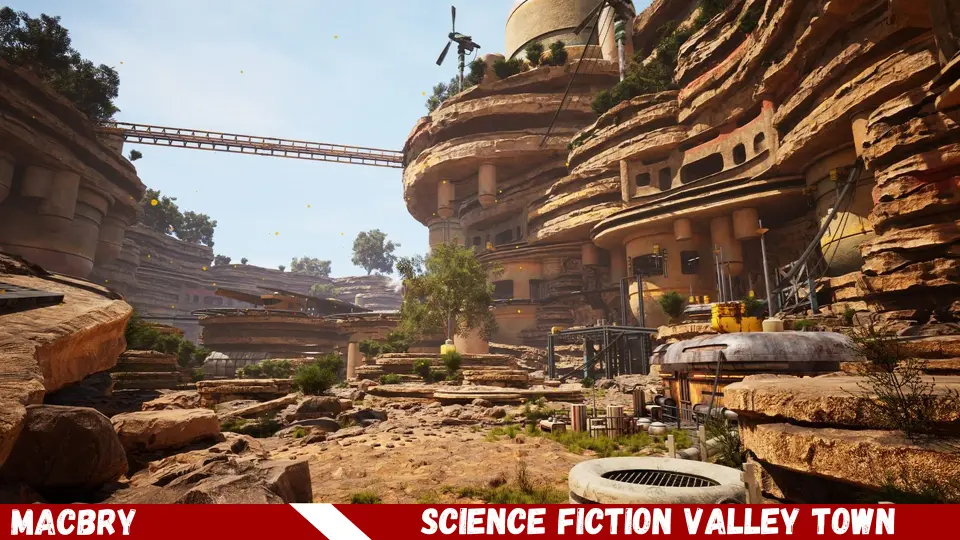
Science Fiction Valley Town provides 99 game-ready static meshes, a modular four-zone showcase, interiors, landing pads, houses, open areas, and flying ships.
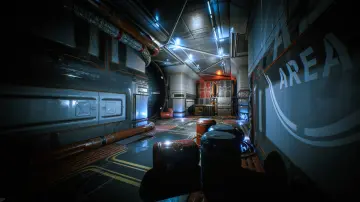
Futuristic towns in games and real-time videos usually need two things at the same time: enough detail to feel real, and enough order to navigate easily. Science Fiction Valley Town covers both with a system of 99 game-ready static meshes and a modular showcase level. That level divides a futuristic valley village into four connected zones—interiors, landing pads, houses, and open areas—so the environment reads as a planned town from the moment the scene loads. Above it, ships pass through the air, giving the ground layout a constantly moving sky.
A four-zone layout designed to be rearranged
The modular showcase level is not a hardcoded map. It is a working example, one where the four zone types establish the core grammar of the settlement. Interiors give the project a set of closed volumes, useful for mission areas, cutscene spaces, or simple shelter from the open landscape. Landing pads connect the town to the vehicles that fly over it, providing a point of origin for those ships and a destination for new arrivals. Houses fill the residential layer with repeated but variable silhouettes, and open areas keep the layout from becoming a corridor of unbroken rooftops.
For a level designer, the four-zone breakdown signals where in the world these pieces are meant to appear. The modular descriptor means the zones can be lifted out, copied, and used in other configurations. One house zone could become the seed for a settlement expansion. An open area could be redesigned from scratch and fed with elements from the mesh set. The initial layout communicates the intended rhythm of the asset kit, not a final match.
The focus on functional zones also helps storytelling. A landing pad surrounded by houses creates a small commercial or transport hub; an open area ringed by interiors can feel like a community square. Since the assets are provided as static meshes, the layout is easy to adapt to the pacing of a game quest or a cinematic walkthrough.
99 game-ready static meshes and the detail budget
With 99 static meshes in the pack, scene builders have a broad palette. The “game-ready” wording indicates they are prepared for use within an interactive engine workflow, so they can support level assembly where meshes need to be accepted directly into the build. A triple-digit asset count also reduces the temptation to over-rely on duplicate props. Careful placement can produce clusters of buildings whose facades differ in enough ways to feel handmade.
Those meshes do not exist only for the showcase layout. Because they are modular and supplied as separate pieces, they can be pulled anywhere in a project. A house mesh from the residential section can be dropped into an alien landscape, a landing pad platform can become a raised stage, and an interior chunk can serve as an escape capsule interior if its anchoring points line up with the player scale. The demonstrated four zones are only a starting point for the same set.
The design sits in the science fiction and futurism space, touching on retrofuturism, alien settings, and planetary towns. The pack’s science-fiction, futurist, retrofuturism, and planet tags point to a frontier-colony visual context rather than a polished urban future. The player is not walking through a modern city with a few holograms; the whole architectural language agrees with the valley-town premise.
Overhead ships add an active vertical layer
One of the most distinctive features is the presence of ships flying over the landscape during exploration. This turns the pack into an immersive world rather than a static diorama. A settlement without overhead movement might feel abandoned; with ships moving across the sky, the valley stays in contact with a larger space-based culture. The landing pads become functional staging points, and the houses appear as homes for people who use those ships.
This feature has specific value in cinematic development. A moving ship creates a natural reason to frame wide establishing shots, pulling the camera upward from the landing pads to the sky. In virtual experiences, ship movements keep the eye busy between points of interest. Even when the player remains near the ground, periodic flyovers create a sense of time, direction, and scale.
UE4 setup and the distance field instruction
Performance is called out in the pack description, and the accompanying technical direction is specific: enable distance fields for proper lighting in UE4. That is the kind of instruction an environment kit needs when its look depends on engine settings rather than content customizers. When working in Unreal Engine 4, the first action is to ensure distance field rendering is active. With that enabled, static meshes across the four zones will interact with the light as intended.
Customization is also a central point. The assets are fully customizable, meaning the built-in material and mesh setup is meant to be edited. A team painting a different environmental mood can modify the pieces to fit their own fog, palette, or time of day. The presence of a customizable kit prevents the 99 meshes from becoming a fixed set.
Game, cinematic, and virtual experience angles
The pack is directly aimed at three destinations: games, cinematics, and virtual experiences. In a game context, the showcase level can be converted into the opening map, with its four zones serving as objectives or spawn regions. In a cinematic context, the modular interiors and open areas can be dressed for a particular shot, layering the static assets around hero geometry. In a virtual experience, the town presents a compact but visually dense area to wander through, with overhead activity to signal that the world continues beyond the player’s reach.
As a practical starting point, the intended workflow is to open the showcase level, check the UE4 project’s distance field state, and then either use the four zones as-is or reshape them with the modular pieces. With 99 game-ready meshes in one style family, a fairly complete futuristic valley town—and any number of variations—comes from a single source.
 Sci-Fi
 Sci-Fi
 Sci-Fi
 Sci-Fi