"efaa631e936fd3ee"{"id":"1002263","slug":"volumetric-spotlight-with-shadow","title":"Volumetric Spotlight with Shadow","category":"Variety","engine":"4.26+,5.0+","assetVersion":"","engineVersion":"Engine Version: 4.26+,5.0+","tag":"Variety","accent":"blue","visual":"mech","summary":"Volumetric Spotlight with Shadow renders realistic dust, fog, and light beams using layered planes, dynamic masks, and distance-based optimizations.","platform":"Unreal Engine","publishedAt":"2026-10-29T16:24:43.164Z","updatedAt":"2026-10-29T16:24:43.164Z","sourceNotes":[],"fileContents":[],"compatibility":["Unreal Engine","Engine Version: 4.26+,5.0+"],"featuredImage":{"alt":"Volumetric Spotlight with Shadow","src":"/wp-content/uploads/published/2026/10/296714bb6fa6-1405d9d2-3acd-4bce-9504-6923e0081b81-297f5cc571.webp"},"hasDownloadLink":true,"downloads":0,"terms":[{"taxonomy":"category","slug":"variety-vfx","name":"Variety"}],"galleryImages":[{"src":"/wp-content/uploads/published/2026/10/e6363471bc24-f94bcb36-9d32-4e1f-a9d8-b0e994cea387-93de1e0bd0.webp","alt":"Volumetric Spotlight with Shadow"},{"src":"/wp-content/uploads/published/2026/10/1a864c9d79cb-5a97239d-21e6-46de-b6f1-866b6f8ae4fb-a49ee90f57.webp","alt":"Volumetric Spotlight with Shadow"},{"src":"/wp-content/uploads/published/2026/10/e8ff79eb6d77-9c6e3b90-b9d8-4983-9088-d35c0b677312-43e610d0c3.webp","alt":"Volumetric Spotlight with Shadow"},{"src":"/wp-content/uploads/published/2026/10/8a68f4995ad5-58f4a3cc-28ba-4894-931f-e070746706ec-90cd4d7835.webp","alt":"Volumetric Spotlight with Shadow"},{"src":"/wp-content/uploads/published/2026/10/a0caa5dd3d92-fbbe22a5-2865-4124-9c0b-66be6cb96b5d-f5b66937c6.webp","alt":"Volumetric Spotlight with Shadow"}],"accessPanel":{"kind":"resource","title":"Download this resource","eyebrow":"Free Download","message":"Log in or create a free account to start your download.","fileName":"Content.7z","safetyNote":"Resources are manually reviewed before listing to improve quality and reduce obvious risks.","actionLabel":"Download Free","resourceType":"Resource archive"},"contentHtml":"\u003ch2\u003eConstructing Light Volumes with Additive-Transparent Planes\u003c/h2\u003e\u003cp\u003eVolumetric Spotlight with Shadow creates the visual impression of light interacting with atmospheric suspended matter, such as ambient dust, fog, or damp air. While standard real-time rendering pipelines focus on drawing the exterior surfaces of polygonal geometry, a true light beam occupies interior space. To simulate that density, the system populates the interior of the spotlight cone with an internal array of additive-transparent planes positioned perpendicular to the direction of the light ray.\u003c/p\u003e\u003cp\u003eBy default, the stack generates 512 individual additive planes spanning the length of the cone. As the camera looks through the volume, the stacked transparency layers accumulate light values additively. This density gives the beam physical substance, capturing the soft, scattering qualities seen when intense illumination cuts across particulate-laden air. Because each plane is drawn with an additive shader, the overlapping slices blend together smoothly, avoiding the rigid outlines often produced by hard mesh boundaries.\u003c/p\u003e\u003ch2\u003eControlling Spotlight Width, Length, and Color Parameters\u003c/h2\u003e\u003cp\u003eFine-tuning the dimensions of the beam is handled through distinct parametric properties. Artists can alter both the width and the overall length of the cone to match diverse lighting fixtures, from narrow, long-range searchlights to wide-angle atmospheric downlights. These adjustments dictate the scale and distribution of the internal transparent slices, ensuring the volume maintains an even gradient across its entire reach.\u003c/p\u003e\u003cp\u003eIn addition to standard circular beams, the system provides a specific toggle to produce a square volumetric cross-section. Selecting a square profile adjusts the boundaries of the internal geometry, allowing the light to emulate rectangular architectural luminaires, projection systems, or boxed stage fixtures. Alongside geometric adjustments, color values can be configured directly, giving creators full control over light temperature, artistic tinting, and thematic ambiance.\u003c/p\u003e\u003ch2\u003eShadow Casting Through Material-Shader Dynamic Masks\u003c/h2\u003e\u003cp\u003eA central capability of the setup is its integration of shadows and dynamic light blockage. Conventional real-time volumetric shortcuts often rely on simple screen-aligned or camera-facing god-ray planes, which fail to register complex obstructions within the beam. Here, dynamic masks are incorporated directly into the material shader applied across the plane array.\u003c/p\u003e\u003cp\u003eBy inserting a 2D mask at the appropriate position and transformation within the material shader, the system selectively cuts away light transmission across each slice. Masks must be oriented perpendicular to the beam axis to map properly across the stacked layers. Even with this 2D projection requirement, simple three-dimensional geometries—such as spheres—render clean, physically accurate volumetric shadows through the depth of the volume. This makes it possible to project believable beams slicing through window frames, panel gaps, and slatted apertures, maintaining continuous spatial shadows that hold up as the vantage point shifts.\u003c/p\u003e\u003ch2\u003eDistance Scaling and Frame Rates for High-Density Plane Stacks\u003c/h2\u003e\u003cp\u003eRendering an entire volumetric mass through hundreds of overlapping additive-transparent planes incurs a significant computational load. The GPU must calculate transparency and blending across every active layer inside the spotlight cone, presenting a rendering workload far heavier than conventional surface shading. When configured to the baseline value of 512 planes, the fill-rate and blending operations can quickly become a bottleneck if left unchecked.\u003c/p\u003e\u003cp\u003eTo safeguard performance and prevent severe frame drops, the system incorporates an automatic distance-based reduction mechanism. As the viewing camera moves farther away from the spotlight, the total count of active transparent planes scales downward dynamically. All performance controls remain fully configurable, permitting adjustments to the base plane density and distance-culling thresholds to match specific scene budgets. Due to the high fill-rate demands of the additive volume, smooth execution at 30 frames per second or higher requires mid-range to high-end hardware specifications.\u003c/p\u003e\u003ch2\u003eAtmospheric Integration with Procedural Lighting Scenarios\u003c/h2\u003e\u003cp\u003eThe system pairs naturally with procedural lighting workflows, providing an expressive solution for spaces that require palpable atmospheric depth. Because the planes react consistently to beam length, width, color, and dynamic occlusion, the light can serve as both an environmental storytelling device and an active gameplay element. The visible density of the beam immediately communicates environmental dampness, stale dungeon air, or humid subterranean moisture.\u003c/p\u003e\u003cp\u003eConfiguring the beam to cut through intricate mask patterns lets developers craft dramatic architectural compositions, such as solitary shafts of daylight piercing industrial grating or stained glass. The combination of per-plane additive blending, shader-driven masking, and distance-scaled density delivers a robust alternative to basic god-ray billboards, keeping the illumination grounded within the physical volume of the environment.\u003c/p\u003e\n\n\u003ch2\u003eContinue Browsing Similar Packs\u003c/h2\u003e\n\u003cul\u003e\n\u003cli\u003e\u003ca href=\"https://3dcghub.com/easy-atmos/\" title=\"Easy Atmos\"\u003eEasy Atmos\u003c/a\u003e\u003c/li\u003e\n\u003cli\u003e\u003ca href=\"https://3dcghub.com/butterfly-particles/\" title=\"Butterfly Particles\"\u003eButterfly Particles\u003c/a\u003e\u003c/li\u003e\n\u003cli\u003e\u003ca href=\"https://3dcghub.com/character-body-fx-vol-3/\" title=\"Character Body FX Vol. 3\"\u003eCharacter Body FX Vol. 3\u003c/a\u003e\u003c/li\u003e\n\u003cli\u003e\u003ca href=\"https://3dcghub.com/50-vector-particles/\" title=\"50+ Vector Particles\"\u003e50+ Vector Particles\u003c/a\u003e\u003c/li\u003e\n\u003cli\u003e\u003ca href=\"https://3dcghub.com/rock-fall-niagara-with-sound/\" title=\"Rock Fall Niagara with Sound\"\u003eRock Fall Niagara with Sound\u003c/a\u003e\u003c/li\u003e\n\u003c/ul\u003e","contentTextLength":5351,"navigation":{"current":22,"total":4209,"previous":{"id":"1002264","slug":"vr-gravity-grab","title":"VR Gravity Grab","category":"Weapons \u0026 Combat","platform":"Unreal Engine","updatedAt":"2026-10-29T16:26:53.660Z"},"next":{"id":"1002262","slug":"virtual-studios-vol-1-scene-5","title":"Virtual Studios Vol 1 Scene 5","category":"Buildings \u0026 Architecture","platform":"Unreal Engine","updatedAt":"2026-10-29T16:22:42.201Z"}},"relatedResources":[{"id":"1001802","slug":"easy-atmos","title":"Easy Atmos","category":"Variety","engine":"5.4+","assetVersion":"","engineVersion":"Engine Version: 5.4+","tag":"Variety","accent":"blue","visual":"mech","summary":"Easy Atmos consolidates volumetric fog, falling leaves, bug swarms, sparks, and debris into a single blueprint for Unreal Engine real-time and cinematic scenes.","platform":"Unreal Engine","publishedAt":"2026-10-21T07:54:07.654Z","updatedAt":"2026-10-21T07:54:07.654Z","sourceNotes":[],"fileContents":[],"compatibility":["Unreal Engine","Engine Version: 5.4+"],"featuredImage":{"alt":"Easy Atmos","src":"/wp-content/uploads/published/2026/10/f204b3b7e0b8-bf9d532f-3684-4920-9848-aa40b7aadd69-9516ffc51e.webp"},"hasDownloadLink":true,"downloads":1},{"id":"1001866","slug":"butterfly-particles","title":"Butterfly Particles","category":"Variety","engine":"4.25+,5.0+","assetVersion":"","engineVersion":"Engine Version: 4.25+,5.0+","tag":"Variety","accent":"blue","visual":"mech","summary":"Configure stylized Butterfly Particles across 63 Niagara systems, using 20 textures, 20 mask types, two-color materials, and custom spline controls.","platform":"Unreal Engine","publishedAt":"2026-10-22T11:09:50.685Z","updatedAt":"2026-10-22T11:09:50.685Z","sourceNotes":[],"fileContents":[],"compatibility":["Unreal Engine","Engine Version: 4.25+,5.0+"],"featuredImage":{"alt":"Butterfly Particles","src":"/wp-content/uploads/published/2026/10/101ba1fc51e7-91958e27-6ecd-4c95-8bd5-5ee40fd72170-6bdb5236d2.webp"},"hasDownloadLink":true,"downloads":0},{"id":"1001976","slug":"character-body-fx-vol-3","title":"Character Body FX Vol. 3","category":"Variety","engine":"4.27+,5.0+","assetVersion":"","engineVersion":"Engine Version: 4.27+,5.0+","tag":"Variety","accent":"blue","visual":"character","summary":"Explore Niagara character visual effects for skeletal meshes, covering GPU distance field setup, regional mesh sampling, and elemental presets.","platform":"Unreal Engine","publishedAt":"2026-10-24T14:07:03.848Z","updatedAt":"2026-10-24T14:07:03.848Z","sourceNotes":[],"fileContents":[],"compatibility":["Unreal Engine","Engine Version: 4.27+,5.0+"],"featuredImage":{"alt":"Character Body FX Vol. 3","src":"/wp-content/uploads/published/2026/10/1a33fb059d6b-bd702f6d-b042-44b5-a5bf-f4ba963dfc1b-e8e00fc35f.webp"},"hasDownloadLink":true,"downloads":0}]}
Variety
Volumetric Spotlight with Shadow
Volumetric Spotlight with Shadow renders realistic dust, fog, and light beams using layered planes, dynamic masks, and distance-based optimizations.
Category:Unreal Engine,VarietyPlatform: Unreal EngineEngine Version: 4.26+,5.0+Published: Oct 29, 2026
Variety
Resource overview
Constructing Light Volumes with Additive-Transparent Planes
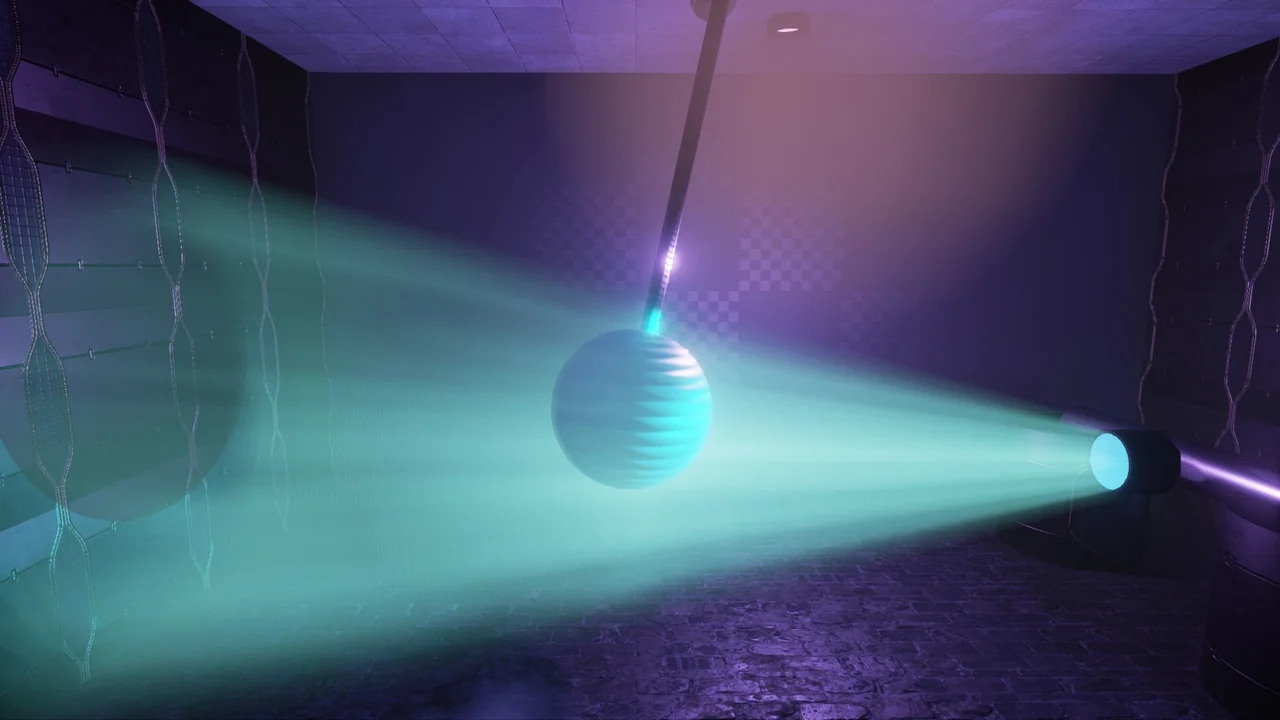
Volumetric Spotlight with Shadow creates the visual impression of light interacting with atmospheric suspended matter, such as ambient dust, fog, or damp air. While standard real-time rendering pipelines focus on drawing the exterior surfaces of polygonal geometry, a true light beam occupies interior space. To simulate that density, the system populates the interior of the spotlight cone with an internal array of additive-transparent planes positioned perpendicular to the direction of the light ray.
By default, the stack generates 512 individual additive planes spanning the length of the cone. As the camera looks through the volume, the stacked transparency layers accumulate light values additively. This density gives the beam physical substance, capturing the soft, scattering qualities seen when intense illumination cuts across particulate-laden air. Because each plane is drawn with an additive shader, the overlapping slices blend together smoothly, avoiding the rigid outlines often produced by hard mesh boundaries.
Controlling Spotlight Width, Length, and Color Parameters
Fine-tuning the dimensions of the beam is handled through distinct parametric properties. Artists can alter both the width and the overall length of the cone to match diverse lighting fixtures, from narrow, long-range searchlights to wide-angle atmospheric downlights. These adjustments dictate the scale and distribution of the internal transparent slices, ensuring the volume maintains an even gradient across its entire reach.
In addition to standard circular beams, the system provides a specific toggle to produce a square volumetric cross-section. Selecting a square profile adjusts the boundaries of the internal geometry, allowing the light to emulate rectangular architectural luminaires, projection systems, or boxed stage fixtures. Alongside geometric adjustments, color values can be configured directly, giving creators full control over light temperature, artistic tinting, and thematic ambiance.
Shadow Casting Through Material-Shader Dynamic Masks
A central capability of the setup is its integration of shadows and dynamic light blockage. Conventional real-time volumetric shortcuts often rely on simple screen-aligned or camera-facing god-ray planes, which fail to register complex obstructions within the beam. Here, dynamic masks are incorporated directly into the material shader applied across the plane array.
By inserting a 2D mask at the appropriate position and transformation within the material shader, the system selectively cuts away light transmission across each slice. Masks must be oriented perpendicular to the beam axis to map properly across the stacked layers. Even with this 2D projection requirement, simple three-dimensional geometries—such as spheres—render clean, physically accurate volumetric shadows through the depth of the volume. This makes it possible to project believable beams slicing through window frames, panel gaps, and slatted apertures, maintaining continuous spatial shadows that hold up as the vantage point shifts.
Distance Scaling and Frame Rates for High-Density Plane Stacks
Rendering an entire volumetric mass through hundreds of overlapping additive-transparent planes incurs a significant computational load. The GPU must calculate transparency and blending across every active layer inside the spotlight cone, presenting a rendering workload far heavier than conventional surface shading. When configured to the baseline value of 512 planes, the fill-rate and blending operations can quickly become a bottleneck if left unchecked.
To safeguard performance and prevent severe frame drops, the system incorporates an automatic distance-based reduction mechanism. As the viewing camera moves farther away from the spotlight, the total count of active transparent planes scales downward dynamically. All performance controls remain fully configurable, permitting adjustments to the base plane density and distance-culling thresholds to match specific scene budgets. Due to the high fill-rate demands of the additive volume, smooth execution at 30 frames per second or higher requires mid-range to high-end hardware specifications.
Atmospheric Integration with Procedural Lighting Scenarios
The system pairs naturally with procedural lighting workflows, providing an expressive solution for spaces that require palpable atmospheric depth. Because the planes react consistently to beam length, width, color, and dynamic occlusion, the light can serve as both an environmental storytelling device and an active gameplay element. The visible density of the beam immediately communicates environmental dampness, stale dungeon air, or humid subterranean moisture.
Configuring the beam to cut through intricate mask patterns lets developers craft dramatic architectural compositions, such as solitary shafts of daylight piercing industrial grating or stained glass. The combination of per-plane additive blending, shader-driven masking, and distance-scaled density delivers a robust alternative to basic god-ray billboards, keeping the illumination grounded within the physical volume of the environment.
 Variety
 Variety
 Variety
 Variety