"c14ff6bd758dadb1"{"id":"24789","slug":"swordswoman","title":"Swordswoman","category":"Characters \u0026 Creatures","engine":"4.26+,5.0+","assetVersion":"Engine version: 4.26+,5.0+","engineVersion":"","tag":"Characters","accent":"blue","visual":"character","summary":"Swordswoman is set up as a modular female character with a UE4 skeleton, facial expressions, and separated armor, hair, body, and clothing parts. It also includes a full body without seams plus multiple 4K texture sets for the main components.","platform":"Unreal Engine","publishedAt":"2026-04-17T08:47:00.000Z","updatedAt":"2026-04-20T06:12:38.000Z","sourceNotes":[],"fileContents":[],"compatibility":["Unreal Engine","Engine version: 4.26+,5.0+"],"featuredImage":{"alt":"Swordswoman","src":"https://3dcghub.com/wp-content/uploads/2026/04/ed75dd13c63a_b31ab841-8674-4ec4-a28d-0844fb43f8f2.webp"},"hasDownloadLink":true,"downloads":1,"terms":[{"taxonomy":"category","slug":"characters-and-creatures","name":"Characters \u0026 Creatures"},{"taxonomy":"post_tag","slug":"animation","name":"Animation"},{"taxonomy":"post_tag","slug":"characters","name":"Characters"},{"taxonomy":"post_tag","slug":"unreal-engine-5","name":"Unreal Engine 5"}],"galleryImages":[{"src":"https://3dcghub.com/wp-content/uploads/2026/04/5fa347105c63_3f8f61cb-48bd-4f5d-a5e3-79e6d0e2f9db.webp","alt":"Swordswoman"},{"src":"https://3dcghub.com/wp-content/uploads/2026/04/9e559ad45315_a4ed1b39-1878-4ac6-a3f8-274d5f3661e0.webp","alt":"Swordswoman"},{"src":"https://3dcghub.com/wp-content/uploads/2026/04/d1e583665b1a_c79f8399-335b-4139-8a2b-b9f3816bbc9a.webp","alt":"Swordswoman"},{"src":"https://3dcghub.com/wp-content/uploads/2026/04/bfabfdd07f12_be5885b0-7d65-4f6c-af38-e0048247841b.webp","alt":"Swordswoman"},{"src":"https://3dcghub.com/wp-content/uploads/2026/04/894bc2fc97da_59f9aab4-16f6-4635-8429-77b8b3f00dc6.webp","alt":"Swordswoman"},{"src":"https://3dcghub.com/wp-content/uploads/2026/04/e4bd2d0d2e7d_a26f1bee-4a70-426c-8e40-b337ddf7a464.webp","alt":"Swordswoman"},{"src":"https://3dcghub.com/wp-content/uploads/2026/04/59ac089acf52_45580633-0e8d-4c5f-aa00-859804bce2d9.webp","alt":"Swordswoman"},{"src":"https://3dcghub.com/wp-content/uploads/2026/04/68fa8b0090b7_8cea12e8-d7fb-40ec-918d-1c65bc7e23a8.webp","alt":"Swordswoman"},{"src":"https://3dcghub.com/wp-content/uploads/2026/04/ac7a64a35d80_d1323dda-4cce-4bdc-9d0b-356798b61692.webp","alt":"Swordswoman"},{"src":"https://3dcghub.com/wp-content/uploads/2026/04/307616a750f0_9c261b49-39c0-47a0-bc4b-ebdc0a846552.webp","alt":"Swordswoman"}],"accessPanel":{"kind":"resource","title":"Access this resource","eyebrow":"Free Download","message":"Log in or create a free account to start your download.","fileName":"SwordsmanCharacter.7z","safetyNote":"All resources are 100% manually reviewed to eliminate all risks.","actionLabel":"Download Free","resourceType":"Resource archive"},"contentHtml":"\u003ch2\u003eBuilt for a game-ready female warrior setup\u003c/h2\u003e\n\u003cp\u003eSwordswoman is shaped for projects that need a fantasy female character ready for animation, customization, and modular assembly. The character comes rigged with a UE4 skeleton, which makes the setup immediately relevant for Unreal-based workflows that rely on an existing skeletal structure. Facial expressions are included through ARKit and Apple blendshapes, so the character is not limited to a static face rig.\u003c/p\u003e\n\u003cp\u003eThat combination makes the asset useful for scenes where a sword-bearing heroine needs to move, emote, and present a clear stylized identity. The character leans into a warrior and knight direction, while still leaving room for color adjustments and part swapping.\u003c/p\u003e \u003ch2\u003eModular parts for assembly and variation\u003c/h2\u003e\n\u003cp\u003eThe character is modular, and the package separates the body into distinct pieces rather than forcing a single fixed look. The included parts cover the body, head, hair, armor parts, lingerie, and shoes. A whole body without seams is also included, which gives an alternate setup when a single unified mesh is preferred.\u003c/p\u003e\n\u003cp\u003eThis structure is practical when a project needs variations without rebuilding the character from scratch. Armor, clothing, and accessory pieces can be worked with as separate elements, while the seamless full body gives a cleaner option for shots where visible seams would be a problem. The modular approach also fits projects that want to swap visual elements while keeping the same base character identity.\u003c/p\u003e \u003ch2\u003eColor control across the outfit and body\u003c/h2\u003e\n\u003cp\u003eSeveral character elements can be recolored: armor, weapon, shoes, hair, eyes, skin, nails, and lingerie. That level of color control makes the character easier to adapt to different scenes or visual themes without changing the underlying structure.\u003c/p\u003e\n\u003cp\u003eBecause the palette can be adjusted across both gear and body details, the same character can read differently depending on the scene direction. A darker armor set, lighter skin tones, or altered hair and eye colors can shift the mood without changing the mesh layout. For character work that depends on quick visual iteration, this is one of the most direct tools included in the setup.\u003c/p\u003e \u003ch2\u003eTexture sets and material coverage\u003c/h2\u003e\n\u003cp\u003eThe asset includes 4K texture sets for the main components, with albedo, normal, occlusion + metallic + roughness, and ID maps provided for the armor, weapon, lingerie, head, and body. The eyes also have 4K albedo and ID textures, while the hair uses 4K albedo, alpha, root, depth, and ID. Eyelashes are provided at 1K with albedo and alpha.\u003c/p\u003e\n\u003cp\u003eThat texture coverage is broad enough to support the characterâs separate parts without forcing every surface into the same treatment. The dedicated sets for armor, weapon, clothing, face, body, eyes, and hair help keep those areas distinct, which matters when the character needs a specific material read on each part. The hair setup is especially notable because it includes alpha, root, and depth alongside the base color, allowing it to sit separately from the rest of the model.\u003c/p\u003e \u003ch3\u003eTexture coverage at a glance\u003c/h3\u003e\n\u003cul\u003e \u003cli\u003e4K Armor: Albedo, Normal, Occlusion + Metallic + Roughness, ID\u003c/li\u003e \u003cli\u003e4K Weapon: Albedo, Normal, Occlusion + Metallic + Roughness, ID\u003c/li\u003e \u003cli\u003e4K Lingerie: Albedo, Normal, Occlusion + Metallic + Roughness, ID\u003c/li\u003e \u003cli\u003e4K Head: Albedo, Normal, Occlusion + Metallic + Roughness, ID\u003c/li\u003e \u003cli\u003e4K Body: Albedo, Normal, Occlusion + Metallic + Roughness, ID\u003c/li\u003e \u003cli\u003e4K Eyes: Albedo, ID\u003c/li\u003e \u003cli\u003e4K Hair: Albedo, Alpha, Root, Depth, ID\u003c/li\u003e \u003cli\u003e1K Eyelashes: Albedo, Alpha\u003c/li\u003e\n\u003c/ul\u003e \u003ch2\u003eMesh data and the different character states\u003c/h2\u003e\n\u003cp\u003eThe package gives separate mesh data for armor, lingerie, nude, and weapon components. The armor mesh is listed at 76,527 vertices and 13,542 tris. The lingerie version uses 54,871 vertices and 96,342 tris, and the nude version is listed with the same 54,871 vertices and 96,342 tris. The weapon mesh is much smaller, with 1,437 vertices and 2,846 tris.\u003c/p\u003e\n\u003cp\u003eThose numbers show how the character is split into distinct presentation states rather than being locked into one fixed appearance. For implementation, that can matter when different scenes require different levels of coverage or a different outfit state. The weapon is also separated cleanly from the body meshes, which keeps it available as its own component in the character setup.\u003c/p\u003e \u003ch2\u003eAnimation setup and what needs attention\u003c/h2\u003e\n\u003cp\u003eThe character is rigged, but bone simulation is not set up in the project. Extra bones are recommended to avoid artifacts in the animation. That makes the asset straightforward in some areas and more deliberate in others: the core skeleton is there, facial expression support is included, but secondary motion will need care if you want to avoid visual issues.\u003c/p\u003e\n\u003cp\u003eThe result is a character that is already grounded in an animation workflow, while still leaving room for technical adjustment during implementation. Anyone placing the model into a scene will want to keep the note about extra bones in mind, especially if the animation relies on parts that would otherwise need simulated movement.\u003c/p\u003e \u003ch2\u003eWhere this character fits\u003c/h2\u003e\n\u003cp\u003eSwordswoman fits projects that need a fantasy female warrior with modular parts, facial expression support, and a clear rigging foundation. It works especially well when the character needs to be adjusted through color changes or assembled from separate armor, hair, clothing, and body pieces. The seam-free full body option also gives flexibility when the scene calls for a cleaner overall silhouette.\u003c/p\u003e\n\u003cp\u003eFor teams working with animation blueprints, the UE4 skeleton and included facial blendshapes provide the key setup points. For character artists, the separate textures and modular parts offer a practical base for iteration. The character is most useful where a stylized sword-fighting heroine needs to be prepared for posing, animation, and visual variation without rebuilding the asset from scratch.\u003c/p\u003e\n\n\u003ch2\u003eRelated Resources Worth Checking\u003c/h2\u003e\n\u003cul\u003e\n\u003cli\u003e\u003ca href=\"https://3dcghub.com/advanced-unreal-engine-5-multiplayer-gameplay-programming/\" title=\"Advanced Unreal Engine 5 Multiplayer Gameplay Programming\"\u003eAdvanced Unreal Engine 5 Multiplayer Gameplay Programming\u003c/a\u003e\u003c/li\u003e\n\u003cli\u003e\u003ca href=\"https://3dcghub.com/niagara-beginners-to-advanced-in-unreal-engine-5/\" title=\"Niagara Beginners to advanced in Unreal Engine 5\"\u003eNiagara Beginners to advanced in Unreal Engine 5\u003c/a\u003e\u003c/li\u003e\n\u003cli\u003e\u003ca href=\"https://3dcghub.com/create-zelda-like-skills-with-c-in-unreal-engine-5-2/\" title=\"Create Zelda-like skills with C++ in unreal engine 5\"\u003eCreate Zelda-like skills with C++ in unreal engine 5\u003c/a\u003e\u003c/li\u003e\n\u003cli\u003e\u003ca href=\"https://3dcghub.com/main-menus-beginner-class-unreal-engine-5/\" title=\"Main Menus Beginner Class – Unreal Engine 5\"\u003eMain Menus Beginner Class – Unreal Engine 5\u003c/a\u003e\u003c/li\u003e\n\u003cli\u003e\u003ca href=\"https://3dcghub.com/create-zelda-like-skills-with-c-in-unreal-engine-5/\" title=\"Create Zelda-like skills with C++ in unreal engine 5\"\u003eCreate Zelda-like skills with C++ in unreal engine 5\u003c/a\u003e\u003c/li\u003e\n\u003c/ul\u003e","contentTextLength":6145,"navigation":{"current":2048,"total":3719,"previous":{"id":"24665","slug":"node-pie","title":"Node Pie","category":"Blender Add-ons \u0026 Plugins","platform":"Blender","updatedAt":"2026-04-20T06:12:39.000Z"},"next":{"id":"24770","slug":"special-ops-modular-character-bundle","title":"Special Ops - Modular Character Bundle","category":"Characters \u0026 Creatures","platform":"Unreal Engine","updatedAt":"2026-04-20T06:12:38.000Z"}},"relatedResources":[{"id":"25198","slug":"dinosaur-utahraptor","title":"Dinosaur UtahRaptor","category":"Characters \u0026 Creatures","engine":"5.0+","assetVersion":"Engine version: 5.0+","engineVersion":"4.26","tag":"Characters","accent":"blue","visual":"character","summary":"UtahRaptor is presented as a real-dinosaur creature model with PBR support, a seven-color skin pack, and a full animation set made in Maya. It also includes Unreal Engine texture sets, engine-ready formats, and a bonus control rig for testing and learning.","platform":"Unreal Engine","publishedAt":"2026-04-19T13:16:27.000Z","updatedAt":"2026-04-20T06:12:31.000Z","sourceNotes":[],"fileContents":[],"compatibility":["Unreal Engine","Engine version: 5.0+"],"featuredImage":{"alt":"Dinosaur UtahRaptor","src":"https://3dcghub.com/wp-content/uploads/2026/04/27ae021e2096_d41ea427-064a-4aec-a57a-d9ad49afa282-1.webp"},"hasDownloadLink":true,"downloads":1},{"id":"28369","slug":"maniac-towing-modular-5in1","title":"Maniac Towing Modular 5in1","category":"Characters \u0026 Creatures","engine":"4.26+,5.0+","assetVersion":"Engine version: 4.26+,5.0+","engineVersion":"","tag":"Characters","accent":"blue","visual":"character","summary":"This character package centers on a modular maniac figure that can shift its look through five masks, clothing swaps, and color changes. It also brings Epic Skeleton rigging, in-place animation support, and a bonus pickup that helps frame the character in t...","platform":"Unreal Engine","publishedAt":"2026-05-07T10:11:07.000Z","updatedAt":"2026-05-07T10:11:08.000Z","sourceNotes":[],"fileContents":[],"compatibility":["Unreal Engine","Engine version: 4.26+,5.0+"],"featuredImage":{"alt":"Maniac Towing Modular 5in1","src":"https://3dcghub.com/wp-content/uploads/2026/05/a8a5e2a74bbb_0b98c0f3-0649-4479-bfdd-aa02f6bc0ba7.webp"},"hasDownloadLink":true,"downloads":0},{"id":"25877","slug":"worker","title":"Worker","category":"Characters \u0026 Creatures","engine":"4.26+,5.0+","assetVersion":"Engine version: 4.26+,5.0+","engineVersion":"","tag":"Characters","accent":"blue","visual":"character","summary":"Worker is a game character that can sit in two places in a production: as part of the environment or as the main character. Its tags point to an industrial, machine-linked, lowpoly, PBR workflow with script and animation blueprint labeling.","platform":"Unreal Engine","publishedAt":"2026-04-19T15:58:44.000Z","updatedAt":"2026-04-20T06:12:30.000Z","sourceNotes":[],"fileContents":[],"compatibility":["Unreal Engine","Engine version: 4.26+,5.0+"],"featuredImage":{"alt":"Worker","src":"https://3dcghub.com/wp-content/uploads/2026/04/03d798cba875_11983e54-2305-42c7-a27d-be0884862d6d.webp"},"hasDownloadLink":true,"downloads":0}]}
Characters
Swordswoman
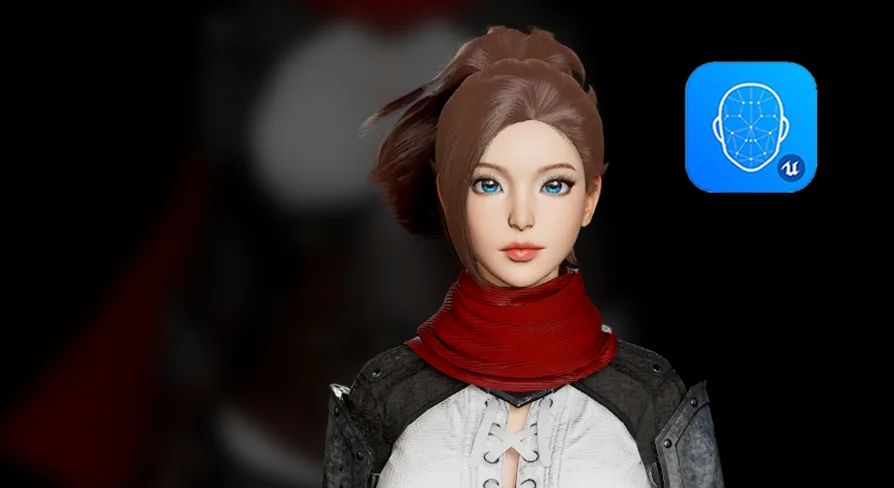
Swordswoman is set up as a modular female character with a UE4 skeleton, facial expressions, and separated armor, hair, body, and clothing parts. It also includes a full body without seams plus multiple 4K texture sets for the main components.
Swordswoman is shaped for projects that need a fantasy female character ready for animation, customization, and modular assembly. The character comes rigged with a UE4 skeleton, which makes the setup immediately relevant for Unreal-based workflows that rely on an existing skeletal structure. Facial expressions are included through ARKit and Apple blendshapes, so the character is not limited to a static face rig.
That combination makes the asset useful for scenes where a sword-bearing heroine needs to move, emote, and present a clear stylized identity. The character leans into a warrior and knight direction, while still leaving room for color adjustments and part swapping.
Modular parts for assembly and variation
The character is modular, and the package separates the body into distinct pieces rather than forcing a single fixed look. The included parts cover the body, head, hair, armor parts, lingerie, and shoes. A whole body without seams is also included, which gives an alternate setup when a single unified mesh is preferred.
This structure is practical when a project needs variations without rebuilding the character from scratch. Armor, clothing, and accessory pieces can be worked with as separate elements, while the seamless full body gives a cleaner option for shots where visible seams would be a problem. The modular approach also fits projects that want to swap visual elements while keeping the same base character identity.
Color control across the outfit and body
Several character elements can be recolored: armor, weapon, shoes, hair, eyes, skin, nails, and lingerie. That level of color control makes the character easier to adapt to different scenes or visual themes without changing the underlying structure.
Because the palette can be adjusted across both gear and body details, the same character can read differently depending on the scene direction. A darker armor set, lighter skin tones, or altered hair and eye colors can shift the mood without changing the mesh layout. For character work that depends on quick visual iteration, this is one of the most direct tools included in the setup.
Texture sets and material coverage
The asset includes 4K texture sets for the main components, with albedo, normal, occlusion + metallic + roughness, and ID maps provided for the armor, weapon, lingerie, head, and body. The eyes also have 4K albedo and ID textures, while the hair uses 4K albedo, alpha, root, depth, and ID. Eyelashes are provided at 1K with albedo and alpha.
That texture coverage is broad enough to support the characterâs separate parts without forcing every surface into the same treatment. The dedicated sets for armor, weapon, clothing, face, body, eyes, and hair help keep those areas distinct, which matters when the character needs a specific material read on each part. The hair setup is especially notable because it includes alpha, root, and depth alongside the base color, allowing it to sit separately from the rest of the model.
Texture coverage at a glance
4K Armor: Albedo, Normal, Occlusion + Metallic + Roughness, ID
4K Weapon: Albedo, Normal, Occlusion + Metallic + Roughness, ID
4K Lingerie: Albedo, Normal, Occlusion + Metallic + Roughness, ID
4K Head: Albedo, Normal, Occlusion + Metallic + Roughness, ID
4K Body: Albedo, Normal, Occlusion + Metallic + Roughness, ID
4K Eyes: Albedo, ID
4K Hair: Albedo, Alpha, Root, Depth, ID
1K Eyelashes: Albedo, Alpha
Mesh data and the different character states
The package gives separate mesh data for armor, lingerie, nude, and weapon components. The armor mesh is listed at 76,527 vertices and 13,542 tris. The lingerie version uses 54,871 vertices and 96,342 tris, and the nude version is listed with the same 54,871 vertices and 96,342 tris. The weapon mesh is much smaller, with 1,437 vertices and 2,846 tris.
Those numbers show how the character is split into distinct presentation states rather than being locked into one fixed appearance. For implementation, that can matter when different scenes require different levels of coverage or a different outfit state. The weapon is also separated cleanly from the body meshes, which keeps it available as its own component in the character setup.
Animation setup and what needs attention
The character is rigged, but bone simulation is not set up in the project. Extra bones are recommended to avoid artifacts in the animation. That makes the asset straightforward in some areas and more deliberate in others: the core skeleton is there, facial expression support is included, but secondary motion will need care if you want to avoid visual issues.
The result is a character that is already grounded in an animation workflow, while still leaving room for technical adjustment during implementation. Anyone placing the model into a scene will want to keep the note about extra bones in mind, especially if the animation relies on parts that would otherwise need simulated movement.
Where this character fits
Swordswoman fits projects that need a fantasy female warrior with modular parts, facial expression support, and a clear rigging foundation. It works especially well when the character needs to be adjusted through color changes or assembled from separate armor, hair, clothing, and body pieces. The seam-free full body option also gives flexibility when the scene calls for a cleaner overall silhouette.
For teams working with animation blueprints, the UE4 skeleton and included facial blendshapes provide the key setup points. For character artists, the separate textures and modular parts offer a practical base for iteration. The character is most useful where a stylized sword-fighting heroine needs to be prepared for posing, animation, and visual variation without rebuilding the asset from scratch.
 Characters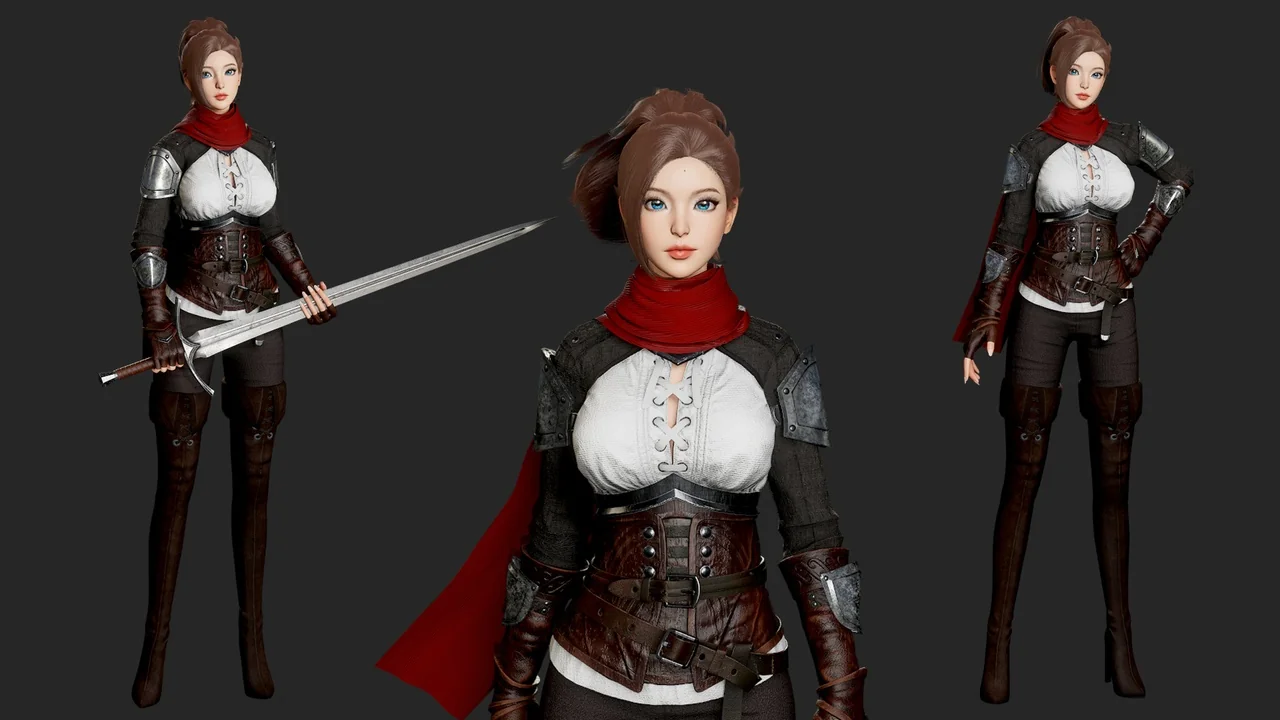
 Characters
 Characters
 Characters