"c14ff6bd758dadb1"{"id":"24798","slug":"post-soviet-furniture","title":"Post Soviet Furniture","category":"Furniture \u0026 Fixtures","engine":"4.26+,5.0+","assetVersion":"Engine version: 4.26+,5.0+","engineVersion":"4.18","tag":"Furniture","accent":"blue","visual":"city","summary":"Post Soviet Furniture gathers Russian and Eastern European household pieces into one consistent set of props. The worn look and shared style make it easy to place in interiors for horror, adventure, or shooter scenes.","platform":"Unreal Engine","publishedAt":"2026-04-17T08:51:47.000Z","updatedAt":"2026-04-20T06:12:37.000Z","sourceNotes":[],"fileContents":[],"compatibility":["Unreal Engine","Engine version: 4.26+,5.0+"],"featuredImage":{"alt":"Post Soviet Furniture","src":"https://3dcghub.com/wp-content/uploads/2026/04/c9160e570719_e740d7e5-b4fa-43bc-ac95-28a45bfd7495.webp"},"hasDownloadLink":true,"downloads":0,"terms":[{"taxonomy":"category","slug":"furniture-and-fixtures","name":"Furniture \u0026 Fixtures"},{"taxonomy":"post_tag","slug":"characters","name":"Characters"},{"taxonomy":"post_tag","slug":"environment","name":"Environment"},{"taxonomy":"post_tag","slug":"prop","name":"Prop"}],"galleryImages":[{"src":"https://3dcghub.com/wp-content/uploads/2026/04/5e841884a27d_40bf6f52-c352-4496-ab8e-f58fa874818e.webp","alt":"Post Soviet Furniture"},{"src":"https://3dcghub.com/wp-content/uploads/2026/04/431c70607a23_0afb28c4-3430-4f5a-bd2e-557a1dd37fcc.webp","alt":"Post Soviet Furniture"},{"src":"https://3dcghub.com/wp-content/uploads/2026/04/f90a59835a56_7269f875-99ba-4888-80f2-57bb90b400f3.webp","alt":"Post Soviet Furniture"},{"src":"https://3dcghub.com/wp-content/uploads/2026/04/a587b271e91b_637aa620-b672-4fb1-9ad3-61208e2df075.webp","alt":"Post Soviet Furniture"},{"src":"https://3dcghub.com/wp-content/uploads/2026/04/5b253247bbf1_175c2ad1-a262-4c34-8980-6060cc7caeff.webp","alt":"Post Soviet Furniture"}],"accessPanel":{"kind":"resource","title":"Access this resource","eyebrow":"Free Download","message":"Log in or create a free account to start your download.","fileName":"Content.7z","safetyNote":"All resources are 100% manually reviewed to eliminate all risks.","actionLabel":"Download Free","resourceType":"Resource archive"},"contentHtml":"\u003ch2\u003ePlacing the set into an interior scene\u003c/h2\u003e\u003cp\u003ePost Soviet Furniture works best when it is treated as part of an interior environment rather than as a collection of isolated props. The pack brings together Russian and Eastern European furniture types that already feel like they belong in the same space, so a scene can be arranged around them without needing to force visual consistency afterward. Cupboards, chairs, a piano, carpets, tables, and coffee tables can be staged together as everyday room pieces, then used to shape how a player reads the space from the first glance.\u003c/p\u003e\u003cp\u003eThat shared identity matters for level building. When furniture carries a similar visual tone, it becomes easier to compose apartments, living rooms, corridors, or other indoor locations that feel like they were furnished at the same time and kept under the same conditions. Instead of scattering unrelated pieces across a level, the pack gives artists a coherent interior language to work with. The result is a space that can feel grounded before any lighting or gameplay logic is added.\u003c/p\u003e\u003ch2\u003eWhat is included in the pack\u003c/h2\u003e\u003cp\u003eThe furniture set covers several familiar household items associated with Russian or Eastern European interiors. The included pieces are the kinds of objects that define the use of a room as much as they decorate it. A cupboard can anchor a wall, chairs can fill out a dining or living area, a piano can become a focal point, and carpets, tables, and coffee tables help fill the negative space between larger props.\u003c/p\u003e\u003cp\u003eBecause the collection includes a mix of large and smaller items, it can support both broad layout work and closer set dressing. Large pieces help establish the basic structure of a room, while smaller items make a space feel inhabited. A coffee table beside chairs, for example, creates a more believable gathering area. A carpet can soften an otherwise empty floor and make the room feel occupied. These are the kinds of details that help a level move from bare geometry to a place that looks ready for gameplay.\u003c/p\u003e\u003cp\u003eThe set does not present itself as modern or polished furniture. Its identity is tied to a specific regional style and a slightly worn condition, which makes the props more useful when the goal is to imply lived-in spaces rather than pristine interiors.\u003c/p\u003e\u003ch2\u003eSurface wear and the mood it creates\u003c/h2\u003e\u003cp\u003eOne of the clearest traits in Post Soviet Furniture is the slight weariness and dilapidation across the props. That surface treatment gives the furniture a history. It suggests use, age, and a building that has not been freshly furnished. For artists, that makes the set immediately useful in scenes where atmosphere needs to carry some of the storytelling.\u003c/p\u003e\u003cp\u003eThis kind of wear is especially helpful when a level is meant to feel uneasy. A slightly damaged chair or a worn cupboard does not need to be called out individually; it simply contributes to the roomâs mood. In a horror setting, that mood can support tension without relying on oversized visual effects. In an adventure scene, it can imply an older home, a forgotten apartment, or a place that has been left behind. In a shooter, it can help establish a believable indoor battleground that feels like it existed before the action started.\u003c/p\u003e\u003cp\u003eThe key point is that the wear is not extreme enough to make the props unusable. The furniture still reads as furniture. It remains clear enough for practical environment building, while the weathered look gives it character. That balance is what makes the pack flexible for scenes that need personality without losing clarity.\u003c/p\u003e\u003ch2\u003eHow the style supports different game genres\u003c/h2\u003e\u003cp\u003eThe pack was developed for the Twin Soul game demo, and the stated target fit includes AAA class projects in horror, adventure, or shooter genres. That gives a strong clue about how the furniture can be applied. It is not presented as a neutral office set or a contemporary home package. Its look is tied to a more specific atmosphere, which can be a strength when an environment needs to communicate place and tone quickly.\u003c/p\u003e\u003cp\u003eFor horror, the worn furniture and regional identity can add weight to a scene without extra explanation. A room with a cupboard, piano, carpets, and clustered tables can suggest history and neglect. For adventure, the same objects can make a location feel lived in and worth exploring, especially when they are arranged to imply a story behind the room. For shooter environments, the pack can help break up empty indoor spaces and give players visual anchors while moving through tighter layouts.\u003c/p\u003e\u003cp\u003eBecause all objects are designed in one style, the pack avoids the problem of interiors that feel assembled from mismatched sources. That consistency is valuable in production, where environment artists often need props to work together quickly across multiple rooms or spaces. A unified furniture set reduces the amount of visual correction needed during scene assembly.\u003c/p\u003e\u003ch2\u003eUsing the pieces as set dressing\u003c/h2\u003e\u003cp\u003eBeyond furnishing a room, the pack can be used to guide how the player experiences an area. A piano can serve as a clear point of interest, while tables and coffee tables can define social or domestic zones. Chairs and cupboards help suggest how a room was used day to day. Carpets can tie the arrangement together and make the floor plane feel less empty.\u003c/p\u003e\u003cp\u003eThat makes the set useful even when an environment is only partially visible. A hallway with a glimpse of furniture through a doorway, or a room framed by a carpet and table arrangement, can carry a surprising amount of narrative weight. The props do not need to be treated as isolated decorations. They can be layered to tell the player something about the space before any dialogue or scripted event occurs.\u003c/p\u003e\u003cp\u003eThe collection also fits naturally into scenes that want a slightly neglected residential feel. The wear on the props, combined with the Eastern European and Russian furniture identity, helps establish a setting that feels specific rather than generic. That specificity is often what gives a game interior its personality.\u003c/p\u003e\u003cp\u003eFor developers and artists building indoor environments, Post Soviet Furniture offers a coherent way to fill a room with props that already speak the same visual language. It is especially practical when the scene needs a worn domestic atmosphere and a style that can hold together across horror, adventure, or shooter spaces.\u003c/p\u003e\n\n\u003ch2\u003eContinue Browsing Similar Packs\u003c/h2\u003e\n\u003cul\u003e\n\u003cli\u003e\u003ca href=\"https://3dcghub.com/hospital-modular-building-props-and-characters/\" title=\"Hospital – modular building, props and characters\"\u003eHospital – modular building, props and characters\u003c/a\u003e\u003c/li\u003e\n\u003cli\u003e\u003ca href=\"https://3dcghub.com/mountain-village-environment-village-modular-village-houses-village-props/\" title=\"Mountain Village Environment (Village, Modular Village Houses, Village Props)\"\u003eMountain Village Environment (Village, Modular Village Houses, Village Props)\u003c/a\u003e\u003c/li\u003e\n\u003cli\u003e\u003ca href=\"https://3dcghub.com/barnyard-megapack-barn-barn-props-farm-environment/\" title=\"Barnyard Megapack (Barn, Barn Props, Farm Environment)\"\u003eBarnyard Megapack (Barn, Barn Props, Farm Environment)\u003c/a\u003e\u003c/li\u003e\n\u003cli\u003e\u003ca href=\"https://3dcghub.com/spaceships-props-and-modular-environment-tiles-sci-fi-low-poly-voxel/\" title=\"Spaceships, props and modular environment tiles (sci-fi, low poly, voxel)\"\u003eSpaceships, props and modular environment tiles (sci-fi, low poly, voxel)\u003c/a\u003e\u003c/li\u003e\n\u003cli\u003e\u003ca href=\"https://3dcghub.com/sci-fi-props-vol01/\" title=\"Sci-Fi Props Vol01\"\u003eSci-Fi Props Vol01\u003c/a\u003e\u003c/li\u003e\n\u003c/ul\u003e\n\n\u003ch2\u003eAsset Gallery\u003c/h2\u003e","contentTextLength":6671,"navigation":{"current":2055,"total":3719,"previous":{"id":"24809","slug":"school-animations","title":"School Animations","category":"Variety","platform":"Unreal Engine","updatedAt":"2026-04-20T06:12:37.000Z"},"next":{"id":"24908","slug":"realistic-base-skeleton","title":"Realistic Base Skeleton","category":"Characters \u0026 Creatures","platform":"Unreal Engine","updatedAt":"2026-04-20T06:12:36.000Z"}},"relatedResources":[{"id":"4004","slug":"abandoned-post-apoc-apartment-props","title":"Abandoned Post Apoc Apartment Props","category":"Furniture \u0026 Fixtures","engine":"4.26+,5.0+","assetVersion":"Engine version: 4.26+,5.0+","engineVersion":"4.17","tag":"Furniture","accent":"blue","visual":"luts","summary":"Create immersive post-apocalyptic environments with this AAA-quality asset pack. Featuring 132 optimized meshes, master materials, and realistic textures.","platform":"Unreal Engine","publishedAt":"2026-02-09T13:03:41.000Z","updatedAt":"2026-04-19T15:57:31.000Z","sourceNotes":[],"fileContents":[],"compatibility":["Unreal Engine","Engine version: 4.26+,5.0+"],"featuredImage":{"alt":"Abandoned Post Apoc Apartment Props","src":"https://3dcghub.com/wp-content/uploads/2026/02/bf18e8f2-a74d-4749-a826-0788ef4ea0bb.webp"},"hasDownloadLink":true,"downloads":0},{"id":"27997","slug":"soviet-village-environment-pack","title":"Soviet Village Environment Pack","category":"Buildings \u0026 Architecture","engine":"4.26+,5.0+","assetVersion":"Engine version: 4.26+,5.0+","engineVersion":"","tag":"Buildings","accent":"blue","visual":"city","summary":"This pack focuses on the pieces that make a village scene read quickly: houses, barns, and props. Together, they support the setup of a solid, good-looking Post-Soviet environment inside Unreal Engine.","platform":"Unreal Engine","publishedAt":"2026-04-30T13:58:45.000Z","updatedAt":"2026-04-30T13:58:46.000Z","sourceNotes":[],"fileContents":[],"compatibility":["Unreal Engine","Engine version: 4.26+,5.0+"],"featuredImage":{"alt":"Soviet Village Environment Pack","src":"https://3dcghub.com/wp-content/uploads/2026/04/b55bcff12956_1-1920x1080-5cda3bc64fef4a0c5666b5203022be30.webp"},"hasDownloadLink":true,"downloads":0},{"id":"1001568","slug":"victorian-furniture-living-room","title":"Victorian Furniture - Living Room","category":"Furniture \u0026 Fixtures","engine":"4.22+,5.0+","assetVersion":"","engineVersion":"Engine Version: 4.22+,5.0+","tag":"Furniture","accent":"blue","visual":"mech","summary":"Create authentic period interiors with Victorian Furniture - Living Room, featuring low-poly optimized models, 4K PBR textures, and a presentation scene.","platform":"Unreal Engine","publishedAt":"2026-10-10T04:02:23.566Z","updatedAt":"2026-10-10T04:02:23.566Z","sourceNotes":[],"fileContents":[],"compatibility":["Unreal Engine","Engine Version: 4.22+,5.0+"],"featuredImage":{"alt":"Victorian Furniture - Living Room","src":"/wp-content/uploads/published/2026/10/6455d49d6b03-29b5c27e-5244-4178-aff9-ef0aaa6e97bd-dfcbac4a43.webp"},"hasDownloadLink":true,"downloads":1}]}
Furniture
Post Soviet Furniture
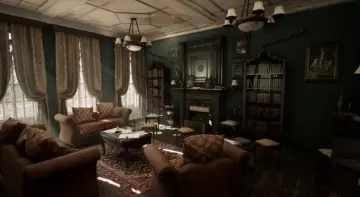
Post Soviet Furniture gathers Russian and Eastern European household pieces into one consistent set of props. The worn look and shared style make it easy to place in interiors for horror, adventure, or shooter scenes.
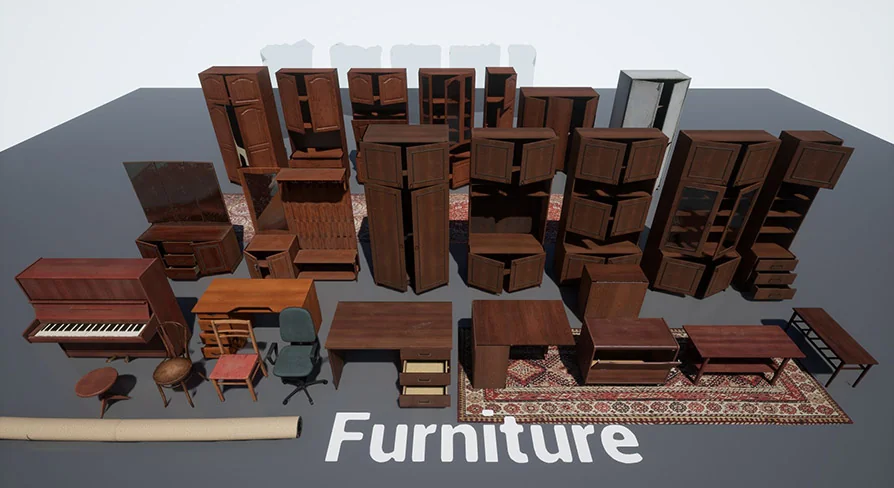
Post Soviet Furniture works best when it is treated as part of an interior environment rather than as a collection of isolated props. The pack brings together Russian and Eastern European furniture types that already feel like they belong in the same space, so a scene can be arranged around them without needing to force visual consistency afterward. Cupboards, chairs, a piano, carpets, tables, and coffee tables can be staged together as everyday room pieces, then used to shape how a player reads the space from the first glance.
That shared identity matters for level building. When furniture carries a similar visual tone, it becomes easier to compose apartments, living rooms, corridors, or other indoor locations that feel like they were furnished at the same time and kept under the same conditions. Instead of scattering unrelated pieces across a level, the pack gives artists a coherent interior language to work with. The result is a space that can feel grounded before any lighting or gameplay logic is added.
What is included in the pack
The furniture set covers several familiar household items associated with Russian or Eastern European interiors. The included pieces are the kinds of objects that define the use of a room as much as they decorate it. A cupboard can anchor a wall, chairs can fill out a dining or living area, a piano can become a focal point, and carpets, tables, and coffee tables help fill the negative space between larger props.
Because the collection includes a mix of large and smaller items, it can support both broad layout work and closer set dressing. Large pieces help establish the basic structure of a room, while smaller items make a space feel inhabited. A coffee table beside chairs, for example, creates a more believable gathering area. A carpet can soften an otherwise empty floor and make the room feel occupied. These are the kinds of details that help a level move from bare geometry to a place that looks ready for gameplay.
The set does not present itself as modern or polished furniture. Its identity is tied to a specific regional style and a slightly worn condition, which makes the props more useful when the goal is to imply lived-in spaces rather than pristine interiors.
Surface wear and the mood it creates
One of the clearest traits in Post Soviet Furniture is the slight weariness and dilapidation across the props. That surface treatment gives the furniture a history. It suggests use, age, and a building that has not been freshly furnished. For artists, that makes the set immediately useful in scenes where atmosphere needs to carry some of the storytelling.
This kind of wear is especially helpful when a level is meant to feel uneasy. A slightly damaged chair or a worn cupboard does not need to be called out individually; it simply contributes to the roomâs mood. In a horror setting, that mood can support tension without relying on oversized visual effects. In an adventure scene, it can imply an older home, a forgotten apartment, or a place that has been left behind. In a shooter, it can help establish a believable indoor battleground that feels like it existed before the action started.
The key point is that the wear is not extreme enough to make the props unusable. The furniture still reads as furniture. It remains clear enough for practical environment building, while the weathered look gives it character. That balance is what makes the pack flexible for scenes that need personality without losing clarity.
How the style supports different game genres
The pack was developed for the Twin Soul game demo, and the stated target fit includes AAA class projects in horror, adventure, or shooter genres. That gives a strong clue about how the furniture can be applied. It is not presented as a neutral office set or a contemporary home package. Its look is tied to a more specific atmosphere, which can be a strength when an environment needs to communicate place and tone quickly.
For horror, the worn furniture and regional identity can add weight to a scene without extra explanation. A room with a cupboard, piano, carpets, and clustered tables can suggest history and neglect. For adventure, the same objects can make a location feel lived in and worth exploring, especially when they are arranged to imply a story behind the room. For shooter environments, the pack can help break up empty indoor spaces and give players visual anchors while moving through tighter layouts.
Because all objects are designed in one style, the pack avoids the problem of interiors that feel assembled from mismatched sources. That consistency is valuable in production, where environment artists often need props to work together quickly across multiple rooms or spaces. A unified furniture set reduces the amount of visual correction needed during scene assembly.
Using the pieces as set dressing
Beyond furnishing a room, the pack can be used to guide how the player experiences an area. A piano can serve as a clear point of interest, while tables and coffee tables can define social or domestic zones. Chairs and cupboards help suggest how a room was used day to day. Carpets can tie the arrangement together and make the floor plane feel less empty.
That makes the set useful even when an environment is only partially visible. A hallway with a glimpse of furniture through a doorway, or a room framed by a carpet and table arrangement, can carry a surprising amount of narrative weight. The props do not need to be treated as isolated decorations. They can be layered to tell the player something about the space before any dialogue or scripted event occurs.
The collection also fits naturally into scenes that want a slightly neglected residential feel. The wear on the props, combined with the Eastern European and Russian furniture identity, helps establish a setting that feels specific rather than generic. That specificity is often what gives a game interior its personality.
For developers and artists building indoor environments, Post Soviet Furniture offers a coherent way to fill a room with props that already speak the same visual language. It is especially practical when the scene needs a worn domestic atmosphere and a style that can hold together across horror, adventure, or shooter spaces.
 Furniture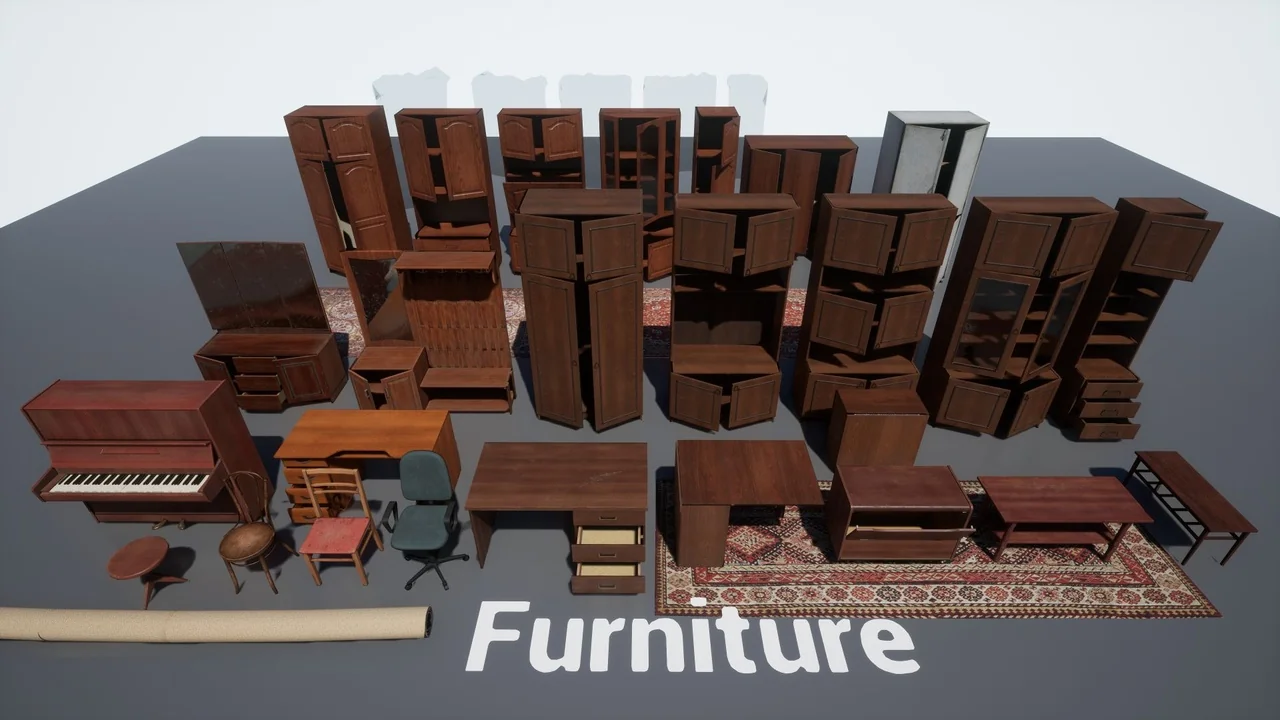
 Furniture
 Buildings
 Furniture