"c68a05d5e51405b3"{"id":"25198","slug":"dinosaur-utahraptor","title":"Dinosaur UtahRaptor","category":"Characters \u0026 Creatures","engine":"5.0+","assetVersion":"Engine version: 5.0+","engineVersion":"4.26","tag":"Characters","accent":"blue","visual":"character","summary":"UtahRaptor is presented as a real-dinosaur creature model with PBR support, a seven-color skin pack, and a full animation set made in Maya. It also includes Unreal Engine texture sets, engine-ready formats, and a bonus control rig for testing and learning.","platform":"Unreal Engine","publishedAt":"2026-04-19T13:16:27.000Z","updatedAt":"2026-04-20T06:12:31.000Z","sourceNotes":[],"fileContents":[],"compatibility":["Unreal Engine","Engine version: 5.0+"],"featuredImage":{"alt":"Dinosaur UtahRaptor","src":"https://3dcghub.com/wp-content/uploads/2026/04/27ae021e2096_d41ea427-064a-4aec-a57a-d9ad49afa282-1.webp"},"hasDownloadLink":true,"downloads":1,"terms":[{"taxonomy":"category","slug":"characters-and-creatures","name":"Characters \u0026 Creatures"},{"taxonomy":"post_tag","slug":"animation","name":"Animation"},{"taxonomy":"post_tag","slug":"characters","name":"Characters"},{"taxonomy":"post_tag","slug":"unreal-engine-5","name":"Unreal Engine 5"}],"galleryImages":[{"src":"https://3dcghub.com/wp-content/uploads/2026/04/645788d85f76_5c652d97-8e91-440f-91e6-e7b282c40529-1.webp","alt":"Dinosaur UtahRaptor"},{"src":"https://3dcghub.com/wp-content/uploads/2026/04/fa50b27feca3_c7d5bd92-0eac-4365-9c20-47253fdb6932-1.webp","alt":"Dinosaur UtahRaptor"},{"src":"https://3dcghub.com/wp-content/uploads/2026/04/85c477818c1b_f6a6e1c2-314c-4618-88d1-f5df14499b5b-1.webp","alt":"Dinosaur UtahRaptor"},{"src":"https://3dcghub.com/wp-content/uploads/2026/04/40029b85c673_685ac0b5-0a14-4e97-b0d5-cf712206cd21-1.webp","alt":"Dinosaur UtahRaptor"},{"src":"https://3dcghub.com/wp-content/uploads/2026/04/94330e642795_91911f2b-2676-45f1-ad14-65ae078920ef-1.webp","alt":"Dinosaur UtahRaptor"},{"src":"https://3dcghub.com/wp-content/uploads/2026/04/16379a37a360_22294215-b18d-45b3-9572-e3c9e4d3fb01-1.webp","alt":"Dinosaur UtahRaptor"},{"src":"https://3dcghub.com/wp-content/uploads/2026/04/8be3a9534ad0_c3bd5359-8b4f-4279-a2a6-52d2aee7e52a-1.webp","alt":"Dinosaur UtahRaptor"},{"src":"https://3dcghub.com/wp-content/uploads/2026/04/0be381e47831_d6498e51-b07f-40c1-ad4b-29a3c9d82191-1.webp","alt":"Dinosaur UtahRaptor"},{"src":"https://3dcghub.com/wp-content/uploads/2026/04/c8a20d60dbdd_cf283a12-13a9-4ca1-8c10-96549593f30b-1.webp","alt":"Dinosaur UtahRaptor"},{"src":"https://3dcghub.com/wp-content/uploads/2026/04/6c9b6d8113a5_507201fc-25e7-43af-b3b5-ac214ead9873-1.webp","alt":"Dinosaur UtahRaptor"}],"accessPanel":{"kind":"resource","title":"Access this resource","eyebrow":"Free Download","message":"Log in or create a free account to start your download.","fileName":"Content.7z","safetyNote":"All resources are 100% manually reviewed to eliminate all risks.","actionLabel":"Download Free","resourceType":"Resource archive"},"contentHtml":"\u003ch2\u003eUtahRaptor model and skin pack\u003c/h2\u003e\u003cp\u003eUtahRaptor is a creature model from the Real Dinosaurs series, shaped as a realistic raptor-style asset rather than a stylized prop. The model is set up with PBR support and includes a skin pack with seven different skin colors, giving it a straightforward way to vary the look of the animal without changing the underlying character setup.\u003c/p\u003e\u003cp\u003eThe mesh is listed at 36,387 polygons and 36,730 vertices. World scale is handled in centimeters, and the model is described as scaled correctly to 7 m. Those details matter in a production workflow because they show the asset is already prepared with size and mesh data in mind, rather than being left as a loose sculpt that still needs basic cleanup before use.\u003c/p\u003e\u003cp\u003eThe result is a UtahRaptor built to sit in a scene as a believable dinosaur creature, with enough structure for real-time presentation and a small set of skin options for visual variation.\u003c/p\u003e\u003ch2\u003eAnimation library made in Maya\u003c/h2\u003e\u003cp\u003eThe animation set is a major part of the package. It is made in Maya and includes movement, behavior, and reaction states rather than only a few basic cycles. The listed actions cover walking, running, speed running, backward movement, ambush, idle, sitting, standing up, sleeping, roaring, attacking, dying, drinking water, eating, sniffing, attacking while standing, leg broken, getting hit, awakening, jumping, and dodging left and right.\u003c/p\u003e\u003cp\u003eThere are 83 animations in total. That kind of range places the asset in a workflow where the dinosaur is not just a static model, but a character that can already support a broader set of creature scenes. Walking and running can cover travel or chase moments, while idle, sitting, sleep, and awakening help build calmer environmental behavior. Attack, roar, hit, broken-leg, and death states support action sequences where the UtahRaptor needs to read as a living predator rather than a background object.\u003c/p\u003e\u003cp\u003eBecause the motion set includes both movement and combat-style reactions, it can fit into game animation work, cinematic blocking, or creature testing where the goal is to move quickly from model approval into animated presentation.\u003c/p\u003e\u003ch2\u003eUnreal Engine textures and file formats\u003c/h2\u003e\u003cp\u003eThe texture setup is organized for Unreal Engine use and includes 19 items. The listed maps are Base Color, Normal Map, Occlusion Roughness Metallic, and Displacement Map. The displacement map is provided at 8096 x 8096 in 32-bit.tif format, while the textures are also described as PNG files at 8192 x 8192 and 2048 x 2048 resolution.\u003c/p\u003e\u003cp\u003eThat combination supports a practical material workflow: base color for surface color, normal information for surface detail, ORM for packed shading data, and displacement for stronger surface variation where it is needed. With PBR support already called out, the package is set up to work as a texture-driven creature asset rather than requiring a separate material rebuild from scratch.\u003c/p\u003e\u003cp\u003eThe available formats are uasset for Unreal Engine and.fbx in multiformat form. That keeps the asset tied to an Unreal-oriented pipeline while still giving an interchange format for other parts of a production process that may need a mesh export.\u003c/p\u003e\u003ch2\u003eControl rig bonus and workflow notes\u003c/h2\u003e\u003cp\u003eA control rig v0.1 is included as a bonus, but it is still in test state and is offered only for testing and learning. It is not part of the main product, and it comes with a clear limitation: if there are hanging problems with the control rig, there is no further support for it. The rig is treated as an extra because of customer requests, not as the core focus of the package.\u003c/p\u003e\u003cp\u003eThere is also a specific requirement attached to that bonus setup. The control rig and the Python editor script plugin need to be installed and enabled, or the control rig will not work. That makes the bonus feature something to use only in a prepared Unreal setup where those parts are already active.\u003c/p\u003e\u003cp\u003eIn a real production workflow, that leaves the main package doing the important work: the UtahRaptor model carries the mesh, scale, textures, and skin choices; the Maya animation set covers the creature behavior; and the Unreal-ready formats help it move into a game or cinematic scene. The bonus rig is simply there for testing and learning, while the main asset is set up to handle creature presentation and animation playback.\u003c/p\u003e\n\n\u003ch2\u003eContinue Browsing Similar Packs\u003c/h2\u003e\n\u003cul\u003e\n\u003cli\u003e\u003ca href=\"https://3dcghub.com/shootlikeme-unreal-engine-third-person-shooter-template/\" title=\"ShootLikeMe – Unreal Engine Third Person Shooter Template\"\u003eShootLikeMe – Unreal Engine Third Person Shooter Template\u003c/a\u003e\u003c/li\u003e\n\u003cli\u003e\u003ca href=\"https://3dcghub.com/advanced-unreal-engine-5-multiplayer-gameplay-programming/\" title=\"Advanced Unreal Engine 5 Multiplayer Gameplay Programming\"\u003eAdvanced Unreal Engine 5 Multiplayer Gameplay Programming\u003c/a\u003e\u003c/li\u003e\n\u003cli\u003e\u003ca href=\"https://3dcghub.com/niagara-beginners-to-advanced-in-unreal-engine-5/\" title=\"Niagara Beginners to advanced in Unreal Engine 5\"\u003eNiagara Beginners to advanced in Unreal Engine 5\u003c/a\u003e\u003c/li\u003e\n\u003cli\u003e\u003ca href=\"https://3dcghub.com/create-zelda-like-skills-with-c-in-unreal-engine-5-2/\" title=\"Create Zelda-like skills with C++ in unreal engine 5\"\u003eCreate Zelda-like skills with C++ in unreal engine 5\u003c/a\u003e\u003c/li\u003e\n\u003cli\u003e\u003ca href=\"https://3dcghub.com/main-menus-beginner-class-unreal-engine-5/\" title=\"Main Menus Beginner Class – Unreal Engine 5\"\u003eMain Menus Beginner Class – Unreal Engine 5\u003c/a\u003e\u003c/li\u003e\n\u003c/ul\u003e","contentTextLength":4629,"navigation":{"current":2223,"total":3860,"previous":{"id":"25213","slug":"western-desert-town-w-construction-tool","title":"Western Desert Town w/ Construction Tool","category":"Towns \u0026 Villages","platform":"Unreal Engine","updatedAt":"2026-04-20T06:12:31.000Z"},"next":{"id":"25185","slug":"volcano-land-environment-w-terrain-scatter-tool-exterior-natural-vfx","title":"Volcano Land Environment w/ Terrain Scatter Tool (Exterior, Natural, VFX)","category":"Mountain","platform":"Unreal Engine","updatedAt":"2026-04-20T06:12:31.000Z"}},"relatedResources":[{"id":"1001595","slug":"dinosaur-brachiosaurus-sauropod","title":"Dinosaur Brachiosaurus Sauropod","category":"Characters \u0026 Creatures","engine":"5.0+","assetVersion":"","engineVersion":"Engine Version: 5.0+","tag":"Characters","accent":"blue","visual":"character","summary":"Examine the Dinosaur Brachiosaurus Sauropod model, featuring 66 animations, 7 skin colors, 8K PBR textures, and native Unreal Engine 4.26 and 5.0 uassets.","platform":"Unreal Engine","publishedAt":"2026-10-10T16:17:58.830Z","updatedAt":"2026-10-10T16:17:58.830Z","sourceNotes":[],"fileContents":[],"compatibility":["Unreal Engine","Engine Version: 5.0+"],"featuredImage":{"alt":"Dinosaur Brachiosaurus Sauropod","src":"/wp-content/uploads/published/2026/10/d64aaaa45572-b9b0cd53-5b5f-4f1e-8982-1944871b16a4-8394a84579.webp"},"hasDownloadLink":true,"downloads":0},{"id":"1001596","slug":"dinosaur-megalodon-sea-monster-series-5","title":"Dinosaur MEGALODON - Sea Monster Series 5","category":"Characters \u0026 Creatures","engine":"4.26+,5.0+","assetVersion":"","engineVersion":"Engine Version: 4.26+,5.0+","tag":"Characters","accent":"blue","visual":"character","summary":"Detailed look at the 20-meter Dinosaur MEGALODON model, featuring 18 Maya swim animations, 39k polygon mesh, 8K PBR textures, and Unreal Engine setup.","platform":"Unreal Engine","publishedAt":"2026-10-10T16:18:43.454Z","updatedAt":"2026-10-10T16:18:43.454Z","sourceNotes":[],"fileContents":[],"compatibility":["Unreal Engine","Engine Version: 4.26+,5.0+"],"featuredImage":{"alt":"Dinosaur MEGALODON - Sea Monster Series 5","src":"/wp-content/uploads/published/2026/10/3ead9ead6d83-75fe9bfc-3625-463d-b709-410aaa403dfb-12800b49cd.webp"},"hasDownloadLink":true,"downloads":0},{"id":"24789","slug":"swordswoman","title":"Swordswoman","category":"Characters \u0026 Creatures","engine":"4.26+,5.0+","assetVersion":"Engine version: 4.26+,5.0+","engineVersion":"","tag":"Characters","accent":"blue","visual":"character","summary":"Swordswoman is set up as a modular female character with a UE4 skeleton, facial expressions, and separated armor, hair, body, and clothing parts. It also includes a full body without seams plus multiple 4K texture sets for the main components.","platform":"Unreal Engine","publishedAt":"2026-04-17T08:47:00.000Z","updatedAt":"2026-04-20T06:12:38.000Z","sourceNotes":[],"fileContents":[],"compatibility":["Unreal Engine","Engine version: 4.26+,5.0+"],"featuredImage":{"alt":"Swordswoman","src":"https://3dcghub.com/wp-content/uploads/2026/04/ed75dd13c63a_b31ab841-8674-4ec4-a28d-0844fb43f8f2.webp"},"hasDownloadLink":true,"downloads":1}]}
Characters
Dinosaur UtahRaptor
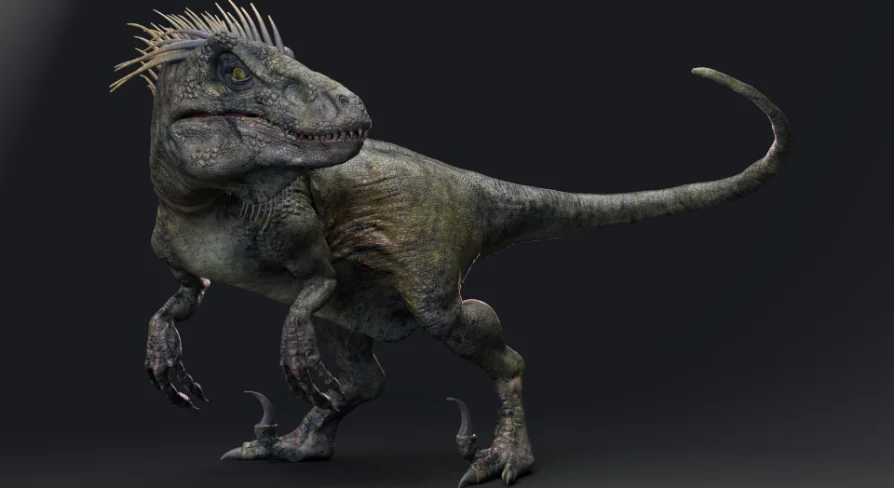
UtahRaptor is presented as a real-dinosaur creature model with PBR support, a seven-color skin pack, and a full animation set made in Maya. It also includes Unreal Engine texture sets, engine-ready formats, and a bonus control rig for testing and learning.
UtahRaptor is a creature model from the Real Dinosaurs series, shaped as a realistic raptor-style asset rather than a stylized prop. The model is set up with PBR support and includes a skin pack with seven different skin colors, giving it a straightforward way to vary the look of the animal without changing the underlying character setup.
The mesh is listed at 36,387 polygons and 36,730 vertices. World scale is handled in centimeters, and the model is described as scaled correctly to 7 m. Those details matter in a production workflow because they show the asset is already prepared with size and mesh data in mind, rather than being left as a loose sculpt that still needs basic cleanup before use.
The result is a UtahRaptor built to sit in a scene as a believable dinosaur creature, with enough structure for real-time presentation and a small set of skin options for visual variation.
Animation library made in Maya
The animation set is a major part of the package. It is made in Maya and includes movement, behavior, and reaction states rather than only a few basic cycles. The listed actions cover walking, running, speed running, backward movement, ambush, idle, sitting, standing up, sleeping, roaring, attacking, dying, drinking water, eating, sniffing, attacking while standing, leg broken, getting hit, awakening, jumping, and dodging left and right.
There are 83 animations in total. That kind of range places the asset in a workflow where the dinosaur is not just a static model, but a character that can already support a broader set of creature scenes. Walking and running can cover travel or chase moments, while idle, sitting, sleep, and awakening help build calmer environmental behavior. Attack, roar, hit, broken-leg, and death states support action sequences where the UtahRaptor needs to read as a living predator rather than a background object.
Because the motion set includes both movement and combat-style reactions, it can fit into game animation work, cinematic blocking, or creature testing where the goal is to move quickly from model approval into animated presentation.
Unreal Engine textures and file formats
The texture setup is organized for Unreal Engine use and includes 19 items. The listed maps are Base Color, Normal Map, Occlusion Roughness Metallic, and Displacement Map. The displacement map is provided at 8096 x 8096 in 32-bit.tif format, while the textures are also described as PNG files at 8192 x 8192 and 2048 x 2048 resolution.
That combination supports a practical material workflow: base color for surface color, normal information for surface detail, ORM for packed shading data, and displacement for stronger surface variation where it is needed. With PBR support already called out, the package is set up to work as a texture-driven creature asset rather than requiring a separate material rebuild from scratch.
The available formats are uasset for Unreal Engine and.fbx in multiformat form. That keeps the asset tied to an Unreal-oriented pipeline while still giving an interchange format for other parts of a production process that may need a mesh export.
Control rig bonus and workflow notes
A control rig v0.1 is included as a bonus, but it is still in test state and is offered only for testing and learning. It is not part of the main product, and it comes with a clear limitation: if there are hanging problems with the control rig, there is no further support for it. The rig is treated as an extra because of customer requests, not as the core focus of the package.
There is also a specific requirement attached to that bonus setup. The control rig and the Python editor script plugin need to be installed and enabled, or the control rig will not work. That makes the bonus feature something to use only in a prepared Unreal setup where those parts are already active.
In a real production workflow, that leaves the main package doing the important work: the UtahRaptor model carries the mesh, scale, textures, and skin choices; the Maya animation set covers the creature behavior; and the Unreal-ready formats help it move into a game or cinematic scene. The bonus rig is simply there for testing and learning, while the main asset is set up to handle creature presentation and animation playback.
 Characters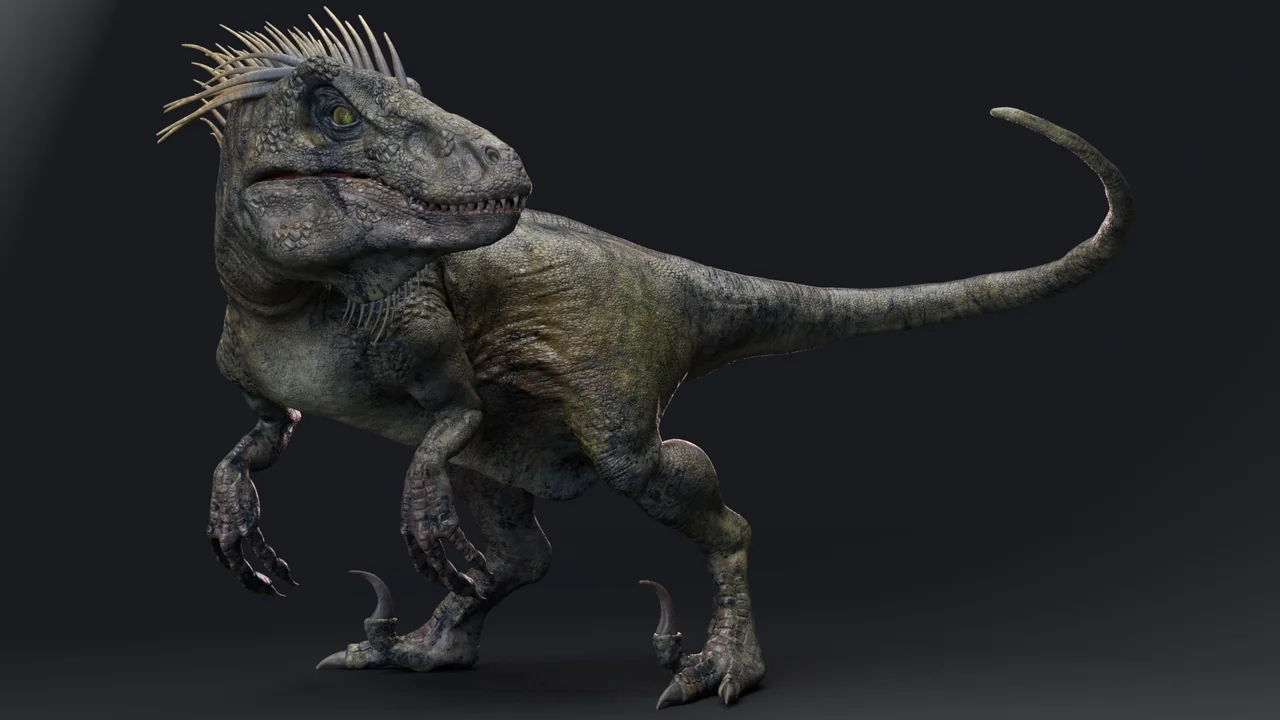
 Characters
 Characters
 Characters