"0283a5a6392d9fd6"{"id":"1001412","slug":"post-apocalyptic-refinery","title":"Post Apocalyptic Refinery","category":"Industrial","engine":"5.1+","assetVersion":"","engineVersion":"Engine Version: 5.1+","tag":"Industrial","accent":"blue","visual":"mech","summary":"Post Apocalyptic Refinery brings over 500 Nanite industrial meshes, 50 blueprints, 90+ packed level actors, and desert landscape tools to Unreal Engine 5.","platform":"Unreal Engine","publishedAt":"2026-10-05T06:19:44.013Z","updatedAt":"2026-10-05T06:19:44.013Z","sourceNotes":[],"fileContents":[],"compatibility":["Unreal Engine","Engine Version: 5.1+"],"featuredImage":{"alt":"Post Apocalyptic Refinery","src":"/wp-content/uploads/published/2026/10/7d523a2b8fc2-6e33f29a-6110-4c7e-a1d4-c018c10071a7-e882ad8ace.webp"},"hasDownloadLink":true,"downloads":1,"terms":[{"taxonomy":"category","slug":"industrial","name":"Industrial"}],"galleryImages":[{"src":"/wp-content/uploads/published/2026/10/9b18b222fb53-3a4d199f-4206-47de-97a2-9a812f817b09-d32632d2ef.webp","alt":"Post Apocalyptic Refinery"},{"src":"/wp-content/uploads/published/2026/10/5735b9dcb369-8b9827e9-6a95-4d0e-bd45-121724379ca6-19a646bd68.webp","alt":"Post Apocalyptic Refinery"},{"src":"/wp-content/uploads/published/2026/10/25960032d32c-ccc70056-9645-45a5-af48-2fd6097b8ec6-72fb4e13cc.webp","alt":"Post Apocalyptic Refinery"},{"src":"/wp-content/uploads/published/2026/10/a8add0282485-4cbef4c8-8911-4b1b-8806-a0ca83fdb402-770dec09ed.webp","alt":"Post Apocalyptic Refinery"},{"src":"/wp-content/uploads/published/2026/10/053c2c9b1634-0454df86-24bf-4618-94f9-815d7d70b42b-16e9c44224.webp","alt":"Post Apocalyptic Refinery"},{"src":"/wp-content/uploads/published/2026/10/64b1c567a7ab-f8bf819a-2256-4a96-8e5a-5f6f23881e76-2d4e732b64.webp","alt":"Post Apocalyptic Refinery"},{"src":"/wp-content/uploads/published/2026/10/e4e6de8b5b6c-a9246083-3553-4dc6-9089-4092ffe2759a-1e7d6faf34.webp","alt":"Post Apocalyptic Refinery"},{"src":"/wp-content/uploads/published/2026/10/f7fa1a413b40-957514dd-ef0c-4445-acb3-91faddc4c667-d37b841d79.webp","alt":"Post Apocalyptic Refinery"},{"src":"/wp-content/uploads/published/2026/10/7032560a4c98-046ad6d3-684a-4371-878a-7ea4f965024a-51fe76ea48.webp","alt":"Post Apocalyptic Refinery"}],"accessPanel":{"kind":"resource","title":"Download this resource","eyebrow":"Free Download","message":"Log in or create a free account to start your download.","fileName":"Content.7z","safetyNote":"Resources are manually reviewed before listing to improve quality and reduce obvious risks.","actionLabel":"Download Free","resourceType":"Resource archive"},"contentHtml":"\u003cp\u003ePost Apocalyptic Refinery gathers more than 500 individual assets, 50 specialized blueprints, and over 90 pre-assembled packed level actors to construct weathered industrial complexes situated in barren landscapes. The asset library balances architectural scale and surface degradation, offering everything from massive distillation tanks to scattered ground clutter. Built specifically to utilize modern Unreal Engine 5 systems, the collection supplies modular structures alongside terrain tools, environmental foliage, bonus weaponry, and vehicles.\u003c/p\u003e \u003ch2\u003eModular Refinery Tanks, Pipes, and Industrial Hardware\u003c/h2\u003e\n\u003cp\u003eThe core mesh library contains over 500 distinct pieces configured for constructing deteriorating industrial processing plants, factories, and pipelines. Modular refinery tanks serve as visual anchors for heavy processing areas, supported by runs of industrial pipes, framework ladders, and metal catwalks. Secondary dressing elements include storage barrels, structural debris, fractured concrete pieces, and rubble piles that convey structural collapse and long-term decay.\u003c/p\u003e \u003cp\u003eTo ground these man-made structures in their setting, the package includes nature assets configured for an arid wasteland biome. Boulders, standalone rocks, and desert foliage items integrate directly into the structural footprint, allowing dry brush and stony scree to encroach on abandoned manufacturing floors and perimeter fences. Every mesh in the asset collection is constructed to leverage Unreal Engine 5 Nanite geometry, permitting dense geometric fidelity across both macro structures and fragmented rubble without traditional polygon budgeting constraints.\u003c/p\u003e \u003ch2\u003eProcedural Blueprints and Packed Level Actors\u003c/h2\u003e\n\u003cp\u003eAssembling large industrial complexes by hand can be labor-intensive, which is why the package incorporates over 50 blueprints focused on layout generation and dressing automation. Dedicated building generation blueprints procedurally assemble architectural frames and walls into diverse building silhouettes, eliminating repetitive manual placement. Spline blueprints address linear features, letting level designers draw industrial pipeline runs and chain-link or security fences across uneven ground with accurate procedural bending and alignment.\u003c/p\u003e \u003cp\u003eScatter blueprints automate the distribution of debris, loose industrial parts, and rubble fields across factory floors and open ground. For complex set-piece arrangements, the package supplies more than 90 pre-made packed level actors. These composite assemblies combine multiple structural and dressing elements into consolidated, performance-optimized groups. By relying on packed level actors, project scenes maintain higher frame rates and clean outliner organization while staging intricate assemblies of tanks, pipe manifolds, and collapsed architecture.\u003c/p\u003e \u003ch2\u003eLandscape Material Setup and Desert Biome Control\u003c/h2\u003e\n\u003cp\u003eThe terrain system uses a multi-layered landscape material intended for sprawling desert locations. It accommodates three individual painted layers mapped with high-resolution textures, enabling smooth transitions between loose sand, compacted dirt, and stony ground. The landscape shader features distance-based detail controls that maintain surface sharpness close to the camera while reducing visual repetition and tiling artifacts across distant vistas.\u003c/p\u003e \u003cp\u003eIntegrated slope detection logic governs surface material distribution automatically, placing rock faces or gravel along steeper grades and finer earth on flat regions. This slope logic simultaneously drives landscape grass output, placing arid vegetation and ground scatter where terrain conditions permit. As a result, expansive terrain surfaces surrounding industrial compounds can be shaped without manually painting every ridge, washout, and foliage pocket.\u003c/p\u003e \u003ch2\u003eMaterial Instances and Surface Weathering Systems\u003c/h2\u003e\n\u003cp\u003eEvery surface in the package is linked through a standardized material instance hierarchy, enabling rapid aesthetic adjustments across entire installations. Artists can adjust global and local color schemes to differentiate pipeline functions or assign designated hazard markings. The master shader logic exposes granular controls for physical wear, allowing users to dial in degrees of surface damage, peeling, chipped paint, and underlying oxidation.\u003c/p\u003e \u003cp\u003eEnvironmental weathering parameters introduce dynamic layers of dirt and dust across structural assemblies. These micro-detail layers help blend clean metal and concrete surfaces with the surrounding desert conditions, ensuring that newly placed modular sections match the weathered tone of adjacent rubble. Because adjustments are managed via lightweight material instances, tweaking dirt opacity, grunge distribution, and surface reflectivity requires no shader recompilation.\u003c/p\u003e \u003ch2\u003eUnreal Engine 5 Nanite, Lumen, and Chaos Vehicle Integration\u003c/h2\u003e\n\u003cp\u003eLighting across the package is configured around Unreal Engine 5 Lumen dynamic global illumination, providing realistic bounce lighting through broken roofs, rusted pipeline clusters, and dark tank interiors. Nanite handles the geometry pipeline across all static meshes, streaming micro-polygon detail across both towering refinery silos and fractured gravel piles.\u003c/p\u003e \u003cp\u003eBeyond static environment dressing, the package incorporates standalone asset drops from the Post Apocalyptic Rifle and Vehicles packs. Integrating these vehicles into active gameplay requires enabling the engine's native ChaosVehiclesPlugin, establishing the foundation for drivable transit across the surrounding desert terrain. The entire package is also compatible with the Scifi Complete Bundle Pack, providing an expansive industrial baseline capable of supporting narrative wastelands, survival combat arenas, and decaying manufacturing compounds.\u003c/p\u003e\n\n\u003ch2\u003eExplore Similar Assets\u003c/h2\u003e\n\u003cul\u003e\n\u003cli\u003e\u003ca href=\"https://3dcghub.com/post-apocalyptic-nyc-environment-megapack-post-apocalyptic-nyc-environment/\" title=\"Post Apocalyptic NYC Environment Megapack ( Post Apocalyptic NYC Environment )\"\u003ePost Apocalyptic NYC Environment Megapack ( Post Apocalyptic NYC Environment )\u003c/a\u003e\u003c/li\u003e\n\u003cli\u003e\u003ca href=\"https://3dcghub.com/ready-map-vol-2-bridge-environment-nature/\" title=\"Ready Map Vol 2 - Bridge Environment / Nature\"\u003eReady Map Vol 2 - Bridge Environment / Nature\u003c/a\u003e\u003c/li\u003e\n\u003cli\u003e\u003ca href=\"https://3dcghub.com/post-apocalyptic-mansion-albert-manor-day-and-night-lighting/\" title=\"Post Apocalyptic Mansion Albert Manor (Day and Night Lighting)\"\u003ePost Apocalyptic Mansion Albert Manor (Day and Night Lighting)\u003c/a\u003e\u003c/li\u003e\n\u003cli\u003e\u003ca href=\"https://3dcghub.com/airport-terminal-interior/\" title=\"Airport Terminal Interior\"\u003eAirport Terminal Interior\u003c/a\u003e\u003c/li\u003e\n\u003cli\u003e\u003ca href=\"https://3dcghub.com/realistic-ivy-plants/\" title=\"Realistic IVY Plants\"\u003eRealistic IVY Plants\u003c/a\u003e\u003c/li\u003e\n\u003c/ul\u003e","contentTextLength":6002,"navigation":{"current":5,"total":3354,"previous":{"id":"1001413","slug":"postsoviet-city-pack","title":"PostSoviet City Pack","category":"Cities","platform":"Unreal Engine","updatedAt":"2026-10-05T06:21:00.890Z"},"next":{"id":"1001411","slug":"modular-hospital-abandoned-hospital-horror-hospital-modular-hospital-asylum-2","title":"Modular Hospital (Abandoned Hospital, Horror Hospital, Modular Hospital, Asylum)","category":"3D","platform":"Unreal Engine","updatedAt":"2026-10-05T06:17:50.999Z"}},"relatedResources":[{"id":"1001390","slug":"post-apocalyptic-nyc-environment-megapack-post-apocalyptic-nyc-environment","title":"Post Apocalyptic NYC Environment Megapack ( Post Apocalyptic NYC Environment )","category":"Environments","engine":"5.2+","assetVersion":"","engineVersion":"Engine Version: 5.2+","tag":"Environments","accent":"blue","visual":"city","summary":"Build ruined urban worlds with the Post Apocalyptic NYC Environment Megapack, featuring 650+ Nanite meshes, 8 drivable vehicles, and Lumen lighting.","platform":"Unreal Engine","publishedAt":"2026-10-04T16:14:19.024Z","updatedAt":"2026-10-04T16:14:19.024Z","sourceNotes":[],"fileContents":[],"compatibility":["Unreal Engine","Engine Version: 5.2+"],"featuredImage":{"alt":"Post Apocalyptic NYC Environment Megapack ( Post Apocalyptic NYC Environment )","src":"/wp-content/uploads/published/2026/10/b3bb0e0ddb64-2c0b4419-94d3-462d-94bd-8899d170c910-e6b0522c84.webp"},"hasDownloadLink":true,"downloads":3},{"id":"1001358","slug":"ready-map-vol-2-bridge-environment-nature","title":"Ready Map Vol 2 - Bridge Environment / Nature","category":"Apocalyptic / Post-apocalyptic","engine":"5.0+","assetVersion":"","engineVersion":"Engine Version: 5.0+","tag":"Apocalyptic","accent":"blue","visual":"city","summary":"Examine the technical layout, RVT setup, LOD hierarchy, and collision pipeline in Ready Map Vol 2 - Bridge Environment / Nature by Six Sides Studios.","platform":"Unreal Engine","publishedAt":"2026-10-04T10:26:35.727Z","updatedAt":"2026-10-04T10:26:35.727Z","sourceNotes":[],"fileContents":[],"compatibility":["Unreal Engine","Engine Version: 5.0+"],"featuredImage":{"alt":"Ready Map Vol 2 - Bridge Environment / Nature","src":"/wp-content/uploads/published/2026/10/2d8c73dc0cd1-9923139d-6e59-4dfd-8370-421d0a51b49a-0aa8801421.webp"},"hasDownloadLink":true,"downloads":0},{"id":"1001129","slug":"post-apocalyptic-mansion-albert-manor-day-and-night-lighting","title":"Post Apocalyptic Mansion Albert Manor (Day and Night Lighting)","category":"Horror","engine":"5.3+","assetVersion":"","engineVersion":"Engine Version: 5.3+","tag":"Horror","accent":"blue","visual":"mech","summary":"Post-apocalyptic mansion Albert Manor delivers a ruined exterior for Unreal Engine with 300 meshes, master material controls, day/night dynamic lighting, foliag","platform":"Unreal Engine","publishedAt":"2026-09-07T18:33:34.153Z","updatedAt":"2026-09-07T18:33:34.153Z","sourceNotes":[],"fileContents":[],"compatibility":["Unreal Engine","Engine Version: 5.3+"],"featuredImage":{"alt":"Post Apocalyptic Mansion Albert Manor (Day and Night Lighting)","src":"/wp-content/uploads/published/2026/09/8ba08547c7f3-1351b525-aca0-4fc9-ae54-559f87377a0a-01fd175d01.webp"},"hasDownloadLink":true,"downloads":0}]}
Industrial
Post Apocalyptic Refinery
Post Apocalyptic Refinery brings over 500 Nanite industrial meshes, 50 blueprints, 90+ packed level actors, and desert landscape tools to Unreal Engine 5.
Category:Unreal Engine,IndustrialPlatform: Unreal EngineEngine Version: 5.1+Published: Oct 5, 2026
Industrial
Resource overview
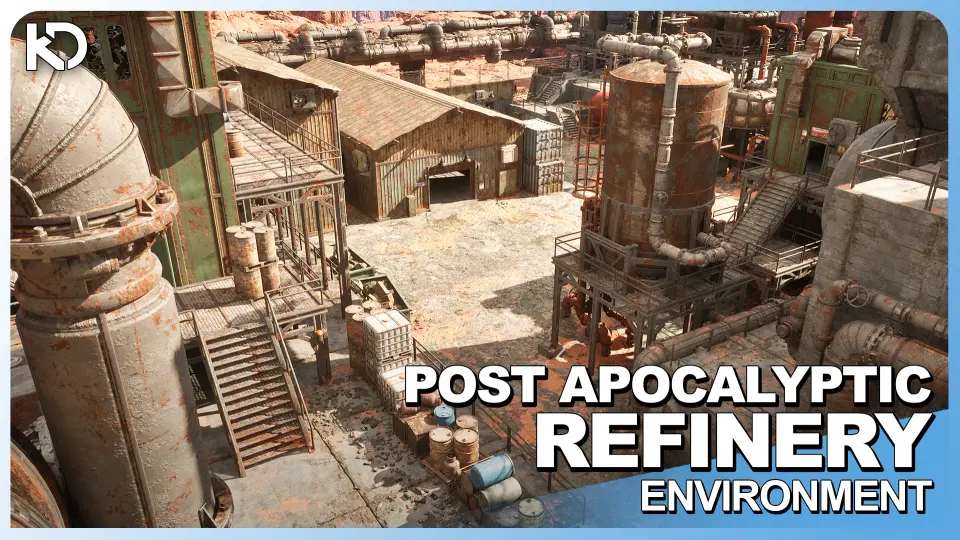
Post Apocalyptic Refinery gathers more than 500 individual assets, 50 specialized blueprints, and over 90 pre-assembled packed level actors to construct weathered industrial complexes situated in barren landscapes. The asset library balances architectural scale and surface degradation, offering everything from massive distillation tanks to scattered ground clutter. Built specifically to utilize modern Unreal Engine 5 systems, the collection supplies modular structures alongside terrain tools, environmental foliage, bonus weaponry, and vehicles.
Modular Refinery Tanks, Pipes, and Industrial Hardware
The core mesh library contains over 500 distinct pieces configured for constructing deteriorating industrial processing plants, factories, and pipelines. Modular refinery tanks serve as visual anchors for heavy processing areas, supported by runs of industrial pipes, framework ladders, and metal catwalks. Secondary dressing elements include storage barrels, structural debris, fractured concrete pieces, and rubble piles that convey structural collapse and long-term decay.
To ground these man-made structures in their setting, the package includes nature assets configured for an arid wasteland biome. Boulders, standalone rocks, and desert foliage items integrate directly into the structural footprint, allowing dry brush and stony scree to encroach on abandoned manufacturing floors and perimeter fences. Every mesh in the asset collection is constructed to leverage Unreal Engine 5 Nanite geometry, permitting dense geometric fidelity across both macro structures and fragmented rubble without traditional polygon budgeting constraints.
Procedural Blueprints and Packed Level Actors
Assembling large industrial complexes by hand can be labor-intensive, which is why the package incorporates over 50 blueprints focused on layout generation and dressing automation. Dedicated building generation blueprints procedurally assemble architectural frames and walls into diverse building silhouettes, eliminating repetitive manual placement. Spline blueprints address linear features, letting level designers draw industrial pipeline runs and chain-link or security fences across uneven ground with accurate procedural bending and alignment.
Scatter blueprints automate the distribution of debris, loose industrial parts, and rubble fields across factory floors and open ground. For complex set-piece arrangements, the package supplies more than 90 pre-made packed level actors. These composite assemblies combine multiple structural and dressing elements into consolidated, performance-optimized groups. By relying on packed level actors, project scenes maintain higher frame rates and clean outliner organization while staging intricate assemblies of tanks, pipe manifolds, and collapsed architecture.
Landscape Material Setup and Desert Biome Control
The terrain system uses a multi-layered landscape material intended for sprawling desert locations. It accommodates three individual painted layers mapped with high-resolution textures, enabling smooth transitions between loose sand, compacted dirt, and stony ground. The landscape shader features distance-based detail controls that maintain surface sharpness close to the camera while reducing visual repetition and tiling artifacts across distant vistas.
Integrated slope detection logic governs surface material distribution automatically, placing rock faces or gravel along steeper grades and finer earth on flat regions. This slope logic simultaneously drives landscape grass output, placing arid vegetation and ground scatter where terrain conditions permit. As a result, expansive terrain surfaces surrounding industrial compounds can be shaped without manually painting every ridge, washout, and foliage pocket.
Material Instances and Surface Weathering Systems
Every surface in the package is linked through a standardized material instance hierarchy, enabling rapid aesthetic adjustments across entire installations. Artists can adjust global and local color schemes to differentiate pipeline functions or assign designated hazard markings. The master shader logic exposes granular controls for physical wear, allowing users to dial in degrees of surface damage, peeling, chipped paint, and underlying oxidation.
Environmental weathering parameters introduce dynamic layers of dirt and dust across structural assemblies. These micro-detail layers help blend clean metal and concrete surfaces with the surrounding desert conditions, ensuring that newly placed modular sections match the weathered tone of adjacent rubble. Because adjustments are managed via lightweight material instances, tweaking dirt opacity, grunge distribution, and surface reflectivity requires no shader recompilation.
Unreal Engine 5 Nanite, Lumen, and Chaos Vehicle Integration
Lighting across the package is configured around Unreal Engine 5 Lumen dynamic global illumination, providing realistic bounce lighting through broken roofs, rusted pipeline clusters, and dark tank interiors. Nanite handles the geometry pipeline across all static meshes, streaming micro-polygon detail across both towering refinery silos and fractured gravel piles.
Beyond static environment dressing, the package incorporates standalone asset drops from the Post Apocalyptic Rifle and Vehicles packs. Integrating these vehicles into active gameplay requires enabling the engine's native ChaosVehiclesPlugin, establishing the foundation for drivable transit across the surrounding desert terrain. The entire package is also compatible with the Scifi Complete Bundle Pack, providing an expansive industrial baseline capable of supporting narrative wastelands, survival combat arenas, and decaying manufacturing compounds.
 Industrial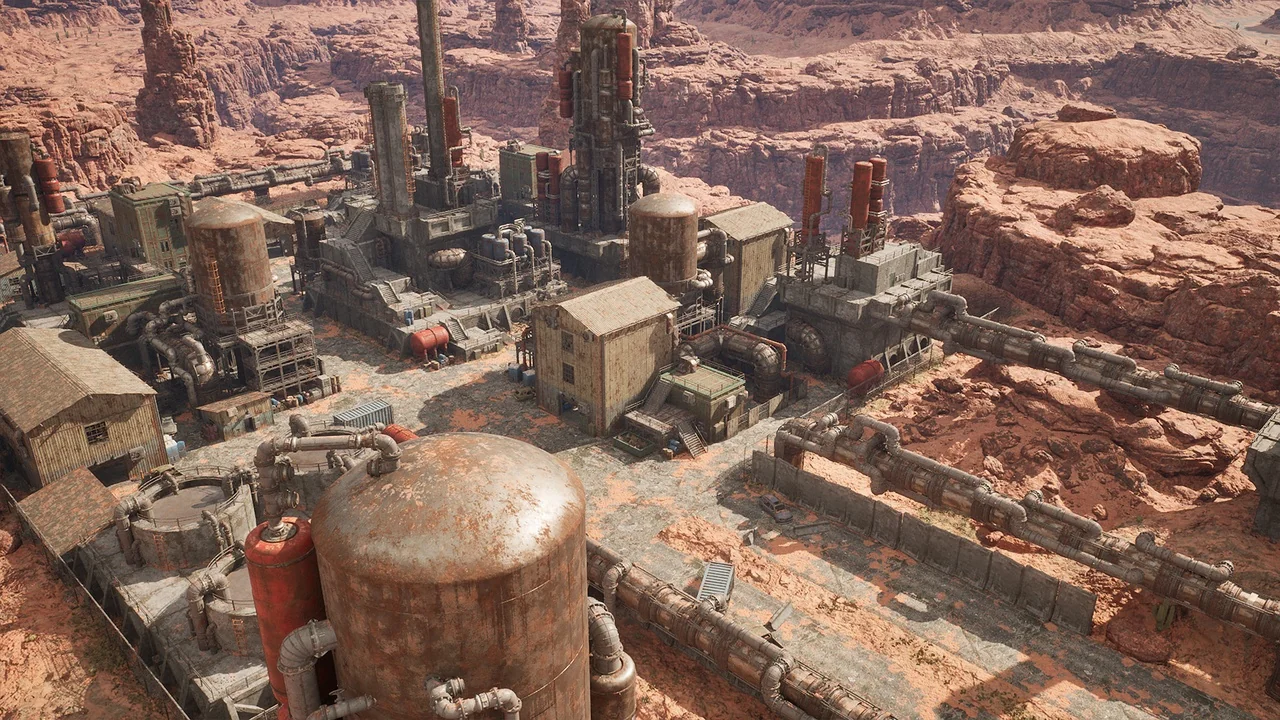
 Environments
 Apocalyptic
 Horror