"c83ee50a0da9d10a"{"id":"1000327","slug":"realistic-ivy-plants","title":"Realistic IVY Plants","category":"Apocalyptic / Post-apocalyptic","engine":"5.0+","assetVersion":"","engineVersion":"Engine Version: 5.0+","tag":"Apocalyptic","accent":"blue","visual":"mech","summary":"A collection of 25 unoptimized ivy plant meshes designed for specific architectural shapes like inner and outer corners, ideal for overgrown or ruined environme","platform":"Unreal Engine","publishedAt":"2026-07-05T06:42:01.825Z","updatedAt":"2026-07-05T06:42:01.825Z","sourceNotes":[],"fileContents":[],"compatibility":["Unreal Engine","Engine Version: 5.0+"],"featuredImage":{"alt":"Realistic IVY Plants","src":"/wp-content/uploads/published/2026/07/ebf737a5d8f6-5e89b3af-7f18-4239-891f-a8ec8c3bea4f-99a7f033f2.webp"},"hasDownloadLink":true,"downloads":3,"terms":[{"taxonomy":"category","slug":"apocalyptic-post-apocalyptic","name":"Apocalyptic / Post-apocalyptic"}],"galleryImages":[{"src":"/wp-content/uploads/published/2026/07/37a96dff7adb-e6377565-1a16-4a37-b94c-f0767a3b989a-c30e2e9aec.webp","alt":"Realistic IVY Plants"},{"src":"/wp-content/uploads/published/2026/07/78884e0158f4-0dc97ef8-5166-46e7-87f7-18302161fb61-5ed3232321.webp","alt":"Realistic IVY Plants"},{"src":"/wp-content/uploads/published/2026/07/f8fc77cbec6e-564d52c7-b3ac-4564-9378-9a52692562a2-1c83ce80e3.webp","alt":"Realistic IVY Plants"},{"src":"/wp-content/uploads/published/2026/07/81b6f5c8e902-de2d744b-71c3-4377-a4aa-6c31d326b9da-0c2b1341d9.webp","alt":"Realistic IVY Plants"},{"src":"/wp-content/uploads/published/2026/07/ad96d2fd1136-164c411a-983e-41d3-bed6-bbdf1f334895-997b374fb4.webp","alt":"Realistic IVY Plants"}],"accessPanel":{"kind":"resource","title":"Download this resource","eyebrow":"Free Download","message":"Log in or create a free account to start your download.","fileName":"Content.7z","safetyNote":"Resources are manually reviewed before listing to improve quality and reduce obvious risks.","actionLabel":"Download Free","resourceType":"Resource archive"},"contentHtml":"\u003ch2\u003eEnvironmental Storytelling in Apocalyptic Settings\u003c/h2\u003e\n\u003cp\u003eWhen constructing overgrown levels or post-apocalyptic environments, vegetation serves as the primary visual indicator of time passing and nature reclaiming human spaces. Originating from the personal project \"AFTERFALL,\" the Realistic IVY Plants package is heavily geared toward this exact type of environmental storytelling. The inclusion of hanging vines, dense green leaves, and aggressive foliage growth provides the structural elements necessary to anchor buildings to the ground and break up rigid man-made silhouettes.\u003c/p\u003e\n\u003cp\u003eWhether the setting is an abandoned city, a forgotten concrete ruin, or a heavily forested level, realistic ivy changes the atmosphere of a scene. The collection leans heavily into apocalyptic and abandoned themes, providing the dense vegetation required to make environments feel untamed and forgotten. By utilizing hanging vines and creeping foliage, level designers can visually communicate the decay and neglect of a ruined space.\u003c/p\u003e\n\u003ch2\u003eFitting 25 Foliage Meshes to Architectural Corners\u003c/h2\u003e\n\u003cp\u003eA persistent challenge when dressing digital environments with vegetation is getting organic shapes to conform to strict architectural angles. This collection addresses that friction directly by supplying 25 distinct ivy plant meshes shaped for specific surface interactions. Rather than relying entirely on flat wall clusters that float awkwardly near edges, these meshes are pre-formed to wrap around structural elements seamlessly. The shapes are specifically categorized to fit straight walls, inner corners, and outer corners.\u003c/p\u003e\n\u003cp\u003eInner corner meshes allow foliage to pool and climb up the crevices where two walls meet, a common area for moisture collection and natural plant growth in real life. Outer corner meshes drape naturally over the exposed edges of buildings, pillars, or ruined walls. Having these specific geometric shapes ready to deploy means level designers can cover complex architectural facades without having to manually bend, distort, or piece together generic flat vines to create a convincing wrap around a 90-degree corner.\u003c/p\u003e\n\u003cp\u003eThe variety of 25 different shapes ensures that repetition can be minimized across a level. This allows for large stretches of straight walls to be covered in varied, organic growth patterns before transitioning smoothly into a dense inner corner or trailing over an exposed outer corner piece.\u003c/p\u003e\n\u003ch2\u003eRealistic PBR Materials and Simple Wind Variables\u003c/h2\u003e\n\u003cp\u003eThe visual foundation of the foliage relies on a realistic PBR workflow, ensuring the green leaves react accurately to environmental lighting and shadowing. Despite the realistic default appearance, the core material setup is kept intentionally straightforward. The leaf material uses a very simple and basic configuration based on a simple grass wind effect.\u003c/p\u003e\n\u003cp\u003eBy exposing specific variables within this wind setup, artists can control the movement and intensity of the foliage. This allows the hanging vines to react gently to a subtle breeze or whip aggressively in a heavier storm, bringing dynamic movement to an otherwise static ruined level. Beyond the default realistic look, this basic material structure means the assets can be modified and edited to match different art styles easily.\u003c/p\u003e\n\u003cp\u003eBecause the shader logic is not bogged down by overly complex, heavily nested material functions, artists can easily tweak the base colors, adjust the material properties, or swap out the textures entirely to fit a more stylized or illustrative environment if strict apocalyptic realism is not required for their specific project.\u003c/p\u003e\n\u003ch2\u003eBypassing Optimization Constraints with UE5 Nanite\u003c/h2\u003e\n\u003cp\u003eBecause these meshes were originally developed for a specific personal environment piece rather than a commercial game asset pipeline, they carry a distinct technical profile. The assets are explicitly noted as not being game-ready optimized in their default state. Foliage is notoriously difficult to optimize due to the sheer volume of overlapping geometry and the complex silhouettes of individual leaves and vines. These assets do not come with aggressive polygon budgeting or the strict optimization tricks typically required for traditional real-time rendering pipelines in older engines.\u003c/p\u003e\n\u003cp\u003eDeploying 25 highly detailed ivy clusters across a massive level using standard rendering methods could easily introduce performance bottlenecks. However, this high-density geometry makes the pack highly compatible with Unreal Engine 5's virtualized geometry system. By enabling Nanite on these meshes, environment artists can bypass traditional polygon constraints entirely.\u003c/p\u003e\n\u003cp\u003eNanite handles the heavy geometric load of the dense leaves and complex vine structures natively, allowing users to populate entire scenes with unoptimized ivy while remaining quite performant. This shift in rendering tech transforms what would normally be a heavy, unoptimized asset into a highly usable tool for modern UE5 environments, allowing developers to prioritize visual density over manual retopology.\u003c/p\u003e\n\u003ch2\u003eFinal Scope and Asset Utility\u003c/h2\u003e\n\u003cp\u003eIt is important to note the exact scope of the package before integrating it into a level. It is strictly a foliage asset collection. While preview renders might showcase the ivy scaling detailed concrete walls or abandoned structures from the \"AFTERFALL\" project, the environment itself is not included. The package delivers only the 25 ivy meshes and their accompanying simple materials.\u003c/p\u003e\n\u003cp\u003eThis focused scope makes the Realistic IVY Plants highly practical for environment artists, level designers, and world builders who already have their primary architecture in place and simply need specialized, corner-ready vegetation to weather their scenes. Those working within Unreal Engine 5, where Nanite can easily shoulder the weight of unoptimized geometry, will find the most immediate utility in this collection. By utilizing the pre-shaped inner and outer corner meshes, developers can quickly transform pristine structures into forgotten, overgrown ruins with realistic, wind-reactive foliage.\u003c/p\u003e\n\n\u003ch2\u003eRelated Resources Worth Checking\u003c/h2\u003e\n\u003cul\u003e\n\u003cli\u003e\u003ca href=\"https://3dcghub.com/crazy-ivy-realistic-ivy-generator-vine-plugin-grow-procedural-plants-in-editor/\" title=\"Crazy Ivy Realistic Ivy Generator Vine Plugin - Grow Procedural Plants in Editor\"\u003eCrazy Ivy Realistic Ivy Generator Vine Plugin - Grow Procedural Plants in Editor\u003c/a\u003e\u003c/li\u003e\n\u003cli\u003e\u003ca href=\"https://3dcghub.com/vegetation-pack-vegetation-pack-vegetations-trees-bushes-grass-plants-3d/\" title=\"Vegetation Pack ( Vegetation Pack Vegetations Trees Bushes Grass Plants 3D )\"\u003eVegetation Pack ( Vegetation Pack Vegetations Trees Bushes Grass Plants 3D )\u003c/a\u003e\u003c/li\u003e\n\u003cli\u003e\u003ca href=\"https://3dcghub.com/ivy-studio-procedural-vine-generation/\" title=\"Ivy Studio - Procedural vine generation\"\u003eIvy Studio - Procedural vine generation\u003c/a\u003e\u003c/li\u003e\n\u003cli\u003e\u003ca href=\"https://3dcghub.com/procedural-ivy-generator/\" title=\"Procedural Ivy Generator\"\u003eProcedural Ivy Generator\u003c/a\u003e\u003c/li\u003e\n\u003cli\u003e\u003ca href=\"https://3dcghub.com/forest-fungi-mushroom-pack/\" title=\"Forest Fungi - Mushroom Pack\"\u003eForest Fungi - Mushroom Pack\u003c/a\u003e\u003c/li\u003e\n\u003c/ul\u003e","contentTextLength":6327,"navigation":{"current":1312,"total":3498,"previous":{"id":"1000328","slug":"real-time-physics-necklaces-for-metahumans","title":"Real-Time Physics Necklaces for MetaHumans","category":"Jewelry","platform":"Unreal Engine","updatedAt":"2026-07-05T06:46:31.628Z"},"next":{"id":"1000326","slug":"realistic-gun-vfx-muzzle-flash-bullet-impact-ejections-gun-vfx-vfx","title":"Realistic Gun VFX (Muzzle Flash, Bullet Impact, Ejections, Gun VFX, VFX)","category":"Spells \u0026 Combat","platform":"Unreal Engine","updatedAt":"2026-07-05T06:37:35.328Z"}},"relatedResources":[{"id":"1001441","slug":"foliage-vol-23-ivy-low-poly","title":"Foliage VOL.23 - Ivy (Low Poly)","category":"Plants","engine":"5.1+","assetVersion":"","engineVersion":"Engine Version: 5.1+","tag":"Plants","accent":"blue","visual":"mech","summary":"Deploy and optimize Foliage VOL.23 - Ivy (Low Poly) in Unreal Engine with 49 meshes, Lumen support, modular branching, and vertex paint wall textures.","platform":"Unreal Engine","publishedAt":"2026-10-07T08:34:14.081Z","updatedAt":"2026-10-07T08:34:14.081Z","sourceNotes":[],"fileContents":[],"compatibility":["Unreal Engine","Engine Version: 5.1+"],"featuredImage":{"alt":"Foliage VOL.23 - Ivy (Low Poly)","src":"/wp-content/uploads/published/2026/10/ab74fe532ca8-53fce03b-c635-4bb2-ba66-1d26d6d4c521-0b026bd542.webp"},"hasDownloadLink":true,"downloads":2},{"id":"15225","slug":"crazy-ivy-realistic-ivy-generator-vine-plugin-grow-procedural-plants-in-editor","title":"Crazy Ivy Realistic Ivy Generator Vine Plugin - Grow Procedural Plants in Editor","category":"Procedural Systems","engine":"5.0 - 5.4","assetVersion":"Engine version: 5.0 - 5.4","engineVersion":"4.27","tag":"Procedural Systems","accent":"blue","visual":"animation","summary":"Crazy Ivy is a powerful procedural tool designed to grow realistic ivy directly within your editor. By automatically detecting static meshes, this plugin allows for the creation of unique, optimized vegetation systems.","platform":"Unreal Engine","publishedAt":"2026-03-12T08:22:47.000Z","updatedAt":"2026-04-19T15:44:52.000Z","sourceNotes":[],"fileContents":[],"compatibility":["Unreal Engine","Engine version: 5.0 - 5.4"],"featuredImage":{"alt":"Crazy Ivy Realistic Ivy Generator Vine Plugin - Grow Procedural Plants in Editor","src":"https://3dcghub.com/wp-content/uploads/2026/03/82ad95ba-cc8c-422c-b4cc-dff51937564d.webp"},"hasDownloadLink":true,"downloads":1},{"id":"4129","slug":"forest-fungi-mushroom-pack","title":"Forest Fungi - Mushroom Pack","category":"Nature \u0026 Plants","engine":"5.0+","assetVersion":"Engine version: 5.0+","engineVersion":"5.0","tag":"Nature \u0026 Plants","accent":"blue","visual":"mech","summary":"Enhance your Unreal Engine 5 environments with this realistic Forest Fungi pack. Features 48 Nanite-ready meshes, master materials, and stunning detail.","platform":"Unreal Engine","publishedAt":"2026-02-10T09:54:20.000Z","updatedAt":"2026-04-19T15:57:30.000Z","sourceNotes":[],"fileContents":[],"compatibility":["Unreal Engine","Engine version: 5.0+"],"featuredImage":{"alt":"Forest Fungi - Mushroom Pack","src":"https://3dcghub.com/wp-content/uploads/2026/02/7be5546d-9091-4804-9e03-e392b0d72de1.webp"},"hasDownloadLink":true,"downloads":0}]}
Apocalyptic
Realistic IVY Plants
A collection of 25 unoptimized ivy plant meshes designed for specific architectural shapes like inner and outer corners, ideal for overgrown or ruined environme
Environmental Storytelling in Apocalyptic Settings
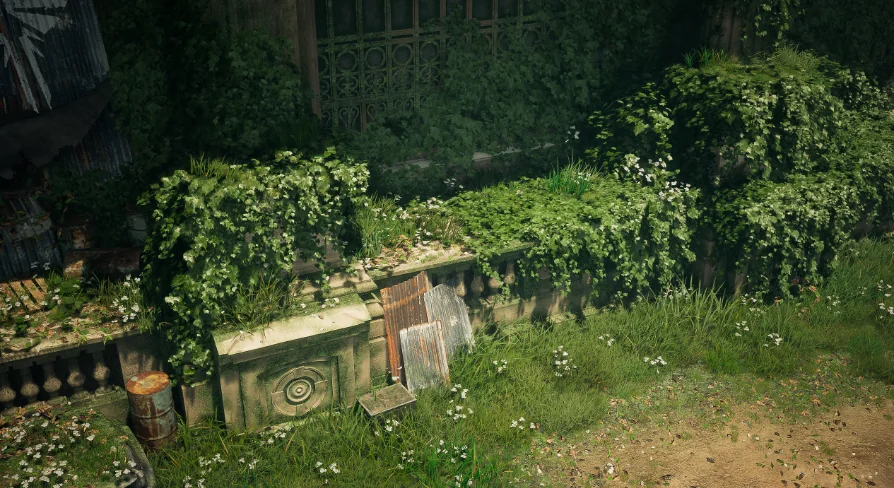
When constructing overgrown levels or post-apocalyptic environments, vegetation serves as the primary visual indicator of time passing and nature reclaiming human spaces. Originating from the personal project "AFTERFALL," the Realistic IVY Plants package is heavily geared toward this exact type of environmental storytelling. The inclusion of hanging vines, dense green leaves, and aggressive foliage growth provides the structural elements necessary to anchor buildings to the ground and break up rigid man-made silhouettes.
Whether the setting is an abandoned city, a forgotten concrete ruin, or a heavily forested level, realistic ivy changes the atmosphere of a scene. The collection leans heavily into apocalyptic and abandoned themes, providing the dense vegetation required to make environments feel untamed and forgotten. By utilizing hanging vines and creeping foliage, level designers can visually communicate the decay and neglect of a ruined space.
Fitting 25 Foliage Meshes to Architectural Corners
A persistent challenge when dressing digital environments with vegetation is getting organic shapes to conform to strict architectural angles. This collection addresses that friction directly by supplying 25 distinct ivy plant meshes shaped for specific surface interactions. Rather than relying entirely on flat wall clusters that float awkwardly near edges, these meshes are pre-formed to wrap around structural elements seamlessly. The shapes are specifically categorized to fit straight walls, inner corners, and outer corners.
Inner corner meshes allow foliage to pool and climb up the crevices where two walls meet, a common area for moisture collection and natural plant growth in real life. Outer corner meshes drape naturally over the exposed edges of buildings, pillars, or ruined walls. Having these specific geometric shapes ready to deploy means level designers can cover complex architectural facades without having to manually bend, distort, or piece together generic flat vines to create a convincing wrap around a 90-degree corner.
The variety of 25 different shapes ensures that repetition can be minimized across a level. This allows for large stretches of straight walls to be covered in varied, organic growth patterns before transitioning smoothly into a dense inner corner or trailing over an exposed outer corner piece.
Realistic PBR Materials and Simple Wind Variables
The visual foundation of the foliage relies on a realistic PBR workflow, ensuring the green leaves react accurately to environmental lighting and shadowing. Despite the realistic default appearance, the core material setup is kept intentionally straightforward. The leaf material uses a very simple and basic configuration based on a simple grass wind effect.
By exposing specific variables within this wind setup, artists can control the movement and intensity of the foliage. This allows the hanging vines to react gently to a subtle breeze or whip aggressively in a heavier storm, bringing dynamic movement to an otherwise static ruined level. Beyond the default realistic look, this basic material structure means the assets can be modified and edited to match different art styles easily.
Because the shader logic is not bogged down by overly complex, heavily nested material functions, artists can easily tweak the base colors, adjust the material properties, or swap out the textures entirely to fit a more stylized or illustrative environment if strict apocalyptic realism is not required for their specific project.
Bypassing Optimization Constraints with UE5 Nanite
Because these meshes were originally developed for a specific personal environment piece rather than a commercial game asset pipeline, they carry a distinct technical profile. The assets are explicitly noted as not being game-ready optimized in their default state. Foliage is notoriously difficult to optimize due to the sheer volume of overlapping geometry and the complex silhouettes of individual leaves and vines. These assets do not come with aggressive polygon budgeting or the strict optimization tricks typically required for traditional real-time rendering pipelines in older engines.
Deploying 25 highly detailed ivy clusters across a massive level using standard rendering methods could easily introduce performance bottlenecks. However, this high-density geometry makes the pack highly compatible with Unreal Engine 5's virtualized geometry system. By enabling Nanite on these meshes, environment artists can bypass traditional polygon constraints entirely.
Nanite handles the heavy geometric load of the dense leaves and complex vine structures natively, allowing users to populate entire scenes with unoptimized ivy while remaining quite performant. This shift in rendering tech transforms what would normally be a heavy, unoptimized asset into a highly usable tool for modern UE5 environments, allowing developers to prioritize visual density over manual retopology.
Final Scope and Asset Utility
It is important to note the exact scope of the package before integrating it into a level. It is strictly a foliage asset collection. While preview renders might showcase the ivy scaling detailed concrete walls or abandoned structures from the "AFTERFALL" project, the environment itself is not included. The package delivers only the 25 ivy meshes and their accompanying simple materials.
This focused scope makes the Realistic IVY Plants highly practical for environment artists, level designers, and world builders who already have their primary architecture in place and simply need specialized, corner-ready vegetation to weather their scenes. Those working within Unreal Engine 5, where Nanite can easily shoulder the weight of unoptimized geometry, will find the most immediate utility in this collection. By utilizing the pre-shaped inner and outer corner meshes, developers can quickly transform pristine structures into forgotten, overgrown ruins with realistic, wind-reactive foliage.
 Apocalyptic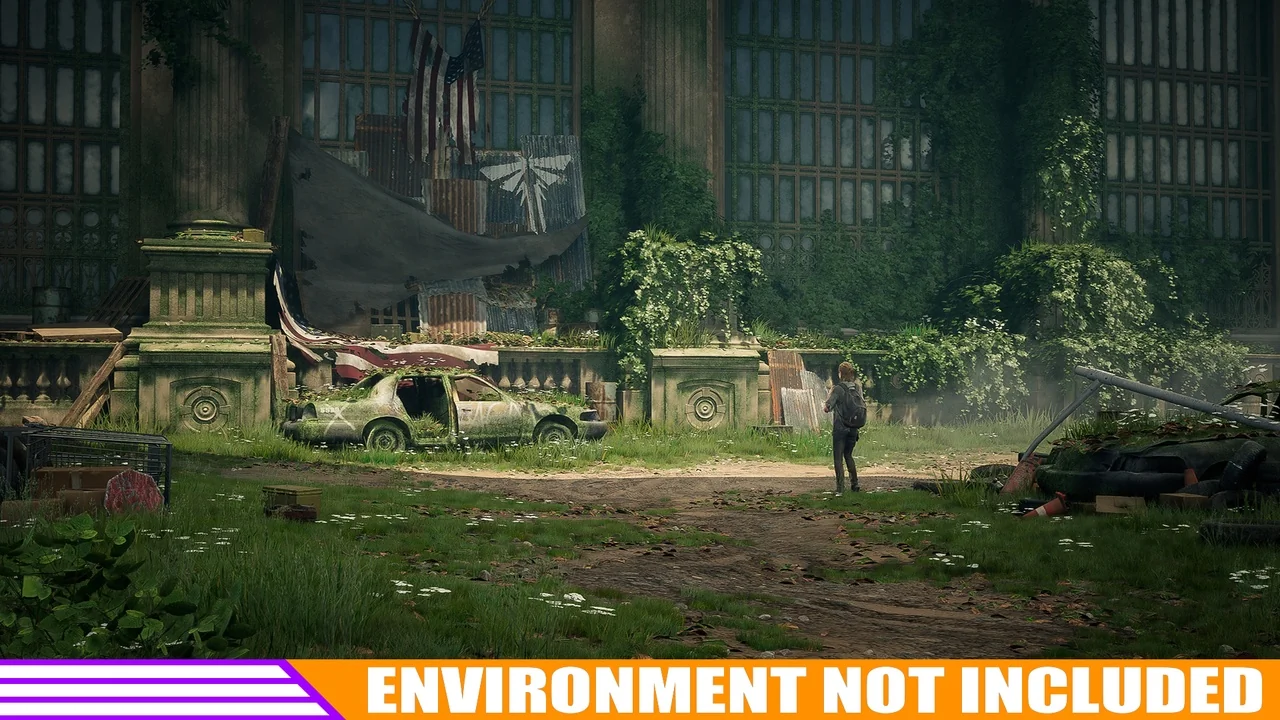
 Plants
 Procedural Systems
 Nature & Plants