"1a0e4ac4dc71d030"{"id":"1000174","slug":"make-short-films-in-unreal-engine-5-with-metahumans","title":"Make Short Films in Unreal Engine 5 with Metahumans","category":"Unreal Engine","engine":"File Content: video + English subtitles","assetVersion":"Video Language: English","engineVersion":"File Content: video + English subtitles","tag":"Unreal Engine","accent":"blue","visual":"character","summary":"A practical Unreal Engine 5 course focused on making a hyper realistic short film with Metahumans, animation, cameras, and outdoor lighting.","platform":"Unreal Engine","publishedAt":"2026-06-20T05:25:11.411Z","updatedAt":"2026-06-20T05:25:11.411Z","sourceNotes":[],"fileContents":[],"compatibility":["Unreal Engine","Video Language: English","File Content: video + English subtitles"],"featuredImage":{"alt":"Make Short Films in Unreal Engine 5 with Metahumans","src":"/wp-content/uploads/published/2026/06/8e1274b47965-5839686-24f9-2-2939fee71b.webp"},"hasDownloadLink":true,"downloads":1,"terms":[{"taxonomy":"category","slug":"tutoriallibrary-unrealengine","name":"Unreal Engine"}],"galleryImages":[],"accessPanel":{"kind":"video-resource","title":"Download this video resource","eyebrow":"Free Download","message":"Log in or create a free account to start your download.","fileName":"Make Short Films in Unreal Engine 5 with Metahumans.7z","safetyNote":"Resources are manually reviewed before listing to improve quality and reduce obvious risks.","actionLabel":"Download Free","resourceType":"Video download"},"contentHtml":"\u003cp\u003eGetting into Unreal Engine 5 can feel much more manageable when the learning path starts with a finished goal. Here, that goal is a hyper realistic short film made with Metahumans. Instead of presenting disconnected software features, the course moves through a filmmaking-oriented setup: create a character, animate performance, shape shots with cinematic cameras, and place everything inside an outdoor environment lit for realism.\u003c/p\u003e\n\u003cp\u003eThat structure makes the material especially useful for artists and developers who want to learn UE5 through actual scene construction. The emphasis stays on the basics, but those basics are tied directly to the kind of work that turns engine tools into a finished visual piece. For anyone drawn to virtual cinematography, digital characters, or short-form storytelling inside Unreal Engine 5, the course keeps the process anchored to making something visible on screen.\u003c/p\u003e \u003ch2\u003eStarting with a short film in Unreal Engine 5\u003c/h2\u003e\n\u003cp\u003eThe central idea is simple: learn the basics of using Metahumans in UE5 by making a hyper realistic short film. That gives the course a practical identity from the start. It is not only about understanding what Metahumans are, but about using them inside a broader creative pipeline that leads toward a cinematic result.\u003c/p\u003e\n\u003cp\u003eThis focus matters because short film work brings several beginner-friendly fundamentals together in one place. A learner is not only dealing with a character tool, or only studying cameras, or only building a scene. The course connects those areas as parts of one production flow. Character creation feeds animation. Animation feeds shot design. Shot design gains impact from a believable environment and realistic lighting. Unreal Engine 5 becomes the space where these parts meet.\u003c/p\u003e\n\u003cp\u003eFor beginners, that kind of project framing can make the software feel less abstract. Instead of memorizing tools without context, the learner is working toward scenes and sequences that resemble a finished film. The course workload of 3 hours and 16 minutes also suggests a compact learning experience, one that introduces core steps without turning the process into a long, fragmented study plan.\u003c/p\u003e \u003ch2\u003eMetahuman Creator and Metahuman Animator in one workflow\u003c/h2\u003e\n\u003cp\u003eA major part of the course is learning how to use Metahuman Creator to design realistic characters. That places character development at the front of the process, where it naturally belongs for a short film anchored in digital performers. For artists interested in believable human presence, this is one of the strongest creative entry points in the course. The work begins with shaping a realistic character rather than dropping a generic figure into a scene.\u003c/p\u003e\n\u003cp\u003eFrom there, the course moves into Metahuman Animator to create body and facial animations. That step turns the character from a static visual asset into a performance tool. In a short film context, body motion and facial movement are not decorative extras; they are core to how emotion, intention, and timing are communicated on screen. By pairing character design with animation, the course presents Metahumans as part of an expressive filmmaking process rather than as isolated technical features.\u003c/p\u003e\n\u003cp\u003eThis combined focus opens up several creative possibilities for learners. A beginner can start thinking about how a character looks and how that character performs as parts of the same decision-making chain. A realistic face means more when facial animation follows through convincingly. Body animation matters more when it supports the personality and presence established during character creation. Even at a basic level, this helps learners think like directors or scene builders, not only software users.\u003c/p\u003e\n\u003cp\u003eThe workflow also supports experimentation. Someone interested in stylized blocking can pay attention to body movement. Someone more interested in close-up acting can focus on facial performance. Because the course positions both within the same project, it encourages learners to see digital humans as flexible cinematic subjects inside UE5.\u003c/p\u003e \u003ch2\u003eCinematic camera basics for Metahuman scenes\u003c/h2\u003e\n\u003cp\u003eAnother key part of the course is the basics of cinematic camera animations in Unreal Engine 5. This is where character work starts to become film language. A realistic Metahuman and an animated performance still need shot choices to become compelling on screen. Camera animation is what turns a scene into a sequence with rhythm, framing, and visual intent.\u003c/p\u003e\n\u003cp\u003eFor beginners making short films, this part of the course is especially practical. It shifts attention from asset preparation to presentation. Learners can start considering how to move through a scene, when to hold on a face, and how camera motion can support the mood of a moment. Even a simple sequence changes significantly once framing and camera animation are treated as deliberate creative tools rather than as afterthoughts.\u003c/p\u003e\n\u003cp\u003eBecause the course is grounded in a short film outcome, the camera work is not floating without context. It belongs to scenes that already include a designed character and animated performance. That makes the learning process more coherent. Camera decisions can be understood in relation to the subject on screen, and cinematic animation becomes part of storytelling rather than a separate technical lesson.\u003c/p\u003e\n\u003cp\u003eThis also helps learners who may come from different backgrounds. An Unreal Engine beginner with a game development interest can use cinematic camera basics to build more expressive cutscenes. An artist approaching UE5 from a visual storytelling angle can use the same lessons to shape dramatic beats and visual pacing in short-form film work.\u003c/p\u003e \u003ch2\u003eOutdoor environments with realistic lighting\u003c/h2\u003e\n\u003cp\u003eThe course also covers the basics of building outdoor environments with realistic lighting in Unreal Engine 5. That expands the project beyond character-only exercises and places the short film inside a world. An outdoor setting changes how a scene reads, especially when realism is the target. Lighting, atmosphere, and environmental context all contribute to whether a shot feels grounded.\u003c/p\u003e\n\u003cp\u003eFor learners, this is an important bridge between subject and setting. A Metahuman can look convincing on its own, but the overall result becomes stronger when the surrounding environment supports the same level of realism. Outdoor environment building introduces the idea that a short film is not just about a performer in empty space. It is about the relationship between character, location, and light.\u003c/p\u003e\n\u003cp\u003eThe realistic lighting focus is particularly useful in a hyper realistic short film workflow. Light shapes visibility, mood, and believability across every shot. In an outdoor scene, it also affects how a character sits inside the environment visually. Beginners can use this part of the course to start understanding how much of cinematic quality comes from environmental treatment, not only from character assets or animation.\u003c/p\u003e\n\u003cp\u003eThis section also gives the course broader creative value. Someone who begins with an interest in Metahumans may come away with a stronger sense of scene construction inside UE5. Someone drawn to environments can see how lighting choices interact with character-focused filmmaking. That overlap makes the training more flexible without drifting away from its short film goal.\u003c/p\u003e \u003ch2\u003eWho this Unreal Engine 5 course fits\u003c/h2\u003e\n\u003cp\u003eThe target audience is beginner Unreal Engine 5 users who want to learn how to make short films. That description is narrow in a useful way. The course is not framed around advanced technical specialization. It is aimed at people entering UE5 who want a filmmaking path into the engine.\u003c/p\u003e\n\u003cp\u003eThe all-levels label broadens that accessibility, but the beginner emphasis remains the clearest signal. It suggests a course that starts with fundamentals and keeps the focus on foundational tasks: making a realistic Metahuman, animating body and face, using cinematic cameras, and building outdoor environments with realistic lighting. Learners who want a direct route into short film creation should find the scope easy to read.\u003c/p\u003e\n\u003cp\u003eThe curriculum is concise, with an introduction followed by making the short film. That minimal structure reinforces the course’s practical orientation. It does not present a long list of detached modules. Instead, it points toward a compact learning arc where the introduction sets the stage and the main work happens through the film-making process itself.\u003c/p\u003e\n\u003cp\u003ePublished on February 27, 2024, the course presents a current learning option for people who want to explore Metahumans inside Unreal Engine 5 through a creative project. Its strongest fit is for learners who respond better to making than to theory alone. If the goal is to understand UE5 by building toward a hyper realistic short film, the course stays closely aligned with that purpose from beginning to end.\u003c/p\u003e\n\u003cp\u003eAs a practical takeaway, this course suits artists and developers who want their first steps in Unreal Engine 5 to lead toward a finished cinematic piece. Its core value lies in connecting Metahuman creation, performance animation, camera basics, and outdoor lighting into one compact short film workflow.\u003c/p\u003e\n\n\u003ch2\u003eExplore Similar Assets\u003c/h2\u003e\n\u003cul\u003e\n\u003cli\u003e\u003ca href=\"https://3dcghub.com/unreal-cinematic-mastery-from-beginner-to-cinematic-creator/\" title=\"Unreal Cinematic Mastery –From Beginner to Cinematic Creator\"\u003eUnreal Cinematic Mastery –From Beginner to Cinematic Creator\u003c/a\u003e\u003c/li\u003e\n\u003cli\u003e\u003ca href=\"https://3dcghub.com/make-a-2d-action-platformer-in-unreal-engine-5/\" title=\"Make a 2D Action Platformer in Unreal Engine 5\"\u003eMake a 2D Action Platformer in Unreal Engine 5\u003c/a\u003e\u003c/li\u003e\n\u003cli\u003e\u003ca href=\"https://3dcghub.com/unreal-engine-5-c-make-your-own-action-combat-game/\" title=\"Unreal Engine 5 C++: Make Your Own Action Combat Game\"\u003eUnreal Engine 5 C++: Make Your Own Action Combat Game\u003c/a\u003e\u003c/li\u003e\n\u003cli\u003e\u003ca href=\"https://3dcghub.com/make-a-2d-platformer-in-unreal-engine-5-c/\" title=\"Make a 2D platformer in Unreal engine 5 C++\"\u003eMake a 2D platformer in Unreal engine 5 C++\u003c/a\u003e\u003c/li\u003e\n\u003cli\u003e\u003ca href=\"https://3dcghub.com/the-ultimate-2d-top-down-unreal-engine-course/\" title=\"The Ultimate 2D Top Down Unreal Engine Course\"\u003eThe Ultimate 2D Top Down Unreal Engine Course\u003c/a\u003e\u003c/li\u003e\n\u003c/ul\u003e","contentTextLength":9369,"navigation":{"current":1127,"total":3200,"previous":{"id":"1000175","slug":"urban-background-buildings-vol-1","title":"Urban Background Buildings - VOL.1","category":"Cities","platform":"Unreal Engine","updatedAt":"2026-06-20T06:26:44.634Z"},"next":{"id":"14623","slug":"skinned-decal-component","title":"Skinned Decal Component","category":"Engine Tools","platform":"Unreal Engine","updatedAt":"2026-06-20T04:53:55.480Z"}},"relatedResources":[{"id":"1000744","slug":"how-to-create-a-movie-in-unreal-engine-5-beginners-edition","title":"How to create a movie in Unreal Engine 5 Beginners Edition","category":"Unreal Engine","engine":"File Content: video + English subtitles","assetVersion":"Video Language: English","engineVersion":"File Content: video + English subtitles","tag":"Unreal Engine","accent":"blue","visual":"mech","summary":"A beginner-level UE5 course on creating CG animation, migrating projects, importing motion capture, and working with MetaHumans.","platform":"Unreal Engine","publishedAt":"2026-07-27T12:07:40.122Z","updatedAt":"2026-07-27T12:07:40.122Z","sourceNotes":[],"fileContents":[],"compatibility":["Unreal Engine","Video Language: English","File Content: video + English subtitles"],"featuredImage":{"alt":"How to create a movie in Unreal Engine 5 Beginners Edition","src":"/wp-content/uploads/published/2026/07/a207ba37646d-4192342-4b9b-11-973394dbfe.webp"},"hasDownloadLink":true,"downloads":4},{"id":"1000114","slug":"unreal-cinematic-mastery-from-beginner-to-cinematic-creator","title":"Unreal Cinematic Mastery –From Beginner to Cinematic Creator","category":"Unreal Engine","engine":"File Content: video + English subtitles","assetVersion":"Video Language: English","engineVersion":"File Content: video + English subtitles","tag":"Unreal Engine","accent":"blue","visual":"mech","summary":"Master real-time filmmaking in Unreal Engine 5.5. Learn to build, light, animate Metahumans, and render complete cinematics from scratch using Sequencer.","platform":"Unreal Engine","publishedAt":"2026-06-09T13:31:58.758Z","updatedAt":"2026-06-09T13:31:58.758Z","sourceNotes":[],"fileContents":[],"compatibility":["Unreal Engine","Video Language: English","File Content: video + English subtitles"],"featuredImage":{"alt":"Unreal Cinematic Mastery –From Beginner to Cinematic Creator","src":"/wp-content/uploads/published/2026/06/4099fecec65e-6484765-a32a-2a5034ad08.webp"},"hasDownloadLink":true,"downloads":1},{"id":"24581","slug":"make-a-2d-action-platformer-in-unreal-engine-5","title":"Make a 2D Action Platformer in Unreal Engine 5","category":"Unreal Engine","engine":"Video language: English","assetVersion":"Video language: English","engineVersion":"File content: video + supporting files + English subtitles","tag":"Unreal Engine","accent":"blue","visual":"audio","summary":"A side-scrolling action game in Unreal Engine 5 needs responsive movement, readable enemy behavior, and levels that support fast platforming. This training walks through that workflow with Paper 2D, from basics and Blueprints to combat, AI, UI, and level cr...","platform":"Unreal Engine","publishedAt":"2026-04-15T13:51:52.000Z","updatedAt":"2026-04-20T06:12:43.000Z","sourceNotes":[],"fileContents":[],"compatibility":["Unreal Engine","Video language: English","File content: video + supporting files + English subtitles"],"featuredImage":{"alt":"Make a 2D Action Platformer in Unreal Engine 5","src":"https://3dcghub.com/wp-content/uploads/2026/04/269b76c038ae_5706222_3889.webp"},"hasDownloadLink":true,"downloads":1}]}
Unreal Engine
Make Short Films in Unreal Engine 5 with Metahumans
A practical Unreal Engine 5 course focused on making a hyper realistic short film with Metahumans, animation, cameras, and outdoor lighting.
Category:Unreal EnginePlatform: Unreal EngineVideo Language: EnglishFile Content: video + English subtitlesPublished: Jun 20, 2026
Unreal Engine
Resource overview
Getting into Unreal Engine 5 can feel much more manageable when the learning path starts with a finished goal. Here, that goal is a hyper realistic short film made with Metahumans. Instead of presenting disconnected software features, the course moves through a filmmaking-oriented setup: create a character, animate performance, shape shots with cinematic cameras, and place everything inside an outdoor environment lit for realism.
That structure makes the material especially useful for artists and developers who want to learn UE5 through actual scene construction. The emphasis stays on the basics, but those basics are tied directly to the kind of work that turns engine tools into a finished visual piece. For anyone drawn to virtual cinematography, digital characters, or short-form storytelling inside Unreal Engine 5, the course keeps the process anchored to making something visible on screen.
Starting with a short film in Unreal Engine 5
The central idea is simple: learn the basics of using Metahumans in UE5 by making a hyper realistic short film. That gives the course a practical identity from the start. It is not only about understanding what Metahumans are, but about using them inside a broader creative pipeline that leads toward a cinematic result.
This focus matters because short film work brings several beginner-friendly fundamentals together in one place. A learner is not only dealing with a character tool, or only studying cameras, or only building a scene. The course connects those areas as parts of one production flow. Character creation feeds animation. Animation feeds shot design. Shot design gains impact from a believable environment and realistic lighting. Unreal Engine 5 becomes the space where these parts meet.
For beginners, that kind of project framing can make the software feel less abstract. Instead of memorizing tools without context, the learner is working toward scenes and sequences that resemble a finished film. The course workload of 3 hours and 16 minutes also suggests a compact learning experience, one that introduces core steps without turning the process into a long, fragmented study plan.
Metahuman Creator and Metahuman Animator in one workflow
A major part of the course is learning how to use Metahuman Creator to design realistic characters. That places character development at the front of the process, where it naturally belongs for a short film anchored in digital performers. For artists interested in believable human presence, this is one of the strongest creative entry points in the course. The work begins with shaping a realistic character rather than dropping a generic figure into a scene.
From there, the course moves into Metahuman Animator to create body and facial animations. That step turns the character from a static visual asset into a performance tool. In a short film context, body motion and facial movement are not decorative extras; they are core to how emotion, intention, and timing are communicated on screen. By pairing character design with animation, the course presents Metahumans as part of an expressive filmmaking process rather than as isolated technical features.
This combined focus opens up several creative possibilities for learners. A beginner can start thinking about how a character looks and how that character performs as parts of the same decision-making chain. A realistic face means more when facial animation follows through convincingly. Body animation matters more when it supports the personality and presence established during character creation. Even at a basic level, this helps learners think like directors or scene builders, not only software users.
The workflow also supports experimentation. Someone interested in stylized blocking can pay attention to body movement. Someone more interested in close-up acting can focus on facial performance. Because the course positions both within the same project, it encourages learners to see digital humans as flexible cinematic subjects inside UE5.
Cinematic camera basics for Metahuman scenes
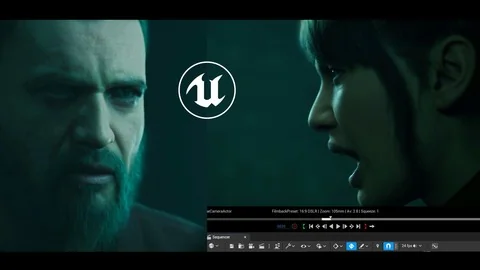
Another key part of the course is the basics of cinematic camera animations in Unreal Engine 5. This is where character work starts to become film language. A realistic Metahuman and an animated performance still need shot choices to become compelling on screen. Camera animation is what turns a scene into a sequence with rhythm, framing, and visual intent.
For beginners making short films, this part of the course is especially practical. It shifts attention from asset preparation to presentation. Learners can start considering how to move through a scene, when to hold on a face, and how camera motion can support the mood of a moment. Even a simple sequence changes significantly once framing and camera animation are treated as deliberate creative tools rather than as afterthoughts.
Because the course is grounded in a short film outcome, the camera work is not floating without context. It belongs to scenes that already include a designed character and animated performance. That makes the learning process more coherent. Camera decisions can be understood in relation to the subject on screen, and cinematic animation becomes part of storytelling rather than a separate technical lesson.
This also helps learners who may come from different backgrounds. An Unreal Engine beginner with a game development interest can use cinematic camera basics to build more expressive cutscenes. An artist approaching UE5 from a visual storytelling angle can use the same lessons to shape dramatic beats and visual pacing in short-form film work.
Outdoor environments with realistic lighting
The course also covers the basics of building outdoor environments with realistic lighting in Unreal Engine 5. That expands the project beyond character-only exercises and places the short film inside a world. An outdoor setting changes how a scene reads, especially when realism is the target. Lighting, atmosphere, and environmental context all contribute to whether a shot feels grounded.
For learners, this is an important bridge between subject and setting. A Metahuman can look convincing on its own, but the overall result becomes stronger when the surrounding environment supports the same level of realism. Outdoor environment building introduces the idea that a short film is not just about a performer in empty space. It is about the relationship between character, location, and light.
The realistic lighting focus is particularly useful in a hyper realistic short film workflow. Light shapes visibility, mood, and believability across every shot. In an outdoor scene, it also affects how a character sits inside the environment visually. Beginners can use this part of the course to start understanding how much of cinematic quality comes from environmental treatment, not only from character assets or animation.
This section also gives the course broader creative value. Someone who begins with an interest in Metahumans may come away with a stronger sense of scene construction inside UE5. Someone drawn to environments can see how lighting choices interact with character-focused filmmaking. That overlap makes the training more flexible without drifting away from its short film goal.
Who this Unreal Engine 5 course fits
The target audience is beginner Unreal Engine 5 users who want to learn how to make short films. That description is narrow in a useful way. The course is not framed around advanced technical specialization. It is aimed at people entering UE5 who want a filmmaking path into the engine.
The all-levels label broadens that accessibility, but the beginner emphasis remains the clearest signal. It suggests a course that starts with fundamentals and keeps the focus on foundational tasks: making a realistic Metahuman, animating body and face, using cinematic cameras, and building outdoor environments with realistic lighting. Learners who want a direct route into short film creation should find the scope easy to read.
The curriculum is concise, with an introduction followed by making the short film. That minimal structure reinforces the course’s practical orientation. It does not present a long list of detached modules. Instead, it points toward a compact learning arc where the introduction sets the stage and the main work happens through the film-making process itself.
Published on February 27, 2024, the course presents a current learning option for people who want to explore Metahumans inside Unreal Engine 5 through a creative project. Its strongest fit is for learners who respond better to making than to theory alone. If the goal is to understand UE5 by building toward a hyper realistic short film, the course stays closely aligned with that purpose from beginning to end.
As a practical takeaway, this course suits artists and developers who want their first steps in Unreal Engine 5 to lead toward a finished cinematic piece. Its core value lies in connecting Metahuman creation, performance animation, camera basics, and outdoor lighting into one compact short film workflow.
 Unreal Engine
 Unreal Engine
 Unreal Engine
 Unreal Engine