"07a32e720bd988c8"{"id":"1002468","slug":"carmel","title":"Carmel","category":"Humans","engine":"4.22+,5.0+","assetVersion":"","engineVersion":"Engine Version: 4.22+,5.0+","tag":"Humans","accent":"blue","visual":"mech","summary":"Carmel is a low-poly fantasy NPC character model featuring separated textures for face, skin, hair, and clothes, with verified animation support.","platform":"Unreal Engine","indexPolicy":"index","publishedAt":"2026-11-12T03:08:36.535Z","updatedAt":"2026-11-12T03:08:36.535Z","sourceNotes":[],"fileContents":[],"compatibility":["Unreal Engine","Engine Version: 4.22+,5.0+"],"featuredImage":{"alt":"Carmel","src":"/wp-content/uploads/published/2026/11/91525a699dff-42b5a9ca-487c-4df4-82d4-f7e5c2afaabe-2459f9cac6.webp"},"hasDownloadLink":true,"downloads":0,"terms":[{"taxonomy":"category","slug":"humans","name":"Humans"}],"galleryImages":[{"src":"/wp-content/uploads/published/2026/11/153cd4783f32-cf079cfc-9f6c-4b3c-9833-ded818cbfaab-af9d0ba450.webp","alt":"Carmel"},{"src":"/wp-content/uploads/published/2026/11/83e8cc6d247d-8d106559-7b4c-4a6b-833c-f3b8412c8937-7d0d37f0ec.webp","alt":"Carmel"}],"accessPanel":{"kind":"resource","title":"Get this resource","eyebrow":"Free resource","message":"Download this resource in your browser.","fileName":"Content.7z","safetyNote":"Resources are manually reviewed before listing to improve quality and reduce obvious risks.","actionLabel":"Get this resource","resourceType":"Resource archive","versions":[]},"contentHtml":"\u003ch2\u003eCarmel in Low-Poly Fantasy Worlds\u003c/h2\u003e\u003cp\u003eStanding watch at the threshold of a fantasy sanctuary or patrolling a cartoon settlement requires a distinct presence. Carmel delivers that profile through a low-poly aesthetic that leans into stylized, anime-inspired proportions. Functioning naturally as an arch guardian, bishop, or priest, the model inhabits sacred halls, fortified gates, or quiet shrines without demanding excessive processing overhead. In an active scene, an NPC of this nature often carries narrative weight, whether offering blessings, providing guidance, or maintaining a defensive vigil.\u003c/p\u003e\u003cp\u003eThe visual direction relies on crisp anime and cartoon conventions, making it suitable for projects that reject hyper-realism in favor of clean silhouettes. In fantasy role-playing games and adventure titles, clerical and guardian figures establish the tone of institutions and sacred orders. Carmel slots into these environments as a dedicated non-player character, standing ready to fulfill conversational duties, populate background temples, or serve as an interactive quest giver. Because the polygonal density remains low, multiple instances can fill a cathedral nave or defensive outpost without creating performance bottlenecks.\u003c/p\u003e\u003cp\u003eThe character archetype blends religious authority with defensive capability. Labeled under roles spanning arch, guardian, bishop, and priest, the model provides visual flexibility across different narrative stations. A player approaching an altar might encounter Carmel as a serene officiant, while another zone could present the same figure as an armored sentinel guarding an ancient gate. This duality allows game systems to utilize the model across diverse factions and settlements while preserving a unified visual logic.\u003c/p\u003e\u003ch2\u003eTexture Separation Across Face, Skin, Hair, and Clothing\u003c/h2\u003e\u003cp\u003eVisual identity in character modeling depends heavily on surface treatment. Carmel isolates its surface data into distinct texture assignments for the face, skin, hair, and clothes. Separating these elements simplifies color customization, allowing developers to manipulate individual zones without repainting entire UV sheets.\u003c/p\u003e\u003cp\u003eIsolating the face texture provides direct control over expressions, eye details, and focal features independently of bodily skin tones. A developer seeking to shift an NPC from a gentle priest to a stern temple guardian can modify the facial mapping without altering skin shaders applied elsewhere on the body. Similarly, keeping skin as an independent texture enables swift adjustments to complexion, making it practical to generate multiple NPC variants from the single mesh. Diverse skin tones across an entire monastic order or town population can be generated by adjusting a few texture instances or material tint values.\u003c/p\u003e\u003cp\u003eThe hair and clothing textures benefit from this modular mapping approach as well. In fantasy productions, factions frequently communicate rank, allegiance, or magical discipline through uniform color schemes. Having hair textures divorced from garments means character hair can shift from bright anime highlights to muted natural tones without touching the vestments. Garments can be tinted to match specific regional factions, religious denominations, or seasonal festival themes. A bishop could wear pristine white and gold vestments, while a roadside priest utilizes earth-toned cloth, all leveraging the same underlying clothing texture partition.\u003c/p\u003e\u003ch2\u003eCarmel Rigging and Animation Handling Across Game Engines\u003c/h2\u003e\u003cp\u003eMotion brings low-poly figures to life, transforming static geometry into believable inhabitants. Carmel includes animations that establish functional baseline behaviors for game environments. The animation checks demonstrate how the rig handles standard movement loops, idle states, and gestures expected of an anime-styled guardian or cleric.\u003c/p\u003e\u003cp\u003eIn practice, seeing the animation example demonstrated within Unity3D reveals how the skeletal hierarchy interacts with the mesh. For non-player characters standing guard or greeting traveling players, smooth deformations around the shoulders, knees, and garments prevent visual artifacts. When characters populate towns, shrines, or garrisons, their idle postures must convey quiet authority. The animated rig allows developers to slot Carmel straight into standard NPC behavior trees, controlling conversational loops, ambient walking, or alert postures.\u003c/p\u003e\u003cp\u003eGame creators working with combat systems can map defensive or incantation animations to the skeleton. Whether the character raises a staff to cast a clerical ward or holds ground as a resolute guardian, the underlying low-poly structure retains its readability during dynamic actions. The stylized anime proportions ensure that arm extensions, steps, and head turns remain sharp and readable even from distant camera angles common in top-down or isometric gameplay.\u003c/p\u003e\u003ch2\u003eEngine Variations and Unreal Engine Shader Requirements\u003c/h2\u003e\u003cp\u003eDeploying assets across different interactive engines highlights differences in default toolsets. Carmel functions across multiple environments, but the presentation varies between setups. In Unity3D, the animated presentation showcases full movement alongside dedicated shader behavior. When transitioning the asset into Unreal Engine, specific technical differences must be accounted for during scene setup.\u003c/p\u003e\u003cp\u003eThe Unreal Engine version does not come with the script or the Toon shader present in other configurations. Developers targeting Unreal must configure their own shading solutions to capture the cartoon, anime-inspired aesthetic. Because Unreal relies heavily on its own material graph and post-process systems, achieving the intended cel-shaded or toon look requires assigning an internal cel shader, setting up custom material parameters, or using post-process outline volumes.\u003c/p\u003e\u003cp\u003eHandling the texture inputs within Unreal remains straightforward due to the clean separation of face, skin, hair, and clothing maps. Material instances can be built directly inside the Unreal Material Editor, piping tint parameters into base color inputs to maintain the easy color customization workflow. Scripting NPC logic in Unreal, such as patrol behaviors, interaction prompts, and dialogue states, must be implemented via Unreal Blueprints or C++, as engine-specific scripts are omitted from the UE package.\u003c/p\u003e\u003ch2\u003eEcosystem Placement and Stylistic Alignment with Yippy Kawaii\u003c/h2\u003e\u003cp\u003eMaintaining visual coherence across a project demands that all assets share compatible design languages. Carmel maintains explicit compatibility with the Yippy Kawaii family of assets, ensuring harmonious proportions, surface rendering, and world-building cohesion.\u003c/p\u003e\u003cp\u003eWhen combining Carmel with Yippy Kawaii environments or companion models, developers avoid the jarring clash of mismatched poly density or conflicting art styles. The low-poly anime aesthetic seamlessly blends with whimsical fantasy environments, modular village structures, and companion characters from the same creative sphere. Whether populating a vibrant fantasy hub or assembling an anime-styled role-playing game roster, Carmel bridges the gap between sacred clergy, stalwart guardians, and everyday townsfolk.\u003c/p\u003e\n\n\u003ch2\u003eExplore Similar Assets\u003c/h2\u003e\n\u003cul\u003e\n\u003cli\u003e\u003ca href=\"https://3dcghub.com/k-pop-series-ryu/\" rel=\"noopener noreferrer\"\u003eK-POP SERIES - Ryu\u003c/a\u003e\u003c/li\u003e\n\u003cli\u003e\u003ca href=\"https://3dcghub.com/female-mannequin-character/\" rel=\"noopener noreferrer\"\u003eFemale Mannequin Character\u003c/a\u003e\u003c/li\u003e\n\u003cli\u003e\u003ca href=\"https://3dcghub.com/death-archer-girl-morgana/\" rel=\"noopener noreferrer\"\u003eDeath Archer Girl Morgana\u003c/a\u003e\u003c/li\u003e\n\u003cli\u003e\u003ca href=\"https://3dcghub.com/succubus-lucia/\" rel=\"noopener noreferrer\"\u003eSuccubus Lucia\u003c/a\u003e\u003c/li\u003e\n\u003cli\u003e\u003ca href=\"https://3dcghub.com/k-pop-series-sun/\" rel=\"noopener noreferrer\"\u003eK-POP SERIES - Sun\u003c/a\u003e\u003c/li\u003e\n\u003c/ul\u003e","contentTextLength":7291,"navigation":{"current":31,"total":4421,"previous":{"id":"1002469","slug":"character-factory-vol-2-heavy-police","title":"Character Factory Vol 2 Heavy Police","category":"Characters \u0026 Creatures","platform":"Unreal Engine","updatedAt":"2026-11-12T03:09:23.837Z"},"next":{"id":"1002467","slug":"barbarian-rpg","title":"Barbarian RPG","category":"Characters \u0026 Creatures","platform":"Unreal Engine","updatedAt":"2026-11-12T03:05:53.821Z"}},"relatedResources":[{"id":"1002484","slug":"landon","title":"Landon","category":"Humans","engine":"4.22+,5.0+","assetVersion":"","engineVersion":"Engine Version: 4.22+,5.0+","tag":"Humans","accent":"blue","visual":"mech","summary":"Explore Landon, a lowpoly anime fantasy character featuring separate textures for face, hair, skin, and armor, ideal for archer and guard roles.","platform":"Unreal Engine","indexPolicy":"index","publishedAt":"2026-11-12T03:47:06.398Z","updatedAt":"2026-11-12T03:47:06.398Z","sourceNotes":[],"fileContents":[],"compatibility":["Unreal Engine","Engine Version: 4.22+,5.0+"],"featuredImage":{"alt":"Landon","src":"/wp-content/uploads/published/2026/11/ea3b0acab5a4-27cd2668-ce20-4397-a47d-69c1fab66c69-91dd5db839.webp"},"hasDownloadLink":true,"downloads":0},{"id":"1002493","slug":"red-knight","title":"Red Knight","category":"Humans","engine":"4.22+,5.0+","assetVersion":"","engineVersion":"Engine Version: 4.22+,5.0+","tag":"Humans","accent":"blue","visual":"mech","summary":"A technical breakdown of the lowpoly Red Knight character, covering texture customization, engine shader differences, animations, and Yippy Kawaii compatibility","platform":"Unreal Engine","indexPolicy":"index","publishedAt":"2026-11-12T03:58:22.626Z","updatedAt":"2026-11-12T03:58:22.626Z","sourceNotes":[],"fileContents":[],"compatibility":["Unreal Engine","Engine Version: 4.22+,5.0+"],"featuredImage":{"alt":"Red Knight","src":"/wp-content/uploads/published/2026/11/8c8ce5564981-0e955ed6-9c9d-4e80-b62a-ba32896c74df-c20436f29a.webp"},"hasDownloadLink":true,"downloads":0},{"id":"1002388","slug":"k-pop-series-ryu","title":"K-POP SERIES - Ryu","category":"Humans","engine":"4.24+,5.0+","assetVersion":"","engineVersion":"Engine Version: 4.24+,5.0+","tag":"Humans","accent":"blue","visual":"mech","summary":"Explore K-POP SERIES - Ryu, a modular low-poly female 3D character featuring 52 Apple blendshapes, UE4 mannequin skeleton compatibility, and 4K PBR textures.","platform":"Unreal Engine","indexPolicy":"index","publishedAt":"2026-11-10T04:05:52.610Z","updatedAt":"2026-11-10T04:05:52.610Z","sourceNotes":[],"fileContents":[],"compatibility":["Unreal Engine","Engine Version: 4.24+,5.0+"],"featuredImage":{"alt":"K-POP SERIES - Ryu","src":"/wp-content/uploads/published/2026/11/b5c8a1b59d0a-620abc61-4cf5-48bf-9fb2-3f5d4bf12f01-34709fe5a7.webp"},"hasDownloadLink":true,"downloads":0}]}
Humans
Carmel
Carmel is a low-poly fantasy NPC character model featuring separated textures for face, skin, hair, and clothes, with verified animation support.
Category:Unreal Engine,HumansPlatform: Unreal EngineEngine Version: 4.22+,5.0+Published: Nov 12, 2026
Humans
Resource overview
Carmel in Low-Poly Fantasy Worlds
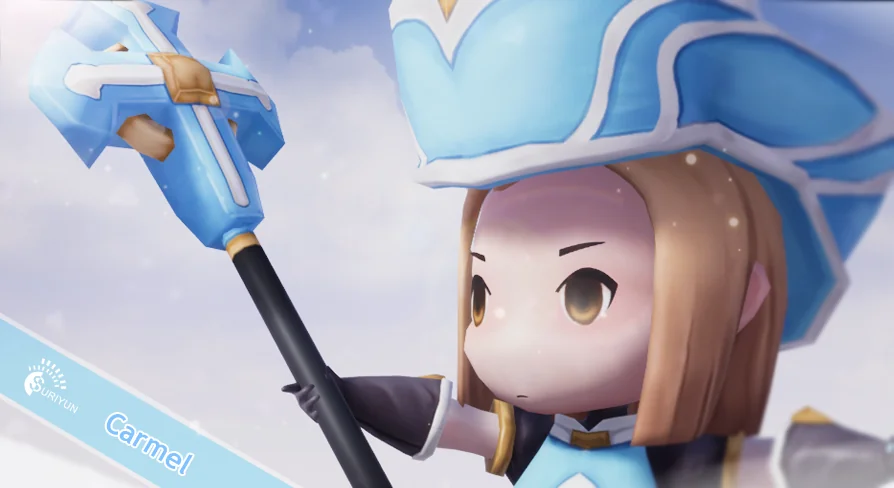
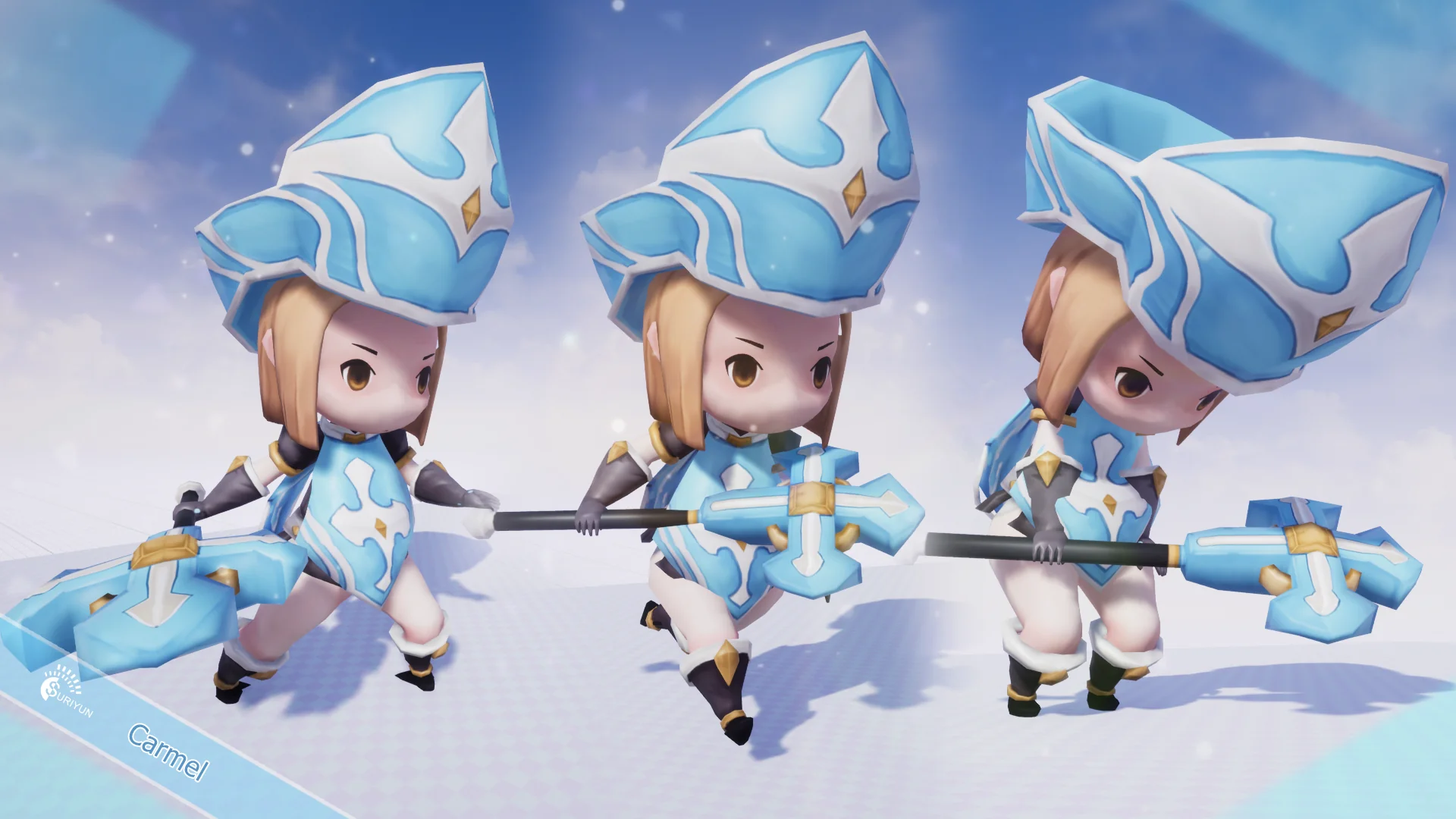
Standing watch at the threshold of a fantasy sanctuary or patrolling a cartoon settlement requires a distinct presence. Carmel delivers that profile through a low-poly aesthetic that leans into stylized, anime-inspired proportions. Functioning naturally as an arch guardian, bishop, or priest, the model inhabits sacred halls, fortified gates, or quiet shrines without demanding excessive processing overhead. In an active scene, an NPC of this nature often carries narrative weight, whether offering blessings, providing guidance, or maintaining a defensive vigil.
The visual direction relies on crisp anime and cartoon conventions, making it suitable for projects that reject hyper-realism in favor of clean silhouettes. In fantasy role-playing games and adventure titles, clerical and guardian figures establish the tone of institutions and sacred orders. Carmel slots into these environments as a dedicated non-player character, standing ready to fulfill conversational duties, populate background temples, or serve as an interactive quest giver. Because the polygonal density remains low, multiple instances can fill a cathedral nave or defensive outpost without creating performance bottlenecks.
The character archetype blends religious authority with defensive capability. Labeled under roles spanning arch, guardian, bishop, and priest, the model provides visual flexibility across different narrative stations. A player approaching an altar might encounter Carmel as a serene officiant, while another zone could present the same figure as an armored sentinel guarding an ancient gate. This duality allows game systems to utilize the model across diverse factions and settlements while preserving a unified visual logic.
Texture Separation Across Face, Skin, Hair, and Clothing
Visual identity in character modeling depends heavily on surface treatment. Carmel isolates its surface data into distinct texture assignments for the face, skin, hair, and clothes. Separating these elements simplifies color customization, allowing developers to manipulate individual zones without repainting entire UV sheets.
Isolating the face texture provides direct control over expressions, eye details, and focal features independently of bodily skin tones. A developer seeking to shift an NPC from a gentle priest to a stern temple guardian can modify the facial mapping without altering skin shaders applied elsewhere on the body. Similarly, keeping skin as an independent texture enables swift adjustments to complexion, making it practical to generate multiple NPC variants from the single mesh. Diverse skin tones across an entire monastic order or town population can be generated by adjusting a few texture instances or material tint values.
The hair and clothing textures benefit from this modular mapping approach as well. In fantasy productions, factions frequently communicate rank, allegiance, or magical discipline through uniform color schemes. Having hair textures divorced from garments means character hair can shift from bright anime highlights to muted natural tones without touching the vestments. Garments can be tinted to match specific regional factions, religious denominations, or seasonal festival themes. A bishop could wear pristine white and gold vestments, while a roadside priest utilizes earth-toned cloth, all leveraging the same underlying clothing texture partition.
Carmel Rigging and Animation Handling Across Game Engines
Motion brings low-poly figures to life, transforming static geometry into believable inhabitants. Carmel includes animations that establish functional baseline behaviors for game environments. The animation checks demonstrate how the rig handles standard movement loops, idle states, and gestures expected of an anime-styled guardian or cleric.
In practice, seeing the animation example demonstrated within Unity3D reveals how the skeletal hierarchy interacts with the mesh. For non-player characters standing guard or greeting traveling players, smooth deformations around the shoulders, knees, and garments prevent visual artifacts. When characters populate towns, shrines, or garrisons, their idle postures must convey quiet authority. The animated rig allows developers to slot Carmel straight into standard NPC behavior trees, controlling conversational loops, ambient walking, or alert postures.
Game creators working with combat systems can map defensive or incantation animations to the skeleton. Whether the character raises a staff to cast a clerical ward or holds ground as a resolute guardian, the underlying low-poly structure retains its readability during dynamic actions. The stylized anime proportions ensure that arm extensions, steps, and head turns remain sharp and readable even from distant camera angles common in top-down or isometric gameplay.
Engine Variations and Unreal Engine Shader Requirements
Deploying assets across different interactive engines highlights differences in default toolsets. Carmel functions across multiple environments, but the presentation varies between setups. In Unity3D, the animated presentation showcases full movement alongside dedicated shader behavior. When transitioning the asset into Unreal Engine, specific technical differences must be accounted for during scene setup.
The Unreal Engine version does not come with the script or the Toon shader present in other configurations. Developers targeting Unreal must configure their own shading solutions to capture the cartoon, anime-inspired aesthetic. Because Unreal relies heavily on its own material graph and post-process systems, achieving the intended cel-shaded or toon look requires assigning an internal cel shader, setting up custom material parameters, or using post-process outline volumes.
Handling the texture inputs within Unreal remains straightforward due to the clean separation of face, skin, hair, and clothing maps. Material instances can be built directly inside the Unreal Material Editor, piping tint parameters into base color inputs to maintain the easy color customization workflow. Scripting NPC logic in Unreal, such as patrol behaviors, interaction prompts, and dialogue states, must be implemented via Unreal Blueprints or C++, as engine-specific scripts are omitted from the UE package.
Ecosystem Placement and Stylistic Alignment with Yippy Kawaii
Maintaining visual coherence across a project demands that all assets share compatible design languages. Carmel maintains explicit compatibility with the Yippy Kawaii family of assets, ensuring harmonious proportions, surface rendering, and world-building cohesion.
When combining Carmel with Yippy Kawaii environments or companion models, developers avoid the jarring clash of mismatched poly density or conflicting art styles. The low-poly anime aesthetic seamlessly blends with whimsical fantasy environments, modular village structures, and companion characters from the same creative sphere. Whether populating a vibrant fantasy hub or assembling an anime-styled role-playing game roster, Carmel bridges the gap between sacred clergy, stalwart guardians, and everyday townsfolk.
 Humans
 Humans
 Humans
 Humans