"07a32e720bd988c8"{"id":"1002493","slug":"red-knight","title":"Red Knight","category":"Humans","engine":"4.22+,5.0+","assetVersion":"","engineVersion":"Engine Version: 4.22+,5.0+","tag":"Humans","accent":"blue","visual":"mech","summary":"A technical breakdown of the lowpoly Red Knight character, covering texture customization, engine shader differences, animations, and Yippy Kawaii compatibility","platform":"Unreal Engine","indexPolicy":"index","publishedAt":"2026-11-12T03:58:22.626Z","updatedAt":"2026-11-12T03:58:22.626Z","sourceNotes":[],"fileContents":[],"compatibility":["Unreal Engine","Engine Version: 4.22+,5.0+"],"featuredImage":{"alt":"Red Knight","src":"/wp-content/uploads/published/2026/11/8c8ce5564981-0e955ed6-9c9d-4e80-b62a-ba32896c74df-c20436f29a.webp"},"hasDownloadLink":true,"downloads":0,"terms":[{"taxonomy":"category","slug":"humans","name":"Humans"}],"galleryImages":[{"src":"/wp-content/uploads/published/2026/11/54323a47d425-fa3d0071-6b89-4f20-818a-cb329895464a-eae03ec12a.webp","alt":"Red Knight"},{"src":"/wp-content/uploads/published/2026/11/6d471247beb1-9d7a1ad1-7f8f-4e0a-a2a4-bfd3c591a4ca-2dd21805d0.webp","alt":"Red Knight"},{"src":"/wp-content/uploads/published/2026/11/d0528b233456-4930e9d7-c46d-4284-ae1d-e661ea3522a4-903e754e23.webp","alt":"Red Knight"}],"accessPanel":{"kind":"resource","title":"Get this resource","eyebrow":"Free resource","message":"Download this resource in your browser.","fileName":"Content.7z","safetyNote":"Resources are manually reviewed before listing to improve quality and reduce obvious risks.","actionLabel":"Get this resource","resourceType":"Resource archive","versions":[]},"contentHtml":"\u003cp\u003eCharacter asset pipelines in stylized game development rely heavily on how easily a 3D model can be altered to fit distinct gameplay roles or visual palettes. The Red Knight is built with dedicated texture segmentation spanning the face, skin, hair, and armor. This clean division allows teams to re-tint surfaces, produce color variants, and separate organic details from defensive gear without rebuilding the underlying mesh.\u003c/p\u003e \u003ch2\u003eTexture Separation on the Red Knight Base Model\u003c/h2\u003e\n\u003cp\u003eModifying a character to serve as an enemy variant, an allied guard, or a distinct player avatar depends on how the material slots are configured. The Red Knight isolates its surface data into four distinct components: face, skin, hair, and armor. By keeping these elements partitioned into separate textures, surface customization avoids the complications that occur when organic anatomy and manufactured armor plates share a single, cramped map.\u003c/p\u003e \u003cp\u003eColor adjustments become direct operations under this structure. Developers looking to change the metallic tint or cloth tones on the armor can alter that specific texture map without disturbing facial expressions or shifting human skin values. Similarly, adjusting hair color or giving skin a different tone leaves the armor values completely intact. This clean separation simplifies batch variations in projects requiring multiple guards, patrolling warriors, or ranking ranks distinguished by uniform color schemes.\u003c/p\u003e \u003cp\u003eBecause the textures support straightforward color manipulation, developers working in stylized art directions can tune brightness, saturation, and hue maps quickly. Whether a project calls for a classic crimson-toned knight, a darkened guardian sentry, or an alternate faction palette, the modular surface layout removes the need to paint entirely new textures from scratch. The boundaries between hair, skin, and protective plating remain sharply defined across any intended colorway.\u003c/p\u003e \u003ch2\u003eStylistic Definition of the Lowpoly Guardian\u003c/h2\u003e\n\u003cp\u003eStylistically, the Red Knight combines cartoon proportions with Japanese warrior aesthetics and traditional knight archetypes. Built deliberately within a lowpoly framework, the model emphasizes broad geometric silhouettes that stay legible during fast camera movement or wide tactical perspectives. Rather than cluttering the figure with fine surface micro-details, the character relies on strong visual forms that communicate role and intent instantly.\u003c/p\u003e \u003cp\u003eEquipped with a sword, the asset fulfills the functional requirements of a sentry, protector, or frontline combatant. The tags defining the character—guardian, warrior, guard, and knight—point directly to defensive and offensive field operations within interactive environments. The clean edges and low geometric density make the warrior well suited for games where performance budgets require disciplined asset geometry, including mobile releases, top-down strategy titles, or arena-based action games.\u003c/p\u003e \u003cp\u003eThe infusion of Japanese warrior themes into a cartoon knight silhouette creates a distinct thematic crossover. The protective armor parts reflect traditional guardian armor cues, giving the figure an identity distinct from strictly Western medieval troops. Paired with its primary sword armament, the character acts naturally as a garrison guard, an escort NPC, or an agile fantasy fighter.\u003c/p\u003e \u003ch2\u003eDeploying the Red Knight Between Unity and Unreal Engine\u003c/h2\u003e\n\u003cp\u003ePipeline implementation varies depending on the destination engine, particularly between Unity and Unreal Engine. The Red Knight includes an animation check, with animation examples shown specifically within the Unity3D environment. This demonstration confirms the rigging and skeletal movement profiles under Unity's animation tools, giving creators a direct reference point for how combat maneuvers, sword swings, and idle stances deform the lowpoly mesh.\u003c/p\u003e \u003cp\u003eWhen migrating or configuring the asset inside Unreal Engine, specific technical differences must be addressed. The Unreal Engine version does not include the custom script or the dedicated Toon shader found in other distributions. As a result, technical artists and developers targeting Unreal Engine must plan for standard material assignment or supply their own stylized post-process or custom shading solutions.\u003c/p\u003e \u003cp\u003eSetting up the Red Knight in Unreal Engine involves building a material network using the separated face, skin, hair, and armor maps. Because the toon shader is omitted in this engine package, achieving the intended cartoon aesthetic requires linking these maps to an existing project-wide cel shader, an unlit emissive shading model, or Unreal's custom shading models. Similarly, gameplay logic, combat interactions, and movement scripts need to be integrated through the project's own Blueprints or C++ codebases rather than relying on bundled engine-specific components.\u003c/p\u003e \u003ch2\u003eRole Implementation and Yippy Kawaii Ecosystem Alignment\u003c/h2\u003e\n\u003cp\u003eThe Red Knight maintains compatibility with the Yippy Kawaii line of characters. In productions utilizing multiple character packs, stylistic uniformity is essential so that friendly units, shopkeepers, adversaries, and town guards appear to belong to the same universe. Because this character shares structural and artistic alignment with the Yippy Kawaii ecosystem, it drops into existing multi-character setups without causing aesthetic friction.\u003c/p\u003e \u003cp\u003eThe combination of a cartoon visual profile and guardian-themed combat gear opens diverse gameplay applications. In role-playing frameworks, the character easily serves as a town guard stationed at defensive gates, an escort unit accompanying a convoy, or a playable fighter starting their journey with a basic sword. In wave-based survival games or dungeon crawlers, the easily tinted armor sheets make it possible to generate tiered encounters, distinguishing elite guards from novice sentries strictly through color customization.\u003c/p\u003e \u003cp\u003eThe package provides a disciplined base asset ready for animation, shader assignment, and gameplay binding. By delivering separated texture channels for every vital anatomical and defensive component, the warrior gives technical artists full control over visual appearance while leaving engine-specific logic and specialized shading to be configured according to each project's architectural standards.\u003c/p\u003e\n\n\u003ch2\u003eMore From The Same Workflow\u003c/h2\u003e\n\u003cul\u003e\n\u003cli\u003e\u003ca href=\"https://3dcghub.com/knight-vesuvius/\" rel=\"noopener noreferrer\"\u003eKnight Vesuvius\u003c/a\u003e\u003c/li\u003e\n\u003cli\u003e\u003ca href=\"https://3dcghub.com/amazon-female-warrior-native-knight-realistic-girl-mmorpg-stylized-character/\" rel=\"noopener noreferrer\"\u003eAmazon Female Warrior, Native Knight Realistic Girl MMORPG Stylized Character\u003c/a\u003e\u003c/li\u003e\n\u003cli\u003e\u003ca href=\"https://3dcghub.com/dragon-knight/\" rel=\"noopener noreferrer\"\u003eDragon Knight\u003c/a\u003e\u003c/li\u003e\n\u003cli\u003e\u003ca href=\"https://3dcghub.com/landon/\" rel=\"noopener noreferrer\"\u003eLandon\u003c/a\u003e\u003c/li\u003e\n\u003cli\u003e\u003ca href=\"https://3dcghub.com/carmel/\" rel=\"noopener noreferrer\"\u003eCarmel\u003c/a\u003e\u003c/li\u003e\n\u003c/ul\u003e","contentTextLength":6424,"navigation":{"current":6,"total":4421,"previous":{"id":"1002494","slug":"sci-fi-robots-pack-vol-1","title":"SCI FI ROBOTS PACK VOL 1","category":"Characters \u0026 Creatures","platform":"Unreal Engine","updatedAt":"2026-11-12T04:01:24.809Z"},"next":{"id":"1002492","slug":"protective-suit","title":"Protective Suit","category":"Characters \u0026 Creatures","platform":"Unreal Engine","updatedAt":"2026-11-12T03:57:57.272Z"}},"relatedResources":[{"id":"1000306","slug":"knight-vesuvius","title":"Knight Vesuvius","category":"Humans","engine":"4.26+,5.0+","assetVersion":"","engineVersion":"Engine Version: 4.26+,5.0+","tag":"Humans","accent":"blue","visual":"mech","summary":"A technical breakdown of the Knight Vesuvius character model for Unreal Engine, detailing its fused and stripped meshes, PBR skins, and Epic Skeleton rig.","platform":"Unreal Engine","indexPolicy":"index","publishedAt":"2026-07-04T09:23:21.715Z","updatedAt":"2026-07-04T09:23:21.715Z","sourceNotes":[],"fileContents":[],"compatibility":["Unreal Engine","Engine Version: 4.26+,5.0+"],"featuredImage":{"alt":"Knight Vesuvius","src":"/wp-content/uploads/published/2026/07/de15c0697fea-f4bca91a-801b-4fc9-8a6b-ac05f98448aa-8be7d5514c.webp"},"hasDownloadLink":true,"downloads":0},{"id":"2603","slug":"amazon-female-warrior-native-knight-realistic-girl-mmorpg-stylized-character","title":"Amazon Female Warrior, Native Knight Realistic Girl MMORPG Stylized Character","category":"Humans","engine":"4.26+,5.0+","assetVersion":"Engine version: 4.26+,5.0+","engineVersion":"4.20","tag":"Humans","accent":"blue","visual":"character","summary":"Discover this professional Amazon Female Warrior character model. Featuring 52 facial blendshapes, modular armor, and Epic Skeleton rigging for game development","platform":"Unreal Engine","indexPolicy":"noindex","publishedAt":"2026-02-07T14:19:58.000Z","updatedAt":"2026-04-19T15:58:00.000Z","sourceNotes":[],"fileContents":[],"compatibility":["Unreal Engine","Engine version: 4.26+,5.0+"],"featuredImage":{"alt":"Amazon Female Warrior, Native Knight Realistic Girl MMORPG Stylized Character","src":"https://3dcghub.com/wp-content/uploads/2026/02/5be3298d-cecd-4344-ace6-cbcdebcc8850.webp"},"hasDownloadLink":true,"downloads":0},{"id":"1002449","slug":"dragon-knight","title":"Dragon Knight","category":"Humans","engine":"5.1+","assetVersion":"","engineVersion":"Engine Version: 5.1+","tag":"Humans","accent":"blue","visual":"mech","summary":"Examine the Dragon Knight dark fantasy modular character, featuring UE4 and UE5 skeleton rigs, skeletal sword, cloth simulation, and Substance Painter files.","platform":"Unreal Engine","indexPolicy":"index","publishedAt":"2026-11-10T18:54:05.186Z","updatedAt":"2026-11-10T18:54:05.186Z","sourceNotes":[],"fileContents":[],"compatibility":["Unreal Engine","Engine Version: 5.1+"],"featuredImage":{"alt":"Dragon Knight","src":"/wp-content/uploads/published/2026/11/3053bf6cfb29-170eccde-f714-4f13-b09d-9db9fd7a3c86-1f6d3d03f9.webp"},"hasDownloadLink":true,"downloads":0}]}
Humans
Red Knight
A technical breakdown of the lowpoly Red Knight character, covering texture customization, engine shader differences, animations, and Yippy Kawaii compatibility
Category:Unreal Engine,HumansPlatform: Unreal EngineEngine Version: 4.22+,5.0+Published: Nov 12, 2026
Humans
Resource overview
Character asset pipelines in stylized game development rely heavily on how easily a 3D model can be altered to fit distinct gameplay roles or visual palettes. The Red Knight is built with dedicated texture segmentation spanning the face, skin, hair, and armor. This clean division allows teams to re-tint surfaces, produce color variants, and separate organic details from defensive gear without rebuilding the underlying mesh.
Texture Separation on the Red Knight Base Model
Modifying a character to serve as an enemy variant, an allied guard, or a distinct player avatar depends on how the material slots are configured. The Red Knight isolates its surface data into four distinct components: face, skin, hair, and armor. By keeping these elements partitioned into separate textures, surface customization avoids the complications that occur when organic anatomy and manufactured armor plates share a single, cramped map.
Color adjustments become direct operations under this structure. Developers looking to change the metallic tint or cloth tones on the armor can alter that specific texture map without disturbing facial expressions or shifting human skin values. Similarly, adjusting hair color or giving skin a different tone leaves the armor values completely intact. This clean separation simplifies batch variations in projects requiring multiple guards, patrolling warriors, or ranking ranks distinguished by uniform color schemes.
Because the textures support straightforward color manipulation, developers working in stylized art directions can tune brightness, saturation, and hue maps quickly. Whether a project calls for a classic crimson-toned knight, a darkened guardian sentry, or an alternate faction palette, the modular surface layout removes the need to paint entirely new textures from scratch. The boundaries between hair, skin, and protective plating remain sharply defined across any intended colorway.
Stylistic Definition of the Lowpoly Guardian
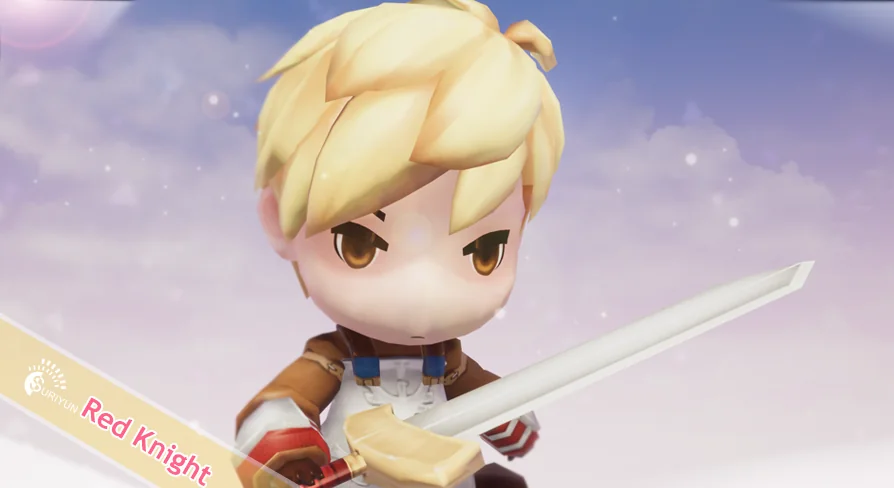
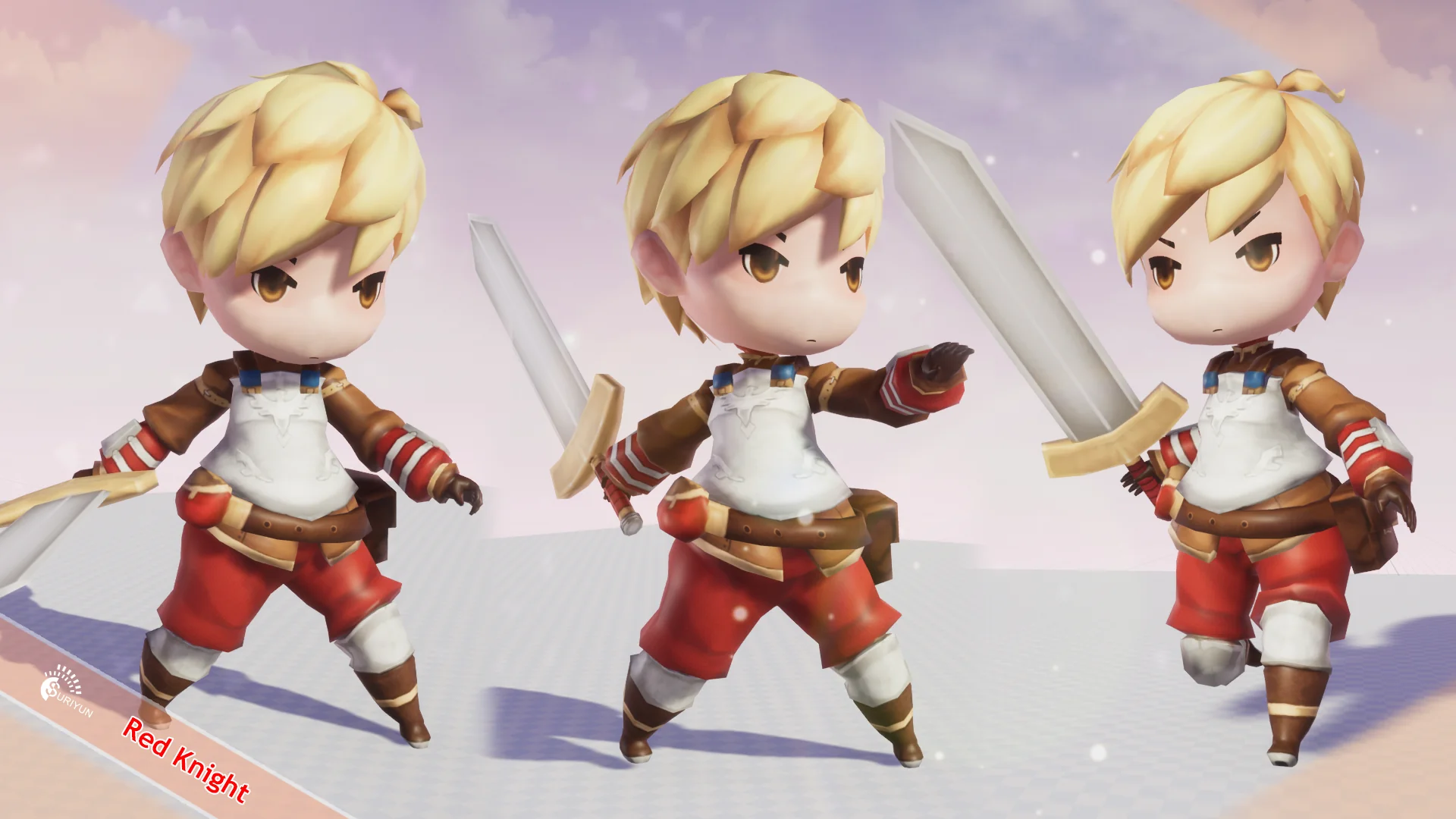
Stylistically, the Red Knight combines cartoon proportions with Japanese warrior aesthetics and traditional knight archetypes. Built deliberately within a lowpoly framework, the model emphasizes broad geometric silhouettes that stay legible during fast camera movement or wide tactical perspectives. Rather than cluttering the figure with fine surface micro-details, the character relies on strong visual forms that communicate role and intent instantly.
Equipped with a sword, the asset fulfills the functional requirements of a sentry, protector, or frontline combatant. The tags defining the character—guardian, warrior, guard, and knight—point directly to defensive and offensive field operations within interactive environments. The clean edges and low geometric density make the warrior well suited for games where performance budgets require disciplined asset geometry, including mobile releases, top-down strategy titles, or arena-based action games.
The infusion of Japanese warrior themes into a cartoon knight silhouette creates a distinct thematic crossover. The protective armor parts reflect traditional guardian armor cues, giving the figure an identity distinct from strictly Western medieval troops. Paired with its primary sword armament, the character acts naturally as a garrison guard, an escort NPC, or an agile fantasy fighter.
Deploying the Red Knight Between Unity and Unreal Engine
Pipeline implementation varies depending on the destination engine, particularly between Unity and Unreal Engine. The Red Knight includes an animation check, with animation examples shown specifically within the Unity3D environment. This demonstration confirms the rigging and skeletal movement profiles under Unity's animation tools, giving creators a direct reference point for how combat maneuvers, sword swings, and idle stances deform the lowpoly mesh.
When migrating or configuring the asset inside Unreal Engine, specific technical differences must be addressed. The Unreal Engine version does not include the custom script or the dedicated Toon shader found in other distributions. As a result, technical artists and developers targeting Unreal Engine must plan for standard material assignment or supply their own stylized post-process or custom shading solutions.
Setting up the Red Knight in Unreal Engine involves building a material network using the separated face, skin, hair, and armor maps. Because the toon shader is omitted in this engine package, achieving the intended cartoon aesthetic requires linking these maps to an existing project-wide cel shader, an unlit emissive shading model, or Unreal's custom shading models. Similarly, gameplay logic, combat interactions, and movement scripts need to be integrated through the project's own Blueprints or C++ codebases rather than relying on bundled engine-specific components.
Role Implementation and Yippy Kawaii Ecosystem Alignment
The Red Knight maintains compatibility with the Yippy Kawaii line of characters. In productions utilizing multiple character packs, stylistic uniformity is essential so that friendly units, shopkeepers, adversaries, and town guards appear to belong to the same universe. Because this character shares structural and artistic alignment with the Yippy Kawaii ecosystem, it drops into existing multi-character setups without causing aesthetic friction.
The combination of a cartoon visual profile and guardian-themed combat gear opens diverse gameplay applications. In role-playing frameworks, the character easily serves as a town guard stationed at defensive gates, an escort unit accompanying a convoy, or a playable fighter starting their journey with a basic sword. In wave-based survival games or dungeon crawlers, the easily tinted armor sheets make it possible to generate tiered encounters, distinguishing elite guards from novice sentries strictly through color customization.
The package provides a disciplined base asset ready for animation, shader assignment, and gameplay binding. By delivering separated texture channels for every vital anatomical and defensive component, the warrior gives technical artists full control over visual appearance while leaving engine-specific logic and specialized shading to be configured according to each project's architectural standards.
 Humans
 Humans
 Humans
 Humans