"07a32e720bd988c8"{"id":"1002484","slug":"landon","title":"Landon","category":"Humans","engine":"4.22+,5.0+","assetVersion":"","engineVersion":"Engine Version: 4.22+,5.0+","tag":"Humans","accent":"blue","visual":"mech","summary":"Explore Landon, a lowpoly anime fantasy character featuring separate textures for face, hair, skin, and armor, ideal for archer and guard roles.","platform":"Unreal Engine","indexPolicy":"index","publishedAt":"2026-11-12T03:47:06.398Z","updatedAt":"2026-11-12T03:47:06.398Z","sourceNotes":[],"fileContents":[],"compatibility":["Unreal Engine","Engine Version: 4.22+,5.0+"],"featuredImage":{"alt":"Landon","src":"/wp-content/uploads/published/2026/11/ea3b0acab5a4-27cd2668-ce20-4397-a47d-69c1fab66c69-91dd5db839.webp"},"hasDownloadLink":true,"downloads":0,"terms":[{"taxonomy":"category","slug":"humans","name":"Humans"}],"galleryImages":[{"src":"/wp-content/uploads/published/2026/11/9ea776d5e58e-28bdfb28-b02d-49d2-98bd-e70ddb5a8e89-f608b6792e.webp","alt":"Landon"},{"src":"/wp-content/uploads/published/2026/11/52667b5cae7f-c62b6459-f96f-4e31-bf66-546fae7423b0-86813054fc.webp","alt":"Landon"},{"src":"/wp-content/uploads/published/2026/11/805f8dcba3e1-d104c0b4-32b9-4107-9759-6a4d20385db7-e1699e38b8.webp","alt":"Landon"}],"accessPanel":{"kind":"resource","title":"Get this resource","eyebrow":"Free resource","message":"Download this resource in your browser.","fileName":"Content.7z","safetyNote":"Resources are manually reviewed before listing to improve quality and reduce obvious risks.","actionLabel":"Get this resource","resourceType":"Resource archive","versions":[]},"contentHtml":"\u003ch2\u003eStructuring Landon Across Engine Pipelines\u003c/h2\u003e\u003cp\u003eIntegrating a stylized lowpoly character into a game project requires an understanding of how its underlying assets interact with your chosen runtime environment. Landon is built for deployment in fantasy, anime, and cartoon aesthetics, functioning primarily as an archer, town guard, or interactive NPC. When preparing the character for engine integration, technical requirements shift depending on whether production is centered in Unity3D or Unreal Engine.\u003c/p\u003e\u003cp\u003eIn Unity3D, animation examples provide an immediate baseline for how the character moves and poses in a real-time environment. Working within Unity allows developers to inspect the character's movement cycles directly, ensuring that the lowpoly proportions, joints, and skeletal weights deform naturally during active sequences such as aiming a bow, walking a sentry route, or idling at a guard post.\u003c/p\u003e\u003cp\u003eDeploying the character into Unreal Engine introduces a different integration process. The Unreal Engine setup does not supply a dedicated script or a pre-configured toon shader. As a result, technical artists working in Unreal must assign their own material definitions to achieve a stylized or cel-shaded look. For projects aiming to retain the intended cartoon aesthetic, this involves setting up a custom post-process toon material or a specialized unlit or half-Lambert shading network inside Unreal Engine's material editor. Game logic and interaction scripts must also be constructed using Blueprints or C++, connecting user input or artificial intelligence routines directly to the character’s state machine.\u003c/p\u003e\u003ch2\u003eCustomizing Landon Through Modular Textures\u003c/h2\u003e\u003cp\u003eVisual diversity is critical when populating game environments with repetitive character types such as city sentries, roaming militia, or ranged combat units. Landon accommodates this requirement by segmenting its surface mapping into dedicated texture passes rather than utilizing a single atlas. Distinct texture maps are mapped across individual body sections:\u003c/p\u003e\u003cul\u003e\u003cli\u003e\u003cstrong\u003eFace:\u003c/strong\u003e Isolates the facial features, providing direct control over expression lines and base skin tones without affecting the rest of the head.\u003c/li\u003e\u003cli\u003e\u003cstrong\u003eSkin:\u003c/strong\u003e Covers exposed bodily surfaces, allowing developers to shift skin undertones independently of clothing or equipment.\u003c/li\u003e\u003cli\u003e\u003cstrong\u003eHair:\u003c/strong\u003e Handles the character's stylized hairstyle as an independent surface layer, simplifying dye variants and saturation adjustments.\u003c/li\u003e\u003cli\u003e\u003cstrong\u003eArmor:\u003c/strong\u003e Encompasses the protective gear, plates, and defensive elements worn by the character for uniform and rank recoloring.\u003c/li\u003e\u003c/ul\u003e\u003cp\u003eBy dividing the surface into face, skin, hair, and armor, the asset simplifies color adjustments. In a production pipeline, artists can alter these separate maps directly inside graphic software or construct dynamic material instances within the engine. Multiplying tint values over the armor textures, for example, enables the rapid generation of distinct factions, town garrisons, or squad ranks while maintaining the underlying lowpoly geometry. Hair textures can be hue-shifted across an array of fantasy colors to differentiate multiple archers operating within the same combat encounter, ensuring players can distinguish between unique targets or allied combatants.\u003c/p\u003e\u003ch2\u003eAnimation Integration for Combat and Guard Roles\u003c/h2\u003e\u003cp\u003eAnimation checks confirm the model's structural viability for dynamic movement. Given its designation as both an archer and a guard, the rig must support precise poses that fit both ranged warfare and stationary surveillance. Archer mechanics require clean rotation around the shoulder, collarbone, and spine to achieve authentic bow-drawing postures, where arm placement and torso twists must align without collapsing the lowpoly volume.\u003c/p\u003e\u003cp\u003eWhen utilized as a guard or sentry NPC, the animation demands shift toward stability and steady physical loops. Typical guard routines involve standing observation, rhythmic idle breathing, weapon readiness, and paced patrol walks. Unity3D setups display these animated behaviors directly, serving as an immediate reference for motion data. If retargeting animations or importing external animation clips into Unreal Engine, developers should verify bone orientations to ensure that holding bows, checking perimeters, or reacting to incoming threats maintains correct silhouette alignment across all animation states.\u003c/p\u003e\u003ch2\u003eStylistic Cohesion with the Yippy Kawaii Ecosystem\u003c/h2\u003e\u003cp\u003eArt direction in stylized projects demands that proportions, line weights, and shading behaviors remain unified across every asset on screen. Landon maintains explicit compatibility with the Yippy Kawaii aesthetic, matching the proportions and lighthearted visual tone associated with that style. The lowpoly topology emphasizes broad, clean shapes and expressive cartoon anatomy rather than hyper-dense geometric detail.\u003c/p\u003e\u003cp\u003eThis design makes the character particularly suitable for top-down strategy games, stylized role-playing games, and mobile titles where rendering budgets are strictly monitored. The simplified surface topology reduces draw overhead, making it practical to display groups of guards at city gates or squads of fantasy archers on castle ramparts without causing performance bottlenecks. When paired alongside other assets carrying the same visual language, the character blends seamlessly into established cartoon towns, fantasy wilderness zones, and medieval encampments.\u003c/p\u003e\u003ch2\u003eFulfilling Gameplay Roles in Fantasy Environments\u003c/h2\u003e\u003cp\u003eThe combination of an anime aesthetic, lowpoly efficiency, and adaptable texturing allows Landon to fill multiple structural roles within a game's world design:\u003c/p\u003e\u003cp\u003eAs an archer, the character brings ranged threat dynamics to gameplay. Whether acting as an allied party member in a tactical role-playing game or functioning as an aggressive ranged enemy firing from high platforms, the clear cartoon silhouette ensures strong readability against environmental backgrounds, allowing players to instantly identify incoming projectile threats.\u003c/p\u003e\u003cp\u003eAs a guard or generic NPC, the character provides the necessary human presence to make settlements feel protected and inhabited. The ability to customize armor colors independently allows teams to assign specific color codes to different municipalities or guilds across a larger game map. Because the UE setup omits preset controllers and custom toon shaders, developers possess total freedom to integrate Landon into proprietary AI behavior trees, customized lighting pipelines, and bespoke interaction mechanics tailored exactly to their project's technical specifications.\u003c/p\u003e\n\n\u003ch2\u003eExplore Similar Assets\u003c/h2\u003e\n\u003cul\u003e\n\u003cli\u003e\u003ca href=\"https://3dcghub.com/carmel/\" rel=\"noopener noreferrer\"\u003eCarmel\u003c/a\u003e\u003c/li\u003e\n\u003cli\u003e\u003ca href=\"https://3dcghub.com/death-archer-girl-morgana/\" rel=\"noopener noreferrer\"\u003eDeath Archer Girl Morgana\u003c/a\u003e\u003c/li\u003e\n\u003cli\u003e\u003ca href=\"https://3dcghub.com/anime-girl-cleric/\" rel=\"noopener noreferrer\"\u003eAnime Girl Cleric\u003c/a\u003e\u003c/li\u003e\n\u003cli\u003e\u003ca href=\"https://3dcghub.com/modular-elf-archer-girl/\" rel=\"noopener noreferrer\"\u003eModular Elf Archer Girl\u003c/a\u003e\u003c/li\u003e\n\u003cli\u003e\u003ca href=\"https://3dcghub.com/k-pop-series-sun/\" rel=\"noopener noreferrer\"\u003eK-POP SERIES - Sun\u003c/a\u003e\u003c/li\u003e\n\u003c/ul\u003e","contentTextLength":6656,"navigation":{"current":15,"total":4421,"previous":{"id":"1002485","slug":"medieval-infantry","title":"Medieval Infantry","category":"Characters \u0026 Creatures","platform":"Unreal Engine","updatedAt":"2026-11-12T03:49:48.304Z"},"next":{"id":"1002483","slug":"iron-fist-girl","title":"Iron Fist Girl","category":"Animations","platform":"Unreal Engine","updatedAt":"2026-11-12T03:46:36.072Z"}},"relatedResources":[{"id":"1002468","slug":"carmel","title":"Carmel","category":"Humans","engine":"4.22+,5.0+","assetVersion":"","engineVersion":"Engine Version: 4.22+,5.0+","tag":"Humans","accent":"blue","visual":"mech","summary":"Carmel is a low-poly fantasy NPC character model featuring separated textures for face, skin, hair, and clothes, with verified animation support.","platform":"Unreal Engine","indexPolicy":"index","publishedAt":"2026-11-12T03:08:36.535Z","updatedAt":"2026-11-12T03:08:36.535Z","sourceNotes":[],"fileContents":[],"compatibility":["Unreal Engine","Engine Version: 4.22+,5.0+"],"featuredImage":{"alt":"Carmel","src":"/wp-content/uploads/published/2026/11/91525a699dff-42b5a9ca-487c-4df4-82d4-f7e5c2afaabe-2459f9cac6.webp"},"hasDownloadLink":true,"downloads":0},{"id":"1002493","slug":"red-knight","title":"Red Knight","category":"Humans","engine":"4.22+,5.0+","assetVersion":"","engineVersion":"Engine Version: 4.22+,5.0+","tag":"Humans","accent":"blue","visual":"mech","summary":"A technical breakdown of the lowpoly Red Knight character, covering texture customization, engine shader differences, animations, and Yippy Kawaii compatibility","platform":"Unreal Engine","indexPolicy":"index","publishedAt":"2026-11-12T03:58:22.626Z","updatedAt":"2026-11-12T03:58:22.626Z","sourceNotes":[],"fileContents":[],"compatibility":["Unreal Engine","Engine Version: 4.22+,5.0+"],"featuredImage":{"alt":"Red Knight","src":"/wp-content/uploads/published/2026/11/8c8ce5564981-0e955ed6-9c9d-4e80-b62a-ba32896c74df-c20436f29a.webp"},"hasDownloadLink":true,"downloads":0},{"id":"1002406","slug":"death-archer-girl-morgana","title":"Death Archer Girl Morgana","category":"Humans","engine":"4.24+,5.0+","assetVersion":"","engineVersion":"Engine Version: 4.24+,5.0+","tag":"Humans","accent":"blue","visual":"mech","summary":"Death Archer Girl Morgana is a modular, fully rigged UE5 character with 52 ARKit blendshapes, MatID color swaps, 4K textures and a bow for dark fantasy scenes.","platform":"Unreal Engine","indexPolicy":"index","publishedAt":"2026-11-10T12:02:23.586Z","updatedAt":"2026-11-10T12:02:23.586Z","sourceNotes":[],"fileContents":[],"compatibility":["Unreal Engine","Engine Version: 4.24+,5.0+"],"featuredImage":{"alt":"Death Archer Girl Morgana","src":"/wp-content/uploads/published/2026/11/ea8636dbb6df-2816da73-8314-4654-b908-7327f7cfd95e-bbd131ee7b.webp"},"hasDownloadLink":true,"downloads":0}]}
Humans
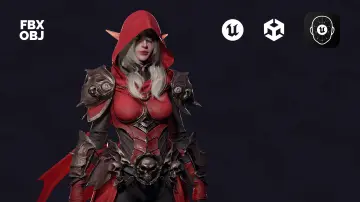
Landon
Explore Landon, a lowpoly anime fantasy character featuring separate textures for face, hair, skin, and armor, ideal for archer and guard roles.
Category:Unreal Engine,HumansPlatform: Unreal EngineEngine Version: 4.22+,5.0+Published: Nov 12, 2026
Humans
Resource overview
Structuring Landon Across Engine Pipelines
Integrating a stylized lowpoly character into a game project requires an understanding of how its underlying assets interact with your chosen runtime environment. Landon is built for deployment in fantasy, anime, and cartoon aesthetics, functioning primarily as an archer, town guard, or interactive NPC. When preparing the character for engine integration, technical requirements shift depending on whether production is centered in Unity3D or Unreal Engine.
In Unity3D, animation examples provide an immediate baseline for how the character moves and poses in a real-time environment. Working within Unity allows developers to inspect the character's movement cycles directly, ensuring that the lowpoly proportions, joints, and skeletal weights deform naturally during active sequences such as aiming a bow, walking a sentry route, or idling at a guard post.
Deploying the character into Unreal Engine introduces a different integration process. The Unreal Engine setup does not supply a dedicated script or a pre-configured toon shader. As a result, technical artists working in Unreal must assign their own material definitions to achieve a stylized or cel-shaded look. For projects aiming to retain the intended cartoon aesthetic, this involves setting up a custom post-process toon material or a specialized unlit or half-Lambert shading network inside Unreal Engine's material editor. Game logic and interaction scripts must also be constructed using Blueprints or C++, connecting user input or artificial intelligence routines directly to the character’s state machine.
Customizing Landon Through Modular Textures
Visual diversity is critical when populating game environments with repetitive character types such as city sentries, roaming militia, or ranged combat units. Landon accommodates this requirement by segmenting its surface mapping into dedicated texture passes rather than utilizing a single atlas. Distinct texture maps are mapped across individual body sections:
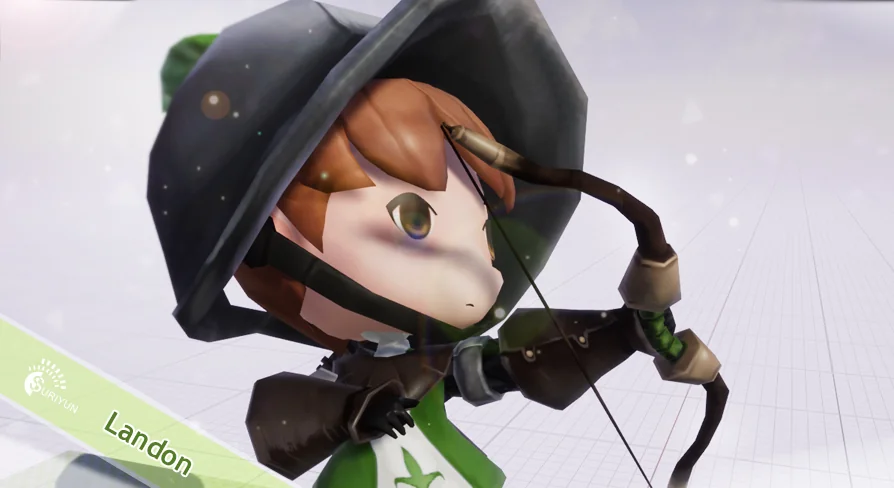
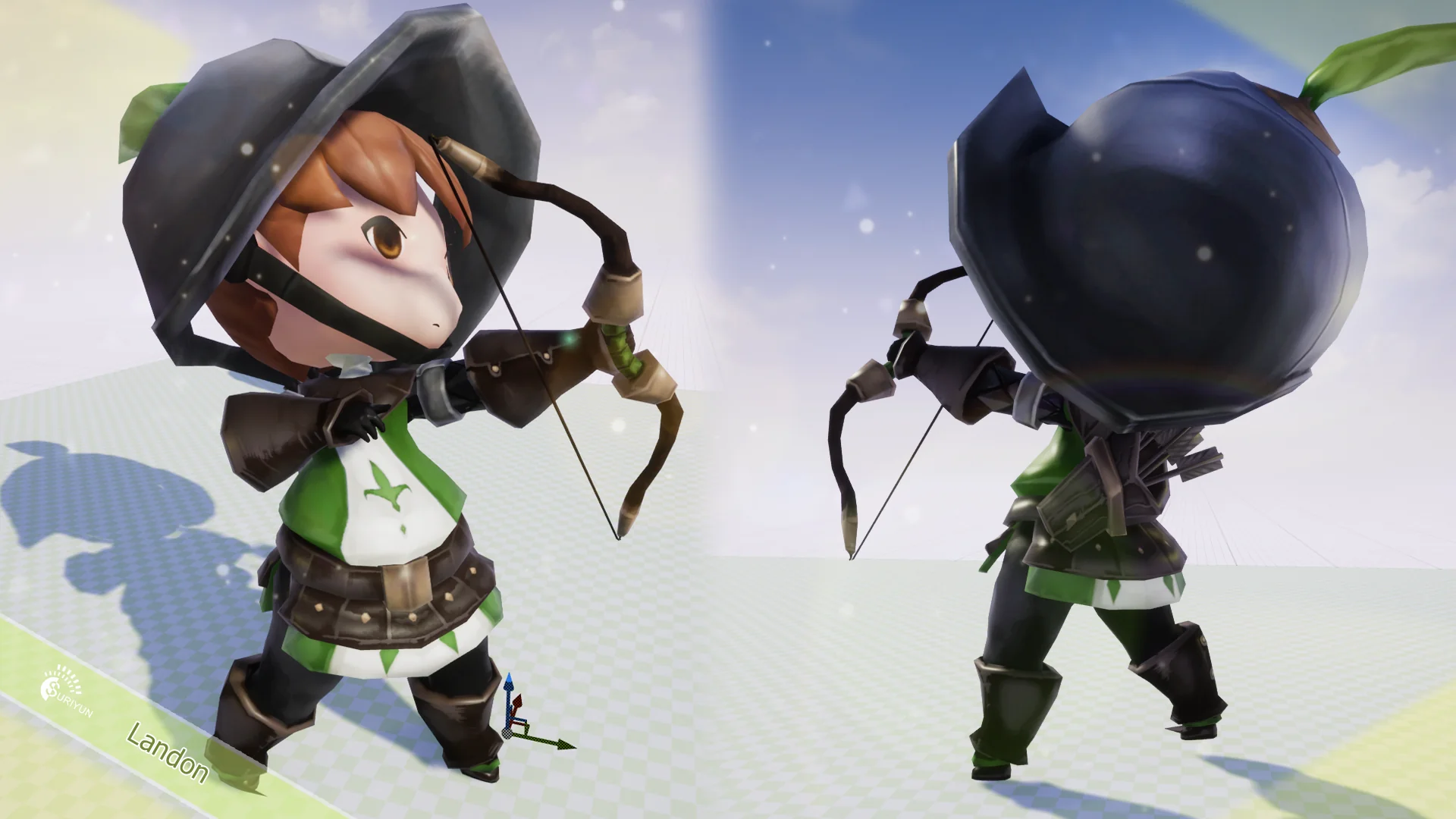
Face: Isolates the facial features, providing direct control over expression lines and base skin tones without affecting the rest of the head.
Skin: Covers exposed bodily surfaces, allowing developers to shift skin undertones independently of clothing or equipment.
Hair: Handles the character's stylized hairstyle as an independent surface layer, simplifying dye variants and saturation adjustments.
Armor: Encompasses the protective gear, plates, and defensive elements worn by the character for uniform and rank recoloring.
By dividing the surface into face, skin, hair, and armor, the asset simplifies color adjustments. In a production pipeline, artists can alter these separate maps directly inside graphic software or construct dynamic material instances within the engine. Multiplying tint values over the armor textures, for example, enables the rapid generation of distinct factions, town garrisons, or squad ranks while maintaining the underlying lowpoly geometry. Hair textures can be hue-shifted across an array of fantasy colors to differentiate multiple archers operating within the same combat encounter, ensuring players can distinguish between unique targets or allied combatants.
Animation Integration for Combat and Guard Roles
Animation checks confirm the model's structural viability for dynamic movement. Given its designation as both an archer and a guard, the rig must support precise poses that fit both ranged warfare and stationary surveillance. Archer mechanics require clean rotation around the shoulder, collarbone, and spine to achieve authentic bow-drawing postures, where arm placement and torso twists must align without collapsing the lowpoly volume.
When utilized as a guard or sentry NPC, the animation demands shift toward stability and steady physical loops. Typical guard routines involve standing observation, rhythmic idle breathing, weapon readiness, and paced patrol walks. Unity3D setups display these animated behaviors directly, serving as an immediate reference for motion data. If retargeting animations or importing external animation clips into Unreal Engine, developers should verify bone orientations to ensure that holding bows, checking perimeters, or reacting to incoming threats maintains correct silhouette alignment across all animation states.
Stylistic Cohesion with the Yippy Kawaii Ecosystem
Art direction in stylized projects demands that proportions, line weights, and shading behaviors remain unified across every asset on screen. Landon maintains explicit compatibility with the Yippy Kawaii aesthetic, matching the proportions and lighthearted visual tone associated with that style. The lowpoly topology emphasizes broad, clean shapes and expressive cartoon anatomy rather than hyper-dense geometric detail.
This design makes the character particularly suitable for top-down strategy games, stylized role-playing games, and mobile titles where rendering budgets are strictly monitored. The simplified surface topology reduces draw overhead, making it practical to display groups of guards at city gates or squads of fantasy archers on castle ramparts without causing performance bottlenecks. When paired alongside other assets carrying the same visual language, the character blends seamlessly into established cartoon towns, fantasy wilderness zones, and medieval encampments.
Fulfilling Gameplay Roles in Fantasy Environments
The combination of an anime aesthetic, lowpoly efficiency, and adaptable texturing allows Landon to fill multiple structural roles within a game's world design:
As an archer, the character brings ranged threat dynamics to gameplay. Whether acting as an allied party member in a tactical role-playing game or functioning as an aggressive ranged enemy firing from high platforms, the clear cartoon silhouette ensures strong readability against environmental backgrounds, allowing players to instantly identify incoming projectile threats.
As a guard or generic NPC, the character provides the necessary human presence to make settlements feel protected and inhabited. The ability to customize armor colors independently allows teams to assign specific color codes to different municipalities or guilds across a larger game map. Because the UE setup omits preset controllers and custom toon shaders, developers possess total freedom to integrate Landon into proprietary AI behavior trees, customized lighting pipelines, and bespoke interaction mechanics tailored exactly to their project's technical specifications.
 Humans
 Humans
 Humans
 Humans