"a338a1d501976271"{"id":"1000306","slug":"knight-vesuvius","title":"Knight Vesuvius","category":"Humans","engine":"4.26+,5.0+","assetVersion":"","engineVersion":"Engine Version: 4.26+,5.0+","tag":"Humans","accent":"blue","visual":"mech","summary":"A technical breakdown of the Knight Vesuvius character model for Unreal Engine, detailing its fused and stripped meshes, PBR skins, and Epic Skeleton rig.","platform":"Unreal Engine","publishedAt":"2026-07-04T09:23:21.715Z","updatedAt":"2026-07-04T09:23:21.715Z","sourceNotes":[],"fileContents":[],"compatibility":["Unreal Engine","Engine Version: 4.26+,5.0+"],"featuredImage":{"alt":"Knight Vesuvius","src":"/wp-content/uploads/published/2026/07/de15c0697fea-f4bca91a-801b-4fc9-8a6b-ac05f98448aa-8be7d5514c.webp"},"hasDownloadLink":true,"downloads":0,"terms":[{"taxonomy":"category","slug":"humans","name":"Humans"}],"galleryImages":[{"src":"/wp-content/uploads/published/2026/07/36d846eb2b38-249b2fdf-2a0b-443a-85e1-d65f0cf41fcf-d3224302cb.webp","alt":"Knight Vesuvius"},{"src":"/wp-content/uploads/published/2026/07/6033c85b0561-afb475f8-bf90-4bc6-91c9-110ccfd3a5b1-7807485a22.webp","alt":"Knight Vesuvius"},{"src":"/wp-content/uploads/published/2026/07/692df01b70ca-9db74a04-e923-4132-8b28-d8288b1c9cad-7162181da1.webp","alt":"Knight Vesuvius"},{"src":"/wp-content/uploads/published/2026/07/48a1063ff47d-20965ff8-6da6-4008-abbc-7ab6fd1d4a19-331f11056a.webp","alt":"Knight Vesuvius"},{"src":"/wp-content/uploads/published/2026/07/0d787087cc23-1da62c0e-cb7d-40e1-8c5b-90d28e416015-dd03462685.webp","alt":"Knight Vesuvius"},{"src":"/wp-content/uploads/published/2026/07/562e6cee7fdf-f9db36ff-205f-4d89-bb78-b08dcee59023-2336e7aa5f.webp","alt":"Knight Vesuvius"},{"src":"/wp-content/uploads/published/2026/07/50b06af957bd-9ed5ddf7-ed86-4914-bd32-36e17fb1cc15-d75a9fbffd.webp","alt":"Knight Vesuvius"},{"src":"/wp-content/uploads/published/2026/07/3c3ffd12c787-03af08f3-d299-42d0-8710-09ed200a10f4-26c2d2644d.webp","alt":"Knight Vesuvius"},{"src":"/wp-content/uploads/published/2026/07/07d0511327f4-f262132c-e17b-4f16-9797-d4c3090b5a59-f0b0943444.webp","alt":"Knight Vesuvius"},{"src":"/wp-content/uploads/published/2026/07/3510639fbe9f-779d88de-c382-41d3-aef0-81540cbef9e9-e36e9661b4.webp","alt":"Knight Vesuvius"}],"accessPanel":{"kind":"resource","title":"Download this resource","eyebrow":"Free Download","message":"Log in or create a free account to start your download.","fileName":"Content.7z","safetyNote":"Resources are manually reviewed before listing to improve quality and reduce obvious risks.","actionLabel":"Download Free","resourceType":"Resource archive"},"contentHtml":"The Knight Vesuvius package provides a low-poly character model designed specifically for Unreal Engine workflows. Thematically framed around a wandering warrior who has become a servant of darkness with ambitions of ascending as a dark king, the asset serves projects rooted in medieval, fantasy, and crusader-style environments. The provided files center on a sword-and-shield fighter, delivering a structured mix of 3D meshes, varied texture sets, and standard engine rigging to support both immediate deployment and deeper custom integration. \u003ch3\u003eFused and Stripped Mesh Configurations\u003c/h3\u003e\nIntegrating character models into a game engine often requires developers to choose between performance-friendly static setups and flexible modular systems. Knight Vesuvius addresses this by including two distinct structural approaches for the character mesh. The first approach is the fused model. This configuration merges the character and all of their equipment into a single, cohesive mesh. For developers looking to populate a scene quickly, this full-equipment setup allows the knight to be dropped directly into an Unreal Engine level without any secondary assembly. It is an ideal format for non-playable characters, background fighters, or projects that do not require dynamic armor swapping. The second approach is the stripped version. This configuration separates the base human character from the armor and gear, providing a modular foundation. Developers building inventory systems or character customization menus can use this stripped model to attach individual pieces of equipment dynamically. Implementing this modularity requires the use of Unreal Engine Blueprints. The developer explicitly notes that the necessary Blueprints for equipping the character are not included in the package archive. Teams utilizing the stripped version will need to script their own Blueprint logic to handle the attachment of armor and weapons to the base mesh. \u003ch3\u003eTexture Skins and PBR Variations\u003c/h3\u003e\nVisually, the asset utilizes a Physically Based Rendering (PBR) pipeline, allowing the materials to react accurately to dynamic lighting environments within Unreal Engine. To support the asset's dark fantasy and medieval themes, the package includes multiple texture variations, which the creator refers to as skins. There are four distinct skins for the knight while fully equipped in ammunition, providing different visual identities for the armored character. Alongside these, there are four skins designed specifically for the character without ammunition, altering the look of the stripped, unarmored base model. Finally, the package includes four separate texture skins for the weapons. This separation of material sets allows developers to mix and match the visual state of the character, visually representing a progression from a simple pilgrim or warrior into a heavily armored champion or dark king. \u003ch3\u003eTopology and Real-Time Performance\u003c/h3\u003e\nThe geometry of Knight Vesuvius is optimized for real-time applications, balancing the visual requirements of a stylized yet realistic aesthetic with the performance constraints of modern game engines. The model is categorized as a low-poly asset, meaning its structural density is kept in check to ensure smooth rendering during gameplay. The specific polygon count for the model sits at 23,398 vertices and 22,719 faces, which triangulates to 40,650 tris. In the context of contemporary Unreal Engine development, a 40,000-triangle count provides enough geometric detail to support smooth deformations during complex combat animations while remaining lightweight enough to allow multiple knights to appear on screen simultaneously without bottlenecking rendering performance. \u003ch3\u003eEpic Skeleton and Control Rig Integration\u003c/h3\u003e\nAnimation compatibility is a core component of the Knight Vesuvius setup. The character is fully rigged and bound to the Epic Skeleton, the standard hierarchical bone structure used within Unreal Engine. By aligning with the Epic Skeleton, the model can seamlessly accept a vast library of existing animations available within the engine's ecosystem, from basic locomotion to complex sword and shield fighting sequences. Beyond standard retargeting, the asset includes support for Unreal Engine's Control Rig. This feature provides technical artists and animators with the ability to manipulate the skeleton directly within the Unreal Editor. Instead of relying entirely on external 3D animation software, developers can adjust poses, refine combat strikes, or author entirely new animations for the knight directly in the engine viewport. For teams building medieval combat scenarios or dark fantasy role-playing games, Knight Vesuvius is structured to accommodate different layers of technical complexity. The inclusion of both fused and stripped meshes means it can function as a straightforward, drag-and-drop enemy unit or serve as the foundation for a fully modular, player-controlled champion, provided the development team is prepared to build the underlying Blueprint logic.\n\n\u003ch2\u003eMore From The Same Workflow\u003c/h2\u003e\n\u003cul\u003e\n\u003cli\u003e\u003ca href=\"https://3dcghub.com/amazon-female-warrior-native-knight-realistic-girl-mmorpg-stylized-character/\" title=\"Amazon Female Warrior, Native Knight Realistic Girl MMORPG Stylized Character\"\u003eAmazon Female Warrior, Native Knight Realistic Girl MMORPG Stylized Character\u003c/a\u003e\u003c/li\u003e\n\u003cli\u003e\u003ca href=\"https://3dcghub.com/amaya/\" title=\"Amaya\"\u003eAmaya\u003c/a\u003e\u003c/li\u003e\n\u003cli\u003e\u003ca href=\"https://3dcghub.com/modular-elf-archer-girl/\" title=\"Modular Elf Archer Girl\"\u003eModular Elf Archer Girl\u003c/a\u003e\u003c/li\u003e\n\u003cli\u003e\u003ca href=\"https://3dcghub.com/succubus-lucia/\" title=\"Succubus Lucia\"\u003eSuccubus Lucia\u003c/a\u003e\u003c/li\u003e\n\u003cli\u003e\u003ca href=\"https://3dcghub.com/survivor-girl-1-modular/\" title=\"Survivor Girl 1 (Modular)\"\u003eSurvivor Girl 1 (Modular)\u003c/a\u003e\u003c/li\u003e\n\u003c/ul\u003e","contentTextLength":5209,"navigation":{"current":1170,"total":3338,"previous":{"id":"1000307","slug":"knights-pack","title":"Knights (Pack)","category":"Characters \u0026 Creatures","platform":"Unreal Engine","updatedAt":"2026-07-04T09:34:36.390Z"},"next":{"id":"1000305","slug":"json4ue-json-for-ue","title":"JSON4UE(JSON For UE)","category":"Engine Tools","platform":"Unreal Engine","updatedAt":"2026-07-04T09:12:37.041Z"}},"relatedResources":[{"id":"2603","slug":"amazon-female-warrior-native-knight-realistic-girl-mmorpg-stylized-character","title":"Amazon Female Warrior, Native Knight Realistic Girl MMORPG Stylized Character","category":"Humans","engine":"4.26+,5.0+","assetVersion":"Engine version: 4.26+,5.0+","engineVersion":"4.20","tag":"Humans","accent":"blue","visual":"character","summary":"Discover this professional Amazon Female Warrior character model. Featuring 52 facial blendshapes, modular armor, and Epic Skeleton rigging for game development","platform":"Unreal Engine","publishedAt":"2026-02-07T14:19:58.000Z","updatedAt":"2026-04-19T15:58:00.000Z","sourceNotes":[],"fileContents":[],"compatibility":["Unreal Engine","Engine version: 4.26+,5.0+"],"featuredImage":{"alt":"Amazon Female Warrior, Native Knight Realistic Girl MMORPG Stylized Character","src":"https://3dcghub.com/wp-content/uploads/2026/02/5be3298d-cecd-4344-ace6-cbcdebcc8850.webp"},"hasDownloadLink":true,"downloads":0},{"id":"1000146","slug":"amaya","title":"Amaya","category":"Humans","engine":"4.26+,5.0+","assetVersion":"","engineVersion":"Engine Version: 4.26+,5.0+","tag":"Humans","accent":"blue","visual":"mech","summary":"A technical breakdown of the Amaya character model, detailing its Animation Blueprint integration, morph target facial controls, and pre-configured physics.","platform":"Unreal Engine","publishedAt":"2026-06-18T05:32:39.353Z","updatedAt":"2026-06-18T05:32:39.353Z","sourceNotes":[],"fileContents":[],"compatibility":["Unreal Engine","Engine Version: 4.26+,5.0+"],"featuredImage":{"alt":"Amaya","src":"/wp-content/uploads/published/2026/06/26fe8ddd942a-a1ade4cc-bf92-4c13-9f55-97b66929ddc7-6733753419.webp"},"hasDownloadLink":true,"downloads":1},{"id":"1000717","slug":"xiao-jue-asian-girl","title":"Xiao Jue - Asian Girl","category":"Humans","engine":"4.26+,5.0+","assetVersion":"","engineVersion":"Engine Version: 4.26+,5.0+","tag":"Humans","accent":"blue","visual":"mech","summary":"Xiao Jue is a fully rigged, modular Asian girl character for Unity, Unreal, and Substance Painter, featuring 52 ARKit blendshapes, 4K textures, Epic Skeleton ri","platform":"Unreal Engine","publishedAt":"2026-07-24T12:37:39.846Z","updatedAt":"2026-07-24T12:37:39.846Z","sourceNotes":[],"fileContents":[],"compatibility":["Unreal Engine","Engine Version: 4.26+,5.0+"],"featuredImage":{"alt":"Xiao Jue - Asian Girl","src":"/wp-content/uploads/published/2026/07/ffa17768091c-29071cfa-7475-41d7-a8ee-0dae6795a052-b8ba4430a8.webp"},"hasDownloadLink":true,"downloads":6}]}
Humans
Knight Vesuvius
A technical breakdown of the Knight Vesuvius character model for Unreal Engine, detailing its fused and stripped meshes, PBR skins, and Epic Skeleton rig.
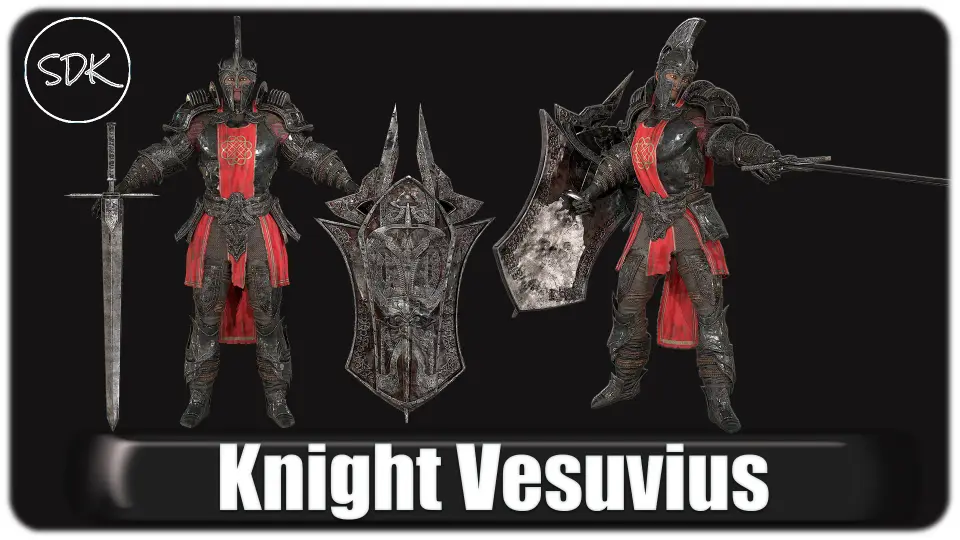
The Knight Vesuvius package provides a low-poly character model designed specifically for Unreal Engine workflows. Thematically framed around a wandering warrior who has become a servant of darkness with ambitions of ascending as a dark king, the asset serves projects rooted in medieval, fantasy, and crusader-style environments. The provided files center on a sword-and-shield fighter, delivering a structured mix of 3D meshes, varied texture sets, and standard engine rigging to support both immediate deployment and deeper custom integration.
Fused and Stripped Mesh Configurations
Integrating character models into a game engine often requires developers to choose between performance-friendly static setups and flexible modular systems. Knight Vesuvius addresses this by including two distinct structural approaches for the character mesh. The first approach is the fused model. This configuration merges the character and all of their equipment into a single, cohesive mesh. For developers looking to populate a scene quickly, this full-equipment setup allows the knight to be dropped directly into an Unreal Engine level without any secondary assembly. It is an ideal format for non-playable characters, background fighters, or projects that do not require dynamic armor swapping. The second approach is the stripped version. This configuration separates the base human character from the armor and gear, providing a modular foundation. Developers building inventory systems or character customization menus can use this stripped model to attach individual pieces of equipment dynamically. Implementing this modularity requires the use of Unreal Engine Blueprints. The developer explicitly notes that the necessary Blueprints for equipping the character are not included in the package archive. Teams utilizing the stripped version will need to script their own Blueprint logic to handle the attachment of armor and weapons to the base mesh.
Texture Skins and PBR Variations
Visually, the asset utilizes a Physically Based Rendering (PBR) pipeline, allowing the materials to react accurately to dynamic lighting environments within Unreal Engine. To support the asset's dark fantasy and medieval themes, the package includes multiple texture variations, which the creator refers to as skins. There are four distinct skins for the knight while fully equipped in ammunition, providing different visual identities for the armored character. Alongside these, there are four skins designed specifically for the character without ammunition, altering the look of the stripped, unarmored base model. Finally, the package includes four separate texture skins for the weapons. This separation of material sets allows developers to mix and match the visual state of the character, visually representing a progression from a simple pilgrim or warrior into a heavily armored champion or dark king.
Topology and Real-Time Performance
The geometry of Knight Vesuvius is optimized for real-time applications, balancing the visual requirements of a stylized yet realistic aesthetic with the performance constraints of modern game engines. The model is categorized as a low-poly asset, meaning its structural density is kept in check to ensure smooth rendering during gameplay. The specific polygon count for the model sits at 23,398 vertices and 22,719 faces, which triangulates to 40,650 tris. In the context of contemporary Unreal Engine development, a 40,000-triangle count provides enough geometric detail to support smooth deformations during complex combat animations while remaining lightweight enough to allow multiple knights to appear on screen simultaneously without bottlenecking rendering performance.
Epic Skeleton and Control Rig Integration
Animation compatibility is a core component of the Knight Vesuvius setup. The character is fully rigged and bound to the Epic Skeleton, the standard hierarchical bone structure used within Unreal Engine. By aligning with the Epic Skeleton, the model can seamlessly accept a vast library of existing animations available within the engine's ecosystem, from basic locomotion to complex sword and shield fighting sequences. Beyond standard retargeting, the asset includes support for Unreal Engine's Control Rig. This feature provides technical artists and animators with the ability to manipulate the skeleton directly within the Unreal Editor. Instead of relying entirely on external 3D animation software, developers can adjust poses, refine combat strikes, or author entirely new animations for the knight directly in the engine viewport. For teams building medieval combat scenarios or dark fantasy role-playing games, Knight Vesuvius is structured to accommodate different layers of technical complexity. The inclusion of both fused and stripped meshes means it can function as a straightforward, drag-and-drop enemy unit or serve as the foundation for a fully modular, player-controlled champion, provided the development team is prepared to build the underlying Blueprint logic.
 Humans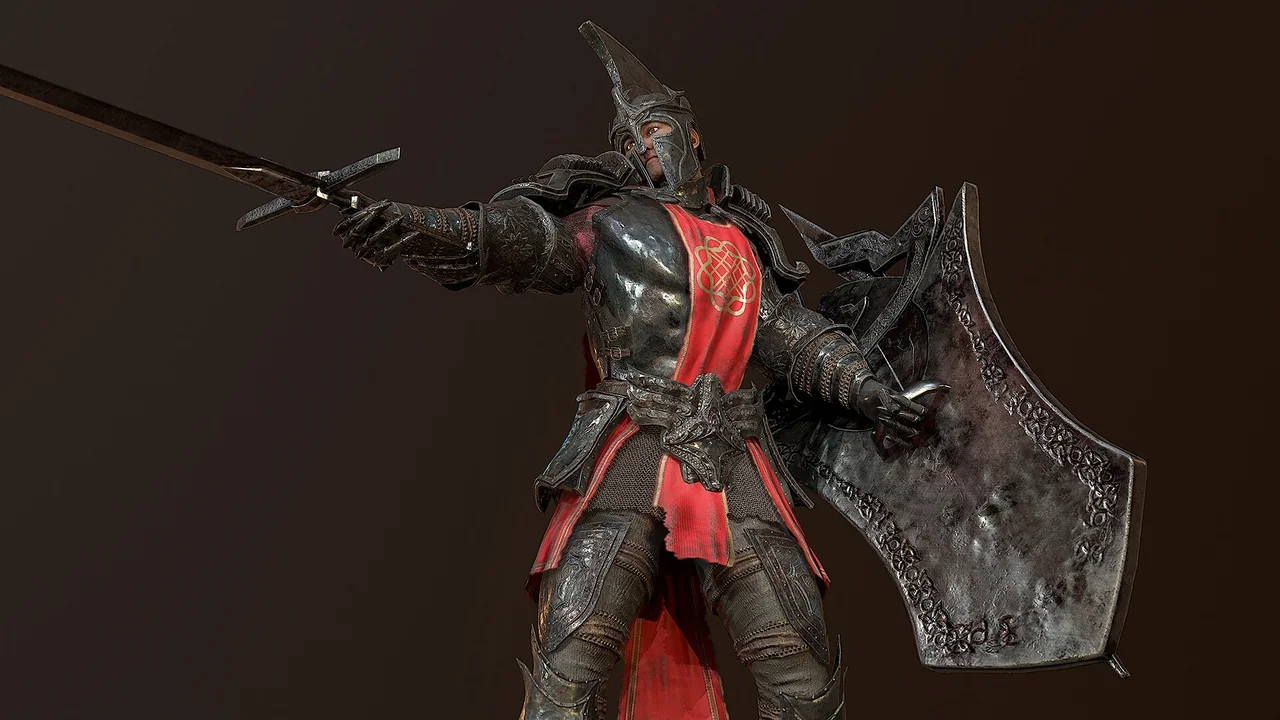
 Humans
 Humans
 Humans