"7b46a695175d8694"{"id":"1001501","slug":"arctic-cliffs","title":"Arctic Cliffs","category":"Mountain","engine":"5.3+","assetVersion":"","engineVersion":"Engine Version: 5.3+","tag":"Mountain","accent":"blue","visual":"mech","summary":"Build polar environments in Unreal Engine 5 with Nanite ice meshes, RVT snow blending, SingleLayerWater ocean systems, and Niagara-driven buoyancy.","platform":"Unreal Engine","publishedAt":"2026-10-09T07:29:09.683Z","updatedAt":"2026-10-09T07:29:09.683Z","sourceNotes":[],"fileContents":[],"compatibility":["Unreal Engine","Engine Version: 5.3+"],"featuredImage":{"alt":"Arctic Cliffs","src":"/wp-content/uploads/published/2026/10/42bf47bcf18c-dd16f4ca-fe96-41a8-837d-7a75ea8cc396-28b685bba6.webp"},"hasDownloadLink":true,"downloads":0,"terms":[{"taxonomy":"category","slug":"mountain","name":"Mountain"}],"galleryImages":[{"src":"/wp-content/uploads/published/2026/10/8877980387fa-02529801-cc7e-4a1a-9b5d-8d7a0a69ac52-4121a5619b.webp","alt":"Arctic Cliffs"},{"src":"/wp-content/uploads/published/2026/10/20b3921e0d6e-664caed7-124c-47f7-901e-b433d8539bd5-9b6f725b41.webp","alt":"Arctic Cliffs"},{"src":"/wp-content/uploads/published/2026/10/f0c588713e74-2f46d868-bbc1-496a-b7ac-06773de8f8e5-7965fa79c9.webp","alt":"Arctic Cliffs"},{"src":"/wp-content/uploads/published/2026/10/df5448bcc678-6a4e6c4f-c8c5-4ffc-9c36-def0ebc805d4-d6036771a3.webp","alt":"Arctic Cliffs"},{"src":"/wp-content/uploads/published/2026/10/dc8a460a1a28-852686e6-595c-42af-813b-9f0c0d570f0a-924115cf2b.webp","alt":"Arctic Cliffs"},{"src":"/wp-content/uploads/published/2026/10/094d570e0b08-3ff6282a-bef0-4eda-92e6-9d87ea5413d2-296e19d5ad.webp","alt":"Arctic Cliffs"}],"accessPanel":{"kind":"resource","title":"Download this resource","eyebrow":"Free Download","message":"Log in or create a free account to start your download.","fileName":"Arctic Cliffs.7z","safetyNote":"Resources are manually reviewed before listing to improve quality and reduce obvious risks.","actionLabel":"Download Free","resourceType":"Resource archive"},"contentHtml":"\u003ch2\u003eEliminating Seams with Nanite Meshes and RVT Blending\u003c/h2\u003e\u003cp\u003eConstructing realistic polar shores often breaks down where rigid ice geometry meets the underlying terrain, resulting in harsh, artificial intersection lines. Resolving these transitions usually demands heavy manual sculpting or excessive decal placement that strains runtime budgets.\u003c/p\u003e\u003cp\u003eThe package tackles this challenge by combining handcrafted Nanite meshes with Runtime Virtual Texturing. Ice sheets, rock formations, and variable-sized ice pieces populate the landscape without polygon constraints. Materials apply multiple layers of detail maps to maintain visual density across massive scales, while RVT blends the base of each mesh directly into the landscape snow. To support high-resolution bitmaps across broad vistas without overwhelming video memory, the material pipeline incorporates Streaming Virtual Texturing, keeping the GPU footprint balanced across dense scenes.\u003c/p\u003e\u003ch2\u003eConfiguring 2-Layer Landscape Snow and Detail Maps\u003c/h2\u003e\u003cp\u003eGlacial terrains require distinct material behavior between wind-swept surface snow and packed, icy base strata.\u003c/p\u003e\u003cp\u003eTerrain surfaces are handled via a dedicated 2-layer landscape material configured to work natively with the RVT setup. As artists paint snow across elevation changes, the landscape material feeds surface data directly into intersecting static assets. Because detail maps function across layered material networks, cliff walls and rocky promontories display crisp micro-textures even when viewed right at the camera plane, avoiding the blurry stretches common to large-scale environment materials.\u003c/p\u003e\u003ch2\u003eSimulating Ocean Surfaces with SingleLayerWater and SSS\u003c/h2\u003e\u003cp\u003eReplicating freezing oceanic waters demands accurate light absorption, surface foam, and seamless camera transitions from air to sea.\u003c/p\u003e\u003cp\u003eThe environment relies on the Unreal Engine Water plugin to drive a custom SingleLayerWater shader implementation. This setup incorporates custom water wave assets and subsurface scattering to mimic the light penetration typical of deep, freezing seas. Ocean foam layers drift dynamically across the surface, backed by specialized functions that minimize repeating tiling artifacts across broad oceanic expanses. The system handles transitions directly at the water surface, incorporating dedicated waterline logic and underwater postprocessing to sustain visual continuity as cameras submerge.\u003c/p\u003e\u003ch2\u003eNiagara-Driven Floating Ice and Dynamic Buoyancy\u003c/h2\u003e\u003cp\u003ePlacing stationary ice chunks in moving water ruins ocean realism, yet computing real-time physics interactions for dozens of floating fragments quickly compromises game performance.\u003c/p\u003e\u003cp\u003eFloating ice fragments are managed through a custom Niagara blueprint that derives buoyant movement directly from wave shader data. By tapping directly into Water plugin wave calculations, individual ice chunks pitch, roll, and bob across the surface without triggering standard physics simulation overhead. The visual motion remains synchronized with surrounding ocean swells. To complete the dynamic environment, separate Niagara particle systems inject environmental motion through falling snow systems and tumbling ice debris, simulating brittle cliff faces giving way under harsh weather.\u003c/p\u003e\u003ch2\u003eLumen Illumination, Volumetric Clouds, and Environment Layouts\u003c/h2\u003e\u003cp\u003ePolar lighting depends heavily on how diffuse sunlight scatters between dense cloud cover, reflective snowfields, and open ocean expanses.\u003c/p\u003e\u003cp\u003eScene lighting is structured natively for Lumen, illuminating both fine ice details and sweeping cliff faces with accurate indirect bounce. Skyscapes are built using a custom Volumetric Clouds material powered by 3D volume textures from the engine's Volumetrics plugin. When projects require simpler atmospheric requirements, an included image-based HDR hemisphere sky serves as an alternate backdrop or backdrop companion. Both plugins—Water and Volumetrics—must remain active within project settings for materials and sky systems to initialize properly.\u003c/p\u003e\u003ch2\u003eApplying the Assets to Production Workflows\u003c/h2\u003e\u003cp\u003eThe collection supplies both a full-featured example location and an asset overview map, giving level designers a direct template for structuring large-scale sub-zero environments.\u003c/p\u003e\u003cp\u003eGame teams developing coastal Arctic levels, desolate Antarctic research stations, or glacial survival sandboxes can assemble expansive maritime coastlines directly from the modular Nanite rocks and ice chunks. The combination of RVT landscape blending, shader-based buoyancy, and automated underwater postprocessing makes the toolkit suited for open-world exploration where players transition fluidly between snowy cliffs, freezing open ocean, and submerged viewpoints.\u003c/p\u003e\n\n\u003ch2\u003eMore From The Same Workflow\u003c/h2\u003e\n\u003cul\u003e\n\u003cli\u003e\u003ca href=\"https://3dcghub.com/natural-wonders-mojave/\" title=\"Natural Wonders - Mojave\"\u003eNatural Wonders - Mojave\u003c/a\u003e\u003c/li\u003e\n\u003cli\u003e\u003ca href=\"https://3dcghub.com/brushify-cliffs-pack/\" title=\"Brushify - Cliffs Pack\"\u003eBrushify - Cliffs Pack\u003c/a\u003e\u003c/li\u003e\n\u003cli\u003e\u003ca href=\"https://3dcghub.com/arctic-base/\" title=\"Arctic Base\"\u003eArctic Base\u003c/a\u003e\u003c/li\u003e\n\u003cli\u003e\u003ca href=\"https://3dcghub.com/brushify-arctic-pack/\" title=\"Brushify - Arctic Pack\"\u003eBrushify - Arctic Pack\u003c/a\u003e\u003c/li\u003e\n\u003cli\u003e\u003ca href=\"https://3dcghub.com/brushify-beach-pack/\" title=\"Brushify - Beach Pack\"\u003eBrushify - Beach Pack\u003c/a\u003e\u003c/li\u003e\n\u003c/ul\u003e","contentTextLength":4796,"navigation":{"current":44,"total":3481,"previous":{"id":"1001502","slug":"asian-cave","title":"ASIAN - Cave","category":"Island","platform":"Unreal Engine","updatedAt":"2026-10-09T07:29:55.965Z"},"next":{"id":"1001500","slug":"african-village","title":"African Village","category":"Towns \u0026 Villages","platform":"Unreal Engine","updatedAt":"2026-10-09T07:27:39.282Z"}},"relatedResources":[{"id":"1000435","slug":"natural-wonders-mojave","title":"Natural Wonders - Mojave","category":"Mountain","engine":"5.3+","assetVersion":"","engineVersion":"Engine Version: 5.3+","tag":"Mountain","accent":"blue","visual":"mech","summary":"Natural Wonders - Mojave delivers 25 Nanite desert terrain meshes with 4K textures, swappable cliff layers, and volumetric clouds for Unreal Engine 5.0–5.4.","platform":"Unreal Engine","publishedAt":"2026-07-10T22:18:48.473Z","updatedAt":"2026-07-10T22:18:48.473Z","sourceNotes":[],"fileContents":[],"compatibility":["Unreal Engine","Engine Version: 5.3+"],"featuredImage":{"alt":"Natural Wonders - Mojave","src":"/wp-content/uploads/published/2026/07/01b91fc21f7d-8749bf87-84b8-4ff9-a7ae-2475cb200c70-1e3b809673.webp"},"hasDownloadLink":true,"downloads":2},{"id":"1000940","slug":"brushify-cliffs-pack","title":"Brushify - Cliffs Pack","category":"Mountain","engine":"4.26+,5.0+","assetVersion":"","engineVersion":"Engine Version: 4.26+,5.0+","tag":"Mountain","accent":"blue","visual":"mech","summary":"Modular cliff meshes, a ready-made UE5 level, and a landscape auto material with 11 biomes. Nanite and Lumen compatible, updated for UE 5.4.","platform":"Unreal Engine","publishedAt":"2026-08-10T03:37:26.959Z","updatedAt":"2026-08-10T03:37:26.959Z","sourceNotes":[],"fileContents":[],"compatibility":["Unreal Engine","Engine Version: 4.26+,5.0+"],"featuredImage":{"alt":"Brushify - Cliffs Pack","src":"/wp-content/uploads/published/2026/08/fe870353c1f3-7dce15fb-52a6-4abc-b664-addba31eee03-1f036ffba2.webp"},"hasDownloadLink":true,"downloads":1},{"id":"1000562","slug":"arctic-base","title":"Arctic Base","category":"Mountain","engine":"4.26+,5.0+","assetVersion":"","engineVersion":"Engine Version: 4.26+,5.0+","tag":"Mountain","accent":"blue","visual":"mech","summary":"Arctic Base is a polar station environment pack with buildings, props, landscape, and water materials across Unreal Engine versions from 4.19 to 5.8.","platform":"Unreal Engine","publishedAt":"2026-07-16T05:00:29.747Z","updatedAt":"2026-07-16T05:00:29.747Z","sourceNotes":[],"fileContents":[],"compatibility":["Unreal Engine","Engine Version: 4.26+,5.0+"],"featuredImage":{"alt":"Arctic Base","src":"/wp-content/uploads/published/2026/07/b73e66f11064-912225d2-ed0b-4150-a5c3-a003ea26c179-8381e0955a.webp"},"hasDownloadLink":true,"downloads":0}]}
Mountain
Arctic Cliffs
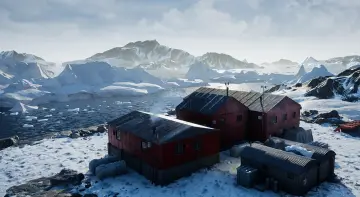
Build polar environments in Unreal Engine 5 with Nanite ice meshes, RVT snow blending, SingleLayerWater ocean systems, and Niagara-driven buoyancy.
Category:Unreal Engine,MountainPlatform: Unreal EngineEngine Version: 5.3+Published: Oct 9, 2026
Mountain
Resource overview
Eliminating Seams with Nanite Meshes and RVT Blending
Constructing realistic polar shores often breaks down where rigid ice geometry meets the underlying terrain, resulting in harsh, artificial intersection lines. Resolving these transitions usually demands heavy manual sculpting or excessive decal placement that strains runtime budgets.
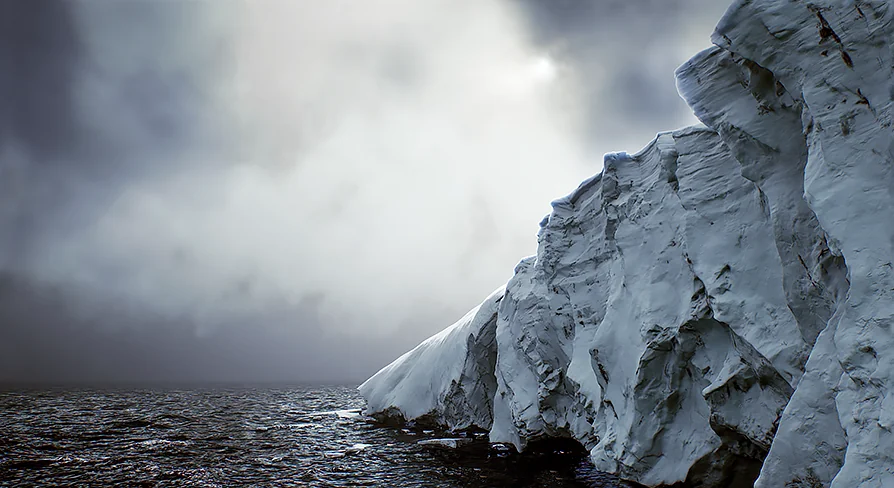
The package tackles this challenge by combining handcrafted Nanite meshes with Runtime Virtual Texturing. Ice sheets, rock formations, and variable-sized ice pieces populate the landscape without polygon constraints. Materials apply multiple layers of detail maps to maintain visual density across massive scales, while RVT blends the base of each mesh directly into the landscape snow. To support high-resolution bitmaps across broad vistas without overwhelming video memory, the material pipeline incorporates Streaming Virtual Texturing, keeping the GPU footprint balanced across dense scenes.
Configuring 2-Layer Landscape Snow and Detail Maps
Glacial terrains require distinct material behavior between wind-swept surface snow and packed, icy base strata.
Terrain surfaces are handled via a dedicated 2-layer landscape material configured to work natively with the RVT setup. As artists paint snow across elevation changes, the landscape material feeds surface data directly into intersecting static assets. Because detail maps function across layered material networks, cliff walls and rocky promontories display crisp micro-textures even when viewed right at the camera plane, avoiding the blurry stretches common to large-scale environment materials.
Simulating Ocean Surfaces with SingleLayerWater and SSS
Replicating freezing oceanic waters demands accurate light absorption, surface foam, and seamless camera transitions from air to sea.
The environment relies on the Unreal Engine Water plugin to drive a custom SingleLayerWater shader implementation. This setup incorporates custom water wave assets and subsurface scattering to mimic the light penetration typical of deep, freezing seas. Ocean foam layers drift dynamically across the surface, backed by specialized functions that minimize repeating tiling artifacts across broad oceanic expanses. The system handles transitions directly at the water surface, incorporating dedicated waterline logic and underwater postprocessing to sustain visual continuity as cameras submerge.
Niagara-Driven Floating Ice and Dynamic Buoyancy
Placing stationary ice chunks in moving water ruins ocean realism, yet computing real-time physics interactions for dozens of floating fragments quickly compromises game performance.
Floating ice fragments are managed through a custom Niagara blueprint that derives buoyant movement directly from wave shader data. By tapping directly into Water plugin wave calculations, individual ice chunks pitch, roll, and bob across the surface without triggering standard physics simulation overhead. The visual motion remains synchronized with surrounding ocean swells. To complete the dynamic environment, separate Niagara particle systems inject environmental motion through falling snow systems and tumbling ice debris, simulating brittle cliff faces giving way under harsh weather.
Lumen Illumination, Volumetric Clouds, and Environment Layouts
Polar lighting depends heavily on how diffuse sunlight scatters between dense cloud cover, reflective snowfields, and open ocean expanses.
Scene lighting is structured natively for Lumen, illuminating both fine ice details and sweeping cliff faces with accurate indirect bounce. Skyscapes are built using a custom Volumetric Clouds material powered by 3D volume textures from the engine's Volumetrics plugin. When projects require simpler atmospheric requirements, an included image-based HDR hemisphere sky serves as an alternate backdrop or backdrop companion. Both plugins—Water and Volumetrics—must remain active within project settings for materials and sky systems to initialize properly.
Applying the Assets to Production Workflows
The collection supplies both a full-featured example location and an asset overview map, giving level designers a direct template for structuring large-scale sub-zero environments.
Game teams developing coastal Arctic levels, desolate Antarctic research stations, or glacial survival sandboxes can assemble expansive maritime coastlines directly from the modular Nanite rocks and ice chunks. The combination of RVT landscape blending, shader-based buoyancy, and automated underwater postprocessing makes the toolkit suited for open-world exploration where players transition fluidly between snowy cliffs, freezing open ocean, and submerged viewpoints.
 Mountain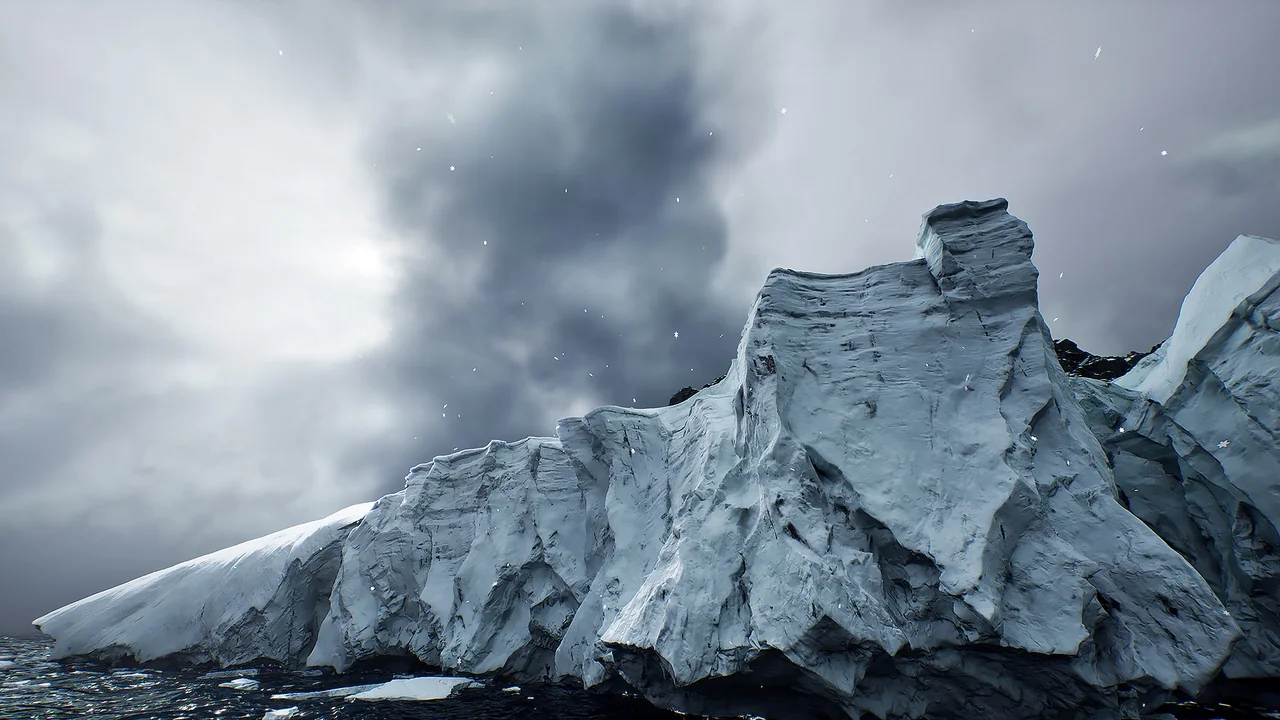
 Mountain
 Mountain
 Mountain