"7e6fc58c410f2894"{"id":"1000435","slug":"natural-wonders-mojave","title":"Natural Wonders - Mojave","category":"Mountain","engine":"5.3+","assetVersion":"","engineVersion":"Engine Version: 5.3+","tag":"Mountain","accent":"blue","visual":"mech","summary":"Natural Wonders - Mojave delivers 25 Nanite desert terrain meshes with 4K textures, swappable cliff layers, and volumetric clouds for Unreal Engine 5.0–5.4.","platform":"Unreal Engine","publishedAt":"2026-07-10T22:18:48.473Z","updatedAt":"2026-07-10T22:18:48.473Z","sourceNotes":[],"fileContents":[],"compatibility":["Unreal Engine","Engine Version: 5.3+"],"featuredImage":{"alt":"Natural Wonders - Mojave","src":"/wp-content/uploads/published/2026/07/01b91fc21f7d-8749bf87-84b8-4ff9-a7ae-2475cb200c70-1e3b809673.webp"},"hasDownloadLink":true,"downloads":2,"terms":[{"taxonomy":"category","slug":"mountain","name":"Mountain"}],"galleryImages":[{"src":"/wp-content/uploads/published/2026/07/fa04342c32c0-483ffd2a-4e12-4e45-bb31-1051bf38b4c7-bc6bc8f6c5.webp","alt":"Natural Wonders - Mojave"},{"src":"/wp-content/uploads/published/2026/07/f17fbeae53df-8050caaa-a44e-42bc-bedc-ea3632e2af75-52f818c486.webp","alt":"Natural Wonders - Mojave"},{"src":"/wp-content/uploads/published/2026/07/45d6afcaa1fe-580b4aef-64f6-4439-86d2-4265d4e9e066-3ff898773b.webp","alt":"Natural Wonders - Mojave"},{"src":"/wp-content/uploads/published/2026/07/6dcd1ecbe4b1-848636b8-97c2-459f-a275-0d834dc4d29e-27b50908d4.webp","alt":"Natural Wonders - Mojave"},{"src":"/wp-content/uploads/published/2026/07/c888df8238c9-44a32823-0358-4217-a46d-7edd8c30addd-1087c34d36.webp","alt":"Natural Wonders - Mojave"},{"src":"/wp-content/uploads/published/2026/07/bc121bfe86ef-e4a48c0d-2976-4f76-ab22-ba906a849de0-2e523dafe7.webp","alt":"Natural Wonders - Mojave"},{"src":"/wp-content/uploads/published/2026/07/f01aaa455da7-aff2d9d2-89bf-47e0-9d91-2646f69cccde-69fcd1adb7.webp","alt":"Natural Wonders - Mojave"}],"accessPanel":{"kind":"resource","title":"Download this resource","eyebrow":"Free Download","message":"Log in or create a free account to start your download.","fileName":"Content.7z","safetyNote":"Resources are manually reviewed before listing to improve quality and reduce obvious risks.","actionLabel":"Download Free","resourceType":"Resource archive"},"contentHtml":"\u003cp\u003eNatural Wonders - Mojave is a collection of Nanite meshes built for rapid level construction, with 25 forms ranging from rolling desert dunes to jagged rocky peaks. The scope of this package is narrow by design—and that narrowed scope is where its value lies. By focusing exclusively on a desert framework, the pack offers environment teams a focused modular starting point for large scale scenes built on Unreal Engine 5's Nanite virtualized geometry system.\u003c/p\u003e\u003cp\u003eEach mesh in this collection of 25 is assigned a unique 4K texture. These high resolution textures allow surface detail to remain crisp even when terrains and mountain shapes are scaled to fill the background horizon of a larger panorama. Since all 25 meshes operate on the Nanite framework, previously costly operations such as filling background space with dense geometry become more feasible. This shift enables level designers to populate vast expanses faster without the optimization overhead commonly associated with large landscape pieces.\u003c/p\u003e\u003ch2\u003eThe 25 Nanite Meshes and Their Thematic Range\u003c/h2\u003e\u003cp\u003eThe terrain library spans natural features aligned to a single climate zone. The collection progresses from gentle ground undulations suitable for desert dunes to sharp, elevated rock formations. This progression allows creators to block out entire biomes within a single asset ecosystem. Tags associated with the resource describe it as real, realistic, and modular, reinforcing that each mountain, hill, and dune form is built as a standalone piece rather than a continuous sheet. The modular tag also suggests that the meshes are intended to interlock or sit adjacent to one another in a modular assembly.\u003c/p\u003e\u003cp\u003eRather than forcing an all-in-one solution, the topology of each individual mesh is self-contained. Creators can use sharp peaks to define distant skylines while relying on flatter dune shapes for traversable mid-ground spaces. This category of asset distribution keeps the layout flexible. A designer building a desert canyon can populate the immediate ground level with rolling sand forms and use the sharper mountain meshes to enclose the perimeter and frame the sky.\u003c/p\u003e\u003ch3\u003eSecondary Cliff and Terrain Texture Layers\u003c/h3\u003e\u003cp\u003eEach of the 25 meshes features its own unique 4K base texture map, but the texturing system extends past this primary layer. A secondary system provides an additional tier of cliff and terrain textures specifically for further surface refinement. This is where the swap mechanism enters the workflow. The developer describes the cliff textures as swappable, meaning the rock surface identity of a given mesh can be altered independently of the base shape. This modularity directly benefits creation iteration. A mountain can be reshaded with varying rock surfaces without the need to alter the underlying silhouette. This level of material control also allows a single mesh to blend into distinct regions across a wide level, pushing the internal variety beyond the 25 mesh shapes provided.\u003c/p\u003e\u003ch2\u003eVolumetric Clouds in the Example Level\u003c/h2\u003e\u003cp\u003eThe Nanite landmasses are paired with a corresponding atmospheric system in the included example level. An advanced volumetric cloud setup is provided as part of this demonstration space, tying the sky rendering workflow directly to the package and giving creators a meaningful reference for how the scenery interacts with sky lighting.\u003c/p\u003e\u003cp\u003eSince sophisticated atmospheric rendering is heavily dependent on specific plugin support, the setup requires a specific activation step. The volumetric cloud system requires creators to first enable the relevant plugin from the editor menu. This is achieved by navigating to the Edit menu, selecting Plugins, and searching for the term Volumetrics. The checkbox next to the plugin must be ticked to activate the feature. Once the volumetrics plugin is enabled, the atmospheric framework in the example level becomes functional, allowing the Mojave terrain to be viewed under the intended sky conditions.\u003c/p\u003e\u003ch2\u003eWhere the Asset Fits in a Production Workflow\u003c/h2\u003e\u003cp\u003eNatural Wonders - Mojave fills a specific production role for Unreal Engine projects. The package supports versions 5.0 through 5.4 of the engine. By providing finished Nanite landmasses, the workflow can quickly shift from empty scene blocking to finished natural vistas. The meshes serve primarily as background build elements intended to establish stunning vistas rapidly. This application pathway is highly relevant for cinematic environment work, where the depth of a shot is typically defined by layered terrain structures fading into the horizon. It also handles the needs of game scenes requiring expansive, distant scenery.\u003c/p\u003e\u003cp\u003eThe modular terrain forms provide options for blocking out wide worlds. Where traditional landscape tools require manual sculpting and time intensive texture painting, this package replaces those steps with drop-in forms that are already identity-rich. Because the aesthetic theme is Mojave specific, the pieces fit together visually without the risk of dubious style mismatches.\u003c/p\u003e\u003cp\u003eThis package is ultimately set up to handle wide frame environment assembly. The combination of Nanite optimized geography, high resolution base textures, and a layered texturing structure enables rapid assembly for desert and mountain biomes. The inclusion of an advanced volumetric cloud example provides the necessary atmospheric context for the terrain, ensuring the Nanite meshes have a complete visual framework for background and horizon rendering.\u003c/p\u003e\n\n\u003ch2\u003eContinue Browsing Similar Packs\u003c/h2\u003e\n\u003cul\u003e\n\u003cli\u003e\u003ca href=\"https://3dcghub.com/natural-wonders-the-alps/\" title=\"Natural Wonders - The Alps\"\u003eNatural Wonders - The Alps\u003c/a\u003e\u003c/li\u003e\n\u003cli\u003e\u003ca href=\"https://3dcghub.com/volcano-land-environment-w-terrain-scatter-tool-exterior-natural-vfx/\" title=\"Volcano Land Environment w/ Terrain Scatter Tool (Exterior, Natural, VFX)\"\u003eVolcano Land Environment w/ Terrain Scatter Tool (Exterior, Natural, VFX)\u003c/a\u003e\u003c/li\u003e\n\u003cli\u003e\u003ca href=\"https://3dcghub.com/natural-and-insects-p1/\" title=\"Natural And Insects P1\"\u003eNatural And Insects P1\u003c/a\u003e\u003c/li\u003e\n\u003cli\u003e\u003ca href=\"https://3dcghub.com/brushify-moorlands-pack/\" title=\"Brushify - Moorlands Pack\"\u003eBrushify - Moorlands Pack\u003c/a\u003e\u003c/li\u003e\n\u003cli\u003e\u003ca href=\"https://3dcghub.com/brushify-volcano-pack/\" title=\"Brushify Volcano Pack\"\u003eBrushify Volcano Pack\u003c/a\u003e\u003c/li\u003e\n\u003c/ul\u003e","contentTextLength":5666,"navigation":{"current":1322,"total":3618,"previous":{"id":"1000436","slug":"physics-platformer-toolkit","title":"Physics Platformer Toolkit","category":"Physics","platform":"Unreal Engine","updatedAt":"2026-07-10T22:22:57.642Z"},"next":{"id":"1000434","slug":"nanite-highland-hills","title":"NANITE HIGHLAND HILLS","category":"Mountain","platform":"Unreal Engine","updatedAt":"2026-07-10T20:23:51.695Z"}},"relatedResources":[{"id":"9396","slug":"natural-wonders-the-alps","title":"Natural Wonders - The Alps","category":"Mountain","engine":"5.0+","assetVersion":"Engine version: 5.0+","engineVersion":"5.0","tag":"Mountain","accent":"blue","visual":"city","summary":"Build breathtaking alpine environments with Natural Wonders - The Alps. This collection features 20 unique Nanite meshes ranging from grassy meadows to rocky peaks, all optimized for high-fidelity backgrounds.","platform":"Unreal Engine","publishedAt":"2026-03-01T16:45:52.000Z","updatedAt":"2026-04-19T15:51:13.000Z","sourceNotes":[],"fileContents":[],"compatibility":["Unreal Engine"],"featuredImage":{"alt":"Natural Wonders - The Alps","src":"https://3dcghub.com/wp-content/uploads/2026/03/6acdc631-546d-42ea-b656-15537cf4a1e4.webp"},"hasDownloadLink":true,"downloads":2},{"id":"25185","slug":"volcano-land-environment-w-terrain-scatter-tool-exterior-natural-vfx","title":"Volcano Land Environment w/ Terrain Scatter Tool (Exterior, Natural, VFX)","category":"Mountain","engine":"5.3+","assetVersion":"Engine version: 5.3+","engineVersion":"","tag":"Mountain","accent":"blue","visual":"city","summary":"This volcanic environment pack focuses on fast scene building and strong atmosphere, combining terrain scattering, lava rivers, and dense smoke with realistic materials. It is built for projects that need a harsh exterior landscape with clear support for Lu...","platform":"Unreal Engine","publishedAt":"2026-04-19T12:59:02.000Z","updatedAt":"2026-04-20T06:12:31.000Z","sourceNotes":[],"fileContents":[],"compatibility":["Unreal Engine","Engine version: 5.3+"],"featuredImage":{"alt":"Volcano Land Environment w/ Terrain Scatter Tool (Exterior, Natural, VFX)","src":"https://3dcghub.com/wp-content/uploads/2026/04/6e347a926c55_43b6bb69-18bf-4c1b-b68a-51da7bf08d0f.webp"},"hasDownloadLink":true,"downloads":0},{"id":"1001136","slug":"eastern-iceland-landscape","title":"Eastern Iceland Landscape","category":"Mountain","engine":"4.26+,5.0+","assetVersion":"","engineVersion":"Engine Version: 4.26+,5.0+","tag":"Mountain","accent":"blue","visual":"city","summary":"A 64 square kilometer terrain with 1x1 m vertex density, volumetric 3D clouds, dynamic cloud shadows, and layered material controls for realistic outdoor scenes","platform":"Unreal Engine","publishedAt":"2026-09-09T03:20:31.567Z","updatedAt":"2026-09-09T03:20:31.567Z","sourceNotes":[],"fileContents":[],"compatibility":["Unreal Engine","Engine Version: 4.26+,5.0+"],"featuredImage":{"alt":"Eastern Iceland Landscape","src":"/wp-content/uploads/published/2026/09/ffd4b4699908-7793c3ec-35c9-4cc6-b06d-962d5f6ccb4e-89f3513491.webp"},"hasDownloadLink":true,"downloads":1}]}
Mountain
Natural Wonders - Mojave
Natural Wonders - Mojave delivers 25 Nanite desert terrain meshes with 4K textures, swappable cliff layers, and volumetric clouds for Unreal Engine 5.0–5.4.
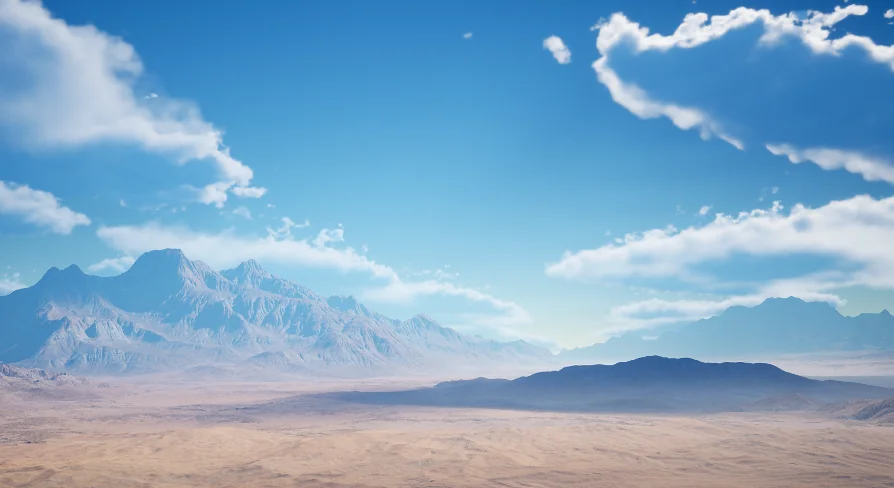
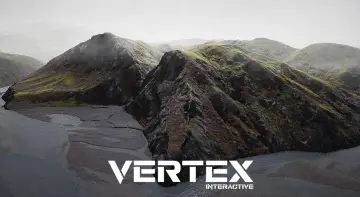
Natural Wonders - Mojave is a collection of Nanite meshes built for rapid level construction, with 25 forms ranging from rolling desert dunes to jagged rocky peaks. The scope of this package is narrow by design—and that narrowed scope is where its value lies. By focusing exclusively on a desert framework, the pack offers environment teams a focused modular starting point for large scale scenes built on Unreal Engine 5's Nanite virtualized geometry system.
Each mesh in this collection of 25 is assigned a unique 4K texture. These high resolution textures allow surface detail to remain crisp even when terrains and mountain shapes are scaled to fill the background horizon of a larger panorama. Since all 25 meshes operate on the Nanite framework, previously costly operations such as filling background space with dense geometry become more feasible. This shift enables level designers to populate vast expanses faster without the optimization overhead commonly associated with large landscape pieces.
The 25 Nanite Meshes and Their Thematic Range
The terrain library spans natural features aligned to a single climate zone. The collection progresses from gentle ground undulations suitable for desert dunes to sharp, elevated rock formations. This progression allows creators to block out entire biomes within a single asset ecosystem. Tags associated with the resource describe it as real, realistic, and modular, reinforcing that each mountain, hill, and dune form is built as a standalone piece rather than a continuous sheet. The modular tag also suggests that the meshes are intended to interlock or sit adjacent to one another in a modular assembly.
Rather than forcing an all-in-one solution, the topology of each individual mesh is self-contained. Creators can use sharp peaks to define distant skylines while relying on flatter dune shapes for traversable mid-ground spaces. This category of asset distribution keeps the layout flexible. A designer building a desert canyon can populate the immediate ground level with rolling sand forms and use the sharper mountain meshes to enclose the perimeter and frame the sky.
Secondary Cliff and Terrain Texture Layers
Each of the 25 meshes features its own unique 4K base texture map, but the texturing system extends past this primary layer. A secondary system provides an additional tier of cliff and terrain textures specifically for further surface refinement. This is where the swap mechanism enters the workflow. The developer describes the cliff textures as swappable, meaning the rock surface identity of a given mesh can be altered independently of the base shape. This modularity directly benefits creation iteration. A mountain can be reshaded with varying rock surfaces without the need to alter the underlying silhouette. This level of material control also allows a single mesh to blend into distinct regions across a wide level, pushing the internal variety beyond the 25 mesh shapes provided.
Volumetric Clouds in the Example Level
The Nanite landmasses are paired with a corresponding atmospheric system in the included example level. An advanced volumetric cloud setup is provided as part of this demonstration space, tying the sky rendering workflow directly to the package and giving creators a meaningful reference for how the scenery interacts with sky lighting.
Since sophisticated atmospheric rendering is heavily dependent on specific plugin support, the setup requires a specific activation step. The volumetric cloud system requires creators to first enable the relevant plugin from the editor menu. This is achieved by navigating to the Edit menu, selecting Plugins, and searching for the term Volumetrics. The checkbox next to the plugin must be ticked to activate the feature. Once the volumetrics plugin is enabled, the atmospheric framework in the example level becomes functional, allowing the Mojave terrain to be viewed under the intended sky conditions.
Where the Asset Fits in a Production Workflow
Natural Wonders - Mojave fills a specific production role for Unreal Engine projects. The package supports versions 5.0 through 5.4 of the engine. By providing finished Nanite landmasses, the workflow can quickly shift from empty scene blocking to finished natural vistas. The meshes serve primarily as background build elements intended to establish stunning vistas rapidly. This application pathway is highly relevant for cinematic environment work, where the depth of a shot is typically defined by layered terrain structures fading into the horizon. It also handles the needs of game scenes requiring expansive, distant scenery.
The modular terrain forms provide options for blocking out wide worlds. Where traditional landscape tools require manual sculpting and time intensive texture painting, this package replaces those steps with drop-in forms that are already identity-rich. Because the aesthetic theme is Mojave specific, the pieces fit together visually without the risk of dubious style mismatches.
This package is ultimately set up to handle wide frame environment assembly. The combination of Nanite optimized geography, high resolution base textures, and a layered texturing structure enables rapid assembly for desert and mountain biomes. The inclusion of an advanced volumetric cloud example provides the necessary atmospheric context for the terrain, ensuring the Nanite meshes have a complete visual framework for background and horizon rendering.
 Mountain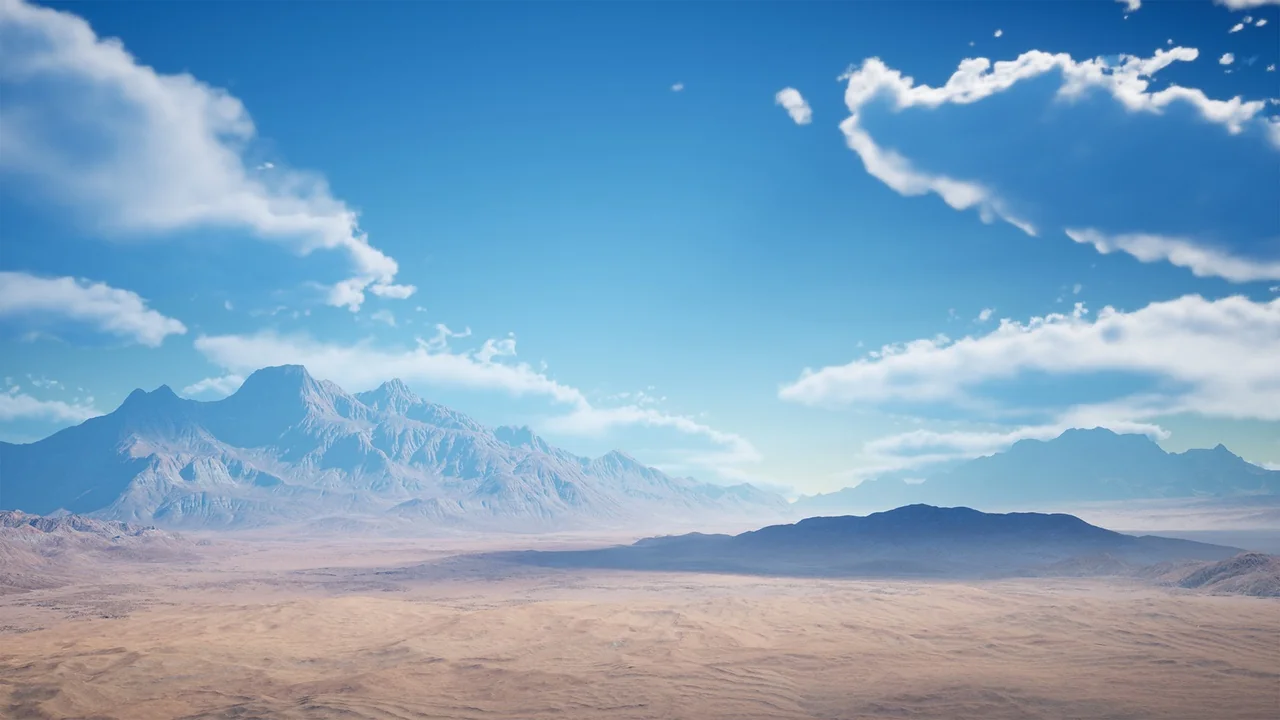
 Mountain
 Mountain
 Mountain