"c68a05d5e51405b3"{"id":"1000677","slug":"ultimate-unreal-engine-5-7-environment-pve-and-pcg-masterclass","title":"Ultimate Unreal Engine 5.7 Environment PVE \u0026 PCG Masterclass","category":"Unreal Engine","engine":"File Content: video + English subtitles","assetVersion":"Video Language: English","engineVersion":"File Content: video + English subtitles","tag":"Unreal Engine","accent":"blue","visual":"city","summary":"Learn Unreal Engine 5.7 tools like the Procedural Vegetation Editor, Nanite Foliage voxelization, and the PCG Framework to build a cinematic Nordic environment.","platform":"Unreal Engine","publishedAt":"2026-07-22T14:40:33.456Z","updatedAt":"2026-07-22T14:40:33.456Z","sourceNotes":[],"fileContents":[],"compatibility":["Unreal Engine","Video Language: English","File Content: video + English subtitles"],"featuredImage":{"alt":"Ultimate Unreal Engine 5.7 Environment PVE \u0026 PCG Masterclass","src":"/wp-content/uploads/published/2026/07/a7dba3db30e0-6963025-1895-2-e270c81ca4.webp"},"hasDownloadLink":true,"downloads":1,"terms":[{"taxonomy":"category","slug":"tutoriallibrary-unrealengine","name":"Unreal Engine"}],"galleryImages":[],"accessPanel":{"kind":"video-resource","title":"Download this video resource","eyebrow":"Free Download","message":"Log in or create a free account to start your download.","fileName":"Ultimate Unreal Engine 5.7 Environment PVE \u0026 PCG Masterclass.7z","safetyNote":"Resources are manually reviewed before listing to improve quality and reduce obvious risks.","actionLabel":"Download Free","resourceType":"Video download"},"contentHtml":"\u003cp\u003eBuilding a cinematic environment in Unreal Engine 5.7 requires a firm grasp of the engine's newest procedural systems. This course begins by guiding artists through basic navigation before moving directly into the new features introduced in this version. The setup path focuses heavily on the Procedural Vegetation Editor, the Procedural Content Generation (PCG) framework, and Nanite foliage voxelization. By structuring the learning around the construction of a Nordic Forest cinematic environment, the workflow connects tool functionality directly to a specific visual outcome.\u003c/p\u003e \n\n\u003ch2\u003eUnreal Engine 5.7 Navigation and New Features\u003c/h2\u003e\n\u003cp\u003eThe opening segment establishes the foundational skills needed to operate within Unreal Engine 5.7. Aimed at beginners, the curriculum requires no prior advanced knowledge, making the navigation phase critical for understanding how the new systems interact. Here, artists learn where the updated tools are located and how to access the newly introduced Procedural Vegetation Editor. This stage sets up the interface knowledge required before tackling scene blocking or dense natural environments.\u003c/p\u003e \n\n\u003ch2\u003eConstructing a Cinematic Nordic Landscape\u003c/h2\u003e\n\u003cp\u003eWith navigation established, the workflow shifts toward landscape creation using the latest features. The primary objective is shaping a Nordic Forest cinematic environment. This phase involves manipulating terrain to fit a specific atmospheric and geographical style. The process relies on applying a Landscape Master Material to define the surface properties of the environment. Using the material alongside the landscape tools allows artists to ground the forest floor and surrounding terrain in a way that supports the overarching cinematic goal. This environment construction makes up a significant portion of the course, ensuring the techniques are contextualized within a real production scenario rather than isolated exercises.\u003c/p\u003e \n\n\u003ch2\u003ePopulating Open Worlds with Procedural Vegetation and Megaplants\u003c/h2\u003e\n\u003cp\u003eVegetation distribution represents a major component of the cinematic environment. The course details the implementation of the new Procedural Vegetation Editor to automate and control plant placement. To achieve the dense, natural look required for a Nordic forest, the workflow incorporates Quixel's new Megaplants. These assets provide the botanical structure necessary for the scene.\u003c/p\u003e\n\u003cp\u003ePerformance and rendering density are addressed through Nanite foliage voxelization. By utilizing this feature, artists can handle the geometric complexity of the Megaplants and surrounding vegetation more efficiently. Managing large-scale natural environments also requires proper open-world streaming. The curriculum covers World Partition for open worlds, teaching artists how to divide and load the expansive Nordic landscape seamlessly without overwhelming system memory.\u003c/p\u003e \n\n\u003ch2\u003eWater Integration and the PCG Framework\u003c/h2\u003e\n\u003cp\u003eBeyond the terrain and foliage, the environment's realism relies on water features. The course teaches artists how to integrate a Witcher 4-style shallow water river system. This specific implementation adds depth to the Nordic setting, providing a functional water layer that interacts with the landscape.\u003c/p\u003e\n\u003cp\u003eProcedural generation extends beyond vegetation placement. The curriculum dedicates time to the Procedural Content Generation (PCG) framework. This system allows developers to define rules and parameters for object placement, enabling non-destructive environment assembly. Learning the PCG framework gives artists a method to generate complex scene elements dynamically, which is vital when populating large open-world spaces. Combining the PCG framework with the Procedural Vegetation Editor provides a multi-layered approach to scene generation.\u003c/p\u003e \n\n\u003ch2\u003eCurriculum Structure and Workflow Pacing\u003c/h2\u003e\n\u003cp\u003eThe course is structured to move from interface comprehension to full scene assembly. The curriculum progresses through an introduction, basic navigation and new features, landscape creation, and finally, making the Nordic landscape cinematic. The total course runtime spans 7 hours and 38 minutes. Published on December 11, 2025, by instructor Jan Benkwitz, the pacing allows artists to follow along with each stage of the environment build. Each section builds on the previous one, locking the technical toolset into the practical demands of cinematic world-building.\u003c/p\u003e \n\n\u003ch2\u003ePractical Application for Environment Artists\u003c/h2\u003e\n\u003cp\u003eThe techniques covered in this masterclass are tailored for Unreal Engine artists, environment artists, filmmakers, and Unreal Engine enthusiasts. The focus on cinematic presentation means the tools are taught with an eye toward framing, atmosphere, and visual density. Filmmakers can use the PCG framework and Procedural Vegetation Editor to quickly dress large sets, while environment artists can leverage the Witcher 4-style shallow water river system and Quixel Megaplants to build distinct biomes. The beginner-level instruction ensures that those new to Unreal Engine 5.7 can establish a working knowledge of World Partition, landscape materials, and Nanite foliage voxelization to produce a complete cinematic Nordic forest.\u003c/p\u003e\n\n\u003ch2\u003eExplore Similar Assets\u003c/h2\u003e\n\u003cul\u003e\n\u003cli\u003e\u003ca href=\"https://3dcghub.com/unreal-engine-5-5-the-ultimate-cinematic-masterclass/\" title=\"Unreal Engine 5.5 - The Ultimate Cinematic Masterclass\"\u003eUnreal Engine 5.5 - The Ultimate Cinematic Masterclass\u003c/a\u003e\u003c/li\u003e\n\u003cli\u003e\u003ca href=\"https://3dcghub.com/the-ultimate-guide-to-unreal-engine-5-for-complete-beginners/\" title=\"The Ultimate Guide to Unreal Engine 5 For Complete Beginners\"\u003eThe Ultimate Guide to Unreal Engine 5 For Complete Beginners\u003c/a\u003e\u003c/li\u003e\n\u003cli\u003e\u003ca href=\"https://3dcghub.com/unreal-engine-5-realistic-automotive-rendering-masterclass/\" title=\"Unreal Engine 5: Realistic Automotive Rendering Masterclass\"\u003eUnreal Engine 5: Realistic Automotive Rendering Masterclass\u003c/a\u003e\u003c/li\u003e\n\u003cli\u003e\u003ca href=\"https://3dcghub.com/unreal-engine-5-blueprints-game-developer-masterclass/\" title=\"Unreal Engine 5 - Blueprints Game Developer Masterclass\"\u003eUnreal Engine 5 - Blueprints Game Developer Masterclass\u003c/a\u003e\u003c/li\u003e\n\u003cli\u003e\u003ca href=\"https://3dcghub.com/the-ultimate-2d-top-down-unreal-engine-course/\" title=\"The Ultimate 2D Top Down Unreal Engine Course\"\u003eThe Ultimate 2D Top Down Unreal Engine Course\u003c/a\u003e\u003c/li\u003e\n\u003c/ul\u003e","contentTextLength":5416,"navigation":{"current":1328,"total":3860,"previous":{"id":"1000678","slug":"sicka-mansion","title":"SICKA MANSION","category":"Victorian","platform":"Unreal Engine","updatedAt":"2026-07-22T14:53:18.949Z"},"next":{"id":"1000676","slug":"shadersource-landscape-material-tool","title":"SHADERSOURCE - Landscape Material Tool","category":"Engine Tools","platform":"Unreal Engine","updatedAt":"2026-07-22T14:16:25.264Z"}},"relatedResources":[{"id":"1000112","slug":"unreal-engine-5-5-the-ultimate-cinematic-masterclass","title":"Unreal Engine 5.5 - The Ultimate Cinematic Masterclass","category":"Unreal Engine","engine":"Video Language: English","assetVersion":"File Content: video + English subtitles","engineVersion":"Video Language: English","tag":"Unreal Engine","accent":"blue","visual":"mech","summary":"A 12h 8m Unreal Engine 5.5 course covering environments, animation, VFX, Sequencer, and post-production for cinematic work.","platform":"Unreal Engine","publishedAt":"2026-06-08T09:00:23.309Z","updatedAt":"2026-06-08T09:00:23.309Z","sourceNotes":[],"fileContents":[],"compatibility":["Unreal Engine","File Content: video + English subtitles","Video Language: English"],"featuredImage":{"alt":"Unreal Engine 5.5 - The Ultimate Cinematic Masterclass","src":"/wp-content/uploads/published/2026/06/5eeb7042783d-6583581-8949-4-6f216bc9fe.webp"},"hasDownloadLink":true,"downloads":1},{"id":"1000620","slug":"environment-art-in-unreal-engine-and-blender","title":"Environment Art in Unreal Engine \u0026 Blender","category":"Unreal Engine","engine":"File Content: video + English subtitles","assetVersion":"Video Language: English","engineVersion":"File Content: video + English subtitles","tag":"Unreal Engine","accent":"blue","visual":"city","summary":"Learn terrain, procedural landscape materials, foliage, PCG, and cinematic lighting across Blender and Unreal Engine through a 12-hour hands-on course.","platform":"Unreal Engine","publishedAt":"2026-07-21T08:02:27.443Z","updatedAt":"2026-07-21T08:02:27.443Z","sourceNotes":[],"fileContents":[],"compatibility":["Blender","Video Language: English","File Content: video + English subtitles"],"featuredImage":{"alt":"Environment Art in Unreal Engine \u0026 Blender","src":"/wp-content/uploads/published/2026/07/dee7455e91d9-6182543-f329-49ae08d4cf.webp"},"hasDownloadLink":true,"downloads":1},{"id":"1000747","slug":"ultimate-lighting-essentials-in-unreal-engine-5-5","title":"Ultimate Lighting Essentials in Unreal Engine 5.5","category":"Unreal Engine","engine":"File Content: video + English subtitles","assetVersion":"Video Language: English","engineVersion":"File Content: video + English subtitles","tag":"Unreal Engine","accent":"blue","visual":"mech","summary":"A beginner course on Unreal Engine 5.5 lighting covering Lumen, GPU Lightmass, HDRI cubemaps, and weather conditions for cinematic and ArchViz scenes.","platform":"Unreal Engine","publishedAt":"2026-07-27T12:35:56.415Z","updatedAt":"2026-07-27T12:35:56.415Z","sourceNotes":[],"fileContents":[],"compatibility":["Unreal Engine","Video Language: English","File Content: video + English subtitles"],"featuredImage":{"alt":"Ultimate Lighting Essentials in Unreal Engine 5.5","src":"/wp-content/uploads/published/2026/07/3ff763507503-6856293-44f6-3-826542478d.webp"},"hasDownloadLink":true,"downloads":2}]}
Learn Unreal Engine 5.7 tools like the Procedural Vegetation Editor, Nanite Foliage voxelization, and the PCG Framework to build a cinematic Nordic environment.
Category:Unreal EnginePlatform: Unreal EngineVideo Language: EnglishFile Content: video + English subtitlesPublished: Jul 22, 2026
Unreal Engine
Resource overview
Building a cinematic environment in Unreal Engine 5.7 requires a firm grasp of the engine's newest procedural systems. This course begins by guiding artists through basic navigation before moving directly into the new features introduced in this version. The setup path focuses heavily on the Procedural Vegetation Editor, the Procedural Content Generation (PCG) framework, and Nanite foliage voxelization. By structuring the learning around the construction of a Nordic Forest cinematic environment, the workflow connects tool functionality directly to a specific visual outcome.
Unreal Engine 5.7 Navigation and New Features
The opening segment establishes the foundational skills needed to operate within Unreal Engine 5.7. Aimed at beginners, the curriculum requires no prior advanced knowledge, making the navigation phase critical for understanding how the new systems interact. Here, artists learn where the updated tools are located and how to access the newly introduced Procedural Vegetation Editor. This stage sets up the interface knowledge required before tackling scene blocking or dense natural environments.
Constructing a Cinematic Nordic Landscape
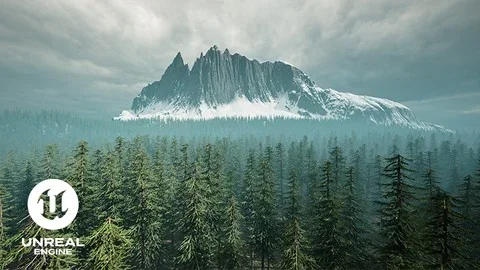
With navigation established, the workflow shifts toward landscape creation using the latest features. The primary objective is shaping a Nordic Forest cinematic environment. This phase involves manipulating terrain to fit a specific atmospheric and geographical style. The process relies on applying a Landscape Master Material to define the surface properties of the environment. Using the material alongside the landscape tools allows artists to ground the forest floor and surrounding terrain in a way that supports the overarching cinematic goal. This environment construction makes up a significant portion of the course, ensuring the techniques are contextualized within a real production scenario rather than isolated exercises.
Populating Open Worlds with Procedural Vegetation and Megaplants
Vegetation distribution represents a major component of the cinematic environment. The course details the implementation of the new Procedural Vegetation Editor to automate and control plant placement. To achieve the dense, natural look required for a Nordic forest, the workflow incorporates Quixel's new Megaplants. These assets provide the botanical structure necessary for the scene.
Performance and rendering density are addressed through Nanite foliage voxelization. By utilizing this feature, artists can handle the geometric complexity of the Megaplants and surrounding vegetation more efficiently. Managing large-scale natural environments also requires proper open-world streaming. The curriculum covers World Partition for open worlds, teaching artists how to divide and load the expansive Nordic landscape seamlessly without overwhelming system memory.
Water Integration and the PCG Framework
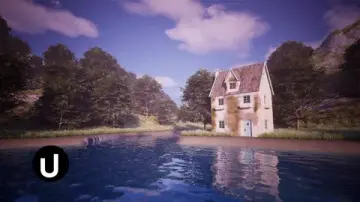
Beyond the terrain and foliage, the environment's realism relies on water features. The course teaches artists how to integrate a Witcher 4-style shallow water river system. This specific implementation adds depth to the Nordic setting, providing a functional water layer that interacts with the landscape.
Procedural generation extends beyond vegetation placement. The curriculum dedicates time to the Procedural Content Generation (PCG) framework. This system allows developers to define rules and parameters for object placement, enabling non-destructive environment assembly. Learning the PCG framework gives artists a method to generate complex scene elements dynamically, which is vital when populating large open-world spaces. Combining the PCG framework with the Procedural Vegetation Editor provides a multi-layered approach to scene generation.
Curriculum Structure and Workflow Pacing
The course is structured to move from interface comprehension to full scene assembly. The curriculum progresses through an introduction, basic navigation and new features, landscape creation, and finally, making the Nordic landscape cinematic. The total course runtime spans 7 hours and 38 minutes. Published on December 11, 2025, by instructor Jan Benkwitz, the pacing allows artists to follow along with each stage of the environment build. Each section builds on the previous one, locking the technical toolset into the practical demands of cinematic world-building.
Practical Application for Environment Artists
The techniques covered in this masterclass are tailored for Unreal Engine artists, environment artists, filmmakers, and Unreal Engine enthusiasts. The focus on cinematic presentation means the tools are taught with an eye toward framing, atmosphere, and visual density. Filmmakers can use the PCG framework and Procedural Vegetation Editor to quickly dress large sets, while environment artists can leverage the Witcher 4-style shallow water river system and Quixel Megaplants to build distinct biomes. The beginner-level instruction ensures that those new to Unreal Engine 5.7 can establish a working knowledge of World Partition, landscape materials, and Nanite foliage voxelization to produce a complete cinematic Nordic forest.
 Unreal Engine
 Unreal Engine
 Unreal Engine
 Unreal Engine