"f9f23ccf4eeb20e2"{"id":"1003052","slug":"stylized-japanese-temple","title":"Stylized Japanese Temple","category":"Temple","engine":"4.20+,5.0+","assetVersion":"","engineVersion":"Engine Version: 4.20+,5.0+","tag":"Temple","accent":"blue","visual":"mech","summary":"A stylized Japanese temple environment set for village and fantasy level building, tagged across Asia settings, temple landmarks, and stylized level art.","platform":"Unreal Engine","indexPolicy":"index","publishedAt":"2026-11-27T04:44:51.787Z","updatedAt":"2026-11-27T04:44:51.787Z","sourceNotes":[],"fileContents":[],"compatibility":["Unreal Engine","Engine Version: 4.20+,5.0+"],"featuredImage":{"alt":"Stylized Japanese Temple","src":"/wp-content/uploads/published/2026/11/16d6379b4c32-26dc1080-63aa-4649-8ef2-ec2536bad9d2-1b63f765dc.webp"},"fileSizeBytes":892698325,"hasDownloadLink":true,"downloads":0,"terms":[{"taxonomy":"category","slug":"temple","name":"Temple"}],"galleryImages":[{"src":"/wp-content/uploads/published/2026/11/8a9bff983fd1-25fc310e-78b0-4253-8124-3c3ab985a2aa-ca19627e49.webp","alt":"Stylized Japanese Temple"},{"src":"/wp-content/uploads/published/2026/11/a071f9a73f59-7f399f85-be20-41e0-b654-5f96ca935bf7-1832ac1d61.webp","alt":"Stylized Japanese Temple"},{"src":"/wp-content/uploads/published/2026/11/ecf9058a3d7d-8ab5adc0-511f-4700-9154-7f6021f4e539-1abfb812d4.webp","alt":"Stylized Japanese Temple"},{"src":"/wp-content/uploads/published/2026/11/d4b61d2ac90c-ca0ab102-0b45-4120-9d5b-1e4153602157-2a84319441.webp","alt":"Stylized Japanese Temple"},{"src":"/wp-content/uploads/published/2026/11/82de5a6f1c0d-9ce347df-8e44-4c85-b0e2-67c99f08b4a5-ff388b8934.webp","alt":"Stylized Japanese Temple"},{"src":"/wp-content/uploads/published/2026/11/82f7d8a3feb2-93cb1b90-32d5-412b-9da7-b74604c9942b-619ef85476.webp","alt":"Stylized Japanese Temple"},{"src":"/wp-content/uploads/published/2026/11/db262d4b9dba-7355e49c-ab36-4d36-9003-14f563bcc9bb-87e241859b.webp","alt":"Stylized Japanese Temple"}],"accessPanel":{"kind":"resource","title":"Get this resource","safetyNote":"Resources are manually reviewed before listing to improve quality and reduce obvious risks.","fileFormat":".7z","resourceType":"Resource archive","versions":[]},"contentHtml":"\u003ch2\u003eA Stylized Japanese Temple, Stated Plainly\u003c/h2\u003e\n\u003cp\u003eThe package contains a set of stylized Japanese temple environment. That is the whole of the subject: not a single prop, not a texture kit, but an environment built on a Japanese temple and delivered in a stylized art direction. The tags attached to it — Asia, Village, Fantasy, Level, Temple, Stylized — read as a short brief in themselves. Two of them name a place, a temple inside an Asian village. One names a genre, fantasy. One names the job, level. And one names the look.\u003c/p\u003e\n\u003cp\u003eFor anyone assembling scenery rather than a lone hero asset, the phrase \"environment\" is the part that carries weight. An environment set is a group of elements meant to be seen together, sharing one visual language so the scene holds up as a single image. A temple pushed into that role is not background decoration; it is the object the surrounding space is arranged around. Everything else in a scene like this — the ground the temple sits on, the village that grew near it — exists in relation to it.\u003c/p\u003e \u003ch2\u003eHow the Temple, Village, and Fantasy Tags Sit Together\u003c/h2\u003e\n\u003cp\u003eThe six tags are worth reading as a set, because each one narrows the others.\u003c/p\u003e\n\u003cul\u003e\n\u003cli\u003e\u003cstrong\u003eTemple\u003c/strong\u003e — the landmark, the thing the environment is named after.\u003c/li\u003e\n\u003cli\u003e\u003cstrong\u003eVillage\u003c/strong\u003e — the scale of settlement around it, smaller and more human than a city.\u003c/li\u003e\n\u003cli\u003e\u003cstrong\u003eAsia\u003c/strong\u003e — the regional frame, with Japan named directly in the package title.\u003c/li\u003e\n\u003cli\u003e\u003cstrong\u003eFantasy\u003c/strong\u003e — the genre the scene is pitched toward.\u003c/li\u003e\n\u003cli\u003e\u003cstrong\u003eLevel\u003c/strong\u003e — the working context, a space meant to be entered and moved through.\u003c/li\u003e\n\u003cli\u003e\u003cstrong\u003eStylized\u003c/strong\u003e — the visual treatment applied to all of the above.\u003c/li\u003e\n\u003c/ul\u003e\n\u003cp\u003eStripped of the fantasy tag, this would be a period Japanese village scene. Stripped of the village tag, it would be a temple standing alone. With both in place, the picture is a settlement with a religious building at its centre, and that arrangement is a very old and very reliable shape for a game location. A temple gives a village a reason to exist, a focal point for the eye, and a natural place for a player to be sent.\u003c/p\u003e\n\u003cp\u003eThe Japan specification matters as much as the broader Asia tag. Japanese temple architecture has a recognisable silhouette — the roofline, the proportion of the structure to its setting — and the package commits to that rather than to a generic pan-Asian styling. The Asia tag still leaves room for the set to sit beside other regional scenery, but the temple itself is named for one country.\u003c/p\u003e \u003ch2\u003eWhere a Temple Level Earns Its Keep\u003c/h2\u003e\n\u003cp\u003eBecause the tags include both Village and Fantasy, the most direct home for this environment is a fantasy level with a settlement in it. That covers a starting town, a quest hub, a place the player returns to between excursions, or a location that exists mainly as a place to walk into and look around. In each case the temple does the work a landmark is supposed to do: it makes the space legible, gives the player a direction to head, and holds the composition of the village together.\u003c/p\u003e\n\u003cp\u003eThe stylized treatment broadens that beyond one genre mood. A stylized temple can carry a warm, storybook village as easily as a stranger, more heightened fantasy setting, because stylization strips out the fine surface detail that would otherwise pin the scene to a particular period or realism level. The set is tagged Fantasy rather than historical, which says the intended reading is imaginative rather than documentary.\u003c/p\u003e\n\u003cp\u003eThere is also a smaller, quieter use: the environment as a piece of art direction to study. A village with a temple at its head is a clean test case for how a scene establishes hierarchy — one structure that reads first, everything else supporting it. Environment artists working on their own Asian-inspired settings can look at how the temple anchors the composition and apply the same logic to their own layouts.\u003c/p\u003e \u003ch2\u003eWhat the Stylized Label Leaves Open\u003c/h2\u003e\n\u003cp\u003eStylized is a direction, not a specification. It says the look is deliberately shaped rather than photographed, that shapes and silhouettes are doing more of the communicating than fine material detail. It does not, on its own, tell you anything about how coarse or fine the modeling is, how the surfaces are authored, or how heavy the scene is to run. Those questions are separate from the art direction, and the tag set here describes subject and intent rather than packaging.\u003c/p\u003e\n\u003cp\u003eWhat the label does tell you is compatibility of a softer kind. Stylized environment work tends to sit comfortably alongside other stylized work, which is useful when the temple has to share a level with assets from elsewhere. A village scene rarely stays pure — a project adds its own props, its own characters, its own effects — and an art direction that simplifies form makes it easier for new pieces to blend in without a fight.\u003c/p\u003e \u003ch2\u003eWho the Japanese Temple Set Suits\u003c/h2\u003e\n\u003cp\u003eThe clearest fit is a team or solo developer building a fantasy level with an Asian village in it and needing the landmark that holds the location together. That could be a town square, a quest location, or the one memorable place in a small project. The temple being the named subject rather than an incidental prop means the set is aimed at people who want that structure to be the point, not scenery at the edge of frame.\u003c/p\u003e\n\u003cp\u003eEnvironment artists working in a stylized register are the second fit — anyone whose scene needs a Japanese building of this scale and who would rather build around a ready-made centrepiece than start from an empty scene. The package is set up to handle the temple-and-village arrangement, faithful to its Japanese subject and its fantasy framing, and it leaves the surrounding project to decide everything else.\u003c/p\u003e\n\n\u003ch2\u003eExplore Similar Assets\u003c/h2\u003e\n\u003cul\u003e\n\u003cli\u003e\u003ca href=\"https://3dcghub.com/japanese-modular-pagoda/\" rel=\"noopener noreferrer\"\u003eJapanese Modular Pagoda\u003c/a\u003e\u003c/li\u003e\n\u003cli\u003e\u003ca href=\"https://3dcghub.com/mountain-temple-japanese-temple-ancient-temple-temple-shrine-feudal-japan/\" rel=\"noopener noreferrer\"\u003eMountain Temple (Japanese Temple, Ancient Temple, Temple Shrine, Feudal Japan)\u003c/a\u003e\u003c/li\u003e\n\u003cli\u003e\u003ca href=\"https://3dcghub.com/stylized-chinese-temple/\" rel=\"noopener noreferrer\"\u003eStylized Chinese Temple\u003c/a\u003e\u003c/li\u003e\n\u003cli\u003e\u003ca href=\"https://3dcghub.com/koi-japanese-carp/\" rel=\"noopener noreferrer\"\u003eKoi. Japanese carp\u003c/a\u003e\u003c/li\u003e\n\u003cli\u003e\u003ca href=\"https://3dcghub.com/modular-temple-plaza-4k-pbr/\" rel=\"noopener noreferrer\"\u003eModular Temple Plaza 4k PBR\u003c/a\u003e\u003c/li\u003e\n\u003c/ul\u003e","contentTextLength":5769,"navigation":{"current":3,"total":4975,"previous":{"id":"1003053","slug":"action-jrpg-template","title":"Action jRPG Template","category":"RPG","platform":"Unreal Engine","updatedAt":"2026-11-27T05:46:38.862Z"},"next":{"id":"1001032","slug":"action-adventure-movement-system","title":"Action-Adventure Movement System","category":"Gameplay Features","platform":"Unreal Engine","updatedAt":"2026-11-27T04:23:34.922Z"}},"relatedResources":[{"id":"1001526","slug":"japanese-modular-pagoda","title":"Japanese Modular Pagoda","category":"Temple","engine":"4.17+,5.0+","assetVersion":"","engineVersion":"Engine Version: 4.17+,5.0+","tag":"Temple","accent":"blue","visual":"mech","summary":"Build historical temple towers and shrine complexes in Unreal Engine with the Japanese Modular Pagoda pack, featuring Nanite, Lumen, and 12 Blueprints.","platform":"Unreal Engine","indexPolicy":"index","publishedAt":"2026-10-09T17:20:51.839Z","updatedAt":"2026-10-09T17:20:51.839Z","sourceNotes":[],"fileContents":[],"compatibility":["Unreal Engine","Engine Version: 4.17+,5.0+"],"featuredImage":{"alt":"Japanese Modular Pagoda","src":"/wp-content/uploads/published/2026/10/ba6391f66283-322f486c-9c35-4abf-9900-9b11b275317c-f5a6071e40.webp"},"fileSizeBytes":3001027905,"hasDownloadLink":true,"downloads":0},{"id":"1000652","slug":"mountain-temple-japanese-temple-ancient-temple-temple-shrine-feudal-japan","title":"Mountain Temple (Japanese Temple, Ancient Temple, Temple Shrine, Feudal Japan)","category":"Temple","engine":"5.5+","assetVersion":"","engineVersion":"Engine Version: 5.5+","tag":"Temple","accent":"blue","visual":"mech","summary":"A modular Japanese shrine temple environment for Unreal Engine with material layering, vertex painting, Nanite foliage, and prop kits for building feudal Japan","platform":"Unreal Engine","indexPolicy":"index","publishedAt":"2026-07-21T19:17:13.891Z","updatedAt":"2026-07-21T19:17:13.891Z","sourceNotes":[],"fileContents":[],"compatibility":["Unreal Engine","Engine Version: 5.5+"],"featuredImage":{"alt":"Mountain Temple (Japanese Temple, Ancient Temple, Temple Shrine, Feudal Japan)","src":"/wp-content/uploads/published/2026/07/c65473b30385-e14168cc-6d72-423a-a7bf-177d39c6402a-3db1da1c73.webp"},"fileSizeBytes":1533075456,"hasDownloadLink":true,"downloads":0},{"id":"1000348","slug":"stylized-chinese-temple","title":"Stylized Chinese Temple","category":"Temple","engine":"5.2+","assetVersion":"","engineVersion":"Engine Version: 5.2+","tag":"Temple","accent":"blue","visual":"mech","summary":"A comprehensive environment package featuring 135 optimized assets, material controls, and a dedicated modular building tool for stylized architecture.","platform":"Unreal Engine","indexPolicy":"index","publishedAt":"2026-07-05T09:25:23.715Z","updatedAt":"2026-07-05T09:25:23.715Z","sourceNotes":[],"fileContents":[],"compatibility":["Unreal Engine","Engine Version: 5.2+"],"featuredImage":{"alt":"Stylized Chinese Temple","src":"/wp-content/uploads/published/2026/07/37e3df60612f-e2d892a6-d598-47f2-a6db-489e0796e1f6-1676899fc4.webp"},"fileSizeBytes":3800931590,"hasDownloadLink":true,"downloads":0}]}[{"id":4225,"sourceId":4225,"taxonomyId":4225,"taxonomy":"category","slug":"asset-library","name":"Asset Library","parentId":null,"count":0,"hasChildren":true,"href":"/","seoTitle":"Free Game Assets Library | 3DCGHUB","seoDescription":"Browse free Unreal Engine, Unity, Blender assets and game development tutorials on 3DCGHUB with previews, compatibility notes, and secure downloads.","sitemapEnabled":true,"children":[{"id":4227,"sourceId":4227,"taxonomyId":4227,"taxonomy":"category","slug":"blender-add-ons-plugins","name":"Blender Add-ons \u0026 Plugins","parentId":4225,"count":0,"hasChildren":false,"href":"/category/blender-add-ons-plugins/","seoTitle":"Free Blender Add-ons \u0026 Plugins | 3DCGHUB","seoDescription":"Browse free Blender Add-ons \u0026 Plugins tools for Blender on 3DCGHUB: curated downloads with preview images, compatibility notes and secure download access.","sitemapEnabled":true},{"id":514,"sourceId":514,"taxonomyId":514,"taxonomy":"category","slug":"unity-2","name":"Unity","parentId":4225,"count":0,"hasChildren":true,"href":"/category/unity-2/","seoTitle":"Free Unity Assets | 3DCGHUB","seoDescription":"Browse free Unity resources on 3DCGHUB: curated downloads with preview images, compatibility notes and secure download access.","sitemapEnabled":true,"children":[{"id":523,"sourceId":523,"taxonomyId":523,"taxonomy":"category","slug":"2d","name":"2D","parentId":514,"count":0,"hasChildren":true,"href":"/category/2d/","seoTitle":"Free Unity 2D | 3DCGHUB","seoDescription":"Browse free 2D assets for Unity on 3DCGHUB: curated downloads with preview images, compatibility notes and secure download access.","sitemapEnabled":true},{"id":515,"sourceId":515,"taxonomyId":515,"taxonomy":"category","slug":"3d-unity-2","name":"3D","parentId":514,"count":0,"hasChildren":true,"href":"/category/3d-unity-2/","seoTitle":"Free Unity 3D Assets | 3DCGHUB","seoDescription":"Browse free 3D assets for Unity on 3DCGHUB: curated downloads with preview images, compatibility notes and secure download access.","sitemapEnabled":true},{"id":565,"sourceId":565,"taxonomyId":565,"taxonomy":"category","slug":"add-ons","name":"Add-Ons","parentId":514,"count":0,"hasChildren":false,"href":"/category/add-ons/","seoTitle":"Free Unity Add-Ons | 3DCGHUB","seoDescription":"Browse free Add-Ons assets for Unity on 3DCGHUB: curated downloads with preview images, compatibility notes and secure download access.","sitemapEnabled":true},{"id":529,"sourceId":529,"taxonomyId":529,"taxonomy":"category","slug":"audio-unity-2","name":"Audio","parentId":514,"count":0,"hasChildren":true,"href":"/category/audio-unity-2/","seoTitle":"Free Unity Audio | 3DCGHUB","seoDescription":"Browse free Audio for Unity on 3DCGHUB: curated downloads with preview images, compatibility notes and secure download access.","sitemapEnabled":true},{"id":557,"sourceId":557,"taxonomyId":557,"taxonomy":"category","slug":"templates","name":"Templates","parentId":514,"count":0,"hasChildren":true,"href":"/category/templates/","seoTitle":"Free Unity Templates | 3DCGHUB","seoDescription":"Browse free Unity project templates on 3DCGHUB. Starter kits with previews, compatibility notes, and secure download access.","sitemapEnabled":true},{"id":533,"sourceId":533,"taxonomyId":533,"taxonomy":"category","slug":"tools-unity-2","name":"Tools","parentId":514,"count":0,"hasChildren":true,"href":"/category/tools-unity-2/","sitemapEnabled":true},{"id":554,"sourceId":554,"taxonomyId":554,"taxonomy":"category","slug":"vfx-unity-2","name":"VFX","parentId":514,"count":0,"hasChildren":true,"href":"/category/vfx-unity-2/","seoTitle":"Free Unity VFX | 3DCGHUB","seoDescription":"Browse free VFX for Unity on 3DCGHUB: curated downloads with preview images, compatibility notes and secure download access.","sitemapEnabled":true}]},{"id":511,"sourceId":511,"taxonomyId":511,"taxonomy":"category","slug":"unreal-engine-2","name":"Unreal Engine","parentId":4225,"count":0,"hasChildren":true,"href":"/category/unreal-engine-2/","seoTitle":"Free Unreal Engine Assets | 3DCGHUB","seoDescription":"Browse free Unreal Engine resources on 3DCGHUB: curated downloads with preview images, compatibility notes and secure download access.","sitemapEnabled":true,"children":[{"id":54,"sourceId":54,"taxonomyId":54,"taxonomy":"category","slug":"3d","name":"3D","parentId":511,"count":0,"hasChildren":true,"href":"/category/3d/","seoTitle":"Free Unreal Engine 3D | 3DCGHUB","seoDescription":"Browse free 3D assets for Unreal Engine on 3DCGHUB: curated downloads with preview images, compatibility notes and secure download access.","sitemapEnabled":true},{"id":441,"sourceId":441,"taxonomyId":441,"taxonomy":"category","slug":"animations","name":"Animations","parentId":511,"count":0,"hasChildren":true,"href":"/category/animations/","seoTitle":"Free Unreal Engine Animations | 3DCGHUB","seoDescription":"Browse free Animations for Unreal Engine on 3DCGHUB: curated downloads with preview images, compatibility notes and secure download access.","sitemapEnabled":true},{"id":446,"sourceId":446,"taxonomyId":446,"taxonomy":"category","slug":"audio","name":"Audio","parentId":511,"count":0,"hasChildren":true,"href":"/category/audio/","seoTitle":"Free Unreal Engine Audio Resources | 3DCGHUB","seoDescription":"Browse free Unreal Engine audio resources including sound effects, voices, dialogue, and ambient sounds. Curated free downloads on 3DCGHUB.","sitemapEnabled":true},{"id":466,"sourceId":466,"taxonomyId":466,"taxonomy":"category","slug":"game-systems","name":"Game Systems","parentId":511,"count":0,"hasChildren":true,"href":"/category/game-systems/","seoTitle":"Free Unreal Engine Game Systems | 3DCGHUB","seoDescription":"Browse free Game Systems tools for Unreal Engine on 3DCGHUB: curated downloads with preview images, compatibility notes and secure download access.","sitemapEnabled":true},{"id":478,"sourceId":478,"taxonomyId":478,"taxonomy":"category","slug":"game-templates","name":"Game Templates","parentId":511,"count":0,"hasChildren":true,"href":"/category/game-templates/","seoTitle":"Free Unreal Engine Game Templates | 3DCGHUB","seoDescription":"Browse free Game Templates for Unreal Engine on 3DCGHUB: curated downloads with preview images, compatibility notes and secure download access.","sitemapEnabled":true},{"id":432,"sourceId":432,"taxonomyId":432,"taxonomy":"category","slug":"hdri","name":"HDRI","parentId":511,"count":0,"hasChildren":true,"href":"/category/hdri/","seoTitle":"Free Unreal Engine HDRI | 3DCGHUB","seoDescription":"Browse free Unreal Engine HDRI skies and lighting maps on 3DCGHUB. Environment lighting with previews and secure downloads.","sitemapEnabled":true},{"id":228,"sourceId":228,"taxonomyId":228,"taxonomy":"category","slug":"material-and-textures","name":"Material \u0026 Textures","parentId":511,"count":0,"hasChildren":true,"href":"/category/material-and-textures/","seoTitle":"Free Unreal Engine Material \u0026 Textures | 3DCGHUB","seoDescription":"Browse free Material \u0026 Textures for Unreal Engine on 3DCGHUB: curated downloads with preview images, compatibility notes and secure download access.","sitemapEnabled":true},{"id":298,"sourceId":298,"taxonomyId":298,"taxonomy":"category","slug":"sprites-and-flipbooks","name":"Sprites \u0026 Flipbooks","parentId":511,"count":0,"hasChildren":true,"href":"/category/sprites-and-flipbooks/","seoTitle":"Free Unreal Engine Sprites \u0026 Flipbooks | 3DCGHUB","seoDescription":"Browse free Sprites \u0026 Flipbooks assets for Unreal Engine on 3DCGHUB: curated downloads with preview images, compatibility notes and secure download access.","sitemapEnabled":true},{"id":489,"sourceId":489,"taxonomyId":489,"taxonomy":"category","slug":"tools-and-plugins","name":"Tools \u0026 Plugins","parentId":511,"count":0,"hasChildren":true,"href":"/category/tools-and-plugins/","seoTitle":"Free Unreal Engine Tools \u0026 Plugins | 3DCGHUB","seoDescription":"Browse free Tools \u0026 Plugins for Unreal Engine on 3DCGHUB: curated downloads with preview images, compatibility notes and secure download access.","sitemapEnabled":true},{"id":459,"sourceId":459,"taxonomyId":459,"taxonomy":"category","slug":"ui","name":"UI","parentId":511,"count":0,"hasChildren":true,"href":"/category/ui/","seoTitle":"Free Unreal Engine UI | 3DCGHUB","seoDescription":"Browse free UI for Unreal Engine on 3DCGHUB: curated downloads with preview images, compatibility notes and secure download access.","sitemapEnabled":true},{"id":450,"sourceId":450,"taxonomyId":450,"taxonomy":"category","slug":"vfx","name":"VFX","parentId":511,"count":0,"hasChildren":true,"href":"/category/vfx/","seoTitle":"Free Unreal Engine VFX | 3DCGHUB","seoDescription":"Browse free VFX for Unreal Engine on 3DCGHUB: curated downloads with preview images, compatibility notes and secure download access.","sitemapEnabled":true}]}]},{"id":4222,"sourceId":4222,"taxonomyId":4222,"taxonomy":"category","slug":"tutorial-library","name":"Tutorial Library","parentId":null,"count":0,"hasChildren":false,"href":"/tutorials/","seoTitle":"Free Game Development Tutorial Library | 3DCGHUB","seoDescription":"Browse free game development tutorials for Unreal Engine, Unity, Blender, and more on 3DCGHUB with practical workflows and secure downloads.","sitemapEnabled":true}]
Resource screenshots
1 / 7
Asset drops
Daily Asset Drops
Follow 3DCGHUB on Telegram for daily Unreal, Unity & Blender drops and curated CC0 releases.
Resources are manually reviewed before listing to improve quality and reduce obvious risks.
Reviewed archive
Temple
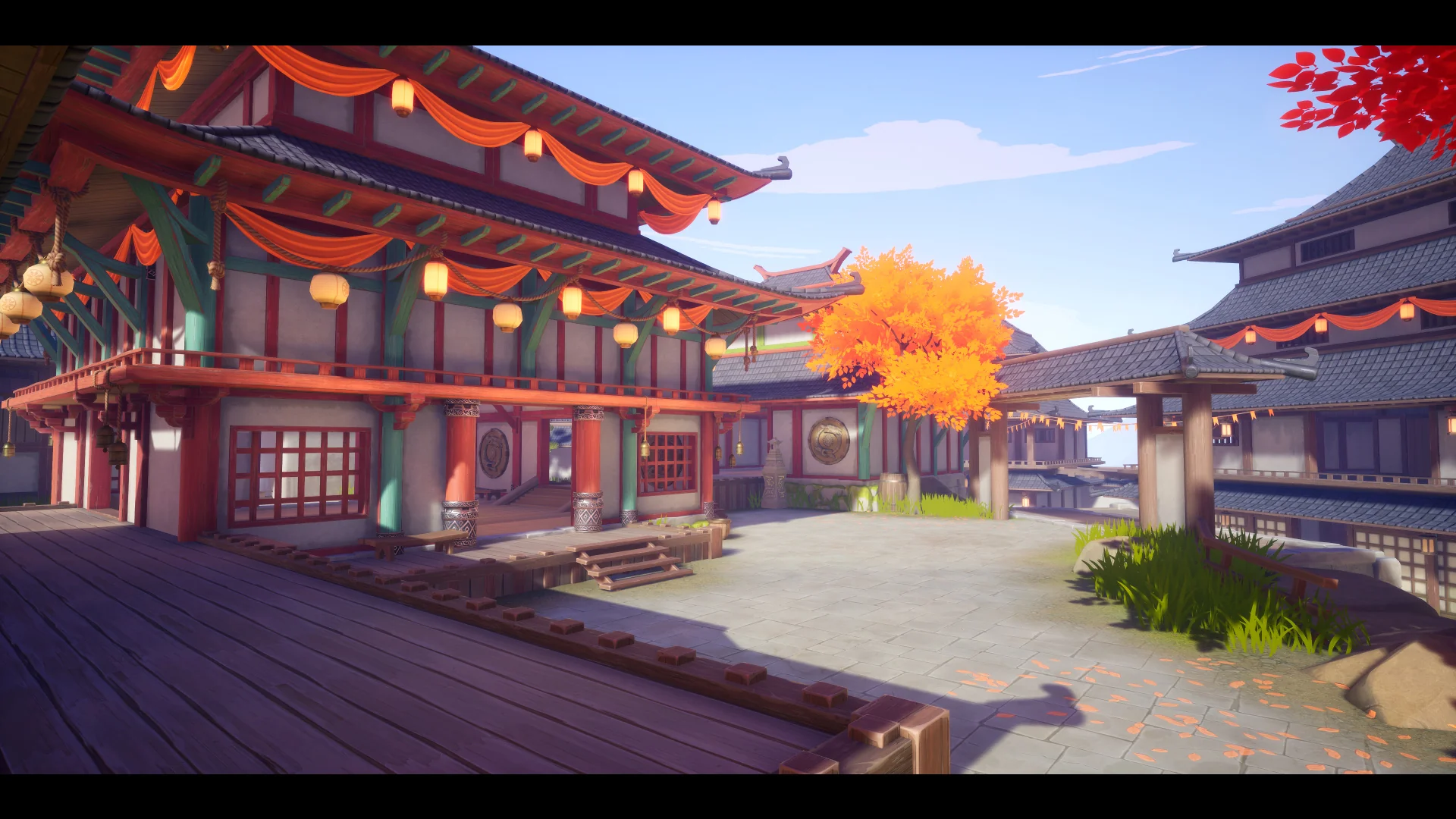
Stylized Japanese Temple
A stylized Japanese temple environment set for village and fantasy level building, tagged across Asia settings, temple landmarks, and stylized level art.
The package contains a set of stylized Japanese temple environment. That is the whole of the subject: not a single prop, not a texture kit, but an environment built on a Japanese temple and delivered in a stylized art direction. The tags attached to it — Asia, Village, Fantasy, Level, Temple, Stylized — read as a short brief in themselves. Two of them name a place, a temple inside an Asian village. One names a genre, fantasy. One names the job, level. And one names the look.
For anyone assembling scenery rather than a lone hero asset, the phrase "environment" is the part that carries weight. An environment set is a group of elements meant to be seen together, sharing one visual language so the scene holds up as a single image. A temple pushed into that role is not background decoration; it is the object the surrounding space is arranged around. Everything else in a scene like this — the ground the temple sits on, the village that grew near it — exists in relation to it.
How the Temple, Village, and Fantasy Tags Sit Together
The six tags are worth reading as a set, because each one narrows the others.
Temple — the landmark, the thing the environment is named after.
Village — the scale of settlement around it, smaller and more human than a city.
Asia — the regional frame, with Japan named directly in the package title.
Fantasy — the genre the scene is pitched toward.
Level — the working context, a space meant to be entered and moved through.
Stylized — the visual treatment applied to all of the above.
Stripped of the fantasy tag, this would be a period Japanese village scene. Stripped of the village tag, it would be a temple standing alone. With both in place, the picture is a settlement with a religious building at its centre, and that arrangement is a very old and very reliable shape for a game location. A temple gives a village a reason to exist, a focal point for the eye, and a natural place for a player to be sent.
The Japan specification matters as much as the broader Asia tag. Japanese temple architecture has a recognisable silhouette — the roofline, the proportion of the structure to its setting — and the package commits to that rather than to a generic pan-Asian styling. The Asia tag still leaves room for the set to sit beside other regional scenery, but the temple itself is named for one country.
Where a Temple Level Earns Its Keep
Because the tags include both Village and Fantasy, the most direct home for this environment is a fantasy level with a settlement in it. That covers a starting town, a quest hub, a place the player returns to between excursions, or a location that exists mainly as a place to walk into and look around. In each case the temple does the work a landmark is supposed to do: it makes the space legible, gives the player a direction to head, and holds the composition of the village together.
The stylized treatment broadens that beyond one genre mood. A stylized temple can carry a warm, storybook village as easily as a stranger, more heightened fantasy setting, because stylization strips out the fine surface detail that would otherwise pin the scene to a particular period or realism level. The set is tagged Fantasy rather than historical, which says the intended reading is imaginative rather than documentary.
There is also a smaller, quieter use: the environment as a piece of art direction to study. A village with a temple at its head is a clean test case for how a scene establishes hierarchy — one structure that reads first, everything else supporting it. Environment artists working on their own Asian-inspired settings can look at how the temple anchors the composition and apply the same logic to their own layouts.
What the Stylized Label Leaves Open
Stylized is a direction, not a specification. It says the look is deliberately shaped rather than photographed, that shapes and silhouettes are doing more of the communicating than fine material detail. It does not, on its own, tell you anything about how coarse or fine the modeling is, how the surfaces are authored, or how heavy the scene is to run. Those questions are separate from the art direction, and the tag set here describes subject and intent rather than packaging.
What the label does tell you is compatibility of a softer kind. Stylized environment work tends to sit comfortably alongside other stylized work, which is useful when the temple has to share a level with assets from elsewhere. A village scene rarely stays pure — a project adds its own props, its own characters, its own effects — and an art direction that simplifies form makes it easier for new pieces to blend in without a fight.
Who the Japanese Temple Set Suits
The clearest fit is a team or solo developer building a fantasy level with an Asian village in it and needing the landmark that holds the location together. That could be a town square, a quest location, or the one memorable place in a small project. The temple being the named subject rather than an incidental prop means the set is aimed at people who want that structure to be the point, not scenery at the edge of frame.
Environment artists working in a stylized register are the second fit — anyone whose scene needs a Japanese building of this scale and who would rather build around a ready-made centrepiece than start from an empty scene. The package is set up to handle the temple-and-village arrangement, faithful to its Japanese subject and its fantasy framing, and it leaves the surrounding project to decide everything else.