"fa182e0cd0a6ea73"{"id":"1000652","slug":"mountain-temple-japanese-temple-ancient-temple-temple-shrine-feudal-japan","title":"Mountain Temple (Japanese Temple, Ancient Temple, Temple Shrine, Feudal Japan)","category":"Temple","engine":"5.5+","assetVersion":"","engineVersion":"Engine Version: 5.5+","tag":"Temple","accent":"blue","visual":"mech","summary":"A modular Japanese shrine temple environment for Unreal Engine with material layering, vertex painting, Nanite foliage, and prop kits for building feudal Japan","platform":"Unreal Engine","publishedAt":"2026-07-21T19:17:13.891Z","updatedAt":"2026-07-21T19:17:13.891Z","sourceNotes":[],"fileContents":[],"compatibility":["Unreal Engine","Engine Version: 5.5+"],"featuredImage":{"alt":"Mountain Temple (Japanese Temple, Ancient Temple, Temple Shrine, Feudal Japan)","src":"/wp-content/uploads/published/2026/07/c65473b30385-e14168cc-6d72-423a-a7bf-177d39c6402a-3db1da1c73.webp"},"hasDownloadLink":true,"downloads":0,"terms":[{"taxonomy":"category","slug":"temple","name":"Temple"}],"galleryImages":[{"src":"/wp-content/uploads/published/2026/07/b30c4997f6fc-027d94f0-0e9a-422a-83e8-0e8ec98d0a5f-f7c6d4bb9e.webp","alt":"Mountain Temple (Japanese Temple, Ancient Temple, Temple Shrine, Feudal Japan)"},{"src":"/wp-content/uploads/published/2026/07/a083eb1c5ee2-b7e43019-1b7c-4a25-abf0-150b4ec46ef0-e6e451fcf6.webp","alt":"Mountain Temple (Japanese Temple, Ancient Temple, Temple Shrine, Feudal Japan)"},{"src":"/wp-content/uploads/published/2026/07/a3a23bceac28-eae86df2-9326-465e-b274-66f6fecee255-8f944c373d.webp","alt":"Mountain Temple (Japanese Temple, Ancient Temple, Temple Shrine, Feudal Japan)"},{"src":"/wp-content/uploads/published/2026/07/90c79c7d6482-2f2df388-78a8-46d2-9af4-c0c495480d80-52ef3a2093.webp","alt":"Mountain Temple (Japanese Temple, Ancient Temple, Temple Shrine, Feudal Japan)"},{"src":"/wp-content/uploads/published/2026/07/641605495082-2888acf3-df9c-471d-a302-f4b8e64d26d8-70463fc57e.webp","alt":"Mountain Temple (Japanese Temple, Ancient Temple, Temple Shrine, Feudal Japan)"},{"src":"/wp-content/uploads/published/2026/07/eb0bb06d01ce-a6de9c7d-944f-47eb-9b54-69b6d06a276b-fcacd963df.webp","alt":"Mountain Temple (Japanese Temple, Ancient Temple, Temple Shrine, Feudal Japan)"},{"src":"/wp-content/uploads/published/2026/07/ab2e727385b6-8a3c4cd1-8e8a-4999-b4ba-99857adaacde-f2f766d50b.webp","alt":"Mountain Temple (Japanese Temple, Ancient Temple, Temple Shrine, Feudal Japan)"},{"src":"/wp-content/uploads/published/2026/07/965c6891a7c6-94cdbe9e-ca89-46a4-82f6-ff37a9c508a5-0dcf2678ea.webp","alt":"Mountain Temple (Japanese Temple, Ancient Temple, Temple Shrine, Feudal Japan)"},{"src":"/wp-content/uploads/published/2026/07/32692b7b715a-15b2d9af-f466-42eb-a196-83f967519609-f08826a03d.webp","alt":"Mountain Temple (Japanese Temple, Ancient Temple, Temple Shrine, Feudal Japan)"}],"accessPanel":{"kind":"resource","title":"Download this resource","eyebrow":"Free Download","message":"Log in or create a free account to start your download.","fileName":"Mountain_Shrine.7z","safetyNote":"Resources are manually reviewed before listing to improve quality and reduce obvious risks.","actionLabel":"Download Free","resourceType":"Resource archive"},"contentHtml":"\u003cp\u003eBuilding a feudal Japan shrine scene calls for more than a handful of static meshes. The Mountain Temple (Japanese Temple, Ancient Temple, Temple Shrine, Feudal Japan) pack functions as a full construction kit for Unreal Engine, giving developers and environment artists the modular pieces, material systems, foliage, and props needed to assemble Japanese-inspired settings from the ground up. The tag list spans Asia, Monastery, Shrine, Zen, Pagoda, Medieval, Mountain, Feudal, Ancient, and Samurai, which paints a clear picture of the aesthetic territory this resource covers.\u003c/p\u003e\u003ch2\u003eScene-Building Freedom Across Japanese and Fantasy Settings\u003c/h2\u003e\u003cp\u003eThe showcase environment represents one possible assembly outcome rather than a fixed layout. Artists can build Japanese temples, shrines, or peaceful village corners using the modular components. The same materials and props can be repurposed for fantasy RPG worlds, stylized Asian villages, or post-apocalyptic shrines, which means the kit extends well beyond a single themed diorama. Modular design supports both small diorama-style scenes and large open-world maps, giving developers latitude to scale projects up or down depending on scope.\u003c/p\u003e\u003cp\u003eThis versatility makes the pack suitable for game environments across RPG, fantasy, historical, and open-world genres. Cinematics and cutscenes benefit from the detailed prop and material systems, while architectural visualization projects focused on traditional Japanese settings can use the modular shrine construction kits for realistic mockups. Kitbashing into worlds entirely removed from Japanese themes is also viable, since the surface materials and structural pieces are_generic enough to support creative reuse.\u003c/p\u003e\u003ch2\u003eMaterial Layering and Vertex Painting Systems\u003c/h2\u003e\u003cp\u003eThe material layering system allows artists to blend multiple surface effects such as edge wear, dirt, and damage across assets. Layer parameters are fully customizable, with controls for tint, brightness, saturation, and tiling. Material instances can be saved for quick reuse across multiple assets, streamlining the look-development process.\u003c/p\u003e\u003cp\u003eVertex painting support works alongside the layering system. Dirt, moss, or weathering can be applied dynamically across surfaces, and materials can be blended in real time to create natural transitions between clean and aged areas. This gives artists direct control over how weathered or pristine each asset appears without needing separate textures for every state.\u003c/p\u003e\u003ch2\u003eTop-Down Projection and Normal Detail\u003c/h2\u003e\u003cp\u003eTop-down projection materials handle roofs, stone paths, and large structures. By projecting textures from above, the system eliminates visible texture stretching that often appears on complex or angled geometry. This is particularly useful for traditional Japanese roof shapes and stone pathway layouts where surface angles vary significantly.\u003c/p\u003e\u003cp\u003eMicro and macro normal details work together to maintain surface fidelity at different viewing distances. Micro normals add fine surface detail for close-up shots, while macro normals provide broader variation across large surfaces. Together, these detail layers ensure that assets hold up visually whether the camera is inches away or viewing from a wide establishing angle.\u003c/p\u003e\u003ch2\u003eModular Construction and Prefab Workflow\u003c/h2\u003e\u003cp\u003eAssets are grouped for flexible assembly, with prefabs and components intended for efficient building. The modular construction approach means that individual pieces such as roof segments, beam kits, fence sections, and stone steps can be combined in different configurations. Rather than delivering a single pre-assembled temple, the pack provides the structural vocabulary for building shrine architecture in multiple layouts.\u003c/p\u003e\u003cp\u003eRoof and beam kits support highly detailed shrine construction, while stone steps, rocks, and pathway assets handle terrain integration. Fence, ropes, and decorative shrine accessories fill in the architectural detail layer.\u003c/p\u003e\u003ch2\u003eFoliage Collection with Nanite Support\u003c/h2\u003e\u003cp\u003eThe foliage collection includes autumn Ginkgo and Maple trees, both with Nanite support for high-detail rendering without traditional polygon budget concerns. Ground vegetation covers wild grass, dry reeds, and flowers. Ground scatter assets include fallen leaves, stones, and moss patches, which add organic layering to temple grounds and surrounding terrain.\u003c/p\u003e\u003cp\u003eFoliage materials are described as procedural-friendly, which supports scalable scene assembly. This means vegetation can be distributed across terrain in varying densities without requiring individually placed assets, making it practical for both compact dioramas and expansive outdoor areas.\u003c/p\u003e\u003ch2\u003eProps and Decorative Shrine Assets\u003c/h2\u003e\u003cp\u003eThe prop library covers several categories specific to Japanese shrine environments. Shrine lanterns come in stone, mossy, and weathered variants, allowing artists to match lighting fixtures to the desired age and condition of the setting. Guardian statues serve as temple protectors with stylized detail, fitting both realistic and slightly stylized art directions.\u003c/p\u003e\u003cp\u003eTorii gate elements include modular ropes, bells, and woodwork, so the iconic gate structures can be assembled and varied rather than placed as single static pieces. The inclusion of separate modular components means gate dimensions and proportions can be adjusted per scene.\u003c/p\u003e\u003ch2\u003eUnreal Engine Setup and Rendering Notes\u003c/h2\u003e\u003cp\u003eThe project uses the HDRIBackdrop plugin. For best visual results, developers are advised to enable Nanite, Lumen, Tessellation, and Displacement within the project. Tessellation and Displacement need to be enabled in the materials separately as well.\u003c/p\u003e\u003cp\u003eTo turn on Nanite displacement, two console variables can be added to the defaultEngine.ini file or pasted as console commands:\u003c/p\u003e\u003cul\u003e\u003cli\u003eR.Nanite.AllowTessellation=1\u003c/li\u003e\u003cli\u003eR.Nanite.Tessellation=1\u003c/li\u003e\u003c/ul\u003e\u003ch2\u003eFitting the Kit to Your Project Scope\u003c/h2\u003e\u003cp\u003eThe combination of modular construction, layered materials, vertex painting, Nanite foliage, and themed props makes this pack adaptable to projects ranging from cinematic shrine scenes to open-world RPG environments. Developers building feudal Japan settings can use the shrineconstruction kits and decorative props directly, while those working in fantasy or post-apocalyptic genres can repurpose the surface materials and structural components for different visual contexts. The material instance system and procedural-friendly foliage workflows keep iteration efficient as scene complexity grows.\u003c/p\u003e\n\n\u003ch2\u003eRelated Resources Worth Checking\u003c/h2\u003e\n\u003cul\u003e\n\u003cli\u003e\u003ca href=\"https://3dcghub.com/temple-of-the-gods-ancient-temple-modular-temple-cathedral-temple-hall/\" title=\"Temple Of The Gods (Ancient Temple, Modular Temple, Cathedral, Temple, Hall)\"\u003eTemple Of The Gods (Ancient Temple, Modular Temple, Cathedral, Temple, Hall)\u003c/a\u003e\u003c/li\u003e\n\u003cli\u003e\u003ca href=\"https://3dcghub.com/wind-temple/\" title=\"Wind Temple\"\u003eWind Temple\u003c/a\u003e\u003c/li\u003e\n\u003cli\u003e\u003ca href=\"https://3dcghub.com/ancient-cathedral-environment-ancient-cathedral-ancient-dungeon-cathedral-3d/\" title=\"Ancient Cathedral Environment ( Ancient Cathedral Ancient Dungeon Cathedral 3D )\"\u003eAncient Cathedral Environment ( Ancient Cathedral Ancient Dungeon Cathedral 3D )\u003c/a\u003e\u003c/li\u003e\n\u003cli\u003e\u003ca href=\"https://3dcghub.com/stylized-chinese-temple/\" title=\"Stylized Chinese Temple\"\u003eStylized Chinese Temple\u003c/a\u003e\u003c/li\u003e\n\u003cli\u003e\u003ca href=\"https://3dcghub.com/mountain-ancient-mountain-mount-shrine-mountain-environment/\" title=\"Mountain (Ancient Mountain, Mount, Shrine, Mountain Environment)\"\u003eMountain (Ancient Mountain, Mount, Shrine, Mountain Environment)\u003c/a\u003e\u003c/li\u003e\n\u003c/ul\u003e","contentTextLength":6694,"navigation":{"current":1283,"total":3789,"previous":{"id":"1000653","slug":"pirate-stilt-village-island-modular-pack","title":"Pirate Stilt Village Island Modular Pack","category":"Towns \u0026 Villages","platform":"Unreal Engine","updatedAt":"2026-07-21T19:28:49.171Z"},"next":{"id":"1000651","slug":"modular-medieval-npc-metahuman-male-female","title":"Modular Medieval NPC - Metahuman - Male/Female","category":"Characters \u0026 Creatures","platform":"Unreal Engine","updatedAt":"2026-07-21T19:10:45.900Z"}},"relatedResources":[{"id":"1001816","slug":"lost-shrine","title":"Lost Shrine","category":"Temple","engine":"5.1+","assetVersion":"","engineVersion":"Engine Version: 5.1+","tag":"Temple","accent":"blue","visual":"mech","summary":"Explore the setup, procedural foliage tools, Blueprints, and Epic Skeleton scaling in the Lost Shrine environment pack for modular game scenes.","platform":"Unreal Engine","publishedAt":"2026-10-21T08:10:07.530Z","updatedAt":"2026-10-21T08:10:07.530Z","sourceNotes":[],"fileContents":[],"compatibility":["Unreal Engine","Engine Version: 5.1+"],"featuredImage":{"alt":"Lost Shrine","src":"/wp-content/uploads/published/2026/10/c20ff8087b98-31efaffa-d4c5-4f6d-8a94-4a1ad07cc2cb-f29ff1bb7c.webp"},"hasDownloadLink":true,"downloads":1},{"id":"1000913","slug":"ancient-temple-environment-temple-ancient-tropical-temple-ancient-temple","title":"Ancient Temple Environment ( Temple, Ancient Tropical Temple, Ancient , Temple )","category":"Temple","engine":"5.1+","assetVersion":"","engineVersion":"Engine Version: 5.1+","tag":"Temple","accent":"blue","visual":"city","summary":"Explore a modular Ancient Temple Environment with 34 ready-to-use prefabs, ancient Indian architectural references, and a valley demo map for UE5 games and cine","platform":"Unreal Engine","publishedAt":"2026-08-08T03:11:58.956Z","updatedAt":"2026-08-08T03:11:58.956Z","sourceNotes":[],"fileContents":[],"compatibility":["Unreal Engine","Engine Version: 5.1+"],"featuredImage":{"alt":"Ancient Temple Environment ( Temple, Ancient Tropical Temple, Ancient , Temple )","src":"/wp-content/uploads/published/2026/08/841ea3296a93-0c853b90-8415-4696-8bdc-5d82ff9e05a3-b564c94d66.webp"},"hasDownloadLink":true,"downloads":1},{"id":"28474","slug":"ancient-cathedral-environment-ancient-cathedral-ancient-dungeon-cathedral-3d","title":"Ancient Cathedral Environment ( Ancient Cathedral Ancient Dungeon Cathedral 3D )","category":"Temple","engine":"5.1+","assetVersion":"Engine version: 5.1+","engineVersion":"","tag":"Temple","accent":"blue","visual":"city","summary":"Ancient Cathedral Environment centers on a large interior scene language of stone architecture, vaulted spaces, stained glass, and shadow-heavy religious halls. With 141 unique meshes, a showcased preassembled scene, and support for Nanite, Lumen, and ULAT,...","platform":"Unreal Engine","publishedAt":"2026-05-15T17:03:38.000Z","updatedAt":"2026-05-15T17:03:39.000Z","sourceNotes":[],"fileContents":[],"compatibility":["Unreal Engine","Engine version: 5.1+"],"featuredImage":{"alt":"Ancient Cathedral Environment ( Ancient Cathedral Ancient Dungeon Cathedral 3D )","src":"https://3dcghub.com/wp-content/uploads/2026/05/2248341ed05d_eb3bf56c-be29-448f-9c74-ae6b825e4648.webp"},"hasDownloadLink":true,"downloads":0}]}
Temple
Mountain Temple (Japanese Temple, Ancient Temple, Temple Shrine, Feudal Japan)
A modular Japanese shrine temple environment for Unreal Engine with material layering, vertex painting, Nanite foliage, and prop kits for building feudal Japan
Building a feudal Japan shrine scene calls for more than a handful of static meshes. The Mountain Temple (Japanese Temple, Ancient Temple, Temple Shrine, Feudal Japan) pack functions as a full construction kit for Unreal Engine, giving developers and environment artists the modular pieces, material systems, foliage, and props needed to assemble Japanese-inspired settings from the ground up. The tag list spans Asia, Monastery, Shrine, Zen, Pagoda, Medieval, Mountain, Feudal, Ancient, and Samurai, which paints a clear picture of the aesthetic territory this resource covers.
Scene-Building Freedom Across Japanese and Fantasy Settings
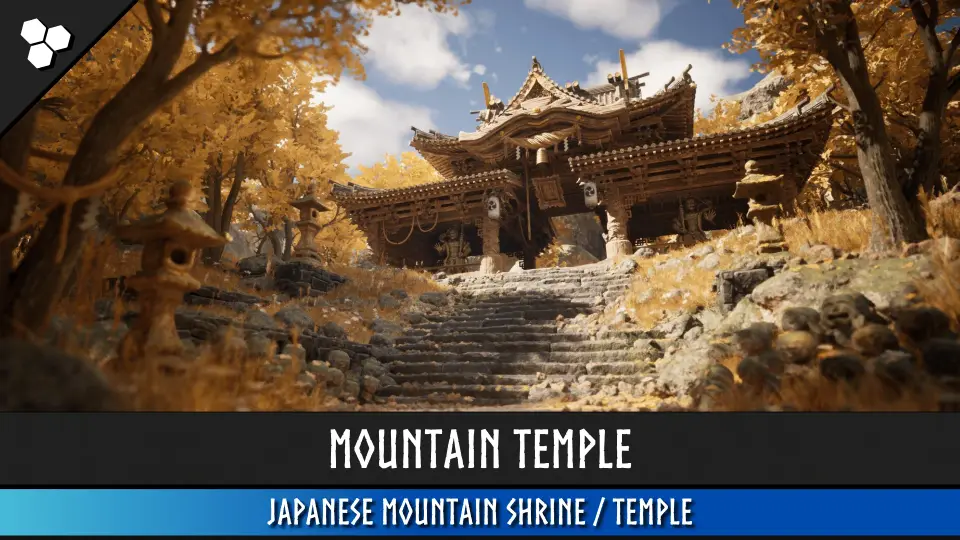
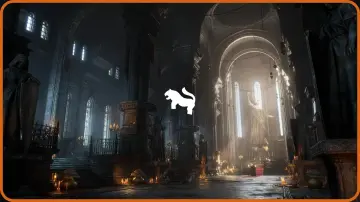
The showcase environment represents one possible assembly outcome rather than a fixed layout. Artists can build Japanese temples, shrines, or peaceful village corners using the modular components. The same materials and props can be repurposed for fantasy RPG worlds, stylized Asian villages, or post-apocalyptic shrines, which means the kit extends well beyond a single themed diorama. Modular design supports both small diorama-style scenes and large open-world maps, giving developers latitude to scale projects up or down depending on scope.
This versatility makes the pack suitable for game environments across RPG, fantasy, historical, and open-world genres. Cinematics and cutscenes benefit from the detailed prop and material systems, while architectural visualization projects focused on traditional Japanese settings can use the modular shrine construction kits for realistic mockups. Kitbashing into worlds entirely removed from Japanese themes is also viable, since the surface materials and structural pieces are_generic enough to support creative reuse.
Material Layering and Vertex Painting Systems
The material layering system allows artists to blend multiple surface effects such as edge wear, dirt, and damage across assets. Layer parameters are fully customizable, with controls for tint, brightness, saturation, and tiling. Material instances can be saved for quick reuse across multiple assets, streamlining the look-development process.
Vertex painting support works alongside the layering system. Dirt, moss, or weathering can be applied dynamically across surfaces, and materials can be blended in real time to create natural transitions between clean and aged areas. This gives artists direct control over how weathered or pristine each asset appears without needing separate textures for every state.
Top-Down Projection and Normal Detail
Top-down projection materials handle roofs, stone paths, and large structures. By projecting textures from above, the system eliminates visible texture stretching that often appears on complex or angled geometry. This is particularly useful for traditional Japanese roof shapes and stone pathway layouts where surface angles vary significantly.
Micro and macro normal details work together to maintain surface fidelity at different viewing distances. Micro normals add fine surface detail for close-up shots, while macro normals provide broader variation across large surfaces. Together, these detail layers ensure that assets hold up visually whether the camera is inches away or viewing from a wide establishing angle.
Modular Construction and Prefab Workflow
Assets are grouped for flexible assembly, with prefabs and components intended for efficient building. The modular construction approach means that individual pieces such as roof segments, beam kits, fence sections, and stone steps can be combined in different configurations. Rather than delivering a single pre-assembled temple, the pack provides the structural vocabulary for building shrine architecture in multiple layouts.
Roof and beam kits support highly detailed shrine construction, while stone steps, rocks, and pathway assets handle terrain integration. Fence, ropes, and decorative shrine accessories fill in the architectural detail layer.
Foliage Collection with Nanite Support
The foliage collection includes autumn Ginkgo and Maple trees, both with Nanite support for high-detail rendering without traditional polygon budget concerns. Ground vegetation covers wild grass, dry reeds, and flowers. Ground scatter assets include fallen leaves, stones, and moss patches, which add organic layering to temple grounds and surrounding terrain.
Foliage materials are described as procedural-friendly, which supports scalable scene assembly. This means vegetation can be distributed across terrain in varying densities without requiring individually placed assets, making it practical for both compact dioramas and expansive outdoor areas.
Props and Decorative Shrine Assets
The prop library covers several categories specific to Japanese shrine environments. Shrine lanterns come in stone, mossy, and weathered variants, allowing artists to match lighting fixtures to the desired age and condition of the setting. Guardian statues serve as temple protectors with stylized detail, fitting both realistic and slightly stylized art directions.
Torii gate elements include modular ropes, bells, and woodwork, so the iconic gate structures can be assembled and varied rather than placed as single static pieces. The inclusion of separate modular components means gate dimensions and proportions can be adjusted per scene.
Unreal Engine Setup and Rendering Notes
The project uses the HDRIBackdrop plugin. For best visual results, developers are advised to enable Nanite, Lumen, Tessellation, and Displacement within the project. Tessellation and Displacement need to be enabled in the materials separately as well.
To turn on Nanite displacement, two console variables can be added to the defaultEngine.ini file or pasted as console commands:
R.Nanite.AllowTessellation=1
R.Nanite.Tessellation=1
Fitting the Kit to Your Project Scope
The combination of modular construction, layered materials, vertex painting, Nanite foliage, and themed props makes this pack adaptable to projects ranging from cinematic shrine scenes to open-world RPG environments. Developers building feudal Japan settings can use the shrineconstruction kits and decorative props directly, while those working in fantasy or post-apocalyptic genres can repurpose the surface materials and structural components for different visual contexts. The material instance system and procedural-friendly foliage workflows keep iteration efficient as scene complexity grows.
 Temple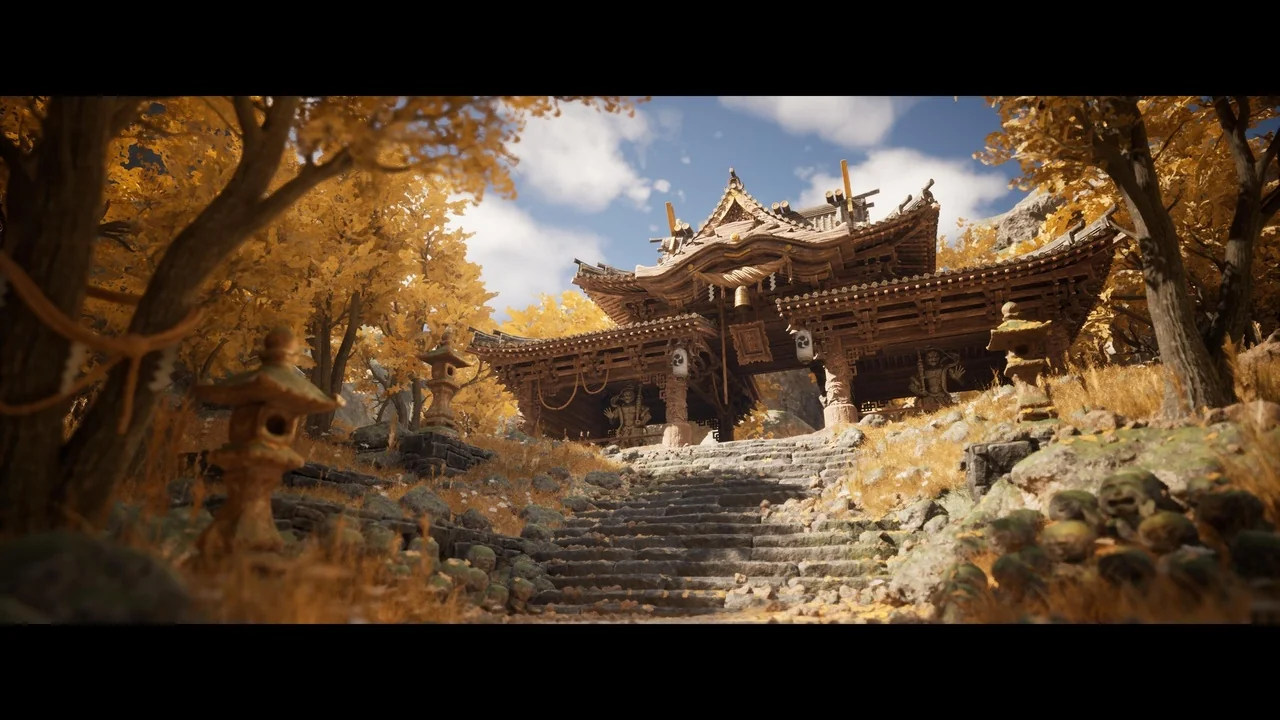
 Temple
 Temple
 Temple