"fa182e0cd0a6ea73"{"id":"1001816","slug":"lost-shrine","title":"Lost Shrine","category":"Temple","engine":"5.1+","assetVersion":"","engineVersion":"Engine Version: 5.1+","tag":"Temple","accent":"blue","visual":"mech","summary":"Explore the setup, procedural foliage tools, Blueprints, and Epic Skeleton scaling in the Lost Shrine environment pack for modular game scenes.","platform":"Unreal Engine","publishedAt":"2026-10-21T08:10:07.530Z","updatedAt":"2026-10-21T08:10:07.530Z","sourceNotes":[],"fileContents":[],"compatibility":["Unreal Engine","Engine Version: 5.1+"],"featuredImage":{"alt":"Lost Shrine","src":"/wp-content/uploads/published/2026/10/c20ff8087b98-31efaffa-d4c5-4f6d-8a94-4a1ad07cc2cb-f29ff1bb7c.webp"},"hasDownloadLink":true,"downloads":1,"terms":[{"taxonomy":"category","slug":"temple","name":"Temple"}],"galleryImages":[{"src":"/wp-content/uploads/published/2026/10/f31869cdca4a-901e3459-8fcc-4fb1-a363-56b6f4fa6007-b6a5991633.webp","alt":"Lost Shrine"},{"src":"/wp-content/uploads/published/2026/10/162a4487655a-90c0305a-8bc3-4f6e-962a-23dcd370d952-1d250a6b93.webp","alt":"Lost Shrine"},{"src":"/wp-content/uploads/published/2026/10/5dbb58390282-ba42500a-8b3c-48d8-9982-35229a1c6d91-0aabd6b9ea.webp","alt":"Lost Shrine"},{"src":"/wp-content/uploads/published/2026/10/43bd27fff3cd-ee6d6bee-1c9d-4f75-88c4-155d6f11e288-ca72131465.webp","alt":"Lost Shrine"},{"src":"/wp-content/uploads/published/2026/10/b6e04ce35584-2a332534-a1e3-462c-b3d6-f083e24339c5-ec52381745.webp","alt":"Lost Shrine"},{"src":"/wp-content/uploads/published/2026/10/9cae7cde3ae3-fb63b3cb-7466-4d97-9e30-36d33dc51d40-051b362e68.webp","alt":"Lost Shrine"},{"src":"/wp-content/uploads/published/2026/10/154bd5712025-48bb9b8c-3649-43fc-8440-4327c6a580da-9897041c1b.webp","alt":"Lost Shrine"},{"src":"/wp-content/uploads/published/2026/10/3efcc1efb6d4-4a91ea4a-d7e9-49d0-80de-bf9c47f032e7-514386eac4.webp","alt":"Lost Shrine"},{"src":"/wp-content/uploads/published/2026/10/d65852950c0e-685b7ba0-4156-4de3-b468-28cacf8ea2dc-b94b7de2de.webp","alt":"Lost Shrine"},{"src":"/wp-content/uploads/published/2026/10/4c8621b1270c-e3b4b04e-e3b2-422a-981f-e99d27267100-1df1ecbb88.webp","alt":"Lost Shrine"}],"accessPanel":{"kind":"resource","title":"Download this resource","eyebrow":"Free Download","message":"Log in or create a free account to start your download.","fileName":"Content.7z","safetyNote":"Resources are manually reviewed before listing to improve quality and reduce obvious risks.","actionLabel":"Download Free","resourceType":"Resource archive"},"contentHtml":"\u003ch2\u003eConstructing Ancient Environments Without Manual Prop Placement\u003c/h2\u003e\u003cp\u003eConstructing an abandoned sanctuary often forces artists to balance massive stone masonry against organic wilderness, consuming valuable development time through repetitive manual prop scattering.\u003c/p\u003e\u003cp\u003eLost Shrine addresses this challenge by providing a cohesive set of overgrown temple modules, nature assets, and architectural components ready for immediate deployment. Rather than starting on an empty landscape, developers can begin inside a completed scene, studying how stone ruins, moving water, and untamed flora interact across varying elevations. The environment suits projects driven by forgotten legends, hidden spiritual temples, or realistic overgrown ruins where ancient human construction meets aggressive natural expansion.\u003c/p\u003e\u003ch2\u003eConfiguring Project Exposure and the HDRI Backdrop Plugin\u003c/h2\u003e\u003cp\u003eCalibrating engine display parameters forms the essential first step before exploring the environment.\u003c/p\u003e\u003cp\u003eTo achieve the visual depth and illumination balance demonstrated in the pack, specific project configurations must be turned on. Users need to activate the option to extend default luminance range in auto exposure settings within the project settings menu. Alongside this exposure adjustment, enabling the HDRI backdrop Plugin ensures that distant skylight, atmospheric scattering, and ambient light sources interact correctly with the stone surfaces, foliage planes, and shaded sanctum corridors.\u003c/p\u003e\u003ch2\u003eNavigating the Lost Shrine Showcase and Asset Review Levels\u003c/h2\u003e\u003cp\u003eTwo distinct maps separate full scene walkthroughs from isolated component inspections.\u003c/p\u003e\u003cp\u003eThe package contains a fully assembled showcase level that presents the entire sanctuary in an operational, playable context. Creators can navigate stone steps, traverse overgrown courtyards, and evaluate real-time composition, shadows, and sightlines directly from a player perspective. Accompanying this world is a dedicated asset showcase level. This secondary map arranges every individual architectural mesh, module, rock formation, and plant in a neutral lineup, allowing technical artists and level designers to examine mesh density, material application, and pivot points prior to placing them into custom maps.\u003c/p\u003e\u003ch2\u003eAssembling Architecture and Modules Around the Epic Skeleton\u003c/h2\u003e\u003cp\u003eStructural reliability across different character archetypes requires strict adherence to uniform scaling standards.\u003c/p\u003e\u003cp\u003eAll architectural meshes and modular pieces in Lost Shrine are scaled to fit directly with the Epic Skeleton. Arches, doorways, fence borders, and stair risers maintain accurate proportions relative to standard game character dimensions, eliminating awkward collisions or immersion-breaking scale mismatches during traversal. Whether assembling towering shrine altars or narrow perimeter walls, developers can snap modular pieces together knowing player characters will navigate the stone structures smoothly and predictably.\u003c/p\u003e\u003ch2\u003eDistributing Overgrown Vegetation with Procedural Foliage\u003c/h2\u003e\u003cp\u003ePopulating vast exterior landscapes with organic growth demands automated placement workflows.\u003c/p\u003e\u003cp\u003eThe package incorporates procedural foliage tools, enabling creators to coat hillsides, stone cracks, and temple borders with thick vegetation in moments. Instead of manually planting each flower stem, bush, or cluster of wild plants, developers can define volume areas where procedural rules distribute nature assets across the ground automatically. This procedural setup helps create believable, weathered landscapes where ancient stone foundations appear naturally reclaimed by creeping plants and forest growth over centuries of neglect.\u003c/p\u003e\u003ch2\u003eBlueprints for Waterfall FX, Flying Leaves, and Fences\u003c/h2\u003e\u003cp\u003eStatic environments can feel rigid without real-time movement and specialized placement utilities.\u003c/p\u003e\u003cp\u003eTo inject motion into quiet ruins, the pack includes custom Blueprints that handle environmental activity and layout assembly. Water FX Blueprints generate cascading waterfalls that flow down natural rock faces or broken masonry, introducing sound and movement to central focal points. A flying leaves Blueprint scatters drifting foliage through the air, giving open courtyards a constant sense of ambient wind. For structural boundaries, a dedicated fence Blueprint lets designers stretch and position rustic barriers across uneven terrain cleanly without manually aligning individual posts.\u003c/p\u003e\u003ch2\u003eMaterial Instance Parameter Controls and LOD Performance\u003c/h2\u003e\u003cp\u003eBalancing visual customization against strict frame-rate targets is critical when working with dense vegetation and detailed stone surfaces.\u003c/p\u003e\u003cp\u003eEvery mesh included in the package features preconfigured Level of Detail (LOD) steps and accurate collisions, ensuring smooth rendering performance across wide landscape vistas and tight corridors alike. To adjust the aesthetic tone of the sanctuary, artists can leverage the included material instances. Exposed parameters permit quick updates to base textures, color schemes, and surface details without modifying the underlying master shaders, allowing the stone and foliage palette to adapt cleanly to sunny forests, misty ruins, or shadowed mountain sanctuaries.\u003c/p\u003e\n\n\u003ch2\u003eMore From The Same Workflow\u003c/h2\u003e\n\u003cul\u003e\n\u003cli\u003e\u003ca href=\"https://3dcghub.com/mountain-temple-japanese-temple-ancient-temple-temple-shrine-feudal-japan/\" title=\"Mountain Temple (Japanese Temple, Ancient Temple, Temple Shrine, Feudal Japan)\"\u003eMountain Temple (Japanese Temple, Ancient Temple, Temple Shrine, Feudal Japan)\u003c/a\u003e\u003c/li\u003e\n\u003cli\u003e\u003ca href=\"https://3dcghub.com/temple-of-the-gods-ancient-temple-modular-temple-cathedral-temple-hall/\" title=\"Temple Of The Gods (Ancient Temple, Modular Temple, Cathedral, Temple, Hall)\"\u003eTemple Of The Gods (Ancient Temple, Modular Temple, Cathedral, Temple, Hall)\u003c/a\u003e\u003c/li\u003e\n\u003cli\u003e\u003ca href=\"https://3dcghub.com/japanese-modular-pagoda/\" title=\"Japanese Modular Pagoda\"\u003eJapanese Modular Pagoda\u003c/a\u003e\u003c/li\u003e\n\u003cli\u003e\u003ca href=\"https://3dcghub.com/mountain-ancient-mountain-mount-shrine-mountain-environment/\" title=\"Mountain (Ancient Mountain, Mount, Shrine, Mountain Environment)\"\u003eMountain (Ancient Mountain, Mount, Shrine, Mountain Environment)\u003c/a\u003e\u003c/li\u003e\n\u003cli\u003e\u003ca href=\"https://3dcghub.com/stylized-lost-paradise/\" title=\"Stylized Lost Paradise\"\u003eStylized Lost Paradise\u003c/a\u003e\u003c/li\u003e\n\u003c/ul\u003e","contentTextLength":5436,"navigation":{"current":40,"total":3789,"previous":{"id":"1001817","slug":"mens-room","title":"Mens Room","category":"Interior","platform":"Unreal Engine","updatedAt":"2026-10-21T08:10:58.887Z"},"next":{"id":"1001815","slug":"kitchen-restaurant-props-vol-2-food-shipment-boxes","title":"Kitchen/Restaurant Props VOL.2 - Food Shipment Boxes","category":"Hardware","platform":"Unreal Engine","updatedAt":"2026-10-21T08:08:39.546Z"}},"relatedResources":[{"id":"1000652","slug":"mountain-temple-japanese-temple-ancient-temple-temple-shrine-feudal-japan","title":"Mountain Temple (Japanese Temple, Ancient Temple, Temple Shrine, Feudal Japan)","category":"Temple","engine":"5.5+","assetVersion":"","engineVersion":"Engine Version: 5.5+","tag":"Temple","accent":"blue","visual":"mech","summary":"A modular Japanese shrine temple environment for Unreal Engine with material layering, vertex painting, Nanite foliage, and prop kits for building feudal Japan","platform":"Unreal Engine","publishedAt":"2026-07-21T19:17:13.891Z","updatedAt":"2026-07-21T19:17:13.891Z","sourceNotes":[],"fileContents":[],"compatibility":["Unreal Engine","Engine Version: 5.5+"],"featuredImage":{"alt":"Mountain Temple (Japanese Temple, Ancient Temple, Temple Shrine, Feudal Japan)","src":"/wp-content/uploads/published/2026/07/c65473b30385-e14168cc-6d72-423a-a7bf-177d39c6402a-3db1da1c73.webp"},"hasDownloadLink":true,"downloads":0},{"id":"9856","slug":"temple-of-the-gods-ancient-temple-modular-temple-cathedral-temple-hall","title":"Temple Of The Gods (Ancient Temple, Modular Temple, Cathedral, Temple, Hall)","category":"Temple","engine":"5.0+","assetVersion":"Engine version: 5.0+","engineVersion":"5.0","tag":"Temple","accent":"blue","visual":"city","summary":"Build majestic shrines and ancient cathedrals with the Temple Of The Gods asset pack. This modular kit is optimized for Unreal Engine 5 and features advanced lighting systems.","platform":"Unreal Engine","publishedAt":"2026-03-02T15:53:46.000Z","updatedAt":"2026-04-19T15:50:09.000Z","sourceNotes":[],"fileContents":[],"compatibility":["Unreal Engine","Engine version: 5.0+"],"featuredImage":{"alt":"Temple Of The Gods (Ancient Temple, Modular Temple, Cathedral, Temple, Hall)","src":"https://3dcghub.com/wp-content/uploads/2026/03/366b7106-af98-48c6-833e-b78e83ff6392.webp"},"hasDownloadLink":true,"downloads":0},{"id":"1001526","slug":"japanese-modular-pagoda","title":"Japanese Modular Pagoda","category":"Temple","engine":"4.17+,5.0+","assetVersion":"","engineVersion":"Engine Version: 4.17+,5.0+","tag":"Temple","accent":"blue","visual":"mech","summary":"Build historical temple towers and shrine complexes in Unreal Engine with the Japanese Modular Pagoda pack, featuring Nanite, Lumen, and 12 Blueprints.","platform":"Unreal Engine","publishedAt":"2026-10-09T17:20:51.839Z","updatedAt":"2026-10-09T17:20:51.839Z","sourceNotes":[],"fileContents":[],"compatibility":["Unreal Engine","Engine Version: 4.17+,5.0+"],"featuredImage":{"alt":"Japanese Modular Pagoda","src":"/wp-content/uploads/published/2026/10/ba6391f66283-322f486c-9c35-4abf-9900-9b11b275317c-f5a6071e40.webp"},"hasDownloadLink":true,"downloads":0}]}
Temple
Lost Shrine
Explore the setup, procedural foliage tools, Blueprints, and Epic Skeleton scaling in the Lost Shrine environment pack for modular game scenes.
Category:Unreal Engine,TemplePlatform: Unreal EngineEngine Version: 5.1+Published: Oct 21, 2026
Temple
Resource overview
Constructing Ancient Environments Without Manual Prop Placement
Constructing an abandoned sanctuary often forces artists to balance massive stone masonry against organic wilderness, consuming valuable development time through repetitive manual prop scattering.
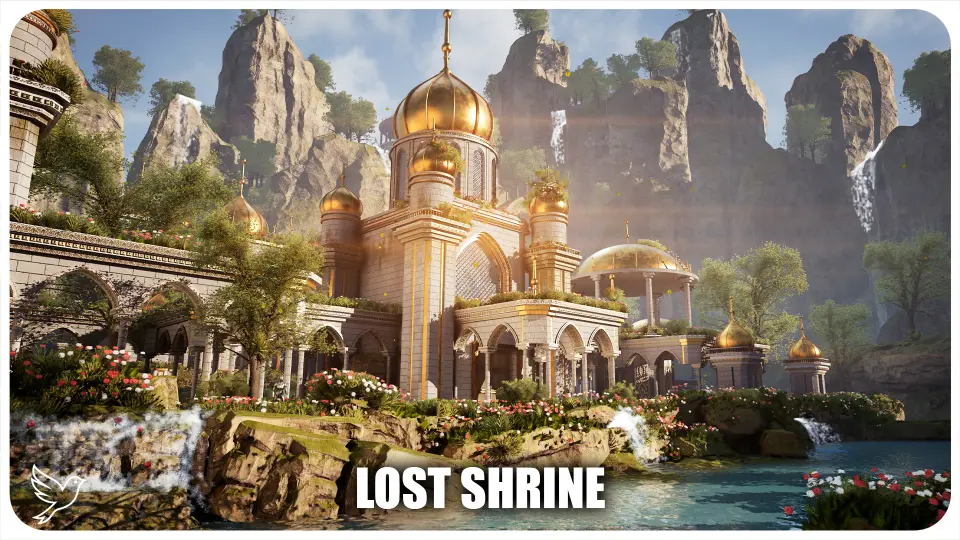
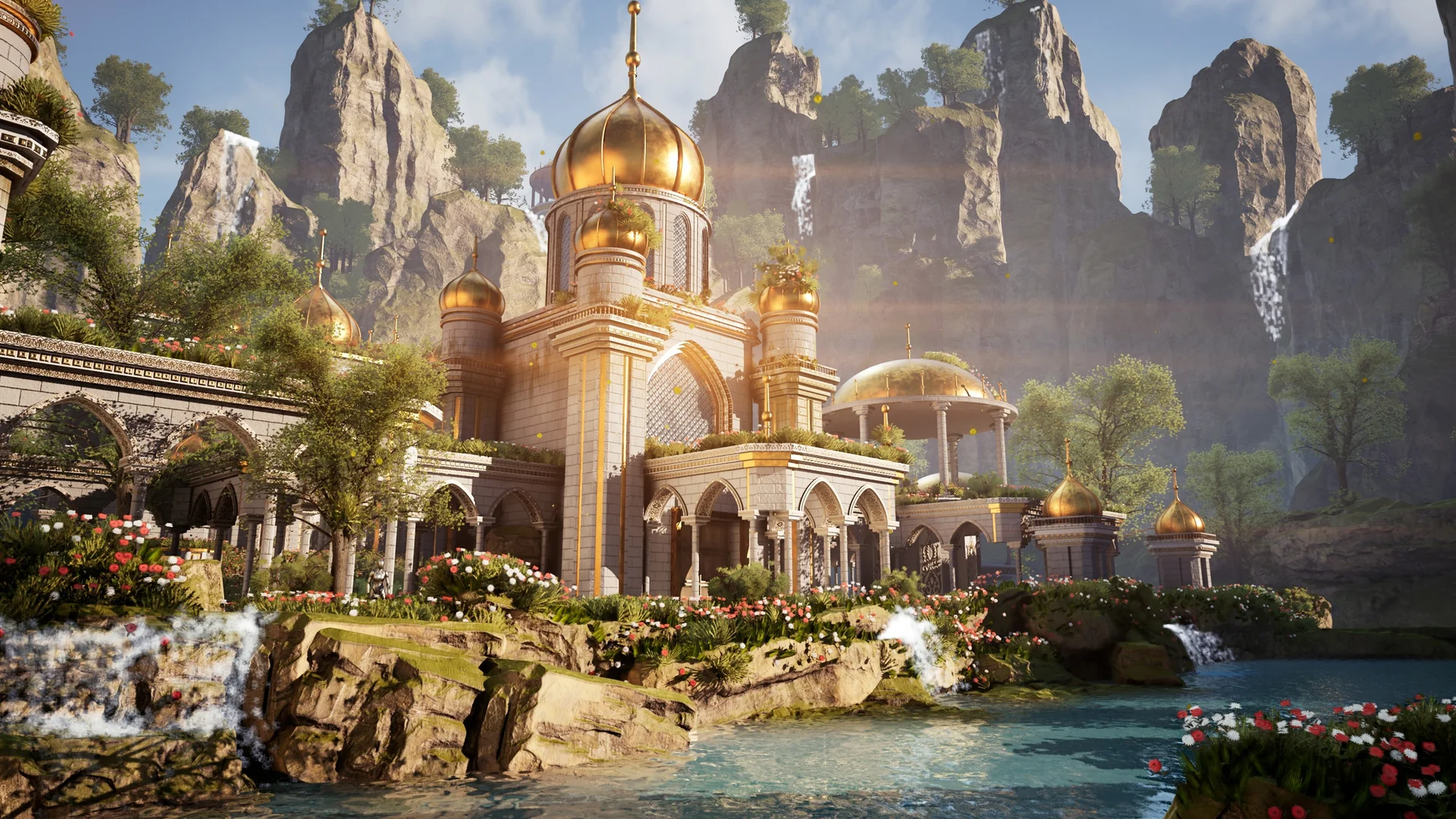
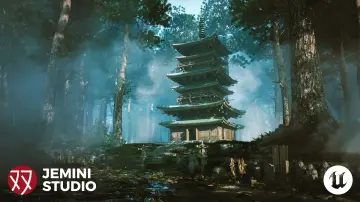
Lost Shrine addresses this challenge by providing a cohesive set of overgrown temple modules, nature assets, and architectural components ready for immediate deployment. Rather than starting on an empty landscape, developers can begin inside a completed scene, studying how stone ruins, moving water, and untamed flora interact across varying elevations. The environment suits projects driven by forgotten legends, hidden spiritual temples, or realistic overgrown ruins where ancient human construction meets aggressive natural expansion.
Configuring Project Exposure and the HDRI Backdrop Plugin
Calibrating engine display parameters forms the essential first step before exploring the environment.
To achieve the visual depth and illumination balance demonstrated in the pack, specific project configurations must be turned on. Users need to activate the option to extend default luminance range in auto exposure settings within the project settings menu. Alongside this exposure adjustment, enabling the HDRI backdrop Plugin ensures that distant skylight, atmospheric scattering, and ambient light sources interact correctly with the stone surfaces, foliage planes, and shaded sanctum corridors.
Navigating the Lost Shrine Showcase and Asset Review Levels
Two distinct maps separate full scene walkthroughs from isolated component inspections.
The package contains a fully assembled showcase level that presents the entire sanctuary in an operational, playable context. Creators can navigate stone steps, traverse overgrown courtyards, and evaluate real-time composition, shadows, and sightlines directly from a player perspective. Accompanying this world is a dedicated asset showcase level. This secondary map arranges every individual architectural mesh, module, rock formation, and plant in a neutral lineup, allowing technical artists and level designers to examine mesh density, material application, and pivot points prior to placing them into custom maps.
Assembling Architecture and Modules Around the Epic Skeleton
Structural reliability across different character archetypes requires strict adherence to uniform scaling standards.
All architectural meshes and modular pieces in Lost Shrine are scaled to fit directly with the Epic Skeleton. Arches, doorways, fence borders, and stair risers maintain accurate proportions relative to standard game character dimensions, eliminating awkward collisions or immersion-breaking scale mismatches during traversal. Whether assembling towering shrine altars or narrow perimeter walls, developers can snap modular pieces together knowing player characters will navigate the stone structures smoothly and predictably.
Distributing Overgrown Vegetation with Procedural Foliage
The package incorporates procedural foliage tools, enabling creators to coat hillsides, stone cracks, and temple borders with thick vegetation in moments. Instead of manually planting each flower stem, bush, or cluster of wild plants, developers can define volume areas where procedural rules distribute nature assets across the ground automatically. This procedural setup helps create believable, weathered landscapes where ancient stone foundations appear naturally reclaimed by creeping plants and forest growth over centuries of neglect.
Blueprints for Waterfall FX, Flying Leaves, and Fences
Static environments can feel rigid without real-time movement and specialized placement utilities.
To inject motion into quiet ruins, the pack includes custom Blueprints that handle environmental activity and layout assembly. Water FX Blueprints generate cascading waterfalls that flow down natural rock faces or broken masonry, introducing sound and movement to central focal points. A flying leaves Blueprint scatters drifting foliage through the air, giving open courtyards a constant sense of ambient wind. For structural boundaries, a dedicated fence Blueprint lets designers stretch and position rustic barriers across uneven terrain cleanly without manually aligning individual posts.
Material Instance Parameter Controls and LOD Performance
Balancing visual customization against strict frame-rate targets is critical when working with dense vegetation and detailed stone surfaces.
Every mesh included in the package features preconfigured Level of Detail (LOD) steps and accurate collisions, ensuring smooth rendering performance across wide landscape vistas and tight corridors alike. To adjust the aesthetic tone of the sanctuary, artists can leverage the included material instances. Exposed parameters permit quick updates to base textures, color schemes, and surface details without modifying the underlying master shaders, allowing the stone and foliage palette to adapt cleanly to sunny forests, misty ruins, or shadowed mountain sanctuaries.
 Temple
 Temple
 Temple
 Temple