"7b46a695175d8694"{"id":"1001526","slug":"japanese-modular-pagoda","title":"Japanese Modular Pagoda","category":"Temple","engine":"4.17+,5.0+","assetVersion":"","engineVersion":"Engine Version: 4.17+,5.0+","tag":"Temple","accent":"blue","visual":"mech","summary":"Build historical temple towers and shrine complexes in Unreal Engine with the Japanese Modular Pagoda pack, featuring Nanite, Lumen, and 12 Blueprints.","platform":"Unreal Engine","publishedAt":"2026-10-09T17:20:51.839Z","updatedAt":"2026-10-09T17:20:51.839Z","sourceNotes":[],"fileContents":[],"compatibility":["Unreal Engine","Engine Version: 4.17+,5.0+"],"featuredImage":{"alt":"Japanese Modular Pagoda","src":"/wp-content/uploads/published/2026/10/ba6391f66283-322f486c-9c35-4abf-9900-9b11b275317c-f5a6071e40.webp"},"hasDownloadLink":true,"downloads":0,"terms":[{"taxonomy":"category","slug":"temple","name":"Temple"}],"galleryImages":[{"src":"/wp-content/uploads/published/2026/10/6ab23e838f88-e88655f3-6643-4246-b506-fd00aabe2fde-02239392bc.webp","alt":"Japanese Modular Pagoda"},{"src":"/wp-content/uploads/published/2026/10/cc063b527933-30943777-0f30-46f4-be55-4d4e99fccee4-08af27067c.webp","alt":"Japanese Modular Pagoda"},{"src":"/wp-content/uploads/published/2026/10/6ec705e8391f-20363ae0-e363-46b7-84b2-a60a06ab04f6-3141f0257e.webp","alt":"Japanese Modular Pagoda"},{"src":"/wp-content/uploads/published/2026/10/b23efcb853e2-b4674c9e-4cd3-4ad1-bb72-25c421376456-6ddfcea124.webp","alt":"Japanese Modular Pagoda"},{"src":"/wp-content/uploads/published/2026/10/ad103de7c9dd-ae7119ad-1a1a-4dad-bee6-305b4d58aba1-7b06c72b77.webp","alt":"Japanese Modular Pagoda"},{"src":"/wp-content/uploads/published/2026/10/cd19f92e9911-c360f7ab-b0f2-4703-ad6f-c1ac19c3a4e5-2d3883cc08.webp","alt":"Japanese Modular Pagoda"},{"src":"/wp-content/uploads/published/2026/10/a5248cee1f85-a7e57c49-7e6b-4f53-800b-3334c2c7353d-7fcbe948be.webp","alt":"Japanese Modular Pagoda"},{"src":"/wp-content/uploads/published/2026/10/0bd14b78b279-727eda02-e1e9-47b1-b36b-65b2f4188fd0-822747d839.webp","alt":"Japanese Modular Pagoda"},{"src":"/wp-content/uploads/published/2026/10/2adb3b70b72b-e55564ce-aacf-4ca4-936b-f75c7aacb250-050e75752a.webp","alt":"Japanese Modular Pagoda"},{"src":"/wp-content/uploads/published/2026/10/8071595244c0-3980b946-bca2-41f1-8dce-fdc47bafb560-7f40f82a56.webp","alt":"Japanese Modular Pagoda"}],"accessPanel":{"kind":"resource","title":"Download this resource","eyebrow":"Free Download","message":"Log in or create a free account to start your download.","fileName":"Content.7z","safetyNote":"Resources are manually reviewed before listing to improve quality and reduce obvious risks.","actionLabel":"Download Free","resourceType":"Resource archive"},"contentHtml":"\u003ch2\u003eConstructing Vertical Landmarks with Japanese Modular Pagoda Systems\u003c/h2\u003e\u003cp\u003eTraditional East Asian architectural skylines rely heavily on multi-tiered wooden towers to establish focal points across natural terrain, monastery districts, and urban castle towns. The Japanese Modular Pagoda collection translates this architectural tradition into a structured building toolkit within Unreal Engine. Rather than locking artists into a static, singular building mesh, the package provides the structural elements necessary to assemble pagodas of varying tier counts, horizontal footprints, and structural proportions.\u003c/p\u003e\u003cp\u003eMulti-tiered Buddhist pagodas and Shinto shrine towers require strict structural rhythm, defined by repeating eaves, bracket complexes, timber posts, and surrounding balustrades. By breaking these elaborate wooden towers into individual structural parts alongside pre-grouped modules, the system accommodates fast layout blocking as well as custom architectural detailing. Whether an environment calls for a modest three-story monastery tower or a soaring five-story landmark rising above a fortified valley, the modular pieces align to maintain authentic historical proportions and cohesive joinery lines.\u003c/p\u003e\u003ch2\u003eModular Pagoda Architecture and Component Hierarchy\u003c/h2\u003e\u003cp\u003eThe construction workflow relies on discrete components that reflect the joinery and timber framing of traditional Japanese carpentry. Creators can assemble unique pagodas from the ground up or modify existing forms using a clear breakdown of architectural elements:\u003c/p\u003e\u003cul\u003e\u003cli\u003eMultiple floor modules that establish structural tiers, deck elevations, and intermediate interior levels\u003c/li\u003e\u003cli\u003eCurved roof sections featuring traditional ceramic tiling, hip ridges, and projecting eaves\u003c/li\u003e\u003cli\u003ePrimary support columns designed to carry vertical visual weight across multiple stories\u003c/li\u003e\u003cli\u003eExposed wooden structural elements, timber framing, and cross-beams\u003c/li\u003e\u003cli\u003eDecorative and protective railings for surrounding exterior walkways and observation verandas\u003c/li\u003e\u003cli\u003ePeriod-appropriate window lattices and entrance doors\u003c/li\u003e\u003cli\u003eFinely crafted architectural ornaments, ridge ends, and traditional roof decorative details\u003c/li\u003e\u003c/ul\u003e\u003cp\u003eTo avoid the tedium of placing thousands of individual bracket and rafter meshes by hand, grouped architectural pieces are provided alongside raw parts. These assemblies speed up the erection of repetitive tiers while retaining the flexibility to swap components, adjust floor heights, or add bespoke ornamental finishes to specific levels.\u003c/p\u003e\u003ch2\u003ePre-Assembled Blueprint Pagodas and Variations\u003c/h2\u003e\u003cp\u003eFor productions requiring rapid level dressing or background vista population, the package includes 12 fully configured Blueprint pagodas. These assemblies are divided across four distinct architectural types, with each type featuring three separate material variations.\u003c/p\u003e\u003cp\u003eThese pre-configured Blueprints function as immediate drop-in landmarks for sprawling game worlds, cinematic shots, and virtual production backdrops. Having three material variations per architectural type allows level designers to scatter multiple pagodas across adjacent hillsides, shrine complexes, or urban vistas without repeating identical surface tones or wood finishes. Beyond serving as ready-made assets, these Blueprints illustrate proper tier spacing, roof transitions, and decorative placements, offering a clear reference for constructing custom configurations.\u003c/p\u003e\u003ch2\u003eSubstance Painter 4K PBR Workflows, Nanite, and Lumen\u003c/h2\u003e\u003cp\u003eMaterial definition across all architectural components is handled through a physically based rendering pipeline. Textures were authored in Substance Painter to capture the aged wood, lacquered surfaces, stone, and clay tiles characteristic of traditional sacred architecture. The material setup includes 4K PBR texture maps that preserve close-up fidelity across structural beams, decorative carvings, and expansive roof surfaces.\u003c/p\u003e\u003cp\u003eThe texture configuration utilizes standard channels alongside memory-conscious packing, featuring Base Color, Normal, Metallic, Roughness, and Ambient Occlusion maps arranged within an optimized packed MRO workflow. Combined with baked UV layouts, the materials react naturally to dynamic environmental lighting conditions, direct sunlight, and shaded overhangs.\u003c/p\u003e\u003cp\u003eBecause the collection is built specifically around modern Unreal Engine 5 technologies, all architectural meshes support both Nanite and Lumen out of the box. Nanite virtualized geometry processes the dense silhouettes of layered roof tiles, projecting rafters, and timber carvings without requiring manual LOD authoring or aggressive draw-distance culling. Lumen dynamic global illumination and reflections accurately bounce light beneath deep overhangs, across shaded verandas, and through open lattice windows, ensuring accurate contact shadows and indirect illumination throughout complex wooden assemblies.\u003c/p\u003e\u003ch2\u003eIntegration Across Japanese Modular Collections\u003c/h2\u003e\u003cp\u003eThe Japanese Modular Pagoda is built to function as an organic component of a wider architectural ecosystem. It is tuned to integrate directly with related architectural releases from Jemini Studio, matching their exact visual direction, physical grid scale, texture resolution, and structural logic. The assets connect cleanly alongside:\u003c/p\u003e\u003cul\u003e\u003cli\u003eJapanese Modular Temple (including interior spaces)\u003c/li\u003e\u003cli\u003eJapanese Modular Castle\u003c/li\u003e\u003cli\u003eJapanese Modular Village\u003c/li\u003e\u003cli\u003eJapanese Modular Folk House\u003c/li\u003e\u003cli\u003eJapanese Toro Lanterns\u003c/li\u003e\u003c/ul\u003e\u003cp\u003eWhen deployed together, these libraries allow environment artists to expand beyond standalone towers to assemble complete historic towns, fortified samurai compounds, cliffside monasteries, and sprawling pilgrimage centers. Rooflines, structural wood finishes, and bracket treatments align across the individual packs, preventing visual friction when placing a pagoda tower inside a temple courtyard or adjacent to a castle bailey.\u003c/p\u003e\u003ch2\u003eProduction Boundaries and Scene Integration\u003c/h2\u003e\u003cp\u003eWhen planning an environment with this asset pack, technical teams should account for the scope of the included content. The package is strictly an architectural toolkit rather than a full landscape environment. Natural assets—such as surrounding trees, mountain terrain, ground cover foliage, and atmospheric landscape maps displayed in demonstration videos—are excluded from the pack. The provided demonstration maps are dedicated exclusively to highlighting the modular architectural models and their material implementations.\u003c/p\u003e\u003cp\u003eThe kit fits naturally into third-person action games, historical RPGs, tactical strategy titles, architectural visualizations, and virtual production sets where authentic Japanese landmarks are required. By balancing granular modular freedom with 12 ready-to-use Blueprint configurations, the asset set offers a dependable foundation for building historical and fantasy East Asian worlds in Unreal Engine.\u003c/p\u003e\n\n\u003ch2\u003eExplore Similar Assets\u003c/h2\u003e\n\u003cul\u003e\n\u003cli\u003e\u003ca href=\"https://3dcghub.com/mountain-temple-japanese-temple-ancient-temple-temple-shrine-feudal-japan/\" title=\"Mountain Temple (Japanese Temple, Ancient Temple, Temple Shrine, Feudal Japan)\"\u003eMountain Temple (Japanese Temple, Ancient Temple, Temple Shrine, Feudal Japan)\u003c/a\u003e\u003c/li\u003e\n\u003cli\u003e\u003ca href=\"https://3dcghub.com/ancient-temple-environment-temple-ancient-tropical-temple-ancient-temple/\" title=\"Ancient Temple Environment ( Temple, Ancient Tropical Temple, Ancient , Temple )\"\u003eAncient Temple Environment ( Temple, Ancient Tropical Temple, Ancient , Temple )\u003c/a\u003e\u003c/li\u003e\n\u003cli\u003e\u003ca href=\"https://3dcghub.com/baroque-cathedral-environment-baroque-cathedral-church-dome-column-throne/\" title=\"Baroque Cathedral Environment ( Baroque Cathedral Church Dome Column Throne )\"\u003eBaroque Cathedral Environment ( Baroque Cathedral Church Dome Column Throne )\u003c/a\u003e\u003c/li\u003e\n\u003cli\u003e\u003ca href=\"https://3dcghub.com/stylized-chinese-temple/\" title=\"Stylized Chinese Temple\"\u003eStylized Chinese Temple\u003c/a\u003e\u003c/li\u003e\n\u003cli\u003e\u003ca href=\"https://3dcghub.com/ancient-cathedral-environment-ancient-cathedral-ancient-dungeon-cathedral-3d/\" title=\"Ancient Cathedral Environment ( Ancient Cathedral Ancient Dungeon Cathedral 3D )\"\u003eAncient Cathedral Environment ( Ancient Cathedral Ancient Dungeon Cathedral 3D )\u003c/a\u003e\u003c/li\u003e\n\u003c/ul\u003e","contentTextLength":7142,"navigation":{"current":18,"total":3481,"previous":{"id":"1001527","slug":"k-pop-series-lola","title":"K-POP SERIES - Lola","category":"Humans","platform":"Unreal Engine","updatedAt":"2026-10-09T17:21:56.867Z"},"next":{"id":"1001142","slug":"modular-sci-fi-station","title":"Modular Sci-Fi Station","category":"Sci-Fi","platform":"Unreal Engine","updatedAt":"2026-10-09T15:37:29.142Z"}},"relatedResources":[{"id":"1000652","slug":"mountain-temple-japanese-temple-ancient-temple-temple-shrine-feudal-japan","title":"Mountain Temple (Japanese Temple, Ancient Temple, Temple Shrine, Feudal Japan)","category":"Temple","engine":"5.5+","assetVersion":"","engineVersion":"Engine Version: 5.5+","tag":"Temple","accent":"blue","visual":"mech","summary":"A modular Japanese shrine temple environment for Unreal Engine with material layering, vertex painting, Nanite foliage, and prop kits for building feudal Japan","platform":"Unreal Engine","publishedAt":"2026-07-21T19:17:13.891Z","updatedAt":"2026-07-21T19:17:13.891Z","sourceNotes":[],"fileContents":[],"compatibility":["Unreal Engine","Engine Version: 5.5+"],"featuredImage":{"alt":"Mountain Temple (Japanese Temple, Ancient Temple, Temple Shrine, Feudal Japan)","src":"/wp-content/uploads/published/2026/07/c65473b30385-e14168cc-6d72-423a-a7bf-177d39c6402a-3db1da1c73.webp"},"hasDownloadLink":true,"downloads":0},{"id":"1000913","slug":"ancient-temple-environment-temple-ancient-tropical-temple-ancient-temple","title":"Ancient Temple Environment ( Temple, Ancient Tropical Temple, Ancient , Temple )","category":"Temple","engine":"5.1+","assetVersion":"","engineVersion":"Engine Version: 5.1+","tag":"Temple","accent":"blue","visual":"city","summary":"Explore a modular Ancient Temple Environment with 34 ready-to-use prefabs, ancient Indian architectural references, and a valley demo map for UE5 games and cine","platform":"Unreal Engine","publishedAt":"2026-08-08T03:11:58.956Z","updatedAt":"2026-08-08T03:11:58.956Z","sourceNotes":[],"fileContents":[],"compatibility":["Unreal Engine","Engine Version: 5.1+"],"featuredImage":{"alt":"Ancient Temple Environment ( Temple, Ancient Tropical Temple, Ancient , Temple )","src":"/wp-content/uploads/published/2026/08/841ea3296a93-0c853b90-8415-4696-8bdc-5d82ff9e05a3-b564c94d66.webp"},"hasDownloadLink":true,"downloads":0},{"id":"1000355","slug":"baroque-cathedral-environment-baroque-cathedral-church-dome-column-throne","title":"Baroque Cathedral Environment ( Baroque Cathedral Church Dome Column Throne )","category":"Temple","engine":"5.2+","assetVersion":"","engineVersion":"Engine Version: 5.2+","tag":"Temple","accent":"blue","visual":"city","summary":"Build highly detailed historical sanctuaries and royal interiors with 89 optimized meshes, Nanite support, Lumen lighting, and the Ultimate Level Art Tool.","platform":"Unreal Engine","publishedAt":"2026-07-05T11:15:26.093Z","updatedAt":"2026-07-05T11:15:26.093Z","sourceNotes":[],"fileContents":[],"compatibility":["Unreal Engine","Engine Version: 5.2+"],"featuredImage":{"alt":"Baroque Cathedral Environment ( Baroque Cathedral Church Dome Column Throne )","src":"/wp-content/uploads/published/2026/07/c77ba22ef55b-58c902e9-24b5-459a-b92d-a57682ddf487-1fb364358d.webp"},"hasDownloadLink":true,"downloads":1}]}
Temple
Japanese Modular Pagoda
Build historical temple towers and shrine complexes in Unreal Engine with the Japanese Modular Pagoda pack, featuring Nanite, Lumen, and 12 Blueprints.
Category:Unreal Engine,TemplePlatform: Unreal EngineEngine Version: 4.17+,5.0+Published: Oct 9, 2026
Temple
Resource overview
Constructing Vertical Landmarks with Japanese Modular Pagoda Systems
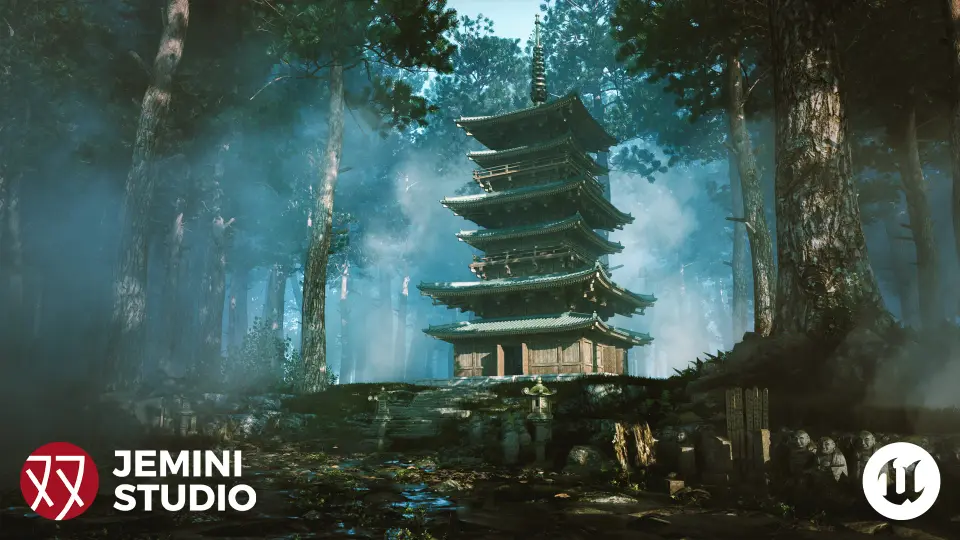
Traditional East Asian architectural skylines rely heavily on multi-tiered wooden towers to establish focal points across natural terrain, monastery districts, and urban castle towns. The Japanese Modular Pagoda collection translates this architectural tradition into a structured building toolkit within Unreal Engine. Rather than locking artists into a static, singular building mesh, the package provides the structural elements necessary to assemble pagodas of varying tier counts, horizontal footprints, and structural proportions.
Multi-tiered Buddhist pagodas and Shinto shrine towers require strict structural rhythm, defined by repeating eaves, bracket complexes, timber posts, and surrounding balustrades. By breaking these elaborate wooden towers into individual structural parts alongside pre-grouped modules, the system accommodates fast layout blocking as well as custom architectural detailing. Whether an environment calls for a modest three-story monastery tower or a soaring five-story landmark rising above a fortified valley, the modular pieces align to maintain authentic historical proportions and cohesive joinery lines.
Modular Pagoda Architecture and Component Hierarchy
The construction workflow relies on discrete components that reflect the joinery and timber framing of traditional Japanese carpentry. Creators can assemble unique pagodas from the ground up or modify existing forms using a clear breakdown of architectural elements:
Multiple floor modules that establish structural tiers, deck elevations, and intermediate interior levels
Curved roof sections featuring traditional ceramic tiling, hip ridges, and projecting eaves
Primary support columns designed to carry vertical visual weight across multiple stories
Exposed wooden structural elements, timber framing, and cross-beams
Decorative and protective railings for surrounding exterior walkways and observation verandas
Period-appropriate window lattices and entrance doors
Finely crafted architectural ornaments, ridge ends, and traditional roof decorative details
To avoid the tedium of placing thousands of individual bracket and rafter meshes by hand, grouped architectural pieces are provided alongside raw parts. These assemblies speed up the erection of repetitive tiers while retaining the flexibility to swap components, adjust floor heights, or add bespoke ornamental finishes to specific levels.
Pre-Assembled Blueprint Pagodas and Variations
For productions requiring rapid level dressing or background vista population, the package includes 12 fully configured Blueprint pagodas. These assemblies are divided across four distinct architectural types, with each type featuring three separate material variations.
These pre-configured Blueprints function as immediate drop-in landmarks for sprawling game worlds, cinematic shots, and virtual production backdrops. Having three material variations per architectural type allows level designers to scatter multiple pagodas across adjacent hillsides, shrine complexes, or urban vistas without repeating identical surface tones or wood finishes. Beyond serving as ready-made assets, these Blueprints illustrate proper tier spacing, roof transitions, and decorative placements, offering a clear reference for constructing custom configurations.
Substance Painter 4K PBR Workflows, Nanite, and Lumen
Material definition across all architectural components is handled through a physically based rendering pipeline. Textures were authored in Substance Painter to capture the aged wood, lacquered surfaces, stone, and clay tiles characteristic of traditional sacred architecture. The material setup includes 4K PBR texture maps that preserve close-up fidelity across structural beams, decorative carvings, and expansive roof surfaces.
The texture configuration utilizes standard channels alongside memory-conscious packing, featuring Base Color, Normal, Metallic, Roughness, and Ambient Occlusion maps arranged within an optimized packed MRO workflow. Combined with baked UV layouts, the materials react naturally to dynamic environmental lighting conditions, direct sunlight, and shaded overhangs.
Because the collection is built specifically around modern Unreal Engine 5 technologies, all architectural meshes support both Nanite and Lumen out of the box. Nanite virtualized geometry processes the dense silhouettes of layered roof tiles, projecting rafters, and timber carvings without requiring manual LOD authoring or aggressive draw-distance culling. Lumen dynamic global illumination and reflections accurately bounce light beneath deep overhangs, across shaded verandas, and through open lattice windows, ensuring accurate contact shadows and indirect illumination throughout complex wooden assemblies.
Integration Across Japanese Modular Collections
The Japanese Modular Pagoda is built to function as an organic component of a wider architectural ecosystem. It is tuned to integrate directly with related architectural releases from Jemini Studio, matching their exact visual direction, physical grid scale, texture resolution, and structural logic. The assets connect cleanly alongside:
Japanese Modular Temple (including interior spaces)
Japanese Modular Castle
Japanese Modular Village
Japanese Modular Folk House
Japanese Toro Lanterns
When deployed together, these libraries allow environment artists to expand beyond standalone towers to assemble complete historic towns, fortified samurai compounds, cliffside monasteries, and sprawling pilgrimage centers. Rooflines, structural wood finishes, and bracket treatments align across the individual packs, preventing visual friction when placing a pagoda tower inside a temple courtyard or adjacent to a castle bailey.
Production Boundaries and Scene Integration
When planning an environment with this asset pack, technical teams should account for the scope of the included content. The package is strictly an architectural toolkit rather than a full landscape environment. Natural assets—such as surrounding trees, mountain terrain, ground cover foliage, and atmospheric landscape maps displayed in demonstration videos—are excluded from the pack. The provided demonstration maps are dedicated exclusively to highlighting the modular architectural models and their material implementations.
The kit fits naturally into third-person action games, historical RPGs, tactical strategy titles, architectural visualizations, and virtual production sets where authentic Japanese landmarks are required. By balancing granular modular freedom with 12 ready-to-use Blueprint configurations, the asset set offers a dependable foundation for building historical and fantasy East Asian worlds in Unreal Engine.
 Temple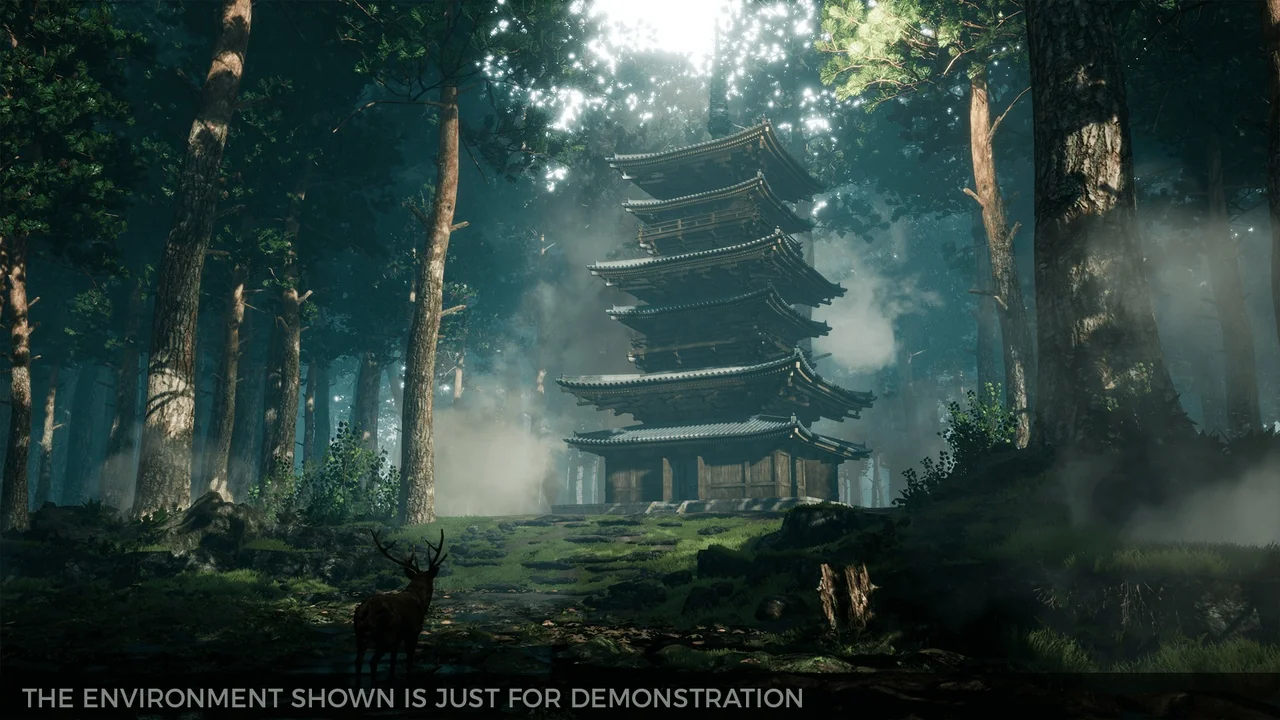
 Temple
 Temple
 Temple