"ddd0e3fb95b0aec2"{"id":"1000396","slug":"realistic-crocodile","title":"Realistic Crocodile","category":"Characters \u0026 Creatures","engine":"5.2+","assetVersion":"","engineVersion":"Engine Version: 5.2+","tag":"Characters","accent":"blue","visual":"character","summary":"A highly customizable 3D crocodile asset featuring scalable bones, blendshapes, AAA animations, and a stylized Poly Art version for diverse environments.","platform":"Unreal Engine","publishedAt":"2026-07-07T15:23:45.665Z","updatedAt":"2026-07-07T15:23:45.665Z","sourceNotes":[],"fileContents":[],"compatibility":["Unreal Engine","Engine Version: 5.2+"],"featuredImage":{"alt":"Realistic Crocodile","src":"/wp-content/uploads/published/2026/07/1b55b470afa5-eedc8feb-f2c9-4cad-bcb7-db06151b4742-eeb2adf2ac.webp"},"hasDownloadLink":true,"downloads":1,"terms":[{"taxonomy":"category","slug":"characters-and-creatures","name":"Characters \u0026 Creatures"}],"galleryImages":[{"src":"/wp-content/uploads/published/2026/07/9320282c2d90-34c6c09d-5a86-4211-a181-4fb4a995f077-e66ec05365.webp","alt":"Realistic Crocodile"},{"src":"/wp-content/uploads/published/2026/07/2636d4e8da53-9f7f026a-66e0-4975-8d60-fe21d227a5cb-1cde2dcdfb.webp","alt":"Realistic Crocodile"},{"src":"/wp-content/uploads/published/2026/07/070fa41b3aa3-7c15ee07-b4e4-40c5-ab64-1d16d21c67be-a1f34eddb0.webp","alt":"Realistic Crocodile"},{"src":"/wp-content/uploads/published/2026/07/639e03ebb1f2-6b062605-b176-45c5-a28f-34cdb1062142-772289fb7d.webp","alt":"Realistic Crocodile"},{"src":"/wp-content/uploads/published/2026/07/c2fb20166dfa-a589f6ad-fbc3-4307-b54f-def395afe159-6be7c1eb96.webp","alt":"Realistic Crocodile"},{"src":"/wp-content/uploads/published/2026/07/df8b86b6cb36-99324d36-9067-4455-b8dc-17fd8876c4c4-8981b03680.webp","alt":"Realistic Crocodile"},{"src":"/wp-content/uploads/published/2026/07/b0ab22e722d5-3584d6ba-b22b-421d-8dcf-7b8ec3043d49-0ef074e3da.webp","alt":"Realistic Crocodile"},{"src":"/wp-content/uploads/published/2026/07/58d88078abb5-a2e76016-ed45-40c4-91c4-f524245a8dcc-3b1af5e824.webp","alt":"Realistic Crocodile"},{"src":"/wp-content/uploads/published/2026/07/8fa41405f1f5-f358c6d6-bfa9-4e95-9bda-691e50421415-6b4718877e.webp","alt":"Realistic Crocodile"},{"src":"/wp-content/uploads/published/2026/07/14fd4c5c8fc4-d9adff09-48d1-4306-bb09-2c57b779a1ac-77f74e1239.webp","alt":"Realistic Crocodile"}],"accessPanel":{"kind":"resource","title":"Download this resource","eyebrow":"Free Download","message":"Log in or create a free account to start your download.","fileName":"Content.7z","safetyNote":"Resources are manually reviewed before listing to improve quality and reduce obvious risks.","actionLabel":"Download Free","resourceType":"Resource archive"},"contentHtml":"\u003ch2\u003eOvercoming Wildlife Repetition with Scalable Bones\u003c/h2\u003e\n\u003cp\u003ePopulating a digital savanna or wetland environment with convincing wildlife presents a distinct challenge for environment artists and developers: avoiding the repetitive clone effect when spawning multiple creatures. Relying on a single static mesh often breaks immersion in nature-focused projects. The Realistic Crocodile addresses this environmental design hurdle by providing a foundation built heavily on structural customization, allowing technical artists to generate a diverse reptile population from a single core asset.\u003c/p\u003e\n\u003cp\u003eA primary technical advantage of this crocodile model is its rigging setup, specifically the inclusion of scalable bones. In creature development, having access to scalable skeletal hierarchies means developers are not restricted to uniform, identically proportioned animals. By adjusting the scale of specific bones within the engine, technical artists can alter the physical profile of the reptile dynamically. This allows for the creation of massive, imposing adult crocodiles alongside smaller, narrower juveniles, all sharing the exact same base rig and animation set. It reduces the need to import entirely separate skeletal meshes just to represent different ages or sizes within a habitat.\u003c/p\u003e\n\u003cp\u003eWorking in tandem with the skeletal scaling are the included blendshapes. These provide mesh-level morphological adjustments, enabling subtle or drastic changes to the crocodile's geometry. When combining these blendshapes with the scalable bones, the potential for variation expands significantly. Developers can tweak snout widths, body bulk, or tail lengths to visually distinguish individual creatures. This level of customization is particularly useful for differentiating between species types, allowing the asset to convincingly stand in as an alligator simply by adjusting its morphological profile.\u003c/p\u003e\n\u003ch2\u003eBridging Realistic and Stylized Art Directions\u003c/h2\u003e\n\u003cp\u003eWhile the primary focus rests on high-fidelity, realistic textures suitable for dense savanna environments, the package accommodates entirely different visual styles. A dedicated Poly Art version is included alongside the core realistic model. This low-poly, faceted variation opens the asset up to stylized projects, broadening its application far beyond strict photorealism.\u003c/p\u003e\n\u003cp\u003eThe Poly Art version comes with its own set of visual variations, ensuring that the stylized creatures retain the same capacity for diversity as their realistic counterparts. Artists working on a stylized low-poly adventure or puzzle game can utilize these variations to maintain a cohesive art direction without sacrificing environmental variety. The inclusion of an unexpected 'Pet' theme within its metadata suggests that these stylized, low-poly variants could easily be repurposed as companion animals in lighter, more stylized gameplay settings, rather than strictly acting as environmental hazards.\u003c/p\u003e\n\u003cp\u003eBecause both the realistic textures and the Poly Art meshes are bundled together, a studio could theoretically use the high-fidelity version for pre-rendered cinematics while deploying the low-poly variants for mobile-optimized gameplay. This keeps the creature's silhouette and general kinematic feel consistent across completely different rendering pipelines.\u003c/p\u003e\n\u003ch2\u003eDriving Movement with AAA Detailed Animations\u003c/h2\u003e\n\u003cp\u003eConvincing reptile movement is notoriously difficult to capture due to the complex articulation of their spines, short limbs, and heavy tails dragging across uneven terrain. The Realistic Crocodile relies on a suite of AAA detailed animations to handle this specific locomotion. These animations are designed to reflect the weight and biomechanics of large terrestrial and aquatic reptiles.\u003c/p\u003e\n\u003cp\u003eTo help manage these complex movements, the asset package includes an Animation Blueprint alongside specific scripts. The inclusion of an Animation Blueprint indicates that the essential groundwork for blending various animation states is already established. Animators and technical artists can immediately begin hooking up the creature's state machine, ensuring the transition from a resting state in the savanna to active movement is handled smoothly within the animation graph. The scripts provided serve to support the animation logic, giving developers a head start on getting the creature moving naturally.\u003c/p\u003e\n\u003ch2\u003eIntegration Pipeline and Implementation Boundaries\u003c/h2\u003e\n\u003cp\u003eUnderstanding the exact scope of the package is crucial for pipeline planning. The Realistic Crocodile is strictly a visual and kinematic resource. It explicitly excludes any gameplay-driven Character Controller Blueprints. Developers will not find pre-built AI logic, player-input scripts, or predefined health, damage, and aggro systems within the provided files.\u003c/p\u003e\n\u003cp\u003eThe delivery is focused purely on the foundational building blocks: the models, the textures, and the animations. This structure is heavily favored by programming teams who require clean assets without the overhead of unraveling another developer's complex, hard-coded gameplay logic. Implementing this crocodile into a fully playable state requires the development team to author their own custom AI controllers, navigation meshes, and interaction logic.\u003c/p\u003e\n\u003cp\u003eThe provided Animation Blueprint serves as the structural bridge between the raw AAA animations and whatever custom logic the studio decides to implement. By keeping the visual assets separate from the gameplay mechanics, the Realistic Crocodile can be dropped into established project architectures without causing blueprint conflicts, leaving the behavior and implementation entirely up to the studio's specific design needs.\u003c/p\u003e\n\n\u003ch2\u003eMore From The Same Workflow\u003c/h2\u003e\n\u003cul\u003e\n\u003cli\u003e\u003ca href=\"https://3dcghub.com/realistic-horse-with-animations/\" title=\"Realistic Horse with Animations\"\u003eRealistic Horse with Animations\u003c/a\u003e\u003c/li\u003e\n\u003cli\u003e\u003ca href=\"https://3dcghub.com/male-mega-realistic-character-pack-01/\" title=\"Male Mega Realistic Character Pack 01\"\u003eMale Mega Realistic Character Pack 01\u003c/a\u003e\u003c/li\u003e\n\u003cli\u003e\u003ca href=\"https://3dcghub.com/redshank/\" title=\"Redshank\"\u003eRedshank\u003c/a\u003e\u003c/li\u003e\n\u003cli\u003e\u003ca href=\"https://3dcghub.com/vulture/\" title=\"Vulture\"\u003eVulture\u003c/a\u003e\u003c/li\u003e\n\u003cli\u003e\u003ca href=\"https://3dcghub.com/mouse/\" title=\"Mouse\"\u003eMouse\u003c/a\u003e\u003c/li\u003e\n\u003c/ul\u003e","contentTextLength":5752,"navigation":{"current":1254,"total":3511,"previous":{"id":"1000397","slug":"realistic-rabbit","title":"Realistic Rabbit","category":"Characters \u0026 Creatures","platform":"Unreal Engine","updatedAt":"2026-07-07T15:27:45.915Z"},"next":{"id":"1000395","slug":"projectile-arcs","title":"Projectile Arcs","category":"Gameplay Features","platform":"Unreal Engine","updatedAt":"2026-07-07T15:19:03.056Z"}},"relatedResources":[{"id":"3284","slug":"realistic-horse-with-animations","title":"Realistic Horse with Animations","category":"Characters \u0026 Creatures","engine":"5.0+","assetVersion":"Engine version: 5.0+","engineVersion":"5.4","tag":"Characters","accent":"blue","visual":"animation","summary":"Enhance your game with this high-quality Realistic Horse asset. Featuring 20 animations, customizable shaders, and muscle shaking effects for maximum realism.","platform":"Unreal Engine","publishedAt":"2026-02-09T06:09:54.000Z","updatedAt":"2026-04-19T15:57:40.000Z","sourceNotes":[],"fileContents":[],"compatibility":["Unreal Engine","Engine version: 5.0+"],"featuredImage":{"alt":"Realistic Horse with Animations","src":"https://3dcghub.com/wp-content/uploads/2026/02/34363d28-a5d5-411a-84f6-36caa5d096af.webp"},"hasDownloadLink":true,"downloads":0},{"id":"2927","slug":"male-mega-realistic-character-pack-01","title":"Male Mega Realistic Character Pack 01","category":"Characters \u0026 Creatures","engine":"5.0+","assetVersion":"Engine version: 5.0+","engineVersion":"4.25","tag":"Characters","accent":"blue","visual":"character","summary":"Enhance your game with the Male Mega Realistic Character Pack. Featuring 52 pre-built action heroes and modular parts rigged to the Epic Skeleton for Unreal Eng","platform":"Unreal Engine","publishedAt":"2026-02-07T16:06:03.000Z","updatedAt":"2026-04-19T15:57:44.000Z","sourceNotes":[],"fileContents":[],"compatibility":["Unreal Engine","Engine version: 5.0+"],"featuredImage":{"alt":"Male Mega Realistic Character Pack 01","src":"https://3dcghub.com/wp-content/uploads/2026/02/89c38da4-4ad1-41f8-9795-ae1b232aa921.webp"},"hasDownloadLink":true,"downloads":0},{"id":"1000918","slug":"male-realistic-character-pack-01","title":"Male Realistic Character Pack 01","category":"Characters \u0026 Creatures","engine":"4.26+,5.0+","assetVersion":"","engineVersion":"Engine Version: 4.26+,5.0+","tag":"Characters","accent":"blue","visual":"character","summary":"Explore a modular set of male action hero meshes rigged to the Epic skeleton, with swappable clothing, heads, hairstyles, and blueprint-based customization.","platform":"Unreal Engine","publishedAt":"2026-08-08T04:07:41.081Z","updatedAt":"2026-08-08T04:07:41.081Z","sourceNotes":[],"fileContents":[],"compatibility":["Unreal Engine","Engine Version: 4.26+,5.0+"],"featuredImage":{"alt":"Male Realistic Character Pack 01","src":"/wp-content/uploads/published/2026/08/492ad697c250-e4cd0df1-4363-4f9b-932f-b718e0090e7f-614dbc8318.webp"},"hasDownloadLink":true,"downloads":1}]}
Characters
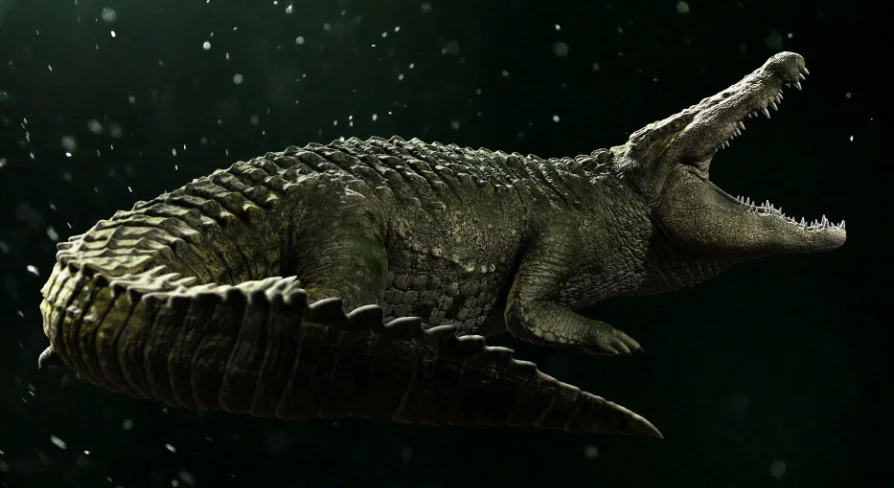
Realistic Crocodile
A highly customizable 3D crocodile asset featuring scalable bones, blendshapes, AAA animations, and a stylized Poly Art version for diverse environments.
Overcoming Wildlife Repetition with Scalable Bones
Populating a digital savanna or wetland environment with convincing wildlife presents a distinct challenge for environment artists and developers: avoiding the repetitive clone effect when spawning multiple creatures. Relying on a single static mesh often breaks immersion in nature-focused projects. The Realistic Crocodile addresses this environmental design hurdle by providing a foundation built heavily on structural customization, allowing technical artists to generate a diverse reptile population from a single core asset.
A primary technical advantage of this crocodile model is its rigging setup, specifically the inclusion of scalable bones. In creature development, having access to scalable skeletal hierarchies means developers are not restricted to uniform, identically proportioned animals. By adjusting the scale of specific bones within the engine, technical artists can alter the physical profile of the reptile dynamically. This allows for the creation of massive, imposing adult crocodiles alongside smaller, narrower juveniles, all sharing the exact same base rig and animation set. It reduces the need to import entirely separate skeletal meshes just to represent different ages or sizes within a habitat.
Working in tandem with the skeletal scaling are the included blendshapes. These provide mesh-level morphological adjustments, enabling subtle or drastic changes to the crocodile's geometry. When combining these blendshapes with the scalable bones, the potential for variation expands significantly. Developers can tweak snout widths, body bulk, or tail lengths to visually distinguish individual creatures. This level of customization is particularly useful for differentiating between species types, allowing the asset to convincingly stand in as an alligator simply by adjusting its morphological profile.
Bridging Realistic and Stylized Art Directions
While the primary focus rests on high-fidelity, realistic textures suitable for dense savanna environments, the package accommodates entirely different visual styles. A dedicated Poly Art version is included alongside the core realistic model. This low-poly, faceted variation opens the asset up to stylized projects, broadening its application far beyond strict photorealism.
The Poly Art version comes with its own set of visual variations, ensuring that the stylized creatures retain the same capacity for diversity as their realistic counterparts. Artists working on a stylized low-poly adventure or puzzle game can utilize these variations to maintain a cohesive art direction without sacrificing environmental variety. The inclusion of an unexpected 'Pet' theme within its metadata suggests that these stylized, low-poly variants could easily be repurposed as companion animals in lighter, more stylized gameplay settings, rather than strictly acting as environmental hazards.
Because both the realistic textures and the Poly Art meshes are bundled together, a studio could theoretically use the high-fidelity version for pre-rendered cinematics while deploying the low-poly variants for mobile-optimized gameplay. This keeps the creature's silhouette and general kinematic feel consistent across completely different rendering pipelines.
Driving Movement with AAA Detailed Animations
Convincing reptile movement is notoriously difficult to capture due to the complex articulation of their spines, short limbs, and heavy tails dragging across uneven terrain. The Realistic Crocodile relies on a suite of AAA detailed animations to handle this specific locomotion. These animations are designed to reflect the weight and biomechanics of large terrestrial and aquatic reptiles.
To help manage these complex movements, the asset package includes an Animation Blueprint alongside specific scripts. The inclusion of an Animation Blueprint indicates that the essential groundwork for blending various animation states is already established. Animators and technical artists can immediately begin hooking up the creature's state machine, ensuring the transition from a resting state in the savanna to active movement is handled smoothly within the animation graph. The scripts provided serve to support the animation logic, giving developers a head start on getting the creature moving naturally.
Integration Pipeline and Implementation Boundaries
Understanding the exact scope of the package is crucial for pipeline planning. The Realistic Crocodile is strictly a visual and kinematic resource. It explicitly excludes any gameplay-driven Character Controller Blueprints. Developers will not find pre-built AI logic, player-input scripts, or predefined health, damage, and aggro systems within the provided files.
The delivery is focused purely on the foundational building blocks: the models, the textures, and the animations. This structure is heavily favored by programming teams who require clean assets without the overhead of unraveling another developer's complex, hard-coded gameplay logic. Implementing this crocodile into a fully playable state requires the development team to author their own custom AI controllers, navigation meshes, and interaction logic.
The provided Animation Blueprint serves as the structural bridge between the raw AAA animations and whatever custom logic the studio decides to implement. By keeping the visual assets separate from the gameplay mechanics, the Realistic Crocodile can be dropped into established project architectures without causing blueprint conflicts, leaving the behavior and implementation entirely up to the studio's specific design needs.
 Characters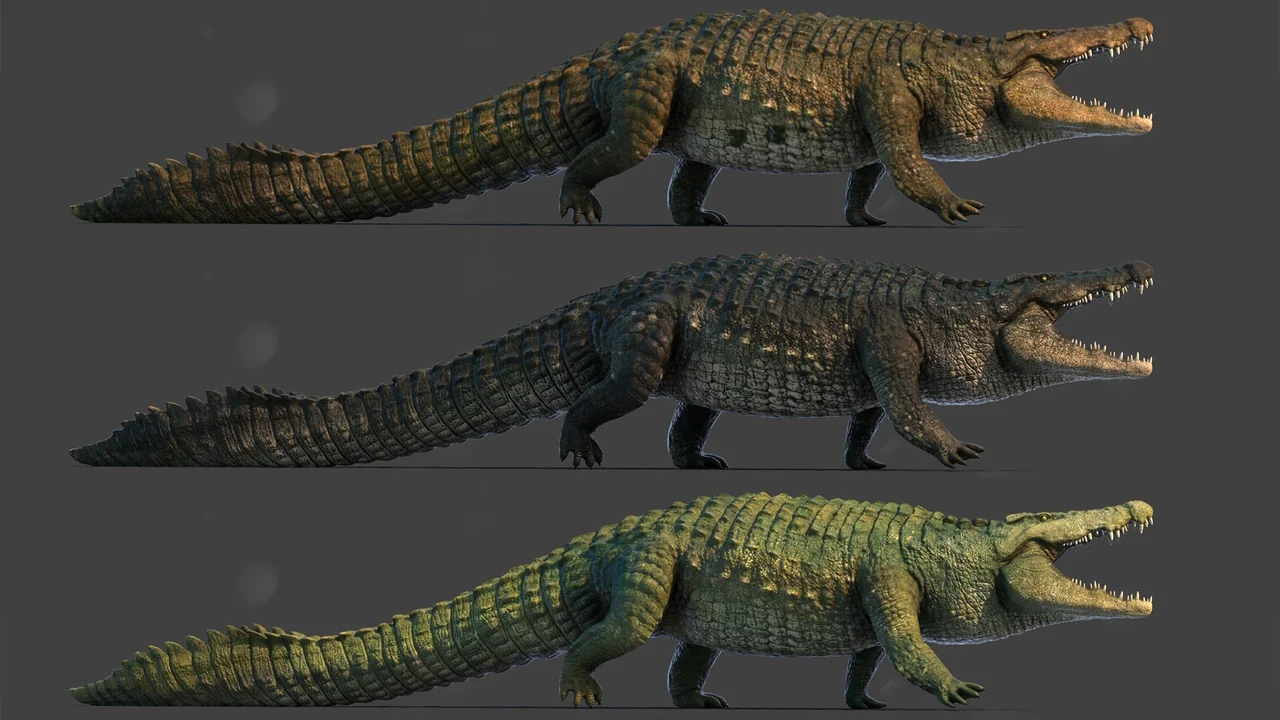
 Characters
 Characters
 Characters