"c68a05d5e51405b3"{"id":"1000662","slug":"radiation-vfx","title":"Radiation VFX","category":"Variety","engine":"4.27,5.0+","assetVersion":"","engineVersion":"Engine Version: 4.27,5.0+","tag":"Variety","accent":"blue","visual":"mech","summary":"Radiation VFX delivers 4K decals, smoke effects, particle systems, and pool materials for post-apocalyptic games and cinematic environments.","platform":"Unreal Engine","publishedAt":"2026-07-21T20:44:48.746Z","updatedAt":"2026-07-21T20:44:48.746Z","sourceNotes":[],"fileContents":[],"compatibility":["Unreal Engine","Engine Version: 4.27,5.0+"],"featuredImage":{"alt":"Radiation VFX","src":"/wp-content/uploads/published/2026/07/a6b32f3137b8-67b2c0d0-a1d3-4bce-a75d-794b120c9cc7-1dd5026f5e.webp"},"hasDownloadLink":true,"downloads":0,"terms":[{"taxonomy":"category","slug":"variety-vfx","name":"Variety"}],"galleryImages":[{"src":"/wp-content/uploads/published/2026/07/27683d81cda6-9887680d-2048-4b55-81f6-684ff73d3df5-868812f288.webp","alt":"Radiation VFX"},{"src":"/wp-content/uploads/published/2026/07/80e385b26a76-17abe5c8-db2c-46d3-b639-9d5557abb8ac-ab47a8c109.webp","alt":"Radiation VFX"},{"src":"/wp-content/uploads/published/2026/07/e38e5f63bd7e-ed9243da-a5bc-4c49-be7e-a056f2605df0-04ee19f5a4.webp","alt":"Radiation VFX"},{"src":"/wp-content/uploads/published/2026/07/139a9b2e053a-9f575de1-ff84-4ecc-82e8-c0d54b7459a2-8407e80d1d.webp","alt":"Radiation VFX"},{"src":"/wp-content/uploads/published/2026/07/9afb18df389e-002ac904-81af-4508-bc22-ef275f82523e-c9c0ec14a9.webp","alt":"Radiation VFX"}],"accessPanel":{"kind":"resource","title":"Download this resource","eyebrow":"Free Download","message":"Log in or create a free account to start your download.","fileName":"Content.7z","safetyNote":"Resources are manually reviewed before listing to improve quality and reduce obvious risks.","actionLabel":"Download Free","resourceType":"Resource archive"},"contentHtml":"\u003cp\u003ePost-apocalyptic environments live or die by the environmental clues left behind. A bombed-out corridor, an abandoned industrial yard, a sealed containment chamber—none of these spaces feel genuinely dangerous until the visual language of radiation poisoning is layered in. That is the specific gap this collection fills. It is built for game environments and cinematic projects that need to communicate invisible toxicity: poisoned ground, lingering gas, hazardous signage, and the particulate fallout that hangs in the air long after a catastrophic event.\u003c/p\u003e\n\n\u003ch2\u003eBuilding Toxic Atmosphere in Abandoned Spaces\u003c/h2\u003e\n\u003cp\u003eThe creative direction here centers on the post-apocalyptic aesthetic. When an artist drops these effects into a level, the intent is not decorative continuity. The goal is environmental storytelling. A glowing radiation pool on a cracked concrete floor tells a player or viewer that something went catastrophically wrong here. A warning sign spray-painted across a wall signals quarantine. Thick, drifting smoke obscuring a hallway suggests a recent breach or an ongoing leak. Every component in the pack is keyed toward that narrative register: abandonment, nuclear aftermath, and contamination.\u003c/p\u003e\n\u003cp\u003eDevelopers working on gas-filled zones, irradiated facilities, or fallout-affected wasteland biomes can layer the collection's outputs across different depth layers in a scene. Decals sit tied to surfaces, pool materials define ground interaction, and particle systems plus smoke VFX occupy the mid-air volume. When combined, these elements read as a single, cohesive biohazard scenario rather than isolated FX placed in different map regions.\u003c/p\u003e\n\n\u003ch2\u003eSurface Detail: Five Radiation Decals and Hazard Signage\u003c/h2\u003e\n\u003cp\u003eThe pack provides five distinct UHD-quality radiation decals. These are the surface-level storytelling tools. Decals are ideal for dramatic ground staining, painted hazard warnings on floors, corroded surface discoloration where radioactive material has bled through concrete, or residual burn patterns tied to a blast origin point. Because they operate as overlays, they can be projected across existing geometry—over rocky soil, across flooring planks, across tiled walls—without forcing an artist to retexture the underlying environment. The 4K+ resolution backing the decals means surface detail holds up at close player distances, which matters significantly for first-person survival experiences where the player is expected to look downward at contaminated ground.\u003c/p\u003e\n\u003cp\u003eBeyond the five standalone radiation designs, the collection adds a radiation sign decal. That element ships with two variations. A hazard sign is an immediately readable environmental cue. In a level design context, it functions as explicit world-building text: a warning painted or stamped by the factions that occupied the space before it fell into ruin. The two variations give an artist slight differentiation—perhaps one variation reads as more faded and weathered while the other maintains sharper legibility. That differentiation helps when dressing multiple rooms of the same cohesive aesthetic without obvious asset repetition breaking the player's immersion.\u003c/p\u003e\n\n\u003ch3\u003eGround Contamination and the Radiation Pool Material\u003c/h3\u003e\n\u003cp\u003eA single radiation pool material rounds out the set. Pools of accumulated radioactive material are an environmental staple of post-apocalyptic games and cinematic shots. They are the shimmering, sometimes illuminated sludge that marks concentrated contamination. As a material rather than a decal, it can be applied to geometry continuously across a floor basin, a containment trench, a flooded sublevel, or a pooling runoff puddle. The material carries the luminous, toxic quality that makes pools like this visually pop even in underlit environments, tying back to the pack's broader radiation-presentation toolkit.\u003c/p\u003e\n\n\u003ch2\u003eMid-Air Volume: Smoke Components and Particle Systems\u003c/h2\u003e\n\u003cp\u003eSurface-level contamination alone cannot carry a post-apocalyptic scene. The pack supplies three unique UHD-quality smoke VFX components. Where decals speak to residue and history, smoke defines the present-tense hazard. These elements help artists build the atmosphere of inactive locations—a slow leak from a compromised containment vessel, drifting clouds over an irradiated bog, gas settling into low-lying trenches, or the motion and drift of airborne contamination after a reactor failure. The UHD quality tag on the smoke components suggests a texture resolution built to withstand closer camera inspection, which is particularly relevant for cinematic projects where a camera move slowly pushes into a smoking environment and the texture holds up rather than breaking into soft, muddy pixelation.\u003c/p\u003e\n\u003cp\u003eAlongside the three smoke components, the pack provides two unique particle VFX. Particle systems are the more dynamic, simulation-driven side of the collection. They are what allows radiation to feel active and mobile rather than painted onto a surface. A particle effect might drive behavioral variation: drifting embers, suspended radioactive dust, or the subtle agitation of gas clouds responding to air movement. When deployed in an engine, particle VFX can be tuned to oscillate, drift with scene wind, or respond to player presence. This makes them well-suited to gameplay moments—a player breaches a sealed door and the particle system clouds outward, or a venting pipe periodically ejects a burst of contaminants into a walkway.\u003c/p\u003e\n\n\u003ch2\u003eTexture and Material Resolution Across the Pack\u003c/h2\u003e\n\u003cp\u003eEvery texture and material included across the pack carries a 4K+ resolution specification. This level of resolution matters because it directly dictates how close the camera can get without the effect starting to lose definition. In third-person cinematic work, a 4K decal might be viewed from ten meters away, where resolution is almost never a visible bottleneck. But in first-person games, or during a dolly-in cinematic shot, the player or viewer gets within touching distance of the asset. Lower-resolution decals and particle sprites begin to smear, and the illusion of a real-world surface contaminant quickly breaks down. The 4K+ layer across this collection guards against that breakdown—preserving crispness in hazard symbols, legible grain in smoke plumes, and fine detail in the radiation pool's visual surface material. The included shaders and materials tie these textures into the target engine's rendering pipeline, allowing the components to integrate with scene lighting, fog, and post-processing.\u003c/p\u003e\n\n\u003ch2\u003eTagging the Pack Against Broader Pipeline Categories\u003c/h2\u003e\n\u003cp\u003eThe way the collection is classified points directly toward its expected use cases. It is tagged for gas, post-apocalyptic, abandoned, visual, shader, effect, material, poison, visual-effect, decal, nuclear, radiation, and smoke. The tagging reveals both a style classification and a pipeline-level categorization. The decorative tags—gas, poison, nuclear, radiation—flag the subject matter. The technical tags—visual, shader, effect, material, visual-effect, decal—describe the asset types a developer or technical artist is pulling into their scene. The stylistic anchors—post-apocalyptic, abandoned—confirm the aesthetic register is wired toward a contaminated world, the visual condition of abandoned infrastructure, and the genre expectations of nuclear fallout scenes.\u003c/p\u003e\n\u003cp\u003eThe mix of shaders and materials alongside positioned decals and volumetric smoke also tells a pipeline story. An artist is not just receiving flat textures. They are receiving packaged visual-effect components and material setups they can drop directly into an environment workflow. Decals can be placed in-editor through a decal actor. Materials can be applied to surfaces. Smoke components and particle systems can be positioned in the world and hooked to triggers or ambient loops. The pipeline structure of the collection is a modular one—one collection built to piece together into different contamination scenarios.\u003c/p\u003e\n\u003cp\u003eThe collection also sits within a larger personal VFX library. The creator references more than 609 VFX assets total across their catalog, and this pack is offered as a pathway into that wider set of effects, suggesting this radiation library is built as part of a modular, interlinking visual-effect ecosystem rather than as a completely isolated one-off release.\u003c/p\u003e\n\n\u003ch2\u003eWhere This Collection Belongs in a Production\u003c/h2\u003e\n\u003cp\u003eFor a contaminant-heavy level or a post-collapse cinematic sequence, this collection supplies the primary visual layering required to sell environmental danger. The scene-building sequence practically writes itself: an artist drops radiation decals across flooring and walls to communicate the explosive dispersion pattern of fallout; they apply the radiation pool material to low-lying areas where the toxic matter has collected; they position the hazard signage to signal zones of containment or historical warning; they layer smoke components and particle VFX to establish the airborne persistence of the hazard; and the resulting environment reads as a fully contaminated, breathing space.\u003c/p\u003e\n\u003cp\u003eThe pack's strength is that it speaks the genre's visual language fluently. Radiation is a difficult contaminant because it is an invisible threat, and visual effects tasked with rendering it have to employ visual proxies—glowing pools, drifting smoke, recognizable warning symbols, and airborne agitation. The Radiation VFX collection provides proxies across each visual layer required: surface, signage, and volume. A team building a nuclear bunker level, a poisoned swamp sequence, or a cinematic scene set inside a fallout quarantine zone can deploy these elements without having to author bespoke decal textures or simulate new smoke plumes from scratch.\u003c/p\u003e\n\u003cp\u003eFit for post-apocalyptic games and cinematic projects, the collection targets the texture resolution and visual-effect component structure needed to keep environments readable under close inspection. It is less a decorative pack than an environmental-narrative toolkit—one keyed to the language of contamination and the visual shorthand of a world affected by radiation.\u003c/p\u003e\n\n\u003ch2\u003eContinue Browsing Similar Packs\u003c/h2\u003e\n\u003cul\u003e\n\u003cli\u003e\u003ca href=\"https://3dcghub.com/energy-weapon-vfx-pack/\" title=\"Energy weapon VFX Pack\"\u003eEnergy weapon VFX Pack\u003c/a\u003e\u003c/li\u003e\n\u003cli\u003e\u003ca href=\"https://3dcghub.com/molecules-and-organisms-vfx/\" title=\"Molecules and Organisms VFX\"\u003eMolecules and Organisms VFX\u003c/a\u003e\u003c/li\u003e\n\u003cli\u003e\u003ca href=\"https://3dcghub.com/500-ultimate-luts-pack-post-processing-filters/\" title=\"500+ Ultimate LUTs Pack - Post-Processing Filters\"\u003e500+ Ultimate LUTs Pack - Post-Processing Filters\u003c/a\u003e\u003c/li\u003e\n\u003cli\u003e\u003ca href=\"https://3dcghub.com/arcs-and-sparks/\" title=\"Arcs and Sparks\"\u003eArcs and Sparks\u003c/a\u003e\u003c/li\u003e\n\u003cli\u003e\u003ca href=\"https://3dcghub.com/convolution-bloom-kernels-pack/\" title=\"Convolution Bloom Kernels Pack\"\u003eConvolution Bloom Kernels Pack\u003c/a\u003e\u003c/li\u003e\n\u003c/ul\u003e","contentTextLength":10244,"navigation":{"current":1343,"total":3860,"previous":{"id":"1000663","slug":"red-pine-biome","title":"Red Pine Biome","category":"Forest \u0026 Jungle","platform":"Unreal Engine","updatedAt":"2026-07-22T06:41:11.442Z"},"next":{"id":"1000661","slug":"procedural-animation-framework","title":"Procedural Animation Framework","category":"Locomotion / Gaits","platform":"Unreal Engine","updatedAt":"2026-07-21T20:41:27.608Z"}},"relatedResources":[{"id":"1001915","slug":"vfx-attack-trails","title":"VFX Attack Trails","category":"Variety","engine":"4.26+,5.0+","assetVersion":"","engineVersion":"Engine Version: 4.26+,5.0+","tag":"Variety","accent":"blue","visual":"mech","summary":"Equip combat systems with VFX Attack Trails, featuring 13 Cascade and 13 Niagara trails, alongside hit and cast effects compatible with Modular Fantasy Knights.","platform":"Unreal Engine","publishedAt":"2026-10-22T11:52:25.654Z","updatedAt":"2026-10-22T11:52:25.654Z","sourceNotes":[],"fileContents":[],"compatibility":["Unreal Engine","Engine Version: 4.26+,5.0+"],"featuredImage":{"alt":"VFX Attack Trails","src":"/wp-content/uploads/published/2026/10/8eabaef1e52f-2148a916-d817-4ae5-aae6-5fac0b6a729c-214779413d.webp"},"hasDownloadLink":true,"downloads":0},{"id":"1001805","slug":"fantasy-vfx-collection-2","title":"FANTASY VFX COLLECTION '2'","category":"Variety","engine":"4.26+,5.0+","assetVersion":"","engineVersion":"Engine Version: 4.26+,5.0+","tag":"Variety","accent":"blue","visual":"mech","summary":"FANTASY VFX COLLECTION '2' delivers elemental visual effects for simple game creation, featuring fantasy magic elements and Trail Master compatibility.","platform":"Unreal Engine","publishedAt":"2026-10-21T07:56:33.422Z","updatedAt":"2026-10-21T07:56:33.422Z","sourceNotes":[],"fileContents":[],"compatibility":["Unreal Engine","Engine Version: 4.26+,5.0+"],"featuredImage":{"alt":"FANTASY VFX COLLECTION '2'","src":"/wp-content/uploads/published/2026/10/72eed2384356-5760cb26-f3d1-4308-8c12-110eab7ac191-410d522251.webp"},"hasDownloadLink":true,"downloads":0},{"id":"1001047","slug":"attack-animals-vfx","title":"Attack Animals VFX","category":"Variety","engine":"4.27,5.0+","assetVersion":"","engineVersion":"Engine Version: 4.27,5.0+","tag":"Variety","accent":"blue","visual":"mech","summary":"Game-ready low poly attack animal VFX pack with 10 creatures, vertex animation, player attack blueprints, Niagara particles, materials, textures, and sound for","platform":"Unreal Engine","publishedAt":"2026-08-27T15:30:48.707Z","updatedAt":"2026-08-27T15:30:48.707Z","sourceNotes":[],"fileContents":[],"compatibility":["Unreal Engine","Engine Version: 4.27,5.0+"],"featuredImage":{"alt":"Attack Animals VFX","src":"/wp-content/uploads/published/2026/08/6850d22e9255-d195760b-5936-47e2-9cd6-1669125d2f34-19a7ef6a7a.webp"},"hasDownloadLink":true,"downloads":3}]}
Variety
Radiation VFX
Radiation VFX delivers 4K decals, smoke effects, particle systems, and pool materials for post-apocalyptic games and cinematic environments.
Post-apocalyptic environments live or die by the environmental clues left behind. A bombed-out corridor, an abandoned industrial yard, a sealed containment chamber—none of these spaces feel genuinely dangerous until the visual language of radiation poisoning is layered in. That is the specific gap this collection fills. It is built for game environments and cinematic projects that need to communicate invisible toxicity: poisoned ground, lingering gas, hazardous signage, and the particulate fallout that hangs in the air long after a catastrophic event.
Building Toxic Atmosphere in Abandoned Spaces
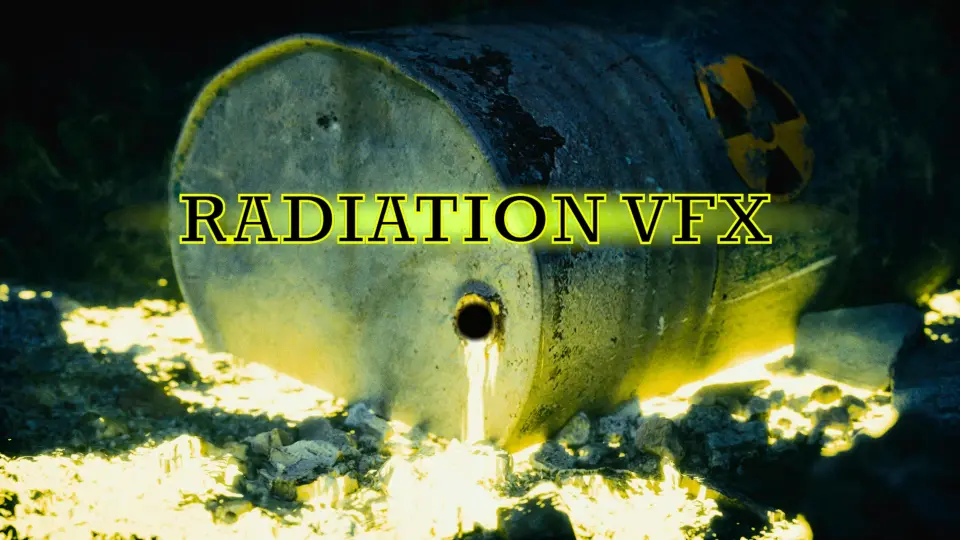
The creative direction here centers on the post-apocalyptic aesthetic. When an artist drops these effects into a level, the intent is not decorative continuity. The goal is environmental storytelling. A glowing radiation pool on a cracked concrete floor tells a player or viewer that something went catastrophically wrong here. A warning sign spray-painted across a wall signals quarantine. Thick, drifting smoke obscuring a hallway suggests a recent breach or an ongoing leak. Every component in the pack is keyed toward that narrative register: abandonment, nuclear aftermath, and contamination.
Developers working on gas-filled zones, irradiated facilities, or fallout-affected wasteland biomes can layer the collection's outputs across different depth layers in a scene. Decals sit tied to surfaces, pool materials define ground interaction, and particle systems plus smoke VFX occupy the mid-air volume. When combined, these elements read as a single, cohesive biohazard scenario rather than isolated FX placed in different map regions.
Surface Detail: Five Radiation Decals and Hazard Signage
The pack provides five distinct UHD-quality radiation decals. These are the surface-level storytelling tools. Decals are ideal for dramatic ground staining, painted hazard warnings on floors, corroded surface discoloration where radioactive material has bled through concrete, or residual burn patterns tied to a blast origin point. Because they operate as overlays, they can be projected across existing geometry—over rocky soil, across flooring planks, across tiled walls—without forcing an artist to retexture the underlying environment. The 4K+ resolution backing the decals means surface detail holds up at close player distances, which matters significantly for first-person survival experiences where the player is expected to look downward at contaminated ground.
Beyond the five standalone radiation designs, the collection adds a radiation sign decal. That element ships with two variations. A hazard sign is an immediately readable environmental cue. In a level design context, it functions as explicit world-building text: a warning painted or stamped by the factions that occupied the space before it fell into ruin. The two variations give an artist slight differentiation—perhaps one variation reads as more faded and weathered while the other maintains sharper legibility. That differentiation helps when dressing multiple rooms of the same cohesive aesthetic without obvious asset repetition breaking the player's immersion.
Ground Contamination and the Radiation Pool Material
A single radiation pool material rounds out the set. Pools of accumulated radioactive material are an environmental staple of post-apocalyptic games and cinematic shots. They are the shimmering, sometimes illuminated sludge that marks concentrated contamination. As a material rather than a decal, it can be applied to geometry continuously across a floor basin, a containment trench, a flooded sublevel, or a pooling runoff puddle. The material carries the luminous, toxic quality that makes pools like this visually pop even in underlit environments, tying back to the pack's broader radiation-presentation toolkit.
Mid-Air Volume: Smoke Components and Particle Systems
Surface-level contamination alone cannot carry a post-apocalyptic scene. The pack supplies three unique UHD-quality smoke VFX components. Where decals speak to residue and history, smoke defines the present-tense hazard. These elements help artists build the atmosphere of inactive locations—a slow leak from a compromised containment vessel, drifting clouds over an irradiated bog, gas settling into low-lying trenches, or the motion and drift of airborne contamination after a reactor failure. The UHD quality tag on the smoke components suggests a texture resolution built to withstand closer camera inspection, which is particularly relevant for cinematic projects where a camera move slowly pushes into a smoking environment and the texture holds up rather than breaking into soft, muddy pixelation.
Alongside the three smoke components, the pack provides two unique particle VFX. Particle systems are the more dynamic, simulation-driven side of the collection. They are what allows radiation to feel active and mobile rather than painted onto a surface. A particle effect might drive behavioral variation: drifting embers, suspended radioactive dust, or the subtle agitation of gas clouds responding to air movement. When deployed in an engine, particle VFX can be tuned to oscillate, drift with scene wind, or respond to player presence. This makes them well-suited to gameplay moments—a player breaches a sealed door and the particle system clouds outward, or a venting pipe periodically ejects a burst of contaminants into a walkway.
Texture and Material Resolution Across the Pack
Every texture and material included across the pack carries a 4K+ resolution specification. This level of resolution matters because it directly dictates how close the camera can get without the effect starting to lose definition. In third-person cinematic work, a 4K decal might be viewed from ten meters away, where resolution is almost never a visible bottleneck. But in first-person games, or during a dolly-in cinematic shot, the player or viewer gets within touching distance of the asset. Lower-resolution decals and particle sprites begin to smear, and the illusion of a real-world surface contaminant quickly breaks down. The 4K+ layer across this collection guards against that breakdown—preserving crispness in hazard symbols, legible grain in smoke plumes, and fine detail in the radiation pool's visual surface material. The included shaders and materials tie these textures into the target engine's rendering pipeline, allowing the components to integrate with scene lighting, fog, and post-processing.
Tagging the Pack Against Broader Pipeline Categories
The way the collection is classified points directly toward its expected use cases. It is tagged for gas, post-apocalyptic, abandoned, visual, shader, effect, material, poison, visual-effect, decal, nuclear, radiation, and smoke. The tagging reveals both a style classification and a pipeline-level categorization. The decorative tags—gas, poison, nuclear, radiation—flag the subject matter. The technical tags—visual, shader, effect, material, visual-effect, decal—describe the asset types a developer or technical artist is pulling into their scene. The stylistic anchors—post-apocalyptic, abandoned—confirm the aesthetic register is wired toward a contaminated world, the visual condition of abandoned infrastructure, and the genre expectations of nuclear fallout scenes.
The mix of shaders and materials alongside positioned decals and volumetric smoke also tells a pipeline story. An artist is not just receiving flat textures. They are receiving packaged visual-effect components and material setups they can drop directly into an environment workflow. Decals can be placed in-editor through a decal actor. Materials can be applied to surfaces. Smoke components and particle systems can be positioned in the world and hooked to triggers or ambient loops. The pipeline structure of the collection is a modular one—one collection built to piece together into different contamination scenarios.
The collection also sits within a larger personal VFX library. The creator references more than 609 VFX assets total across their catalog, and this pack is offered as a pathway into that wider set of effects, suggesting this radiation library is built as part of a modular, interlinking visual-effect ecosystem rather than as a completely isolated one-off release.
Where This Collection Belongs in a Production
For a contaminant-heavy level or a post-collapse cinematic sequence, this collection supplies the primary visual layering required to sell environmental danger. The scene-building sequence practically writes itself: an artist drops radiation decals across flooring and walls to communicate the explosive dispersion pattern of fallout; they apply the radiation pool material to low-lying areas where the toxic matter has collected; they position the hazard signage to signal zones of containment or historical warning; they layer smoke components and particle VFX to establish the airborne persistence of the hazard; and the resulting environment reads as a fully contaminated, breathing space.
The pack's strength is that it speaks the genre's visual language fluently. Radiation is a difficult contaminant because it is an invisible threat, and visual effects tasked with rendering it have to employ visual proxies—glowing pools, drifting smoke, recognizable warning symbols, and airborne agitation. The Radiation VFX collection provides proxies across each visual layer required: surface, signage, and volume. A team building a nuclear bunker level, a poisoned swamp sequence, or a cinematic scene set inside a fallout quarantine zone can deploy these elements without having to author bespoke decal textures or simulate new smoke plumes from scratch.
Fit for post-apocalyptic games and cinematic projects, the collection targets the texture resolution and visual-effect component structure needed to keep environments readable under close inspection. It is less a decorative pack than an environmental-narrative toolkit—one keyed to the language of contamination and the visual shorthand of a world affected by radiation.
 Variety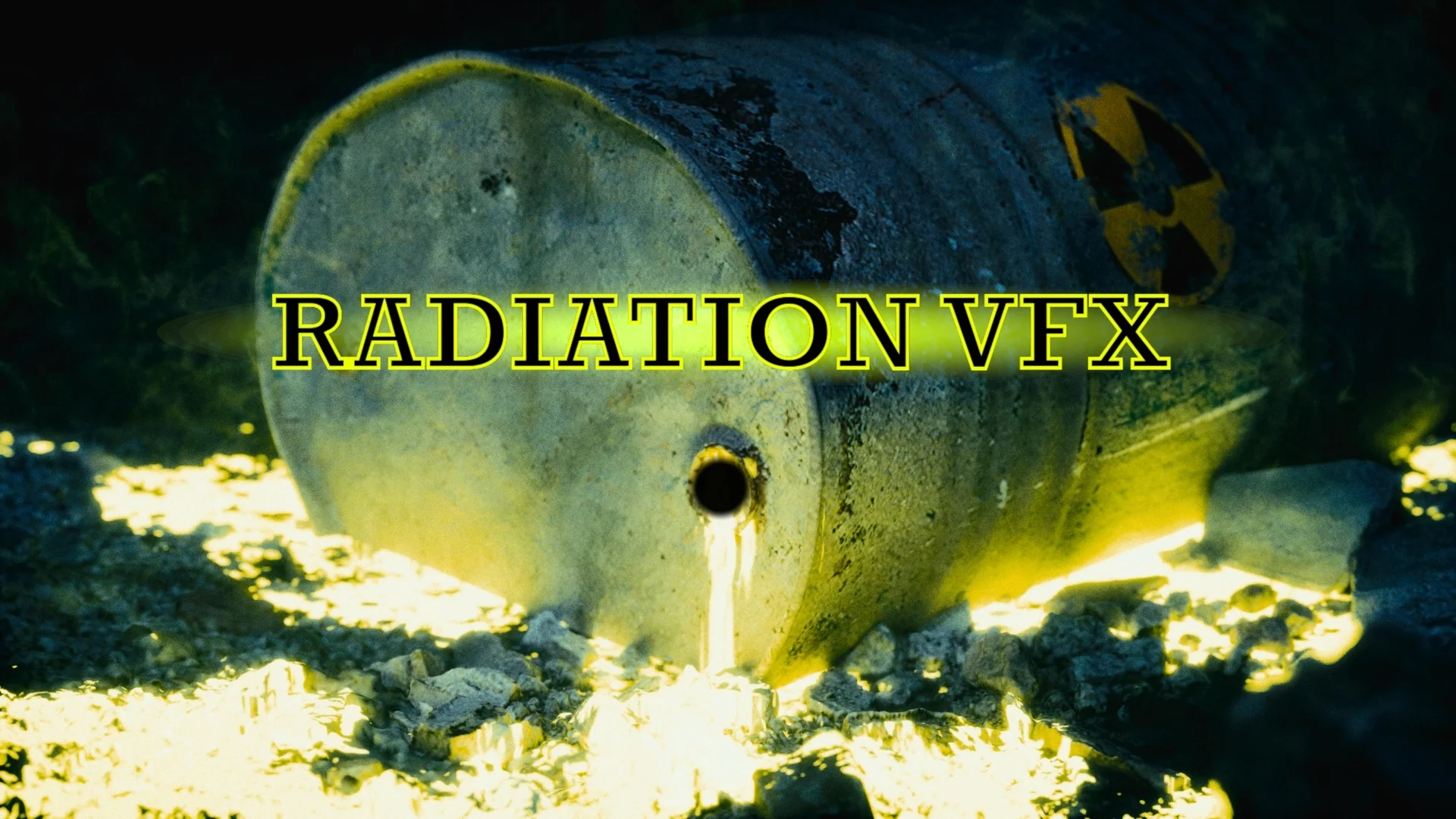
 Variety
 Variety
 Variety