"26aaab8a5d5ed4fc"{"id":"1001007","slug":"pipe-system-pack","title":"Pipe System Pack","category":"Industrial","engine":"5.1+","assetVersion":"","engineVersion":"Engine Version: 5.1+","tag":"Industrial","accent":"blue","visual":"mech","summary":"A realistic modular pipe system for factories, sewers, and old industrial buildings. Four pipe types, a flexible blueprint, and full artistic control in Unreal","platform":"Unreal Engine","publishedAt":"2026-08-22T11:07:46.440Z","updatedAt":"2026-08-22T11:07:46.440Z","sourceNotes":[],"fileContents":[],"compatibility":["Unreal Engine","Engine Version: 5.1+"],"featuredImage":{"alt":"Pipe System Pack","src":"/wp-content/uploads/published/2026/08/887e3182f34a-b4dd76a0-eafb-41c4-885e-6c311424c13b-9531c4c517.webp"},"hasDownloadLink":true,"downloads":0,"terms":[{"taxonomy":"category","slug":"industrial-furniture-and-fixtures","name":"Industrial"}],"galleryImages":[{"src":"/wp-content/uploads/published/2026/08/5663c8522f2a-c6e01715-711c-4bc0-9dab-3eac770dfb03-3013869f02.webp","alt":"Pipe System Pack"},{"src":"/wp-content/uploads/published/2026/08/a2aa4dc39d61-75c0ba68-bda8-4bd8-9116-1aff7135d1fc-ad96cdc3c4.webp","alt":"Pipe System Pack"},{"src":"/wp-content/uploads/published/2026/08/12380ab5390a-32e50493-f7f8-489a-9999-864e31ca4eb9-17e13158ec.webp","alt":"Pipe System Pack"},{"src":"/wp-content/uploads/published/2026/08/103a347e34e7-dcdde159-fec0-4478-b13e-596b0dca9f90-f92b2dfa6b.webp","alt":"Pipe System Pack"},{"src":"/wp-content/uploads/published/2026/08/52786f94d662-71be6904-f4ae-4723-b937-53c30951062a-79ab766f5c.webp","alt":"Pipe System Pack"},{"src":"/wp-content/uploads/published/2026/08/de62d6e36030-a09f727f-bb3f-41a1-a228-3ffecbff86a9-6ec715200c.webp","alt":"Pipe System Pack"},{"src":"/wp-content/uploads/published/2026/08/c48d542688a9-b46907cf-8eee-4ae9-a937-2178509cf6eb-e86da50d6e.webp","alt":"Pipe System Pack"},{"src":"/wp-content/uploads/published/2026/08/9410f8c83842-82c83fd6-8976-4d65-ad2c-275ed7e0eac2-17b2579ea3.webp","alt":"Pipe System Pack"},{"src":"/wp-content/uploads/published/2026/08/a78a7b900046-bd6fa268-9156-4997-8a5f-70bbb05e1d9b-d11c31f128.webp","alt":"Pipe System Pack"},{"src":"/wp-content/uploads/published/2026/08/c84ddadd7ec3-a0c60df3-8665-4efd-bc6d-b068494cb888-990913b01c.webp","alt":"Pipe System Pack"}],"accessPanel":{"kind":"resource","title":"Download this resource","eyebrow":"Free Download","message":"Log in or create a free account to start your download.","fileName":"Content.7z","safetyNote":"Resources are manually reviewed before listing to improve quality and reduce obvious risks.","actionLabel":"Download Free","resourceType":"Resource archive"},"contentHtml":"\u003cp\u003eIn a half-lit facility or a cramped sewer corridor, a realistic pipe run is often what sells the space. The Pipe System Pack starts with that assumption and gives the user a single blueprint to place pipes across multiple segments without turning every connection into a manual modeling task. The pack is aimed at industrial settings, but the underlying logic is simple: lay down a path, pick the pipe type, and let the blueprint handle the connections.\u003c/p\u003e\n\u003ch2\u003eFour pipe types, one blueprint\u003c/h2\u003e\n\u003cp\u003eThe pack defines four pipe types: Simple, Corner, Branch, and Valve. Those four cover most of what a practical industrial layout needs. Simple pipes handle straight runs from one point to another. Corner pipes change the direction of the run. Branch pipes split the flow into a second route. Valve pipes place a control point directly in the line, so a system can be shut off or serviced without breaking the visual continuity.\u003c/p\u003e\n\u003cp\u003eThe blueprint itself is the center of the workflow. It has an intuitive UI and full artistic control in every aspect, so the user is not limited to dragging pre-built segments into place. The blueprint can be adjusted to fit the scene, with each part of the pipe system responding to changes. For artists who need a lot of variation across a factory floor, this control makes the difference between a pipe system that looks repeated and one that feels organic.\u003c/p\u003e\n\u003ch2\u003eScenes that call for an industrial pipe network\u003c/h2\u003e\n\u003cp\u003eThe pack targets factories, yards, facilities, sewers, and old industrial buildings. These spaces share a common trait: pipes are not decorative extras, they are structural elements that guide the eye and explain how the environment functions. A factory with visible steam lines, a treatment facility with water feeds, a sewer tunnel with exposed conduits—all of these can be built from the same modular set.\u003c/p\u003e\n\u003cp\u003eThe tags attached to the pack reinforce that range. Machine, PBR, System, Pipe, Modular, Roof, Modern, Sewer, Factory, Cable, Facility, Procedural, Script, Realistic, Old, Building, Wire, Stylized, Pack, Industrial, Prop, Blueprint, Nanite, Backyard, Steam. That is a broad set, but the core is clear: this is a modular, PBR-driven system that can look modern or weathered depending on how it is placed. The \"Roof\" and \"Backyard\" tags are worth noting because they suggest the pack can move beyond pure industrial interiors and appear in rooftop utility runs or exterior building services.\u003c/p\u003e\n\u003ch2\u003eDocumentation and setup without guesswork\u003c/h2\u003e\n\u003cp\u003eThe pack includes a breakdown video and detailed documentation. The video walks through the pack's behavior in Unreal Engine 5, while the written documentation covers setup and usage. That combination is practical for teams that need to onboard a new asset quickly, because it removes the guesswork from the first placement.\u003c/p\u003e\n\u003cp\u003eSetup does require one thing: the Editor Scripting Plugin must be enabled in the project. That is done through Editor -\u003e Plugins, and once it is active, the blueprint can place pipes according to the user's input. The requirement is explicit in the pack materials, so it is worth checking before installation if the project restricts which plugins can be turned on.\u003c/p\u003e\n\u003ch2\u003eWider compatibility and the Roof - City Pack\u003c/h2\u003e\n\u003cp\u003eThe Pipe System Pack is also included in the Roof - City Pack. That means a user who owns the larger environment pack already has this system as part of their toolkit. The overlap is useful because rooftop scenes, backyards, and city buildings often need the same pipe runs for water, steam, or ducting, and the pack carries the same visual language into those spaces.\u003c/p\u003e\n\u003cp\u003eCompatibility with City Core - Paris points to another integration point. Teams building a Paris-inspired city scene within the City Core workflow can bring the pipe system in alongside the city pack without worrying about a style mismatch. The pack's PBR materials and modular structure make it a serviceable fit for both new builds and retrofit layouts.\u003c/p\u003e\n\u003ch2\u003eWho gets the most out of it\u003c/h2\u003e\n\u003cp\u003eEnvironment artists setting up industrial backdrops will likely benefit the most. The blueprint-driven workflow keeps the pipe placement interactive, which suits scenes where the layout changes during iteration. Technical artists who want to give level designers a clean pipe tool will also find the pack's UI and documentation helpful for handoff. For smaller teams, the combination of four pipe types, full artistic control, and a quick setup path means a factory or sewer level can have a believable pipe network without a dedicated modeling pass.\u003c/p\u003e\n\n\u003ch2\u003eExplore Similar Assets\u003c/h2\u003e\n\u003cul\u003e\n\u003cli\u003e\u003ca href=\"https://3dcghub.com/buildings-vol-9-modular-pipes-and-gutters-nanite-and-low-poly/\" title=\"Buildings VOL.9 - Modular Pipes \u0026amp; Gutters (Nanite \u0026amp; Low Poly)\"\u003eBuildings VOL.9 - Modular Pipes \u0026amp; Gutters (Nanite \u0026amp; Low Poly)\u003c/a\u003e\u003c/li\u003e\n\u003cli\u003e\u003ca href=\"https://3dcghub.com/industrial-kitbash-and-coal-mine-set/\" title=\"Industrial Kitbash and Coal Mine Set\"\u003eIndustrial Kitbash and Coal Mine Set\u003c/a\u003e\u003c/li\u003e\n\u003cli\u003e\u003ca href=\"https://3dcghub.com/sewerage/\" title=\"Sewerage\"\u003eSewerage\u003c/a\u003e\u003c/li\u003e\n\u003cli\u003e\u003ca href=\"https://3dcghub.com/hawknest-an-aircraft-factory-hangar-modular/\" title=\"HAWKNEST An Aircraft Factory Hangar (Modular)\"\u003eHAWKNEST An Aircraft Factory Hangar (Modular)\u003c/a\u003e\u003c/li\u003e\n\u003cli\u003e\u003ca href=\"https://3dcghub.com/advanced-spline-mesh-analysis-tool/\" title=\"Advanced Spline Mesh Analysis Tool\"\u003eAdvanced Spline Mesh Analysis Tool\u003c/a\u003e\u003c/li\u003e\n\u003c/ul\u003e","contentTextLength":4722,"navigation":{"current":511,"total":3400,"previous":{"id":"1001008","slug":"polygon-ancient-empire","title":"POLYGON - Ancient Empire","category":"Historical","platform":"Unreal Engine","updatedAt":"2026-08-22T13:02:43.200Z"},"next":{"id":"1001006","slug":"ork-rogue-2","title":"Ork Rogue","category":"Creatures \u0026 Monsters","platform":"Unreal Engine","updatedAt":"2026-08-22T11:04:26.209Z"}},"relatedResources":[{"id":"1000453","slug":"buildings-vol-9-modular-pipes-and-gutters-nanite-and-low-poly","title":"Buildings VOL.9 - Modular Pipes \u0026 Gutters (Nanite \u0026 Low Poly)","category":"Residential Buildings","engine":"5.1+","assetVersion":"","engineVersion":"Engine Version: 5.1+","tag":"Residential Buildi","accent":"blue","visual":"mech","summary":"Unreal Engine modular pipes and gutters pack with 220 Nanite and low-poly meshes, 4K textures, channel-packed maps, Lumen support, and color-changeable painted","platform":"Unreal Engine","publishedAt":"2026-07-11T01:39:01.440Z","updatedAt":"2026-07-11T01:39:01.440Z","sourceNotes":[],"fileContents":[],"compatibility":["Unreal Engine","Engine Version: 5.1+"],"featuredImage":{"alt":"Buildings VOL.9 - Modular Pipes \u0026 Gutters (Nanite \u0026 Low Poly)","src":"/wp-content/uploads/published/2026/07/44ad0f52be13-919d78f7-3a95-4791-af9a-e7914b09902c-70e302bccb.webp"},"hasDownloadLink":true,"downloads":0},{"id":"1001109","slug":"modular-subway-tunnels","title":"Modular Subway Tunnels","category":"Industrial","engine":"4.26+,5.0+","assetVersion":"","engineVersion":"Engine Version: 4.26+,5.0+","tag":"Industrial","accent":"blue","visual":"mech","summary":"A modular kit for building subway tunnels and underground rooms, including rails, pipes, hermetic doors, furniture, and a technical train for Unreal and Unity.","platform":"Unreal Engine","publishedAt":"2026-09-07T07:50:51.958Z","updatedAt":"2026-09-07T07:50:51.958Z","sourceNotes":[],"fileContents":[],"compatibility":["Unreal Engine","Engine Version: 4.26+,5.0+"],"featuredImage":{"alt":"Modular Subway Tunnels","src":"/wp-content/uploads/published/2026/09/61d89297ef4d-edf779ea-b395-4cd8-b3c5-ab28b72ece9f-2084d0cc6d.webp"},"hasDownloadLink":true,"downloads":0},{"id":"1000521","slug":"industrial-kitbash-and-coal-mine-set","title":"Industrial Kitbash and Coal Mine Set","category":"Industrial","engine":"4.26+,5.0+","assetVersion":"","engineVersion":"Engine Version: 4.26+,5.0+","tag":"Industrial","accent":"blue","visual":"mech","summary":"Industrial Kitbash and Coal Mine Set combining hard surface pipes, pillars, walls with organic coal rocks and stones for Unreal Engine environments.","platform":"Unreal Engine","publishedAt":"2026-07-14T13:19:10.840Z","updatedAt":"2026-07-14T13:19:10.840Z","sourceNotes":[],"fileContents":[],"compatibility":["Unreal Engine","Engine Version: 4.26+,5.0+"],"featuredImage":{"alt":"Industrial Kitbash and Coal Mine Set","src":"/wp-content/uploads/published/2026/07/2f1241c3affb-43210993-d994-4453-a220-142ff2888530-1b02908e9f.webp"},"hasDownloadLink":true,"downloads":4}]}
Industrial
Pipe System Pack
A realistic modular pipe system for factories, sewers, and old industrial buildings. Four pipe types, a flexible blueprint, and full artistic control in Unreal
Category:Unreal Engine,IndustrialPlatform: Unreal EngineEngine Version: 5.1+Published: Aug 22, 2026
Industrial
Resource overview
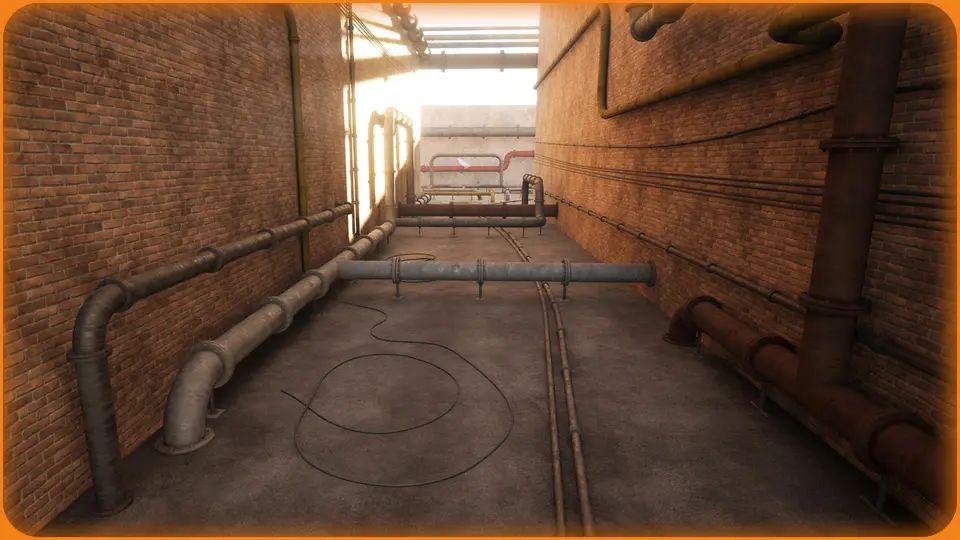
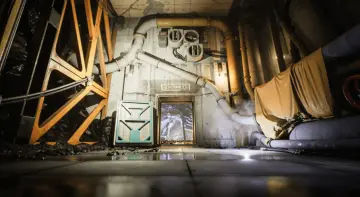
In a half-lit facility or a cramped sewer corridor, a realistic pipe run is often what sells the space. The Pipe System Pack starts with that assumption and gives the user a single blueprint to place pipes across multiple segments without turning every connection into a manual modeling task. The pack is aimed at industrial settings, but the underlying logic is simple: lay down a path, pick the pipe type, and let the blueprint handle the connections.
Four pipe types, one blueprint
The pack defines four pipe types: Simple, Corner, Branch, and Valve. Those four cover most of what a practical industrial layout needs. Simple pipes handle straight runs from one point to another. Corner pipes change the direction of the run. Branch pipes split the flow into a second route. Valve pipes place a control point directly in the line, so a system can be shut off or serviced without breaking the visual continuity.
The blueprint itself is the center of the workflow. It has an intuitive UI and full artistic control in every aspect, so the user is not limited to dragging pre-built segments into place. The blueprint can be adjusted to fit the scene, with each part of the pipe system responding to changes. For artists who need a lot of variation across a factory floor, this control makes the difference between a pipe system that looks repeated and one that feels organic.
Scenes that call for an industrial pipe network
The pack targets factories, yards, facilities, sewers, and old industrial buildings. These spaces share a common trait: pipes are not decorative extras, they are structural elements that guide the eye and explain how the environment functions. A factory with visible steam lines, a treatment facility with water feeds, a sewer tunnel with exposed conduits—all of these can be built from the same modular set.
The tags attached to the pack reinforce that range. Machine, PBR, System, Pipe, Modular, Roof, Modern, Sewer, Factory, Cable, Facility, Procedural, Script, Realistic, Old, Building, Wire, Stylized, Pack, Industrial, Prop, Blueprint, Nanite, Backyard, Steam. That is a broad set, but the core is clear: this is a modular, PBR-driven system that can look modern or weathered depending on how it is placed. The "Roof" and "Backyard" tags are worth noting because they suggest the pack can move beyond pure industrial interiors and appear in rooftop utility runs or exterior building services.
Documentation and setup without guesswork
The pack includes a breakdown video and detailed documentation. The video walks through the pack's behavior in Unreal Engine 5, while the written documentation covers setup and usage. That combination is practical for teams that need to onboard a new asset quickly, because it removes the guesswork from the first placement.
Setup does require one thing: the Editor Scripting Plugin must be enabled in the project. That is done through Editor -> Plugins, and once it is active, the blueprint can place pipes according to the user's input. The requirement is explicit in the pack materials, so it is worth checking before installation if the project restricts which plugins can be turned on.
Wider compatibility and the Roof - City Pack
The Pipe System Pack is also included in the Roof - City Pack. That means a user who owns the larger environment pack already has this system as part of their toolkit. The overlap is useful because rooftop scenes, backyards, and city buildings often need the same pipe runs for water, steam, or ducting, and the pack carries the same visual language into those spaces.
Compatibility with City Core - Paris points to another integration point. Teams building a Paris-inspired city scene within the City Core workflow can bring the pipe system in alongside the city pack without worrying about a style mismatch. The pack's PBR materials and modular structure make it a serviceable fit for both new builds and retrofit layouts.
Who gets the most out of it
Environment artists setting up industrial backdrops will likely benefit the most. The blueprint-driven workflow keeps the pipe placement interactive, which suits scenes where the layout changes during iteration. Technical artists who want to give level designers a clean pipe tool will also find the pack's UI and documentation helpful for handoff. For smaller teams, the combination of four pipe types, full artistic control, and a quick setup path means a factory or sewer level can have a believable pipe network without a dedicated modeling pass.
 Industrial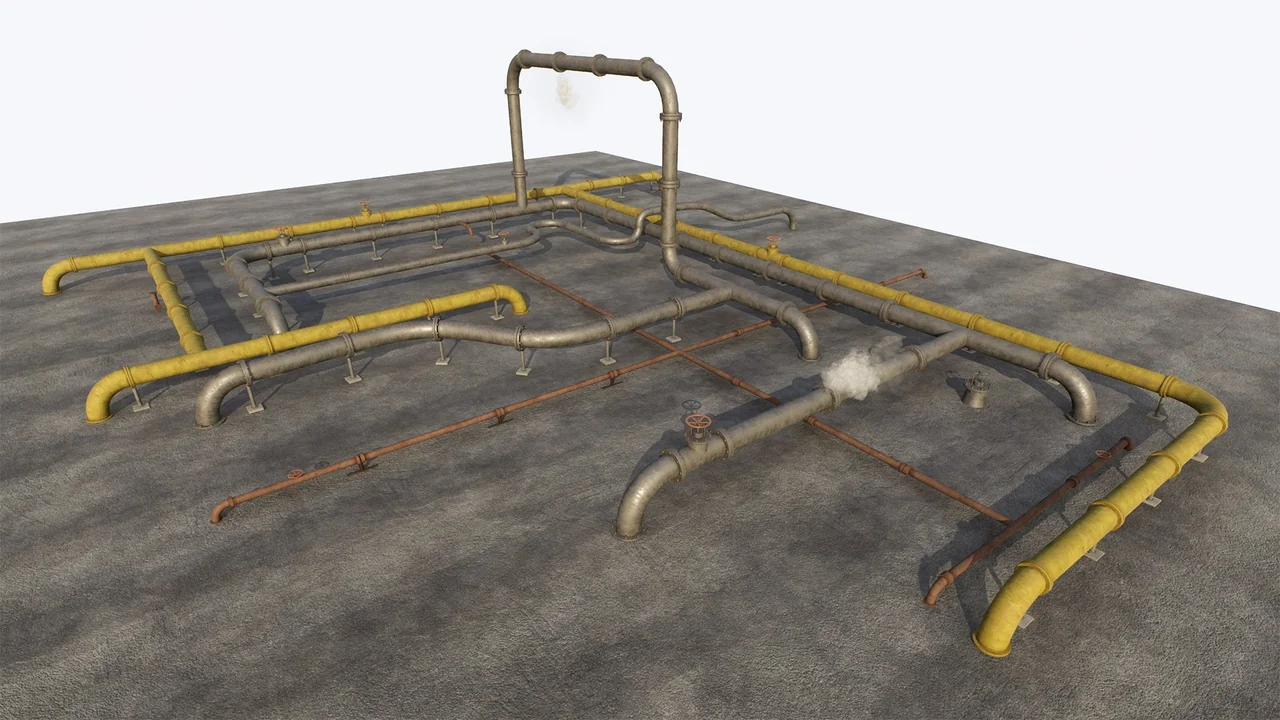
 Residential Buildi
 Industrial
 Industrial